The Simple Power of “What If?”

Every work of fiction, or damned near every one, can been seen as an answer to a “what if?” question. What if a family has to uproot their entire existence because of climate change? What if most of a small town’s children are killed in a tragic accident? What if a young attorney’s cushy law firm is a front for the mob? On and on it goes.

The power of “what if?” is given particularly free reign in speculative fiction, since the question doesn’t have to conform itself to the real world. Stepping outside reality to ask the question can still lead to powerful insights into the real world, however.

Last week while putting laundry away I stumbled into a Twilight Zone marathon on TV. The episode I landed on, “I Am the Night – Color Me Black”, that takes a preposterously simple “what if?” question and uses it to drill down about the human condition. The opening narration lays it out:

Sheriff Charlie Koch on the morning of an execution. As a matter of fact, it’s seven-thirty in the morning. Logic and natural laws dictate that at this hour there should be daylight. It is a simple rule of physical science that the sun should rise at a certain moment and supersede the darkness. But at this given moment, Sheriff Charlie Koch, a deputy named Pierce, a condemned man named Jagger, and a small, inconsequential village will shortly find out that there are causes and effects that have no precedent. Such is usually the case—in the Twilight Zone.

In typical Twilight Zone fashion the supernatural event isn’t really the important part of the story. It’s how it throws everyone in the episode out of equilibrium and allows the filters of euphemism and manners to slip enough to see peoples’ true selves. Thus, not only do we have the deputy who’s certain (against the evidence) that Jagger is guilty, but we get the realization that Jagger is pretty much a douche, anyway. He may have been wronged, but that doesn’t make him right.

So the darkness lingers, until after the execution when we learn that it’s appearing all over the world, at locations like the Berlin Wall, Budapest, and a street in Dallas (keep in mind, the episode first aired four months after the Kennedy assassination). So, in less than half an hour, a simple question – “what if one morning the sun didn’t rise?” – leads us to, on the micro and macro scale, sober observations on human nature.

That’s the simple power of “what if?” when it comes to storytelling. It’s the prime mover, the thing that gets the ball rolling. It can upend the real world and give us a way to reflect on it all at the same time.

whatif1

What Vinyl Can Learn From The Americans

Almost every piece of fiction is, in fact, about creating an alternate reality. No matter the verisimilitude of a story, not matter how “real” the characters feel, the simple truth is they aren’t. They’re creations of a writer who controls their every movement and word. Our world is not their world for the basic reason that they don’t exist in our world.

Alternate histories, of course, take this premise and run with it. What if the Allies lost World War II? What if the American Revolution never happened? Stories that ask such questions are all about messing with history. The only limits on the changes you make are whether they make some sense in relation to the big change.

Things are a little trickier when you’re telling a story set in the past that doesn’t have quite the same ambition. If you’re not really changing the past, how much of “history” as we know it can you play with? And how? Two current TV shows deal with this issue, one much more successfully.

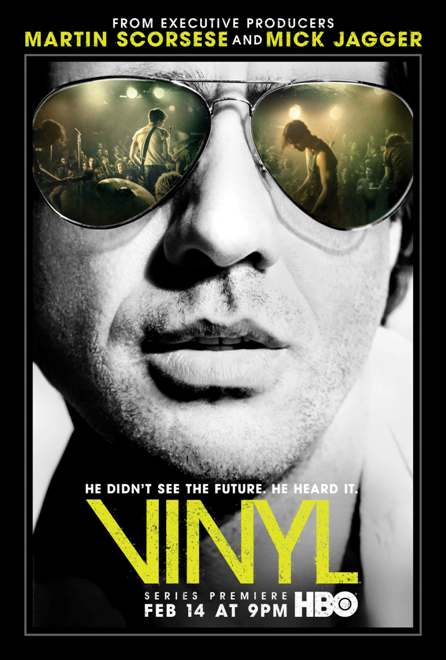
Vinyl, on HBO, has a hell of a pedigree. The show, about the head of a struggling record company in the early-to-mid 1970s, boasts Martin Scorsese, Mick Jagger, and Terrence Winter (of The Sopranos and Boardwalk Empire fame) among its creative forces. The company is on the brink, the main character is a coked-up killer, and, well, there are other complications. It’s gotten a fairly cool reception from critics, but has already been renewed for a second season. I’m not sure I’ll be on board for it.

Vinyl-Key-Art-FINAL

Although I have several issues with the show, the one that really drives me nuts (and prompted this post) involves how the fictional record label interacts with real world stars. Already this season we’ve seen our heroes interact with Led Zeppelin, David Bowie, Alice Cooper, and Elvis. While there’s a chance to play that for fun, or verisimilitude boosting background, the show doesn’t go that route. Instead, we’re shown multiple instances of the fictional record label trying to do business with these luminaries that we know won’t because we’re still in the “real” world. Whatever conversations you might dream up for Alice Cooper to say in your version of 1973, you’re not going so far as to have him sign with a fictional record label. It drains these incidents of any tension or drama, regardless of how well they’re executed.

Compare that approach with the one taken by FX’s The Americans. It’s got considerably higher fictional stakes – telling the story of a pair of Soviet spies posing as a suburban American family during height of the Cold War 1980s. They should bump into historical biggies every week, yet they don’t. In fact, the only major historical fact in play in the series is the one that hangs over the whole thing like a specter – we know that these folks play for the losing team.

the-americans

Yet, the drama of the series still works because our “heroes” aren’t interacting with bigger specific historical events that have happened around them. They never try to assassinate Reagan, for example (although I suppose you could conspiracy theory that one into real history), or engage in some epic act of sabotage that didn’t happen in the real world. As a result, we’re more caught up in the tension of their existence because we’re unsure how their small part of the larger story is going to play out.

Vinyl lacks that. Whatever the fate of American Century Records will turn out to be it has fuck all to do with hitching its star to David Bowie or Elvis. It’s a much better show when it’s playing with its fictional artists, people in whom viewers can invest some real emotion.

It’s fun to play around with history. But I think you have to have a solid idea of why you’re doing it and how your fictional characters are going to fit into that history. Are they swept along with the tide we all know or are they changing it into something entirely different? It’s a fine line and easy to wind up on the wrong side of it.

Not Getting It Right Versus Getting It Wrong

A little while back someone in one of the online writers’ forums I haunt asked about what, within our particular area of real life expertise, makes us throw up our hands when we see it in fiction. This was particularly in a sci-fi and fantasy context, so my own area of expertise – criminal law – doesn’t really come into play. But reading the discussion and thinking about the question made me realize there is a fine line in fiction between not getting something right and actually getting it wrong.

Exhibit A, since it’s right in my wheelhouse – Law & Order. I’m talking the mothership here, the one that effectively split its time between the courtroom and the police investigation. To put it bluntly, Law & Order very rarely actually got things right, but it didn’t very often actually get things wrong. The former is forgivable, understandable, and even to be encouraged in the interest of drama. The latter just makes me want to punch the TV.

An episode that was on the other day while I was knocking around the house provides great examples of each. “Charm City” is the first part of the first crossover between Law & Order and my favorite cop show of all time, Homicide: Life On the Street. A gas bomb attack in New York has ties to a similar attack years earlier in Baltimore, bringing Baltimore detectives to town to crack the case.

The eventual trial provides an example of the first situation – not getting it right, but in the understandable service of the narrative. Curtis testifies at trial and, among other things, tells the jury that a partial thumbprint was found at the crime scene and it matched the defendant. In no way would a detective testify about this in a real trial. That evidence would come in via an expert witness, probably from the state or city’s crime lab. But we’ve never seen a crime lab expert in this episode, so it’s a waste of narrative resources to introduce an entirely new character to pass on this single (uncontested) fact. Curtis is a main character, by contrast, so give it to him to carry. It’s not right, but it’s not all that wrong, either.

By contrast, earlier on is the kind of thing that Law & Order routinely does that makes me howl. The two New York detectives question the suspect, who gives up nothing. Their boss lets the Baltimore guys take a run at him. Homicide viewers knew that Pembleton’s great skill was extracting confessions in “the box,” and, he does, but only after the suspect says he “can’t talk about it.” Pembleton responds, “you mean you’re unable to talk about it, or you just don’t want to talk about it?”

The confession winds up getting suppressed because, in the Law & Order universe, “I can’t talk about it” is an invocation of the right to remain silent and the right to counsel. There’s even a good back and forth about how it doesn’t matter that such things will “fly” down in Baltimore. In truth, such things “fly” everywhere that Supreme Court precedent controls. Invocation of counsel, or the right to remain silent, has to be explicit before it keeps the cops from barreling on with their inquiries.

The ruling was, simply, TV-land bullshit, an attempt to throw an obstacle in the path of our heroes. This was getting it wrong, seriously wrong, more than just not getting it right. And, in the end, it didn’t really make a difference (the guy was convicted anyway, without much drama). The overly-defense friendly law is a staple on Law & Order, but it’s usually at least closer to getting it right than this.

In the end, does it really matter? No, because the vast majority of people watching Law & Order aren’t lawyers, much less criminal defense lawyers who might zero in on that kind of thing. For most viewers it’s just an obstacle for our heroes to overcome. That, after all, is why we’re watching. Which is why it’s important for “experts” to back off a little bit and give fiction some room to breathe. Everybody sing along:


Weekly Watch: Making a Murderer

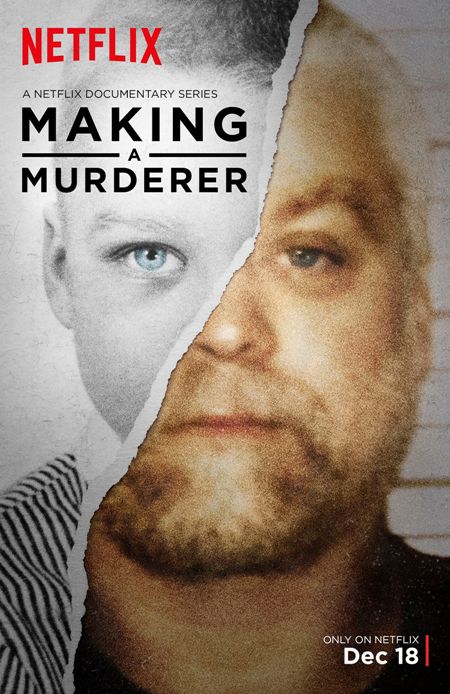
2015 was a good year for long-form documentaries about criminal justice, from the smashing success of the Serial podcast to HBO’s crime solving (?) The Jinx. But the cream of the crop has to be the Netflix series Making a Murderer. That’s partly because it’s infinitely bingeable, where the others weren’t, but that’s also because it’s got a hell of a story to tell

The story, writ broadly (it’s over 10 hours long, after all) is this – In 1985 Steven Avery is convicted of attempted rape in Manitowoc, Wisconsin. He maintained his innocence and, 18 years later, DNA proved him right (while identifying the real culprit to boot). Released from prison, Avery became a shining star in the exoneration world, a poster boy for needed reforms of the criminal justice system. Then, just when changes were about to be made, he was charged and convicted of an even more heinous crime – murder. As in 1985, Avery maintains his innocence, but so far, hasn’t been able to prove it.

But wait, there’s more. There’s a back story involving Avery’s relationship with the Manitowoc County Sheriff’s Office. It was responsible for putting him away in 1985, ignoring evidence pointing to the real perpetrator in the process. It ignored signs in the mid 1990s that suggested Avery was innocent. And, most important, the office and several of its officers were being deposed as part of a lawsuit about Avery’s conviction at the time the murder victim, Teresa Halbach, went missing.

Thus, rather than telling a story about how a man who was wrongly imprisoned for two decades might have been turned into a killer, the film makers (with a generous assist from Avery’s lawyers) instead tell a tale of a man who wrongfully convicted twice. The first time, via more negligence than malice, but the second time by a deliberate frame up.

There’s also the story of Brendan Dassey, Avery’s slow-witted teenage cousin, who was also convicted of participating in Halbach’s murder. The entire case against Dassey consisted of a “confession” given by Dassey that’s almost a paradigmatic example of how skilled interrogators can get the answers they want, regardless of how truthful they really are. The overriding sense at the end of things is that Brendan, at the very least, had nothing to do with the murder.

I’m not sure they can make the case that Avery was framed. But what the Making a Murderer does is to highlight a lot of troubling issues in the criminal justice system. They’re not things that are new to those of us who work there every day, but they’ll shock some lay people. At least I hope they do.

The first thing that pops up is investigative and prosecutorial tunnel vision. That is, once cops know they have the “right guy,” they focus entirely on convicting him, regardless of evidence that might point to another suspect. Case closed, stat achieved! That’s most obvious in those in the system who, even after DNA cleared Avery, refused to concede they’d gotten the wrong man. This is fairly common in exoneration cases. People are so wedded to the position that they were right that they can’t accept they were wrong. Confirmation bias can be a real monkey on one’s back.

Next there’s the way that the prosecutorial apparatus protects itself from accusations of wrongdoing. To its credit, the Wisconsin AG’s office did an investigation of Avery’s 1985 case after his exoneration. The investigators who were deposed in Avery’s civil case said some pretty damaging things, mostly about the kind of tunnel vision I mentioned above. The final report, however, was a whitewash, which is par for the course. Misbehaving prosecutors are rarely punished, or even called out by name when courts find they’ve misbehaved.

Brendan’s story combines two current tropes of criminal defense, a coerced confession and horrific defense lawyering. We see some of Brendan’s taped interview with police, but we also hear lots of phone calls with his mother while he was in jail. The upshot of all this is that he had no idea what he was doing, was trying to please the officers, and almost certainly didn’t have the role in the murder he ascribed to himself (if he had any at all). Again, this isn’t unusual – while all cases of DNA exoneration have a false confession rate somewhere around 20 percent, for juveniles that goes up to over 40 percent. Let that sink in for a moment – in almost half of juvenile exoneration cases, the juvenile confessed to a crime he didn’t commit.

What’s worse in Brendan’s case is that one of the his false confessions was obtained by his defense team! His second appointed lawyer declared his client guilty before he even met him and apparently was trying to make him the best guilty pleader and cooperator he could. That backfired, spectacularly, giving the prosecution extra ammunition to use against him at trial. You’ve heard of lawyers who are asleep during their client’s case? Maybe, sometimes, that’s the lesser of two evils.

Of course, to hear the prosecution tell it, there is no such thing as a “false” confession. During the closing argument in Brendan’s case the prosecutor told the jury that “innocent people don’t confess to crimes they didn’t commit.” As the numbers laid out above show, that’s clearly false. While a lay person might be forgiven for thinking that, a lawyer in the 21st century shouldn’t. If the prosecutor wasn’t outright lying, he was so out of touch with current research on false confessions that he should have his license pulled.

Avery’s trial had a whopper from the prosecutor in closing argument, too, in the form of the declaration that “the presumption of innocence applies to the innocent.” That’s wrong on a couple of levels. Theoretically, of course, everyone – innocent, guilty, and in between – is entitled to a presumption of innocence. It’s the prosecution’s job to rebut that. If it can’t, the defendant goes free – regardless of whether, factually, he’s guilty or not.

But he’s also wrong practically, for a very different reason. That’s because, practically (in my experience), there is no presumption of innocence. It’s a myth people buy into to make themselves feel better about how the world works, like Santa Claus or God. In truth, lots of people think if you’re charged with something, you must be guilty of something. Judges can instruct jurors otherwise, but it’s a hard bias to crack.

Speaking of bias, I certainly have one that I bring to Making a Murderer. Being a criminal defense lawyer for 16-plus years will do that. And make no mistake, the filmmakers have a viewpoint and are making an argument. This is not an even, balanced, tell all sides documentary. It’s a polemic, meant to stir passions. Whether it succeeds in convincing that Avery is the unluckiest man on the planet, being wrongfully convicted for two separate crimes, is unclear. But if it riles people up enough to pay attention to the issues the case raises, that’s good enough for me.

MakingaMurderer

Unmasking Judas

Since the time I wrote this post in 2014, Big Big Train staged a set of fairly rare live gigs which, thankfully, were recorded. They’ve been sharing the results on YouTube, the second of which was “Judas Unrepentant.” Sounds like a good enough excuse for me to repost this. Watch, listen, read, and enjoy!

It took a while for Big Big Train’s The Underfall Yard, released in 2009, to grow on me.  It’s successor, English Electric Volume One still hasn’t*, for whatever reason, with the exception of one track.  It’s a song about something that always strikes me as fascinating – art forgery.

“Judas Unrepentant” is about a guy who forges art, but does it in a very clever way.  Rather that churn out reproductions of known classics, he has a different scheme:

Establishing provenance
Acquiring old frames with Christie’s numbers
Then Pains a picture in the same style
Specializing in minor works by major artists

It’s quite brilliant, actually.  Reminds me of a story I heard Rick Nielsen of Cheap Trick tell about their early days – where every other bar band played the radio hits by Zeppelin or The Who, they’d learn the B-sides nobody paid much attention to, so it sounded like original material (although they never passed it off that way).

I always wondered if the song was completely fictional or inspired by a real forger.  Last night, I think got the answer, thanks to a 60 Minutes piece on Wolfgang Beltracchi.  As the setup explains:

Wolfgang Beltracchi is a name you may never have heard before.  Very few people have. But his paintings have brought him millions and millions of dollars in a career that spanned nearly 40 years. They have made their way into museums, galleries, and private collections all over the world.  What makes him a story for us is that all his paintings are fakes. And what makes him an unusual forger is that he didn’t copy the paintings of great artists, but created new works which he imagined the artist might have painted or which might have gotten lost. Connoisseurs and dealers acknowledge that Beltracchi is the most successful art forger of our time — perhaps of all time. Brilliant not only as a painter, but as a conman of epic proportions.

Now, the song is not Beltracchi’s story.  For one thing, the song indicates that its hero wanted to get caught:

His time bombs are in place
And anachronisms
Clues pointing to the truth
If ever they are X-rayed

It’s clear from the story that Beltracchi didn’t want to get caught, which he did.  He was sentenced to six years in prison and his wife/codefendant to four.  As for how he got caught?

But then in 2010, he got busted by this tube of white paint.

The Dutch manufacturer didn’t include on the tube that it contained traces of a pigment called titanium white. That form of titanium white wasn’t available when [Max] Ernst would have painted these works and Beltracchi’s high ride was over.

Which is interesting, because in the song, our hero:

Wrote legends in lead white
to trick the experts
And hoodwink the trained eye

Coincidence?  Could be.  But Beltrachhi’s story must have been in the news in Europe sometimes before “Judas Unrepentant” was written, so it makes sense that one served as inspiration for the other.

One thing I will say for the song is that is provides something the 60 Minutes piece doesn’t, which is answering why go through all trouble?  Beltracchi is a staggeringly talented guy.  Presumably he could have been a successful artist under his own name, so why all the fraud?  “Judas Unrepentant” has an answer:

He’s painting revenge
Embittered by lack of success

* * *

Expressing contempt
For greedy dealers
Getting rich
At the artist’s expense

Revenge as the long con.  I like it, although it all comes to a tragic end, sadly.

I think what makes art forgets so interesting is that they tend to poke a finger in the eye of the art world, challenging its aesthetic bona fides and pointing out how, so often, people only care about the name attached to a work, not the work itself.  To that end, I applaud this collector:

This $7 million dollar fake Max Ernst is being shipped back to New York.  Its owner decided to keep it even after it had been exposed as a fake. He said it’s one of the best Max Ernsts he’s ever seen.

Because, in the end, the important thing shouldn’t be whether the signature on the bottom makes your friends jealous, but whether the art moves you and makes you think about it.

* The similarly named English Electric by OMD, however, grabbed me right away, for what it’s worth.

This post originally appeared at my old blog on February 24, 2014.

Why I Love The Knick

One of the side effects of living in the Golden Age of Television is that there’s so much good stuff out there it’s just a fact of life that some really good shows get overlooked. Take, for example, The Knick, which is two episodes into its second season run. Helmed by Steven Soderbergh (and created by Jack Amiel and Michael Begler), the show has all the hallmarks of being one of those everybody-talks-about it cable shows. Only it isn’t.

I can fathom a couple of reasons for this. For one thing, Friday nights have never been great for struggling TV series (ask Joss Whedon). For another, Cinemax has yet to have its critical and cultural breakout series like HBO and Showtime have. People might be forgiven for still thinking of it as Skinamax first and foremost, which probably doesn’t help the show’s profile.

Which is a shame, because The Knick‘s become one of my favorite shows on TV right now. Part of that’s down to the wonderful world building that’s inherent in a show that’s set in 1900-1901 (I discussed something similar in an old review of Mad Men). But part of it’s down to one element of the show that’s a complete and utter anachronism – the score.

Cliff Martinez – a long-time Soderbergh collaborator – could have taken the safe route and used music of the period (or new music styled to sound like the music of the period) as a means to deepen the world building. Instead, the score is entirely electronic, full of burbling sequencers and noises that weren’t even contemplated in 1901, much less actually heard. It shouldn’t work, but it does, and brilliantly.

I think that’s because the story of The Knick is one of cutting edge advancements in science, even if it’s science that’s more than 100 years old and sometimes hilariously wrong. Even though electronic music has been around in popular culture for decades it still sounds vaguely “futuristic.”

But it also allows Martinez to do things in service of the story telling that would be impossible with a more traditional score. Brandon Nowalk, writing about the latest episode at the AV Club, describes one example. It involves a regular character’s father, a preacher, who comes to visit from home (which is West Virginia, if I’m not mistaken). Naturally, he winds up preaching:

He talks about the diversity of New York City and how all its exotic peoples have as much to learn from them, good God-fearing Christians, as they do from the exotic peoples. Okay, he speaks in tongues a few times. It’s a ballsy move after calling actual Earth languages he’s overheard on his visit “strange tongues from Babel.” He claims it’s God speaking through him. And then composer Cliff Martinez, whose work is often beyond my ability to express, ramps up the theremin sounds like it’s a classic sci-fi horror scene. AD invites the congregation to sing, and we pan back to Lucy, joining in with everyone else without hesitation. Soon the spooky sounds drown out the singing so we’re watching a silent group move in unison to the oooh-OOOH of the theremins and thump-thump-thump of the beat. There’s no clue in Lucy’s performance as to what could be the matter, but maybe that mindless conformism is the point, a demonstration of AD’s power. It’s a thrilling scene that somehow remains essentially elusive.

You can see that scene for yourself here. It’s just one example, but it’s a really good one. And while that’s only one aspect of a show that’s really hitting on all cylinders, it’s the one that most clearly sets it apart from its peers.

Why The Muppets Doesn’t Work For Me

Last week, I had a chance to watch the pilot of the newest version of the Muppets, this time a prime-time sitcom called (creatively) The Muppets. In many ways it’s a setup taken from the beloved Muppet Show of the 1970s – our gang gets together and puts on a show every week, with backstage wackiness providing grist for the comedy mill. But something didn’t sit quite right about it with me:

There were a few good jokes, and it’s always good to see Dr. Teeth and crew back on TV, but the whole thing just didn’t work for me. I thought about it for a bit and finally figured out why. There’s one important difference between the classic Muppet Show and the new one, one that kind of ruins the whole thing for me.

If you look closely at the old Muppet Show, you’ll notice that it doesn’t take place in our world. Obviously, that’s true of any TV show with talking puppets, but what I mean is that it’s a Muppet world there – we’re just invited in every week. Look at the audience – it’s all puppets! It’s truly a fantastic thing, something that exists outside of reality and the humdrum of the real world. Human guest stars were clearly playing along for the fun of it.

By contrast, The Muppets is set in our world, modified slightly by the presence of a late-night talk show hosted and run by felt creatures (sort of like the kiddy morning show in that puppetastic episode of Angel). We’re not visiting their madcap, zany, confusing world – they’re visiting ours. And ours, well, kind of sucks in comparison.

I agree with David Sims, writing in The Atlantic:

But entirely gone is the manic energy of The Muppet Show, the classic behind-the-scenes formula that gave Jim Henson’s creations their big break. In its place is sardonic drudgery that makes for very unenjoyable viewing.

Dan Caffrey at the AV Club kind of hits on the same thing, from a different direction, when discussing a scene from that first episode:

Sometime later, there’s a flashback to the demise of Kermit and Piggy’s relationship . . .. The breakup itself isn’t anything surprising—Kermit has, quite fairly, grown tired of dealing with the constant bouts of vanity, jealousy, and anger from his famous partner—but then something unexpected happens. After he delivers the bad news, the handheld camera hangs on Piggy, shaking ever so slightly. Her breathing gets labored, her snout scrunches up, the camera continues to wobble. It looks like she’s going to cry—not the dramatic sob she’s done plenty of times in the past to get what she wants, but a stoic, painful, honest-to-goodness cry. Suddenly, we’re viewing Miss Piggy in a sympathetic light, thanks to the use of a convention we’ve seen in so many mockumentary breakup scenes before. Her character expands into something much more complex and—I’ll just come out and say it—human.

I don’t disagree with the technical aspects of the scene – they’re well done, even moving. But I don’t care because I don’t want Muppets who have real world problems. That’s the whole fucking point of the Muppets in the first place, isn’t it? If you’re telling stories that could just as easily be told with live people in their place, it seems kind of useless.

Let me say, at this point, that I’m talking strictly on a subjective level of “quality” here. The calls in some quarters for ABC to cancel the show because it’s “indecent” or whatever are just silly. Muppets dealing with some real world situations does not equal smut. You want smut with puppets? I’ll give you smut with puppets:

I’m clearly in the minority on this, but that’s OK. Over the years I’ve concluded I’m very hard on reboots for jettisoning what I see as the essential elements of the property being revived. Don’t care for Daniel Craig’s Bond flicks because, to me, they seem like generic action flicks, without the charm of the Bond flicks I grew up with. Don’t care for JJ Abrams’s reboot of Star Trek, which takes a thoughtful sci-fi property and turns into yet another excuse to blow shit up while being cool (I have more hope for his take on Star Wars, however). Just chock this up as another example.

Weekly Watch: Breaking Bad

A little while back I confessed that, although I had enjoyed the first season of Better Call Saul I had not seen a minute of that show’s mothership, Breaking Bad. It wasn’t that I was unaware of it or avoiding it out of some hipsterish notion of cool. It just got past me (why must there be so much good TV on at the same time on the same night of the week?). But I read the hype and knew the show’s reputation. Now I’ve gone back and done my due diligence. Did it live up to the hype?

Abso-fucking-lutely.

I usually try to push back against the hype on things like this, at least a little bit, but, damn, I can’t really do it here. Breaking Bad is everything great storytelling should be, tightly plotted and filled with well drawn, memorable characters. Moreover, it uses the visual and audible aspects of television in ways that most shows never dream of.

If you’ve been under a rock for the past few years, Breaking Bad is the story of Walter White, a high school chemistry teacher who turns to cooking methamphetamine (with the help of a former student turned junkie and small-time dealer, Jesse Pinkman) for money after being diagnosed with cancer. What plays out is Walt’s fall into ego-driven evil, as he finally finds personal satisfaction in his nearly pristine blue meth. It’s a reverse of the typical redemption arc where the bad guy comes good. Walt begins good (sort of) and goes very very wrong. It’s not uplifting stuff, but it’s riveting.

It’s not perfect, of course. It drags at times (particularly when it involves the long but inevitable rehab of Walt’s DEA Agent brother-in-law). Walt is occasionally too much James Bond or McGyver. And the entire premise – that ultra-pure meth would be that much more valuable – is dubious. But those are minor quibbles and, in the case of the last one, a great dramatic device for springing Walt’s ego upon us.

I suspect Walt might agree with that other great thinker, Zaphod Beeblebrox, that if “there’s anything more important than my ego . . .I want it caught and shot right now.” Starved for personal reward and nagged by the staggering success of former business partners, Walt repeatedly passes up moderately safe ways out of his life to as to continue his ego stroking meth cooks.

Equally important as a character, although it’s not played by any particular actor, is the War on (Some People’s) Drugs. Not only do we see both sides at play, but we see how inevitable it is that the drug trade continues on all the time. One of Walt’s ego problems is that when he tries to get out he finds out that others are selling blue meth that’s not as pure as his. It’s a personal insult. But dealers are going to sell whatever they can to those that want to buy, of which there will always be a supply. A war on what is essentially the human desire to soothe their lives will always be bound to fail.

While I came late to Breaking Bad proper, I read a lot about it while it was on the air, or shortly after it wrapped up. I noticed how images, phrases, and other parts of the series were seaping in the culture. It’s a TV show, right? So, of course they did. When a parent freaked out at finding Breaking Bad action figures on a store shelf somewhere, I chuckled and rolled my eyes.

But now, having watched the whole thing, the impact of the show on the culture kind of disturbs me. People know that, whatever its dramatic qualities (which are substantial), the show is basically about horrible people doing progressively more horrible things. Given that, things like producing a Breaking Bad vodka or Aaron Paul’s repeated attempts to capitalize on being Jesse Pinkman or the plans to open up a real Los Pollos Hermanos really rubs me the wrong way. It says something about our popular culture and the nature of celebrity and I’m not sure it’s good.

None of which takes away from the achievement of Breaking Bad (including Paul – Pinkman is, perhaps, the most sympathetic character, who consistently struggles with what he’s done and has so little idea of a better life that he can’t take any chance to find one). It is one of the gems of the current Golden Age of TV.

breaking_bad_css3_svg_raw

Weekly Watch: American Crime

With a name like American Crime you’d be forgiven for thinking that the ABC show, which just wrapped up its debut 11-episode season, was another in the long line of TV shows about heroic cops nabbing bad guys. They’re popular for good reason – even I, the criminal defense lawyer, am not immune to their pull – but we hardly need another one on TV.  Good thing, then, that American Crime isn’t like anything else on TV.

That’s down to its creator, writer/director John Ridley, last seen collecting an Oscar for the screenplay to 12 Years a Slave. Rather than focus on the crime itself and the “solving” of it, the show takes one crime – a murder (nearly a double murder) in a nondescript California town – and shows how it impacts those caught up in its wake. Not only is that the focus, but Ridley showed that he didn’t really care about any traditional resolution to the case at all.

As a result, the focus is on several families dealing with the impact of the crime – the victims’ parents, the sister of the main suspect, the foster family of his heroin addict girlfriend, and the would-be family of the state’s first main witness. Issues of race, class, ethnicity, and gender bubble through the season, spurred by the stress brought on by the murder and its prosecution.

Amongst all these, the most fascinating was the Gutiérrez family. Tony, the younger of two children, unknowingly gets caught up in the fringes of the murder – he lent a car to a guy who was involved, but had no idea of it at the time. At the urging of his father, he cooperates with the police. This leads to him being arrested, charged as an accessory (mostly as leverage, it appears), and sent to juvenile detention. What happens from there is as heartbreaking as it is inevitable – treated like a criminal, like a thug, Tony becomes one, committing his own heinous act once released.

American Crime doesn’t look like anything on TV, either. A lot of the editing and camera work is intentionally disorienting (often we focus on the person being spoken too, rather than the speaker) and keeps you on your toes. Breaking Bad (Which I’m working through now, finally) may have been cinematic, but not like this. The closest precedent I can think of is Homicide: Life On the Street, which introduced TV to the hand held cinema verite style. Given that the technical flair is done in service of a bunch of fantastic performances and American Crime was always a fascinating, if grim, watch.

All that being said, the show’s greatest asset was also its greatest weakness. By stubbornly refusing to deal with the facts of the case itself, it was difficult to fully comprehend why the various parties involved were behaving the way they were behaving. How are we to judge the initial suspect’s reaction to being imprisoned and being turned into a political prop without having some idea whether he actually did it? He knew, after all. The end result is a fascinating exercise, but it rings a little hollow.

Regardless, I know the show didn’t have wonderful ratings, so kudos to ABC renewing it for a second season. With a new case on the horizon and a second chance to tweak the formula, I expect something even better.

american-crime

Weekly Watch: Justified

I should not like Raylan Givens. He is precisely the kind of rogue cop trope that drives me so completely nuts, not only as a viewer or reader but as a criminal defense attorney. You know the type – he can’t play by the rules because he’s just so righteous for tracking down bad guys. In spite of repeated violations of the law in ways that should end his career (or at least torpedo many cases he’s worked on), everybody kind of shrugs and winks because, hey, in the end he got the bad guy.

Nonetheless, I like Raylan. And, therefore, I liked Justified, the FX series based on the stories of Elmore Leonard, who created Raylan. That DNA is a lot of the reason Raylan works. He’s interesting enough as a character, a man sort of out of time with the modern world, that his inability to follow the rules kind of makes sense. Plus, when you put dialogue of the quality that populated Justified for so many years in his mouth it absolves a number of sins.

Which is not to say that Justified was ever a one-man outfit. It never could have succeeded if the other characters weren’t as well drawn and executed as Raylan. That goes not only for the major recurring characters, such as the outlaw yin to Raylan’s yang, Boyd Crowder, a racist drug runner with occasional bouts of preaching and speechifying, but with all the supporting characters. Bad guys, too. Justified had the best, most interesting and complex bad guys this side of The Wire.

Another thing Justified had going for it, which it also shared with The Wire (and all of David Simon’s Baltimore stuff, really) is a setting that you don’t see anywhere else on TV. Harlan County was already etched onto the national consciousness as a hardscrabble coal mining region (thanks largely to this award-winning documentary) before Justified came along. But the show made the most of that setting (even though it was shot in California) and what it meant for the people who lived there. Maybe I just liked seeing it because it could have very easily been set across the border in West Virginia, with Raylan working out of my courthouse in Charleston.

Justified never quite got its due while it was on the air. Most critics loved it, but it was never quite able to break through to that top tier of awards. Part of that’s timing. This is a golden age of TV, after all, and it’s hardly Justified’s fault if it was lost in the shuffle to the likes of Breaking Bad, Mad Men, the HBO stuff, and it’s own stable mate The Americans.

Justified was not groundbreaking and maybe not all that deep, but it was damned entertaining. It seemed to take pride in being smartly entertaining, too. I think Elmore would be proud.

Justified