Weekly Watch: The Force Awakens

I’m a sci-fi/fantasy geek writer – you thought I was going to pass this one up?

Unless you’ve been under a rock for the past two years, you know that last week brought the rebirth of the Star Wars franchise with The Force Awakens, the biggest movie event in – well, in ever, I think (I’ve never stood in line for a movie in my 42 years, much less for a mid afternoon Saturday matinee). This was the first of a new trilogy, the first since Disney bought the franchise, and the first to be made without the input of George Lucas. Could it bear the weight fandom has put upon it?

Short answer – very much yes.

Longer answer . . . well, read on (trying to be as non-spoilery as possible).

The good news is that the scripted, penned by (among others) West Virginia native and Empire Strikes Back scribe Lawrence Kasdan is strong where it counts most, which is in the actual interaction of people (well, “beings,” I guess) on screen. Not only are the characters, be they new or old, given interesting things to say and do, but J.J. Abrams manages to do something that Lucas has lost all talent for – getting good performances out of actors. You care about what happens to the people on screen, which goes an awful long way.

The effects, as promised, harken back to the first trilogy rather than the “throw all the CGI things on screen!” approach of the prequels. In fact, it’s quite fun to see the sleek, modern interior of the First Order TIE fighters contrasted with the decidedly retro (dare I say analog?) controls of the Millennium Falcon. When there are battles (and there are!), they’re refreshingly gritty and small enough that we can keep track of what’s going on (there’s one scene in particular where the camera keeps ground action in frame while tracking what a particular pilot’s doing in the air – great stuff).

As for the overall story, it’s a bit of a letdown. If you’re a fan of the series – hell, even if you’ve only seen Star Wars itself, it will seem awfully familiar. It’s not a carbon copy, which is best seen in the contrast between the two characters who begin things on a backwater desert planet, Luke and Rey. Luke wants nothing more than to get his ass off Tatooine in the beginning of Star Wars. Rey, on the other hand, wants nothing more to hang around on Jakku. But the beats are largely the same and as things wind to the big finale, the voice of Peter Griffin might pop into your head.

That’s not entirely a bad thing. The big ask of The Force Awakens was to wash the stench out of our mouths from the prequels, as well as set up two more movies (at least). It succeeds in that, partly by reassuring fans that it’s going back to its roots, that everything’s in good hands. It’s not the greatest movie ever made. It’s not the best Star Wars movie ever made. But it’s damned good and makes me look forward to whatever comes next.

Merry Xmas, everybody – Star Wars is back!

star-wars-force-awakens-official-poster

Weekly Read: Calculating God

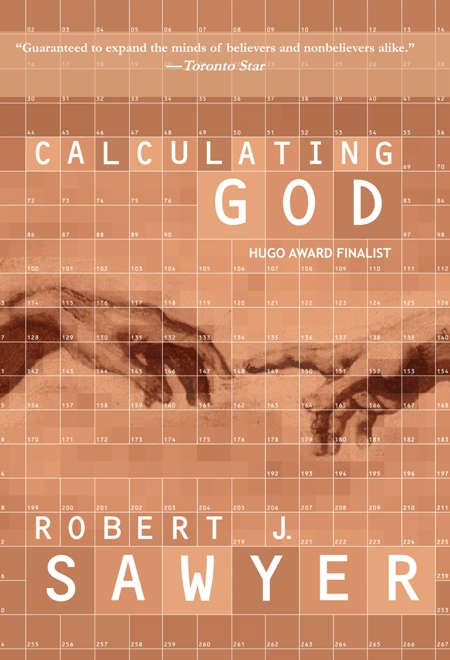
It’s a hell of an opening for a book. A six-legged alien lands on earth. He doesn’t land in Washington, DC in front of the White House. No, he lands in Toronto in front of a museum. And he doesn’t ask the nearest passerby to “take me to you your leader,” he goes to the front desk and inquires of the security guard if he might speak to a paleontologist.

So begins Calculating God, Robert Sawyer’s twist of one of the most beloved tropes in science fiction.

That trope is the alien who comes to earth to share the advanced knowledge of his species with humanity, often for good, though sometimes for ill. Think Klatuu from The Day the Earth Stood Still or the Overlords of Arthur C. Clark’s (and SyFy’s!) Childhood’s End. Hollus, the alien in question for Sawyer does the same, but with a twist – she’s come to share the Good News.

Well, not quite. But she’s looking for God. Actually, she’s a believer, certain that there was an intelligent designer. Her cancer-riddled human counterpart, Tom Jerrico, is not. Thus the usual frame of received wisdom from aliens is flipped. Thus ensues a lot of talking, of the vaguely scientific and philosophical variety, about the possibility of an intelligently designed universe.

To be certain, this is not a serious exploration of the issue. That’s because Sawyer stacks the deck, adding in a few additional “facts” known to the aliens but not us that pushes well beyond the basis for modern intelligence design or “Goldilocks” theorists. Rhetorically it’s a cheat, but dramatically it’s quite interesting. Tom, after all, is a man of science as well as an atheist and skeptic. If anyone should be open to new evidence about a feature like the existence of God, it would be him (contrary to popular belief, most of we atheists don’t claim to know for certain God doesn’t exist, just that we haven’t seen proof of his/her existence). Given that, it’s silly for people to get upset about the arguments presented and Tom’s eventual “conversion,” given that, to paraphrase MST3K (talk about resurrections!), it’s just a book and folks should really just relax.

In this sense, Sawyer’s book hasn’t aged well. In 2000, when the book came out, it might have been possible to give the benefit of the doubt to those arguing “intelligent design.” However, just five years later in a landmark court decision, it was revealed that intelligent design purveyors are simply religious folks trying repackage creationism into a “science” they can shove into public schools. The hilarious find and replace evidence in that case speaks for itself.

Not that those people are interested in the same kind of designer as the aliens Sawyer constructs. Their designer is just another advanced alien intelligence, one so far ahead of the rest of us as to appear magical (kind of like the Vorlons from Babylon 5, now that I think of it). The aliens aren’t interested in saving souls, condemning sinners to hellfire, or purging heretical ideas. That the book ignores that this is true for so long is one of its primary faults.

But far from its only one.

For one thing, the book is awfully talky. Which makes sense, as the main interest is in Hollus learning about Earth’s history and how that plays into her theories about a created universe. But it can be kind of dull and doesn’t have any real tension to it. In addition, Tom is a pretty bad foil for Hollus (he turns Occam’s Razor from a guidepost into dogma) – more stacking of the deck. For most of the book the only breaks are Tom’s maudlin asides about his cancer, which don’t add much to things.

Sawyer does something about this in the last third of the book, but in incredibly ham-handed fashion. He introduces to Arkansas Christian terrorists – one is even named Cooter (the other is JD – thanks Robert!) – who bomb abortion clinics and, eventually, shoot up a bunch of priceless fossils at the museum. Putting to one side how these rednecks ex machina manage to get into Canada after first blowing up a clinic in Buffalo (but, remember, this was before 9/11), their stories end when they’re both killed at the museum, so they come and go so quickly and without any real impact that you’re left wondering just what the point was.

The second attempt at action fares better, but makes you wonder why it hadn’t come earlier. A celestial event that should destroy life on Earth (and the other alien worlds) is blocked, literally, by the hand of God, leading the aliens to pick up and head to that part of space. Naturally, cancer-ridden Tom comes with them – who wants to spend your last days with your loving prop family, anyway? What plays out frantically in the last bit of the book might have been interesting with some more room to breathe, but it’s so rushed that you just don’t care.

The jaunt to the stars also highlights how the alien technology conveniently moves at the speed of plot. Yes, they’re advanced enough to travel at near light speeds from star to star. No, sorry Tom, they’re not any more advanced than late 20th century Canada when it comes to treating cancer – not only do they not have a cure, they don’t even have a better way of treating it. But, good news! In spite of the fact that you’re lurching toward your death bed, they can put you in suspended animation (twice!) for the space trip! It just doesn’t make much sense.

All this makes the book sound worse than it is. It’s a fairly quick read, has a fun premise, and raises a couple of interesting ideas. It could have been a lot more engaging and epic, however.

CalculatingGod

Weekly Read: Machine Man

A few weeks ago I wrote a review of the new 3rDegree album, Ones and Zeroes Volume 1, which is about great leaps forward in life extension technology, overseen by a powerful corporation, that ultimate results in the uploading of human consciousness into a computer. I have no idea of the guys in the bad are familiar with Max Barry’s Machine Man, but they really ought to talk.

Two key refrains from Ones and Zeroes kept running through my head while reading Machine Man. One is the plea, “tell me what it means to be human?” The other is the observation that “life is needing more.” Good science fiction, of course, deals squarely with “what it means to be human” and Barry does just that in Machine Man.

Dr. Charles Neumann – Charlie to those lesser beings he allows to get within speaking distance – is a research engineer at Better Future, the kind of soulless, mega corporation that would have to have a name like that (it reminds me, over and over, of Veridian Dynamics from the all-too-short-lived series Better Off Ted). One day he loses a lower leg in an industrial accident. He gets a prosthetic leg, but isn’t much taken with it (he’s much more taken with the protheticist, Lola). As an engineer is apt to do he starts  tinkering, building a better fake leg. So good, in fact, that he decides he’s really being held back by his other “good” leg. So off it comes.

Rather than being locked away in an asylum or left penniless and unemployed because of his antics, Better Future sees Charlie as a visionary, someone who can open up a whole new market for them selling medical products to people who aren’t actually sick. It’s a neat setup, but one that only really works because of a decision Barry makes that is both fascinating and limiting.

Machine Man is told entirely from Charlie’s point of view. We are in his head (or whatever passes for his head) from beginning to end. This works really well in putting us  inside the mind of someone who comes up with a nice justification for a desperate act and follows that down the rabbit hole. On the other hand, it means we’re stuck with Charlie. In addition to being kind of a dick (we will tell you what’s wrong with everything, including you), Charlie is incredibly naive. He never thinks twice about the broader problems that Better Future’s plans may cause – indeed, he frequently protests that he only ever wanted to build parts for himself and fuck anybody else. That allows Better Future to have a hold over Charlie that a more thoughtful character would be able to shake. It’s not fatal to the book, but it is kind of aggravating.

To Barry’s credit, the devotion to Charlie’s POV means there are no bits of the narrative that devolve into a pro/con argument about Charlie’s augmentation. The argument is there, but it’s more subtle and comes from his interactions with Lola and the fact that we can’t get away from his very selfish and limited view of the world. It’s argument by example, rather than rhetoric, and works pretty well.

Which makes Machine Man seem like a dour trek. In fact, it’s very funny. Darkly funny, but still. The opening chapter, in which Charlie’s resolve to find his cell phone (without which he’d be lost) leads to the loss of his leg, is hilarious. It gets less so the further things go, but Barry never lets go of the fact that he’s telling a story that is absurd and getting more so the longer it goes on.

It’s not perfect. It’s just not believable that the goings on in Charlie’s lab – his army of assistants undergo quit the transformation – could have stayed contained within Better Future in the YouTube age. Someone would have talked or tweeted or Instagrammed and all hell would have broken loose. Barry gets away with a setting that’s almost hermetically sealed from the rest of the world. And it goes on a bit too long, with the emotional punch of a potential ending giving way to a happier conclusion.

Nevertheless, it’s a good read. One that’s bound to put music in your head, whether it’s this:

or this:

MachineMan

Weekly Read: A Consternation of Monsters

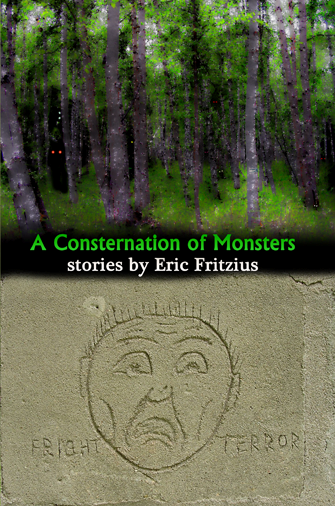
A group of crows is a murder. A bunch of lions hanging around is a pride. So what do you call a group of beastly, ghostly, ghoulish things all packed into one place? A consternation, of course.

In this short story collection Eric Fritzius introduces us to a whole host of supernatural creatures, some more monstrous than others. In fact, he does a really good job of weaving in stories full of humor and cleverness among the more serious and terrifying. It would be easy for a collection of monster stories to devolve into variations on the same them. Fritzius studiously avoids that.

In fact, my favorite story in the collection is a funny one, “. . . to a Flame,” which stars (although that’s not the right word) one of West Virginia’s native monsters, Mothman. Particularly, it involves a local who accidentally kills one. There are problems of disposal and the lurking possibility of a visit from Men In Black, but the heart of the story, for me, is the conversation between the shooter and the narrator in which the shooter goes to great lengths to explain his error.

My other favorite is less directly funny, but has a bit of comedic irony at its core. In “The Wise Ones” we meet an old woman and her dog who are, naturally, not quite what they seem. The story works so well because this mystical woman, when stripped of her powers, is still clever and ruthless (and, one suspects, has a killer sense of humor).

A pair of stories, “The Hocco Makes the Echo” and “Puppet Legacy” involve the same character in a different way. Aaron is a child in “The Hocco . . .” when the titular beastie makes its appearance. Then in “Puppet Legacy” we see an older Aaron who discovers a monster of an entirely different type in his own family. It’s interesting to see the two stories play off against each other.

Add to all that stories about the real fate of Elvis, the strangest boating disaster you’ve ever heard of, and a wolf with a view of some very human monsters and there’s a lot to sink your teeth into here. It being a short story collection some stories work better (as I’ve said before) and some just don’t land, but the ratio of what worked for me versus what didn’t was very high.

A Consternation of Monsters is well worth the time if you like weird tales filled with weird creatures. Just don’t read it alone with the lights off!

Consternation Cover

Weekly Read: The Water Knife

There’s a scene deep in Kevin Smith’s Dogma in which Rufus, the thirteenth apostle, explains to a credulous Bethany who she can be a descendant of Christ. “Mary,” she points out, “was a virgin.” Rufus explains that while it’s true Mary was a virgin when Christ was born, she was married to Joseph for an awful long time after that. Why assume she stayed a virgin? He concludes:

The nature of God and the Virgin birth, those are leaps of faith. But to believe a married couple never got down? Well, that’s just plain gullibility.

That scene popped into my head late in The Water Knife, the new novel by award winner Paolo Bacigalupi. It’s set in the American southwest, mostly Phoenix, Arizona, in a near future where climate change has displaced populations and fueled droughts that have made water the most precious commodity on earth. Life is pretty much lived to find water, either by scrambling with other refugees at a pump set up by the Red Cross or by being part of the upper crust that lives in high rise arcologies that are self contained recyclers of water.

It’s not the setup that’s the problem. Like any piece of science fiction there are certain things that are, to borrow Rufus’s term, “leaps of faith.” Bacigalupi isn’t leaping very far, to be honest. The world he creates is terrifyingly plausible, if not without its blind spots (the role of the federal government in all this, which still exists but allows states to war on each other, is never really explained). It’s rich, in a gritty, ugly sort of way and is fully convincing even if one might be able to pull at some of the details.

No the need for gullibility comes when the story requires us to believe that characters won’t behave like people or submit to the basic laws of biology.

There are three main characters in the book, united by a set of water rights with nearly mystical powers that could be a game changer for the whole Southwest. It’s pretty much a McGuffin, a genre appropriate version of Pulp Fiction’s glowing briefcase, but it does drive people to do some really awful things.

Before I go any further – this is really a brutal book. I’ve seen comments in various places from readers who just stopped and gave up at certain points. I don’t blame them. In addition to the horribles entailed in living in an arid, post-apocalyptic tableau choked with refugees and amoral operators, there are scenes upon scenes of pure savagery. In fact, each of the three main characters is brutalized pretty severely (and in detail). Yet they manage to shake it off, for the most part.

Said characters are Angel, the titular Water Knife, a local reporter named Lucy, and a teenaged Texas refugee named Maria. Angel is sent from Nevada to figure out what’s going down in Phoenix. Lucy is trying to do the same, hunting for a big story and trying to figure out what got a friend killed (and brutally tortured – detail we get second hand). Maria just wants to get out, constantly scrapping to figure out how to get north. They all orbit each other, though Angel and Lucy pair up about midway through the book for good.

And I mean “pair up” in the Biblical sense. The sexual activity between the two of them is so clichéd and obvious that it really disappointed me Bacigalupi went that route. Lucy has no reason to trust, much less desire, a man whose profession is strangling cities like Phoenix of their water (he has the book’s first scene, where he rides Apocalypse Now style in a chopper that attacks an Arizona city’s water plant). Nonetheless, she sleeps with him, because, why not?

She also betrays him, which sets up the true gullibility moment. As I said all three characters are brutalized (the women basically for fun, which says something). Angel’s turn comes when the car he’s sitting in is ambushed by his own people. He’s riddled with bullets and smacked in the head by an exploding airbag. Not only does that not knock him unconscious, he manages to crawl away, only to fall head-first into an empty swimming pool (an interesting recurring image of Phoenix). After all this, which should leave him bleeding profusely, concussed, and probably with a broken neck he’s miraculously saved by Lucy and some hand-waving med tech.

This is where, even in the oppressive Phoenix heat, my snowmen started flying. As I said, the other main characters also suffer horrible abuse and manage to shake it off, but not quite like this (a minor character is up and walking a few days after having his kneecap blown away!). Unless Angel is superman – and there’s been no suggestion he is – he shouldn’t survive. At the very least, he should be incapacitated for the rest of the book. After that, I simply couldn’t care what happened to these people.

That’s not true. I kind of didn’t care all that much about these people to begin with. Angel’s basically a gun for hire. Lucy wants a big story, but doesn’t seem all that motivated by anything else until the very end. Only Maria is really worth rooting for, which makes the rather abrupt ending work in a way that it probably shouldn’t have worked.

I loved The Windup Girl and have really enjoyed Bacigalupi’s short stories. Unfortunately, The Water Knife doesn’t measure up. That’s no crime, but it’s perhaps a missed opportunity. Worth a read, but not essential, and certainly not one to pick up if you’re looking to have your faith in humanity restored.

The Water Knife

The Dog Days of August Sale!

In which Maia, the One-Eyed Wonder Pup, speaks to you:

It’s August – the last hazy, sticky, hotter than heck days of summer. What better way to beat the heat than with a good book!

MaiaTalkstoYou

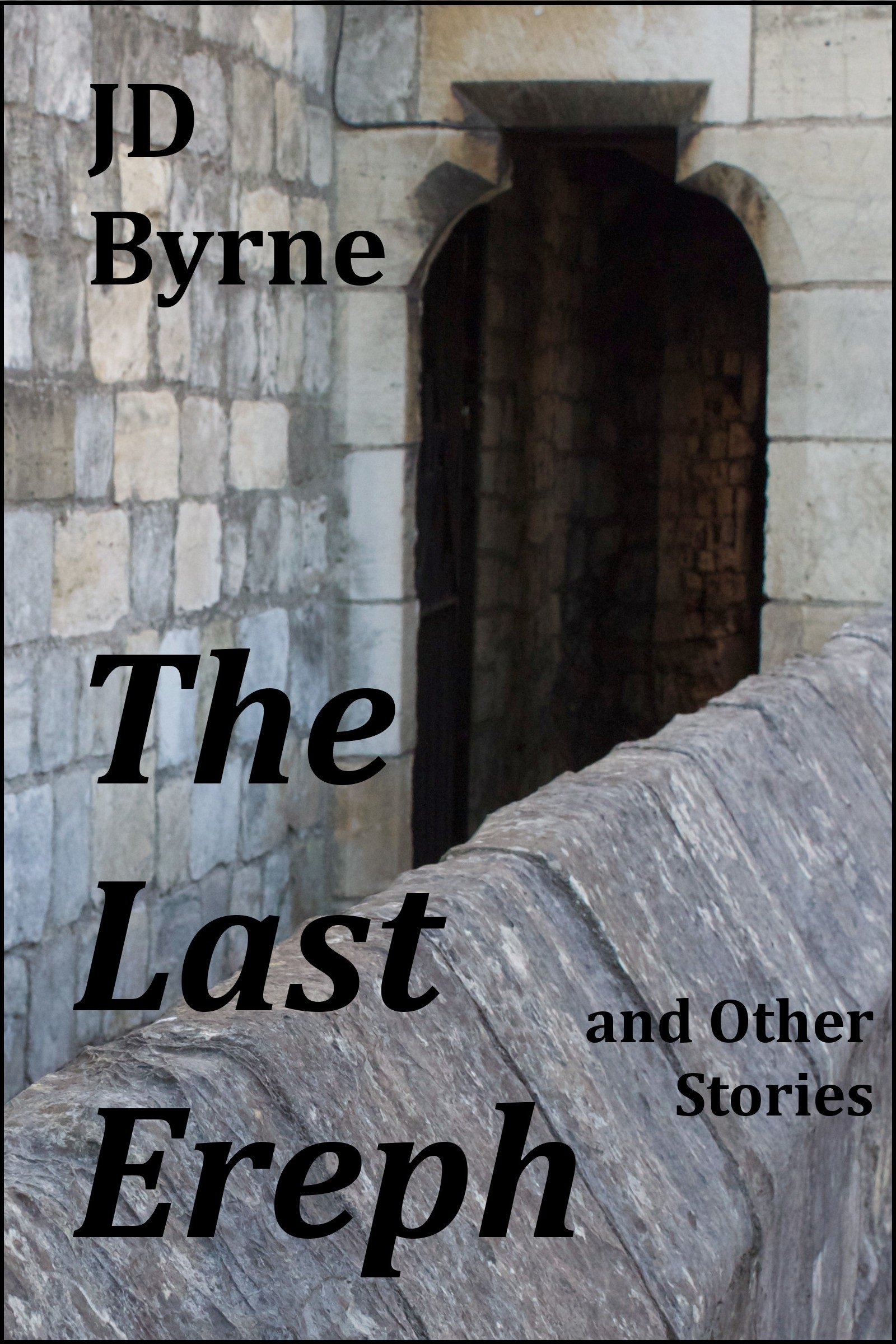
Better yet, how about a book full of stories that will take you anywhere but where you are! That’s The Last Ereph and Other Stories, a collection of ten tales of fantasy and science fiction. Go from mysterious verdant islands to a haunted lake in the woods and to eight other places. Well, OK, there is the one about the stifling heat and brownouts and a shady salesman, but still! It’s not where you are!

Final Cover Idea (KDP)

Only 99 cents on for Kindle, now until very early Monday morning. Tell ’em Maia sent ya’!

For more on The Last Ereph and Other Stories, including free samples, click here.

Weekly Listen: Ones and Zeroes: Volume 1

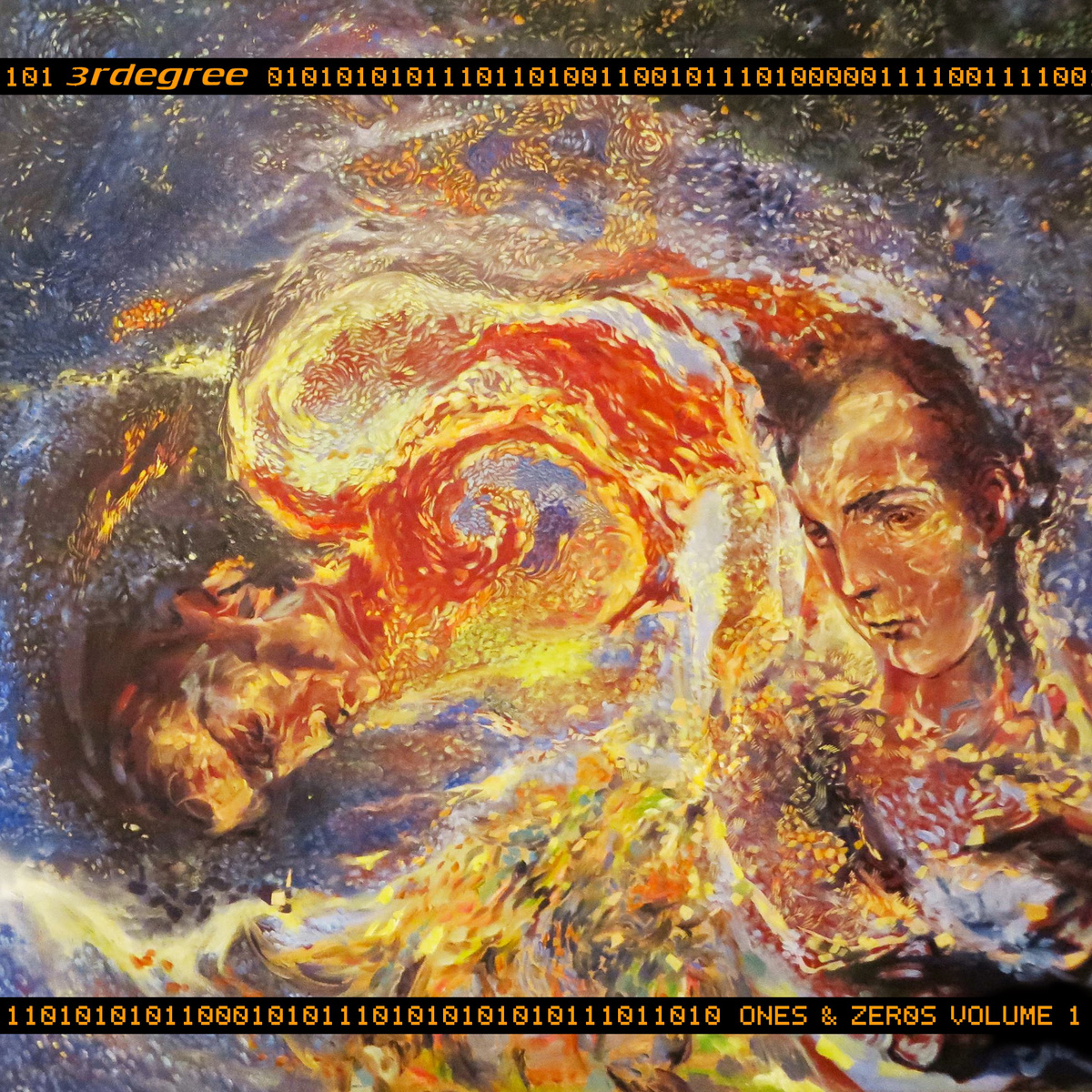
Since roaring back to life with 2008’s Narrow-Caster, 3rDegree has gone from strength to strength. Their 2012 effort, The Long Division, is one of my favorite albums. Does Ones and Zeroes: Volume 1 measure up and keep pushing the band forward? It’s too early to tell, but it keeps revealing great things on every listen.

The Long Division had a strong theme running through lots of it, but Ones and Zeroes goes a step further by being a full on concept album (part one of at least two, if I remember correctly). The concept revolves around a shady corporation, Valhalla Biotech, that sells a variety of life extension technology. As set forth in the band’s press release, the album “isn’t so much science fiction as it is a futurist album, expounding upon current trends in technology and leading them to their logical conclusion.” As regular readers know, just saying something isn’t science fiction doesn’t make it so. Ones and Zeroes is as sci-fi as they come, using advances in technology to explore our own humanity.

On the album that deals mostly with the question of what it means to be human? More particularly, what does it mean to be alive? If, as we hear over and over again, “life is needing more,” then the ultimate goal is to extend life forever. Along the way Valhalla goes from stocking “elixir centers” that extend “expiration dates” to realizing the dream of Ray Kurzweil – the uploading of the human mind into a computer where it could, theoretically, live forever.

Along the way, the band explores the various issues that would arise in this situation. There’s concern that this expensive tech will further class divides (there’s a voice over about the world’s oldest man watching his son die of old age) along with the idea that this might all be allowed under the theory that somebody will get there eventually (the Chinese, most likely), so “we” (whoever “we” are) might as well get there first. Most hilariously, the idea of a megacorp in charge of all this leads to the fact that, in “Life at All Cost,” the company tries to sell upgrades while peeling apart and scanning a client’s brain.

All in all, I get a strong Blade Runner vibe from Ones and Zeroes. Valhalla reminds me a bit of the Tyrell Corporation, whose motto, after all, was “More Human Than Human.” Is that where we are at the end of Volume 1? Seems that way. In addition, the need for more life echoes the demand of replicant Roy Batty that he “wants more life” as he kills his creator. So the concept has a lot of areas to explore and I’m sure I haven’t touched them all (I’m notoriously bad at sussing out album concepts).

But this is an album after all and none of that matters if the music is subpar.

Good thing that the music is up to 3rDegree’s usual high standards. The band has always walked a fine line between melodic accessibility and prog complexity, a mixture they’ve refined over the years. The result is a group of tunes that are instantly appealing but reveal depth and interesting details upon further listens. Believe me, once you’ve heard “This Is the Future” it will stick in your head (I dare you not to sing the backup vocals in the chorus!). Not to mention it makes the cheery yet disturbing voice overs of “We Regret to Inform You” go down easy!

If you look at the credits you’ll see no fewer than three guitarists were involved on this album. Lest you fear it’s an onslaught of power chords and shredding six strings, they’re actually fairly restrained. In fact, I’m not sure all three of them are brought to bear on any one track. There are some nice acoustic spots and George Dobbs gets plenty of room to lay out some nice synth solos.

There’s nothing on Ones and Zeroes that jumps out at me the way a few tracks did on The Long Division. But it works better as a whole, as befits a concept album. It’s a mess of awfully good music wrapped around an interesting idea. And the best thing? It’s only the first part!

OnesandZeroes

Ideas Are Everywhere

One question that writers, and other creative types (I’m assuming), routinely get asked is “where do you get your ideas?” For some reason many writers find this frustrating. I suspect that’s not because the question itself is annoying, but because the answer so rarely satisfies the person asking it. The fact is that there are no muses who whisper in the ears of writers, nor do words generally flow out without effort. Writing, like most creative endeavors, is hard work. For laypersons, it takes a bit of a shine off the process, I imagine.

But in reality, it makes the question of inspiration all the more interesting, because it can come from anywhere. Allow me to provide a recent example.

My office is in the market for a new lawyer and we’ve interviewed several candidates over the past few weeks. One applicant who was in private practice was explaining the size and scope of their firm and mentioned that, in addition to offices in several large cities there was “one guy up in Alaska.” It was hyperbole, no doubt (and good for a laugh), but it put the idea in my head of a solitary lawyer toiling away in the wilds of Alaska. What sent them there? Was it where the firm misfits went? Was it the shit assignment you had to go through to make partner.

Of course, I write speculative fiction and don’t (generally) write about lawyers. I turned the idea over in my head for a few days and started writing. Alaska became a rock in space called Orsini and the law firm became “the company,” but the central question – what would send a person all the way out there? – remains (and gets answered). It’s got the working title “Retirement Party,” but the more I live with that the less I like it. Hopefully it’ll see the light of day in a little while.

That’s only one example. Inspiration really is everywhere – it’s up to you to do something with it when it tickles that part of your brain that makes you ask “what if?” or wonder “why?”

Like I said – the hard part’s taking the inspiration is doing something with the idea once you get it. So let me get back to it . . .

Genre Matters, If Only a Little

From time to time, I get a little riled up when it comes to issues of genre. I am, as you can tell, a genre writer. I am also, for the most part, a genre reader. Sci-fi and fantasy is what I like and I’ve got no problem admitting it. Nor do I have a problem with folks who don’t like it. Different strokes and all that.

However, it rubs me the wrong way when people use genre labels as a sign of inferiority. Particularly, it makes me grumpy when people see something that, in spite of all the genre trappings, is so elevated and wonderful that it cannot, under any circumstances, actually be a part of the genre itself. This all flared up back in March with the publication of Kazuo Ishiguro’s The Buried Giant.

Ishiguro is the Man Booker Prize winning author of (among other things) The Remains of the Day. He is “Literary” with a capital L. However, first with Never Let Me Go and now with his latest he’s come to play in what folks would generally recognize as the lands of science fiction and fantasy, respectively. But he really wishes they weren’t (I addressed this at my old blog after watching the film version of Never Let Me Go).

Ursula K. Le Guin fired the first shot, responding on an interview Ishiguro did with the New York Times. Here’s how she describes The Buried Giant:

[it] takes place in a non-historic just-post-Arthurian England. Everybody there has lost most of their longterm memory, due to the influence of the breath of a dragon named Querig.

Ogres and other monsters roam the land, but Querig just sleeps and exhales forgetfulness, until a pair of elderly Britons with the singularly unBriton names of Beatrice and Axl arrive with the knight Gawain and a poisoned goat to watch a Saxon named Wistan kill Gawain and then slice the head off the sleeping dragon.

Sounds pretty fantastic, right?

Ishiguro then says:

Will readers follow me into this? Will they understand what I’m trying to do, or will they be prejudiced against the surface elements? Are they going to say this is fantasy?

They probably will, Le Guin argues, with good reason and with no need of being ashamed. Yet Ishiguro, it seems, “takes the word for an insult.” More recently, in an interview with Neil Gaiman, Ishiguro expressed surprised at such a reaction, asking “why are people so preoccupied?” and wondering if genre labels were just something created by the publishing industry.

He’s certainly right that genres make things easier for the sellers of books – which includes authors, by the way. But they also make things easier for readers. If I read Book X and it falls into Genre 1, then maybe I might like to check out other things that fall into Genre 1, right? Sure, the genre definitions get fuzzy along the boundaries (go see any of the “what is progressive rock?” debates on the Web for proof!), but some guidance is better than none.

Admittedly, some genre signposts don’t tell you very much. Gaiman makes this point:

I think that there’s a huge difference between, for example, a novel with spies in it and a spy novel; or a novel with cowboys in it and a cowboy novel.

Can’t argue with that. The Big Lebowski isn’t a “cowboy movie” just because there’s a cowboy in it, after all. But it doesn’t really do much to tell you what it’s about. Likewise, a story with a detective as a main character could be lots of different things: mystery, police procedural, domestic drama, comedy, etc. But those two genres do have one thing in common – their stories exist in the real world.

Science fiction, fantasy, and (to a lesser extent) horror stories don’t take place in our world. That’s what makes them “speculative,” after all. Stories told in the real world have to confine to our world – if a key scene requires a character to get from one side of town to the other in 10 minutes she can’t just close her eyes, mumble some Latin, and teleport herself. But in the speculative genres anything is possible. The writer has to develop her world and its rules, but isn’t constrained by how the real world operates. It’s a Rubicon kind of thing – once you cross it, you can’t uncross it.

But genre has nothing to do with quality. There’s good science fiction and bad (cue Sturgeon), good fantasy and bad, good literary fiction and bad (keeping in mind the highly subjective nature of “good” or “bad”). If there’s a stigma about genre fiction it’s largely because writers like Ishiguro (and, at earlier times, Margaret Atwood) and his critics insist that his work is too good to be labeled as such.

That’s my great objection. I don’t care that Ishiguro or anyone else wants to come play with some of the trappings of genre fiction while not buying wholly into the genre’s tropes. It’s perfectly OK to come into our sandbox and play by yourself. That doesn’t obscure that you are, in fact, in the sandbox with us. Don’t insult our intelligence by arguing otherwise.

Come Say Hi This Saturday @ Tamarack

This weekend, Tamarack – the showplace for West Virginia arts and crafts located outside Beckley – is hosting a West Virginia Writers Weekend. It runs both Friday and Saturday.

I’ll be there on Saturday (June 27), from six in the morning until about six in the evening. I’ll be selling books, signing books, talking with readers about writing, and probably doing some actual writing (still working hard on the second draft of The Endless Hills).

In addition, at 11:45 – just before lunch! – I’ll be doing a reading of one of the stories from The Last Ereph and Other Stories.

It’s free to the public and should be a lot of fun. See you there!

WVWriterWeekend