Weekly Read: Head On

One of the cool things about writing speculative fiction is building a world out of a neat “what if?” idea and playing around in it. John Scalzi did that with Lock In. Set in a world where a chunk of the population has succumb to Haden’s Syndrome – a disease that leaves them “locked in” their body, unable to move but with functional brains – Lock In used a fairly standard buddy cop storyline to play out the ramifications. The story was secondary to learning how the main character, FBI agent (and intentionally ungendered) Chris Shane, and their fellow Hadens interacted with each other and the rest of the world. I couldn’t even tell you what the central mystery was and still really liked it.

Head On is a sequel to Lock In, but it’s dubbed a “standalone followup.” Having read Lock In certainly helps understand the background of the story, but newbies should be able to jump right in, and maybe they should. With my feet firmly on the ground in the world of Head On right from the jump the story came to the fore and, sadly, it wasn’t that interesting.

The milieu for it is, though. Head On revolves around an ultraviolent sport called hilketa (SP?), in which specially crafted versions of the threeps (aka “3P0” – get it?) batter each other with the objective of ripping a particular player’s head off and using it to score a goal. It’s like rugby or gridiron football without any of the problems with head injuries, since there aren’t actual humans on the field playing the game.

Nonetheless, when one hilketa player dies during a preseason game, it swings Shane and his (non-Haden) partner into action to untangle a convoluted web of deceit and murder. Diving into that mystery allows Scalzi to explore some interesting things. The most mundane may be the impact of big money and expansion in sports, but there’s also more world-specific questions like what “performance enhancing” drugs mean for people who play a sport without their body. Most compelling is how all this is impacted by the United States government’s withdrawal of financial support for Hadens (helped, it’s more than implied, by corporations pushing the edges of the law too far). Also, there’s a cat with an interesting bauble on its collar.

MiBCat

Sort of like this one, but a different color. And friendlier. And without a galaxy ’round its neck. But otherwise . . .

But I find these background things, or sideways highlights of the Hadens world, much more interesting than the actual detective story. Shane and their partner are your typical fictional cops – always pushing boundaries, but always getting the bad person, so it’s OK. This time, particularly, that none of the several lawyers in the book are even decent people, much less competent. I was particularly disappointed that Scalzi reuses the stereotype of the public defender as an out of their depth idiot, rather than a dedicated, smart, hard working advocate stuck in a system that criminal underfunds them. To his credit, the actual solution to the mystery of the hilketa player’s death is sadly plausible for 21st Century America.

Oddly, part of what I think kept me from fully engaging with Head On is that it’s so short. The version I listened to (in keeping with the ungendered main character, there are separate audiobook versions read by Will Wheaton and Amber Benson – I listened to Wheaton’s) was barely seven-and-a-half hours long. The book moves at a brisk pace – the trademark Scalzi smart assess are present in all their glory (a good thing!) – and doesn’t really make room for anything that doesn’t drive the plot along. The decision to “lock in” the point of view on Chris, I think, limits things a bit too much. I think if I’d known more about the other people in this world I’d have cared more about the mystery in which they were wrapped up.

If that sounds negative, I don’t really mean it to be. Head On is a quick, interesting, fun read, but I don’t think it does much to improve on its predecessor. My hope is that in a future book Scalzi breaks from the crime story mold and tells some other stories about Hadens. He could bring Shane along for the ride, although it would probably help if they were knocked down a few pegs (in addition to being an FBI agent Shane is the son of a fabulously wealthy ex-NBA superstar – he’s got power and money, in other words). Regardless, I’ll probably check that one out, too.

HeadOnCover

Why You Should Be Reading Saga

I didn’t grow up reading comic books. I can’t say why. They weren’t verboten in our house and their residence in the same ghetto as science fiction and fantasy, but for some reason I never really dove in. Maybe it was because I perceived comics as being about super heroes and they never interested me much. It wasn’t until I got to college and my roommate corrupted me with some Batman did I get a chance to read them.

Even then, I didn’t really get into comics or graphic novels (I prefer waiting for a bunch of issues to get collected – makes for a more satisfying reading experience) until I got exposed to a pair of the traditional gateway drugs for the genre – in other words, stuff so good that even people who don’t read comics read them. One was Alan Moore’s Watchmen, a deconstruction of the entire superhero genre; the other, Neil Gaiman’s Sandman series, which follows the exploits of Morpheus, the god of dreams, and his extended family.

While both of those are great ways for readers not familiar with comics to dip their toes into the graphic waters, they’re both “classics” by this point, held in such reverence that people might risk approaching them like you would Homer or Hemingway – things you should read because they’re important and exemplars of the form, but maybe not just for the enjoyment of it.

Thus, allow me to suggest another gateway, one that’s fresh, ongoing, and just released its 50th issue – Saga.

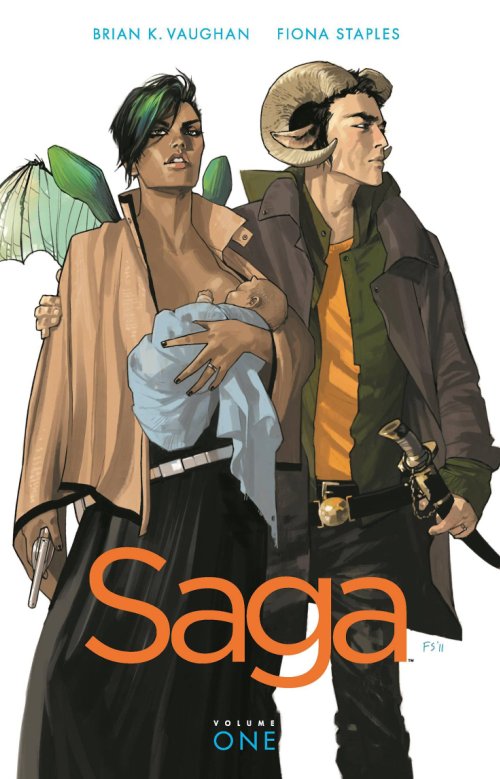
Created by Bryan K. Vaughn (words) and Fiona Staples (images), it’s a sprawling science fantasy saga with a heavy helping of just plain weirdness. Vaughn and Staples take full advantage of their chosen format to give the story a scope and a visual sense that would be impossible to pull off in another format. In the same way that 2001 epitomizes what a motion picture can be (an completely immersive audio-visual experience), Saga is the apex of what comics can be.

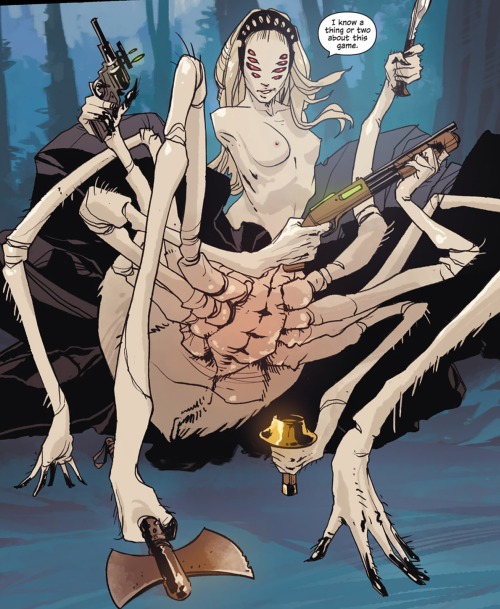
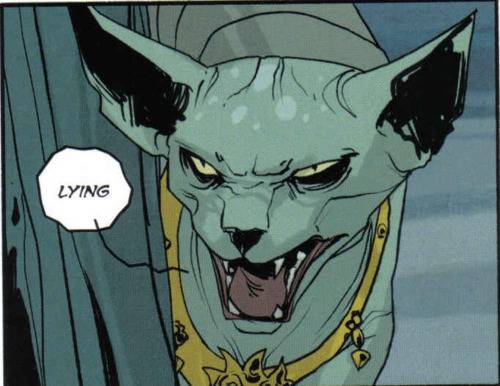
As amazing as Staples’s art is, Saga wouldn’t be worth reading without a compelling story and characters we care about. The basic setup is simple – a world, Landfall, has been at war with its moon, Wreath, for years. In the middle of the war, Alana (from Landfall) and Marko (from Wreath) fall in love and produce a kid, Hazel (who is the narrator), who really shouldn’t have been able to happen. They try and survive in a world where damned near everyone wants to hunt them down, from soldiers to bounty hunters with sentient lie-detecting cats.

Lying_Cat_Saga_001

Along the way, as they blast from world to world in a spaceship that is also a tree (did I mention this is science Fantasy? Definitely a capital “F”), collecting other outcasts to form a very bizarre, very fractured, but very sweet extended family (as this article points out, Saga is almost impossibly diverse in its characters). Vaughn has said that’s what Saga is really about:

I now have two kids. I first starting thinking about this while waiting for our first kid. And I always used writing as an outlet to talk about my fears, concerns, and passions. I really wanted to talk about creating new life. And I found talking to my friends who are strangers to the fatherhood experience—I would watch them start yawning or looking at their watch–difficult. If you’re outside of that world you don’t really give a shit. When you’re living in it, it’s really exciting. So I wanted to find a way to make people who don’t have kids or who never intend to have kids feel what it’s like to be a parent.

That’s where Saga was born.

Not having kids I can’t say whether having them makes Saga more meaningful, but it does emphasize the foundation of the story. All the amazing art and “holy shit” concepts don’t add up to much if the characters aren’t ones we care about in the first place. That’s true of good fiction in general, but particularly good speculative fiction. At bottom, it’s a story about love, fear, and survival. The tree ships and arachnid bounty hunters are just gravy.

saga-the-stalk

What I’m trying say is that Saga isn’t something I recommend to comic newbies because it’s a classic (although it’s on its way to becoming that) or because it’s something, to channel one of my high school English teachers, “that well read people know.” It’s because it’s a great story, involving people you will care deeply about, told across a stunningly inventive backdrop. I mean, really, what else do you need?

SagaVol1

Weekly Read: Children of Time

One of the great things about speculative fiction is that you get to write about characters who aren’t human. One of the hard things, as a result, can be making readers care about characters who, at least on the surface, aren’t anything like them. To be able to pull that off is something special.

Children of Time starts off with human characters who seem all to relatable. A ship is in orbit around a planet that’s been freshly terraformed. A scientist is making ready to start a bold experiment – seeding the planet with a group of monkeys, followed by a spiffy nanovirus that will help jumpstart and guide their evolution. To “uplift” them, in the David Brin sense of the word.

Needless to say, things don’t go as planned. The experiment is disrupted before it’s really begun by a quasi-Luddite faction that things humanity going to the stars was a mistake. The monkeys burn up over the planet. The nanovirus . . . well, what becomes of the nanovirus is what Children of Time is all about.

You see, just because the monkeys didn’t make it to the planet doesn’t mean other life didn’t. Instead of finding its intended host, the nanovirus finds a species of spiders into which it can insert itself. It does and, for half the ensuing chapters in Children of Time, Adrian Tchaikovsky puts us in the brains of various spiders as their society develops over thousands of years. That society itself is a supreme feat of imagination on Tchaikovsky ‘s part, but what really matters is that you come to care for these non-human beings, creatures that are more likely to conjure nightmares than sympathy.

That’s certainly true for the crew of Gilgamesh, the humans who make up the other half of the chapters. After the experiment at the beginning of the book goes awry humanity itself follows suit. Eventually, the only humans left alive are the crew of Gilgamesh and its “cargo” – hundreds of thousands of people in suspended animation.

It’s no spoiler to say that the humans and spiders have a coming together (two of them, sort of) and while the ultimate confrontation is wonderfully done, the paths they take getting there are equally fascinating. While the spiders slowly develop a technologically advanced society (the things they do with webs), humanity on board Gilgamesh is slowly falling apart. As seen through the eyes of a “classicist,” who gets woken up every so often to observe another crisis, it’s like the entire universe is falling apart at the seams. By the time the end comes the desperation among the humans is palpable.

Along the way, Tchaikovsky uses his characters to explore lots of big issues in a classic sci-fi way – religion, politics, and the like. More than anything, however, it shows how two intelligent groups can nearly destroy each other based mostly on the fact that they don’t have accurate information about the other group. The ending keeps this from being completely depressing, but it is kind of bleak. The day is saved by something the real world doesn’t have, after all.

There’s a lot to unpack in Children of Time. It doesn’t shy away from the fairly bleak state of the human condition, while suggesting that it’s not something specific to humans. And it does offer some hope, for while the source of the ending isn’t real, the effects could be. Either way, this is one of the best books I’ve read in a while (and I don’t see any way to adapt it to film). I was completely blown away. Highest recommendation, of course.

ChildrenofTime

Weekly Read: The Long Way to a Small Angry Planet

There are a lot of things to like about The Long Way to a Small Angry Planet. It’s set in an interesting universe where humans aren’t dominant and there are lots of interesting alien species to deal with. The characters, for the most part, are interesting and fun to spend time with. And the writing it pretty quippy and moves at a good clip. It should be a fun read and it is, but it doesn’t go much further than that.

I’ve read a lot of commentary about the book that it’s about characters and not plot. While that’s true it wouldn’t be correct to say “nothing happens” in the book. Several things – exciting things! – happen. It’s just that they’re resolved fairly easily and don’t really have any impact on things going forward.

Take, for example, an early crisis. The ship, Wayfarer, is off on the titular long trip in order to bore a new wormhole in space. Fairly early in this journey they’re set upon by pirates! A sticky enough situation, made all the more so by the fact that the ship’s captain is a pacifist and, thus, everyone on the ship is unarmed. That is a fantastic twist on a typical space opera trope. It’s not really a spoiler to say they talk themselves out of it. It’s a pretty exciting scene.

Yet it has almost no residual effect. One character has a brief bit of PTSD, but it goes away just as quickly. More annoying, our heroes escape the pirates by giving them some of their supplies – supplies which, apparently, were completely superfluous to the main mission. Thus, while there’s talk about getting reimbursed for them, there’s no complaint that it will make their job harder or require extra stops along the way. It’s a problem, it’s solved, and the book plows ahead.

The effect is kind of like an old-fashioned TV show from before the current golden age of serialized TV. Each episode is basically a standalone story, with little ongoing plot to drive things along. Thus, along The Long Way . . . we get “episodes” for just about all of the Wayfarer’s crew that all play out the same way – some crises appears, it’s resolved, and everyone goes on their merry way.

Consider Rosemary, who if not the main character of the book (it bounces POVs around a bunch), is at last our audience surrogate, the new person on the ship who has to learn how things work (our Tim Bayliss, if you will). We know from the beginning that she has a big secret in her past. If she’s not running from something, she’s at least in search of a new start in a new life. We find out why about halfway through (her father’s a war criminal, in essence) and she worries this will impact the life she’s made on the ship, cost her friends. It doesn’t, because everyone on board is so incredibly understanding – even the alien chef/doctor (another neat touch) whose species is about to be extinct due to the war Rosemary’s father fueled. A great potential for tension is completely squandered.

And so it goes. With the exception of the ship’s algae specialist (that’s what fuels the ship – don’t ask, it’s never explained) everybody gets along swimmingly through the voyage. When his “episode” comes it falls flat because we suddenly need to care about somebody nobody else does (particular shame given the issues it raises). The goal of the actual “long trip” basically disappears once they embark, only to rear its head at the very end.

I’ve seen lots of references to “imagination” in reviews praising The Long Way . . . and that’s a spot on description. Becky Chambers let her imagination run wild in creating the universe in which the book is set. It’s just a shame more interesting things don’t happen in it. In that way it reminds me a bit of The Goblin Emperor, another book with a fascinating setting and interesting characters that didn’t really amount to much.

There’s something to be said for an author who just takes her readers and drops them into a fascinating place filled with interesting characters. Ultimately, I want a little bit more than that. Others might not care so much and, so, your mileage may vary when it comes to The Long Way to a Small Angry Planet. Still recommended, if with a little hesitation.

LongWay Cover.png

Weekly Read: The Lost City of Z

I generally roll my eyes at people who see a movie based on a book and then tut tut that “the book was better.” Even as a writer, it comes off as snobbish to me. The written word is a different medium than film, which makes adaptations their own things. One’s rarely “better,” even in a subjective sense, than the other. They’re just different.

The film, The Lost City of Z (released last year), got a good amount of praise when it was released. I’ve even seen people list it as being snubbed in the Oscar race. It’s the story of Percy Fawcett, who repeatedly search the Amazon jungle for evidence of a lost city in the early part of the last century. The wife and I put it on our list of flicks to see and, the other weekend, were able to pay per view it. My thoughts at the time was that it was a fine flick, but it suffered in comparison to such jungle fever dreams as Aguirre, The Wrath of God.

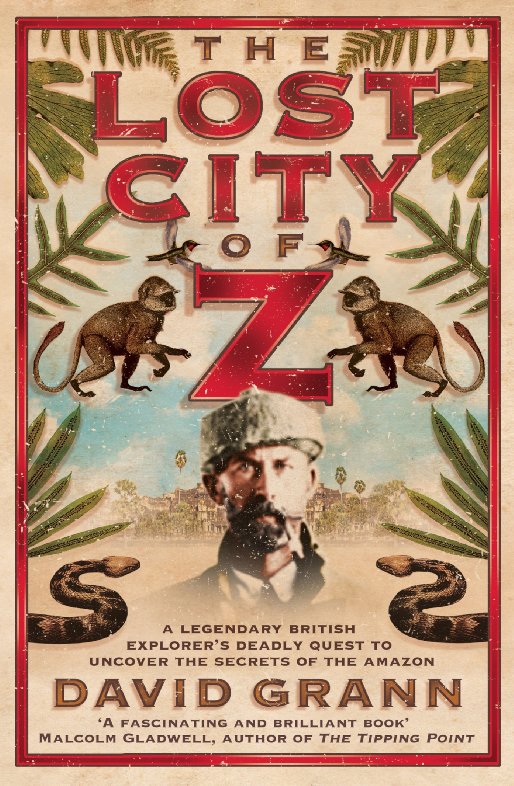
It did interest me enough to go read the book upon which the movie is based. Also called The Lost City of Z, it weaves the history of Fawcett’s expeditions in with the attempt of author David Grann to track down evidence of Fawcett’s final expedition (no spoiler alert – Fawcett’s disappearance in 1925 is one of the everlasting mysteries of the golden age of exploration). I’m glad I did, not just because the book provides more detail than any movie possibly could, but it makes clear that large hunks of the movie are complete and utter fiction.

Let me clarify that I’m not talking about whether the film itself, or the book, is “accurate” from an historical standpoint. There was a lively debate at the time the movie came out with historians arguing that it portrayed Fawcett in a much more positive, progressive light than the historical record supports (also, he sucked at exploring). Naturally, the director’s response to this was, in essence, “it’s art and you can’t talk like that about it.” That’s not what I’m really interested in. However, I will note this observation from one critique of the movie version of Fawcett:

The original book, by David Grann, was much more intelligent and nuanced, as one would expect from a staff writer on the New Yorker. But everything has gone wrong in its clumsy adaptation for the screen by director James Gray, who has written his own script and then filmed it with great reverence – almost always a mistake.

That sounds about right, although “clumsy” is perhaps too kind. It’s simply bizarre for a movie based on a particular non-fiction book – it even uses the title! – to break from the book in so many fundamental ways. I’m not talking about the inevitable compression that happens to turn a biography into a movie – that Fawcett had 8 Amazon expeditions, not 3, or that he and his son had a third person on their final voyage makes sense. I’m talking about things that get the character so wrong I don’t understand why the writer/director used the name of a real person.

For example, one of the most obvious diversions from the book is the in the film Fawcett is portrayed as having fallen into exploration after being tapped by the military and Royal Geographical Society to survey a river on the border of Brazil and Bolivia. In fact, Fawcett caught the exploration bug while stationed in Sri Lanka (then Ceylon) when he fell hard for a story of buried treasure (he didn’t find that, either). He’d already attended a 1-year course at the RGS before the surveying mission came up.

Or take the depiction of Fawcett’s relationship with his eldest son, Jack. In the film Jack is shown as an angry kid, raging against his father as a failure after an expedition collapses spectacularly (bonus point – the book never mentions that Fawcett resigned from the RGS in the aftermath, as the film portrays). They’re reconnection as they plan the last expedition is a moving part of the film. But, according to Grann’s book at least (the source material for the film!), the two were always close and Jack wanted to join his father in his explorations almost as soon as he could.

But the most egregious example involves World War I. Fawcett was well into his Amazon explorations when the war broke out. He went back to England and, eventually, to the Western Front. The film portrays Fawcett leading a Paths of Glory style assault over the top (after consulting with a Madame Blavatsky type – she died in 1891) during which he’s wounded by gas. No just wounded – blinded. A doctor even tells the blind Fawcett that he’ll never see the jungle again. This is utter fiction, unless Grann decided to skip the episode completely in his book. Fawcett wasn’t wounded, much less blinded, and didn’t sit around the English countryside recuperating for years until his son convinced him to give it one more go. Why the director (who also wrote the script) decided to put it in is anybody’s guess.

Somebody could have made a really interesting movie out of the Grann’s book. Even without the modern day overlay of Grann’s own expedition, the atmosphere of doom that clung to Fawcett’s final expedition could have really worked as the backbone of the movie (cover what else needs to be covered in flashbacks). Or, alternately, somebody could have used Fawcett as the basis for a truly fictional character and played around with the details as he saw fit. The Lost City of Z the movie isn’t either of those and it suffers for it. The Fawcett of the book is much more interesting than his celluloid counterpart.

But it did lead me to the book, for which I thank it. For, in this instance, the tutters would be right – the book really is better than the movie.

lost city z bookLost City of Z film

Weekly Read: The Road to Jonestown

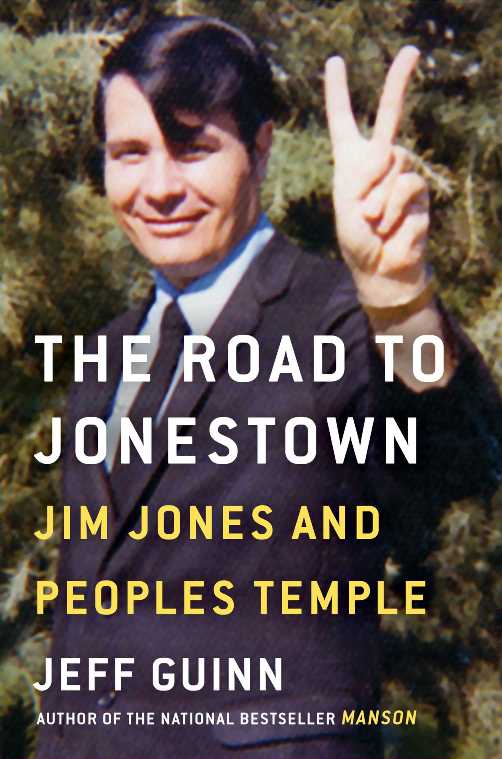
There’s a passage in Jeffrey Toobin’s book on Patty Hearst where, after the heiress is captured, her kidnappers demand the Hearst family set up a from scratch program to feed the poor. Various groups come out of the woodwork to try and run the program, including Peoples Temple, the cult led by Jim Jones that, a few years later, would mostly die out in the Guyanese jungle. Toobin presents it as a freakish aside, the intersection of two infamous historical figures. After reading Jeff Guinn’s The Road to Jonestown it becomes clear that there wasn’t anything freakish about it – Jones and his followers could have pulled it off.

That is, perhaps, the most interesting thing about Guinn’s book, which takes a deep dive into the founding of Peoples Temple and the founding, if you will, of Jim Jones. Born poor in rural Indiana Jones gravitated toward two things when young – social justice and fire-breathing religion. Neither of his parents were religious, but he had a neighbor who was constantly on the prowl to recruit souls for Christ and she exposed Jones to her church. He took to preaching and honed a miracle-working approach in Indiana that would serve him well for decades. It was also the spark of the dark charisma that would lead to so many more than 900 dead in Guyana.

Fact is, Peoples Temple got things done for people who were too often left behind by society. Jones and his followers helped drive desegregation in Indianapolis. Both there and later in California they ran nursing homes, drug treatment programs, and, yes, food giveaways. All those programs were successful (at least as successful as other similar programs) and properly run.

The problem was that, from the beginning to the end, Peoples Temple was always the fiefdom of Jim Jones. All the good work came at the expense of a staggering cult of personality that merged with Jones’s rising paranoia (aided, no doubt, by a cocktail of drugs he used to work and sleep) to make for one of the more frightening cults in recent history. Jones was Father, at the very least, and perhaps God herself (or some reincarnation of past holy figures, like Buddha or Jesus) and the only one who could save his people from the destructive world around them.

At first the destruction was nuclear war. That was reason Jones moved Peoples Temple from Indianapolis to California, setting up shop in a rural area north of San Francisco that supposedly was far enough away from primary targets that, with favorable winds, residents could survive a nuclear attack. That fear didn’t keep Jones from barnstorming around the country on a fleet of busses doing revival shtick, however.

The threats quickly became more personal. There were defectors from Peoples Temple, people who either saw Jones for the con man he was or simply grew tires of giving everything they made and owned to the organization. To Jones each was a potential villain, providing fodder to the press or authorities about what went on in the increasingly secretive group. Journalists started to close in, too. The final straw was a group of former members who focused on getting other family members, including children, out of the group who, they claimed, were being held against their will.

Although Jonestown itself had been founded earlier, these existential threats are what drove Jones and most of his followers there well before the settlement was ready to support them. Harsh conditions, piled on top of Jones’s paranoia and iron grip over his followers, soon degraded into homicidal/suicidal tendencies. Jones simulated an attack on the compound and later staged a mock suicide, just to make sure everyone reacted in the proper fashion. By the time San Francisco-area Congressman Leo Ryan arrived in November 1978, the keg was set to blow. Ryan and several others were murdered at a nearby airport, while Jones led the mass of his followers in Jonestown to their death via a mix of cyanide and Flavor-Aid (not Kool-Aid, to set the record straight).

More than 900 people died in Jonestown and there’s always been some controversy over what label to apply to it. Jones called it “radical suicide” (?), but given that at least a third of the dead were children it’s easy to say that many of the deaths were flat out murders. Beyond the children there’s evidence that some adults were held down and injected with poison, rather than having drunk it on their own. Still, hundreds of people, at least, appear to have willingly laid down their lives when Jones said so.

The big question, of course, is why? Guinn doesn’t do much evaluation of the aftermath of Jonestown or bring in any kind of experts to attempt to explain it. Instead, he lets the work he’s already done, showing how Peoples Temple developed, do the work. What he shows is that people really believed in Jones. Some believed in his commitment to social justice. Others came at it from a more religious angle, drawn in by the healings and such that Jones performed on the revival circuit. Because once your religion has primed you to believe miracles exist, why would you doubt the con man that actually says he performs them? Regardless, they believed in Jones and the outside world gave them just enough reason to buy into his paranoid rants. More than anything else, they let Jones come to define their world, to the exclusion of any critical thinking or close examination of what he was doing.

It’s hard not to think of Donald Trump while reading The Road to Jonestown. Not because Trump is going to lead us into ritual suicide (with a side of murder) anytime soon (we hope), but because of the freakishly similar way Trump and Jim Jones interacted with the outside world. To Jones’s followers he was the only person who could solve their problems and save them from the injustices of the world. Trump during the campaign repeatedly expressed similar sentiments. Jones never failed – he was only failed by underlings or thwarted by shadowy outside forces. Likewise, Trump never backs a loser and is constantly doing battle with the “deep state” or “fake news.” More than anything else, Jones and Trump share a complete aversion to dealing with reality. That way lies madness, as Jones and others have proven.

Hopefully, we’re not all on the road to Jonestown again, without quite realizing it.

RoadtoJonestown

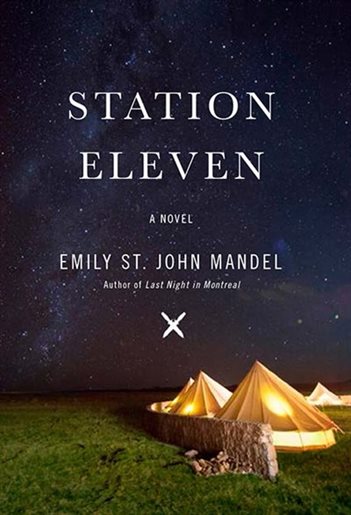
Weekly Read: Station Eleven

Usually when a book is set in a post-apocalyptic world, it’s telling one of two stories. Either it’s the story of the fall – how did society get into this fucking mess? – or it’s the story of the gritty challenge to survive just after the fall. Few stories contemplate what might happen a decade or two later, once basic survival is figured out. What then?

That’s the brilliant conceit of Station Eleven.

Sometime in the near future a global pandemic called the Georgia Flu (named after the country, not the state) roars across the planet killing off 99 percent of humanity. Using a time skipping narrative worth of an early (aka “good”) Atom Egoyan flick, Station Eleven tells the interlocked stories of several survivors trying to make sense of an empty world about twenty years in the future.

Note the word “survivors.” These aren’t just people lucky enough to be immune or otherwise avoid the flu. These characters have made it a couple of decades in this new world and have become competent at getting by. If they hadn’t, they’d be dead. Instead, they’re able to devote themselves to larger questions. How important is art and culture in a post-apocalyptic world? Pretty damned important is the answer, one I’m not compelled to argue with. It would have been nice if “art” meant something beyond Shakespeare and classical music, but it is a limited sample, after all. If there’s a Travelling Symphony out there in a wastelands doing King Lear and playing Mozart, I’d like to think there’s a band knocking around playing King Crimson and Zappa, too.

The other big question that rears its head over and over again is how much these people should remember the world as it was and try to pass along information about that world. Two decades on there are adults, either born shortly after the flu or who were young children when it happened, who know nothing of electricity and the Internet and flying aircraft. Is telling them about what they’re missing inspirational, something to make them rebuild? Or is it calcifying nostalgia, dragging them down? Theories are floated and arguments are made, but nothing’s decided. How could it be?

The time-skipping structure works really effectively. The goal isn’t to reveal some big secret, to build to a Shamalan-style “a ha!” moment. Instead it’s a way of drawing connections between characters, even as they become spread around the modern world. It leads to some disjointed spots – there’s one character in particular, front and center in the beginning just before the flu hits, whose story doesn’t really seem a part of the rest – but otherwise it’s a treat.

Where the book falls down a bit is in the overall arc of the story. As I said, there are no big moments and the closest thing to a bad guy is dispatched cleverly, but without it feeling like it’s the moment it should be. That and one section set among survivors at an airport (later turned into a “museum of civilization”) that drags on too long keeps Station Eleven from being knock out of the park great.

This isn’t a gritty survival story. It’s not a whodunit about why the world came to an end. It’s a lyrical, atmospheric, meditation on what it means to be alive in a world where so many others aren’t. Big thoughts, ones worth pondering for a bit.

Also, it led to perhaps the greatest Goodreads Q&A I’ve ever seen:

Station11Q

Needless to say, that’s not at all what this book is about. Good thing, too.

Station11

Genre Bias Rears Its Ugly Head – It’s Science!

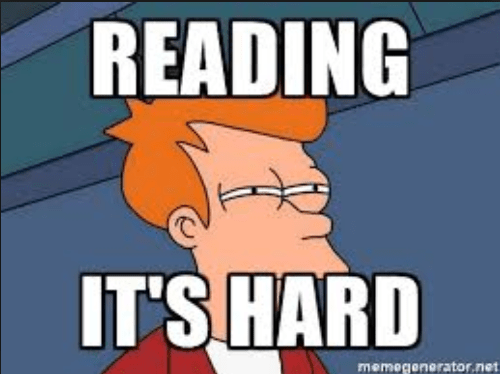
While I was of NaNoing last month an interesting bit of news came out with regards to science fiction and other types of fantastic literature. Put simply – people don’t put as much effort into reading those stories as other types.

ReadingHard

The study went like this:

Their study, detailed in the paper The Genre Effect, saw the academics work with around 150 participants who were given a text of 1,000 words to read. In each version of the text, a character enters a public eating area and interacts with the people there, after his negative opinion of the community has been made public. In the ‘literary’ version of the text, the character enters a diner after his letter to the editor has been published in the town newspaper. In the science fiction version, he enters a galley in a space station inhabited by aliens and androids as well as humans.

After they read the text, participants were asked how much they agreed with statements such as ‘I felt like I could put myself in the shoes of the character in the story’, and how much effort they spent trying to work out what characters were feeling.

The results were, on the face, disappointing:

‘Converting the text’s world to science fiction dramatically reduced perceptions of literary quality, despite the fact participants were reading the same story in terms of plot and character relationships,’ they write. ‘In comparison to narrative realism readers, science fiction readers reported lower transportation, experience taking, and empathy. Science fiction readers also reported exerting greater effort to understand the world of the story, but less effort to understand the minds of the characters. Science fiction readers scored lower in comprehension, generally, and in the subcategories of theory of mind, world, and plot.’

Readers of the science fiction story ‘appear to have expected an overall simpler story to comprehend, an expectation that overrode the actual qualities of the story itself’, so ‘the science fiction setting triggered poorer overall reading’.

In spite of some of the breathless comments I saw online the study does not, as someone points out, imply that reading sci-fi makes you dumber, but implies that people who don’t like sci-fi won’t give it its full attention. It’s nice to have some science to back this up, I guess, but is that any surprise?

That’s the whole reason literary writers, whom I’ve complained about before, don’t like admitting that they write sci-fi or fantasy. This came up against just recently after I finished Emily St. John Mandel’s really excellent Station Eleven (Weekly review forthcoming). It’s a story about survivors of a global pandemic striving to maintain a life that’s something beyond mere survival. It’s a quintessential piece of sci-fi (or, more broadly, speculative fiction), although the author is having none of it:

Thus when Station Eleven was nominated for the National Book Award – it also won the Arthur C. Clarke awards, so take that! – some eyebrows were raised. But when something that is “literary” is it prevented from being something else? I tend to agreed with this:

And yet confusion reigns in this debate, which feels strangely vague and misformulated. It remains unclear exactly what the terms ‘literary fiction’ and ‘genre fiction’ mean. A book like ‘Station Eleven’ is both a literary novel and a genre novel; the same goes for ‘Jane Eyre’ and ‘Crime and Punishment.’ How can two contrasting categories overlap so much? Genres themselves fall into genres: there are period genres (Victorian literature), subject genres (detective fiction), form genres (the short story), style genres (minimalism), market genres (“chick-lit”), mode genres (satire), and so on. How are different kinds of genres supposed to be compared? (‘Literary fiction’ and ‘genre fiction,’ one senses, aren’t really comparable categories.) What is it, exactly, about genre that is unliterary—and what is it in “the literary” that resists genre? The debate goes round and round, magnetic and circular—a lovers’ quarrel among literati.

Listen, I get the concern of writers like Mandel – slap a “sci-fi” or “detective” genre label on a book a certain group of people won’t take it as seriously. But rather than run away from the tag and deny the reality of what you’re writing, why not embrace it? Doing so would help smash conceptions about what genre fiction is and can be. Stand up for the slighted genre kids, rather than lean into the bully who just wants to put them down.

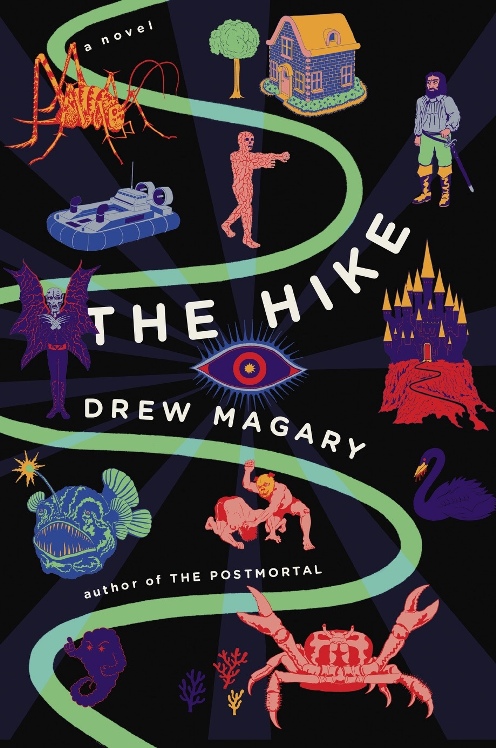
Weekly Read: The Hike

There’s a long tradition of stories were a regular person is thrown into some weird alternate world, one where the rules of real life don’t apply. The person has to battle through this world without understanding what’s really going on until, hopefully, they find their way out again. A problem with this evergreen template is that, eventually, the storyteller has to explain what’s going on. Rarely do the explanations match what happened along the way.

The Hike falls into that trap. It plunges its main character head first into a bizarre, alien, and frightening world that throws challenges at him apparently at random. It’s no spoiler to say that we eventually find out who’s doing this, but not really why. It’s an awfully soft landing after such a long journey.

But, oh, what a journey it is.

Ben is a businessman of some kind (it’s not really important) on a business trip. He checks into a third-rate hotel in the Pennsylvania wilderness and, with some time to kill before a meeting, decides to take a hike. From there things get – interesting. Almost immediately there’s a dead girl and killers chasing Ben while weaning the torn off faces of Rottweilers. Ben evades them, but finds he can’t get back to anything that looks familiar. With that, the saga is on.

It’s hard to describe what follows, and the surprise of it is part of the joy, so I won’t bother. Safe to say that Ben faces a series of trials that play out like an early role playing video game – success at each “level” is often dependent on figuring out what to do with objects that mysteriously appear when necessary. The struggles get harder as the journey goes along, while Ben occasionally has to deal with frightening episodes from his past.

Ben goes at this mostly alone, although he meets a wide variety of beings as he progresses along his path. At times he gets some companionship, in the form of a talking crab (who refuses to give his name and addresses Ben as “Shithead”) and a 15th-century Spanish explorer (who hates anybody who isn’t Spanish, particularly the English). That these relationships actually pays off in ways beyond being purely entertaining (the crab is really funny) is a testament to how good The Hike is.

Which is not to say it’s perfect. The book falls foul of the regular problem with stories of this sort in that the explanation of this weird world doesn’t hold a candle to the world itself. I’m not saying it doesn’t make sense, it’s just not very satisfying (admittedly, I’m not sure what would be). Also, while the final twist gives a little bit of sting to the tale, I don’t buy the reading that so many people have that Ben learned a great lesson through all this. He never really got into the world as an escape from real life, was never seduced by the promise of something different and exciting. He always wanted to go home to his wife and kids.

Then again, doesn’t everybody (well, maybe not the kids part)?. Which is why it’s hard to fault The Hike for not wowing you at the end, given all the wow you get out of the journey.

Untitled-4.indd

Speculative Fiction and the “Real” World

A little while back I reviewed The Spaceship Next Door and while I enjoyed it there was something about it that bothered me. It kept picking at my writer brain until I finally figured it out. It’s a small thing and nothing at all to change my earlier recommendation (TLDR – go read it), but it’s still something worth pondering.

Spaceship . . . was released at the end of 2015. It’s safe to say it was written sometime in the year or two before that. At the very least, we’re not talking about a book that sat in a trunk for decades before it saw the light of day. By all indications, it takes place in the time in which it was written, which is to say pretty much right now. There are smart phones, ubiquitous wi-fi, and other trappings of second decade of the 21st Century. And we’re clearly talking about 21st Century America, as the book is set in Massachusetts (albeit in a fictional town).

The book also has a considerable military presence, as one might imagine for a story where a spaceship suddenly lands in the countryside and then sits around for a bit. There’s more than one soldier who is a minor character and other characters interact with even more Army folks.

This is where something started bugging me. If we’re dealing with military matters in a world that’s otherwise our own – why is there almost no mention of Iraq or Afghanistan?

I’m not saying that any book set in modern America has to comment on our never-ending military adventures (full disclosure – Moore Hollow doesn’t). Nor do I expect a domestically set sci-fi tale to dive deeply into the matter. Still, it’s a little weird that, aside from one brief mention late in the book, they never come up. There’s at least one scene where one of the soldiers (maybe the general – I can’t remember) is talking about what a good posting this is. A quick “beats dodging IEDs in Baghdad” or something similar would have worked.

This is the risk that comes from writing fiction set in the “real” world, but I can’t put my finger on why this particular aspect of it irked me. It didn’t bother me that the president (who shows up near the end) isn’t Obama (or any other actual US president), so why does the military thing? I can’t say. Maybe, for this kind of thing, this is my flying snowman moment, even if it’s not so serious as to destroy my suspension of disbelief.

There’s probably no wrong way or right way for a writer to handle a situation like this. But at the very least, writers should be aware of the issue and give it some consideration – is there something in your not-quite-real world that’s going to make people cock their heads and bit and wonder, “huh?” We want our stories to be immersive, not confusing, after all.

Or maybe I’m just a moron.

sloth-dat-reality