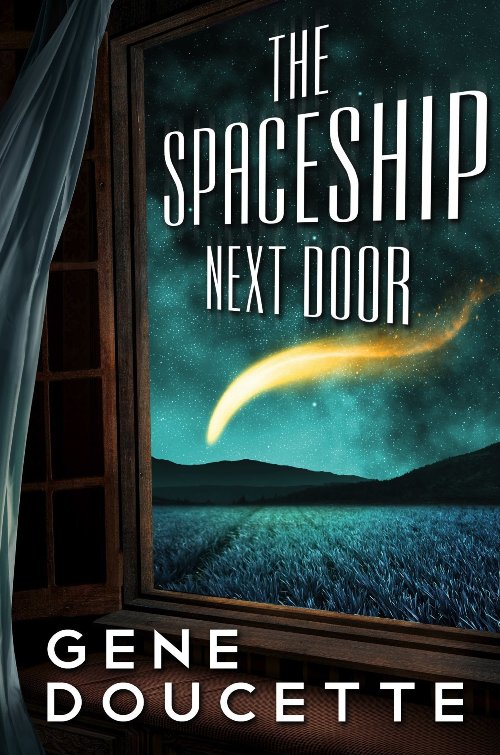
Weekly Read: The Spaceship Next Door

I have a soft spot for books that deal in tropes that don’t conform to reader expectation. After all, I wrote a whole book about zombies where never a brain is eaten. The Spaceship Next Door, therefore, hooked me early on with a great twist on one trope, before throwing in a second for free along the way.

The hook is this – one night a spaceship from another planet lands in rural Massachusetts. Then – nothing happens. There’s no alien invasion. There’s no dire warning about what we’re doing to the planet, ala The Day the Earth Stood Still. There’s not even a massive overreaction by the government, although the town of Sorrow Falls essentially succumbs to a velvet-glove version of martial law. Mostly, the ship just sits there and makes people wonder what the hell is going on.

Three years after landing, something finally does happen.

Much like the ship, the book isn’t in too much of a hurry to get to that thing. Some will complain that this makes the book slow, but I think it’s time well spent with 16-year old Annie Collins, who is kind of the town’s goodwill ambassador to the outside world. She’s given the task for shepherding around a “reporter” (actually a government scientist – he fools nobody), which allows us not only to meet a bunch of characters, but dive deep into the history of Sorrow Falls. To the book’s credit, this doesn’t result in a whole bunch of characters who are nothing more than walking quirks. They all seem real, if a bit off.

I should mention the second trope, because it’s what pops up when things start happening. In a word – zombies. Except, really, they’re not. But they behave kind of like zombies (no brain eating!). Annie and her government guy even have a funny conversation where they try to come up with a better term, but nothing really works. Besides, the zombies tie back in to what the ship is doing (naturally), which lets the book continue its twisty way with first contact stories.

The Spaceship Next Door isn’t perfect. The ending gets a little jumbled and there’s a bit of hand waving at the final post (one of the final chapters is tilted “Deus Ex Machina,” so it’s not like you aren’t warned). Even in light of that, it’s a quick, fun read with a couple of really good laughs sprinkled in. If you like your tropes a little twisted, I highly recommend this one.

SpaceshipNextDoor

Will I Care Once I’m Dead?

Thinking about future projects the other day – ideas that are well enough developed that I can see a book coming out of them – I figured that I have material for about 20 books locked away in my brain. Even at a pace of one a year that means a long haul going forward. Let’s face it – chances are that I’ll be in the middle of writing some book when I die. What should happen to it and any others that might be semi-started?

The issue is back in the news recently thanks to the amusingly public way that the late great Terry Pratchet’s unfinished works were handled. Per his request, his hard drive (which contained as many as 10 works in progress) was destroyed – by being crushed by a steamroller.

The comments I read when the news came out was mostly amusement and pleasure at Pratchet’s wishes being so scrupulously honored. After all, if he was so specific as to how his literary executor was to deal with his unfinished work he must have felt fairly passionately about it never seeing the light of day. Who could argue that the right thing to do is precisely what the author wants?

Destruction isn’t the only option, of course. Robert Jordan, author of the massive Wheel of Time series, realized he wouldn’t live to see the completion of the series, so he provided a trove of notes and left the final few books to be completed by Brandon Sanderson. I can’t speak to the quality of Sanderson’s work and whether he did a good job with Jordan’s baby, but, again, it’s hard to complain when the people involved do just what the author wanted them to.

The legal-rule side of my personality says this is precisely how it should work. An author (or her designee) is the master of her own work, after all. If she never wants the world to see it, or only wants the world to see it with certain conditions, that’s her right. If she wants to take any potential masterpieces to the grave, that’s no problems.

Except we have examples where ignoring the author’s wishes turns out pretty well. When Franz Kafka died he left his literary executor (and friend) Max Brod fairly specific instructions:

Dearest Max, my last request: Everything I leave behind me … in the way of diaries, manuscripts, letters (my own and others’), sketches, and so on, [is] to be burned unread

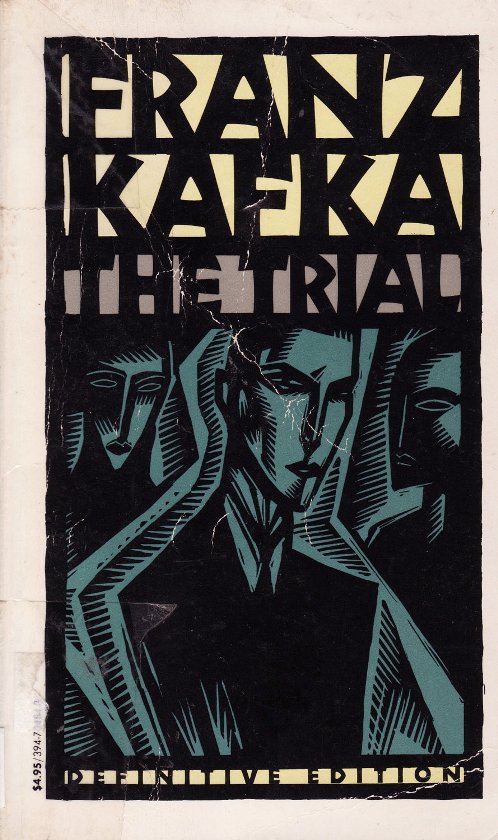
Brod did no such thing. As a result, we have all of Kafka’s novels, including The Trial, none of which were published before Kafka’s death.

franz-kafka-the-trial

A world without The Trial is barely fathomable (ironically), but had Brod did as instructed, we’d never know of it. Nabokov’s The Original of Laura was published against his wishes after he died. Even Mark Twain had a new collection of essays published almost a century after his death – against his wishes.

And so I find myself retreating from my bright-line rule of always doing what the author wants. After all, what’s the harm in ignoring those wishes? Yes, work might be released that the author wasn’t happy with, but the author isn’t going to be around to complain. A reputation could be diminished, I suppose, but authors have very little say in how the world perceives them when they’re alive and even less when they’re dead. Besides, does the posthumous release of a bad book by a great author devalue their prior work? It’s not a perfect analogy (since Harper Lee is still alive), but is To Kill a Mockingbird any less a masterpiece because Go Tell a Watchman was kind of ordinary? I don’t see how.

It’s a more complicated problem than I thought it was at first glance. Certainly, I don’t think it’s a legal issue. I’d oppose any law that required an author’s papers and unfinished works to become some kind of public good and exploited willy nilly. Nor would I support laws that would punish people like Brod for ignoring the wishes of their dead author friend. But, I have a hard time working up too much outrage when an author’s wishes are disregarded, so long as the person doing the second guessing is a close friend or family member. If they are all right with it, I’m in no place to complain. It’s kind of like jury nullification – I’m not a fan of promoting it, but I’m glad it exists for the rare occasions when it’s really necessary.

So I guess what I’m saying, to my literary heirs, if they ever get around to reading this – you’re on your own!

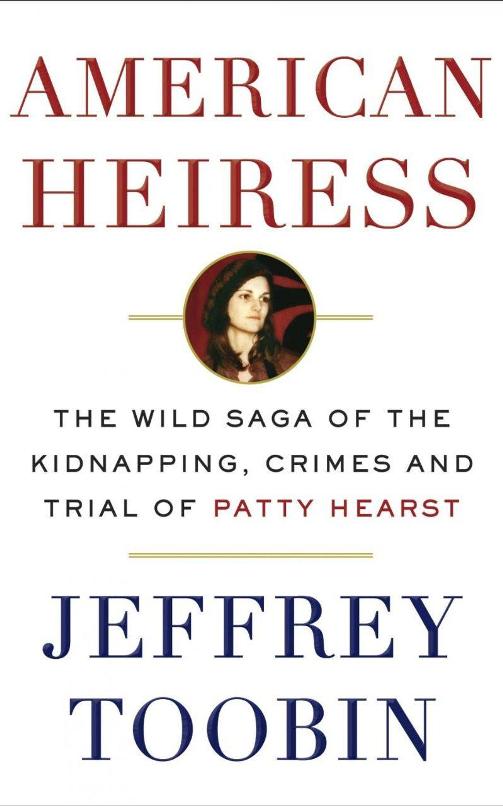
Weekly Read: American Heiress

As they say, truth is stranger than fiction. One of the problems with writing fiction is that readers expect it to make sense, for characters to behave in ways that are believable and compelling. Writers telling true stories aren’t saddled with such issues. Jeffrey Toobin’s latest, American Heiress, tells one of those stories that, if labeled fiction, would have readers rolling their eyes in disbelief.

The basic parameters of the Patty Hearst case are fairly well known. She was kidnapped from the apartment she shared with her then-fiancé in Berkley, California, by a group calling itself the Symbionese Liberation Army. She was held for months, during which time she turned from captive to comrade. As a professed member of the SLA she participated in bank robberies and lead a life on the run. It all came to an end with an arrest, conviction, and lengthy federal prison sentence.

Toobin’s book breaks down, basically, into three parts. Part one covers Hearst’s background, the kidnapping itself, and her turn to bank robber. This part is a bonkers story with a lot of different angles playing into it – not just Hearst and her kidnappers, but also her family and the law enforcement officers working the case. Then there’s Hearst’s fiancé, who famously told the kidnappers to “take anything you want” when they broke in. As Toobin jokes (multiple times), they did.

Events after the kidnapping played out in a way that seems unbelievable today. The Hearst family – who, at this point, were nowhere near as wealthy as people thought – agreed to an SLA demand to set up a broad food giveaway for the poor. The operation, created almost overnight, had to fight off local grifters (including Jim Jones) and led to riots. The fiancé, whom the family never liked, tried to help in his own way, but only led to his reputation being shredded.

This part makes you hope that the American Crime Story crew, who turned Toobin’s The Run of His Life into The People v. OJ Simpson for FX, has the rights to this book. There are so many characters (the list of famous people who had some connection to all this is impressive – Jane Pauley, Kevin Kline, Lance Ito, and, later on, Bill Walton) acting in so many bizarre ways that Ryan Murphy’s sensibilities would be well served. Appropriately enough, this part wraps up after the SLA members split up and Hearst and her two comrades watched the other half dozen perish in a scene that played out like a mini-Waco – gunfight followed by immolation.

The rest of the book doesn’t quite live up to the first part. The middle section drags a bit as Hearst and the others go on the lamb. Mostly it’s because we lose the multiple angle approach that brought so many characters into play. Still, there’s a particularly odd idyll in the Pennsylvania woods (which has given me a great story idea) and it’s important to the story as a whole.

Part three covers the Hearst’s eventual arrest and trial. One would think that Toobin, being a lawyer, would focus mostly on this, but he gives it a brief, compelling summary, during which one thing becomes clear – Toobin has no regard for Hearst’s lawyer, F. Lee. Bailey. In Toobin’s telling, Bailey was a swaggering, swashbuckling self promoter for whom practicing law was almost an afterthought. He had a deal to write a book about the trial before it even started and spent several nights during trial flying back and forth to Las Vegas to speak at legal seminars. To boot, while Bailey’s reputation was built on winning big cases – Sam Sheppard (aka The Fugitive) and the Boston Strangler – he, like any criminal defense lawyer, lost more than he won. For Hearst, he lost.

Hearst’s trial – she was charged with bank robbery and carrying a firearm in relation to it – boiled down to one issue: did she willingly engage in this criminal conduct after becoming a SLA member, or was she a kidnap victim who had been brutalized, terrorized, and brainwashed to the point where she did whatever she was told in order to survive? It’s clear that Toobin agrees with the jury that convicted her that Hearst was a fully fledged revolutionary by the time of the robbery. What’s really troubling is that while it seems like Hearst did shift into the role of SLA comrade, she shifted out of it just as easily. Given that all this happened while she was barely an adult (she was 19 at the time of the kidnapping, 21 when convicted), I wonder what modern research in the brain development of young adults might shed some light on whether such swings of outlook are really that out of the realm of normal.

Whatever steam the book loses after the first part Toobin finds when he gets righteous in the conclusion. After her conviction was affirmed on appeal and the trial court denied a habeas claim (contrary to what Toobin says, ineffective assistance of counsel claims are routine and often completely baseless), Hearst’s family started a massive effort to get her sentence commuted. It was, eventually, but Jimmy Carter. The staggering bipartisan group that pushed for clemency included famous hardliners such as John Wayne and Carter’s opponent in the upcoming election, Ronald Reagan. Part of it, Toobin argues, is that once Jim Jones led his group in a mass suicide (and murder of Congressman Leo Ryan, a vocal supporter of Hearst), it became much easier to believe Hearst’s story of brainwashing. In the end, she only served about two out of the seven years to which she was sentenced.

But it didn’t stop there. Flash forward to the end of the 1990s and Hearst is now seeking something unprecedented – getting a pardon from a second President after first gaining a commutation. There was no consensus this time – part of the opposition was the then United States Attorney in San Francisco, a guy named Robert Mueller. But Carter and his wife appealed directly to Bill Clinton, who pardoned Hearst on his last day in office.

Toobin, who clearly believes Hearst was a willing participant in her criminal activity, makes the obvious point – only Patty Hearst had the resources and name recognition to get clemency twice, in spite of the evidence against her. People who have done a lot less have gone to prison for a lot longer and not gotten any sniff of clemency. But those people were the ones the SLA said it was fighting for. They weren’t wealthy heiresses.

Toobin’s book is well worth reading. Even if the back half can’t live up to the entertainment value of the first part, there’s a lot of interesting info in here. Toobin does a good job of setting the context for all this (You think we’ve got political strife today? How do several years with 2500 bombings across the country sound?). There’s also some original research, as Toobin got his hands on previously unseen letters Hearst and her lover/co-defendant wrote to each other after their arrest (as couriered by Hearst’s first lawyer). I’m not sure it all makes sense in the end, but so what? It’s real life – it doesn’t have to.

PS – For an interesting perspective on the book, check out this column from Andrew O’Heir, who grew up in the San Francisco area while all this was going on.
ToobinHearst

Weekly Read: Mrs. Fletcher

Mrs. Fletcher – the latest from Tom Perrotta – is a frustrating little book.

I say “little” because it clocks in at just over 8.5 hours in the unabridged Audible version. I’m used to reading massive tomes that routinely have three or four parts of that length. So even though it’s perfectly novel-sized, it seems like something’s missing.

“Little” is also an apt description because so little of actual consequence happens in the book. It’s not that the book is plotless (I hate it when people complain that a book or movie has “no plot” – unless you’re indulging in seriously experimental shit, it certainly does), it’s just that it never gets to the point of making you really feel like you needed to drop in on the lives of these characters.

The main character is the titular Mrs. Fletcher (Eve to her friends), a single mother who, as the novel starts, is sending her son Brendan off to college. How Eve deals with her new status as an empty nester is what drives the book, as she tries to come to grips with her life. She goes back to school, taking a class at a local community college. She continues to work as the director of the local seniors’ center.

And she discovers Internet porn. In a big honking way. This is due to someone (her son’s college roommate, most likely) who sends her an anonymous text telling her she’s a MILF. It’s not right to say she becomes addicted, but it does change her way of looking at the world and sets her up for what seems like it will be the book’s dramatic conclusion, which never actually happens.

Along the way we jump into the head of several others in Eve’s orbit. There’s her son, a dull, uncurious bro who finds himself completely out of his depth at college. There’s her work underling, with whom things get entirely too complicated. There’s also the professor of her class, a transitioned transgender woman teaching a class on society and gender roles. All of these give Perrotta a lot of chance to dive into hot button issues of the day, but he mostly skips over them. The professor, for instance, gives one of the regular lectures at the senior center Eve runs and while it doesn’t go well, we only learn of the real fallout of it later in passing. We do, at least, get some really moving background on the professor.

That’s really my biggest beef with Mrs. Fletcher. I like Perrotta’s style – darkly humorous, but in a subtle way – but the parts don’t really amount to a compelling whole. At one point Eve has a protracted back and forth with one of her son’s former classmates that seems to be spiraling to something horrible, the kind of something that a disaffected teen would see as the only option. It never gets there and we’re not given any good reason why it doesn’t. It’s like Perrotta puts a bunch of plates in the air and then, flush with the success, just walks away and lets them drop. That’s borne out in the painfully rushed happy ending, a tacked-on resolution that seems like it was added in the shadow of an onrushing deadline.

My only prior experience (on the printed page) with Perrotta was The Leftovers, which I read on a plane to Cambodia after the first season of the HBO show. I liked it a lot, not just for the dark comedy (which the show didn’t really nail until after the first season, ironically), but for how Perrotta subverted the expectations of the genre. Any other speculative fiction story about the world after a mass disappearance would focus, at least somewhat, on trying to figure out what actually happened, why everybody went missing. Nobody in The Leftovers does that and it works brilliantly – this is about regular people left behind, no heroes. Nothing much happens.

But now I’m wondering if that’s just Perrotta’s shtick. It’s almost as if Mrs. Fletcher is a kind of dry run, a little bit of world and character building for something that’s going to have a broader scope. Wouldn’t you know it – it is! Maybe Eve and friends will get a little more substance when they hit the small screen.

MrsFletcher

Weekly Read: The Show That Never Ends

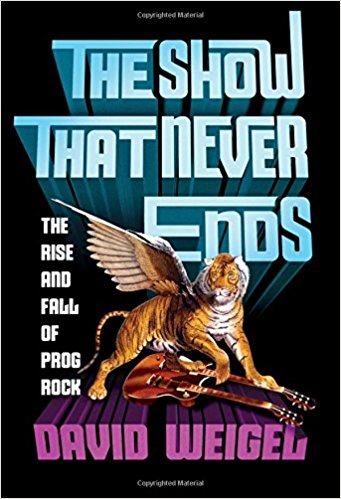
If one knew nothing about progressive rock – “prog,” as it’s usually called these days – one could do worse than the new book by (of all people) political reporter Dave Weigel. Weigel is clearly a fan and that helps an awful lot with a book that is otherwise fairly shallow and doesn’t provide a great deal of insight into what makes prog (or prog fans) tick.

What Weigel provides is a brisk trip through prog’s history, starting with its roots in 1960s psychedelia. Actually, he goes back even further, to Franz Liszt and the superstar he was (some of the fan behavior from those days wouldn’t be out of place if it happened today). In a fun bit of synergy, Yes keyboardist Rick Wakeman would later provide the soundtrack for the bonkers Ken Russell film (is there any other kind?) Lisztomania (Liszt himself was played by Roger Daltrey, because why not?). This is good background and I’m glad Weigel devoted a chapter to it.

Most of the book focuses on prog’s commercial heyday, from about 1969 to 1974 – roughly the time during which King Crimson (in its many permutations) were around. Crim, and particularly Robert Fripp, is one of the touchstones to which Weigel returns again and again, along with David Allen of Gong and a few others. This starts out well enough, as a way to track the commercial and artistic development of the genre using specific examples, but things get awfully spread out by the late 1970s. By that point, as Weigel tries to keep track of the careers of everybody who passed through Crim or Yes the book becomes a collection of quick anecdotes that don’t really tie together. It might have worked better to tell the story of the genre through one person deeply embedded in it (Bill Bruford – with connections to Crim, Yes, Genesis, National Health and so many others – would be a good choice).

Prog is usually thought of as a distinctly English thing, and it’s true that most of the genre’s heavyweights come from (or are at least closely associated with) the UK. However there was a vibrant scene around the world that deserves attention. To my pleasant surprise, Weigel examines this, albeit briefly, through some usual suspects (Rush, Kansas) and some more esoteric ones (Italian bands like Premiata Forenria Marconi). Still, there are odd gaps, including the complete absence of discussion of Frank Zappa, aside from his influence on early proggers like Soft Machine.

I was also pleasantly surprised that Weigel continued the prog story past the 1970s. He quickly discusses Marillion and the rise of neo-prog in the 1980s as well as Dream Theater and the development of prog-metal in the 1990s. It’s not a deep dive, so he doesn’t capture the real breadth of the modern prog scene, but he at least recognizes that it’s here. The book is subtitled “The Rise and Fall of Prog Rock,” which may rankle fans, but it’s the truth – the genre boomed for a few years in the 1970s then nosedived in terms of popularity. That it’s still kicking at all today is kind of a miracle.

Given all the ground that Weigel covers, it’s a shame that he falls into the trap of spending too much time trying to describe the music. Zappa famously said that writing about music is like “dancing about architecture” – it’s damned near impossible. Weigel’s descriptions fall flat and, in some instances, don’t even match what he’s talking about. I don’t know what he’s thinking of when he’s talking about the first track on Yes’s Tales from Topographic Oceans, but it sure as hell isn’t “The Revealing Science of God (Dance of the Dawn).” The beginning of “Dance on a Volcano” gets attributed to the wrong guitar player and then he talks about synth chords being played when there are none about (Tony Banks didn’t go polyphonic with synths until Duke, I think).

There are some other Weigel just gets bizarrely wrong. He calls a nascent Keith Emerson project in the early 1980s the “rump of Yes” (presumably he was thinking of Chris Squire and Alan White’s foray with Jimmy Page?). In discussing what the King Crimson guys were up to before Fripp assembled the mighty “double trio” in the mid 1990s, he explains how Adrian Belew had toured the world with Peter Gabriel. That, of course, was Tony Levin (for all the people Belew’s played with I don’t think he’s every worked with Gabriel – something which needs to happen!). Along with the misdescribed music there’s enough here to wonder how much else Weigel gets wrong.

As usual, I didn’t actually read The Show That Never Ends, I listened to it via Audible. Normally even a less than stellar reader doesn’t get to me, but the reader for this book was particularly poor. For one thing, in some instances where Weigel is quoting someone, the reader tries to do accents. This is a bad move to begin with (he doesn’t sound anything like the actual people involved), but it’s compounded by not being consistent – sometimes he tries an accent, sometimes he doesn’t. For another, the reader has multiple issues pronouncing words. OK, so he doesn’t know a Moog synth from a toaster oven, but there’s plenty of video of and about Bob Moog where you can learn how to pronounce the man’s name! Given the amount of time Weigel devotes to Moog’s synths (mostly via Keith Emerson), that’s inexcusable. Then there’s things from song lyrics – “syrinx” (from Rush’s “2112”) and “Rael” (the main character in Genesis’s The Lamb Lies Down on Broadway) come to mind – that he gets wrong. And I won’t even begin to speculate on how “fugue” comes out “fuh-guh.” It’s just awful.

As I said, if you’re a prog neophyte there’s a lot to recommend in The Show That Never Ends. It’s a story told by someone with affection for the music, which isn’t always the case. But you’ll probably get deeper and more interesting reflections on the music by going someplace like Progressive Ears or Progarchives and poking around. Whatever you do, stay the hell away from the audiobook.

ShowThatNeverEnds

New Technology = Moral Panic

I’m reading Tom Perrotta’s new book Mrs. Fletcher, which is about a single mother navigating the modern world on her own once her brotastic son leaves for college. At one point she flashes back to a talk given to the local PTA addressing the then latest and greatest moral panic – Internet porn. It was delivered by a prosecutor, naturally, since history shows that the best reaction to any panic is to lock people in cages.

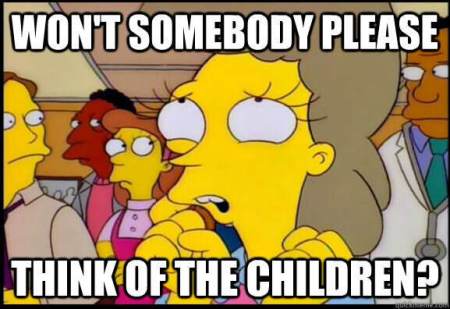
The panic over Internet porn is hardly the first situation where an emerging technology leads some people to think said tech is going to lead the world to hell in a hand basket. In fact, it’s a fairly predictable pattern that’s played out many times throughout history.

Slate has an article about the moral panic that surrounded the great technological breakthrough of . . . cheap paper.

Although the printing press had brought reading out of the monasteries and upper classes, the actual production of books didn’t ramp up all that much because of the lack of quality paper. People lower down the socio-economic ladder didn’t own books, they owned a book – usually a Bible.

That started to change in the 19th century:

The paper machine, invented in France in 1799 at the Didot family’s paper mill, could make 40 times as much paper per day as the traditional method, which involved pounding rags into pulp by hand using a mortar and pestle. By 1825, 50 percent of England’s paper supply was produced by machines. As the stock of rags for papermaking grew smaller and smaller, papermakers began experimenting with other materials such as grass, silk, asparagus, manure, stone, and even hornets’ nests. In 1800, the Marquess of Salisbury gifted to King George III a book printed on ‘the first useful Paper manufactured solely from Straw’ to demonstrate the viability of the material as an alternative for rags, which were already in ‘extraordinary scarcit’ in Europe.

Then, in the 1860s, came the real breakthrough – paper made from wood pulp. Upwards of 90% of modern paper is made from wood pulp or recycled pulp. This cheaper, more readily available paper led to the explosion of low-cost books for the masses. That’s why it’s called “pulp fiction.”

You know, things like this:

CrookedCity

NakedandAlone

And it was of the Devil:

Detractors delighted in linking ‘the volatile matter’ of wood-pulp paper with the ‘volatile minds’ of pulp readers. Londoner W. Coldwell wrote a three-part diatribe, ‘On Reading,’ lamenting that ‘the noble art of printing’ should be ‘pressed into this ignoble service.’ Samuel Taylor Coleridge mourned how books, once revered as ‘religious oracles … degraded into culprits’ as they became more widely available.

By the end of the century there was growing concern—especially among middle class parents—that these cheap, plentiful books were seducing children into a life of crime and violence.

* * *

Moralizers painted the books as no better than ‘printed poison,’ with headlines warning readers that Pomeroy’s brutality was ‘what came of reading dime novels.’ Others hoped that by providing alternatives—penny delightfuls or ‘penny populars’—they could curb the demand for the sensational literature. A letter to the editor to the Worcester Talisman from the late 1820s tells young people to stop reading novels and read books of substance: ‘[F]ar better were it for a person to confine himself to the plain sober facts recorded in history and the lives of eminent individuals, than to wander through the flowery pages of fiction.’

It’s easy now to look back at such panics and roll your eyes and the naive concern about cheap books or television or whatever kind of music kids are listening to at the time. But history, as they say, repeats itself. Rather than being smug in our modern superiority, maybe think twice the next time some panic is sweeping the nation. Try not to give future generations something to roll their eyes about.

ThinkoftheChildren

Weekly Read: Lovecraft Country

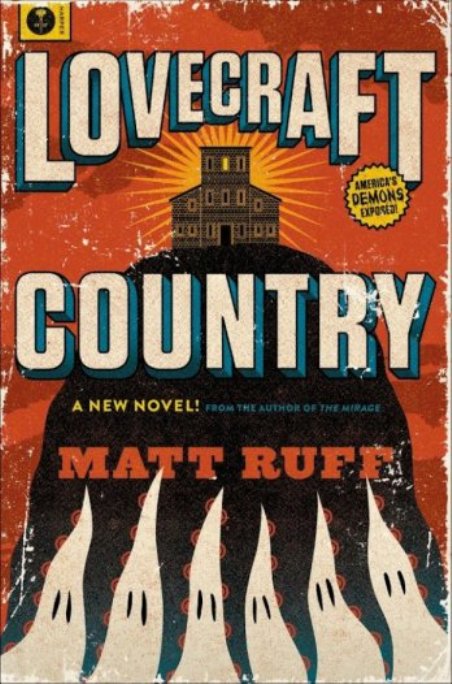
Matt Ruff’s Lovecraft Country is less a novel than it is a collection of linked short stories built around a brilliant conceit. That is, the main characters in the stories are all from an extended African-American family (family and friends) living in Chicago in the 1950s. That is to say, the stories are shot through with everyday racism that will make your toes curl. But they’re also shot through with magic, nasty creatures, and mysterious rites. Who better to deal with such supernatural horrors than people who have to deal with horrific treatment on a daily basis just based on the color of their skin?

I should say, at this point, that I’m not particularly familiar with Lovecraft’s work (I’ve got a book of his on in my ever expanding “to read” pile, though). I have a vague sense of what it’s about, but it’s only a surface understanding. That’s to say that I’ve read some criticism from people about Lovecraft Country that isn’t, well, sufficiently Lovecraftian. That wasn’t a concern for me going in and it certainly isn’t a concern now that I’ve read the book.

In this “Big Idea” piece over at John Scalzi’s blog, Ruff explains that Lovecraft Country started as a TV pitch (and, indeed, it’s been picked up by HBO with Jordan Peele and JJ Abrams involved) and knowing that now I can see it. Each story serves like an episode, telling a tale that stands alone but pushes forward an overall plot that comes to fruition in the season finale (aka, the final story). It’s a bit frustrating initially because the first story (the title track, if you will) winds up really quickly, especially when you’re expecting it to be just the beginning of a much longer story.

So that first story does what a good pilot does – introduces the main characters and explores some of the world they’re walking around in. The closest thing to a “main” character the book has is Atticus Turner, a veteran returning to Chicago to a collection of family and friends that will, one by one, be drawn into this weird world. Atticus is the link between the African-American characters and the main white character, Caleb Braithwhite. Braithwhite is the latest in a long line of secret-society sorcerers who are trying to control the world. He and Atticus are distant relations – Braithwaite’s ancestor owned one of Atticus’s ancestors, whom he also raped. That makes Atticus a critical part of Braithwaite’s scheme to control the society and its secrets.

That being said, this isn’t Braithwaite’s story. He lurks above the main characters, pulling strings and trying to use them to his advantage. In that way, the book makes a powerful point about the lives African-Americans lead in a racist society. As bright, clever, and determined as they are, they’re really not in control of their own destinies. That they’re able to turn those tables, somewhat, makes the point land even harder.

This being, essentially, a short story collection, it rises and falls from tale to tale. All of them have some kind of interesting creepy thing going on – a haunted house, a “devil doll,” a comatose woman providing a “change” for one of the characters – but they don’t all work as well. The cream of the crop for me is “Hippolyta Disturbs the Universe.”

Hippolyta is one of a pair of sisters close to Atticus’s family and someone who, had she not been a black woman in 1950s American, would have become an astronomer. As it is, Hippolyta retains her fascination with the stars and occasionally shows up at observatories just to help out. That leads her to one particular observatory in Wisconsin that’s tied into the history of the secret society. As a result, she discovers a portal to another world and, briefly, takes us there. What she finds on the other side is another sad commentary on how people of privilege treat those who have none. It’s both a serviceable monster story and an interesting commentary.

It will be interesting to see how Lovecraft Country translates to the small screen. On the one hand, it’s built for it, given its episodic nature. On the other hand, since each story has a different main character it might be hard to keep such a dispersed focus (a “star” playing Atticus would, presumably, not want to spend as much time on the sidelines as he does). It will also be interesting to see if some issues of appropriation come up as the book gets a wider audience. Ruff certainly appears to be a white guy telling an inherently African-American story. He did it well from my perspective – but I’m another white guy. Particularly the fate of Hippolyta’s sister might raise some eyebrows.

Regardless, this was an enjoyable trip into Lovecraft Country. I’ll gladly go again.

lovecraftcov

Weekly Read: Perdido Street Station

My feelings about Perdido Street Station, China Mieville’s sprawling steampunky saga of a strange city and it’s even stranger inhabitants, can be summed up in the way I feel about one character in the book, Yagharek.

Yagharek is a part-man, part-bird creature with a fascinating back story and, were his story to be presented in a standalone short story, I think I’d love it. But within the context of the larger novel, it occurs to me that, aside from a couple of plot-goosing things that could be given to other characters, Yagharek’s story could be excised from the book without losing anything.

A lot of Perdido Street Station is that way. There’s so much going on in New Crobuzon that it would be a shame if Mieville just ignored it. After all, there’s not just magic and steampunk technology, but a host of non-human races (many based on folk creatures from around our world), creatures that can slip the very fabric of existence, and even a sentient trash heap! Like Yagharek they’re all interesting in their way, but the time we take observing these things doesn’t really pay off in the larger story.

That story itself is one that makes a hard shift about halfway through the book. Until that point it’s largely the story of Isaac, a renegade scientist (it’s via Isaac we meet Yagharek), and his artist lover Lin, who has the head of a scarab beetle but the body of a woman. Isaac works on Yagharek’s assignment to return him to flight, while Lin accepts a commission from a powerful (and powerfully weird) organized crime figure. Along the way we  learn some of the politics of New Crobuzon and generally get to know the world.

Around halfway one of Isaac’s beasties goes bad and the city is terrorized by a group of slake moths, giant creatures that hypnotize with the shifting patterns in their wings and then suck the victim’s dreams from their minds. The result is a shell of a person who is still alive, but hardly living. The book turns into a monster hunt for Isaac and others (Lin is absent, for the most part, being brutalized off screen for no good reason). The mechanics of the hunt are interesting (see, above, the sentient trash heap) but it doesn’t quite live up to the promise of the first part of the book.

All this might make it sound like I didn’t enjoy Perdido Street Station. I did, but it can be very frustrating at times. There’s something of a perfect storm where Mieville’s imagination running wild (and overtime) matches up with his purple prose and love for description. There’s a scene where one character meets his state handlers in a seedy brothel. Naturally, we get a long, loving description of said brothel (and its bizarre employees) that has no relevance to the meeting the character is going to and doesn’t reappear later in the story.

To a certain extent, Perdido Street Station reminds me of Bryan K. Vaughn’s Saga, which is also overflowing with imaginative locales, creatures, and technologies. Maybe it’s because we get to see all that stuff it’s easier for me to process. In print it sometimes gets to be too much.

Which makes the reading difficult, but not necessarily unrewarding. In fact, if you’ve got the patience for a deep dive into a world where everything doesn’t need to be all that important, Perdido Street Station is the book for you. There’s more that’s interesting and bizarre and wondrous than there is frustrating and (perhaps) pointless. Recommended, even if I do so with caveats.

Perdido

Is Originality an Illusion?

On their second album echolyn has a multipart suite that chronicles their struggle to make their kind of music in a world that doesn’t really appreciate it. An early section is called “Only Twelve,” a reference to the fact that the Western musical scales only has 12 tones. It’s not that diverse a palate to work with. A later section, however, suggests that’s not the right way to think about it. It’s called “Twelve’s Enough.”

But recent evidence suggests that 12 might not really be enough. As this article lays out, more and more pop artists are getting sued for lifting bits of music from other sources (Ed Sheeran, whose music I couldn’t pick out of a sonic lineup, appears to be a great transgressor). This is not likely to be a result purely of coincidence:

[quote]Bennett [a forensic musicologist – JDB] then goes very deep into the maths, proposing a scenario where he and I each decide to write a melody. ‘I might start on C and you might start on E – two of the seven notes in the major scale. The odds [against us choosing the same note] aren’t exactly one in seven, but you get the idea. Then you come to the second note: I might choose D, you might choose another E. So then we’ve got a seven to the power of two probability, and that’s just within two pitch choices.’[/quote]

The analysis goes much deeper but as you can see from just two notes, the probabilities don’t look good for coincidence. That shouldn’t be a huge surprise. We interact with art – music, literature, you name it – from the day we’re born. How could we not internalize things and, perhaps, come to think of them as our own? As Bennett admits, there’s a line between copying and plagiarizing.

Having said all that, artists have always copied from one another. There are entire traditions – folk music and the blues come to mind – that are based on taking work done by others making it your own. Hell, it’s been said (by Picasso, possibly) that good artists copy, but great artists steal (http://quoteinvestigator.com/2013/03/06/artists-steal/).

The issue of going too far with borrowing is where this all meshes with the law of copyright. We want to protect creators and incentivize creativity, but we don’t want to shut down the natural drift of ideas that occurs in culture. Is the list of court cases about pop plagiarism an indictment of our current copyright scheme?

That’s the idea behind what is surely the best piece of legal/regulatory speculative fiction ever written, Spider Robinson’s “Melancholy Elephants.” It’s about a word where copyright protection is eternal and, as a result, it becomes increasingly difficult for people to create new things because everything can be traced to something that came before.

We haven’t reached that point yet, although we might be close. Before we go too far, it’s worth thinking about whether we want to live in a world where every idea, every melody, every story is owned by a single person (or corporate entity) for all of time.

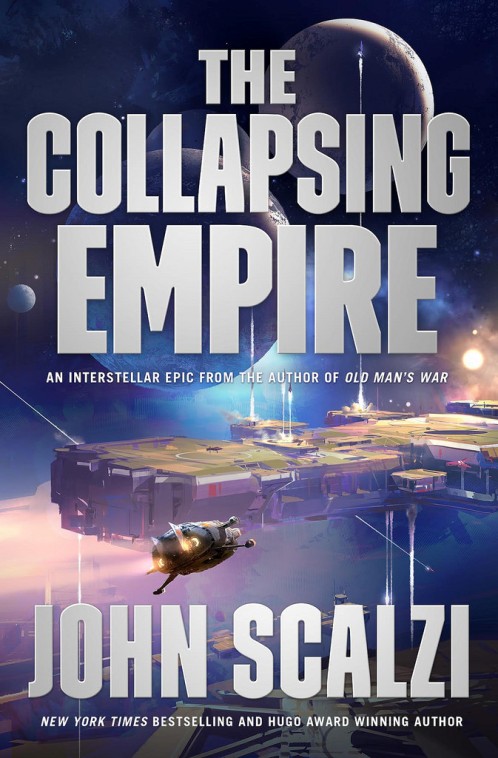
Weekly Read: The Collapsing Empire

I don’t think this is unique to me, but it’s at least unusual that my entry into the realm of John Scalzi fan began not with his books, but with his blog, Whatever. I was a regular reader there for a few years before I started working through his ever expanding bibliography.

What’s more unusual is that, for the most part, I don’t care for Scalzi’s most well developed universe, the Old Man’s War series. I read the first book and liked it well enough, but military sci-fi has never been my favorite corner of the genre. I’m much more into Scalzi’s stand alone work, from The Android’s Dream to Redshirts to Lock In. Which is to say I was stoked when I heard Scalzi was opening up another space opera series.

The Collapsing Empire has, at its core (or “Hub,” I suppose) a terrific idea. Humanity is spread across a multitude of worlds (Earth not being one of them, anymore), thanks to a faster-than-light McGuffin called “The Flow.” The Flow works . . . well, nobody is really sure why it works. But it does work, like a hyperspace equivalent of the jet stream or ocean currents, carrying spaceships along at post-light speed and making interstellar travel possible, if a pain in the ass.

Since people can only go where The Flow takes them, there are certain routes of travel. All lead to a planet called Hub, where the titular empire is headquartered. On the other end of the travelled galaxy is End, a sort of Australia (they send the troublemakers there) that, also, happens to be the only place where humans live under the open sky. The problem, as the book begins, is that The Flow is starting to fail. The bigger problem – most of the empire has no idea about it yet.

This is all background, against which a few stories play out. There’s a new emperox (not a typo – it’s a gender neutral imperial title) trying to figure out her new life. End is experiencing one of its periodic rebellions, although this one might actually stick. And someone is trying to inform the powers that be about the problem with the Flow. All of this is interesting, but none of it seems like a fully formed story.

That is The Collapsing Empire’s biggest problem – it’s not a complete story. Even in the context of a series (of which this is the first), it’s not too much to expect an individual volume to actually have some resolution. This doesn’t, really. In the end, it feels more like an extended, epic prologue or a backfill sequel than it does a novel of its own.

Which is a shame, because until you realize that the end is coming and there’s no way things are going to even try to wrap up, The Collapsing Empire is a fun read. Scalzi’s characters are well drawn and interesting. His great creation in this book is Lady Kiva, the “owner’s representative” on a ship that has to deal with The Flow and the rebellion on End.* She’s quick of wit, free with the word “fuck,” and willing to sleep with just about anything that moves. Think of her as Captain Jack Harkness’s long lost more vulgar cousin. The new emperox, Cardenia, isn’t developed quite as well, but her desire not to do the job sets up an interesting story going forward.**

Which brings me back to my complaint – this is all setup. It’s interesting setup. I’m definitely on board for the next book in the series, because I want to see how all this starts to shake out. But I’m left wanting more right now, something a little more solid and whole.

Still, I’m hooked. That counts for something.

* Bonus fun note – the ship names are great. A pair of sister ships are called the Yes Sir, That’s My Baby and No Sir, I Don’t Mean Maybe.

** Bonus fun note – the emperox has access to a “memory room,” in which she can summon the computer-generated simulacrum of any prior emperox. The discussions she has in there are all the better for the simulacra knowing just what they are.

CollapsingEmpire