A Statement About AI

Just before I went on hiatus courts in two separate lawsuits by creatives against generative AI companies handed down similar decisions indicating that AI isn’t going anywhere anytime soon. Both concluded that using existing copyright-protected works to train AI engines falls under the doctrine of “fair use.” As one article explained:

The doctrine of fair use allows the use of copyrighted works without the copyright owner’s permission in some circumstances.

Fair use is a key legal defense for the tech companies, and Alsup’s decision is the first to address it in the context of generative AI.

AI companies argue their systems make fair use of copyrighted material to create new, transformative content, and that being forced to pay copyright holders for their work could hamstring the burgeoning AI industry.

Anthropic told the court that it made fair use of the books and that U.S. copyright law “not only allows, but encourages” its AI training because it promotes human creativity. The company said its system copied the books to “study Plaintiffs’ writing, extract uncopyrightable information from it, and use what it learned to create revolutionary technology.”

Copyright owners say that AI companies are unlawfully copying their work to generate competing content that threatens their livelihoods.

Alsup agreed with Anthropic on Monday that its training was “exceedingly transformative.”

You can read more about the nuances of the various cases here. And this column points out how restrictive copyright can be when a real human being wants to use something that’s currently protected.

While I’m not a party to either suit, I do know that some of my books (likely scraped from pirate sites) are included in at least one collection that’s used for AI training, so I do have some skin in the game. In light of that, I wanted to say a few more words about AI and make some public promises about it.

Part of the trouble we’re having with AI is down to the fact that the law has never really grappled with the nature of computer power in the 21st Century. The pro-AI argument for training on existing works is that it’s the same thing that humans do – all artists and creators are building their own work on whatever they’ve read or seen or heard before. Nobody could seriously argue that a young would-be writer who borrows a bunch of books from friends or families and then writes their own story was fucking with anybody’s copyright. The problem with AI is that it can do that on a massive scale that the law can’t quite fathom.

It’s somewhat similar to what’s happened with criminal records and arrest reports over the past few decades. Those things were always (for the most part) public and accessible to anyone who had the time and desire to go to the courthouse and wade through files to find them. But who actually did, outside of people doing it for a living? Now it’s just a matter of a quick Web search to see if your neighbor was arrested for DUI over the weekend. The law is mostly concerned with the public/private dichotomy, without factoring in accessibility.

Years ago, the Supreme Court was confronted with how to deal with GPS trackers placed on cars and whether they implicated the Fourth Amendment. Generally speaking, to assert a Fourth Amendment violation you have to have a “reasonable expectation of privacy” in the place that was searched. By definition, there’s no such expectation when you’re out in public, so there’s never been a problem with the police following people who they suspect of something (but lack the probable cause necessary to arrest them). GPS trackers take that and multiply the amount of data available exponentially in a way that flesh-and-blood cops could never handle. Rather than confront this head-on in the case, the Court took a step back and concluded that the actual placement of the tracker was the problem. We’re still trying to figure out what mass data means when it comes to the Fourth Amendment.

It’s the same with AI and it’s doubtful the law is going to get itself in gear anytime soon.  With that said, I have a few promises I’ll make to readers when it comes to AI:

I will not knowingly allow my work to be used for AI training. A good chunk of the AI discourse when it comes to creators is the copyright angle, but even if the AI companies came up with arrangements to compensate creators for the use of their work in training there are still huge issues with generative AI. It’s horrible for the environment. Its products are the worst kind of unimaginative slop. It’s bad for the soul – creativity is a large part of what makes us human and we best not be willing to outsource it to machines. Count me out, regardless of potential reward.

I will not knowingly use generative AI in my writing or music. This should come as no surprise, particularly in light of my NaNoWriMo post linked above, but I won’t knowingly use generative AI in my work. There are other AI variants that are much more common and less problematic (like spell check) that I have always used and will continue to use, but every idea that gets put on a page or in a song is only going to come from my own head – for better or worse! Otherwise, what’s the point?

I will not knowingly work with others who use generative AI. I am happy to say that Deranged Doctor Designs, who have done the (current) covers for all my books, are committed to going forward without resorting to generative AI in their work. I will strive to ensure the same with anybody else I work with in the production process.

All this may be pointless, standing on the tracks of “progress” while the train inevitably barrels over me. I may be shouting into the void (I did use to have a blog called Feeding the Silence so it wouldn’t be the first time). As one snappy commenter put it:

Can’t Anyone Rest in Peace These Days?

Many many years ago, there was a Bloom County cartoon in which Opus learns of new companies that allow you to freeze-dry a deceased pet and keep them around forever. His reaction was a tad overwrought:

Or at least I always thought it was. More and more, however, it’s becoming clear that we can’t just let the dead be dead, we’ve got to keep bringing them back to serve various agendas.

The most alarming recent case came out of a court in Arizona. Christopher Pelkey was killed during an incident of road rage and Gabriel Horcasitas convicted of his manslaughter. It’s pretty common in such cases to have victims (or family members of victims) give statements to the judge before sentencing about what has been lost due to whatever crime the defendant committed.

Horcasitas’ sentencing went a step further:

Ms. Wales, 47, had a thought. What if her brother, who was 37 and had done three combat tours of duty in the U.S. Army, could speak for himself at the sentencing? And what would he tell Gabriel Horcasitas, 54, the man convicted of manslaughter in his case?

The answer came on May 1, when Ms. Wales clicked the play button on a laptop in a courtroom in Maricopa County, Ariz.

A likeness of her brother appeared on an 80-inch television screen, the same one that had previously displayed autopsy photos of Mr. Pelkey and security camera footage of his being fatally shot at an intersection in Chandler, Ariz. It was created with artificial intelligence.

“It is a shame we encountered each other that day in those circumstances,” the avatar of Mr. Pelkey said. “In another life, we probably could have been friends. I believe in forgiveness and in God, who forgives. I always have and I still do.”

Reporting on the hearing has been really bad – that article quotes the defense attorney as stating (perhaps correctly) that given the wide latitude judges have at sentencing that there’s probably nothing legally wrong with it, but he also says that an appellate court might find it to be reversible error – but it’s unclear whether an objection was lodged, so who knows? Regardless, Pelkey’s reference to forgiveness beyond the grave didn’t seem to move the judge any – Horcasistas got the maximum sentence.

I can sympathize with using AI to bring a dead loved one back to life to hear them make their own plea for justice (I also think it’s ghoulish and I’ve never been a big fan of victim impact statements, but at least feel for those involved). That’s a lot harder to do when it’s part of a cynical cash grab at the expense of a dead person’s reputation.

BBC Maestro is the British broadcaster’s version of Masterclass, in which you pay to access video lectures by big names in their given fields. When it comes to mystery fiction is there a bigger name than Agatha Christie? Ah, but she’s dead. That’s no longer a problem! Thanks to the “magic” of AI and some desperate descendants:

Agatha Christie is dead. But Agatha Christie also just started teaching a writing class.

“I must confess,” she says, in a cut-glass English accent, “that this is all rather new to me.”

* * *

She has been reanimated with the help of a team of academic researchers — who wrote a script using her writings and archival interviews — and a “digital prosthetic” made with artificial intelligence and then fitted over a real actor’s performance.

“We are not trying to pretend, in any way, that this is Agatha somehow brought to life,” Michael Levine, the chief executive of BBC Maestro, said in a phone interview. “This is just a representation of Agatha to teach her own craft.”

Bullshit. Anyone could take Christie’s writings, including drafts, notes, and other non-published works, and base a writing class on it. Such a class would probably be quite useful! But it wouldn’t bring in the bucks the way having “Agatha” actually tell it to you. People are attracted to the name, which is the whole point in using it in the first place. Add in the likeness and it’s like she’s in the room with you (are the space bees, as well?).

It reminds me of the Frank Zappa hologram tour that hit the road a few years ago. A band full of Zappa alumni played live, occasionally joined by a holographic projection of Frank playing along. It was a sad gimmick. It should have been enough of a draw to hear some amazing music played live (in front of your ears!) by amazing musicians, but that wouldn’t have been enough of a draw. But Zappa there in hologram form? Well, it did sell some tickets, although the fact that it’s been largely forgotten about hints at its impact (meanwhile, Dweezil and others continue to do the man’s music justice on the live stage around the world).

And now they’re reanimating one of the most distinctive voices in movie history:

Nearly 40 years after his death, Orson Welles is back — as a disembodied AI-generated voice in location-based storytelling app Storyrabbit.

Storyrabbit, from podcast company Treefort Media, inked a partnership with the Orson Welles Estate to launch “Orson Welles Presents.” The app now features the unmistakable voice of Welles, digitally re-created using Storyrabbit’s AI technology, as an option for users to hear stories about specific locations. Using the Welles voice is free in the app until June 1, after which it will cost $4.99/month.

I mean, the idea for the app is kind of neat – it provides you with short info blurbs about specific locations based on where your phone is – but what value is added by having not-Welles give you the info? Surely the into itself is what you want, right? Maybe you don’t want it read by Gilbert Gotfried, but surely any of the numerous voice over actors or audiobook narrators out there could do the job, right?

I love history – that was my undergrad degree before I went to law school. I love the history of art, too. I’d give a lot to have been able to talk with Kurt Vonnegut or see Frank Zappa play live, but that’s never going to happen. An AI simulacrum of either of them isn’t the same thing – it’s a modern construct based largely on who we think those people were, not who they really were.

The dead are gone. They can leave us incalculable gifts, but what they can’t leave is their presence. Animating their virtual corpses in pursuit of a buck (or pound) demeans them – and us as well. Maybe Opus had it right all along.

“Bone Valley” and the Crushing Weight of Finality

I occasionally get appointed to what are called “cold record” appeals, so called because the lawyer handling the case on appeal (that’s me) is not the same person, or from the same office, who handled the case at trial, plea, or sentencing. In those cases I have a letter I send that explains just what a direct appeal is and what it isn’t. Part of that spiel is that in the United States courts of appeals generally don’t review the facts of cases. They’re looking for legal error (for which the facts may be relevant), but generally the question of “did this person actually do it?” has already been answered and the court of appeals isn’t going to revisit that.

It’s called “finality” and it is, in many ways, the hobgoblin of our criminal justice system. It’s the idea that once someone is convicted of a crime it becomes really difficult to even get a court to look at the question of guilt/innocence, much less in a way that might actually result in a conviction being reversed. It’s something that a lot of lay people don’t understand and find frustrating – which I do, too!

I was thinking about this while listening to season one of the podcast Bone Valley.

The subject is Leo Schofield, who was convicted of the 1987 murder of his wife, Michelle. The podcast covers not only the initial investigation and Schofield’s trial (for which the evidence presented is pretty slight), but also his attempts to get a new trial after evidence turns up pointing to another man, Jeremy Scott, as the killer. Scott eventually confesses, but even that’s not good enough for Florida courts, who denied Schofield’s requests for relief (he was eventually released on parole in 2023).

Bone Valley does a pretty good job as a “whodunnit,” but there’s a gaping hole in the middle of it when it comes to the law. Nobody ever comes out and says just what Schofield has to show to get a new trial. What is the standard of review? Is it enough to show newly discovered evidence or does he have to show it’s of a kind that it completely undermines his conviction? Does it matter that Scott tells a half dozen different stories and isn’t particularly reliable as a witness, but appears to get some details right that only the killer would know? The show presents its case as if courts now are looking at the question of guilt anew, but they aren’t.

Let me give you an example. The state, of course, has a theory as to how Schofield killed his wife and can marshal some facts to back it up (not enough, in my opinion, but a jury disagreed). A couple of times Bone Valley dings courts for taking the state’s gloss on the facts as gospel truth, as if they’re just gullible doofuses.

Only that’s how review of facts in criminal cases generally work. On appeal I can technically challenge the sufficiency of evidence supporting a conviction, but in doing so the court of appeals has to take the facts of the case in the light most favorable to the prosecution. In particular, that means if a witness whose credibility was sketchy testified to X and X supports conviction, the court of appeals has to accept X as true.

For example, there’s a witness in Schofield’s trial who testified that she saw him loading something heavy, perhaps a body, in the back of his car the night his wife disappeared. Damning if true! Only her sister’s testimony suggested she had her dates wrong and that was really a couple of weeks before the murder (when, Schofield says, he was loading an amp into his car to go play a gig). You can choose to believe that witness or not, but courts of appeal can’t – her testimony supports the verdict and so, taking things in the light most favorable to the prosecution, her testimony is reliable.

Finality is, like all the various procedural hurdles inmates have to jump through to get back to court, about prioritizing an answer already gotten over making sure it’s the right answer. Antonin Scalia famously wrote in an opinion that there’s nothing in the Constitution that “forbids the exe­cu­tion of a con­vict­ed defen­dant who has had a full and fair tri­al but is lat­er able to con­vince a habeas court that he is ​’actu­al­ly’ innocent.” He wasn’t wrong – our system is designed to produce a winner and a loser, rather than struggle to get to the “right” answer (the same’s true in civil cases, too).

This is not how it has to be. Lots of other countries, usually working in variants of the civil/Napoleonic system, review the factual bases of convictions fresh on appeal. I honestly don’t know if those systems work out any better, on average, than ours when there are genuine questions of guilt, but at least the system isn’t structured to entrench mistakes in the name of not upsetting the status quo. What’s for certain is that any system that allows Alford and nolo contender guilty pleas (where a defendant pleads guilty even though they maintain they didn’t do it) or excludes reliable evidence because it was found or seized in the wrong way has other priorities than getting the ultimate question of guilt “right.”

All this is important if you really care about legal outcomes, not just the factual issues around the case. It’s one thing to ask, as a factual question, “did Leo Schofield kill his wife?” You can weigh the evidence however you want and make your best case. It’s an entirely different thing to ask, as a legal matter, “should Leo Schofield get a new trial based on newly discovered evidence that somebody else killed his wife?” The judges who will make the decision have law that constrains them in terms of how they view the facts of a case.

It’s surely not the best system the world has ever known. I’m not even certain it is (to borrow a phrase) “the worst . . . except for all the others.” But it is the one we’ve got, so know what it is you’re working with. Still and all, sometimes Dickens was right.

Thoughts on Rewatching “Homicide: Life on the Street”

Last fall one of the great injustices of the streaming world was remedied when the entire run of Homicide: Life on the Street (including the wrap up TV movie) was finally available to stream on Peacock.

Yes, some of the music cues had to be changed due to rights issues (miss my “No Self Control” drop!), but otherwise the show looks and sounds better than it has for years. Created by Paul Attanasio (with an assist from director and Balimore guru Barry Levinson) and based on a book by then-journalist David Simon called Homicide: A Year on the Killing Streets, the show broke a lot of ground for network TV and helped usher in the cable shows we now think of as peak TV, including Simon’s The Wire.

I wish I could say I was into Homicide from the jump, but the truth is I only remember being able to drop in here and there during the show’s original run. I liked what I saw, but it was harder to watch a specific show back in those days, kids (it was on Friday night for part of its run, for fuck’s sake!). Where I really picked up the show was on cable a few years later and, ultimately, by getting the entire series on DVD. In spite of having it right there, I hadn’t really watched it for years until it hit Peacock last year.

The relaunch on streaming led to a good deal of reportage on Homicide’s place in the TV pantheon, which caught my wife’s attention. She’d not seen much of the show, but decided it was worth diving in in light of the hype. How does the series hold up during a full-length rewatch after all these years?

Dramatically, Homicide holds up remarkably well. Part of that is due to the fact that it doesn’t look or feel like a product of 1990s network TV. If you listen to the (hopefully not gone for goode) podcast Homicide: Life on Repeat, Kyle Secor and Reed Diamond talk a lot about how differently the show was shot and other technical things that are, mostly, above my head. Still, it doesn’t feel like a TV show from thirty years ago, from an era with commercial breaks and network censors looking over everyone’s shoulders.

That extends to the storytelling itself, of course. The cops of Homicide are not (generally speaking) heroes out there braving the mean streets to make the world safe for democracy. They’re just men (mostly) and women trying to do a job and get through days filled with horror, pain, and uncooperative witnesses. Cases frequently remain unsolved (the “board” – a large dry-erase board that lurks to one side of the squadroom tracking open and closed cases – is practically a character itself). Unlike it’s NBC stablemate Law & Order things rarely go to court, so most often it’s the arrest, the clearance of the case, that matters, not ultimately whether justice is actually done. Homicide depicts police work as a grind, as a kind of assembly line, rather than a great, noble calling. It’s not unlike the practice of law, in my experience.

None of that would work without amazing work from the cast, both the series regulars and guests (again, like Law & Order, there are lots of “hey, they went on to . . .” moments). Secor, as Tim Bayliss, provides the perfect audience surrogate, the new guy to the squad who has to figure out the rhythms of the work and whether he should really be there are all. Andre Braugher rules as Frank Pembleton, master of “the box,” and the last person you want to sit down with for a chat. That the series doesn’t shy away from the fact that interrogations are often about tricking idiots into incriminating themselves adds a sleazy sheen to proceedings.

I’ve already mentioned Law & Order a couple of times and it’s impossible not to compare the two shows. I’m no Law & Order hater, in spite of my profession, but that show does seem to have a more upbeat attitude toward police work than Homicide does. A great example of that is two stories that dealt with suspects who really looked guilty, but the facts didn’t show it.

On Homicide, Bayliss’ first case as a primary is the sexual assault and death of a young girl, Adena Watson. Through most of the first season he and Pembleton try to build a case against a neighborhood fruit seller who really appears to be the best suspect, but they can never actually pin the murder on him. An entire episode is devoted to his interrogation, after which nothing has changed. The case remains unsolved (as did the real life inspiration in Simon’s book) and haunts Bayliss through the rest of the series. Viewers are left without any real closure, either.

Compare that to the Law & Order episode “Mad Dog” from 1997, in which a rapist prosecutor Jack McCoy had convicted years prior is released on parole, over McCoy’s furious objection. Shortly thereafter, there is a rape/murder in the neighborhood that bears the released guy’s modus operandi, but no real evidence to connect him. Detectives and prosecutors spend most of the episode deploying various tools of surveillance and coercion to trip the guy up, to no avail (McCoy is even chided by his boss for “dragging the law through the gutter to catch a rat”). It could have ended like that, with a sense of unknowing and asking serious questions about police conduct. Instead, a second assault is interrupted by the would-be victim taking a baseball bat to the skull of her attacker – who is, of course, the recently paroled rapist. In a flash we get closure and knowledge that not only had the cops and prosecutors been right all along, but that the bad guys’s dead, to boot.

All of this leads to an interesting question rewatching Homicide after all these years – is it copaganda? That is, do the stories it tells valorize police in a way that polishes their public image in a manner that can lead to the public letting police get away with stuff they never should get away with? Although it’s hardly a new phenomenon, I don’t remember “copaganda” being a term back during the show’s original run or it being discussed as such. There are certainly moments when the show leans that way – for all their faults, the cops are still fairly noble and have a sense of purpose as “murder police” (as Meldrick Lewis would put it), but overall it doesn’t really feel like it. These cops cut corners, unashamedly treat some murders as more worthy of solving than others, and worry about bulking up overtime. It’s not pure copaganda, at any rate, which makes sense given the issues many of the characters’ real-world analogues have had.

But I might be biased. For all the glory heaped upon The Wire, which is great, I always held Homicide in higher esteem. It seemed to get there first, but did it with constraints that would strangle a modern “prestige TV” series. After rewatching I still do. It’s an amazing achievement and, if you’ve not seen it, you owe yourself some binging.

How Censors Work

When I was first pulling together the world of the Unari Empire, one of the character ideas I had was that of an Imperial censor. That character would kind of pop up throughout the story, struggling to hold on as the Empire shattered around them, slowly losing their will to do the job that had defined them. I shelved that particular idea since I didn’t have a good handle on what the day-to-day life of a censor looked like.

If only I’d read Robert Darnton’s Censors at Work: How States Shaped Literature back then I might have given it a go.

Darnton explores the nitty gritty of how censors actually did their jobs during three historical periods – pre-Revolutionary France, India in the late 19th and early 20th centuries under British rule, and East Germany right around the fall of the Berlin Wall. It’s a dry work, without a lot of compelling through lines for casual readers, but it does offer some fascinating insights into what it means to be a “censor.”

Primarily, what censors did (or what these censors did) on a daily basis wasn’t squelch explicitly political speech aimed at criticizing the regime for which they worked. In a lot of ways they worked as hyper-powerful literary gatekeepers, helping to shape literature by acting as a kind of quality control. The French censors, many of whom were writers themselves, wanted to ensure the quality of French literature. The British censors in India were hopeful they could guide the Indians into writing great literature (“great” here meaning “what British thinkers consider great,” of course). The East Germans helped literary works get trimmed and massaged to reach an audience.

To an extent, in crafting these portraits, Darnton is trying to humanize the censors. They weren’t faceless thugs grinding ideas into the dirt under their bootheels – they were just people doing a job in which they believed, at least most of the time. This isn’t to say that Darnton comes across as a fan of censorship (he emphatically doesn’t), but it does create a more nuanced picture of what they do most of the time.

Of course, what they were doing all the time was still censoring writers (Darnton focuses almost exclusively on books, with some theater stuff thrown in), even if most of the time their motives were more benign than we might expect. The French censors Darnton talks about who squelched a bawdy insider narrative of life at Versailles might have thought it was low brow trash, but they were also aware that it made fun of the royal court and you can’t have that. That dynamic is even more clear with the British, who developed a real knack for decoding incipient strains of Indian nationalism and independence movements in modern retellings of ancient myths (not for nothing, but if you see rebellion in every work you read, maybe that’s saying something about you?). The East Germans, of course, made no bones that they were making sure new books were ideologically appropriate, regardless of the genre.

One interesting dynamic that plays out across all three eras is that every regime at least pays lip service to the importance of free speech. That is, none of the regimes saw their restriction of particular kinds of speech as any kind of violation. Hell, the East German censors (Darnton interviews two) don’t even think they engaged in censorship! This is true wherever you are, including the United States. The “freedom of speech” guaranteed by the First Amendment is  term of legal art that excludes things like libel and obscenity. The grey areas of those definitions are where the rubber meets the road.

Given that these censors didn’t see their work as being conflict with a commitment to free speech, it’s not surprising that they tended to find objectionable material wherever they looked for it. If Hitchens was right that religion poisons everything then censorship does, too. There is no book or literary work so minor that it can’t be subversive or just not up to quality if you look at it from the right angle.

Which is perhaps the most important takeaway from Darnton’s work. Any censorship scheme is going to be carried out by human beings (or AI programmed by human beings, I suppose). Those human beings will come from different backgrounds, with different philosophies, shaped by whatever flavor of regime is in charge at the time. If you think there’s some kind of speech that should be obviously off limits – say, “hate speech” – it’s worth considering who’s going to decide what that is and what it isn’t. Chances are, they aren’t going to get it “right” all the time (but they’ll think they are).

Which is why I might come back to the idea of using a censor as a character in a story sometime. There’s more going on there than I suspected, even if it’s perhaps not as complicated as the person doing the censoring might want it to be.

The Many Mutinies on the Bounty

Sometimes I fall down rabbit holes. This particular one I’m going to blame on Turner Classic Movies.

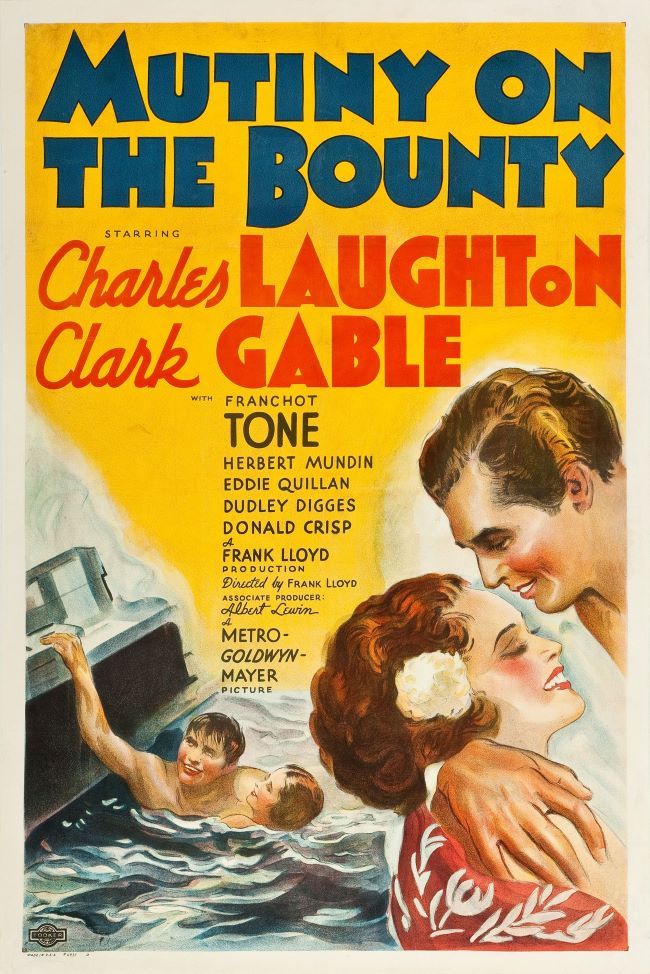
As I think I’ve said before, part of my work morning routine is to flip through the schedule on TCM to see if there’s anything worth recording that day. Months ago I found such a thing, the 1935 version of Mutiny on the Bounty, starring Charles Laughton and Clark Gable.

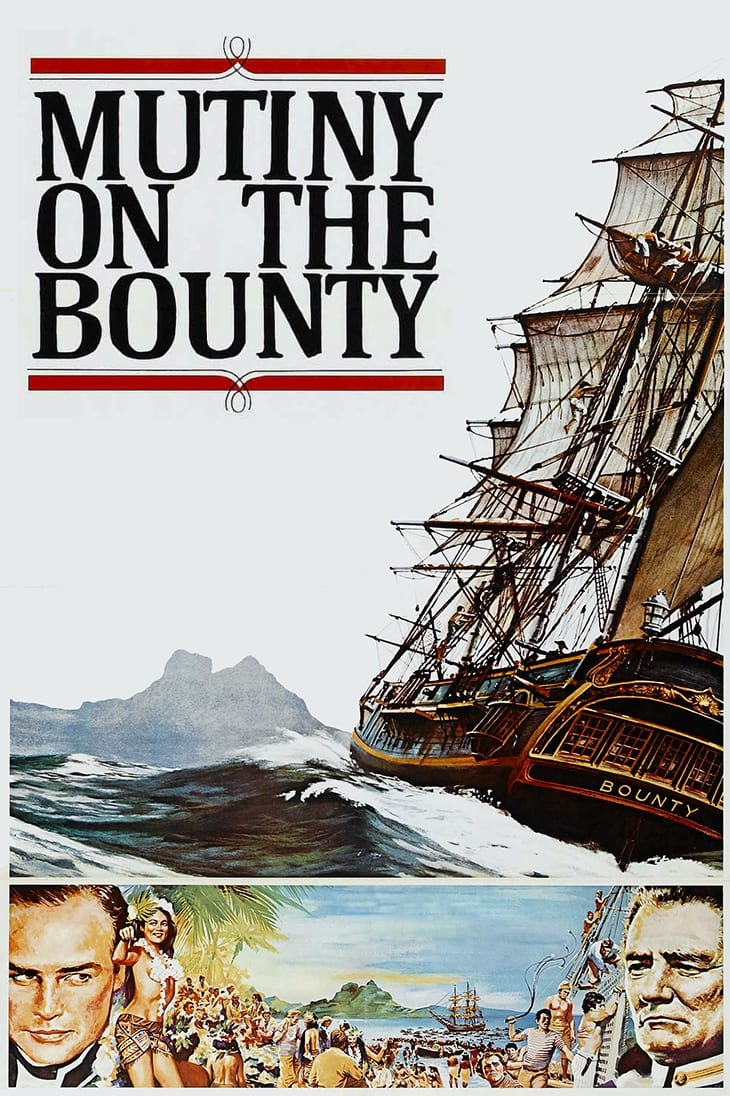
Having never seen it, or any other Bounty story, I recorded it. It sat on the TiVo long enough that TCM also showed the 1962 version (with Marlon Brando), so I recorded that as well.

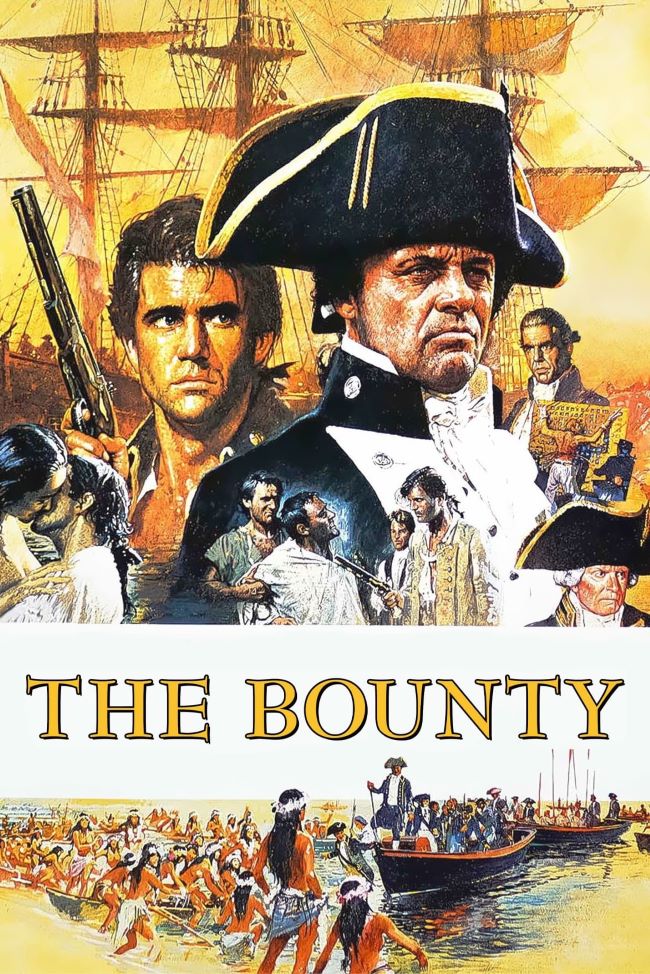
When my wife saw both sitting there, she wondered aloud about if I intended to watch the 1984 version, Bounty, with Mel Gibson and Anthony Hopkins (and Daniel Day Lewis and Liam Neeson!).

So, one Saturday, we did the deep dive and watched all three back-to-back-to-back. And then I read Caroline Alexander’s The Bounty: The True Story of the Mutiny on the Bounty to actually get the history of the whole thing.

Watching different versions of the same story, the history of which is not as clear as you might think, made for some interesting comparisons.

But first, the basic history – in 1787 Bounty left England, under the command of William Bligh, for a journey to Tahiti. There, the crew would harvest breadfruit plants for transport to Jamaica, where it was hoped they could be replanted and used as a cheap food for the enslaved population. Sometime after Bounty left Tahiti one of Bligh’s underlings, Fletcher Christian, led a mutiny. Bligh and several loyal men were put adrift in a launch (and managed to make it back to civilization), while Christian and the others found their way to Pitcairn Island, where their descendants live to this day.

What’s particularly interesting about the history (from Alexander’s book, at least) is that there is a gaping hole in the record when it comes to Christian. Bligh, the men in the launch, and even some of the other mutineers returned to England where there were various inquiries into the mutiny, but Christian never did, dying (or being murdered) on Pitcairn. His precise motivation for the mutiny is unknown, therefore, and leaves a lot of room for fictional variation in the story.

For example, the portrayals of Bligh vary considerably between the three movies. As played by Laughton  in 1935, Bligh is a tough-love legal enforcer. The law of the sea is harsh and brutal, but it’s necessary to keep discipline on what is a very dangerous voyage. The 1962 Bligh, by contrast (played by Trevor Howard), appears to get off on the punishment he dishes out (which Christian calls him out for). He may use the legalish language that Laughton did, but it appears to be a cover for more personal motives. Hopkins in Bounty, on the other hand, dishes out much less discipline (particularly before the reach Tahiti), but seems much more paranoid about possible plots. Per Alexander’s book, Bounty was probably the closest to correct, as Bligh didn’t appear to be any firmer of a disciplinarian than the normal English captain of the time. That said, Bligh also suffered a rebellion (land mutiny?) when he was a territorial governor in Australia later in life, so clearly there was something about his leadership style that rubbed some people the wrong way.

The same is true for Christian, whose motives shift from telling to telling. Gable’s version, perhaps polished to match his matinee idol status, was driven to mutiny on behalf of the lowly sailors who Bligh abused. Notably, that version of Christian had served with Bligh before and had some idea that there might be trouble. It’s a pretty simple narrative. The 1962 version Brando played takes longer to get to the same place and, when he does so, simply snaps, rather than more coolly plots the mutiny. This Christian didn’t know Bligh before, so he’s perhaps more shocked by the brutality. Where Brando’s Christian really differs from Gable’s is the weight that command puts on him after the mutiny. Gibson’s version is motivated less by Bligh’s cruelty (since there’s less of it) than his affection for life on Tahiti. He appears, to quote Londo Molari, to have “gone native” and is willing to do whatever it takes to get back. This Christian didn’t just know Bligh prior to being on Bounty but was good friends with him, which again kind of pushes the cruelty angle to the side. Which of these is closest to truth, if any, is anybody’s guess.

The movies differ considerably in what happens after the mutiny, too. In the 1935 version, after Bligh makes it back to England, he is exonerated of anything to do with the mutiny, then heads off back to the South Pacific (true!) where he tracks down Christian on Tahiti and forces him to book it to Pitcairn (false!). Post-mutiny life for Christian is pretty swell, as least until Bligh shows up. In the 1962 version, Bligh is again acquitted, but with some comments from the judges afterwards that maybe he had it coming, anyway. There’s no return voyage. For Christian, as I said, command weighs heavily on him so much so that on Pitcairn he floats the idea of returning to England to tell their story. This prompts others to burn Bounty in the bay and Christian dies trying to save it (ending courtesy of Billy Wilder, rather than any historical basis). The 1984 version gives Bligh a full exoneration, while making Christian’s life after the mutiny even more miserable. The landing on Pitcairn comes off less of a triumph and more pathetic than anything else.

What none of the movies really do is dig into what happened in England once Bligh returned. There really was a court martial at which many of the mutineers (returned from Tahiti by other vessels) were convicted of mutiny, although many were acquitted (including a potential ancestor of mine!). Several were sentenced to hang, but two were pardoned. News coverage of the court martial was largely favorable to Bligh, but Alexander chronicles how that shifted over the years, thanks in part to Christian’s family and some of the other sailors involved. It’s safe to say that the popular conception of Bligh, closer to Laughton’s and Howard’s portrayals than to Hopkins’, is largely due to their out-of-court efforts.

Particularly interesting in the variations is that the 1935 and 1952 movies are both based on the same set of novels, so you’d think they’d be more similar. They’re both big screen spectacles and the 1952 version was no doubt made just to take advantage of color, but they are quite different in the people whose stories they are telling. I think I prefer the 1935 one. Laughton’s Bligh may be the farthest from the truth, but he’s pretty compelling and in his devotion to rules without empathy scarier to me than Howard’s psycho Bligh (remember, I’m a public defender by day). While I appreciate the ambiguity of the 1984 film, it doesn’t resonate quite as much (in spite of the Vangelis score).

Usually when a movie is made about a historical event the discourse breaks down into whether the movie got it “right” or how “wrong” it actually got things. The whole Bounty situation is a good example of how history isn’t so obvious in lots of situations and lends itself to different interpretations. Surely there’s another Bounty movie or TV series in the works that’ll provide an entirely different perspective, too.

It’s All Right, They Have a Warrant (and Fangs)

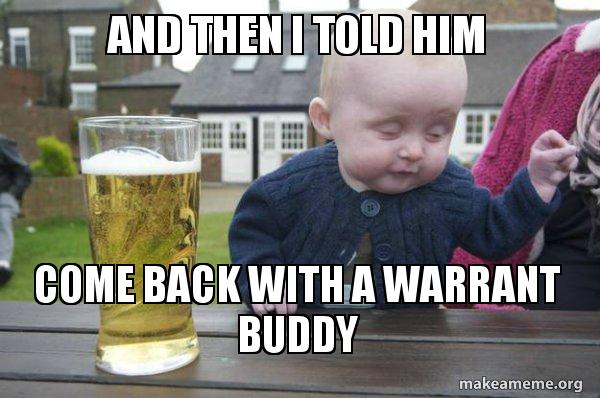
I’ve seen a question posed in various places on social media the past few weeks:

I thought if anyone is qualified to answer this question it might just be the guy who is both a public defender and a writer of fantasy (with horror overtones in spots). So, what of it – can that vampire cop enter your house against your will?

Let’s start with the assumption that we’re talking about an American vampire cop here, so they’d have to comply with the Fourth Amendment to the Constitution, which prohibits “unreasonable” searches and seizures. It also requires a warrant to execute a search of a home. An arrest warrant will also allow police to enter a home, if they have the necessary suspicion that the person named in the warrant lives there.

A search warrant has to be based on probable cause that evidence of a crime is present in the place to be searched. It’s not a particularly high standard, not even up to the level of “preponderance of the evidence” used in civil proceedings (essentially 51% certainty) and a far cry from the “beyond a reasonable doubt” standard needed to convict someone of a crime. Warrants must be particular as to the things to be seized and the places to be searched. That’s supposed to prevent exploratory rummaging of the kind that occurred under “general” warrants in the pre-Revolutionary era. The application of all this in particular cases is tricky and what keeps me employed, but the basic concepts are easy to grasp.

Perhaps not quite so much for vampires, since their lore varies from telling to telling of particular stories. Nonetheless, there does seem to be a consensus that vampires require permission before they can enter a home. According to this article it dates back to at least the 17th Century and a Greek theologian who stated that a way to be safe from vampires was to stay at home, as they couldn’t enter without being invited. But why? One explanation is that the rule “reflects the idea that evil, represented by vampires, can’t harm you unless you allow it to. It’s a choice, an act of free will.” Tough shit if you get taken in by a slick talking blood sucker then!

With that said, let’s set the scene – Detective Angel and Lieutenant Louis show up at your home. As vampires they cannot come in uninvited. Fun fact – as cops, they can’t either! Except, of course, they have a search warrant, which they do (it allows them to search for any and all implements relating to killing the undead). Does the warrant let them in even if you don’t invite them?

The basic answer, I think, is “no.” The law is the law, but the rule that vampires can only enter with an invitation operates more like a law of nature. Police could no more get a warrant to stop the tides or keep the sun from rising than they could to allow a vampire entrance to a home without an invitation. Nor are warrants commands to someone to allow police into your home – they are permission for the police to enter using any means necessary, hence SWAT teams and knocking down doors in the middle of the night.

But the basic answer is not the only answer. For one thing, if we’re assuming a world with vampires – vampires who are police, no less – then presumably the law has made some accommodation for this. Can a court, as part of issuing a search warrant, compel a homeowner to give permission for the vampire police to enter? I don’t see why not. Courts frequently order people to do things they otherwise don’t want to do, including things like provide blood samples and fingerprints. This doesn’t feel any different and doesn’t lean into that kind of acquiescence that might trigger Fifth Amendment self-incrimination concerns (like giving up the password to your phone).

For another, who gets to give consent to enter and how much consent is enough? Many years ago the Supreme Court decided a case where police showed up to a home in response to a domestic dispute. They asked for permission to search the home – the husband denied it, the wife consented. Police searched the home and found drug paraphernalia. The Supreme Court ultimately held that the search was invalid because so long as one person present when the request for consent was made objected to the search, it didn’t matter what anybody else said. In such situations, police had to go get a warrant.

So what if, when our vampire police walk up with their warrant, you’re willing to invite them in but your significant other who also lives there is not? Does the Supreme Court’s rule for the Fourth Amendment carry over to vampire invitations? Or is it a one-person-to-a-home situation? I’m leaning towards the latter, since, as I understand it, once a vampire is invited into a home it is forever invited, implying that consensus among the occupants isn’t necessary.

What makes the question fun to ponder is the clash of what seems like two absolutes – a warrant permits entry versus a vampire’s need to be invited. But that rests on the presumption that the law wouldn’t evolve to account for the fact that (a) vampires were real and (b) they worked in law enforcement. The Founders didn’t imagine automobiles, but the Supreme Court figured out how the Fourth Amendment interacted with them. Same with cell phones. I have no doubt that a legal system that’s been in a constant state of evolution since at least the Magna Carta would figure out how to deal with vampire detectives.

But until then? Ask to see the warrant, then keep your mouth shut, unless you’re asking for your lawyer.

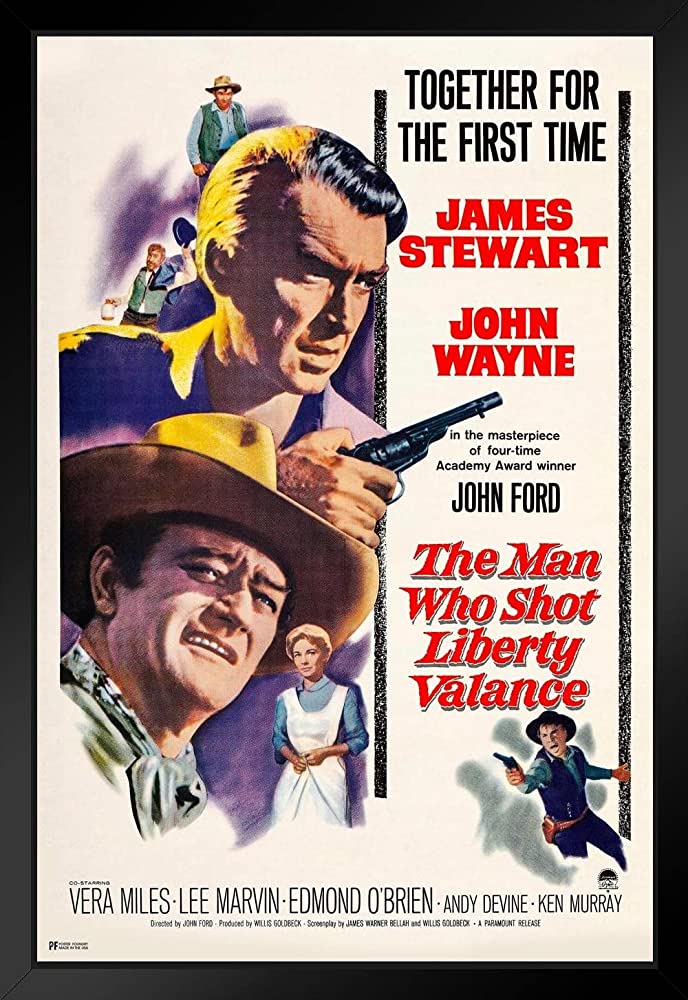
Weekly Watch: The Man Who Shot Liberty Valance

Sometimes the ideas the animate a movie are better than the movie itself.

As with many films of the 1930s-1960s I’ve seen recently, I stumbled into The Man Who Shot Liberty Valance on Turner Classic Movies.

Not only that, it was part of a slate of movies programmed by Steven Spielberg, so there was a little intro discussion between he and Ben Mankiewicz about the film. It was the last of the great westerns directed by John Ford (a huge influence on Spielberg, among others) and they talked about how it confronted issues about the transition of the West as a conflict between an older regime built on violence and self-sufficiency to a new order based on the rule of law. As a lawyer, and someone with a degree in history, that sounded like something I should just eat up. Damned if the actual movie didn’t get in the way of that.

The “old” West is represented by none other than John Wayne, whose performance here spawned a million impressions punctuated by the word “pilgrim.” He plays a rancher, Tom Doniphon, who has made a hardscrabble living out of the land and thinks everyone needs to be capable of using a gun to protect themselves (he is, naturally, a crack shot). The “new” West is represented by Jimmy Stewart as Ransom Stoddard, a lawyer from the east who believes in bringing civilization to the West. They go back and forth about the best way to handle the titular Liberty Valance (Lee Marvin), a local brigand who furthers the interests of big cattle ranchers who don’t want the unnamed territory to become a state.

That setup is fine so far as it goes, but Ford doesn’t really do a lot with it in the end. Stoddard’s stagecoach is robbed on its way into town by Valance. When Stoddard complains to the town marshal about it he dodges responsibility by pointing out that it occurred outside of town and therefore outside of his jurisdiction. But we later see Valance do all sorts of criminal things right in the middle of town and not only does the marshal do nothing, Stoddard never demands that he do so. Stoddard never tries to take the job and be the law. Hell, we never actually see him practicing any kind of law in the movie (he does some school teaching, though). No, what does Stoddard do? He pretty quickly gets himself a gun and starts practicing how to shoot.

It’s no great spoiler that Valance winds up on the wrong end of a gun (it’s right there in the title, people), although it’s a little unclear precisely who “the man who shot Liberty Valance” is, in the end. Both Doniphon (from the shadows, we later learn) and Stoddard shot AT him, but it’s unclear who hits him and which shot is the fatal one. Regardless, what is beyond clear is that Stoddard fully joins in the game of dealing with Valance through violence, leaving any real pretense of the law behind. And it’s Stoddard who gets the honor of being that man, even if he doesn’t really want it (which is a really interesting conflict that could have been explored more deeply).

So the movie kind of fizzles in its portray of the “old” versus “new” West, but how is it otherwise? Well, it’s a tale of two movies.

The first, which focuses on the leads – Wayne, Stewart, Marvin, and Vera Miles as the love interest – is pretty good. All those performances are good and the have good scenes together. Marvin, in particular, is really menacing as Valance (and has a young Lee Van Cleef as a sidekick). The love triangle between Stoddard, Doniphon, and Miles’ character is underbaked (Doniphon is building an addition onto his house for her, but she doesn’t have any apparent desire to move in), but, hey.

The other movie is the weirdest feast of overacting I’ve ever seen. There are multiple characters – the Cowardly-Lion-esque town marshal, the drunk town doctor, the (also drunk) newspaper publisher – who perform so broadly that had they wandered off this set onto the one for Blazing Saddles Mel Brooks would have told them to tone it down. If you’ve seen the episode of Futurama where Zoidberg’s uncle directs a “serious” movie but demands that the background actors run around throwing pies at each other, you’ve got the picture. Big ideas can be great drivers of a story, and fiction can be a fantastic way to explore how people grapple with those big ideas. But the idea is not the story. The story is the characters in it, what they do, and why they do it. The biggest and most important idea can be felled by a poorly executed story. That’s what’s the most frightening for us creative types – the big ideas are the easy part, but there’s so much left to do once you’ve hit on one.

When Copyright Kills

A couple of weeks ago John Oliver pointed out that the original version of Mickey Mouse is about to slip into the public domain and out of copyright control. Naturally, he has plans for this, but it’s worth remembering that the last time Steamboat Willie was in danger of passing out of copyright control Congress snapped into action and extended the term for copyright protection. I haven’t seen anything indicating they’re going to do it again, but I wouldn’t be surprised if the idea was at least floated (probably without success, given the current GOP jihad against Disney), particularly given what’s happened to poor Winnie-the-Pooh.

As a writer and musician I’m a fan of copyright. The basic idea is that allowing the producers of art to have a monopoly on its sale and distribution incentivizes the creation of more art. But there’s always been a question of how much copyright is too much and when works should move into the public domain and be free for adaptation by others. The Copyright Act of 1790 established a 14-year copyright term, renewable for another 14 years, but those terms were doubled in the 19th century. Then between 1976 and 1998 (when The Mouse roared) terms ballooned to the current life of the author plus 70 years or 120 years if a it was created by a corporation. So in the brief life of the United States we’ve gone from copyright that expired while the creator was not only still living but probably still creating to a term that runs for decades.

Weird things happen when copyright terms run so long that they outstrip the lives of the work’s creators. Recently there’s been controversy about changes to books by the likes of Roald Dahl and Agatha Christie to better reflect modern sensibilities (I talked a bit about the issue here). What’s interesting is that both authors made such changes in their lifetimes, presumably without much fuss. What makes it seem wrong now is that it’s not the authors making the changes but their current copyright holders, who didn’t create a thing. Without lengthy copyright terms that extend beyond the lives of those authors this wouldn’t be an issue – anybody who wanted to could publish the original versions or whatever bowdlerized versions they wanted.

Thanks to this in-depth video, I recently learned about another problematic case of long-term copyright. Remember “Down Under,” by Men at Work? Particularly the flute riff that repeats several times during the song? 

Released in 1981 it was a huge international hit, hitting number one in the US and UK. It wasn’t until 2007 when a TV quiz show noticed that part of the flute part matches almost perfectly the melody of “Kookaburra Sits in the Old Gumtree,” a popular Australian song. After the show aired, people called the company that held the copyright to “Kookaburra” about the similarities, resulting in a lawsuit against Men at Work and their record company for infringement. The company won, a result which Colin Hay has suggested helped speed flautist Greg Ham’s depression and death (Ham played the famous riff, but wasn’t actually one of the listed songwriters).

What makes the “Down Under” story so concerning is that this wasn’t a situation of the writer of “Kookaburra” herself, or even her descendants, making the claim, it was a company that bought the rights at auction after her death. It was purely a commercial maneuver and could not have contributed in any way to encouraging the writer to create more art (her being dead, after all). And while the riff has become fairly iconic, it’s hardly essential to the song, providing a little bit of extra flavor in the arrangement.

Questions on the persistence of copyright always bring me back to Spider Robinson’s Hugo-award winning story “Melancholy Elephants.” It’s that rarest of beasts, a sci-fi story about the law. In this case, it’s about a proposed law that would extend copyrights indefinitely, and the widow of a famous composer beseeches a legislator to not pass the bill – even though it would financially benefit her. She makes the point that there are only so many combinations of notes, rhythms and such out there (echolyn’s “Suite for the Everyman” covers this with sections titled “Only Twelve” and “Twelve’s Enough,” respectively) and if they’re all placed off limits for future composers people will eventually stop making new music.

The same is true for stories, whether they’re written in books or told on screens. New writers often worry about sharing ideas for stories, unaware that pretty much no “idea” is new. What makes a story worth writing is what you want to say with it, not what others have already said. Not only has Romeo and Juliet given birth to adaptations as diverse as West Side Story, a ballet, and a Dire Straits song (which produced its own amazing Indigo Girls cover!) – it was based on a history of similar stories dating back centuries. The idea of Romeo and Juliet was not new – Shakespeare’s presentation of it was.

It was Picasso who said “good artists borrow, great artists steal” – and even that wasn’t an original thought. That’s probably a bit flippant, but the core of it is true. Every creative person is the sum of their influences, the things they’ve read, heard, or seen. Placing those things eternally off limits will do more to stifle that kind of creativity than it will to encourage creators to create in the first place. Killing off creative endeavors altogether is probably too high a price to pay for some author’s grandchildren being able to live of their book sales.

As in nearly all things, balance is key. It’s just that I’m not sure we’re particularly well balanced at the moment.

On Practicing Law In Someone Else’s Sweet Hereafter

I’ve written about The Sweet Hereafter, Atom Egoyan’s 1997 film, a couple of times before. It made my list of favorite movies last year and I added it to a list of other great lawyer movies compiled by the ABA.

As I said in the favorite movie post:

his is my favorite movie about being a lawyer, even though there’s no dramatic courtroom climax or wronged client who needs defended. Instead, it’s about the toll it takes on a person’s psyche to make a living by inserting yourself into the tragedies of others.

With the recent passing of Russell Banks, who wrote the novel upon which the film was based, I thought it was a good time to actually read the damn thing and see how they compare. I did this secure in the knowledge that I had read, somewhere, that Banks  himself admitted that this was one of those rare situations where the film improved on the book. Naturally, I can’t find that anywhere online. Regardless, is it true? After reading the novel and rewatching the movie, I can’t say for sure.

At bottom, both are about a small town called Sam Dent (upstate New York in the book, somewhere in Canada in the movie) where a school bus accident led to the death of most of the town’s children. Into this tragedy comes a big-city lawyer named Mitchell Stephens, who tries to sign up grieving parents for a lawsuit against someone, somewhere that was really responsible for the accident. His plans are foiled when one of the kids who survived the crash, but is now paralyzed, Nicole Burnell, lies in a deposition that the bus driver had been speeding. She does this either to get back at her father who has molested her, in sympathy with those in town who don’t want anything to do with lawsuits, or both. All the while, Stephens deals with phone calls from his estranged daughter, a long-term drug addict who has just learned she’s HIV positive (maybe).

One major difference between the two is that the novel really has no main characters. It’s told in a series of first-person monologues by the bus driver, Delores Driscol; Billy Ansel, who lost his two twins and runs the local garage where the wreck of the bus is stored; Stephens; and Burnell. Each character interacts with others, but the shifts of focus make it impossible for any of them to be the narrative spine of the story. The movie, by contrast, clearly makes Stephens the main character, the agitator/irritant who gets into town and stirs up stuff (whether that’s “trouble” or “justice” depends on your point of view).

There are a couple of places where the book’s shifting POV makes for really interesting comparisons. At one point, Stephens and Ansel talk after Stephens shows up to take pictures/video of the wrecked bus. In the movie, this plays as Stephens trying, quite unsuccessfully, to sign up another parent for his lawsuit (this is how it’s read in law review articles, of which there are many), but in the book we know that he’s actually doing the opposite – he wants Ansel pissed and wanting no part in the lawsuit so when he testifies as a witness (Ansel was behind the bus when it crashed) he’ll be unbiased. Legally, I’m not so sure that makes sense (and it backfires spectacularly), but it certainly changes the way we see Stephens. Likewise, being in Nicole’s head makes her outright anger at her father more palpable and her ultimate betrayal more emotional and spiteful than the cold, calculated move it appears in the film.

There’s two big changes from the book that the movie makes, one more important than the other for figuring out what the story is trying to say. The smaller change is a storyline where Stephens is on a plane and meets an old friend of her daughter to whom he’s able to deal out all the information about his daughter’s troubled life. This is a pretty good way of getting at a lot of stuff that’s in Stephens’ head in the book and doesn’t really impact the overall arc of things.

The bigger change is the ending. In the film, after the lawsuit falls apart, it jumps to Stephens getting into a cab at the airport, where he sees that Delores is driving one of the shuttle busses. In the book, by contrast, there’s a lengthy coda from her point of view in which she learns what Nicole said about her and, therefore, what the town now thinks of her. It culminates in a demolition derby at the county fair that plays out like a kind of sacrifice (it involves one of Delores’ old cars) after which things seem to slide back towards normal. I don’t think it really works (and Delores does wind up driving tourist vans, although fairly nearby), but it’s certainly different.

Do these changes makes the movie better? I’m not going to go that far. I prefer the film, but I came to it first and there’s some bias because of that. Also, while Egoyan arguably exercised a messy ending dealing with the fallout from Nicole’s perjury, the end of the movie works better (I think) than the book. Mostly, the experience reinforced my thought that literature and visual media are different things driving at different goals. One isn’t really better than the other, they’re both different and it’s great that we can explore the same story in multiple ways.

So where does that leave my love for The Sweet Hereafter as a lawyer’s story? The film version of Stephens continues to hit harder. While the book gets us into his head, Ian Holm’s portrayal of Stephens as emotionally running on fumes resonates more. In the deposition scene, as Nicole’s perjury spills out, the look on Holm’s face is one that any lawyer knows well. Remember this scene from The Simpsons?

It’s the same thing with Stephens. You can tell the very moment his case, all the work he’s put into it, all the hours away from home, goes up in smoke. All due to something entirely beyond his control. We’ve all been there pal.

That, in the end, is why The Sweet Hereafter resonates so much as a lawyer movie. We may all aspire to be Atticus Finch, but we recognize more of ourselves in Mitchell Stephens then we’d like to admit.