Will I Care Once I’m Dead?

Thinking about future projects the other day – ideas that are well enough developed that I can see a book coming out of them – I figured that I have material for about 20 books locked away in my brain. Even at a pace of one a year that means a long haul going forward. Let’s face it – chances are that I’ll be in the middle of writing some book when I die. What should happen to it and any others that might be semi-started?

The issue is back in the news recently thanks to the amusingly public way that the late great Terry Pratchet’s unfinished works were handled. Per his request, his hard drive (which contained as many as 10 works in progress) was destroyed – by being crushed by a steamroller.

The comments I read when the news came out was mostly amusement and pleasure at Pratchet’s wishes being so scrupulously honored. After all, if he was so specific as to how his literary executor was to deal with his unfinished work he must have felt fairly passionately about it never seeing the light of day. Who could argue that the right thing to do is precisely what the author wants?

Destruction isn’t the only option, of course. Robert Jordan, author of the massive Wheel of Time series, realized he wouldn’t live to see the completion of the series, so he provided a trove of notes and left the final few books to be completed by Brandon Sanderson. I can’t speak to the quality of Sanderson’s work and whether he did a good job with Jordan’s baby, but, again, it’s hard to complain when the people involved do just what the author wanted them to.

The legal-rule side of my personality says this is precisely how it should work. An author (or her designee) is the master of her own work, after all. If she never wants the world to see it, or only wants the world to see it with certain conditions, that’s her right. If she wants to take any potential masterpieces to the grave, that’s no problems.

Except we have examples where ignoring the author’s wishes turns out pretty well. When Franz Kafka died he left his literary executor (and friend) Max Brod fairly specific instructions:

Dearest Max, my last request: Everything I leave behind me … in the way of diaries, manuscripts, letters (my own and others’), sketches, and so on, [is] to be burned unread

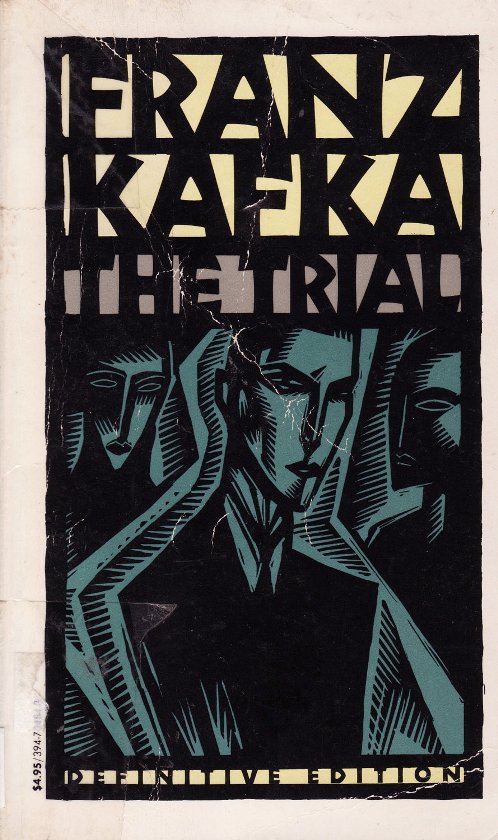
Brod did no such thing. As a result, we have all of Kafka’s novels, including The Trial, none of which were published before Kafka’s death.

franz-kafka-the-trial

A world without The Trial is barely fathomable (ironically), but had Brod did as instructed, we’d never know of it. Nabokov’s The Original of Laura was published against his wishes after he died. Even Mark Twain had a new collection of essays published almost a century after his death – against his wishes.

And so I find myself retreating from my bright-line rule of always doing what the author wants. After all, what’s the harm in ignoring those wishes? Yes, work might be released that the author wasn’t happy with, but the author isn’t going to be around to complain. A reputation could be diminished, I suppose, but authors have very little say in how the world perceives them when they’re alive and even less when they’re dead. Besides, does the posthumous release of a bad book by a great author devalue their prior work? It’s not a perfect analogy (since Harper Lee is still alive), but is To Kill a Mockingbird any less a masterpiece because Go Tell a Watchman was kind of ordinary? I don’t see how.

It’s a more complicated problem than I thought it was at first glance. Certainly, I don’t think it’s a legal issue. I’d oppose any law that required an author’s papers and unfinished works to become some kind of public good and exploited willy nilly. Nor would I support laws that would punish people like Brod for ignoring the wishes of their dead author friend. But, I have a hard time working up too much outrage when an author’s wishes are disregarded, so long as the person doing the second guessing is a close friend or family member. If they are all right with it, I’m in no place to complain. It’s kind of like jury nullification – I’m not a fan of promoting it, but I’m glad it exists for the rare occasions when it’s really necessary.

So I guess what I’m saying, to my literary heirs, if they ever get around to reading this – you’re on your own!

Weekly Read: American Heiress

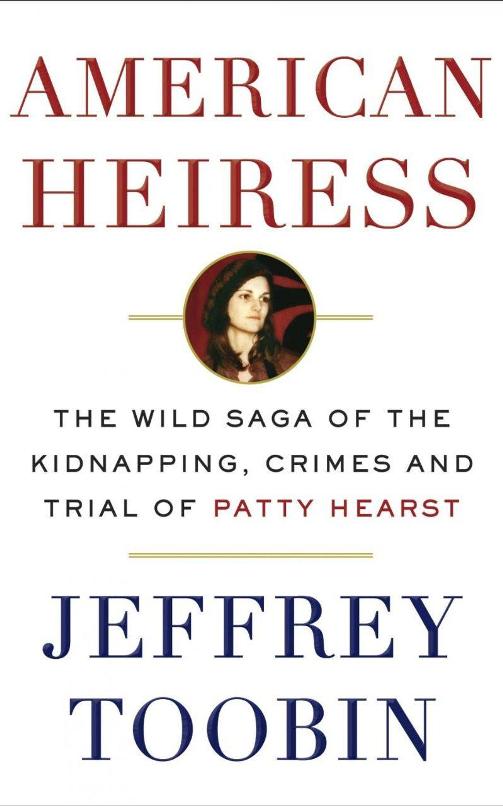
As they say, truth is stranger than fiction. One of the problems with writing fiction is that readers expect it to make sense, for characters to behave in ways that are believable and compelling. Writers telling true stories aren’t saddled with such issues. Jeffrey Toobin’s latest, American Heiress, tells one of those stories that, if labeled fiction, would have readers rolling their eyes in disbelief.

The basic parameters of the Patty Hearst case are fairly well known. She was kidnapped from the apartment she shared with her then-fiancé in Berkley, California, by a group calling itself the Symbionese Liberation Army. She was held for months, during which time she turned from captive to comrade. As a professed member of the SLA she participated in bank robberies and lead a life on the run. It all came to an end with an arrest, conviction, and lengthy federal prison sentence.

Toobin’s book breaks down, basically, into three parts. Part one covers Hearst’s background, the kidnapping itself, and her turn to bank robber. This part is a bonkers story with a lot of different angles playing into it – not just Hearst and her kidnappers, but also her family and the law enforcement officers working the case. Then there’s Hearst’s fiancé, who famously told the kidnappers to “take anything you want” when they broke in. As Toobin jokes (multiple times), they did.

Events after the kidnapping played out in a way that seems unbelievable today. The Hearst family – who, at this point, were nowhere near as wealthy as people thought – agreed to an SLA demand to set up a broad food giveaway for the poor. The operation, created almost overnight, had to fight off local grifters (including Jim Jones) and led to riots. The fiancé, whom the family never liked, tried to help in his own way, but only led to his reputation being shredded.

This part makes you hope that the American Crime Story crew, who turned Toobin’s The Run of His Life into The People v. OJ Simpson for FX, has the rights to this book. There are so many characters (the list of famous people who had some connection to all this is impressive – Jane Pauley, Kevin Kline, Lance Ito, and, later on, Bill Walton) acting in so many bizarre ways that Ryan Murphy’s sensibilities would be well served. Appropriately enough, this part wraps up after the SLA members split up and Hearst and her two comrades watched the other half dozen perish in a scene that played out like a mini-Waco – gunfight followed by immolation.

The rest of the book doesn’t quite live up to the first part. The middle section drags a bit as Hearst and the others go on the lamb. Mostly it’s because we lose the multiple angle approach that brought so many characters into play. Still, there’s a particularly odd idyll in the Pennsylvania woods (which has given me a great story idea) and it’s important to the story as a whole.

Part three covers the Hearst’s eventual arrest and trial. One would think that Toobin, being a lawyer, would focus mostly on this, but he gives it a brief, compelling summary, during which one thing becomes clear – Toobin has no regard for Hearst’s lawyer, F. Lee. Bailey. In Toobin’s telling, Bailey was a swaggering, swashbuckling self promoter for whom practicing law was almost an afterthought. He had a deal to write a book about the trial before it even started and spent several nights during trial flying back and forth to Las Vegas to speak at legal seminars. To boot, while Bailey’s reputation was built on winning big cases – Sam Sheppard (aka The Fugitive) and the Boston Strangler – he, like any criminal defense lawyer, lost more than he won. For Hearst, he lost.

Hearst’s trial – she was charged with bank robbery and carrying a firearm in relation to it – boiled down to one issue: did she willingly engage in this criminal conduct after becoming a SLA member, or was she a kidnap victim who had been brutalized, terrorized, and brainwashed to the point where she did whatever she was told in order to survive? It’s clear that Toobin agrees with the jury that convicted her that Hearst was a fully fledged revolutionary by the time of the robbery. What’s really troubling is that while it seems like Hearst did shift into the role of SLA comrade, she shifted out of it just as easily. Given that all this happened while she was barely an adult (she was 19 at the time of the kidnapping, 21 when convicted), I wonder what modern research in the brain development of young adults might shed some light on whether such swings of outlook are really that out of the realm of normal.

Whatever steam the book loses after the first part Toobin finds when he gets righteous in the conclusion. After her conviction was affirmed on appeal and the trial court denied a habeas claim (contrary to what Toobin says, ineffective assistance of counsel claims are routine and often completely baseless), Hearst’s family started a massive effort to get her sentence commuted. It was, eventually, but Jimmy Carter. The staggering bipartisan group that pushed for clemency included famous hardliners such as John Wayne and Carter’s opponent in the upcoming election, Ronald Reagan. Part of it, Toobin argues, is that once Jim Jones led his group in a mass suicide (and murder of Congressman Leo Ryan, a vocal supporter of Hearst), it became much easier to believe Hearst’s story of brainwashing. In the end, she only served about two out of the seven years to which she was sentenced.

But it didn’t stop there. Flash forward to the end of the 1990s and Hearst is now seeking something unprecedented – getting a pardon from a second President after first gaining a commutation. There was no consensus this time – part of the opposition was the then United States Attorney in San Francisco, a guy named Robert Mueller. But Carter and his wife appealed directly to Bill Clinton, who pardoned Hearst on his last day in office.

Toobin, who clearly believes Hearst was a willing participant in her criminal activity, makes the obvious point – only Patty Hearst had the resources and name recognition to get clemency twice, in spite of the evidence against her. People who have done a lot less have gone to prison for a lot longer and not gotten any sniff of clemency. But those people were the ones the SLA said it was fighting for. They weren’t wealthy heiresses.

Toobin’s book is well worth reading. Even if the back half can’t live up to the entertainment value of the first part, there’s a lot of interesting info in here. Toobin does a good job of setting the context for all this (You think we’ve got political strife today? How do several years with 2500 bombings across the country sound?). There’s also some original research, as Toobin got his hands on previously unseen letters Hearst and her lover/co-defendant wrote to each other after their arrest (as couriered by Hearst’s first lawyer). I’m not sure it all makes sense in the end, but so what? It’s real life – it doesn’t have to.

PS – For an interesting perspective on the book, check out this column from Andrew O’Heir, who grew up in the San Francisco area while all this was going on.

ToobinHearst

New Technology = Moral Panic

I’m reading Tom Perrotta’s new book Mrs. Fletcher, which is about a single mother navigating the modern world on her own once her brotastic son leaves for college. At one point she flashes back to a talk given to the local PTA addressing the then latest and greatest moral panic – Internet porn. It was delivered by a prosecutor, naturally, since history shows that the best reaction to any panic is to lock people in cages.

The panic over Internet porn is hardly the first situation where an emerging technology leads some people to think said tech is going to lead the world to hell in a hand basket. In fact, it’s a fairly predictable pattern that’s played out many times throughout history.

Slate has an article about the moral panic that surrounded the great technological breakthrough of . . . cheap paper.

Although the printing press had brought reading out of the monasteries and upper classes, the actual production of books didn’t ramp up all that much because of the lack of quality paper. People lower down the socio-economic ladder didn’t own books, they owned a book – usually a Bible.

That started to change in the 19th century:

The paper machine, invented in France in 1799 at the Didot family’s paper mill, could make 40 times as much paper per day as the traditional method, which involved pounding rags into pulp by hand using a mortar and pestle. By 1825, 50 percent of England’s paper supply was produced by machines. As the stock of rags for papermaking grew smaller and smaller, papermakers began experimenting with other materials such as grass, silk, asparagus, manure, stone, and even hornets’ nests. In 1800, the Marquess of Salisbury gifted to King George III a book printed on ‘the first useful Paper manufactured solely from Straw’ to demonstrate the viability of the material as an alternative for rags, which were already in ‘extraordinary scarcit’ in Europe.

Then, in the 1860s, came the real breakthrough – paper made from wood pulp. Upwards of 90% of modern paper is made from wood pulp or recycled pulp. This cheaper, more readily available paper led to the explosion of low-cost books for the masses. That’s why it’s called “pulp fiction.”

You know, things like this:

CrookedCity

NakedandAlone

And it was of the Devil:

Detractors delighted in linking ‘the volatile matter’ of wood-pulp paper with the ‘volatile minds’ of pulp readers. Londoner W. Coldwell wrote a three-part diatribe, ‘On Reading,’ lamenting that ‘the noble art of printing’ should be ‘pressed into this ignoble service.’ Samuel Taylor Coleridge mourned how books, once revered as ‘religious oracles … degraded into culprits’ as they became more widely available.

By the end of the century there was growing concern—especially among middle class parents—that these cheap, plentiful books were seducing children into a life of crime and violence.

* * *

Moralizers painted the books as no better than ‘printed poison,’ with headlines warning readers that Pomeroy’s brutality was ‘what came of reading dime novels.’ Others hoped that by providing alternatives—penny delightfuls or ‘penny populars’—they could curb the demand for the sensational literature. A letter to the editor to the Worcester Talisman from the late 1820s tells young people to stop reading novels and read books of substance: ‘[F]ar better were it for a person to confine himself to the plain sober facts recorded in history and the lives of eminent individuals, than to wander through the flowery pages of fiction.’

It’s easy now to look back at such panics and roll your eyes and the naive concern about cheap books or television or whatever kind of music kids are listening to at the time. But history, as they say, repeats itself. Rather than being smug in our modern superiority, maybe think twice the next time some panic is sweeping the nation. Try not to give future generations something to roll their eyes about.

ThinkoftheChildren

This Argument Makes No Sense

Authorities in New Orleans have begun removing from public land a group of monuments dedicated to the Confederacy. It says something about how touchy a subject this is that the people doing the work had to be masked and protected by police snipers.

Among all the wrangling about this there’s one argument from the enablers of the Lost Cause that I just don’t understand, since it makes no fucking sense. It’s made repeatedly in the comments to this story in the Guardian. Here’s a representative sample, responding to the article’s point that this isn’t an issue of erasing history:

Yes it does. You have removed a piece of history from public view. Say you were walking past it with your young child and they said, “Daddy, what does that statue represent” then you could explain to them. Otherwise they are unlikely to learn about the past that has been removed, unless they teach it in school. But even then it’s not the same because it’s just words in books. It’s like removing fossils.

I can only figure that this is a post-hoc rationalization for a knee-jerk opposition to anything perceived as being done in the name of “political correctness,” because a couple seconds of thought shows is just doesn’t make a damned bit of sense.

Take this to its logical conclusion – once a monument of some kind has been erected, it can never be taken down without “erasing history.” If that’s true, we’re not exactly innocent:

IRAQ-BRITAIN-IRAQ-MILITARY-HUSSEIN-AUCTION-HISTORY-FILES

Then there’s the wholesale destruction of Nazi symbols and such in Germany following World War II. Or the toppling of statues of Stalin or Lenin following the end of the Cold War. The idea that monuments have infinite shelf lives simply isn’t rooted in history.

Beyond that, if a monument is history that can never be erased, does it create a perpetual obligation upon future taxpayers to keep it in good repair? Neither of those things can be true – they just don’t make any sense.

Let’s hypothesize using a silly example. In Futurama we learn that, sometime between Fry being frozen and thawed out, New York had a supervillain for a governor. Not only did he “collect” a bunch of famous monuments from around the world, he even added himself to Mount Rushmore:

Futurama_Mt_Rushmore

Now, years after the fact, are the citizens of New New York required to look at the face of evil everyday in the name of history? Do they have to pay to keep the super villain’s face looking crisp and life like? I’d say the answer is clearly no, but I’m not sure how those “this is erasing history” people could reach that conclusion.

Monuments and memorials are put up for a reason – because the people of that community at that time thought they were appropriate. There’s no magic in those intentions, nothing that shields the thing memorialized from future scrutiny. It’s entirely appropriate for future communities to decide that this thing is no longer worth celebrating.

Let’s Play the Feud!

I’m currently reading Authors In Court: Scenes from the Theater of Copyright, which uses a handful of case studies to track the development of copyright law since its introduction in England via the Statute of Anne in 1710. I haven’t even gotten through the first case yet and already I’m entertained. To anyone who thinks folks way back when were more civilized than modern, crass, digital folks, think again.

That first case involves Alexander Pope, English author (and second most quoted writer in The Oxford Dictionary of Quotations, according to Wikipedia – behind only Shakespeare), and a contemporary publisher named Edmund Curll. They’re in the book because, eventually, Pope sued Curll for publishing some of his letters in which, Pope argued, he retained the copyright. But things got ugly long before that.

Curll and Pope were very different people. Pope was a country gentleman, an elite. He was a writer, but he didn’t do it for a living (heaven forefend!). Curll, by contrast, was a scrappy businessman, doing anything he could to make a buck. He developed a reputation as a low-rent publisher, becoming (among other things) the first publisher in England to be convicted of obscenity.

What set the feud alight was a book Curll published called Court Poems, which purported to contain works by Pope (among others). The poems were scandalous and Pope was upset, either because he or a friend was designated as the author of some of them. Rather than just send a nasty letter, Pope got even in a much more emphatic way:

shortly after the book appeared, Pop contrived to encounter Curll at a tavern in Fleet Street. There, under the pretense of sharing a glass of wine as a sign of reconciliation, Pope dosed Curll’s drink.

Said dose was an “emetic,” a word which sent me scrambling to the dictionary. Long story short – it’s something that makes you puke.

Poisoning a professional rival so that he puked is a pretty dick move. But Pope wasn’t done:

A few days later, adding insult to injury, Pope published a comic pamphlet couched in the sensationalist style of a Grub Street production, a style not entirely different from that of, say, a modern supermarket tabloid. Titled A Full and True Account of a Horrid and Barbarous Revenge by Poison on the Body of Mr. Edmund Curll, Bookseller, Pope’s undated pamphlet, identified only as “by an Eye Witness,” reports on the tavern episode and then veers off into malicious fantasy as the stricken Curll, convinced that he is dying, makes his last will and testament.

In the end he is spared from death by “a plentiful foetid Stool.” Pope still wasn’t done, writing two more pamphlets expanding the fantasy and, eventually , devolving into anti-Semitism.

Future chapters involve Harriet Beecher-Stowe and J.D. Salinger, among others. I wonder if they taunted their rivals with bodily fluids (and tales thereof), too?

They might, given that the Pope/Curll feud is just one of many in literary history that went beyond simple sniping at each other. For example, Gore Vidal once compared Norman Mailer to Charles Manson – so Mailer punched him at a party (leading to Vidal’s retort – “once again, words fail Norman Mailer). Hell, Mario Vargas Llosa punched Gabriel Garcia Marquez in 1976 and neither ever explained why (although this article suggests it was over a woman and, therefore, isn’t really a literary feud at all) .

Of course, writers being writers they’re more likely to lash out at each other with words rather than fists. Playwright Lillian Hellman sued critic Mary McCarthy after McCarthy said that “every word she writes is a lie, including ‘and’ and ‘the.’” Hellman got the last laugh, dying before the suit could be heard. Salman Rushdie responded to John Updike making fun of a name he used in one of his books by suggesting that Updike “stay in his parochial neighbourhood and write about wife-swapping, because it’s what he can do.” Finally, after Colson Whitehead gave a book by Richard Ford a particularly nasty review in the New York Times, Ford spit on Whitehead at a party. Whitehead shot back that this “wasn’t the first time some old coot had drooled on me” and that other critical reviewers (there were a bunch, apparently) best “get a rain poncho, in case of inclement Ford.”

If nothing else, feuds tend to be good for business. Pope and Curll, certainly, made hay out of their beef. Maybe what I need to do is go honk off some famous author and start a heated back and forth! Yeah, that’s the ticket!

pope-and-curll

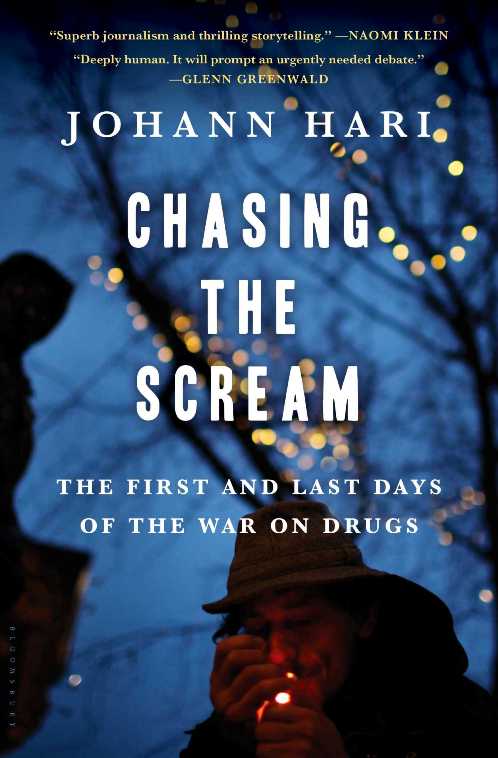
Weekly Read: Dreamland and Chasing the Scream

I read these two books back to back because they seemed to go together. One is a sober telling of how an epidemic swept the nation, landing right in my back yard (the book itself swept through my office earlier this year). The other is a passionate call to arms about the War on (Other Peoples’) Drugs. Both are essential reading.

The Dreamland in Dreamland, by former crime reporter Sam Quinones, is a public pool in Portsmouth, Ohio. For decades it was a hub of life in the town, ever expanding. It’s decline was tied to the region’s decline as a manufacturing hub. As jobs went away and poverty grew, addiction to powerful new opioid painkillers, and then heroin, ravaged the region. Dreamland was the perfect metaphor, withering away to merely a memory.

In Dreamland the book, Quinones lays out the perfect storm of factors that led to the opioid epidemic, which continues to claim lives all over the industrial Midwest and Appalachia. It’s made of three strands. The first is a revolution in the medical conception of pain, especially long term, chronic pain, and that it could and should be treated with powerful drugs. The second is the search for a safe drug to meet that need, which eventually led to Oxycontin. The third is slow expansion of a particular kind of heroin distribution operation from a particular small town in Mexico, Xalisco. As the “Xalisco Boys” operation spread into regions not generally thought of as “heroin country” (like West Virginia), they found a fertile ground of addicts already hooked on Oxycontin and looking for a cheaper, better fix.

Each strand has some particularly interesting stories to tell, although they’re not all of equal interest. The retail heroin distribution of the Xalisco Boys is, in fact, quite interesting – unlike the violent drug gangs who sell stepped-on product as a means to enhance the bottom line, the Xalisco Boys competed simply by selling a better product for less money. No violence and a focus on customer service. It makes getting heroin like ordering a pizza – an analogy to which Quinones returns over and over again. That’s the book’s main failing – it treads over the same ground repeatedly, particularly when it comes to the Xalisco Boys.

The other two strands weave together more effortlessly, particularly since they share a common root. In the 1980s a doctor published a “report” – really just a one-paragraph letter to the editor of a medical journal – that his practice hadn’t shown that patient who received powerful pain killers became addicted to them. This became the basis for Oxycontin advertising that opioid medications weren’t addictive, which recent history has shown to be completely false.* In the post-truth era of President Trump and “fake news,” it says something that the basis for Oxycontin’s development and sales was so poorly vetted because there was no profit to be gained in confirming it (because there never was in debunking it).

That’s one interesting linkage between the sellers of Oxycontin and the Xalisco Boys that Quinones hints at, but doesn’t quite make. Both are driven in what they do by the most basic of motives in a capitalist society – not just to make a profit, but to make as much of it as possible. That’s what drove the Xalisco Boys to look for untapped heroin markets. That’s what drove the Oxycontin peddlers to skip past the possibility of addiction and push doctors to prescribe the pills for damned near everything. The bottom line can be damned scary thing.

Dreamland is far from perfect. As stated above, it’s redundant, even beyond the stories of the Xalisco Boys. It’s also pretty dry writing, although it gets the point across. More important, Quinones gives short shrift to the fact that Oxycontin and other powerful pain killers are, for some patients, their only means of dealing with their pain. It also falls into a familiar pattern – of drug dealing bad guys (of various kinds) and good guy cops fighting to stop them – without providing any insight as to whether that’s a battle worth fighting.

Where Dreamland is a sober telling of an important modern story, Chasing the Scream is a polemic, a call to wake up to the failure of the War on (Some Peoples’) Drugs after more than a century. Dreamland should depress you – Chasing the Scream should piss you off.

Chasing the Scream is journalist Johann Hari’s chronicle of his attempt to figure out how the drug war began and where it’s headed. He travels the world, from his native UK to North America and elsewhere seeking answers about policy, addiction, and alternatives to prohibition. If in the end he doesn’t come up with a singular policy proposal to end the drug war, Hari at least convinces that it’s a war that needs to end (full disclosure – 15+ years of criminal defense practice convinced me of this long ago).

One thing he collects along the way are a cast of rich, memorable characters, from the transgendered former dealer in New York City and the former addict who transformed a particularly seedy portion of Vancouver to an addict who died in prison, cooked alive in the Arizona sun, and a mother whose pursuit of justice for her daughter in Mexico just produced further violence. Most key to the Hari’s book, however, is Harry Anslinger.

Anslinger was the head of the Federal Bureau of Narcotics (the spiritual predecessor to the modern Drug Enforcement Agency) for more than three decades and was, to Hari’s telling, the paradigmatic drug prohibition enforcer. He saw addicts as less than human, used racial and ethnic hatred to stir up panics to grow the power of his office, and was an overall asshole (the “scream” of the title refers to a trauma of Anslinger’s early childhood). Along with jazz great Billie Holiday (one of Anslinger’s high profile targets) and gangster Arnold Rothstein (the prototypical violent drug lord), Anslinger’s ghost hovers over the entire book as the project he started, the War on (Other Peoples’) Drugs expands and is entrenched.

Anslinger is Hari’s antagonist and he spends most of the book looking at the impact of his drug war on those caught up in it and challenging the assumptions underlying it. Of particular importance, he emphasizes the psychological model of addiction over the pharmaceutical model, presenting evidence that most drug users consume their product of choice without much problem, like most people drink alcohol without becoming alcoholics. Along the way he suggests that the scientific literature is clear about the limited addictive power of opioid pain killers, for instance, a claim that Quinones severely undermines.

Compelling as the stories of those caught up in the drug war are, the more interesting bits of Hari’s book are his examination of questions of drug use more generally, and addiction in particular, that shows the entire is more nuanced that Anslinger-style prohibitionists allow. For example, he discusses studies of drug use by non-humans, which is apparently fairly common. Elephants in Vietnam, for instance, generally steered clear of poppy fields until the United States bombing campaign drove them to seek escape from their terror.

It also allows Hari to get into various experiments with alternatives to strict drug prohibition. That includes programs in the UK and elsewhere that allowed addicts to get drugs legally, via prescriptions doled out by a state monopoly. Far from turning into drug fueled free for alls, this allowed addicts to function in everyday society and didn’t lead to more drug use. It also cut off a powerful marketing tool for drug dealers, as the addicts are their best customers. It’s no coincidence that part of the Xalisco Boys scheme that Quinones documents is how they used addicts in a new market to help them advertise and otherwise find customers.

Hari also explores broader legalization and decriminalization programs, such as those in Uruguay and Portugal. Though showing their success, Hari doesn’t dive deeply enough into the Portugal experiment, in particular, for it’s unclear how the law squares legal use and possession of drugs with criminal distribution – the drugs being used have to come from somewhere, after all. More interesting is his examination of the different arguments used by the people backing marijuana legalization in Washington and Colorado in the past few years. The disconnect (WA – drug prohibition is worse that pot being legal, even if it’s bad; CO – pot isn’t bad at all, being less harmful than alcohol) shows that even folks who see the end of the drug war in sight don’t necessarily agree on how to get to that point.

In the end, Hari doubles back to Anslinger for a stinger that brings the rot at the core of the drug war home. The stinger is – Anslinger himself was a drug dealer. He provided for a sitting United State Representative who was an addict to get a safe supply of heroin at a pharmacy (paid for by Anslinger’s agency, no less). The final irony? It was Joseph McCarthy, infamous red scare scam artist. It’s the ultimate example of the hypocrisy that leads me to call the drug war the “War on (Other Peoples’) Drugs,” because it’s rarely about the powerful and connected that are targeted, but the outcast and the hopeless. The war on drugs, ultimately, is a war on them.

Chasing the Scream, as I said, is a call to arms. Unfortunately, Hari may not be the best person to lead the charge, given his prior history with plagiarism and Wikipedia sock puppet scandals. It gives people an instant reason to disagree with anything he says, from snarky internet commenters to book critics (but see, as we lawyers say).

Dreamland is a flawed book, but essential to understanding one of modern American’s great tragedies. Chasing the Scream is the polemic of a flawed messenger about one of mankind’s great modern mistakes. Both are necessary and highly recommended.

dreamland

drugs0118

* UPDATE: This article from Slate goes into more detail on the one-paragraph phenomenon and how it’s not an uncommon occurrence in scientific journals.
Weekly Read: Imbeciles: The Supreme Court, American Eugenics, and the Sterilization of Carrie Buck

It is better for all the world, if instead of waiting to execute degenerate offspring for crime, or to let them starve for their imbecility, society can prevent those who are manifestly unfit from continuing their kind. The principle that sustains compulsory vaccination is broad enough Three generations of imbeciles are enough.

– Buck v. Bell, 274 U.S. 200, 207 (1927)

In the rogues gallery of bad Supreme Court decisions – things like Dred Scott, Plessy, and Korematsu  – few had summed their own awfulness up so succinctly as Buck v. Bell, in which the Supreme Court upheld the constitutionality of Virginia’s law allowing the forced sterilization of the “feeble minded.” The decision was nearly unanimous (the lone dissenter didn’t write an opinion explaining his vote) and, horrifically, it is still “good law” in the 21st Century (a claim is shares with Korematsu).

Imbeciles, by lawyer turned journalist Adam Cohen, isn’t a deep legal analysis of Buck itself. Instead, it tells the story of the case by focusing on four people involved in it. First (and last) is Carrie Buck, the Virginia woman eventually sterilized for being “feeble minded.” Second is Albert Priddy, who ran the Virginia institution where Buck was committed prior to her sterilization (he dropped out before the case hit the Court, being replaced by Bell). Third is Aubrey Strode, the Virginia legislator and lawyer who helped pass the law and then defend it in court. Finally, there’s Olive Wendell Holmes, the Supreme Court Justice who authored the opinion. The result is an interesting, depressing, and angering story that provides a lot of needed background to the Court’s brief (5 paragraphs) opinion.

Cohen structures the book so that we begin with Buck’s life up to the case began and end with her life after her sterilization. In between, we get a chapter each on the background of the other guys and then a chapter covering their intersection with the case. It’s a fairly effective way to structure things, although not carried off very creatively (each chapter title is just someone’s name, like a George R.R. Martin tome). It also leads to some redundancy, particularly as Cohen uses Priddy’s and Strode’s background chapters as means to sketch out the broader picture of the eugenics movement.

That movement, though eventually discredited and forgotten (the Nazis being enthusiastic adopters of eugenics helped it slip down the memory hole), echoes in the 21st Century political diatribes about immigration and wall building. Indeed, the sterilization arguments were basically the same as the arguments for restricting the immigration of “undesirables,” with the added twist of them already being in the United States. Beyond that, sterilization was largely a way for society to deal with a perceived problem on the cheap – it was too expensive to warehouse the “feeble minded” in a more beneficent way. Sterilization followed by release into society was cheap, easy, and, thanks to the Supreme Court, perfectly legal.

I’ve read some complaints from readers that Cohen spends too much time diving into the biographies of his subjects, to the detriment of a broader understanding of the eugenics movement. I think that misses the point, somewhat. Cohen presents a good argument that Buck v. Bell was as much the result of those biographies as it was legal theory or factual findings. It’s not a complete success (Holmes may have been predisposed to support eugenics, but this wasn’t a close case), but I find it fairly persuasive. For example, see here for a law review article putting Holmes’s vote down his experiences during the Civil War (something Cohen touches on).

The personal relationships explain how the law’s most dubious component came into being. Strode drafted the law, perhaps in a way that meant to slow down its implementation. For example, he refused calls to have the sterilization scheme applied to all Virginians, rather than only those in state custody. Similar provisions in other states had been struck down on equal protection grounds. Cohen argues that while Strode was a skilled lawyer and advocate, he wasn’t the eugenic evangelist that Priddy and others were.

One of those provisions of the law was a requirement that it not go into effect until the Supreme Court approved it. On the face of it, this seems like a good thing – why not wait for the high court to weigh in? But that’s not the way the American legal system is designed to function. Courts (up to and including the Supreme Court) only adjudicate live “cases and controversies” – meaning actual disputes that require a resolution. That’s why issues of standing are so important, as there can be no actual dispute if someone doesn’t have the ability to seek redress against the other party. Our system is designed to allow two interested parties to argue against each other, present evidence to support their claims, and ultimately allow a neutral third party to pick a winner. It’s trial by combat, only less bloody and more mentally taxing.

By requiring the Virginia law to be blessed by the Supreme Court before it went into effect, Strode effectively set the stage for the farce that was Buck v. Bell. Cohen lays out how Priddy, Strode and others essentially conspired to produce a “test case” for the Court. Now, test cases and strategic litigation on social issues isn’t a bad thing – the one that always stands out to me is how the plaintiff in Brown v. Board of Education was chosen partly because the black school she attended was actually better than the closer white school she would have otherwise attended (that took the idea that it was separate, but not equal, off the table and forced the discrimination issue to the fore). But that’s different than a setup. Buck v. Bell was a setup.

That was largely true for two reasons. First, Buck herself was largely kept in the dark about the whole thing, both the operation to sterilize her and the litigation about it. It’s hard to have a real case or controversy if the plaintiff isn’t really driving the bus. Second, and more importantly, Buck’s lawyer, Whitehead, was in on it from the get go. He was friends with Strode and Priddy and did nothing that a competent lawyer would think of as competent. With only token resistance, Strode rolled through the courts and up to the Supreme Court, getting the ruling everybody wanted (and needed). This is, perhaps, the biggest flaw in Cohen’s argument that Strode wasn’t quite as on board with eugenic sterilization as the rest of those involved – he knew how the system was supposed to work and proceeded with the farce, anyway.

Ultimately, the focus is on Carrie Buck, who opens and closes the book. It’s a natural through line for the story of her particular case (obviously), but a little bit dangerous as a thread holding together a book about eugenics as a broader movement. That’s because, as Cohen makes clear again and again, there simply wasn’t evidence to support the conclusion that Buck was “feeble minded.” In fact, she appears to have been a perfectly normal person of average intelligence. As a result, the book comes dangerously close to suggesting that the real injustice is that Buck wasn’t actually a moron, rather than the state mandated sterilization of anybody. It’s a bit like telling the story of prison overcrowding through the eyes of someone who was wrongfully convicted. It’s powerful, but perhaps not for the right reason.

Imbeciles is a compelling story of a Supreme Court case, the people who guided it, and the woman who got caught up in its wake. Highly recommended.

imbeciles

Weekly Read: The Relic Master

As it happens, the afternoon after I finished Christopher Buckley’s The Relic Master I stumbled across Blazing Saddles on TV. While watching it for the umpteenth time, I had an epiphany about comedy and violence.

Trust me, these two things go together.

The Relic Master is the story of Dismas, who works for a pair of high placed Germans in the 16th century, scouring the world for holy relics. These baubles – from a piece of a saint’s fingernail to the boat of St. Peter – are supposed to cure the sick and help the sinful atone for being, well, basically for being human.

Dismas tries to scam one of his patrons (with an assist from Albrecht Durer – yes, that one), but gets caught. As penance, he (and Durer) are tasked with stealing another holy relic, the Shroud of Chambery – better known today as the Shroud of Turin. A road trip ensues, terminating in an extended stay in Chambery that, let’s just say, doesn’t go as planned.

It’s a heist story, and a fairly amusing one. It’s never quite as funny as it wants to be (aside from a version of the Last Supper that’s beautifully farcical), but it’s generally fun, quick moving, and interesting. Dismas (who may or may not have been a real person) lived in interesting times (see Luther, Martin – relics play large role in the indulgence trade) and intersects with several interesting historical figures, none of which actually changes history as we know it.

Where does Blazing Saddles come in? Early in the movie there’s a scene where the railroad company sends a gang of thugs to Rock Ridge to scare off the population. Violence, rape, and murder are all on offer and, if presented in any way realistically, would be horrible. But it’s not. There’s no blood, nobody dies, and the attack ends with a nearly pantomime attack on a little old lady who still manages to crack a one liner. A subsequent church bombing is, literally, all smoke.

Why is that important? Because it means the movie never loses sight of what it is, of its tone. It’s a comedy first and foremost. One that’s got something to say about serious stuff, but in terms of action, it’s profoundly silly.

The Relic Master, by contrast, wants to be light and funny most of the time, but twice it dips into serious violence that just ruins the mood. The first is when Dismas’s initial caper goes bad and he’s tortured by his wronged patron. This is all off stage, thankfully, although that results in a heretofore unutilized POV shift. Torture is rarely funny (Vogon poetry should be involved), and the kind the Dismas experiences certainly isn’t It leaves him physically altered (a plot point of which Buckley makes good use later), although doesn’t appear to do that much emotional damage. Regardless, it’s a downer.

The second is near the end, when the other scheme starts to go to shit, with bloody consequences. At one point Dismas references eleven dead bodies in a room. And someone gets their throat cut on stage. None of this is particularly necessary and, again, it’s a real downer. There’s something to be said for dark comedy (think Tarrantino), but that doesn’t seem to be what The Relic Master is going for the other 85% of the time.

The sudden shifts in tone keep The Relic Master from being a completely satisfying read. Whether that’s an outgrowth of making Dismas a former mercenary, and thus possessed of certain skills, I don’t know. Protagonists of capers often work better if they’re talkers, not fighter. While Dismas is clever in his own right, he does fall back on old habits.

Still, a mostly fun, quick read, set during an interesting time. You could do worse.

the-relic-master

Weekly Read: The State of Jones

With the movie Free State of Jones opening this weekend, I thought it was a good chance to highlight this review of one of the books on which it’s based, from my old blog.

A title is a promise, at least for a work of nonfiction. It’s what draws you in, after all, and convinces you to give a book more attention. The full title of this book by Washington Post reporter Sally Jenkins and Harvard professor John Stauffer is The State of Jones: The Small Southern County That Seceded From the Confederacy. It’s a case that Jenkins and Stauffer don’t make.

Which is a shame, because the story they have to tell is fairly fascinating in its own right and something that a lot of Americans don’t know about. Revolving around a backwoods Mississippi “dirt farmer” named Newton Knight, it’s a tale of racial and class divisions before, during, and after the Civil War. Poor farmers from areas of Mississippi like Jones County had little interest in defending the ability of wealthy elites elsewhere to own slaves. Faced with the horrors of war in places like Corinth and Vicksburg and with families starving back at home due to shitty wartime economics, Knight and a group of others deserted from the Confederate army and headed back home.

Back in the Mississippi countryside, Knight and company organized an armed group that basically made life impossible for the Confederacy in Jones and surrounding counties. In addition to skirmishing with soldiers dispatched to arrest them for desertion, Knight’s group raided Confederate supply lines and tax collectors. It’s fair to say, based on the evidence presented in the book, that Jones County was effectively outside the sphere of Confederate power well before the end of the war.

But that’s not the same as secession. Maybe it’s because I’m a West Virginian and familiar with our unique history when it comes to the birth of the state and kind of sensitive about it, but secession is a formal, political act, not the de facto result of guerrilla military activity. Jenkins and Stauffer never provide evidence of such an act and, in fact, don’t really show whether Knight and his company were more pro-Union insurgents or simply a group of outlaws who gathered together to protect themselves and, as a side effect, cleared the Confederates from Jones.

It’s an important distinction because there was a hot debate when The State of Jones came out about its quality as work of history. Detractors argued that Jenkins and Stauffer massaged the historical record (and filled in gaps with imaginative extrapolations) to make Knight more of a modern progressive figure than he actually was (see, e.g., here and here). As for the question of secession itself, in part two of her three part review, professor Victoria Bynum (author of another book on Jones County) writes:

The old tale that Newt Knight and his band of renegades drew up a Constitution during the Civil War that declared Jones County, Mississippi, to have seceded from the Confederacy has been a favorite of journalists, folklorists, and even a few historians, since the late nineteenth century. Until historians finally shattered this myth, its effect was to paint the men of the Knight Company as hyper-secessionists rather than Unionists; i.e. as good old Southern white boys on a tear against any and all authority—rebels against the Rebellion, if you will.Stauffer’s defense is, in my opinion, weak:

From Newton Knight’s perspective, neither he nor his fellow Unionists seceded from the Union, which means they were never part of the Confederacy. Knight insisted that since Jones County had voted against secession, it ‘never seceded from the Union into the Confederacy.’

But from the perspective of the Confederacy, Knight and his fellow Unionists did secede. Confederate officers wrote that Jones County was in ‘rebellion’ against the Confederacy, and they referred to Knight and his men as ‘traitors.’ These were the same terms Republicans used to describe Confederates.It simply doesn’t work that way. Whatever irregularities existed with Jones County’s delegate to the Mississippi secession convention (the book alleges that he switched his position and voted for secession, even though the county had voted overwhelmingly against it), the convention voted to secede and the state as a whole was along for the ride. As was Virginia, of course, except for the counties west of the Alleghenies that stood up, said “bullshit to this,” and created, eventually, the state of West Virginia. Statewide votes are binding on the entire state. Individual disaffected voters don’t get to ignore results they don’t like.

Aside from the whole secession issue, The State of Jones has some other flaws that keep it from being easily recommended. For one thing, it’s focus shifts without any good reason from the more personal story of Knight and his family to broad depictions of several major engagements during the war (one of which, Bynum argues, Knight wasn’t present for). Those get tedious, mostly because they drive home the same point each time – war is hell, the Confederate foot soldier’s life was one of near constant starvation and disease, and it’s easy to see why anyone would want to escape it. Once we’ve gotten that point, do we really need it made over and over again?

Another problem with the book is, as noted above, its use of speculation and conjecture to fill in the blanks of Knight’s life and the lives of those around him. To be completely fair, Jenkins and Stauffer don’t hide it when they do it. To the contrary, many times they discuss a particular event, then transition into something along the lines of “we don’t know what Knight thought about this, but it might have been . . ..” Nonetheless, it’s frustrating to have the actual history whither down such dead ends.

I’m glad I read The State of Jones, if only because I knew nothing about this particular part of the Civil War before. But, after reading it and much of the discussion about it around the Web, I wouldn’t recommend it. There are other, more scholarly (if drier, perhaps), accounts out there. But The State of Jones is the one most likely to be encountered by the general public. That’s OK, if it serves as a jumping off point, rather than a comprehensive education.

Originally published March 15, 2013.

The New York Times had an interesting article on the movie and the director’s engagement with the issue of historical accuracy.

Weekly Read: The Master of Confessions

As I said once before, my wife and I spent a couple of weeks in Cambodia last year as a belated honeymoon. It’s a country of stunning geographical beauty, fascinating history, and warm, friendly people. But it’s also a place that still dealing with the deep scars of its recent past. Specifically, the impact of the overspill of the Vietnam War and the eventual rise and fall of the Khmer Rouge regime in the 1970s and the horrors that it brought.

Although the regime fell to a Vietnamese invasion in 1979 (some groups hung on until the 1990s), the country is still dealing with trying to bring to justice those responsible for an era that killed up to 2 million people. The first of those brought to trial was Kaing Guek Eav, known more widely as Duch. Duch spent most of the Khmer Rouge years in charge of the S-21 prison in Phnom Penh, in which thousands of people were tortured and killed. In fact, there were only 7 survivors of S-21. S-21 is now the Tuol Sleng Genocide Museum, which is a horrifying place.

The Master of Confessions, by French journalist Thierry Cruvellier, is about Duch and his crimes, but it’s not a straight biography. Nor is it a typical history of the Khmer Rouge. Instead, it’s the relations and observations of Duch’s 8-month trial before the Extraordinary Chambers in the Courts of Cambodia in Phnom Penh. While it certainly goes into the history, it’s all done at arm’s length, allowing Cruvellier to effectively comment on not just what’s happened, but the trial itself and the very idea of seeking justice for such massive crimes (Cruvellier has also written about the Rwandan genocide trials – sadly, that book doesn’t appear to be available in English).

I already noted one example, when Cruvellier brings up the dynamic of confessions and their role in the justice system, something which is familiar to defense lawyers from Phnom Penh to West Virginia. Another is where he details how the mood of the trial changes the longer it goes on:

Five months into the trial, the quality of the silence in the courtroom has changed. No longer is it that breathless and dumbstruck silence that knows it is watching history being written, nor is it the solemn quiet of a legal drama. The silence that fills the courtroom now is that of fatigue, of weariness, of exhaustion with both the trial and Duch’s words. His performance has lost its shine. Now he sounds like he’s rambling endlessly.

Duch was rambling because, alone amongst the few charged by the ECCC, he pleaded guilty and spent most of his time trying to lessen his culpability, rather than deny it completely. That being said, as Cruvellier points out, Duch was rarely willing to extend his testimony beyond those areas that were already widely documented. It’s a cunning, if empty, strategy – admit what they can prove you did, stall on everything else. It would also be frustrating as fuck.

That frustration came to a head during closing arguments when one of the Cambodian lawyers representing Duch kneecapped his French superior and suddenly claimed that Duch shouldn’t be convicted at all. The argument is cowardly, but kind of compelling – not only was Duch not in the top echelon of the Khmer Rouge, but some of those who were are still free and, indeed, still part of the Cambodian government today. It was a bold, weird gambit that, as expected, fell completely flat.

Cruvellier’s approach also allows him some interesting digressions from Duch himself and the trial. In one instance he treks to the northern part of Cambodia, the rugged mountainous area near the Thai border where the remnants of the Khmer Rouge (including Pol Pot) held on until the 1990s. He explores the growing industry of genocide tourism, as various people try to monetize everything from gravesites of Khmer Rouge leaders to spots where their homes once stood. It was an uncomfortable bit to read, given that my wife and I travelled halfway around the world partly to see S-21 and the killings fields at Choeung Ek. I like to think that we’re both students of history, engaging in some empathy for the victims of the regime. But maybe we were just gawkers, scraping the surface of something we can never really hope to understand.

At the heart of Cruvellier’s observations is the same question most people ask about someone like Duch – how does someone do such horrible things on such a scale? It’s not really a question courts are designed to answer – they’re more interested in the what of someone’s actions, rather than the why (issues of intent aside). At the end there aren’t any good answers. Duch, for all his evil deeds, is not a mustache twiddling villain. He’s a man who glommed on to several ideologies in his life, each with equal vigor, whether it was the Khmer Rouge’s particularly brutal form of Communism or, in his later life, Christianity. At least he recognizes that flaws in his past ideologies. Duch doesn’t make the argument that Communism was failed, rather than conceded that it failed the Cambodian people spectacularly.

My only real beef with the book is the Cruvellier gives short shrift to the actual outcome of the trial. Duch was convicted (naturally) and initially sentenced to 30 years, a term that was increased to life in prison on appeal. Cruvellier dashes that off in a few lines at the end of the book. I wish he’d been able to get into the considerations at play in that appeal, particularly since increasing a sentence on appeal is almost unheard of in American law.

One of the reviews on Amazon faults Cruvellier’s approach because it:

is tainted by the author’s utter contempt for the institutions that conduct international criminal trials . . ..

It’s certainly true that Cruvellier has a jaundiced view of tribunals like the ECCC, but I’m not so sure it rises to the level of “utter contempt.” If anything, he seems to be disappointed at how tribunals that theoretically should aim for answering bigger questions of why ultimately wind up bound down by legal procedural minutiae. For what it’s worth, the couple of conversations we had with Cambodians about the ECCC showed a real ambivalence toward it. They seemed to think that justice was something that was never really going to happen and that the main purpose of the ECCC was to show the international community that something was happening and keep foreign investment flowing. Cynicism, more than contempt, but well earned, it seems to me.

Maybe I have less of an issue with Cruvellier’s point of view because, deep down, I’m a cynic, too, especially when it comes to international law. I found his reporting to be sober, nuanced, and tinged with the sadness that when humanity is at its most brutal it often can’t rise to the occasion when it comes time to do justice. It’s not as depressing a read as it sounds, but it’s not one that will leave you walking away with a song in your heart. Maybe that’s a good thing.

There’s a good interview with Cruvellier here, if you’re interested in more about him and the book (and how to actually pronounce Duch correctly).

MasterofConfessions