2021 – My Year In Media

It always drives me nuts that when the start of December rolls around (sometimes even earlier!) we begin to see “best of . . .” lists for that year. As if nothing interesting ever happens in December. So, to buck the trend, I wait until January to talk about stuff I found interesting in the year prior. With that said, here’s what most interested me about media – books, music, TV, and movies – last year. Not all of these are 2021 releases, keep in mind. Sometimes I’m a little slow on the uptake.

Books

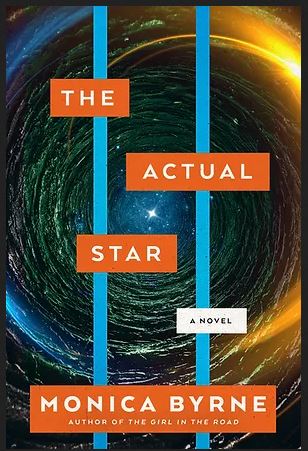
In term of fiction, the only new-for-2021 book that really stuck with me was The Actual Star, by Monica Byrne (no relation, so far as I’m aware).

The story sprawls out across three separate timelines, each 1000 years apart (basically the far past, the present, and the distant future) and leans more heavily in to fantasy than sci-fi for me, but ultimately the label doesn’t matter. The stories playing out in the three eras tie together really well and there’s a lot of interesting ideas tossed around to chew on. Highly recommended.

In terms of endings, I have to give a shout out to Sex Criminals, by Matt Fraction and Chip Zdarsky, the comic/graphic novel that wrapped up its run in late 2020 (I didn’t get the sixth and final volume until January of last year).

The series never really reached the heights of the first volume again – the pages (three-and-a-half of them!) where Suzie sings “Fat Bottomed Girls” in a bar, with all the words covered over with exposition explaining how expensive it is to quote song lyrics in a comic – still leaves me rolling. It touched on a lot of interesting things along the way and was never less than interesting. The ending worked, too.

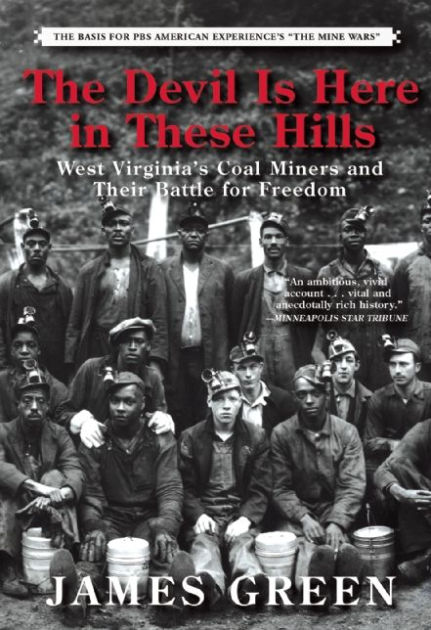
As for things I got caught up on in 2021, a lot of it was historical, not fiction. I’ve recently written about The Invention of Murder and how interesting it was. Another bit of history I really enjoyed digging into was  The Devil Is Here in These Hills: West Virginia’s Coal Miners and Their Battle for Freedom by James R. Green.

It covers the tumultuous history of labor organization in the WV coal fields, generally referred to as the Mine Wars. Very in depth, with lots of necessary background context, but also very readable.

I’d also  recommend  The Quiet Americans: Four CIA Spies at the Dawn of the Cold War—A Tragedy in Three Acts by Scott Anderson.

It’s probably the most tragic thing I read last year, given that it tracks how the initial enthusiasm for fighting Communism curdled into dictator-propping-up realpolitk cynicism. Oh well.

Oh, and I read an awful lot about the history of the beautiful game.

Music

2021 was a weird year, musically. Several of my favorite artists – Mogwai, Steven Wilson, St. Vincent, Resistor – released albums last year. All of them are good – I even like Wilson’s electro-pop driven The Future Bites better than most proggers – but none of them really grabbed me. Maybe they’ll grow on me in the future, but for now there wasn’t anything in 2021 really worth taking note of.

As a result, last year was more about getting caught up in some things I’d overlooked – in some cases for a long long time.

Speaking of Steven Wilson, my history with his old (and new again!) band Porcupine Tree is that I preferred the “newer” stuff, from Stupid Dream on, to the older material. The Sky Moves Sideways just feel tedious to me, for instance. But poking around Bandcamp (my happy hunting ground) I found a recent rerelease of the band’s 1996 album, Signify.

That album really hits a sweet spot between the spacier stuff and the tighter, song-driven rock stuff. I also love the recurring samples that mostly touch on religious themes (the guy on “Idiot Prayer” switching from his LSD trip being nearly rapturous to just repeating “please help” does it for me every time).

I’ve given some time over the years to reevaluating music that was popular while I was growing up in the 1980s. Part of that is due to getting into electronic music, including the synthpop of my youth. Part of it is just maturing as a listener to realize that just because something is popular doesn’t mean it’s crap (95% of it is, of course). So when I came across this article written by a professor who used pop culture to open discussions of how people felt during the Cold War I was inspired to go dive into some of the music, including the second Men At Work album, Cargo.

The singles are good and some of the deeper cuts are just as good. “No Sign of Yesterday,” which closes out side one is great. It’s fairly recognizable pop/new wave, but with just enough weirdness to distinguish it.

Finally, another pleasant discovery from Bandcamp was the album Prophecy by Solstice:

Solstice were part of the neo-prog scene of the early 1980s, but with definite folk and Celtic shadings. They only released one album back then, but have released a few more over the years, with Prophecy coming in 2013. It’s great melodic stuff. Wonderful find.

Television/Streaming

You don’t need me to tell you we’re living in the era of peak TV. There’s just so much good stuff out there that I couldn’t touch them all. So let’s focus on pleasant surprises  – things that I thought might be decent, but turned out to be really good.

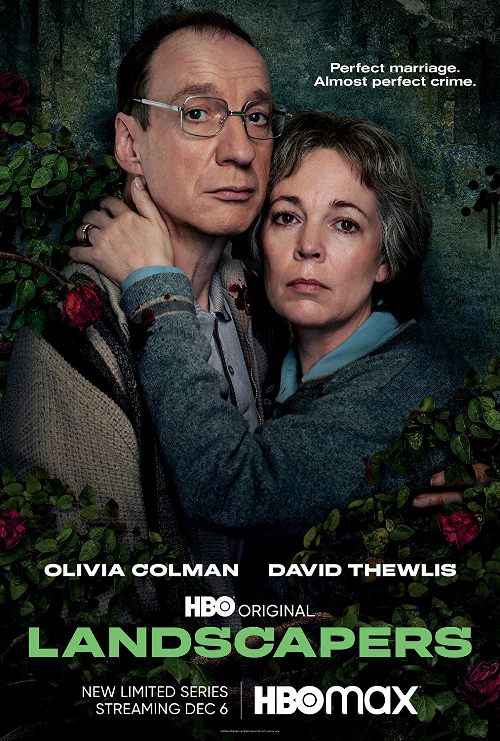
The poster child for this approach is Landscapers.

On the one hand, it’s a true crime story of a married couple who murder the wife’s parents and bury them in the garden then go on the run for fifteen years. On the other, it’s a close study of a couple shut off in their own little world where reality only sometimes intrudes. It’s shot with a grab bag of styles related to classic cinema and includes a bravura scene where the police interrogation room is pulled apart to reveal a set while the scene resets. Brilliant? I’m not sure, but it wasn’t like anything else I saw last year.

I feel somewhat the same about Only Murders In the Building, in that I thought it might have potential, but didn’t think I’d enjoy it as much as I did.

The Martin Short/Steve Martin pairing is as good as ever and Selena Gomez slipped into the mix very well. I’m not sure the actual mystery made much sense, or that I really cared about it, but given the light-hearted nature of things, who cares?

Staged, on the other hand, I was relieved was as good as it was.

I missed the first season in 2020, even though David Tennant and Michael Sheen doing comedy should have drawn me in. That season chronicled their involvement with rehearsals of a play that never actually happened (delayed by COVID and then collapsing). Shot via Zoom (or some similar platform), with their significant others playing themselves it managed to be funny and thoughtful at the same time. The second season, from last year, expands a bit as an American remake is in the works – one which isn’t going to use either one of them as stars (since, apparently, we don’t like them over here). It’s more meta and sillier, but equally good.

Finally, I’m giving a provisional shout out to Yellowjackets.

The first season hasn’t even finished as a write this and it may go way off the rails in coming years (it’s allegedly going to run for five seasons) but so far it’s been engrossing.

Movies

I can’t say much about movies in 2021 since I didn’t set foot in a movie theater all year (the pandemic and all). I watched a few 2021 releases on streaming services, but nothing that really wowed me. As a result, I think the “movie” that stuck with me most from the year was Get Back, Peter Jackson’s epic excavation of The Beatles. I already wrote about that here.

That’s it – on to the new year!

Thoughts on Christmas Stories

A confession – I’ve never seen Die Hard. I’m not really an action movie guy, so it’s not really in my wheelhouse. I was kind of surprised when it started popping up described as a “Christmas movie,” but I suppose it takes place during the holiday, so why not? Then early this week I saw an interesting push back against that argument – basically that while the movie takes place at Christmas it doesn’t actually have anything to do with Christmas or what it means. That got me thinking about what makes a Christmas story and whether you can have a Christmas story that doesn’t even have Christmas in it.

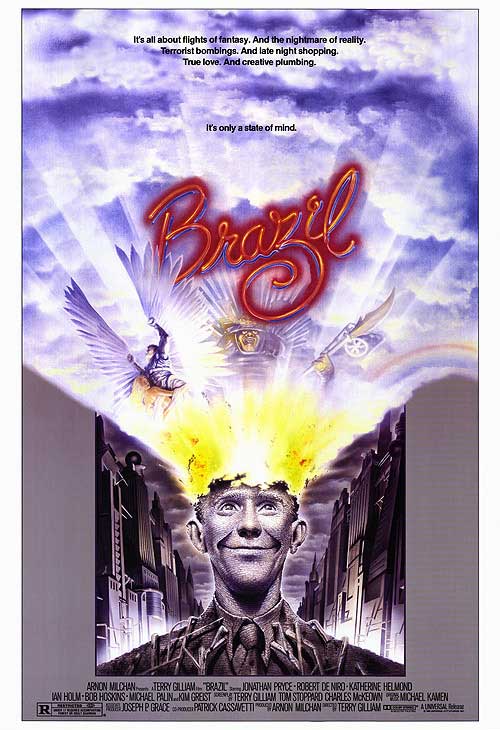
I’m kind of into the “if it takes place at Christmas it’s a Christmas story” argument, because then I could force my wife to watch one my favorite movies, Brazil, under that rubric.

Make no mistake, Brazil is not at all what anyone would call a “Christmas movie.” It takes place at Christmas time, but aside from satirical asides on the consumer side of the holiday – one little girl asks Santa for a credit card, while there’s a running joke of people repeatedly gifting the kind of meaningless doodad gift you do when you’re forced to (everyone refers to it as “a gift for an executive,” so it says something about those folks, too) – the holiday doesn’t really enter into it. There’s certainly no “Christmas message” in it, given that it’s a dystopian nightmare in which the “happy ending” is the main character going insane.

That’s not a really good metric. Don’t you need some tie-in to actual Christmas and the holiday? Think of something like Gremlins, which, again, is more set at Christmastime than a “Christmas movie,” but at least you’ve got the horrible back story of Kate’s father, who died trying to pull a Santa to surprise the family. Still, there’s not really much of a message to that movie (aside from “don’t feed them after midnight,” of course). Let’s conclude, then, that we need at least “Christmas plus . . .” something, although I’m not sure what. That eliminates Brazil, but I can’t say if the same is true for Die Hard (this article makes a pretty good argument that the movie works as well as it does precisely because it’s merely “Christmas-adjacent”).

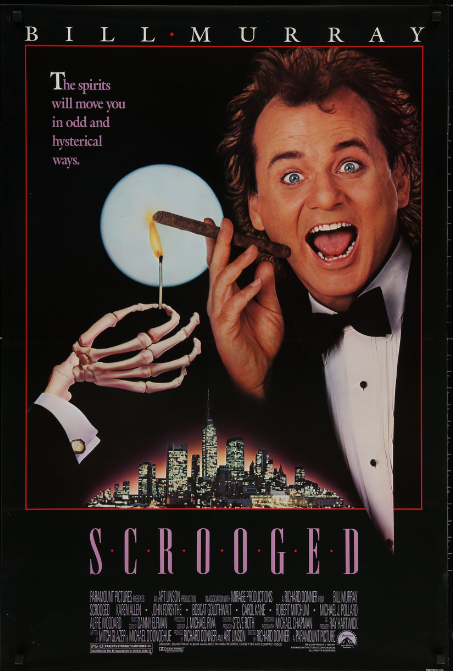
The “plus” is mostly going to be some kind of message, right? Lots of classic Christmas stories have some moral component, from A Christmas Carol (don’t be a dick to the poor at Christmas or the rest of the year) to The Grinch Who Stole Christmas (don’t be a dick to people celebrating Christmas). I like those. I’m particularly a sucker for variations on Carol, my favorite being Scrooged.

Any movie that puts Miles Davis and other jazz greats in a band of street musicians for a throwaway joke is OK by me. Of course there’s also the religious angle, probably pulled off best by A Charlie Brown Christmas, which I love even though I don’t buy into the theology. I suppose we can also ditch the messages altogether and just focus on nostalgia, as in A Christmas Story, which manages the impressive task of selling that nostalgia to an audience who largely are too young to wallow in it.

I feel much less favorable toward what I call “you’re doing Christmas wrong” movies, wherein somebody dares to celebrate the holiday in their own way, only to have their individualism squashed by some kind of hive-mind celebratory conformity. Seriously, is there any reason to look at how somebody else does (or does not!) celebrate a holiday and decide you need to fix them? Drives me up the fucking wall.

So if we agree that a real Christmas story is “Christmas plus” something else, what if we don’t have the Christmas part, at least technically?

My only real routine for the holiday season is to reread (relisten, in actuality) Hogfather, by Terry Pratchett.

The Hogfather is the Discworld’s equivalent of Santa Claus, basically. His holiday, Hogswatch, is a combination of Christmas and New Year’s Eve, combining the gift giving aspect with the midnight revelry.

I love Hogfather in a way I don’t with many things. It’s brilliantly funny throughout. Lots of characters from the other Discworld books show up to play their part in a really clever plot – someone hires the Guild of Assassins to kill (or “inhume,” as the head assassin prefers) the Hogfather as means of bringing some order to the universe. Turns out the human imagination is both destabilizing – it makes folks do wacky things – but it also inspires us to grander things. Thus we have this truth from none other than Death himself (hence the all caps – he talks that way): “HUMANS NEED FANTASY TO BE HUMAN. TO BE THE PLACE WHERE THE FALLING ANGEL MEETS THE RISING APE.”*

Death shows up in Hogfather to do the fat man’s job while he’s disposed, thus shoring up the role of belief in the universe. This allows Pratchett to do a lot of commentary on the holiday and what it means to different people. He shows up at a mall to give kids exactly what they want, even if they really can’t have them (he tries to give one kid a real sword, then announces to a little girl that there’s a pony in her kitchen). He butts in as a king tries to pass of his leftovers as an act of benevolent charity. He actually forgoes collecting the soul of the “little match girl,” concluding that it’s unfair for someone to die alone and cold on Hogswatch, even as his pixie henchman Albert (a fabulous character in his own right) explains that touching stories of that kind of death make other people feel better at Hogswatch. It’s through this relationship that Pratchett deals with the economic inequality of the world, which shines through during the holidays just as it does all year ‘round.

None of this message, commentary on what it means to knowingly celebrate a story you know not to be true, would land if the rest of the book wasn’t so funny, if the characters weren’t so sharp and memorable. But the Hogfather (much less Death!) isn’t Santa and Hogswatch isn’t Christmas, so does it count?

Here’s where I’ve come down on all this – if something’s a Christmas story to you, then that’s all that matters. We all find meaning in different places and different ways. At no time is that more true than when all these competing winter celebrations are underway. However you celebrate, whether it’s with Die Hard or not – Happy Holidays (whatever your holiday may be)! See ya’ in the new year.

* The book’s loaded with great lines. Here’s another, from Death’s granddaughter, Susan, who’s the heroine of the story: “Getting an education was a bit like a communicable sexual disease. It made you unsuitable for a lot of jobs and then you had the urge to pass it on.”

Weekly Watch: The Beatles: Get Back

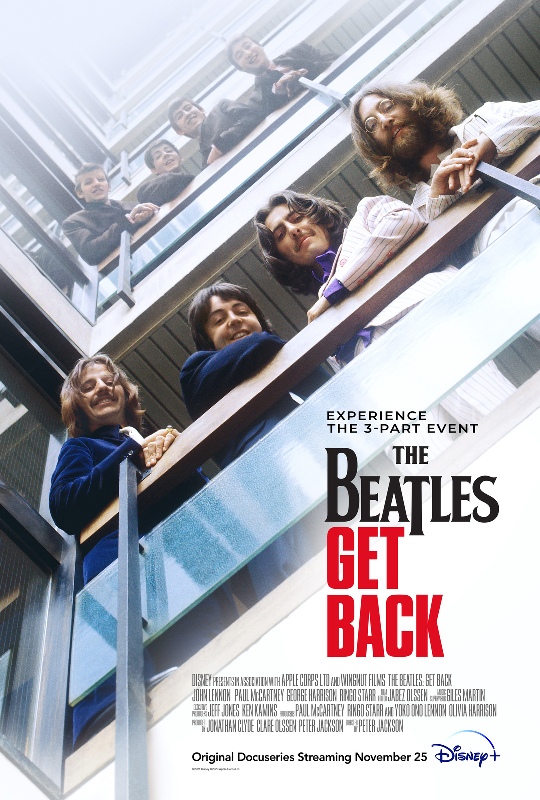
I am not the biggest fan of The Beatles in the world. Sure, I have every album from Rubber Soul on, but if push came to shove and was forced to save my favorite albums from a fire or something I doubt they’d make the cut. Still, when it was announced that Peter Jackson had cobbled together a multi-part documentary from the infamous Let It Be sessions, I was excited. With a long Thanksgiving weekend, it only made sense to dive in whole hog (or turkey, as it were). I’m glad I did, but I can see where other folks might not be able to push through it all.

It’s a Lot

“Multi-part” doesn’t quite do justice to just how much there is to digest in TB:GB. Each of the three parts is feature-length in its own right and they clock in at almost eight hours altogether. There are reasons for that – there was nearly 50 hours of footage to work with (and three times the amount of audio). In addition, I’ve read that Jackson added some footage once Disney decided the Blu-Ray release wouldn’t have any bonus features and he didn’t want the footage to disappear back into a vault for another few decades. All fine and good, but is it worth it?

It depends on whether you one of two kinds of people – or a third kind with a foot in both camps. The first is diehard fans of The Beatles who will absolutely want to spend all the time picking up on the minutiae of proceedings. The second are people who are interested in the creative process and seeing how the musical sausage gets made. I’m in the third group – I’m most interested in the sausage making and like The Beatles enough to wade through all the music they make in the process (I’d watch a similar, but much more brief, doc on, say Taylor Swift, even though I don’t really like her stuff).

If you’re not in one of those groups, you’ve probably got a better way to spend eight hours. That’s partly because given the fly-on-the-wall approach of this you really have to pay attention to what’s going on. Occasionally there’s text on screen to transition between scenes, but there’s no narration, no talking heads to guide you through what’s going on. You either jump in with both feet or don’t, in other words.

George On an Island

The dynamics of the band as they work are the most fascinating part of TB:GB. For all their troubles at this point, Paul and John and still a unit and tend to drive things (Paul, in particular). They’re not really the songwriting team they once were, but they help shape each other’s material in any case. The other two, well, they’re kind of odd men out. Ringo copes with all this by being Ringo, the most laid back man on the planet. It’s not for nothing that initially at the movie studio in Twickenham he’s on a riser, up and apart from the other three, and then at Apple studios he’s behind a sound barrier with his drums. His ability to let the bullshit pass him by while doing his job really well definitely says something.

George, sadly, doesn’t have the same personality make up, or whatever, that allows Ringo to go along and get along. He seems to be having a serious crisis of confidence through most of the sessions. Early on he brings up Eric Clapton and admiringly talks of his work with Cream, clearly feeling insufficient as a player by comparison (almost anybody would, right?). Later on he has trouble generating enthusiasm from the others for some of his songs, including “All Things Must Pass,” which would wind up as the title track on his first solo album.

It may have ever been thus, but by the time these sessions start the various stresses of the band clearly leave George out on his own most of the time. Which leads to . . .

George Quits

As I said, I’m not the biggest fan, but I did know that Ringo quit for a bit during the making of The White Album. I had no idea George did the same during these sessions. I can’t say I blame him, but two things really stood out about that.

First, it happened without any of the kind of drama or hysterics you might expect. He did not fling his guitar down. He didn’t kick over an amp. He didn’t curse anybody out, yell, scream, or otherwise make an ass of himself. George simply announced that he was leaving and then did. If you were writing drama I don’t know that you’d have a character do it that way, but it almost hits harder for being so low key.

Second, what happens next is, dare I say it, very Spinal Tappish? In that classic mockumentary, lead guitarist and founding member Nigel Tufnel storms off stage and quits the band. Asked the next day about his leaving, co-founder David St. Hubbins downplays it, noting just how many people have been in the band over the years (all those hapless drummers!). When confronted that surely Nigel leaving is different, David eventually admits that he might feel different if he wasn’t sedated.

Part two of TB:GB begins with the band dealing with George’s absence and, at least initially, it’s no big deal. There’s no talk of the band being over. There’s no real talk, even, of stopping the sessions. Things are paused, somewhat, while George is talked back into the fold, but that’s about it. There’s talk of potential replacements, even! No wonder George walked out.

Sparks of Genius

One thing that really comes out of TB:GB is that, even for some of the most lauded songwriters of their generation, writing songs is hard work. There’s slog, there’s false starts, there’s struggle (as a recently departed genius wrote, “art isn’t easy”). As a creative person who often struggles with writing (and music making) it’s encouraging to see that even these guys have a hard time with it.

That said, there are some amazing moments where sparks of genius emerge from almost nothing. Most notably is the genesis of “Get Back” itself. A recurring theme of the Twickenham sessions is that John (with Yoko in tow) is almost always late, leaving the others to fart around waiting. On one of those mornings Paul is absent-mindedly strumming his bass when all of a sudden the opening riff of “Get Back” emerges. It takes hours of work (in documentary time) to actually get the final song out (at one point it takes a diversion into being a protest song about racism and xenophobia in the UK), but the nugget of it comes out of nowhere. It’s very cool to see those things happen.

The Life, Death, and Rebirth of the Live Show

The original plan for what became Let It Be was for the band to get together to write and rehearse new material (while being filmed for a documentary) which would be the basis for a new album and a live concert. The band hadn’t played live in a few years, so anticipation was high for that, at least outside the band. The band never seemed on board and one of the more amusing themes of TB:GB is how the live concert element continues to morph until it winds up with the famous concert on top of the Apple Corps building.

The plan that made the most sense was to build a set at the film studio and bring a live audience in, but nobody is really that interested in that (they’d done it before). One of the band’s handlers suggests doing the concert in an ancient amphitheater in Libya, but it would take a few more years for Pink Floyd to get there (basically). A sub idea of that was to bring the audience with them on cruise ships to that venue, which nobody in the band is up for. Apparently the only thing worse than being cooped up with their fellow Beatles would be being stuck on a boat with loads of fans. Given that various music cruises are a thing these days (or were, before COVID) I wonder what the artists involve really think of those.

What a Live Show!

Of course they did wind up putting on a show, on the roof of the Apple Corps building in downtown London. If I remember correctly, Paul actual floats this idea early on, but it’s waved away while they consider more traditional alternatives (Paul, in general, is the driving force to have all this wind up being something other than just an another album). We get all of it, which is both great and a little bit of a grind – they only do a few tracks and take multiple takes of most. That said, several of those takes are what make it onto Let It Be in the end, so it’s cool to get them in all their glory.

The dynamic of the band through the sessions really comes into sharp relief up on the roof. John and Paul come alive on stage and are having a blast. George is more subdued, like rocking out on a cold, windy rooftop isn’t the best idea. Ringo just does what he does, unflappable behind the drums.

A word here about the fifth Beatle for this show, keyboardist Billy Preston. He’d met the band way back in their Hamburg days and dropped in the sessions in London just to say “hi.” He wound up drafted in to playing electric piano and organ (and goofing around with a Stylophone!), fleshing out the band’s sound, dedicated as they were to doing it all live. It’s after he arrives that things really get more focused and it’s not beyond the realm of possibility to suggest that he’s the real hero here.

Another word about the baddies of the piece – the cops who come to shut everything down. If, like me, you’ve ever wondered if Monty Python sketches were too hard on British cops and authority figures, exaggerating for comedic effect, this footage convinced me they weren’t. The cops couldn’t have been more wet blankets if they had been played by John Cleese and Graham Chapman. There’s even a pepper pot who complains on the street! Life imitating art (or vice versa) and all that.

It Just Ends

This is an odd thing to say about an eight-hour long documentary, but it really just ends, without wrapping up stuff very well. After the concert on the roof there’s some brief footage of folks listening back to the recordings the film rolls credits, over which some more footage of the last of the studio recording takes place. It’s an odd choice that, among other things, leaves us without a full take of “Let It Be.”

Beyond that, given that the film is about the creation of these songs, it’s odd not to have a post-script about the actual release of the album. Or about how they went back into the studio almost immediately to work on what became Abbey Road (several songs from that album pop up during these sessions). Or about how Phil Spector got a hold of Let It Be and glooped his production onto it. Or . . ..

I get it – you got to stop sometime and that’s when the footage ran out. Still, given that there’s a little “how we got here” prologue for the band’s history a similar epilogue would have made sense.

Get Back, Jo

As I said, if you’re a Beatles fan or interested in seeing music get made, from the ground up, this is well worth your time. Otherwise, probably not. I’m glad it’s here and I’m glad I had the time to work through it. I don’t think I’ll add the Blu-Ray to my collection, though.


Weekly Read & Watch: Eight Men Out

I’m not a baseball fan. I don’t hate it – life’s too short to get worked up about other peoples’ pastimes – but it doesn’t engage me. It might be odd, then, that one of my favorite movies is Eight Men Out, John Sayles’ exploration of the infamous “Black Sox” scandal, when a group of Chicago White Sox players threw the 1919 World Series.

Of course, what makes the movie work so well is that it isn’t really a baseball movie. It’s a movie about labor relations, in which the ballplayers are exploited at first by the club’s owner, Charles Comiskey, and then by unscrupulous gamblers who don’t even pay the players what they’re supposed to. I won’t say the baseball stuff is secondary (there’s a good deal of on-field action), but it’s definitely used in service to something other than your traditional sports movie narrative.

The film is based on a book of the same name by Eliot Asinof that was first published in 1963.

I only just got around to reading the book itself, which is an interesting contrast to the movie. They tell the same story, but there are some interesting differences that arise from Sayles really driving home the political point of view he’s coming from.

What the book does better than the film, since it has more time to cover the story, is provide more context to what happened in 1919. For one thing, while the movie presents the Black Sox scandal as almost sui generis – a huge breach of sporting life – it turns out the gambling-related scandals were pretty common in baseball at the time. Granted, they hadn’t gotten up to the level of the World Series, but in truth this was the straw that broke the camel’s back rather than a singular incident. Indeed, one of the earlier scandals involved the Sox’s opponents in the World Series – the Cincinnati Reds.

The book also provides more context for what is alleged to be the prime driver of the players’ interest in the fix – that Comiskey was a particularly miserly owner. The movie moves a couple of incidents (involving avoiding paying bonuses) from 1917 to 1919 to help drive this home. While the book argues that Comiskey was a tight wad, it also shows that the rest of the owners weren’t much better. In the days of the reserve clause, where free agency didn’t exist and players were forced to play for basically whatever wages the owners offered, it was easy to be a tightwad. There’s also attention given to contract terms that allowed players to be fired with 10-days notice for just about anything (including getting injured), but they had no similar right to walk away. It’s not as if your best player could fuck off to another team when their contract was up. More than that, given that the country was just coming out of World War I there was a rational (if not completely honest) basis for owners to worry more about money. Being a professional baseball player then wasn’t much better than being a professional women’s soccer player is these days, complete with the side hustles. The movie focusing on salaries makes that easier to convey in a dramatic narrative of just about two hours.

For all that context there’s one area where I wish the book would have provided a little bit more. Having read the book I’m still not sure where gambling fit into society at the time of the 1919 World Series. The gamblers involved in this story are all pretty sleazy characters with connections to organized crime, but gambling itself seemed to be much more open and notorious than it would be in later years. There’s a recurring motif of entertainer George M. Cohan being close to the fix (although not involved) due to gambling that makes it seem not quite illegal – but maybe not quite legal, either? I’d be interested to know what society thought of gambling back then as a way to help explain the reaction to the fix.

The book also dives deeper into the aftermath of the series and the eventual exposure of the fix. The movie keeps a tight point of view on the players, while the book follows the journalists and lawyers who probed the series and the gambling that surrounded it (Sayles compresses most of this into a jazz-fueled montage). In particular, I appreciated the details on how journalist Hugh Fullerton (played by Studs Terkel who, along with Sayles himself as Ring Lardner, act as kind of a Greek chorus throughout) was roundly vilified for daring to suggest that something wasn’t on the level. History proved him right, of course, but that might have been cold consolation.

As for the lawyers – well, if baseball came out of the entire scandal with a damaged reputation, my profession didn’t exactly cover itself in glory. Some of the more melodramatic parts of the movie – grand jury testimony being stolen, outbursts in the courtroom – weren’t added for dramatic effect, it seems. At the eventual criminal trial (where everyone, players and gamblers both, were acquitted) the players were represented by lawyers paid by Comiskey who were more interested in letting baseball (with its new, all powerful, commissioner) deal with the matter than the courts. But my favorite bit of lawyerdom in the movie is when Kennesaw Mountain Landis, a federal judge named the first baseball commissioner, takes the job for significantly more pay than being a judge – but keeps his seat on the bench, anyway.

Where the book and movie differ most importantly is when it comes to the genesis of the fix itself. In the book it’s clear that the fix began with the players, who reached out to gamblers about the possibility of fixing the series. The film is a bit more vague. The conversation where it’s first broached by Chick Gandil and gambler Sport Sullivan starts kind of in medias res, with no real indication of who made the first pitch (so to speak). I think it lets Sayles maintain his exploitation narrative without sullying the players too much.

Ultimately, though, it’s important to consider that the Sayles movie is a narrative work of fiction, not history, and the Asinof book is now nearly six decades old. As compiled by the Society for Baseball Research, more recent evidence has emerged that cast some doubts over the story told in Eight Men Out. In particular, maybe Comiskey wasn’t the miser he’s been portrayed as being, although that doesn’t much matter in the end. The book, to a lesser extent than the film, is telling this story from the players’ perspectives and whether their complaints with Comiskey were valid in a wider context doesn’t mean they still weren’t motivated by them.

None of this makes the any less engrossing or means it can’t get at broader truths about America and its economic life. There’s truthiness to it, if not absolute truth. Just means it’s history, which is ever changing upon further evaluation.

Timing Isn’t Everything, But It’s Something

The Godfather came out in 1972, its sequel in 1974. I was born right in between, in 1973, which is to say I had no chance to experience these Coppola epics when they were fresh. In fact, it wasn’t until sometime 15 years ago or so that I actually managed to watch them. By that time I’d already consumed a good amount of mob stories, from Goodfellas to (most of) The Sopranos and many others.

It sort of makes sense, then, that I wasn’t exactly overwhelmed by the first two Godfather movies (I’ve never seen the third). They’re really good, don’t get me wrong, but by the time I saw them a lot of what made them exceptional had bled through into popular culture. The idea of morally conflicted mobsters was certainly a trope by 2005 or so. Likewise, the stress of familial obligations in the mob operation had been done and done by then. This is no fault of the original films – it’s just that by the time I experienced them they weren’t as timely as they once were.

I thought about The Godfather while I was reading Soon I Will Be Invincible by Austin Grossman.

As you might guess from the cover, it’s a superhero story. Why did it make me think of The Godfather? Because it came out in 2007 and I was reading it fourteen years later.

To give some context, the first MCU installment, Iron Man, came out in 2008. That same year is when The Dark Knight, the second of Nolan’s Batman movies came out (to be fair, we’d also had a few X-men movies). In other words, this book came out just as a huge chunk of the movie and TV landscape shifted to super hero stories. By the time I got around to reading it I’d consumed most (although not all) of them. And as a result, the book very much had a “been there, seen that” feeling to it.

Invincible plays out across two related points of view. One is Fatale, a fairly new cybernetic superhero who joins The Champions, a group of superheroes who have their own dysfunctional baggage (including a failed marriage between two members). That side of the story leans into that dysfunction and highlights the personal toll that being superheroes takes on each of them (from OCD to drug use and the like). It’s more personal and intimate than, say, The Avengers in the MCU, but it’s in the same league. There’s even a corporate element that reminds me of The Boys, although it’s not so cynical.

The other point of view is that of Doctor Impossible, who, conveniently enough, breaks out of prison for the dozenth or so time just as the book starts. He embarks on another scheme to take over the world, along the way diving into his own history as well as those of the heroes who have crossed his path over the years. What we get is a narrative in which the villain is fairly sympathetic, in that he’s a put-upon smart guy who channels his frustrations into evil. Again, this is pretty common these days in super hero properties. The era of the mustache-twiddling bad guys is a thing of the past, thankfully.

None of this has anything to say about Invincible as a book. It’s pretty good and darkly funny in parts (naturally, Doctor Impossible has all the best lines), but I can’t help but thinking that it might have felt really fresh in 2007 or a few years later. Today, sadly, it comes off as a bit tired. Is there anything Grossman could have done to prevent my reaction to his book? Not at all.

Is being timely something writers should worry about? Probably not. Certainly, if you were thinking of writing a book like Invincible today, you’d have to take into account how prevalent super hero stories are these days. One more similar story probably won’t attract a lot of attention. That’s a different discussion than trying to figure out how well something might age in the future. Unless you can predict what’s going to happen in years to come – in which case, why are you writing books? – it’s just not something worth worrying about.

Sometimes I see authors wondering about whether particular references – to pop culture things or news events – will “date” their work down the road. That always seemed very presumptuous to me, since it assumes anybody will be reading your work in years (or decades) to come. This issue is more of the flip side – how do you keep you work from being swallowed by general trends? You can’t – write what moves you and let the broader market sort itself out.

You can’t fight time – you can only hope to survive it.

Weekly Watch: The Suicide Squad

Fair warning – I’ve never been much of a superhero comic book reader. I read other kinds of stories in that graphic novel format, but something about the endless nature of most superhero titles – they go on forever, double back upon themselves, have alternate versions – makes them impenetrable. Aside from a few Batman titles I read in college, thanks to my roommate, I’ve not really dug into them. Comic book movies, on the other hand, I’ve consumed quite a bit and enjoy. That’s largely due to my wife, who, shortly after we started dating, informed me I had to be up to date on the X-Men movies so we could see the new one the weekend it came out.

Which is to say that all I know of the Suicide Squad (as opposed to The Suicide Squad – the article is important, just like that university in Columbus) is what I’ve seen on screen. What I’ve seen so far isn’t that great.

The first movie (from all the way back in 2016), simply called Suicide Squad, was a mess, going down in flames financially and getting destroyed by critics. I didn’t think it was horrible, but it wasn’t that good. It did get the basic point across, though – the Suicide Squad are a collection of super villains who do special, super dangerous missions for the US government on the promise of getting their sentences cut. Makes sense as the basis for a story about a group of bad guys, right?

The Suicide Squad kind of picks up where Suicide Squad left off, but only enough to get by. There are a handful of carryover characters, but lots of new ones and a new creative team to bring it all to life. Or death, really, since there is an awful lot of blood and gore in this movie. It’s of the “so awful it’s funny” type – kind of like Sam Peckinpah as filtered through Monty Python – but it wears thin pretty fast.

Aside from the gore, there’s lots of crass humor. That’s not necessarily a bad thing – some of it works really well. There’s a discussion between Idris Elba’s Bloodsport and John Cena’s Peacemaker about a particular juvenile insult that spirals into the absurdity of it so far it’s funny. Likewise, when another character says he can only kill if he pictures the target as his mother, that becomes a callback that goes from funny, to not funny, to funny again through sheer repetition.

But there’s not enough of that to go around, particularly for a movie that’s over two hours long. There are other quibbles, too. There’s a kind of bait and switch that happens at the beginning that is apparently hilarious if you’re familiar with the Suicide Squad comics, but if you’re not doesn’t make a lot of sense. Harley Quinn, who’s the most interesting character here (the only one with her own movie to build on), seems like an afterthought, off on her own for most of the time. And while there are some stabs at character development here and there, they’re pretty weak (the motivation for Bloodsport to do all this is laughably badly done).

But where things really go wrong is when the Big Bad shows up. The Squad’s mission is to take out a Nazi-spawned research facility in a fictional South American country. Run by Peter Capaldi’s The Thinker (picture his The Thick of It character sprouting vacuum tubes from his head – at least he gets to keep the cursing!) it actually holds a deep dark secret that the US doesn’t want the world to know about. Fine – it’s not like there isn’t some basis for that in the real world.

But the Big Bad secret is . . . a giant alien starfish? That kills people and controls their bodies by slapping tiny versions of itself over its face? Maybe that works in the pages of a comic, but on the big(ish) screen, it looks ludicrous. It would be a low-level Dr. Who baddie, at best. As the existential threat in a movie it just doesn’t work.

I’d be willing to look past that (I think) if the way the movie ended made any sense for the characters involved. Remember, these are super villains – largely killers – who are so dangerous they’re expendable. Yet, when the oversized aquarium dweller toddles off to destroy this imaginary country and the boss (Viola Davis, who is probably the scariest of them all) calls them home – they all turn into big damned heroes! That’s right, a movie about super VILLAINS ends just the same way as one about super HEROES! What’s so frustrating is they could have reached the same end (a big CGI-fueled battle with lots of collateral damage) and dealt with the “aren’t we the baddies?” issue quite easily, but instead it’s just lazy writing to get to the big finale. The great promise of something like the Suicide Squad in general or The Suicide Squad specifically is that it’s a great chance to take the superhero story conventions and turn them on their heads. These characters aren’t self-sacrificing do-gooders, after all. They’re not out to uphold truth, justice, and the American way (well, the first two, at least). They’re killers, they’re criminals, they’re immoral (or at least amoral) psychopaths. So why fit them into the heroic straight jacket? Have the confidence of you convictions and make them the sleazeballs they’re supposed to be. That’d be more interesting, at least.

When the Character Has No Deep Dark Secret

There’s been a lot of press recently about the 20th anniversary of the release of Shrek and its impact on the culture. One of the most memorable parts of the movie is when the main character explains that ogres are like onions, as they have layers. It’s more than a nice message about not judging people for their looks, though. It suggests that fictional characters are supposed to be the same – they should have layers that peel away the more time we spend with them. Some of them, maybe most of them, wind up with deep dark secrets that motivate their actions or hold them back.

So what happens when you find a character that has no layers at all? The surface they project to the world is exactly who they are. How do you handle a character like that?

A Beautiful Day In the Neighborhood is, in one way, a movie about Mr. Rogers. With a title like that, how couldn’t it be? But in a more accurate way, it’s not about him at all. The main character is a (fictional) writer sent to do a short puff piece on the children’ TV legend. Cynical, bitter, and having just had a drunken punch up at a wedding, he’s the one with layers.

Mr. Rogers is . . . well, he’s Mr. Rogers. He’s kind and patient and he cares about this guy’s well being. The writer is an investigative journalist, so he (and, by proxy, the audience) thinks that some dark reveal is just around the corner. Surely Mr. Rogers will curse like a sailor in private or abuse his staff in petty ways or something like that. Nope. All we see of him is that he’s a nice, kind guy and that’s all there is to it. Not at all like this:

That made Mr. Rogers great guy. It doesn’t make him a great character to build a movie around. That’s why he’s not the lead in the movie that’s practically named for him.

There’s an interesting comparison here to the Showtime series Kidding, which stars Jim Carey as a children’s TV icon named Mr. Pickles. He is very much the main character of this story and, as expected, he has layers that the series digs into as it goes along – he suffers from a kind of stunted development, his marriage dissolves after the death of a child, etc. It’s funnier than it sounds (in a very dark way), but it has what you’d expect out of a central character.

Which is what makes A Beautiful Day In the Neighborhood such a nifty work of leger de main. It is undeniably Mr. Rogers’ movie (as played by Tom Hanks, again, how could it not be?), but it can’t be about him, right? So let another character be our focus, our entry into that world, and let the rest seep in around the edges. Which it does, in spades. Bottom line is, a movie about Mr. Rogers that isn’t really about Mr. Rogers has no business working as well as it does. It’s something to consider when planning out stories.

And I have to say, every time I think of Mr. Rogers this is actually what jumps into my head. I blame my brother, Todd, who does, indeed, play the bass:

Why “The Cold Equations” Is Still Horribly Plausible

Netflix recently released a new sci-fi flick, Stowaway. The trailer gives you a sense of what it’s about:

A spaceship on the way to another planet, finite resources, and an extra person. It’s the classic lifeboat problem IN SPAAACCCEEE!! FYI, expect spoilers from here on out if you’re worried about that kind of thing.

Stowaway also owes a lot to “The Cold Equations,” a 1954 short story that’s one of the most talked about in the history of science fiction. The release of Stowaway has lead to another round of reevaluation of the story, although there are some pretty big distinctions between the two.

Wikipedia has a pretty good summary of “The Cold Equations”:

The story takes place entirely aboard an Emergency Dispatch Ship (EDS) headed for the frontier planet Woden with a load of desperately-needed medical supplies. The pilot, Barton, discovers a stowaway: an eighteen-year-old girl. By law, all EDS stowaways are to be jettisoned because EDS vessels carry no more fuel than is absolutely necessary to land safely at their destination. The girl, Marilyn, merely wants to see her brother Gerry and was not aware of the law. When boarding the EDS, Marilyn saw the ‘UNAUTHORIZED PERSONNEL KEEP OUT!’ sign, but thought she would at most have to pay a fine if she were caught. Barton explains that her presence dooms the mission by exceeding the weight limit, and the subsequent crash would kill both of them and doom the colonists awaiting the medical supplies. After contacting her brother for the last moments of her life, Marilyn willingly walks into the airlock and is ejected into space.

The thrust of the story is that the EDS is designed to do a particular job in a particular way and the additional variable of a stowaway wrecked all that. Physics, the “cold equations” of the title, mean that’s a problem and there’s only one solution.

While those same equations play a role in Stowaway, it’s really quite a different story. For one thing, the “stowaway” of the title really isn’t. He’s an engineer who wound up on the ship by accident. He did not intentionally sneak on like Marilyn in “The Cold Equations.” It puts him on a completely different ethical/moral footing. Another important distinction is that the problem in Stowaway that creates the drama is a mechanical malfunction, not just the presence of an additional person on the ship. Again, it changes the moral calculus. Most importantly, the eventual sacrifice is completely different – a crew member in Stowaway sacrifices herself to save the rest of the crew, whereas poor Marilyn has to take the task on herself.

That said, things are close enough to make mention of “The Close Equations” understandable (it even comes up in this really interesting video from one of the science advisors on Stowaway) and it’s always worth revisiting classic works. However, a lot of the criticisms of “The Cold Equations” always struck me as a bit off.

Lots of people who read “The Cold Equations” want to change it somehow to create a happy ending. There’s lots of criticism (much of it summarized here) of the entire setup, both of the fine margins in the EDS which subjects it to not having any room for error and for the society that would not go to greater lengths to keep someone like Marilyn from sneaking on in the first place. Surely they’d do more than put up a sign that said “KEEP OUT,” right? They’d place armed guards or design the EDS with more room for error? Why wouldn’t they do that?!?

For a certain idea of science fiction, I can see where these criticisms are coming from. For some folks, sci-fi is a genre of positivity or showing people overcoming odds and crises through knowledge, ingenuity, and hard work. David Brin is famously an exponent of this theory of sci-fi, which excludes things like dystopian fiction as “sci-fi” since it doesn’t have a positive, “go humans!”  message.

Thing is, humans are often awful to each other and that is sometimes reflected in sci-fi, too, as it should be. Anyone with a passing familiarity with history would know that the corner cutting that leads to tragedy in “The Cold Equations” are really plausible. That summary of criticisms I linked to above notes this history, but presumes that it’s just that – history, something we’ve moved passed as a species. Sadly, it isn’t. After all, if laws passed to ensure safe working conditions have been on the books for the past century or so, how could 29 coal miners die in an accident in the 21st century caused largely by ignoring and working around those law? Laws don’t get followed or enforced just because they’re on the books, not when the bottom line is at stake.

This really came into sharp focus for me recently when I was reading Midnight In Chernobyl, Adam Higginbotham’s excellent book on the 1986 meltdown in the Soviet Union. One of the reasons the disaster happened is that the RBMK-type reactor was an inherently flawed design. Experts had said it was flawed for years. Indeed, in 1975 a similar accident happened in another nuclear plant that highlighted this design flaw. Did they redesign the reactor? No. Did they move on to an entire new design? No. Did they rewrite the manuals and assume human beings would react rationally if the same thing happened again? YES! In other words, they decided to put up a sign that said “KEEP OUT” instead of spending extra money to fix the problem.

The same dynamic is evident in Stowaway. Lots of people talking about the movie complain that NASA would never allow this problem to happen. The oxygen problem is similar to what happened to Apollo 13, so wouldn’t NASA know to have backups on board? Problem is, the mission in Stowaway isn’t run by NASA, but by a company called Hyperion. More to the point, there are bits of dialog that suggest that Hyperion is not beyond cutting corners in order to save money. Should space travel work that way? No. Does history suggest it could? Absolutely. We may progress to the point where such thinking doesn’t happen, but we’re a long way from there (if we ever reach it).

As for Stowaway as a movie – if you can swallow the setup it’s pretty good. How the stowaway got on board is never satisfactorily addressed (leading to a lot of people to assume it was intentional, which really doesn’t fit the film), but once you’re beyond that things greatly improve. The performances are all good. The filmmakers made a choice to keep the action entirely focused on the four people on the ship, to the point that we don’t even hear the other side of conversations with ground control, much less see any of them grappling with the problem. I found that this reinforces how cut off the ship was, how on their own they were, and was very effective. The ending just kind of is there, but it would have been hard to go much further without changing the vibe of the thing. Worth a watch, certainly.

What Makes a “Heist” Story, Anyway?

One of my semi-regular podcast listenings is The Rewatchables from the folks over at The Ringer. In each episode they take a deep dive (sometimes too deep – the episodes can tend to sprawl) into a movie that they can watch over and over again. It’s good fun if they’re talking about a movie you’re familiar with.

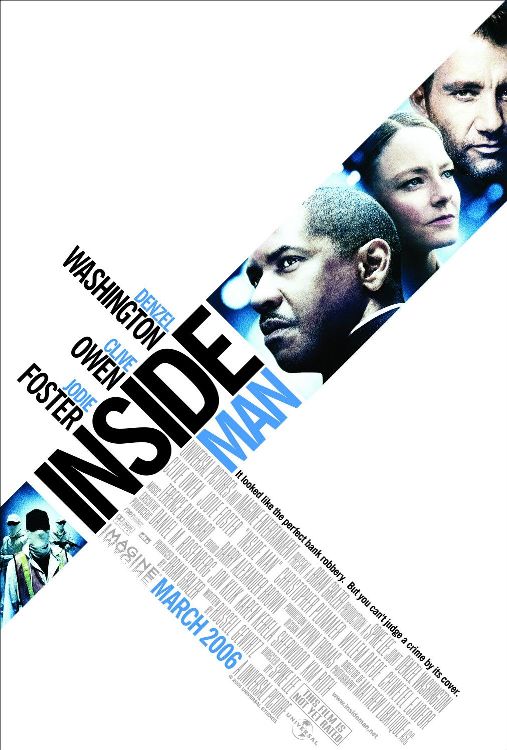
Recently, they did an episode on the 2006 film Inside Man. Directed by Spike Lee and starring Clive Owen, Denzel Washington, and Jodie Foster (among others), it’s about an elaborate bank robbery that’s about much more than money.

What really got me thinking, though, was the introduction to this episode, where they talked about “heist” movies and how great they were. No argument from me – but is Inside Man really about a heist? What makes a heist, and therefore a heist story, anyway?

Maybe Inside Man fits, if we’re just going by dictionary definitions. The Oxford English Dictionary defines heist as “a hold-up, a robbery.” Far be it from me to disagree with the OED, but at least when it comes to storytelling, “heist” means something quite different than “robbery.”

I should say here that when I think of robbery I’m thinking of it in the legal sense that I deal with everyday – that is, the taking of property from the person of another by use or threatened use of force. Other thieving is something different. Think of it this way – if I go into a bank and point a gun at the teller, I’m committing a robbery; but if, as an employee, I secretly steal money without anybody noticing, I’m committing embezzlement. Both felonies, but quite different from one another.

The distinction, for me at least, comes down to brute force. A robbery can be elaborate and kinetic and exciting – think the beginning of The Dark Knight – but, at the end of the day, it’s “your money or your life.” It’s simple, effective, and brutal. “Heist” conjures up something more clever, more deeply thought out. It’s about getting the object of the robbery without the violence. It’s a better, more elevated, kind of crime, if you will.

I’m thinking of things like The Thomas Crown Affair or Ocean’s Eleven and its sequels. Those movies are about the scheming to pull off the job, not just rolling up with guns and forcing people to do your bidding. To be sure, sometimes the scheme goes sour and the heist goes bad, so I suppose it’s a question of intent. If the thieves are trying to get away with it without using violence, it’s a heist. Otherwise, it’s not.

There are also things that don’t fit in either category. There’s a new(ish) Neflix documentary called This Is a Robbery about the 1990 theft of the Isabella Steward Gardner Museum in Boston in which over $500 million worth of art was taken. On the one hand, it involved a clever ruse – the thieves posed as Boston cops and got in by saying they were responding the report of a break in. On the other hand, they tied up the two night security guys pretty violently, so there’s that. Is that a heist story or not? Honestly, I’m not sure.

As I’m writing this I’m watching/listening to a 2017 in-studio performance by Monobody, a band whose music is really hard to classify. In one of the interview breaks the guitar player talks about genre labels as a necessary label, since they help people talk about things like art. But, ultimately, they’re meaningless when considering whether any piece of art is enjoyable or not. So whether I think a story is a heist story or not is irrelevant.

And I’m completely will to admit I’m full of shit about this. Such is life.

On Leaving Things Unsaid

Twice in the past couple of weeks, while channel surfing, I’ve come across Fargo, the 1996 Coen Brothers classic right at that point where there’s enough left to make it worth watching the rest, even if it’s not the beginning. For what it’s worth, that point – both times! – was after Jerry’s unsuccessful parking lot pitch to his father in law, after which he has a little freak out in the parking lot.

Fargo is one of my favorite movies and I’ve seen it over and over, but I still get new things out of it. These two times around one thing jumped out at my writer brain that hadn’t registered before. It has to do not with what was on screen, but what wasn’t.

What drives the plot of Fargo is that hapless car salesman Jerry Lundegaard needs money and is willing to do just about anything to do it. He tries to scam his wealthy father-in-law to “investing” in a parking lot development deal. He’s running some kind of game with the GMAC finance people, too. And, of course, there’s the eventual plot he hatches to have two goons kidnap his wife (who’s wealthy father will then pay an inflated ransom to get back) that ends with a lot of dead bodies.

We know all this. We see the machinations, see the wheels turning. One of the best scenes in the movie is after the kidnapping when we hear Jerry on the phone calling his father-in-law to tell him his wife has been kidnapped. Only he’s not on the phone (the shot starts with him off screen) – he’s rehearing the call he’s going to make, getting his scheme down pat. We hear him fend off the GMAC guy on the phone. And we see him deal with the two goons.

What occurred to me rewatching recently is what we don’t see, what we don’t learn. For a start, we have no idea how much money Jerry needs. It must be substantial, as he’s only going to pay the goons $40k initially on the kidnapping, while setting the ransom at $1 million and that’s only one of his many ongoing schemes. Still, we don’t know a number. Nor do we know to whom Jerry owes a substantial debt. It could be a bank, the result of a failed legit investment or business, or it could be gambling debts that he owes to the mob. Again, we just don’t know.

I think this is a pretty brilliant bit of storytelling. Typically, story gurus will say, you should give your main character a clear goal that they struggle to achieve through the course of your story. But sometimes the rule needs to be broken and I think Fargo is one of those places. If we know how much Jerry needs, the story shifts from being one about a scheme spiraling out of control to one about whether Jerry is going to succeed. If we know why he needs the money it shifts our perception a bit and we’ll be more invested in Jerry’s success. We probably don’t want the mob to break his legs, right?

What all this does is keep us as viewers from getting too close to Jerry, from caring about him succeeding. I think it’s a conscious choice by the Coens to keep us from empathizing with him, as you normally do with a main character. You could certainly try to produce a story where the readers or viewers try to empathize with a guy who gets his own wife, not to mention half-dozen other people, killed as his scheme goes off the rails, but that would be a different story than Fargo. This also allows the moral center of the film to be Marge, who doesn’t even show up until about a third of the way in (coincidentally right after I found the movie on TV these past times).

This isn’t the way to go for most stories. Certainly if you want your main character to be viewed as a hero, even a flawed one, you need to let readers know why they’re doing what they’re doing. But sometimes that’s not what you want. Sometimes you want the guy who sets in motion the disposal of a dead body in a woodchipper to just be a bastard through and through. Who needs to get on board with that?