In the Court of the Crimson Kane

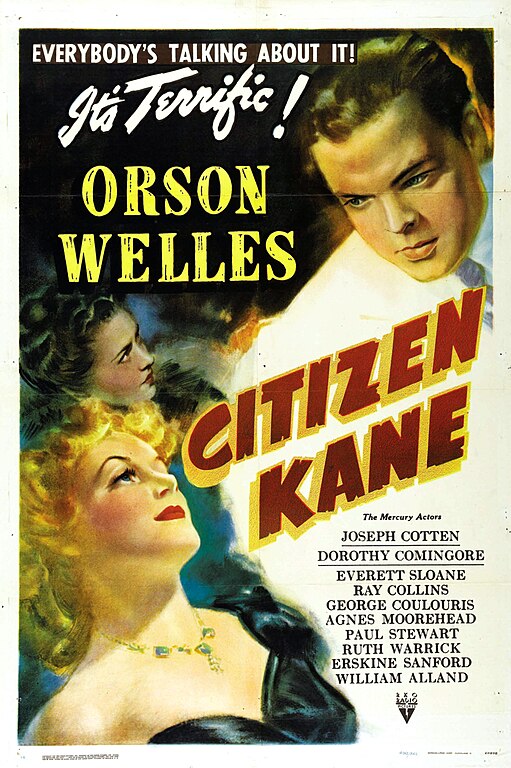
Director Peter Bogdanovich has a new podcast, One Handshake Away. The setup is he gets together with a current director to talk about the work of a classic director – one who Bogdanovich happens to have recorded interviews with. It’s a neat idea. A recent episode featured Rian Johnson and focused on Orson Welles and, perhaps inevitably, Citizen Kane. Listening to it sent me on a deeper dive that got me thinking about Kane’s parallels with another iconic debut – In the Court of the Crimson King.

My journey to Citizen Kane is an odd, if not unique, one. I really dove into movies, even “cinema,” in college and particularly in law school. It didn’t take long to have Kane pop up here and there, often near or at the tops of lists of the best movies ever made, but for some reason I didn’t feel compelled to seek it out. It’s not because it was old or in black and white – I devoured movies by Fritz Lang and Akira Kurosawa. Maybe because it had been placed on such a pedestal I thought it was too good for my growing cinephile brain?

Regardless, what really drew my attention to Kane was the story around the movie and the lengths William Randolph Hearst went to squash it. I’m not sure whether I stumbled into that via The Battle Over Citizen Cane, a 1996 PBS documentary, or RKO 281, the 1999 HBO movie based on it. Both tell how the character of Charles Foster Kane became a stand in for Hearst (even though he was based on several different magnates of the age) and how the publisher marshalled all his considerable resources to kill the film (in the process, of course, bringing extra attention to the whole thing – a proto Streisand Effect, if you will). Regardless, Kane became one of the those works, like Brazil, that I was attracted to because of the story behind it more than the work itself.

All that said, when I first saw Kane I was not overwhelmed. It was good, don’t get me wrong, and I liked the flashback structure and the “Rosebud” MacGuffin. Still, it did not necessarily scream out at me that this was the greatest film ever made. My opinion ticked up somewhat when I watched it again with Roger Ebert’s commentary. He pointed out all the myriad ways that Welles was breaking new ground in terms of how shots were composed, how the very medium of the movies was changing in his hands. It made all the praise easier to understand. After repeated viewings I easily called Kane a classic, even if it’s not necessarily at the top of my list of favorite movies ever.

On the heels of listening to the Bogdanovich and Johnson discussion, I found an episode of The Ringer’s Big Picture podcast on the legacy of Citizen Kane in the lead up to the release of David Fincher’s Mank, which takes on the writing of the screenplay (among other things). In that discussion, critic and author Adam Nayman made an interesting observation. Contrary to Ebert’s commentary, or at least what I took away from it, Nayman argues that Welles didn’t really break any new ground himself, but combined a lot of recent innovations in one place with a sense of skill that hadn’t been seen before. He was, in other words, making the best refinements of breakthroughs that had come before, in the process giving birth to a lot of the visual language of modern movies.

I immediately thought of In the Court of the Crimson King.

As evergreen as the “what is progressive rock?” debate has been over the decades, the “what was the first prog album?” debate is equally well worn. For broader audiences King Crimson’s 1969 debut is usually cited. But the truth is that there are several other candidates that predate it, at least for certain elements of what would come to define “progressive rock”:

  • The Beatles, along with the Beach Boys, helped transition the album from just a collection of singles to something that is a cohesive work (Sgt. Pepper in 1967 and Pet Sounds in 1966). The Beatles even threw in what amounts to a side-long suite on Abbey Road (1969).
  • The Moody Blues took the concept album idea (which dates back to at least the 1940s) and layered it over with symphonic grandeur on Days of Future Passed (1967).
  • The Nice were doing the side-long suite thing and adapting classical (and related) pieces for a rock setting before Keith Emerson left for Emerson, Lake, and Palmer on albums like Ars Vita Longa Brevis (1968).
  • Then there’s Frank Zappa, who by 1969 had done albums covering fun-house pop/rock/blues music, orchestral stuff, jazz fusion, music concrete, and just plain weirdness.

Given all that, does In the Court . . . still have a valid claim to the title of “first” prog album? I think so, because, as with Citizen Kane, it took a lot of different things that were happening in the musical culture at the time and seamlessly wound them together into a single, cohesive work. It wasn’t the first drip of the prog rains, but it was the deluge that nobody could ignore. Once In the Court . . . was released the era of progressive rock was upon us.

There’s another similarity I see between Kane and Crim – its creators would never again reach the same heights, at least in terms of the popular zeitgeist. Yes, Welles made more movies, some of which are very good, but none can lay claim to being the best film ever made. As for Crimson – it wasn’t took long after In The Court . . . came out that the band became, effectively, a Robert Fripp project (he’s the only common member for the rest of the band’s history). And while they, too, made some great albums over the years, none punctured the culture the same way In the Court . . . did. Being first is important, in a way, but it’s not the only thing. Welles may have been borrowing from other ground breakers, just as Fripp and company were synthesizing a lot of things that were in the rock music atmosphere at the time. Doesn’t make their accomplishments any less mind blowing. Sometimes it’s best to come just behind the pioneers.

Returning to the End of the World (and the Story)

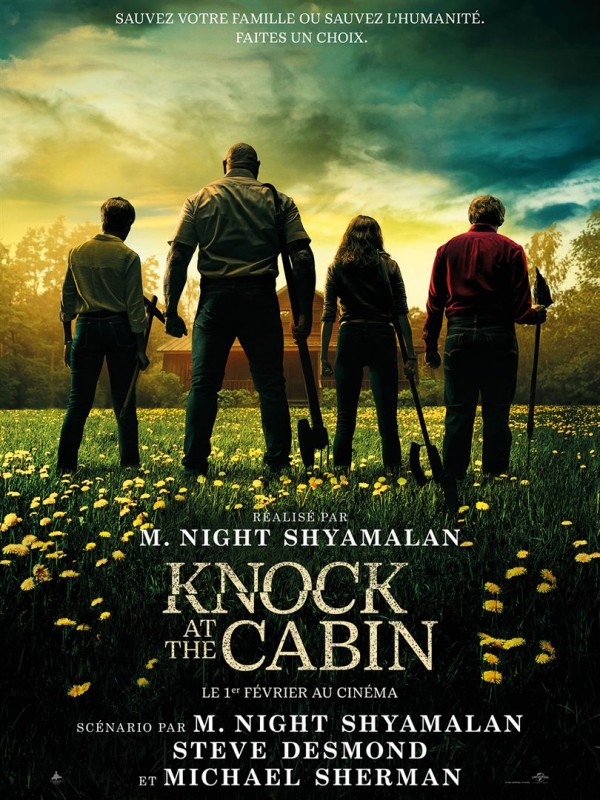
Last year I wrote some about how the ending of Paul Tremblay’s The Cabin at the End of the World, which I had just read, had been changed in pretty big ways for the film adaptation, Knock at the Cabin, directed by M. Night Shyamalan. At the time I hadn’t seen the movie for myself, and now that I have I wanted to circle back on the matter.

To recap (in spoiler-filled fashion), the book and movie are both about a family – two dads and their young daughter – who are beset in the titular cabin by a group of people who claim that the apocalypse is imminent and the only way to stop it is for one of the family members to kill another (suicide won’t work). The family refuses the bargain and the tension creeps up as it appears that, just maybe, the end of the world is nigh.

As I said last year:

Here’s where things part ways, significantly, between book and movie. In the book there is a struggle over a gun that leaves the little girl dead. Eventually the dads escape (all the intruders die) and they confront the question of sacrificing one of themselves just in case the world is really ending (one is now more of a believer than the other). Ultimately they decide not to, essentially concluding that any kind of God that would require such a thing isn’t worth obeying, and they walk off into a brewing storm that may or may not just be a storm. In the movie, by contrast, the girl is not shot and one of the dads decides to sacrifice himself to save the world on her behalf. The girl and her remaining father leave and find evidence that the sacrifice really is stopping the world from ending.

In that earlier post I was focused on the question of which ending was better described as a “happy” ending – the one where characters refuse to play the game of an abusive deity or the one where they sacrifice for the greater good. Both are a choice and neither is wrong in any kind of a normative sense – one will work better for some, the other for others. Nonetheless why the choice was made is kind of fascinating.

Having seen the movie I did my usual post-viewing due diligence (reading reviews and such) and came across this article which goes into why the ending for the movie was changed:

Steve Desmond and Michael Sherman, who wrote the screenplay with Shyamalan, agreed the book’s original, grim ending had to be changed for film.

“We adapted it slightly different than the book, and then [Shyamalan] had a whole new vision for what the ending could be,” Desmond and Sherman told Variety at the “Knock at the Cabin” premiere. “The book is the book, and the movie is the movie, and we think they both were exceptional mediums. This is a big, wide release movie that is meant for a very large audience. There are some decisions that the book made that were pretty dark and may have been a little too much for a broader audience. That was a decision that [Shyamalan] immediately recognized. It’s a great ending now.”

Now, without a doubt, more people saw Knock at the Cabin than read The Cabin at the End of the World. That’s true of any book turned into a movie or TV show (alas). Is that a good reason to change an ending? It feels kind of chickenshit to me to decide the masses can’t handle the ambiguity of the original and decide to spoon feed them a “happier” ending. It’s one thing to imagine that you’re just improving on it from an artistic standpoint (Shyamalan, at least, appears to lean more this way in terms of his outlook on the world), but to admit to dumbing it down feels cheap.

It should be clear by now that I prefer the book’s ending. The entire story, for me, is all about ambiguity: Is what these people are saying about the world ending real? Is it a hoax? Are they honest, but mentally ill, believers? It also gets at an issue that’s frequently lost in popular discussion about the existence of one god or the other – that even if some being like that exists it might not be worthy of worship or obeisance. The book leaves you much more to chew on than the movie does. I may be in the minority, but that’s OK.

Endings are hard. They’re harder still if you’re engaging in some kind of triangulation in an attempt to find the “right” ending for a particular audience, be it broad or narrow casted. Find the ending you think works best for the story. If it puts off some people, well, that sucks. You can’t please all the people all the time – and most of the time it’s a folly to even try.

2023 – My Year in Movies, TV, & Podcasts

Let’s talk about the past year on screens – big, small, and phone.

MOVIES

As has become the norm, I didn’t see a lot of new movies this year, although my wife and I did venture out to theaters a couple of times. One of those was to see the movie that I thought was the best of the year, Christopher Nolan’s Oppenheimer.

I don’t have a lot more to say about that movie, as it’s been reviewed and discussed to death since it came out. I will not say it is my favorite of Nolan’s films (I have a soft spot for The Prestige and always will), but it may be the most impressive. I thought James Camerson did well wringing drama out of a shipwreck we all knew about going in, but the tension developed during the scene with the Trinity test was another level.

The other 2023 movie I wanted to highlight was very different, a documentary called The Mission.

You may remember in 2018 when a missionary named John Chau decided he should try and convert a remote, isolated tribe on an Indian Ocean island and wound up being killed for his troubles. The Mission tells that story, based largely on Chau’s own diaries, along with letters from his father to the filmmakers. It uses animation to fill in the visuals, along with some talking heads that cover broader issues of missionary work and whether it’s more of a plague than a blessing. What really got to me is how Chau’s father watched helplessly as his son became more and more devout, captured by an evangelistic spirit, and charged headlong to his death.

As for the “new to me” class, it turns out that I spent 2023 getting caught up on a lot of good stuff from 2022. The first two are a pair of very different horror(ish) flicks, The Menu and Men.

The Menu is another in the recently popular “eat the rich” genre, this time skewering the wealthy and aloof via a snooty, high-end restaurant with the world’s worst customer service (or best, depending on your point of view). It’s darkly funny and enjoyable in a sick, twisted way. As for Men . . . well, it’s bizarre. A woman who suffered a recent tragic loss departs to a small English village as a retreat, only to find that it’s entirely populated by men (and boys, even more creepily) who all look alike (all played by Rory Kinnear, who’s a good enough reason to watch just about anything). It goes from unsettling, past creepy, into confusingly disgusting by the end, but it really stuck with me. It was the high point of several folk-horror movies I saw last year.

For something completely different, the absolute funniest thing I saw last year was Weird: The Al Yankovic Story.

It’s a biopic of Weird Al Yankovic’s life, only it really isn’t. Instead, it skewers biopic tropes and pokes fun at Al’s own image and history. I watched it on a plane on the way to the UK last year and there were a couple of times I drew stares for laughing so hard.

TELEVISION

The watchword for television in 2023 was “endings,” as several excellent series came to an end, most notably Succession. Don’t sleep on the final outings of the gang at Archer, though. That was a show that had no business running as long as it did and continuing to be that funny. I wanted to highlight another couple of excellent shows that wrapped things up last year, however.

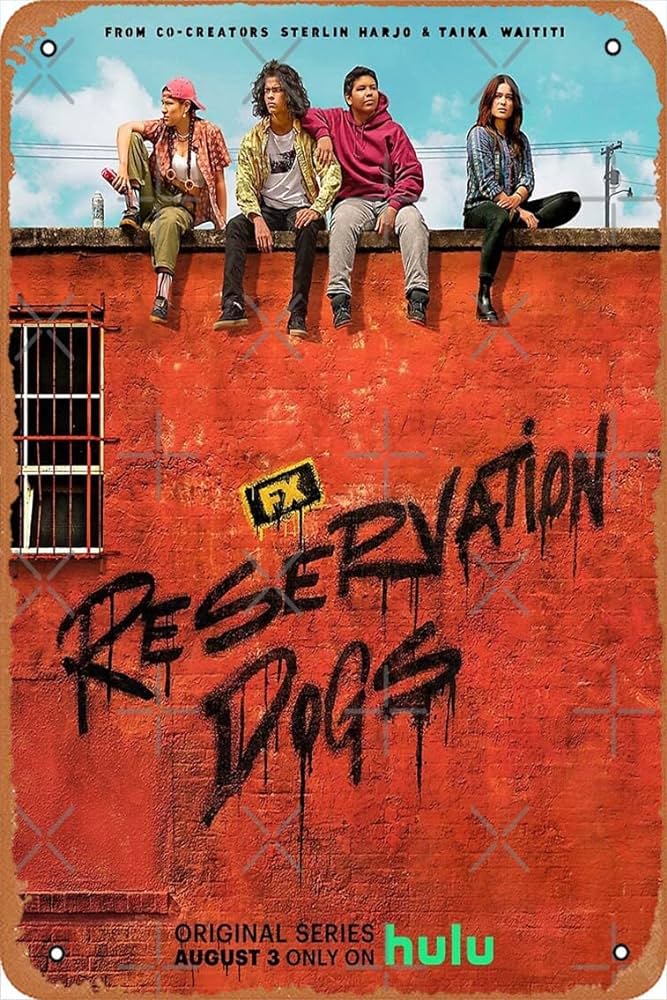
The first is Reservation Dogs, the Native American-led dramedy from FX (or Hulu, whichever).

Set largely on an Indian reservation in Oklahoma, the show was about four young adults trying to make sense of their world and culture in the wake of their best friend’s suicide. It was often funny (the recurring presence of one character’s spirit guide in particular), but also quite moving. And while I would have loved to have gotten more of it, the series wrapped up in a very satisfactory way.

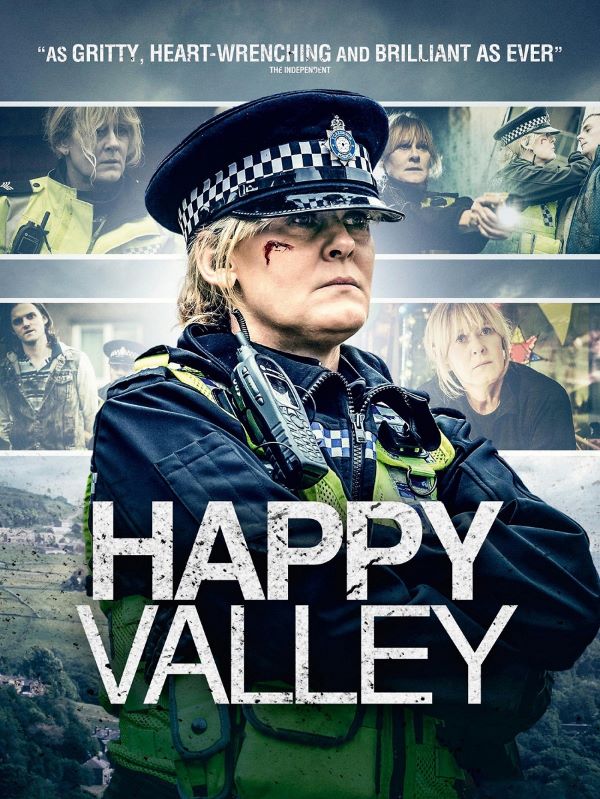
The other ending I wanted to note was also a return, and of a show I knew nothing about before its return, Happy Valley.

The ironically named series is set in Yorkshire and follows the tribulations of a woman who is both a police officer and stand-in mother to her grandson, the product of a rape that led her daughter to kill herself. It’s pretty rough stuff and, plotting wise, I have some issues with how they keep the father/rapist around as the series bogeyman, but the whole thing is held together by an amazing performance by NAME as the officer/grandmother. Very glad I stumbled into it on BBC America.

A pair of new shows really caught my attention, too. Each could have additional seasons, I suppose, but they work well as standalone experiences, too.

One is Scavengers Reign, an impressive sci-fi series from HBO (or Max or whatever the hell they’re calling themselves these days).

The setup is really simple – the crew of a deep-space flight crash land on an alien planet and struggle to survive. That’s really it for plot, which is slight, but that’s not the point of this show. Rather, the creators use the flexibility of animation to conjure a world that is truly and utterly alien, both amazing and terrifying in equal measure. In a way it reminded me of 2001 in the way it takes complete advantage of its medium. A trip well worth taking.

By contrast I wouldn’t recommend the trip taken by most of the people involved in Love Has Won: The Cult of Mother God (another Max offering), much less the titular mother herself.

On the one hand, this documentary is part of the current boom in docs about cults. What sets this apart is that so much of it is populated with video taken by the members itself as their leader goes from somewhat inspirational spiritualist to complete crank wasting away from overdoses of colloidal silver. It’s three episodes and there’s a part in the second where people say things that are just so stereotypically culty that you have to laugh. Then it becomes more clear is what we’re watching is a woman who surrounded herself with true believers that, once she needed help, weren’t able to provide it because they had gone so deep down this particular rabbit hole. It winds up being very tragic.

PODCASTS

I am not what you’d call a devout podcast listening (in spite of hosting one), but I do have a couple of favorites from the last year that I really enjoyed.

The first has been around since the early days of the pandemic, but I hadn’t highlighted it before – The Album Years.

Hosted by musicians Steven Wilson and Tim Bowness (who’ve worked together as No-Man, in addition to a host of other projects), each episode takes a particular year and works through albums from that year that stood out to them. The idea is to leave the obvious choices to the side and feature some lesser known, or perhaps lesser loved, work. Wilson and Bowness are literate in the area and have enough overlap in tastes that they can talk about a lot, but have enough areas of disagreement to keep things interesting.

The other was new for 2023 – If Books Could Kill.

Hosted by journalist Michael Hobbes and lawyer Peter Shamshiri, the tagline says it all: “The airport bestsellers that captured our hearts and ruined our minds.” For each episode one of them (only one, usually) reads the featured book and they walk through the clichés, spurious claims, and just plain weirdness that infests pop psychology, self-help, and popular political/economics books. It’s funny, and often deeply sarcastic, but the work is kind of serious – we lap up a lot of bullshit as a society, often packaged in innocuous ways, so it’s good to call it out every now and then.

With that said, on to 2024!

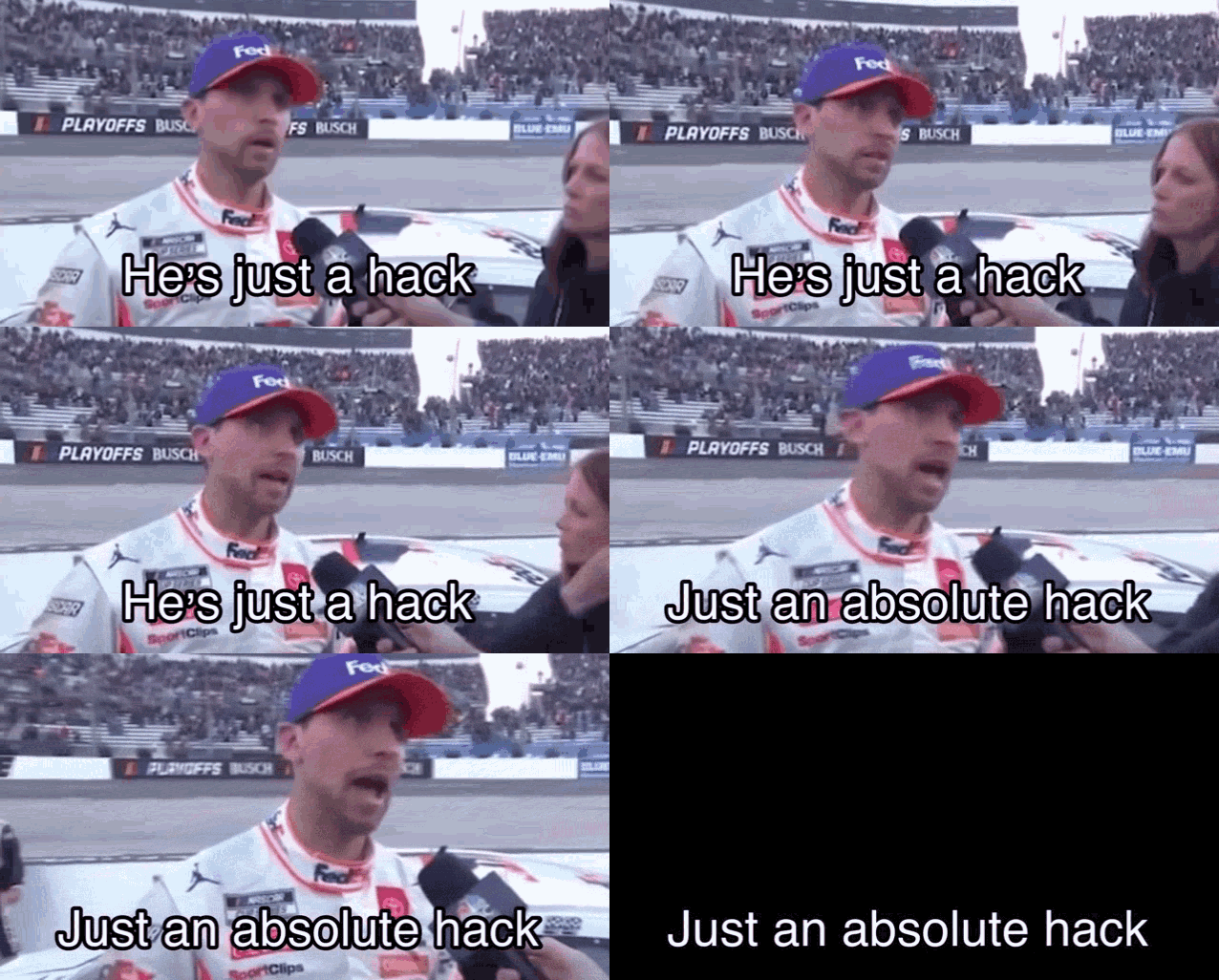
Am I a Hack?

People create for lots of different reasons. Some folks do it purely for the fun or catharsis of creation. Some do it as a vocation, if they’re good at it, enjoy it, and can hit the market just the right way. Others are trying to tap into something fundamental about humanity or probe deep into the eternal mysteries of the universe. And some just want to share their creation with the world and hope it brings a few people joy.

I fall into that last category. I write largely because I enjoy it, because it’s fun to tell stories, and I hope some other folks out there will enjoy reading them. I’m not trying to write the “great American novel” or plumb the depths of the human condition to help better understand my fellow people. All I’m really interested in is entertaining, maybe more thoughtfully sometimes, but that’s it.

Does that make me a hack?

I never thought so until recently. To my mind, “hack” was a pejorative term. Wikipedia, at least, agrees with me, defining a “hack writer” as a:

Term for a writer who is paid to write low-quality, rushed articles or books “to order”, often with a short deadline. In fiction writing, a hack writer is paid to quickly write sensational, pulp fiction such as “true crime” novels or “bodice ripping” paperbacks. In journalism, a hack writer is deemed to operate as a “mercenary” or “pen for hire”, expressing their client’s political opinions in pamphlets or newspaper articles. Hack writers are usually paid by the number of words in their book or article; as a result, hack writing has a reputation for quantity taking precedence over quality.

Putting to one side the unwarranted bias against “pulp” writing or romances inherent in that definition, it’s clear that being called a hack is insulting. It’s a charge that your insincere, only in it for the money, not making art but some kind of crass commercial product. If I was called a hack I’d be deeply offended, same as if someone in my professional life called me a shill or a mouthpiece.

But maybe I’m looking at things all wrong, if this Slate piece by Sam Adams is right. Titled “Bring Back the Hack,” it argues that movie studios should look to “hack” directors to helm their big-budget franchises rather than getting up-and-coming auteurs whose singularity tends to get squished in the franchise machine, anyway:

The problem here is two-pronged. The first is Hollywood’s penchant for sucking promising young directors into its maw, tempting them into selling their artistic souls to the franchise devil with medium-fat paychecks and the possibility of speaking to a larger audience. The second is that the movies frequently end up being lousy, extinguishing whatever hint of personality made the filmmaker attractive in the first place and revealing them to be hopelessly out of their depth when tasked with bending a massive studio movie to their will. You don’t get the unique stamp of an artist, but you also don’t get the frictionless craftsmanship that would be brought to the job by a seasoned old hand—in other words, a hack.

Adams seems to deem the primary feature of a “hack” as being that “you don’t know who they are.” He then launches into a discussion distinguishing workmanlike directors such as Jon Turtletaub and even John Huston from true auteurs. Later on, however, he sort of admits that “hack” isn’t really the word he’s looking for:

That’s where hacks come in. A hack—or, if you insist on a less prejudicial term, a craftsperson—isn’t out to make a movie their own. Their aim is to fulfill the task set before them. Like former cinematographer Jan de Bont and former costumer designer Joel Schumacher, they often entered the business from the lower ranks of the crew rather than as writer-directors, rising to the top with an understanding based in the practicalities of production. A hack is a perfect match for a formula film, whether it’s the latest IP extension or simply squarely in an established genre, because they don’t consider themselves better than the material.

This “craftsperson hack” category includes, for Adams, people like Ron Howard (who won Best Picture and Best Director Oscars for A Beautiful Mind) and Jon Favreau (who launched the most successful film series in history, not to mention The Mandalorian). If those guys are hacks then I suppose I’d be happy to be called one, though that term doesn’t feel right. Neither is somebody that’s on my list of favorite directors, the kind of people whose stuff I want to see just because they made it. But Adams cites Favreau’s going to battle with the studio to cast Robert Downey, Jr. for Iron Man, which hardly seems like a pliant, go-along-to-get-along kind of thing. Hell, if hacks can make stuff like Rush then sign me up.

At any rate, I don’t think the same kind of distinction can be made with writers. Name brands are a thing, after all, since people like to read more books from an author if they liked one of their books. That applies equally to deeply sublime stuff and more pulpy just-for-fun stuff. I suppose the closest thing you have in books is situations where some established author’s name continues to hold sway even though others are actually writing the books. Zombie comic strips come to mind, too, I suppose.

I tend to agree with Adams that bringing in somebody known for their personal vision in movies to direct the next comic book flick is kind of a waste. Regardless, I don’t think defining hack so broadly as to lose its meaning does anybody any favors. Leave to it the stain of uncaring make work, produced without any personal motivation.

I may be a lot of things, but I think I’m safe in saying I’m not a hack.

Some Thoughts on “2001”(s)

One of my favorite podcasts is Mary Versus the Movies, in which the titular Mary watches a popular movie from the 1980s she’s never seen and then discusses it with her co-host/husband (I think that’s who he is). It’s a fun setup, as each episode starts with what she thinks the movie is about before watching it, which is sometimes hilariously wrong.

On a recent episode the subject was 2010: The Year We Make Contact, the sequel to 2001: A Space Odyssey, directed by Peter Hyams. Of course, it’s impossible to talk about a sequel without talking about what came before, but that’s doubly true of 2010 and 2001, which are completely different types of movies. It’s like comparing OK Computer to Kid A – it’s as much about what the sequel is not compared to the first one as anything. For what it’s worth, I think 2010 is a pretty solid flick, but it pales in comparison to Kubrick’s masterpiece.

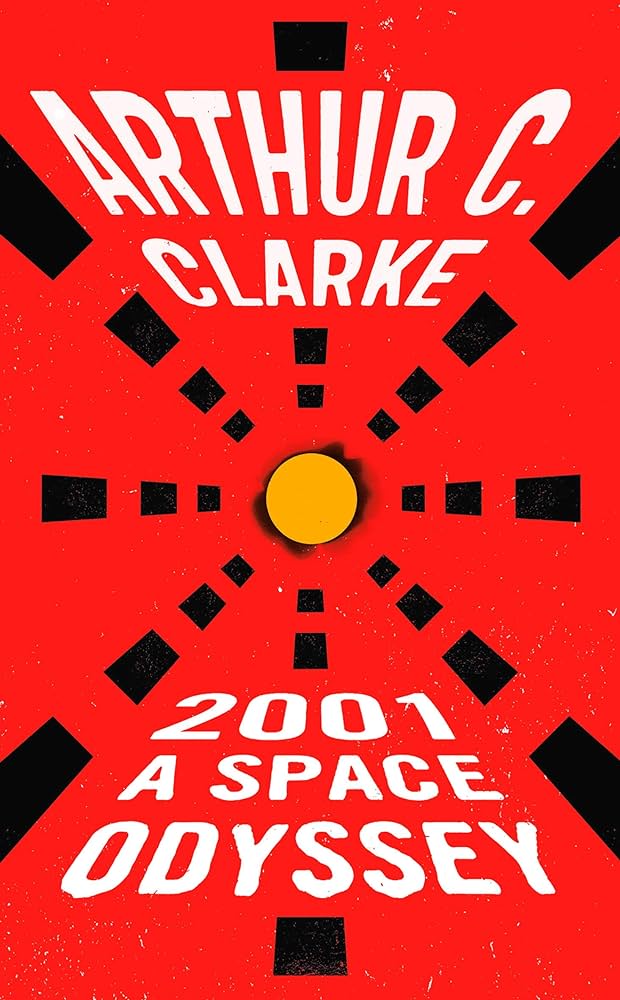
Part of the discussion these movies, inevitably, involved their relation to the books of the same name. That brought to front of mind that I’d never actually read Arthur C. Clarke’s novel 2001: A Space Odyssey. Seemed like as good a reason as any to get it from Audible and give it a listen.

Kubrick is one of my favorite directors and 2001 one of my favorite movies of his, so it was impossible for me to read Clarke’s version of 2001 with completely fresh eyes. It also defies the usual analysis of looking to how the movie “adapted” the book since, in this case, the movie and book developed on parallel tracks – neither was an adaptation of the other. Which is particularly odd since, in terms of what happens, they track each other pretty closely.

The biggest difference from book to movie is the destination of Discovery’s journey. In the book they’re headed to Saturn, but in the movie it’s Jupiter. Apparently the change was due to the effects folks not being able to make Saturn’s rings convincing, so Kubrick moved the destination to Jupiter (ironically, the novel of 2010 – upon which that movie really was based – retconned the story to have them go to Jupiter). There are other minor differences – the monoliths aren’t all black and have particular measurements, we learn why HAL went apeshit, etc. – but for the most part the book is as faithful to the movie as it could be, given the circumstances.

Which is both a blessing and a curse. A blessing because they kind of play into each other and can help folks grasp what’s going on. It’s a curse because that means the main difference between book and movie is the execution and, on that score, Clarke simply can’t compare.

I’ve read some Clarke before, including Rendezvous With Rama, which is another one of his classics. It’s got a great idea at the core – an alien object enters the solar system and a research crew goes out to meet it. The book is basically their exploration of this vast ship. I found it pretty dull, without any real character development or emotional pull into the story. The exploration itself was, I’m sure, rigorously scientific and accurate, but for me there was no “there” there.

A lot of 2001 feels the same way. There are long stretches where Clarke describes the nature of space travel and how everything works that were probably fascinating back in the 1960s when this was all new but didn’t do anything for me. For instance, there’s a chapter where the Discovery crew tries to closely observe a passing asteroid – there’s no threat or danger, no chance that something will go wrong, just a chance to exercise some scientific curiosity. That’s a great thing! It just doesn’t make for compelling fiction, necessarily.

Of course, a lot of the movie is fairly slow and not exactly action packed, but the visual and audio work Kubrick does makes that work, creating a sense of deepening isolation as Discovery plows further on. Clarke tells us the numerical details of that isolation, but doesn’t show it in a way that creeps into your bones. That said, some of what works best for me about Clarke’s writing comes in the parts that are hardest to conceive of being written on the page, namely the stuff with the apes in the beginning and the whole “journey into the infinite” in the end.

Another area where the novel falls down are characters. None of them are particular interesting and exist mostly to talk about Clarke’s tech stuff and move the plot along. The movie isn’t much better, but it has one redeeming aspect in this area – HAL.

In both the book and movie HAL slowly goes crazy and starts killing people. As I said, the book tells us why (2010, the movie, does that, too), which takes some of the mystery and terror out of it. HAL comes across as a problem to be solved (and fairly quickly, at that) rather than a sentient, malevolent being.

The movie’s HAL, on the other hand, is one of the most chilling characters every to grace a movie screen. Not for nothing did HAL rank 13th on the American Film Institute’s list of greatest movie villains. The cold precision with which HAL goes through everything makes what he does so terrifying. Yet, the scene where Bowman shuts HAL down and he starts to sing is heartbreaking. Those scenes on the written page just don’t pop in the same way (I’m not sure any writer could have made them compete).

As for the endings, well, I think it depends on what you want out of your fiction. Clarke’s ending makes much more “sense,” in that he largely lays out precisely what’s happening, and it’s done fairly well. Again, though, it’s hard to top the movie’s visual/aural mindfuck that spits you out on the other side more bamboozled than before. Probably because I came to the movie first I prefer the ambiguity. It has that “what the fuck?” quality I talked about a few weeks ago that I dig in art sometimes.

It’s generally a fool’s errand to look at a book and a movie based on it (or vice versa) and determine which one is “better.” The written word and film are different mediums that reach the soul in different ways. What works well on the page might not on the screen (and vice versa). That’s doubly true with 2001. I can’t say the movie is “better” than the book, but I can say I prefer it. It transports me in a way Clarke’s prose doesn’t and leaves more of a lasting impression. Still, I’m glad to have read the book, if only to again realize how fruitless such comparisons are.

And neither of them are as groovy as Mike Keneally’s “2001,” anyway.

Weekly Watch – Quick Hits

Sometimes the weekend passes in a string of movies – not even very good ones. That was the case this past weekend as the wife and I fell down a Netflix rabbit hole (so to speak – around these we also consumed the final season of Disenchanted, of which I’ll have more to say later). I suppose a 1 out of 3 average isn’t bad from a baseball stat point of view, even if the one is more of a bloop single than anything more impressive.

Spoilers ahoy! Don’t say I didn’t warn you.

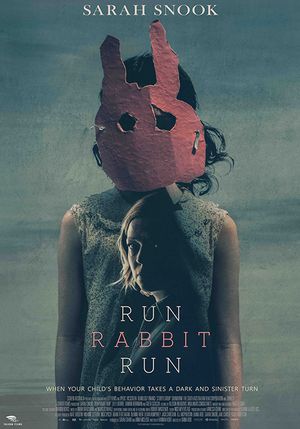
Run Rabbit Run (2023)

Sarah Snook (Shiv Roy of Succession fame – who knew she was Australian?) stars as a mother, Sarah, struggling with a troubled daughter, Mia, in the overlong, but often creepy, horror flick. In the wake of Sarah’s father’s death, Mia starts to behave strangely, insisting on meeting her grandmother she’s never seen before, and referring to herself by a different name – Alice, the name of Sarah’s long “lost” sister. Things proceed from there, usually because Sarah makes the worst possible decision at any given opportunity until she and Mia are holed up in a rural farmhouse where bad things continue to happen.

The deep mystery here is what happened to Alice, who appears to be possessing Mia. We’re never given any even implausible mechanism for this to happen, by the way. We know Sarah had some part in what happened to Alice because she’s haunted by guilt. Eventually we find out why – she pushed her sister off a cliff. Not by accident, not in a fit of passing rage. Nope, she just flat out murdered her sister. This is an odd narrative choice as is zaps any sympathy we have for Sarah, to the point that when we see Alice walking Mia toward the cliff you almost think justice might be done.

As I said, the movie is about a half hour too long. To its credit, it does maintain creepy vibes the whole time and the actress playing Mia does a good job of making her stand out in a film world flooded with odd, creepy children (although she’s not the best of the weekend – which is saying something). Snook is good, too, but the whole thing really doesn’t amount to much in the end.

As an aside, Sarah’s ex-husband (and Mia’s father) is played by Damon Herriman who will forever in my head by Dewey Crowe from Justified and manages to turn up in just about everything Australian I see these days.

In the Shadow of the Moon (2019)

I thought this flick had a pretty decent idea behind it – a cop tracks a serial killer over decades because they only strike every nine years. Cool! What I didn’t realize until we actually started watching this is that less than a detective story this was a half-baked fantasy story (the “science” nodded at is too silly to really call it sci-fi) with some appalling ethics at the core of it.

All that would go down better if the actual stuff on screen was actually better. Nothing particularly works, from the setup (why start the main character off as a beat cop who wouldn’t have anything to do with detective work and the, just as quickly, kick him off the force?) to the writing to the acting (Boyd Holbrook was much better in Justified: City Primeval, even if he was overshadowed by the return of Boyd Crowder in the last ten minutes) to the laughable explanation for all this (it involves time travel and the moon – seriously).

With all that said, it could have been kind of a fun lark if it hadn’t trampled all over one of the classic historical “what if?”s – if you could go back and strangle the infant Hitler in his crib, would you? It’s a thorny ethical dilemma, since at that point infant Hitler is completely innocent and hasn’t done anything to anybody – doesn’t that make it straight up murder (maybe Sarah could push him off a cliff?)? And even if you did it, would it make a difference, or were the forces at work in Weimar Germany of a sort that the Nazis would have seized power anyway?

This movie jettisons all those thorny ethical issues in favor of brute force – in order to prevent a right-wing militia group from bombing Philadelphia in 2024 and starting a new civil war, the killer is travelling back in time (to 1988, at least) to kill the bombers as children. Wait, no, that might make some sense. Rather, the killer is going back and murdering everybody on the mailing list of the predecessor organization of the group who committed the bombing. Not only have they not actually done anything when killed, they had decades in which to recognize the error of their ways!

It’s as if you took Minority Report and stripped out of it any issues of free will, determinism and whether we can punish people for something they might do. It’s just dumb, on multiple levels.

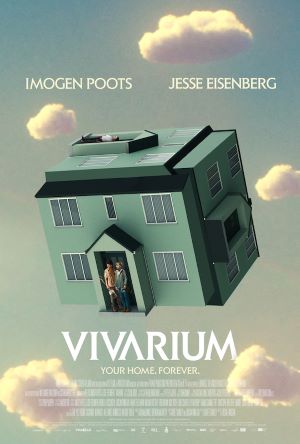
Vivarium (2019)

Well, at least Vivarium was interesting, if not particularly successful in the end.

A couple (Imogen Poots & Jesse Eisenberg) looking to buy a home is shown to a weirdo mono-chrome suburb that looks like something out of a Wes Anderson movie that’s seen better day by completely off-putting real estate agent. While they’re looking at the house, purely out of formal obligation, the agent slips away, leaving them stuck in the place. Why can’t they leave? Probably the same reason the dinner guests can’t leave in The Exterminating Angel – it’s surrealism, baby!

After their failed escape attempt (the couple always returns to the same house, number 9 – subtle Beatles reference, perhaps?), the couple settles into a weird routine that’s punctuated by boxes full of “food” and other supplies showing up in the street. One day the box contains what looks like an infant human child, but it’s quickly clear that it isn’t. It grows rapidly, screeches horrifically when it’s hungry, and can mimic the voices of its “parents” in completely unsettling ways (if this kid ever hooks up with Mia we are all fucked).

Ennui and horror ensue from there, but without any particular payoff. Poots takes on the unwilling role as mother to the child-beast, while Eisenberg starts digging a hole in the yard, returning to it day after day for fruitless labor. In the end they die, the child-beast grows up, and winds up replacing the original real estate agent in luring in a new pair of victims. Apparently this is all a sci-fi (they’re aliens?) riff on brood parasitism, in which species rely on others to raise their young. OK, I guess, but that gloss kind of ruins the ability of the film to actually be about anything larger regarding the human condition (I don’t think the standard “suburbia sucks and destroys your soul” angle really works, given that the couple didn’t choose to remain and weren’t seduced into it – they were just trapped).

Last week I talked about art that made me just go “what the fuck?” as having value. At least Vivarium gave me that. It’ll stick in my head for a while in a way that the other two won’t. Doesn’t mean I’d recommend it, but at least it’s weirdly interesting in its own way.

Keep in mind – taste is personal, your mileage may vary, etc.

Is the ATAC a MacGuffin?

For Your Eyes Only is my favorite James Bond flick.

Part of that is due to when I saw it, it being one of the first Bond movies I’d seen. But a big part of it due to the fact that the spine of the movie’s plot is a more plausible Cold War scenario than the Dr. Evil inspiring big bads Bond often faced.

In a nutshell, a British ship (disguised as a fishing trawler but really a spy ship) sinks off the Greek coast. On board was the Automatic Targeting Attack Communicator or ATAC, a computer that helps coordinate the UK’s ballistic missile fleet. Naturally the Soviets want to get their hands on it. Bond, aided by supreme Bond Girl Melina Havelock, tries to get it back for the Brits. In the end . . . well, the end is one of my favorites of all time:

So I was delighted to come across an episode of the All 80s Movies Podcast about For Your Eyes Only. I was surprised, though, when the guys on the podcast called the ATAC (which they hilarious mispronounce “AhhTAC” – it’s not like they don’t say it over and over again in the movie!) a “MacGuffin.” That didn’t jive with my idea of what a MacGuffin was and got me to thinking about it.

The term apparently dates to about 1930s or 1940s and was coined by a British screenwriter named Angus MacPhail, who worked a lot with Hitchcock. As defined by the OED, a MacGuffin is:

a particular event, object, factor, etc., presented as being of great significance to a character or characters, but in the end proving illusory.

Hitchcock would further explain that a “MacGuffin is the thing that the spies are after, but the audience doesn’t care” and, ultimately, “is actually nothing at all.”

It’s that last part that I always associated with the concept of a MacGuffin. A famous more recent example is the briefcase in Pulp Fiction, which multiple characters go to great lengths to possess, but we never learn what is inside, except for:

But I’m seeing lots of examples cited of things that are, to my mind, so substantial to be considered MacGuffins. Some cite all the things in the Indiana Jones movies (as in “Indiana Jones and the BLANK of BLANK”) as MacGuffins. This includes the Ark of the Covenant in the first movie – but they find the Ark, it melts some Nazis, and basically deus ex machina’s Indy’s escape. Is that a MacGuffin? Another list includes Colonel Kurtz from Apocalypse Now, a real human being with whom the main character significantly interacts, as a MacGuffin. That makes no sense to me. Likewise the Death Star plans in Star Wars – not only do they jump start the plot, but we see them after delivery and the info in them allows Luke to blow the place to shit!

Other examples hew closer to my conception of a MacGuffin. “Rosebud” in Citizen Kain, for example, since the important part of the story isn’t the damned sled but that rise and fall of Kain’s life. The Holy Grail in Monty Python and the Holy Grail is an even better example, since it motivates the action but is never seen or obtained by the characters.

While pondering all this I checked out one of the all-time great MacGuffin movies, which I’d never seen, The Maltese Falcon.

It definitely fits the mold of MacGuffin I have in my mind. The bird itself doesn’t show up until about 15 minutes from the end of the film and then, once it’s revealed to be fake, ceases to have any real meaning. Rather, the movie is about what the pursuit of this object (which Bogart’s Sam Spade calls “the stuff that dreams are made of”) changes and corrupts all who decide to pursue it. It could be anything – a Javanese lion, an Andalusian wombat – and the same story gets told. That the damned thing matters to the characters but doesn’t to the audience seems to be the whole point.

I suppose for me the question is how important the actual item is to the resolution of the story. If all it does it motivate people and the ultimate identity/characteristics of the thing doesn’t matter, I’d call that a MacGuffin. If it’s more important than that, probably not.

Where does that leave the ATAC? Since we see it in action, then see it recovered, then stolen, and then ultimately destroyed by the main character so the bad guys can’t have it, I’m definitely not getting MacGuffin vibes from it. It’s just too important to the movie, including the wider world of it. The world of The Maltese Falcon continues to spin regardless of how that petty crime is resolved, while the world of For Your Eyes Only gets considerably more dangerous if the ATAC falls into Soviet hands.

Ultimately, what qualifies as a MacGuffin is probably in the eye of the beholder. As a writer, it’s a useful tool to have in order to motivate characters. On the other hand, don’t lose sight of the fact that sometimes the little doohickey everybody is trying to get their hands on is pretty damned important in its own right.

Just like obscenity, you know it when you see it.

Weekly Watches & Reads – UK History Edition

In May, my wife and I took a much delayed (thanks COVID!) vacation to the United Kingdom, hitting London, the Scottish Highlands and Isle of Skye, and Edinburgh over the course of a couple of weeks.

As is my wont, the trip inspired me to come home and read/listen/watch various things about that part of the world. Here are some quick thoughts.

The whole of the UK is steeped in history and it occurred while I was there that I knew precious little of it, particularly when it came to Scotland. I remedied that by digesting the entirety of Scotland: A History from Earliest Times, by Alistair Moffat.

Never was a book so aptly named, given that it spends a good hunk of its epic runtime (23+ hours in audiobook format) covering the geological history of Scotland before human beings even enter into it. Honestly, I wish the book would have condensed that considerably, since Moffat then covers basically all of Scottish human history (my other criticism is that he goes too close to current, lapsing from history to journalism in the end). As a result, it has a kind of bird’s eye view of things, without a whole lot of detail, but for someone like me who didn’t have a great idea of Scottish history, it was just about perfect. Particularly interesting to me was how Sir Walter Scott (who has a huge memorial in Edinburgh, pictured above) essentially created the modern conception of being “Scottish,” drawing on Highland things that had mostly been suppressed previously.

One of this historical things about which I knew nothing at all before we hit Scotland were the Jacobite Risings that happened there in the 17th & 18th Centuries. The last, started in 1745, was particularly prominent, in spite of the fact that it ended in bloody defeat for the rebels at the Battle of Culloden. We visited the battlefield and I wanted to get a better sense of the battle, so I read/listened to a book with the title Culloden, by Trevor Royle, which you’d think would do the trick.

Except that the full title is Culloden: Scotland’s Last Battle and the Forging of the British Empire. The Culloden part is, maybe, one third of the book, although perhaps it doesn’t need much more than that (it took place on wide open terrain and was over in about an hour – Gettysburg it was not). The rest is about how many of the officers and men at Culloden went on to fight Britain’s imperial wars around the world, with a decent focus on North America. It was interesting, in its own way, but not quite what I was looking for.

My thought was Culloden would be a good subject for a movie, so I was surprised that there weren’t many out there dealing with it directly (as opposed to using it as some kind of background). I finally found one called Chasing the Deer that I was able to watch on YouTube.

I was drawn to this partly because one of the actors is Fish, original lead singer of Marillion and successful solo artist in his own right. I knew he’d done a little bit of acting (this was his only feature film) so that made certain I had to check it out. It was well done in terms of tone and accuracy, but the small budget came through and the script wasn’t great (neither, sad to say, was Fish, although he was about par for the course with the rest of the cast). It did give you some idea of what the actual battle was like, however, so that counts for something.

My final bit of reading when I got home was Devil-Land: England Under Siege 1588-1688, by Clare Jackson.

We were in Westminster Abbey and I saw Oliver Cromwell’s tomb (well, slab of tile under which he’s buried) and realized I’d never really dug into Cromwell or the English Civil Wars. This book looked like just the thing to fill that gap. It’s just as long as Scotland, but only focused on about 100 years, after all. Still, I was disappointed that this was also pretty high-level history, without a lot of detail about life on the ground. In addition, the Civil Wars didn’t get any singular treatment and were just events along the way that happened to involve the royals that were really the focus of the book. There was no discussion of any political philosophy underlying the Republicans or Royalists. What is clear to me, however, is that this period was hugely influential on the American Founding Fathers, as you can pick precise parts of the Constitution that seem designed to prevent atrocities and injustices that happened during this era.

Speaking of Westminster Abbey, part of what we took in there were the tombs of Elizabeth I and Mary Queen of Scots. Somewhere along the way I found out there was a fairly recent movie about the pair, cleverly titled Mary Queen of Scots, with Saoirse Ronan in the title role and Margot Robbie as Elizabeth.

As the title suggests this is a Mary-forward portrayal of events and does give you a sense of the era (the claims of historical inaccuracy, based on my reading, are mostly down to interpretation rather than outright incorrectness). That said, it’s fairly dull for the most part, skipping large periods of time in order to cover all of Mary’s time in Scotland, but precious little of her time as a prisoner in England. And as much as I love David Tennant, one of John Knox’s rants on how wicked women are was enough. Nice bit of synergy, though – I started Devil-Land just after we saw this and it starts with the execution of Mary, so it was a nice transition.

Much less period, and not at all historical, but definitely getting points for Highland isolation is Calibre, from 2018.

Calibre is the story of two buddies, one of whom is getting ready to become a father, who jaunt into the Scottish wilderness for a hunting trip. They wind up in a very small town filled with very creepy people who are full of unheeded warnings. A tragic accident happens and the guys get stuck in town without an easy way out. The movies deals in tropes, to be sure (the “small town creepy hick” cliche transcends oceans), but the atmosphere is really well maintained and the acting is quite good. Like I said, nothing historical, but does give you a sense of what it’s like in the middle of nowhere Scotland (see also “Loch Henry,” one of the episodes of the new season of Black Mirror).

Spending a few days in a foreign land is hardly enough time to get a sense of the place. What it can do, at least for me, is spark a deeper interest in the area’s history and culture, such that it will always be something that captures my interest. I figure British history is a rabbit hole I’m going to plumet down into for a good long while to come.

Weekly Watch: The Man Who Shot Liberty Valance

Sometimes the ideas the animate a movie are better than the movie itself.

As with many films of the 1930s-1960s I’ve seen recently, I stumbled into The Man Who Shot Liberty Valance on Turner Classic Movies.

Not only that, it was part of a slate of movies programmed by Steven Spielberg, so there was a little intro discussion between he and Ben Mankiewicz about the film. It was the last of the great westerns directed by John Ford (a huge influence on Spielberg, among others) and they talked about how it confronted issues about the transition of the West as a conflict between an older regime built on violence and self-sufficiency to a new order based on the rule of law. As a lawyer, and someone with a degree in history, that sounded like something I should just eat up. Damned if the actual movie didn’t get in the way of that.

The “old” West is represented by none other than John Wayne, whose performance here spawned a million impressions punctuated by the word “pilgrim.” He plays a rancher, Tom Doniphon, who has made a hardscrabble living out of the land and thinks everyone needs to be capable of using a gun to protect themselves (he is, naturally, a crack shot). The “new” West is represented by Jimmy Stewart as Ransom Stoddard, a lawyer from the east who believes in bringing civilization to the West. They go back and forth about the best way to handle the titular Liberty Valance (Lee Marvin), a local brigand who furthers the interests of big cattle ranchers who don’t want the unnamed territory to become a state.

That setup is fine so far as it goes, but Ford doesn’t really do a lot with it in the end. Stoddard’s stagecoach is robbed on its way into town by Valance. When Stoddard complains to the town marshal about it he dodges responsibility by pointing out that it occurred outside of town and therefore outside of his jurisdiction. But we later see Valance do all sorts of criminal things right in the middle of town and not only does the marshal do nothing, Stoddard never demands that he do so. Stoddard never tries to take the job and be the law. Hell, we never actually see him practicing any kind of law in the movie (he does some school teaching, though). No, what does Stoddard do? He pretty quickly gets himself a gun and starts practicing how to shoot.

It’s no great spoiler that Valance winds up on the wrong end of a gun (it’s right there in the title, people), although it’s a little unclear precisely who “the man who shot Liberty Valance” is, in the end. Both Doniphon (from the shadows, we later learn) and Stoddard shot AT him, but it’s unclear who hits him and which shot is the fatal one. Regardless, what is beyond clear is that Stoddard fully joins in the game of dealing with Valance through violence, leaving any real pretense of the law behind. And it’s Stoddard who gets the honor of being that man, even if he doesn’t really want it (which is a really interesting conflict that could have been explored more deeply).

So the movie kind of fizzles in its portray of the “old” versus “new” West, but how is it otherwise? Well, it’s a tale of two movies.

The first, which focuses on the leads – Wayne, Stewart, Marvin, and Vera Miles as the love interest – is pretty good. All those performances are good and the have good scenes together. Marvin, in particular, is really menacing as Valance (and has a young Lee Van Cleef as a sidekick). The love triangle between Stoddard, Doniphon, and Miles’ character is underbaked (Doniphon is building an addition onto his house for her, but she doesn’t have any apparent desire to move in), but, hey.

The other movie is the weirdest feast of overacting I’ve ever seen. There are multiple characters – the Cowardly-Lion-esque town marshal, the drunk town doctor, the (also drunk) newspaper publisher – who perform so broadly that had they wandered off this set onto the one for Blazing Saddles Mel Brooks would have told them to tone it down. If you’ve seen the episode of Futurama where Zoidberg’s uncle directs a “serious” movie but demands that the background actors run around throwing pies at each other, you’ve got the picture. Big ideas can be great drivers of a story, and fiction can be a fantastic way to explore how people grapple with those big ideas. But the idea is not the story. The story is the characters in it, what they do, and why they do it. The biggest and most important idea can be felled by a poorly executed story. That’s what’s the most frightening for us creative types – the big ideas are the easy part, but there’s so much left to do once you’ve hit on one.

But What Is a Happy Ending?

As the Tears for Fears song goes, everybody loves a happy ending. That said, what makes an ending a happy one? Does that depend on the person doing the reading or watching? And does it matter whether we’re looking at a more meta or personal level?

I stumbled into these questions recently after finishing Paul Tremblay’s The Cabin at the End of the World, which became the movie Knock at the Cabin, directed by M. Night Shyamalan and released last year. It was the movie promos that made me want to read the book (I’ve not had good luck with Shaymalan’s movies over the years) so I was always interested in how the adaptation went. The endings of the book and movie differ quite a bit and raise some interesting questions about what constitutes a “happy” ending.

Needless to say, the post from here on out is going to be spoiler heavy, so if you don’t want to know about any of this, head away now.

The plot of the book and film are pretty close, until a certain point. They both start with a young girl playing outside a remote country cabin where she and her two fathers are on vacation. She’s approached by a large, friendly guy who winds up having three friends with him. He gives the family a startling ultimatum – the end of the world is upon us and the only way to stop it is for one of the family members to be sacrificed. It’s sort of a horror/mythical take on Sophie’s Choice.

Naturally, the family refuses to kill one of their own and the tension ramps up from there. The interlopers start to kill each other and there’s some evidence from the outside world (via TV) that maybe it really is the end of days. Tragedies are happening and the big dude in charge may or may not know of them in advance. In the book, at least (I haven’t seen the movie yet), it’s left very vague whether the intruders are religious fanatics, simply nuts (but I repeat myself), or are really telling the truth.

Here’s where things part ways, significantly, between book and movie. In the book there is a struggle over a gun that leaves the little girl dead. Eventually the dads escape (all the intruders die) and they confront the question of sacrificing one of themselves just in case the world is really ending (one is now more of a believer than the other). Ultimately they decide not to, essentially concluding that any kind of God that would require such a thing isn’t worth obeying, and they walk off into a brewing storm that may or may not just be a storm. In the movie, by contrast, the girl is not shot and one of the dads decides to sacrifice himself to save the world on her behalf. The girl and her remaining father leave and find evidence that the sacrifice really is stopping the world from ending.

Per this interview with the LA Times (via), Tremblay explains that while he generally likes the movie, he prefers his ending to Shaymalan’s. No big surprise there. Endings are hard and if you get what you think is a good one you’re kind of protective of it. But what really interested me was Tremblay’s explanation as to why:

I think the movie’s ending is way darker than my book. I don’t mean to say this flippantly. But politics aside, on a character level, the idea of, “What are Andrew and Wen going to do now”? Not only did they just kill Eric – how will they go on with that knowledge – but also with the knowledge that this supreme being that controls the universe was so unremittingly cruel to them? I would never write a sequel . . . but I’m actually weirdly interested in a story of what Wen and Andrew do now.

He further explains:

at a certain point in telling the story it didn’t matter to me if the apocalypse was happening because the story to me became, “What were Eric and Andrew going to choose?”

That was the story: their choice. Their ultimate rejection of fear and cruelty, whether or not the apocalypse is happening. What has happened in the cabin and what they’re presented with is wrong; it’s immoral, and they refuse. And I find that hopeful . . ..

This is weird on its face. The movie ending is clearly the happier one, right? The little girl lives. While one of her dads decides to sacrifice himself (which is honestly where I thought the book was going) at least we know it wasn’t in vain and it really did save the world. For a story full of psychological terror that seems like the best possible outcome.

But I think that framing depends on whether you look at the story from a personal or meta level. On a meta level this story is the trolley problem on steroids. Forget five strangers on the tracks versus one, we’re talking about survival of life on Earth – billions of people – against the life of one person who is, to you, particularly beloved. By pure utilitarian calculus this is a fairly easy call (the needs of the many, as Spock would say). Of course, that presumed that the apocalypse is really happening and the requested sacrifice could really stop it.

A similar dilemma animated the season finale of The Last of Us (and the end of the game, so far as I’ve read), in which Joel was faced with Ellie being operated on in a way that would kill her but that might lead to a cure for the pandemic that was ravaging humanity. Rather than give it much thought, he broke very bad (badder than before, at any rate) and killed anyone who got between he and Ellie. He saved her, thus potentially condemning the rest of the people on the planet.

Is that a happy ending? It sure is for Joel, who doesn’t have to go through the trauma of losing (in essence) another daughter. Is it for Ellie? Hard to tell, since she didn’t really get much choice in the matter (either way). Is it for humanity? If it was going to lead to a cure, fuck no, but if it wasn’t?

My point isn’t to take sides (although I have my preferences, like anybody), but to point out that any on person’s conception of a “happy” ending might not match someone else’s. In a way, that’s a great thing for writers. Endings are hard and the knowledge that people can interpret a particular ending so differently means it’s folly to try and please people. But in another, it means more to think about when trying to shoot for a happy ending.

As always, the best course is to think hard about what you’re going to do and why you want to do it. That way at least you’ll have a satisfactory conclusion to the story you want to tell.