Why You Should Be Reading Saga

I didn’t grow up reading comic books. I can’t say why. They weren’t verboten in our house and their residence in the same ghetto as science fiction and fantasy, but for some reason I never really dove in. Maybe it was because I perceived comics as being about super heroes and they never interested me much. It wasn’t until I got to college and my roommate corrupted me with some Batman did I get a chance to read them.

Even then, I didn’t really get into comics or graphic novels (I prefer waiting for a bunch of issues to get collected – makes for a more satisfying reading experience) until I got exposed to a pair of the traditional gateway drugs for the genre – in other words, stuff so good that even people who don’t read comics read them. One was Alan Moore’s Watchmen, a deconstruction of the entire superhero genre; the other, Neil Gaiman’s Sandman series, which follows the exploits of Morpheus, the god of dreams, and his extended family.

While both of those are great ways for readers not familiar with comics to dip their toes into the graphic waters, they’re both “classics” by this point, held in such reverence that people might risk approaching them like you would Homer or Hemingway – things you should read because they’re important and exemplars of the form, but maybe not just for the enjoyment of it.

Thus, allow me to suggest another gateway, one that’s fresh, ongoing, and just released its 50th issue – Saga.

Created by Bryan K. Vaughn (words) and Fiona Staples (images), it’s a sprawling science fantasy saga with a heavy helping of just plain weirdness. Vaughn and Staples take full advantage of their chosen format to give the story a scope and a visual sense that would be impossible to pull off in another format. In the same way that 2001 epitomizes what a motion picture can be (an completely immersive audio-visual experience), Saga is the apex of what comics can be.

As amazing as Staples’s art is, Saga wouldn’t be worth reading without a compelling story and characters we care about. The basic setup is simple – a world, Landfall, has been at war with its moon, Wreath, for years. In the middle of the war, Alana (from Landfall) and Marko (from Wreath) fall in love and produce a kid, Hazel (who is the narrator), who really shouldn’t have been able to happen. They try and survive in a world where damned near everyone wants to hunt them down, from soldiers to bounty hunters with sentient lie-detecting cats.
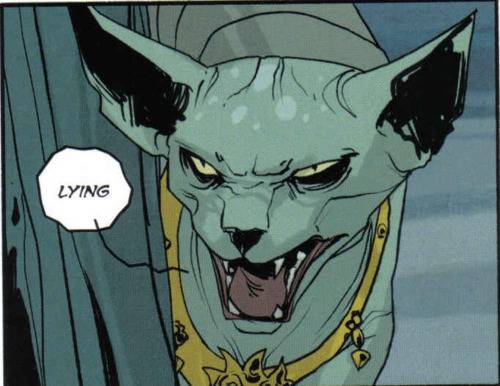
Lying_Cat_Saga_001

Along the way, as they blast from world to world in a spaceship that is also a tree (did I mention this is science Fantasy? Definitely a capital “F”), collecting other outcasts to form a very bizarre, very fractured, but very sweet extended family (as this article points out, Saga is almost impossibly diverse in its characters). Vaughn has said that’s what Saga is really about:

I now have two kids. I first starting thinking about this while waiting for our first kid. And I always used writing as an outlet to talk about my fears, concerns, and passions. I really wanted to talk about creating new life. And I found talking to my friends who are strangers to the fatherhood experience—I would watch them start yawning or looking at their watch–difficult. If you’re outside of that world you don’t really give a shit. When you’re living in it, it’s really exciting. So I wanted to find a way to make people who don’t have kids or who never intend to have kids feel what it’s like to be a parent.

That’s where Saga was born.

Not having kids I can’t say whether having them makes Saga more meaningful, but it does emphasize the foundation of the story. All the amazing art and “holy shit” concepts don’t add up to much if the characters aren’t ones we care about in the first place. That’s true of good fiction in general, but particularly good speculative fiction. At bottom, it’s a story about love, fear, and survival. The tree ships and arachnid bounty hunters are just gravy.
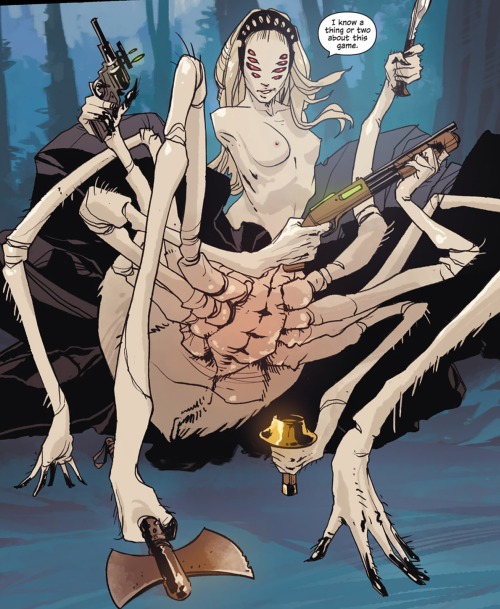
saga-the-stalk

What I’m trying say is that Saga isn’t something I recommend to comic newbies because it’s a classic (although it’s on its way to becoming that) or because it’s something, to channel one of my high school English teachers, “that well read people know.” It’s because it’s a great story, involving people you will care deeply about, told across a stunningly inventive backdrop. I mean, really, what else do you need?
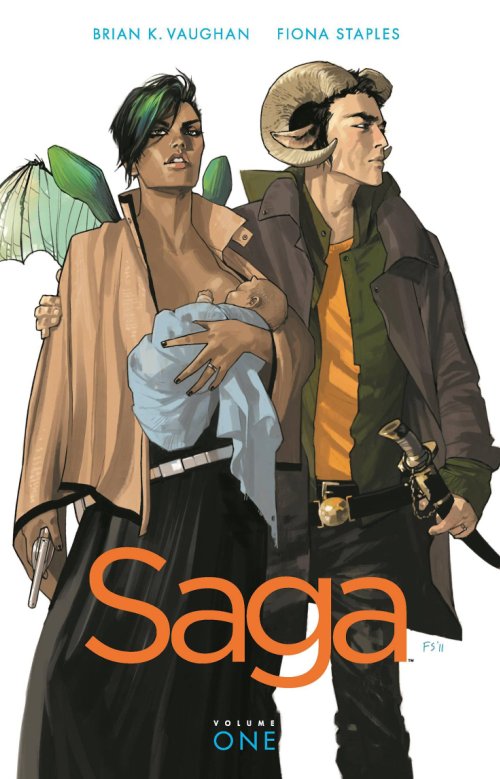
SagaVol1

At Long Last, the Entire Saga of The Water Road In One Handy Package

Very happy to announce that how, instead of buying three separate books to digest the entire story of Antrey, Strefer, and The Water Road, you can now get them in one convenient package. Presenting The Complete Water Road Trilogy box set:

2017-525 3d render on transparent Website.png

This is the series readers have called “magnificent,” “excellent,” “exciting,” and “engrossing.”

This version is only available in eBook format. And for April, it’s on sale for just 99 cents! Get one in your preferred format at the links below.

Amazon
Barnes & Noble
Kobo
iBooks
Scribd

Weekly Watch: The Shape of Water

The other weekend my wife and I decided to go to the movies. It’s that time of year where all the stuff that was in limited release at the end of last year for Oscar consideration is starting to trickle out to our neck of the woods. We checked the listings and came down to seeing either The Post, the new Spielberg take on the Pentagon Papers, or The Shape of Water, Guillermo del Toro’s latest. The wife decided on the latter, figuring it was more the kind of movie that should be seen in the theater.

Boy was she ever right (as usual).

Mostly when I think of “see it in the theater” movies I’m thinking of the big, popcorn movies that dominate the box office most of the year – superheroes, big sci-fi/fantasy franchises, or action movies (the wife has a disturbing affection for the Fast and Furious movies). Things that really play into the “bigger is better” idea and make it worth dealing with the public to watch in super wide vision, rather than just on the TV.

The Shape of Water isn’t one of those movies. It looks beautiful, don’t get me wrong, and it has some praise worthy effects, but it’s not interested in them as an end, as so many big movies are. Rather, what makes The Shape of Water the kind of movie you want to see in the theater is that it’s the kind best experienced when you turn the lights off, shut out the real world, and give yourself over to it completely.

That’s because The Shape of Water is, essentially, a fairy tale. Voice overs at the beginning and end of the film make this about as explicitly as they could without just saying “this is a fairy tale.” It’s not a movie for your logical, rational mind; it’s for your heart or spirit or soul or whatever place it is where your feels live. That’s not for everybody – witness the low ratings from some IMDB commenters who ding the movie for not being “realistic.” Problem is, the movie never sets out to be realistic.

I mean, “realistic” isn’t a word that should be anywhere near a story about a mute woman who falls in love with The Creature from the Black Lagoon (or Abe Sapien – take your pick). Just so stories aren’t realistic – or else they wouldn’t be just-so stories – and that’s what this is. A collection of outsiders – mute woman, gay man, African-American woman, a communist – band together to save another odd outsider, battling all the way against forces of conformity.

By turning away from realism del Toro is able to give the film a lyrical, dreamlike quality. When a black and white musical number pops up in the second half of the film, it seems perfectly in place. Another scene, wherein the aquatic containment properties of the common apartment bathroom are pushed beyond all sense, works just as well. Del Toro, aided by an amazing cast, weaves a spell, but it has to be one you’re willing to fall for.

But don’t take it from me. The Shape of Water now had 13 Oscar nominations, including Best Picture and Best Director. You want to see it, and the best place to see it is in a large, dark room where you can let it completely absorb you.

ShapeofWater

New Cover, Same Great Stories!

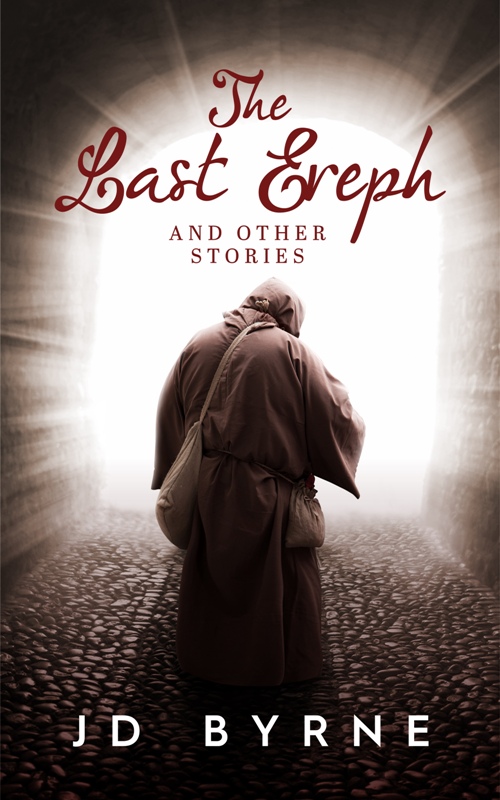
Releasing my first book, The Last Ereph and Other Stories, was a huge learning process for me. One of the things I learned was that I’m not very good when it comes to the visual side of things. I thought I could bang out a good cover all on my own. Others do it, right? How hard can it be.

Really fucking hard, it turns out. As I’ve moved forward and released other books I’ve looked back on The Last Ereph . . . and wanted to give it the suit it really deserved. Now I have:

Ereph Cover 2.0 (KDP) 500 x 800

This one is courtesy of James at GoOnWrite. But rest, assured, the stories inside (ten in all) are the same high quality as before.

Get the new, more stylish, The Last Ereph and Other Stories here:

Kindle
Barnes & Noble
Kobo
iBooks
Inktera
Scribd
Playster

Writing Resolutions for 2018

Happy New Year, everybody!

Happy-New-Year-Memes

I figured now was as good a time as ever, and this as good a place as any, to set out some goals for the 2018 writing year. I’ve done the same in the past in private and it’s a good way to crystallize my plans, even if they don’t all come off in the end. So, what’s on the agenda for this year?

The Water Road Box Set

Now that The Water Road trilogy is complete, it only makes sense to put together an omnibus version that combines all three books in one convenient package.

2017-525 Front Page Box Set

The plan is to make the box set a Kindle exclusive, thus returning The Water Road trilogy to Kindle Unlimited. The individual books would still be available from Amazon and all other outlets.

Interviews

Last year I decided to try and do some interviews with other writers. I’ve done a few and thought they were fun and interesting and wanted to see if I could repay the favor. I wound up doing 19 interviews with all kinds of writers from all over the world. It was such a rewarding experience that I’m going to do more this year. I’ve already got about a half dozen people lined up.

More Short Stories

I’ve got a couple of finished short stories that need to find homes, so I’ll keep trying to shop those around. I’ve also got a pretty decent backlog of short story ideas, so while I’m polishing longer works I’m planning to knock out a few new short stories. Someday, down the road, there will be enough to make releasing a second collection of short stories a reality. It will include a couple of stories set in the universe of The Water Road.

Speaking of collections, look for The Last Ereph and Other Stories to get a spiffy new cover (done by someone who is not me) sometime this year, too.

Orb of Triska Polishing

Last year, you’ll recall, I finished the first draft of a novel in a new series, The Orb of Triska. My main job for 2018 will be getting that polished up and finished. Once that happens, I’m not quite sure what the next step will be. I may get it ready for publishing, with an eye toward releasing it in 2019. I may sit on it until another book or two (of the planned seven) is done. Or I may shop it around to see if any agents/publishers are interested. A lot will depend on when it’s “done” and how I’m feeling about it then.

Write The Scepter of Maril

Regardless of what becomes of The Orb of Triska one goal for later in the year is to start work on the second book in the Empire Falls series, The Scepter of Maril. If all goes well, it should be my NaNo project for 2018.

I think that about covers it. If you’re wondering about a certain other project I’ve talked about before – I’ll have some info about that in a couple of days.

Author Interview – Jeffrey Bardwell

For the penultimate interview of this year we’re back in the USA with epic fantasy & steampunkist Jeffrey Bardwell.

Who are you? Where are you? What kind of stuff do you write?

My name is Jeffrey Bardwell and I write under that name. I was born in Virginia, but have bounced around the USA in the last decade or so. I write speculative fiction.

Tell us about your most recent book, story, or other project.

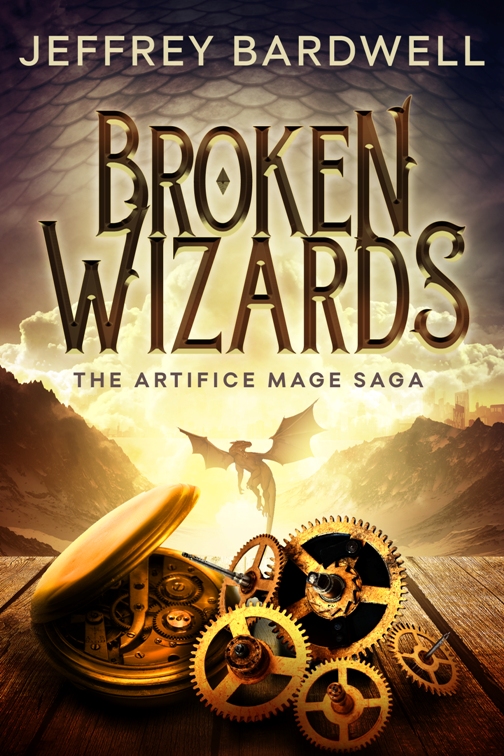
My most recent project is developing my own secondary fantasy world: geography, cultures, history, the works. I call it the ‘Metal vs. Magic Universe’ and primarily focus on the conflicts between those who cast steel and those who cast spells. The latest book in one of the current ongoing series set in this universe is Hidden Revolt.

Broken Wizards cover

In what genre do you primarily write? Why did you choose that one?

I mostly write epic fantasy steampunk. I love the wide breath of options, from the brimstone dragon reek to the shrill whistle of science.

I was in a discussion recently about what “steampunk” really means as a genre – what does it mean to you? What’s the difference between steampunk and fantasy (or even alternate history) set in a late 19th-century type environment?

Steampunk probably means something different to me than most authors. The genre classically hearkens to the Victorian Era, but my fictional evil steampunk empire is more Late Medieval Era. It’s second world fantasy, but a good analogue from our own history would be to ask what if the Dark Ages never happened and Rome just kept going and innovating machines and technology? There’s also a strong whiff of magic in the world in other countries, so gas lamp fantasy might be more accurate to denote a story that combines magic and metal. However, each element is championed by separate societies: the one character who combines an affinity for both in one person is condemned and outcast.

Tell us briefly about your writing process, from once you’ve got an idea down to having a finished product ready for publication.

First, I file the idea away for later. I typically have a backlog portfolio overflowing with ideas and after I select one, I try and get a feel for the main characters’ interweaving arcs. This builds into an outline ranging from minor notes to entire scenes. Then I write the first draft, intently micro revising the previous day’s work as I go.

Soon, latent themes begin to emerge. Often inspiration strikes at random and new, minor developments push off the beaten path as I’m writing. Despite all the exploration and improvisation, the overall map and the destination remain the same.

Once the initial draft is done, I send it to an editor and/or several beta readers. Editing is a two pass system: first, the story is examined for large-scale flaws such as narrative flow, character motivation, internal consistency, and tone. Once every scene is polished and every characterization nailed down, the second pass examines small-scale issues like spelling, grammar, and punctuation.

AuthorPic

Who is the favorite character you’ve created? Why?

My favorite character is Styx, a tall automaton made from wood with brass fittings. His life truly begins when a young wizard finds his puppet body abandoned in the woods and accidentally-on-purpose gives him a soul. Styx has the innocent wonder of a child, but the down-to-earth nature of a wise, old man. He’s seen it all . . . he just wasn’t cognizant at the time.

First, is Styx named after the band or the river? Second, was he one of those ideas around which other things were built or was he a “minor note” that grew into something larger?

Styx is certainly undergoing a rite of passage throughout the series, so the allusion to the river from Greek mythology is appropriate. However, the true root of his name is just a childish misspelling of “Sticks,” the epithet after which the large wooden automaton names himself when he learns to think and speak. He is definitely a minor note whose gentle leitmotif is slowly rising with a strong crescendo.

What’s the weirdest subject you’ve had to research as a writer that you never would have otherwise?

The weirdest subject was looking up the original programmable clockwork automata build by Heron of Alexandria, Jacques de Vaucanson, and Henri Maillardet. This research helped me to ground Styx’s designs and the hypothesize the functionality of mechanized armor. Though, to be fair, I would have looked in them eventually regardless. Clockwork robots are cool.

What’s the one thing you’ve learned, the hard way, as a writer that you’d share to help others avoid?

Don’t neglect the actual time for writing among all the other trappings of a modern indie career. Outsource what you can when you can however often you can.

If you won $1 million (tax free, to keep the numbers round and juicy), how would it change your writing life?

I would use some of that money to buy ads for my series loss leaders and boxed sets, run those ads, and then take a vacation overseas, which would use up more of the money. Then, when I got home, I’d use a little more to hire a personal assistant. The rest I would invest in mutual funds, bonds, and real estate.

What’s the last great book you read or new author you discovered?

Anything by Terry Pratchett.

What do you think you’re next project will be?

My next project will be taking my epic fantasy steampunk universe into space after fast forwarding the clock a millennium or two.

Check out Jeffrey on Amazon, Facebook, or at his website

Genre Bias Rears Its Ugly Head – It’s Science!

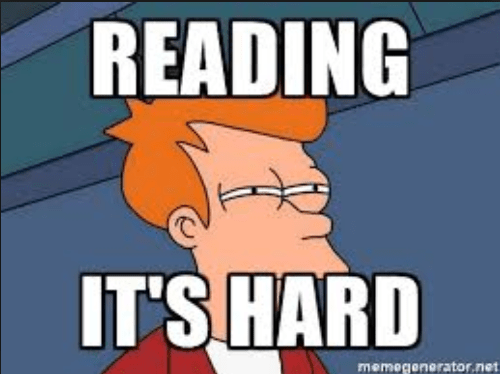
While I was of NaNoing last month an interesting bit of news came out with regards to science fiction and other types of fantastic literature. Put simply – people don’t put as much effort into reading those stories as other types.

ReadingHard

The study went like this:

Their study, detailed in the paper The Genre Effect, saw the academics work with around 150 participants who were given a text of 1,000 words to read. In each version of the text, a character enters a public eating area and interacts with the people there, after his negative opinion of the community has been made public. In the ‘literary’ version of the text, the character enters a diner after his letter to the editor has been published in the town newspaper. In the science fiction version, he enters a galley in a space station inhabited by aliens and androids as well as humans.

After they read the text, participants were asked how much they agreed with statements such as ‘I felt like I could put myself in the shoes of the character in the story’, and how much effort they spent trying to work out what characters were feeling.

The results were, on the face, disappointing:

‘Converting the text’s world to science fiction dramatically reduced perceptions of literary quality, despite the fact participants were reading the same story in terms of plot and character relationships,’ they write. ‘In comparison to narrative realism readers, science fiction readers reported lower transportation, experience taking, and empathy. Science fiction readers also reported exerting greater effort to understand the world of the story, but less effort to understand the minds of the characters. Science fiction readers scored lower in comprehension, generally, and in the subcategories of theory of mind, world, and plot.’

Readers of the science fiction story ‘appear to have expected an overall simpler story to comprehend, an expectation that overrode the actual qualities of the story itself’, so ‘the science fiction setting triggered poorer overall reading’.

In spite of some of the breathless comments I saw online the study does not, as someone points out, imply that reading sci-fi makes you dumber, but implies that people who don’t like sci-fi won’t give it its full attention. It’s nice to have some science to back this up, I guess, but is that any surprise?

That’s the whole reason literary writers, whom I’ve complained about before, don’t like admitting that they write sci-fi or fantasy. This came up against just recently after I finished Emily St. John Mandel’s really excellent Station Eleven (Weekly review forthcoming). It’s a story about survivors of a global pandemic striving to maintain a life that’s something beyond mere survival. It’s a quintessential piece of sci-fi (or, more broadly, speculative fiction), although the author is having none of it:

Thus when Station Eleven was nominated for the National Book Award – it also won the Arthur C. Clarke awards, so take that! – some eyebrows were raised. But when something that is “literary” is it prevented from being something else? I tend to agreed with this:

And yet confusion reigns in this debate, which feels strangely vague and misformulated. It remains unclear exactly what the terms ‘literary fiction’ and ‘genre fiction’ mean. A book like ‘Station Eleven’ is both a literary novel and a genre novel; the same goes for ‘Jane Eyre’ and ‘Crime and Punishment.’ How can two contrasting categories overlap so much? Genres themselves fall into genres: there are period genres (Victorian literature), subject genres (detective fiction), form genres (the short story), style genres (minimalism), market genres (“chick-lit”), mode genres (satire), and so on. How are different kinds of genres supposed to be compared? (‘Literary fiction’ and ‘genre fiction,’ one senses, aren’t really comparable categories.) What is it, exactly, about genre that is unliterary—and what is it in “the literary” that resists genre? The debate goes round and round, magnetic and circular—a lovers’ quarrel among literati.

Listen, I get the concern of writers like Mandel – slap a “sci-fi” or “detective” genre label on a book a certain group of people won’t take it as seriously. But rather than run away from the tag and deny the reality of what you’re writing, why not embrace it? Doing so would help smash conceptions about what genre fiction is and can be. Stand up for the slighted genre kids, rather than lean into the bully who just wants to put them down.

Author Interview – Holly Evans

This time we head to the Emerald Isle for some words with fantasist Holly Evans.

Who are you? Where are you? What kind of stuff do you write?

 I’m Holly Evans, an English expat with a love of blades, fae, and predators that hide in the shadows. I’m currently living in the Republic of Ireland. I write Urban Fantasy, mostly with LGBT+ casts, and mostly set in a huge fantasy kitchen sink world that I refer to as my Ink World.

Do your Ink World books tell an ongoing story or is it a shared universe with lots of separate stories going on?

I’m careful to keep the Ink World series separate so none of them spoil any of the others. If you look closely and read all of the books you’ll see there’s a larger arc there, but it’s kept far in the background. So really it’s more the latter, a shared universe with some overlapping locales and characters.

Tell us about your most recent book, story, or other project.

Seers Stone is book one in a new series. It follows treasure-hunting alchemist Kaitlyn Felis. It’s something I’ve wanted to write for years. It’s a quick-paced, adventure-focused Urban Fantasy set in my Ink World. Kaitlyn’s a vibrant character who has such a lust for life, she’s amazing fun to play with.

In Seers Stone she takes a new job in Prague and is sent to retrieve the mythical Seers Stone for her new boss. That takes her across Europe and sees her in a lot of fun situations along the way.

Cover

In what genre do you primarily write? Why did you choose that one?

 Urban Fantasy. It’s what I naturally write, I can’t imagine writing anything else. I love the mix of myth, magic, and mayhem, all set in the modern world. The idea that magic and adventure could be hiding just around the corner is too good to ignore. If you know which shadow to slip into, or which door to knock on, you can be transported into this amazing new world. How can I not love that?

 Tell us briefly about your writing process, from once you’ve got an idea down to having a finished product ready for publication.

 I don’t really have a set process. The idea gets written in my planning book. I’ll jot down broad strokes, scenes that pop into my head, and everything I can about the protagonist. That will involve lots of colour, my brain loves colour. That will sit and percolate in the back of my mind for a while, while I work on other things. When it’s time to write it I’ll return to my planning book and make more notes. They’re not usually too organized at that point, it’s lots of colour and notes on scenes that call to me. From there I’ll start pulling together an outline and then writing.

I tend to write roughly the first 10k pretty quickly, then I’ll pause, update my outline, and carry on. Once I hit the 20k mark I start wailing about how much I hate writing middles. I’ve started writing the endings before the middles as my ADD means I get bored and frustrated which leads to rushing the ending. So I’ll write the opening as much as I can, then the ending, then go back and gnash my teeth through writing the middle!

From there it goes over to my editor. I have a language-based learning disability, so my books require *a lot* of copy editing. My editor gives the draft a copy editing pass then a developmental pass. It’s rare that the developmental will call for anything more than tweaking a few sentences and expanding on a couple of scenes. Once I’ve done that (usually that takes me about 48 hours) it’ll go back to my editor for two more copy editing passes. I’ll then format it, and it goes on Amazon.

Have you ever had a situation where you wrote the beginning, wrote the ending, then in filling in the middle part decide that the ending you wrote doesn’t work anymore?

I came really close to needing to rewrite the end of one of my Infernal Hunt books. I wrote the book completely out of order from four different points. Fortunately the end only needed tweaking not a complete rewrite but it was a close call for a moment.

What’s your strategy for publishing a series (i.e., do you release each book as it comes, hold them all until the series is done, etc.)?

I release each book as they come in a series. I held onto the first three books of my first series so I could release them quickly, but after that I just release them when they’re done. I’d rather have regular releases than hold books back.

Who is the favorite character you’ve created? Why?

 I’m so hopeless about picking favourites! I think that’s a tossup between Tyn and Kaitlyn. Tyn’s a secondary character in both my Ink Born and Hidden Alchemy series. He’s my broken little kitten. He’s a Cait Sidhe (a fae cat) with a really tragic backstory, he’s so snarky, and broken, but also sweet, fierce, and incredibly loyal.

Kaitlyn’s amazing fun. She has such a lust for life. She lives to have adventures, and she’s just so vibrant, so incredibly alive.

What’s the weirdest subject you’ve had to research as a writer that you never would have otherwise?

 I don’t do much research for my writing. I have a pretty good knowledge-base of myths and such from spending my childhood and teenage years devouring everything I could find on that. I can’t think of anything to be honest.

What’s the one thing you’ve learned, the hard way, as a writer that you’d share to help others avoid?

 If you want to make readers happy, you have to keep them in mind. I wrote some books that were for me under another name, and they didn’t make readers happy. Looking back, I can absolutely see why. It’s so easy to go, ‘well I’m an avid reader, of course I know what readers want!’ and then it turns out that well, actually…

I suppose that really comes down to why you write. I’m a storyteller, I write for my readers, so I want to make sure that I write books readers love. If you’re writing more for the pure love of writing, then do what makes you happy.

What’s the best way to find out what makes readers happy?

Ask them 😛 I survey my newsletter subscribers on a semi-regular basis and ask what they enjoy, what they want, etc. I try to offer as many methods for engagement and reader feedback as I can. Reading reviews, your own and those of bestsellers also helps a lot. You can look down the top 100 in your genre and read the reviews, positive and negative. You’ll see some trends.

If you won $1 million (tax free, to keep the numbers round and juicy), how would it change your writing life?

 My husband and I want to become digital nomads, if I won that money we’d pack our bags and start travelling the next day. I’d visit all these wonderful places I want to visit, and I’d put them all in my books.

What’s the last great book you read or new author you discovered?

 I’m not normally an eRom reader, but a friend had a new book out that people were raving about so I picked up a copy. It was fantastic. Finn by Liz Meldon is exquisitely put together. I’m really impressed with how much character development she managed to pack into a little space.

What do you think your next project will be?

 I’m bouncing back and forth between the Ink Born series and the Hidden Alchemy series, so it’ll be whatever sequel is due along those lines. Right this very second that’s Ritual Ink (Ink Born 4). That being said I’m really tempted to start a third series in my Ink world, I’m weighing up the pros and cons right now.

Check out Holly’s blog here.

All 99-cents All Month!

To celebrate the successful end of NaNoWriMo, and in an attempt to spread a little bit of holiday cheer, I’ve lowered prices on all my books to 99 cents across all platorms for the entire month of December!

That includes Moore Hollow, the entire The Water Road trilogy, and even my short story collection, The Last Ereph and Other Stories.

Get ‘em for a friend, get ‘em for yourself!

Thoughts From an Experimental NaNoWriMo

Right – so where were we?

Oh, yeah, National Novel Writing Month, also known as NaNoWriMo. Did I have a good month? I’d say I did.

NaNo-2017-Winner-Twitter-Header

The book I started for NaNo, The Messenger, is different for me in a lot of ways. For one thing, it’s pure space-based science fiction. While I’ve written some near-future sci-fi short stories, I’ve not done anything this long or, well, spacey. For another, I started the project having done very little prep work. So to be past 50k words and looking at another month’s writing (at least) to finish it is making me a little giddy.

HappyPuppy

Not an actual picture of the author. Think metaphorically, people!

Let me explain why.

Writers generally like to divide themselves into two groups – plotters and pantsers (putting to one side the ones who don’t accept either label). Plotters, as you might imagine, are people who do a lot of work before they actually start writing a first draft. They outline, develop characters, build worlds and all that kind of stuff before ever sitting down to write “it was a dark and stormy night.” (LINK). Pantsers are the complete opposite – they do little prep before writing and are, as the name implies, flying by the seat of their pants. In truth, I think most people are a little of both. Anybody who writes exactly the same book they planned to write or really sits down with a completely empty noggin and pours out a book are few and far between.

I tend to be a plotter. Lots of that is down to writing fantasy and the heavy lifting of world building. I like to get that stuff out of the way so I can let the story develop against a fairly fixed backdrop. Still, things never go precisely as planned, even when (as with The Bay of Sins, my last NaNo project) you lay out all the chapters you think you’ll need from the beginning. I suspect it’s something like attorneys say about oral arguments – there’s the one you plan to make, the one you actually make, and the one you wished you’d made after the fact.

So The Messenger was a very different experience for me. I had about a page of notes, compiled from thinking about the story over the years, but it was lacking lots of important things. Like, for instance, the names of the main characters or any of the names of the planets or alien races they’d encounter along their way. As for the way? I had an idea of how things began, but after that? I decided to let it see where it went. I’m glad I did, because I don’t think I would have come up with some of these things ahead of time.

It’s particularly interesting to do this one right after finishing the first draft of The Orb of Triska. That has a lot of work done on it before I started writing and I always felt like I knew where I was going. I think that first draft is a much better, more coherent final product, but, of course, neither one of them are “finished” after a first draft. It will be interesting to see how the final products compare once they’ve been polished up.

So that’s how I spent my November.

Also, we got new puppies:

ZariaKalindi

Zaria (L) and Kalindi (R) are ready for their album cover.

How you all been?