Consider The Leftovers, but funnier. And full of cheese.
That’s a good way to think of John Scalzi’s latest, When the Moon Hits Your Eye.
In The Leftovers (both the very good book and the excellent TV series based on it) a small portion of the world’s population simply vanishes. The story is about what comes next, the grappling with a strange new world and your place in it. Fixing it, or figuring out what happened, really doesn’t enter into it.
So, too, for Moon in which, suddenly one day, the Earth’s only satellite turns to cheese. Sorry, NASA, I meant into an “organic matrix.” Terminology aside, what follows is a lot like The Leftovers in that Scalzi is more interested in how people deal with their new reality rather than probing how it happened or how the problem might be solved. That will surely frustrate some, but I suppose I’m a sucker for “the world’s gone weird, how do we feel about that?” stories.
And “stories” is what Moon provides. In fact, it’s worth asking just what Moon actually is in the first place. It looks like a novel – work of fiction, of several tens-of-thousands of words, takes place in a fairly limited timeframe – but it reads like a collection of short stories. They’re not even particularly connected ones, either. There are characters from some stories that appear in others, often in the background after having been main characters themselves, but aside from a series that tells of a voyage to the cheese/moon that is told from several POVs, there isn’t really an overall “story” happening. I liked this setup, but folks who go into it wanting a novel might be put off (my wife, who doesn’t really care for short stories, said she’d been miffed in that situation).
Some of those stories are really good, too. There’s a chapter that’s a meeting of bankers trying to squeeze the last penny out of what appears to be the end of the world (how long before people stop working, etc.?) that sharp satire. There’s another involving a dying musician that’s touching as it deals with loose ends and regrets. There’s another matched pair that involves young lovers caught in a duel between cheese shops owned by estranged brothers. Not all land this well, but that’s the nature of the beast for what is, essentially, a short story collection. They’ll always sort themselves out (I’ll regret having said that one day).
That said, do any of those stories really require the who “moon turns to cheese” setup? Not really, although the one with the bankers comes close, since it requires some kind of apocalypse. The others would work just as well without it, though, which makes me wonder if Scalzi had some ideas lying around that he shoehorned into Moon. Not really a complaint – sometimes the best track on a concept album is the one that’s mostly a killer instrumental that doesn’t move any plot along – but it’s an interesting thought.
Moon also asks a question of just what genre it is. Scalzi is most well-known for writing science fiction, but can one really say that a story where the moon, for no explicable reason, turns to cheese is anything other than fantasy? To a certain extent Scalzi feels like he’s trying the alternate history approach – the critical event is pure fantasy, but the aftereffects are as realistic as possible. As an example, when the moon changes to cheese it retains the same mass, which means it gets bigger since cheese is less dense than rock (the good stuff, at least!). That makes the moon brighter in the sky. All that said, in an afterword Scalzi concedes that he wasn’t really that interest in scientific rigor, so there’s no harm is saying that Moon is pure absurdist fantasy.
There’s one way in which Moon falls short of The Leftovers, which is the ending. Without getting too spoilery the book manages to return, sitcom style, to the status quo in the same mysterious way as it began. It didn’t work for me, but given that this wasn’t a book that was all leading up to that ending, that didn’t bother me much.
If you’re willing to indulge some dispersed storytelling and don’t have a deep desire for answers, When the Moon Hits Your Eye is a lot of fun and my favorite of Scalzi’s since Redshirts.
I thought if anyone is qualified to answer this question it might just be the guy who is both a public defender and a writer of fantasy (with horror overtones in spots). So, what of it – can that vampire cop enter your house against your will?
Let’s start with the assumption that we’re talking about an American vampire cop here, so they’d have to comply with the Fourth Amendment to the Constitution, which prohibits “unreasonable” searches and seizures. It also requires a warrant to execute a search of a home. An arrest warrant will also allow police to enter a home, if they have the necessary suspicion that the person named in the warrant lives there.
A search warrant has to be based on probable cause that evidence of a crime is present in the place to be searched. It’s not a particularly high standard, not even up to the level of “preponderance of the evidence” used in civil proceedings (essentially 51% certainty) and a far cry from the “beyond a reasonable doubt” standard needed to convict someone of a crime. Warrants must be particular as to the things to be seized and the places to be searched. That’s supposed to prevent exploratory rummaging of the kind that occurred under “general” warrants in the pre-Revolutionary era. The application of all this in particular cases is tricky and what keeps me employed, but the basic concepts are easy to grasp.
Perhaps not quite so much for vampires, since their lore varies from telling to telling of particular stories. Nonetheless, there does seem to be a consensus that vampires require permission before they can enter a home. According to this article it dates back to at least the 17th Century and a Greek theologian who stated that a way to be safe from vampires was to stay at home, as they couldn’t enter without being invited. But why? One explanation is that the rule “reflects the idea that evil, represented by vampires, can’t harm you unless you allow it to. It’s a choice, an act of free will.” Tough shit if you get taken in by a slick talking blood sucker then!
With that said, let’s set the scene – Detective Angel and Lieutenant Louis show up at your home. As vampires they cannot come in uninvited. Fun fact – as cops, they can’t either! Except, of course, they have a search warrant, which they do (it allows them to search for any and all implements relating to killing the undead). Does the warrant let them in even if you don’t invite them?
The basic answer, I think, is “no.” The law is the law, but the rule that vampires can only enter with an invitation operates more like a law of nature. Police could no more get a warrant to stop the tides or keep the sun from rising than they could to allow a vampire entrance to a home without an invitation. Nor are warrants commands to someone to allow police into your home – they are permission for the police to enter using any means necessary, hence SWAT teams and knocking down doors in the middle of the night.
But the basic answer is not the only answer. For one thing, if we’re assuming a world with vampires – vampires who are police, no less – then presumably the law has made some accommodation for this. Can a court, as part of issuing a search warrant, compel a homeowner to give permission for the vampire police to enter? I don’t see why not. Courts frequently order people to do things they otherwise don’t want to do, including things like provide blood samples and fingerprints. This doesn’t feel any different and doesn’t lean into that kind of acquiescence that might trigger Fifth Amendment self-incrimination concerns (like giving up the password to your phone).
For another, who gets to give consent to enter and how much consent is enough? Many years ago the Supreme Court decided a case where police showed up to a home in response to a domestic dispute. They asked for permission to search the home – the husband denied it, the wife consented. Police searched the home and found drug paraphernalia. The Supreme Court ultimately held that the search was invalid because so long as one person present when the request for consent was made objected to the search, it didn’t matter what anybody else said. In such situations, police had to go get a warrant.
So what if, when our vampire police walk up with their warrant, you’re willing to invite them in but your significant other who also lives there is not? Does the Supreme Court’s rule for the Fourth Amendment carry over to vampire invitations? Or is it a one-person-to-a-home situation? I’m leaning towards the latter, since, as I understand it, once a vampire is invited into a home it is forever invited, implying that consensus among the occupants isn’t necessary.
What makes the question fun to ponder is the clash of what seems like two absolutes – a warrant permits entry versus a vampire’s need to be invited. But that rests on the presumption that the law wouldn’t evolve to account for the fact that (a) vampires were real and (b) they worked in law enforcement. The Founders didn’t imagine automobiles, but the Supreme Court figured out how the Fourth Amendment interacted with them. Same with cell phones. I have no doubt that a legal system that’s been in a constant state of evolution since at least the Magna Carta would figure out how to deal with vampire detectives.
But until then? Ask to see the warrant, then keep your mouth shut, unless you’re asking for your lawyer.
My wife is a voracious reader and introduced me to the concept of “cozy” genres. Her big one is cozy mysteries, in which the murder takes place bloodlessly off screen and the cookie recipes in the back are more important than the whodunnit. I stumbled into one of those that crossed into fantasy a while back, The Accidental Alchemist, which was fun enough, but not quite my thing. Would a second go on cozy fantasy change my mind? Not yet, at any rate.
The setup for Legends & Lattes is pretty slick – Viv, an orc who’s spent her life adventuring and killing in a typical fantasy world, decides to get out of the business and settle down. Her new line of work? Running a coffee shop in a town that’s never heard of the stuff (in-world it’s an invention of dwarves, IIRC). “High fantasy and low stakes,” claims the cover, which certainly suggests a light, frothy outing.
Which it is! I’ve seen a lot of people rave about this book for being like a big hug or warm blanket, super comfy and cozy and I won’t disagree. I wish it had something more to it, however, to make it more than just a bit of literary comfort food (adept as it is when it comes to that).
It could, for example, have been really funny. There are a couple of chuckles here and there, but it’s not what I’d call a comedy. The basic idea sounds like it could have come out of a Discworld novel, but Pratchett always had a more cutting edge and could write amazing jokes. There’s nothing like that here.
I’ve seen some people complain that the book has “no plot,” but that’s not true. Things happen! What is really lacking is conflict, in any meaningful sense. For instance, Viv and the crew she assembles around her have to get the business off the ground and running. Every innovation they think of – offering iced coffee in addition to hot, adding baked goods (sumptuously described, it has to be said) to the menu, etc. – works like a charm. There’s even a local protection racket that Viv has to deal with, but it’s wrapped up easily with a conversation (and Viv paying protection, oddly).
That isn’t to say there isn’t a bad guy. A member of Viv’s old crew shows up about two-thirds of the way through and commits what appears to be a heinous crime – so much so that it’s completely out of place with the warm fuzziness of the rest of the book – but it’s barely a hiccup in the end.
Without any real conflict I need something more. Could have been humor, but, like I said, that’s not really what the book was going for. It could have been a more thorough exploration of Viv’s new home town. I particularly thought the protection racket stuff would give her a chance to interact with other people in her neighborhood, either to rally them or find out that resistance was futile. It could have been a cool way to see other species at work, add some additional color. Alas, the book sometimes feels like a TV show allegedly set in a big city that’s clearly shot on a soundstage that never moves from the single corner it regularly depicts.
I don’t want to come down too harshly on Legends & Lattes. It’s a quick, fun read, even if it leaves you feeling a little “so what?” when it’s over. But I’m clearly in the minority in not finding it completely charming and wonderful (it’s nominated for an Nebula and Hugo awards, after all). Which means, ultimately, that I just don’t think the “cozy fantasy” thing is really my cuppa, so to speak. And that’s OK.
I’d really like one of them cinnamon rolls, though. Hold the icing.
I don’t put maps in my books for a couple of reasons. One is purely practical – they’re expensive if they’re any good. The other is kind of philosophical – I think that if the book is well written and compelling that readers won’t get hung up on details of geography. I hope I’ve managed to do that in these books (and others). Geography is fun, but it’s not the story.
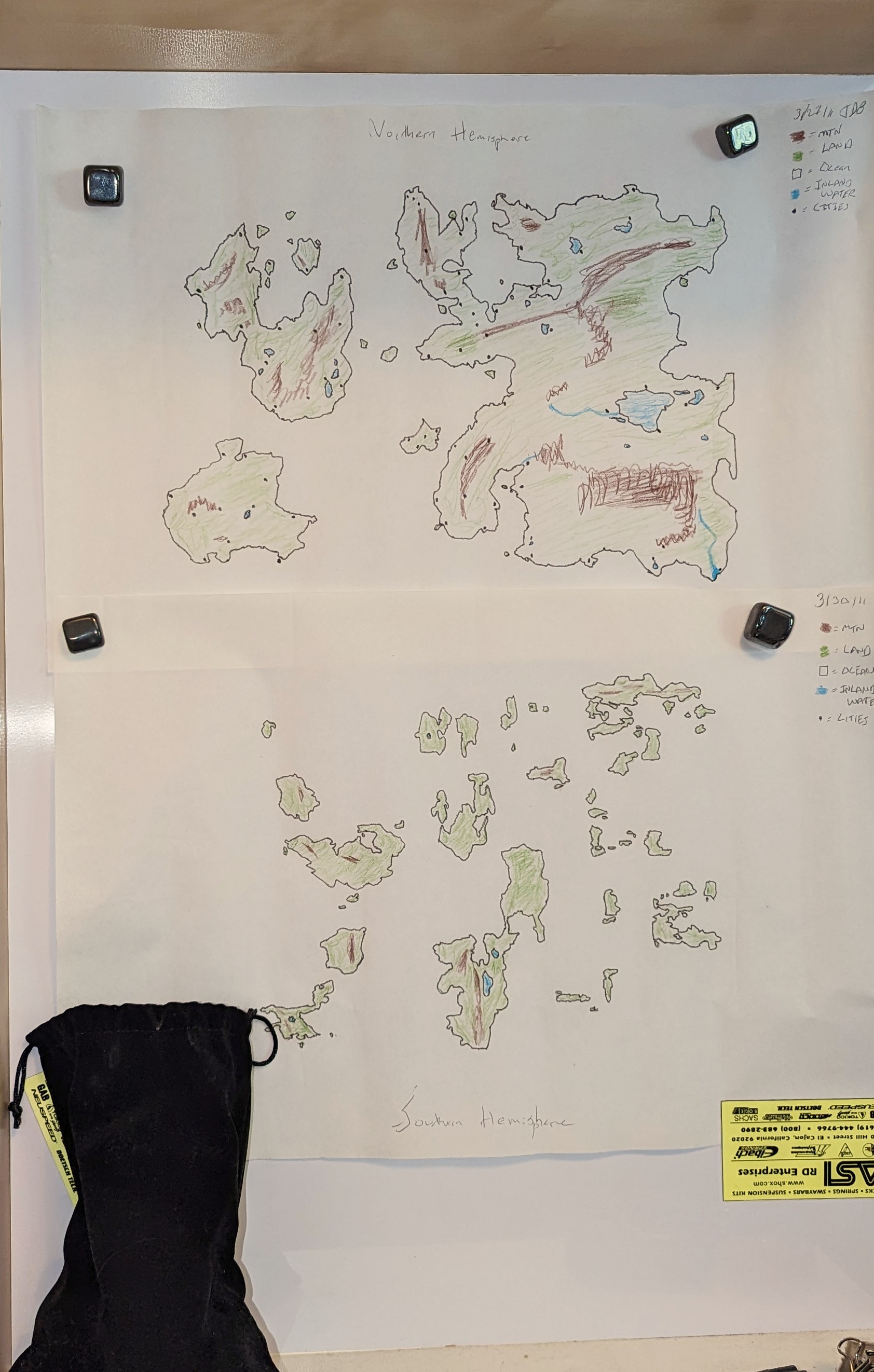
That said, I do tend to make maps for myself to use as a reference while I write. Here’s what’s been stuck to the metal part of my writing desk for the past six years, a map of the planet Oiwa:
The bag at the bottom is the collection of role playing dice I used to create the map. I rolled them out and traced around them to create continents and islands, then filled in the terrain. Some of it matched the story idea I was developing, but a lot of it didn’t and impacted things as they moved along.
Essentially, Oiwa boils down into three sectors, two in the north and one in the south. The one on the right is the Unari Empire, which is where most of the action of these books take place. Cye is just off the east coast of that north/south inlet at the bottom. For Widows of the Empire I wrote some about the areas called the Unaru (the very southern part, south of that big mountain range) and the Knuria (most of what’s north of those mountains). The top left contains the nations of the Western Alliance, which have mostly featured as an off-screen force in the books (from the “sometimes you build stuff for your world you can’t use” file). Aton actually goes there in a job that takes place off screen between the first two books.
To the south are the correctly, if unspectacularly named, Southern Islands, which covers everything on the bottom half of the map. They played a larger part in Widows of the Empire and do again in Heroes. As with the Western Alliance I’ve got a whole lot of lore in my head for how the various parts of the Southern Islands fit together politically and culturally, but there was never a good place for it all to go in these books. Aton spends time there in Widows and there’s action there in Heroes, too, but it’s mostly on ships and so we only get a glimpse of some of the Islander culture.
One of the cool things about writing stories that take place in other worlds is the freedom to create whatever kind of world that you want. With that comes a responsibility to bring readers into it in such a way that it feels real and understandable. Building Oiwa, including its history, has been a blast. I hope it was worth coming along for the ride.
A few years ago, off the back of reading N.K. Jemisin’s The City We Became, I wrote about whether stories that involve magic that are set in the “real world” need to have a meaningful impact on that world.
I had started thinking about that issue thanks to an observation by a legal blogger (of all people!) about Lev Grossman’s The Magicians, in which he concluded that:
it therefore strains credulity to believe that powerful sorcerers have been around for centuries, yet have never revealed themselves to normal humans, seized political power, or had any impact on history.
As I said in my post, I’ve wrestled with this in developing (or not) some of my own ideas. If the story is set in our world, but with magic, shouldn’t magic change things?
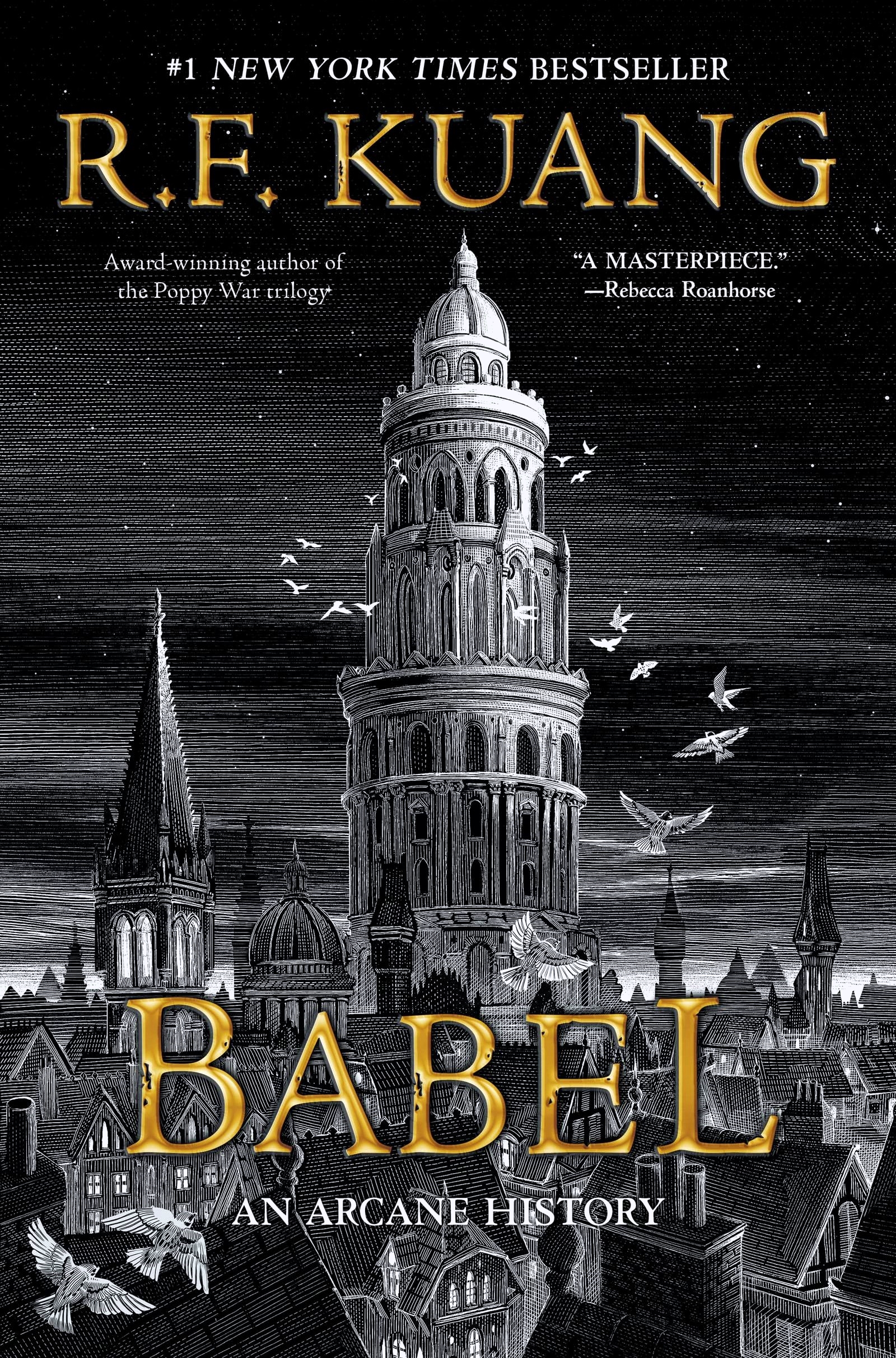
I was set to thinking about this again after reading R.F. Kuang’s Babel, which is up for a Hugo.
Babel is set in an alternate history version of England (for the most part) of the early Victorian era, just on the verge of the First Opium War in China. The main characters are training as “translators” at Oxford who practice a form of magic whereby they engrave pairs of words on silver bars that are then used to do particular things. Some of them are completely magical – there’s one that explodes someone’s heart, for example, and another that can heal the sick. Most of them, however, merely make things that already work do so more smoothly and efficiently – carriages travel more smoothly, gardens are more pleasurable, factories require fewer employees, etc.
For our purposes, what all this means is that the British Empire is precisely the same thing that it was in our real history – a globe-spanning colossus that exploited its colonial territories and other weaker, developing nations for fun and profit. There’s nothing about the world of Babel, in broad strokes, that is different from our world. Does that matter? Is it a flaw in Kuang’s world building?
At one time I would have said it was, or at least leaned that way, and you can certainly find reviewers on Goodreads who find that to be a major flaw. But I think what Kuang has done is use the fantasy element to crystalize the themes she wanted to talk about that are very real in our world and our history, namely colonialism and its legacy. In Babel the raw silver needed to fuel the magic works almost like spice does in Dune, a purely extractive industry conducted in a faraway place for the benefit of entrenched, moneyed interests back home. Sure, the actual silver trade did that, too, but the magical gloss heightens the inequity of it.
Could Babel have told the same story without the magic? A few specifics would have to change, but in general, sure it could have. It’s a book about a character who at first thinks he’s been plucked from a dead-end life to live a life of learning and privilege who slowly learns what that privilege is based upon and rebels against it. Magic isn’t required for that, but it doesn’t hurt, either. There’s also the possibility, of course, that what Kuang is saying is that whatever resource we’re talking about, including magic, was going to fall into the service of the most wealthy and powerful anyway, which is not wrong.
In my conclusion back in 2020 I suggested that writers are leaving some interesting ideas on the table by not playing out the impacts of their world’s fantastical things on the world as we know it. I still think that’s true, largely, but I’ve come to accept a caveat – that, sometimes, what you’re after isn’t a big world building “what if?” exercise and trying to do so would just take away from the story you’re trying to tell. As usual, the focus should be on what best serves the character and the story, not anybody else’s idea of how world building should be done.
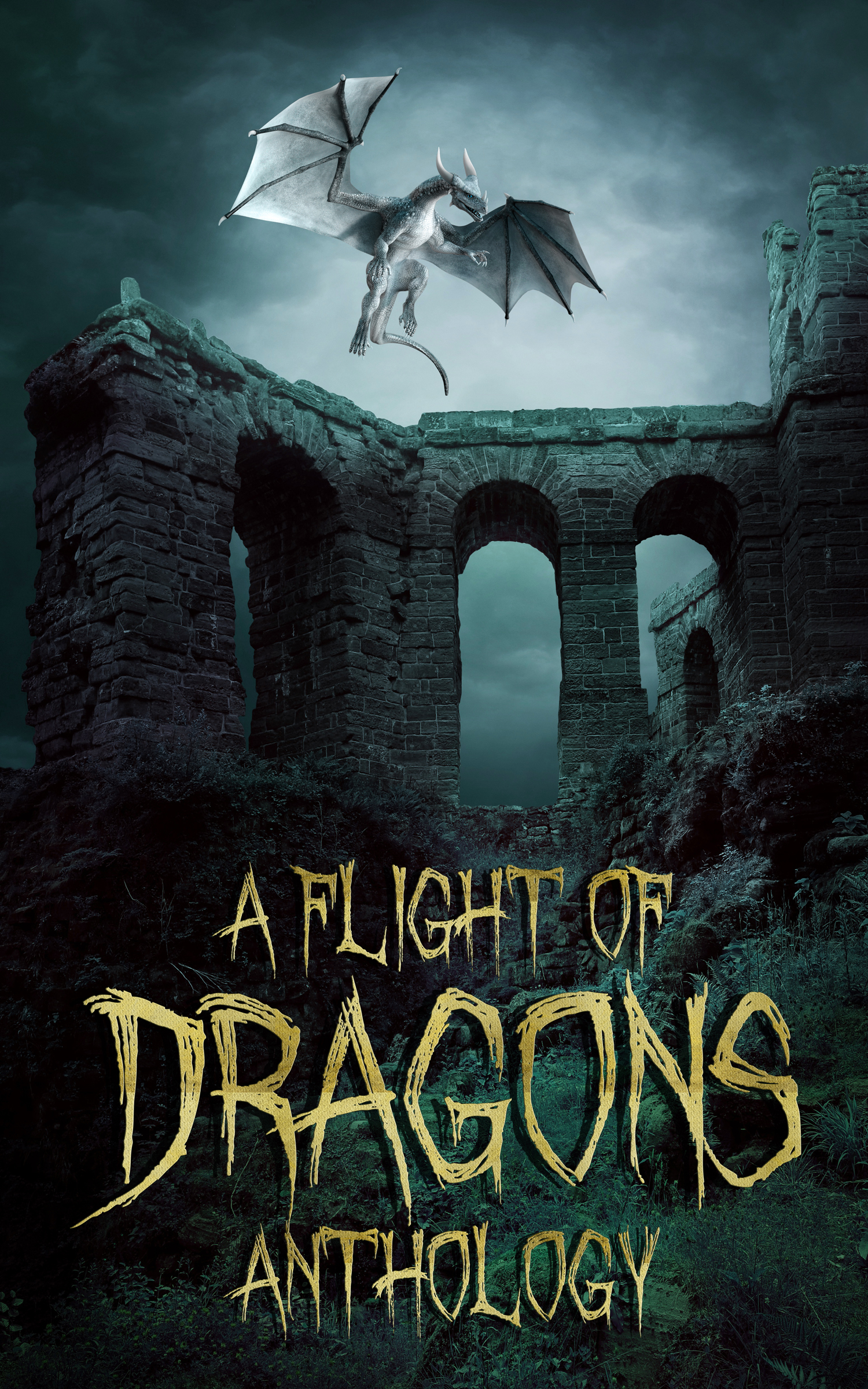
Sure you do! I’m happy to announce that my short story, “The Dragon of the Bailey,” is one of two dozen stories collected in a new anthology, A Flight of Dragons.
“The Dragon of the Bailey” was inspired by the ravens at the Tower of London. Legend says that if the ravens leave the tower either the monarchy or the nation will fall. So, naturally, the clip the ravens’ wings! Ideas really can come from anywhere.
That post title sounded better before we were on the verge of Armageddon (again). But recall back in June I announced that I had a new short story that was going to appear in a forthcoming anthology. Well, it’s here.
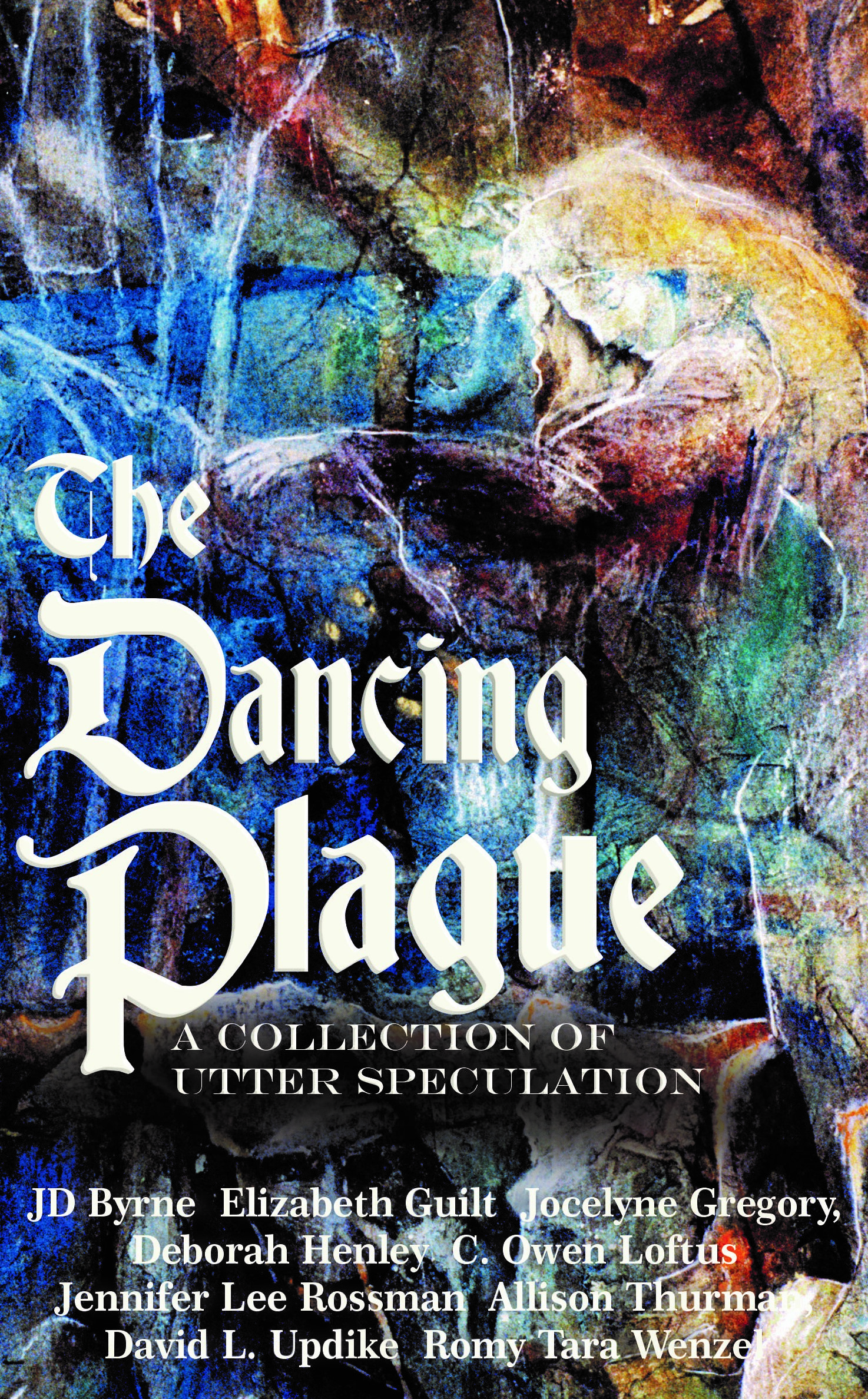
The book is The Dancing Plague: A Collection of Utter Speculation, which you can get here (paperback) or here (Kindle eBook). My story is “The Consequences of Sin,” takes one of the traditional explanations for these kinds of phenomena (not really a spoiler – it’s demons) and twists it a bit, inspired by the Fritz Lang classic M. You can read more here about the background of the story (and other stuff) in this interview I did. The other authors did similar interviews, which you can find here.
Regular readers will know that lost of years I’ve done a story for Halloween here on the blog. Since this story is coming out in October and is sufficiently creepy (I hope), it will fill that role for this year. You can find links to all my Halloween stories here.
To wrap up the months of lists, it’s only natural to turn our attention to books. Just choosing ten favorite books is tough – so I’m going to cheat. A few years ago I did a post about ten books that were “particularly important to me,” spun off from a Facebook thing that was going around. Those are all favorites, right? Sure. There’s a difference between “favorite” and “important,” but I’m not sure that’s a hair worth splitting.
That said, I’ve read an awful lot more books since I did that, so rather than take apart that first list, I’m just going to add to it. So, these ten books are all recent favorites (recent to me, at least) and I love these and the old ones so much I don’t want to knock any of those off to make room. It’s my list after all, right? Speaking of, if Saga, by Bryan K . Vaughn and Fiona Staples was complete, it would be on this list in a heartbeat, but I worry about them sticking the landing (it’s still only about halfway through, after all). Thankfully, that leaves an open spot on the list (for now).
The only other cheat for this list is that I decided to consider series as a single entry, so I could consider those in their entirety. Other than that, no rules. Also apologies for the wonky order, as I originally had them listed by series title but the formatting looked awful. Honestly, they’re in alphabetical order! That said, let ‘er rip . . .
The Mechanical (2015) – The Rising (2015) – The Liberation (2016)
It’s 1926, but not the 1926 we remember. There is no Lost Generation following the First World War, no Jazz Age, no impending economic collapse. Instead, the world, or at least the largest part of it, is ruled over by the Dutch. How have the Dutch managed this feat? Magic, of course.
That’s the basic setup for the Alchemy Wars trilogy – one of the “clakkers” created by a combination of Dutch magic (here called “alchemy”) and steampunkish technology gets a case of free will and a war of liberation is on. Along the way, we get a heavy dose of live in the world’s only non-Dutch outpost – a rump New France based around Montreal. The Mechanical is a brilliant opening book, full of world building and questions on the nature of being. The Rising gets a little too action heavy, at the expense of the philosophical questions, but The Liberation rebounds, bolstered by some temporal sleight of hand that shouldn’t work as well as it does.
American Heiress: The Wild Saga of the Kidnapping, Crimes and Trial of Patty Hearst (2016)
by Jeffrey Toobin
Just by growing up when I did and sitting in the culture I knew the outlines of Patty Hearst’s story – she was a rich young woman who was kidnapped by radicals and eventually wound up taking part in some of their violent activities. I was vaguely aware of the debate about whether she was really transformed into a believe or just going along out of fear. Toobin’s (yeah, I know) book does a really good job of filling in not just her specific story, but the time period out of which it arose. I had no idea bombings were so common in the 1970s! He also manages to dig into the argument on Hearst’s culpability deeply enough to allow people to draw their own conclusions, if you even can (I’m not sure I have). Super bummed that any adaptations of this book apparently aren’t going to happen.
The Ball Is Round: A Global History of Soccer (2006)
by David Goldblatt
While soccer is my favorite sport, I admit that I’d not really dug too deeply into the history of it. I had a handle on the big stuff – Uruguay’s early success, our upset of England in 1950, Pele – but the development of the game itself was mostly a black hole for me. No longer, having absorbed this deep history of the development of the beautiful game. What amazed me is how much of the game’s reach today is the result of British influence overseas, both through empire and commercial power (Barcelona, AC Milan, and a host of South American clubs have English or Scottish origins). There’s such a wealth of interesting history that plays into the current state of the game that it’s easy to overlook some of the “you are there!” portions that try to describe game action but can only come up short.
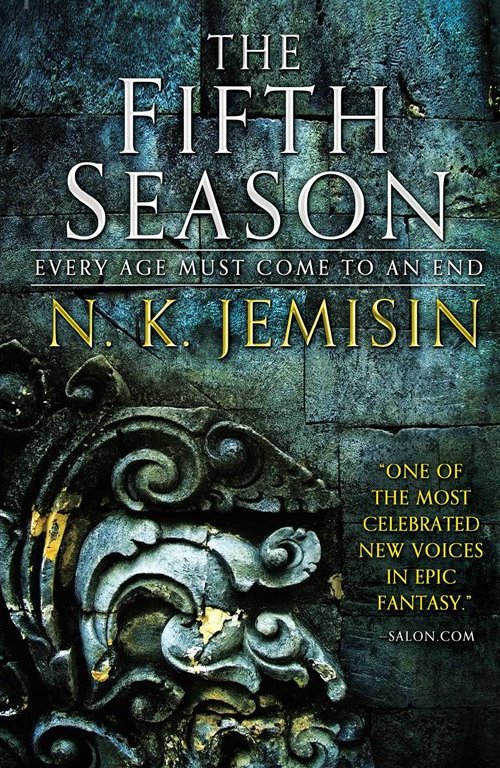
The Fifth Season (2015) – The Obelisk Gate (2016) – The Stone Sky (2017)
by N.K. Jemisin
I mean, these books only won the Hugo Award back-to-back-to-back, a feat never before accomplished, so it’s safe to say they’re pretty good. The Fifth Season is flat out brilliant, a structural bit of leger de main that completely reconceptualizes all that came before when you reach the end. The other two can’t quite reach that height, but that’s no slight. The world building is amazing. Jemisin has an amazing knack for brilliant scenes, the basic building blocks of writing. They’re not light reads, but well worth the emotional toil they’ll wreak upon you.
Children of Time (2015)
by Adrian Tchaikovsky
The main characters in this book are spiders. That is not a joke. They’re jumped up, hyper-evolved spiders, benefiting from a fuck up in human settlement on another planet. Science fiction has the ability to put readers in the head of truly alien creatures and Tchaikovsky did that here. But there’s also a second story line, of another ship full of humans (some on ice) where things are going to shit. They cross paths, of course. The next book in the trilogy, Children of Ruin, is just about as good. The only think keeping me from putting the whole trilogy on here is that it isn’t finished yet!
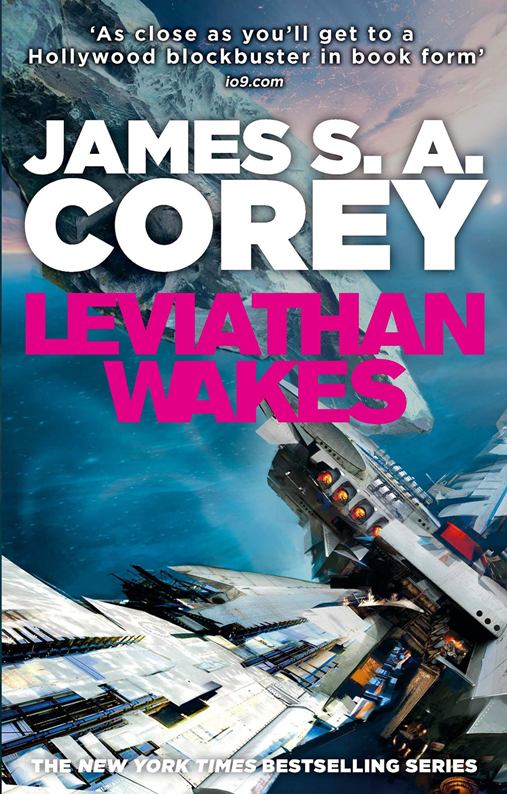
I’ve sort of concluded that the trilogy is the ultimate best length for a series. It’s long enough to tell tales of grand scope, but tight enough not to get away from the author. As a result, I rarely go more than a couple of books into a lengthy series unless I completely love it. Clearly, the fact that I’ve read all nine books in the Expanse series (and consumed all of the excellent TV adaptation) means that I loved this. It’s not all brilliant (looking at you, Cibola Burn), but the world that’s built is amazingly realistic (it feels that way, at least) and it’s full of characters I came to really care about. And, I have to say, I think the writers really nailed the ending in a way that was satisfying and felt complete. If you’re looking for a near-future space opera to simply lose yourself in, this is it.
The Half-Made World (2010) – The Rise of Ransom City (2012)
by Felix Gilman
The world of The Half-Made World looks a lot like the American west during the late 19th century, with white settlers streaming into “untamed” territory and finding conflict with the natives, not to mention each other. What really distinguishes this world is an ongoing (never-ending?) conflict between The Line (the embodiment of technological process in sentient train engines) and The Gun (chaos and immorality) that plays out in a world that is literally still in the process of being made. It’s a brilliant setup and serves to bring to life one of the most interesting characters I’ve ever encountered, John Creedmore. An agent of The Gun, Creedmore is a killer and a thug, but he’s also in thrall to a demon that lives in his gun. His struggle to leave it behind is exceptionally well done. Set in the same world and sharing some characters, this is more a pair of great standalone books (with The Half-Made World getting the nod) than an ongoing serious. Unless Gilman decides to give us another glimpse.
Hogfather (1996)
by Terry Pratchett
Generally speaking, I don’t reread books. It happens every now and then, but for the most part I’d rather move on to newer things, given the increasingly absurd size of my to-be-read pile. That is to say, Hogfather has a special place in my heart as I read it every year during the Christmas season. It’s a story of Hogswatch, the Discworld variant of Christmas, in which someone is trying to kill the Hogfather (i.e., Santa) leaving Death to fulfill his duties and Death’s granddaughter to stop all of existence from coming undone. It’s funny, sweetly nostalgic without overlooking how narrow nostalgia can be, and just all over brilliant. It warms my holiday cockles in a way that nothing else much does.
Say Nothing: A True Story of Murder and Memory in Northern Ireland (2018)
by Patrick Radden Keefe
Speaking of rereading books. I just went through a jag reading about Irish history, finishing up with a history of the (provisional) IRA, so I decided to dive back into Say Nothing, which covers The Troubles but on a more personal and street-level way. It also deals with questions of memory and how we talk about, and study, the past. It’s simply brilliant on every level. I can’t recommend it enough.
Sex Criminals (2014-2020)
by Matt Fraction & Chip Zdarsky
When I saw a story somewhere about a comic called Sex Criminals I thought it might be about the kind of people I represent in my day job as a defense attorney. How surprised I was that it was about people who had sex and then committed crimes! That’s because time literally stops when the two main characters (and several others, as things go on) have an orgasm, allowing them to get up to all kinds of nonsense (one of them takes the time to drop a shit in a plant in his boss’ office). If that was the entire joke the series couldn’t have run for more than thirty issues, but the series builds into a deeper exploration of relationships, depression, and other things. It wrapped up in 2020 in pretty satisfying fashion.
That’s it! The end of lists! Regular programming returns next week (probably).
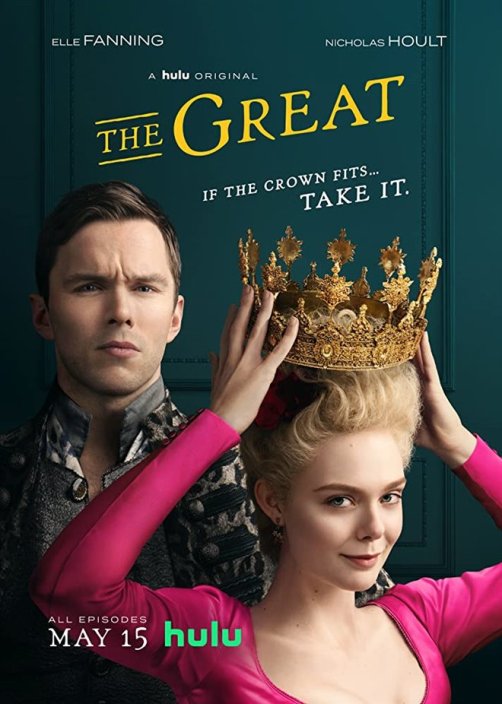
Over the winter my wife and I discovered The Great*, the Hulu series about (very loosely) the early reign of Russian empress Catherine the Great.
While I’m not certain the series quite lives up to the title, it is very entertaining and, in spots, riotously funny. What it definitely lives up to is the little asterisk the end of the title (as displayed in the opening credits, at least), which notes it is either “An Occasionally True Story” (season one) or “An Almost Entirely Untrue Story” (season two).
This post is very much not going to take the show’s creators to task for playing fast and loose with history, particularly since they admit it up front. Truth is, literature and theater and film/TV is full of examples of historical persons or events remolded for dramatic purposes. I know Salieri didn’t really work Mozart to death (they were pretty good buds!), but I still love Amadeus. Dollars to donvts Julius Caesar did not turn to Brutus and “et tu, Brute?” him in real life, but Shakespeare makes it work.
But as a writer, I wonder about the choices other writers made when playing with history. History is full of lots of interesting story fuel, after all. I’ve used some of it myself. I’ve said before that the idea for the basic arc of The Water Road trilogy came from seeing an “on this day” thing on Wikipedia about the anniversary of Napoleon’s return from exile to start the Hundred Days. I thought that sounded like something out of a fantasy series – a vanquished foe returning to the world to wreak further havoc – and wheels started turning in my head.
What never occurred to me was the make the story about Napoleon. I didn’t want to tell his story, but another one that might have echoes of his. Being a fantasy writer that’s not an issue, but with more traditional fiction things can get complicated. After all, a made up character doing made up things is the grist of fiction – sometimes everything even happens in made up places. But a made up town or neighborhood is one thing, what about a made up country?
I got to thinking about this again due to this piece in the New York Times about the recent glut of true-crime limited series that are all over streaming services. Things like Netflix’s Inventing Anna and Hulu’s The Dropout (both pretty good, though I’d go with the latter) are telling true-crime stories of recent vintage that, in most cases, have been thoroughly aired in other settings (Inventing Anna came out of a long-form magazine piece, The Dropout from a podcast of the same name). I don’t agree that just because these stories have been told in other mediums means the fictionalized TV versions are superfluous (not everybody consumes podcasts), but the author makes an interesting point:
Now, it is absolutely true that real life does not always give you neat “Rosebud” explanations; real people are often simply jumbles of unresolved contradictions. But that’s one reason we have drama: to make emotional, if not literal, sense of this kind of figure. (Hence Orson Welles reimagined William Randolph Hearst as Charles Foster Kane.)
Indeed, it seems much easier if you want to tell a story about a particular kind of person to do it with a fictional character rather than a real-life one. Legal issues aside, it allows you to mold and shape the story as dramatic (or comedic!) stakes dictate, without worrying about people complaining that you’re not “getting it right.” After all, fantasy only has to be compelling, not accurate.
So why not, if you want to tell a story that pretty much set in a fantastic version of a historical place, why not make it fantasy? What’s the pull of using a historical figure whose actual history you’re going to discard anyway? I suppose it’s easier to market a series about Catherine the Great (who’s not that well know in the US, anyway) with an ahistorical twist than it is to sell a bloody, bawdy, fantasy series nobody’s heard of before.
As I said, it’s silly to get bent out of shape about The Great’s lack of rigorous historicity. They’re doing something much more fun and not even hiding the fact. Nonetheless, it does make you think.
Come, join us in our fantasy worlds. The water’s fine – unless that’s not what you want! Huzzah!
If you’re reading this, you probably know that as an author I primarily write fantasy stories. As I’ve said before, I love that fantasy basically has no rules and, so long as the world you build makes sense on the page, you can do anything you want. Given that, I figure it’s time that I came clean about my deep, dark secret as a fantasy writer:
I have never read a word by J.R.R. Tolkein.
It’s not that I have anything personal against ol’ JRR. I’ve seen all the movies! Not the super-extended versions that take entire years to watch, but all the ones as released in theaters. I enjoyed them, too (well, the actual Lord of the Rings ones). But if I’m honest, the Tolkien link that has the most meaning to me is the fact that Marillion was originally called Silmarillion, before changing their name early on to avoid any legal problems.
Nor was this a case of conscious avoidance of Tolkien’s work as a reader. I just never really was that interested in diving into it. When I was young and first encountered traditional fantasy books it was the first couple of Narnia books and, particularly, Lloyd Alexander’s The Chronicles of Prydain, which I really enjoyed. But once I finished those my tastes turned more towards science fiction.
I wasn’t until I was in my thirties that I really dug back into reading fantasy, thanks mostly to my wife, who introduced me to Neil Gaiman and George R.R. Martin. While both of them would, assuredly, note the influence of Tolkien on their work, their stuff (or at least the stuff that appealed to me) isn’t very Tolkienesque. Gaiman’s work like American Gods and the Sandman series showed me that “fantasy” was a much broader thing than stories about wizards and goblins and the like. A Song of Ice and Fire draws deep on Tolkien-style world building, but does so in the service of a story that’s more about political maneuvers and human failings than it is about grand quests.
That part of the fantasy world hasn’t appealed to me that much lately. I’ve got nothing against a good quest – I’ve got a quest story percolating I hope to write one day – but I was more drawn to weird worlds and things that didn’t require the explanation/technobabble of science fiction. That’s where I found my inspiration to tell stories in worlds that aren’t our own, but aren’t necessarily filled with magic.
Am I missing out on something? Possibly. Am I going to try and rectify that situation? Not necessarily. I read for pleasure and so I’m not likely to decide to read something as homework just because most others might. Hell, I write for pleasure, too (that others enjoy the end product is a bonus), so I can’t see taking the time to force feed any particular author’s work.
The bottom line is I know enough about Tolkien to understand the memes and spot the references in progressive rock songs. Right now, that’s all I need. Plus I got to play the first movement of this in high school:













 JD Byrne