Water Road Wednesday: Life In the Guilds

As I mentioned last week, Strefer Quants is from the United Guilds of Altreria, what’s commonly referred to as the Guildlands. The Guilders (as they’re known in The Water Road universe) live in a society that’s arranged completely differently from everywhere else in their world, even the Neldathi. Where family and kin create bonds in most places, Guild society is organized around the Guilds to which people belong. There are no families, as we traditionally think about it.

Here’s Strefer explaining to Rurek, her companion through The Water Road, a little bit of how that works:

“You talk about your mother and father, your siblings? We don’t really have concepts like that in the Guildlands. Sure, some woman gave birth to me and some man did his part so that I was conceived, but neither one of them raised me.”

Rurek shook his head. “You don’t even know who your parents are?”

“I told you, the concept of ‘parents’ really doesn’t exist where I come from. But to answer your question, yes, I do know who the two people who produced me were. I’ve met who you would call my mother once or twice. She is in the Guild of Musicians. I met her after seeing her sing at a concert once. She has a beautiful voice. Shame I didn’t inherit it,” Strefer said with a laugh. “The one you would call my father was from the Guild of Soldiers. He was killed fighting the Azkiri, from what I learned, before I could meet him.”

“I’m so sorry,” Rurek said with genuine compassion.

Strefer shook her head. “You still don’t get it. I’m not talking about someone like your father, who helped raise you, taught you things, protected you. To me he was never more than a name, and may have always been that way. I’m just answering your question about whether I knew who my biological ancestors were.”

“All right, then. No more sympathy from me,” Rurek said jokingly.

“I’ll take sympathy, thank you, but at the appropriate time and place.”

“Duly noted,” he said. “So, with that bridge crossed, who did raise you, then?”

“Not surprisingly,” Strefer said, starting on the final side of the pocket in which the pages had been hidden, “there’s a Guild for that. It’s called the Guild of Midwives, but it really includes a lot more people than that. Men and women, both, you know. Midwives, wet nurses, caregivers, you name it. They’re the ones that do the hard work of actually raising children.”

“But there’s more to it than that, surely,” Rurek said. “Parenting is more than just making sure your daughter gets fed and has a roof over her head at night.”

“It does in Kerkondala, because your society is structured around individual family units. Families just don’t exist like that in the Guildlands. Have you ever wondered about my last name?” she asked.

“Not really,” he said. “I know it sounds a lot like the city where you’re from, but that’s not uncommon in the Arbor or Telebria.”

“Except that, in the Arbor or Telebria, a similarity between a name and place is probably due to that person’s ancestors naming the town. Quants isn’t a family name, Rurek. It’s a short way of telling people I was born in Quantstown. My actual full, official name, as it appears on the rolls now, is Strefer of Quantstown of the Guild of Writers. Quite a mouthful, huh?”

He nodded. “I guess it is.”

“That Alban who got his head bashed in? His last name was Ventris, because that’s where he was from. Nothing more. My point is there is nothing about me that reaches back to some long line of ancestors, like you have.”

“Who named you, then?” Rurek asked.

Strefer stopped sewing for a moment, looked out over the water, and said, “You know, I’m not sure. Never occurred to me to ask. From as young as I can remember, I was Strefer. I could change it if I wanted to, but it works just as well as any other name, doesn’t it?”

“No argument here,” he said. “Rurek is an old family name, goes back generations. I hate it.”

“Why don’t you change it, then?” Strefer asked, returning to her task.

“Because,” Rurek said, stopping for a second to think about it, “it’s just not done where I come from. Like it or not, I do have some connection to my distant ancestors to worry about. Besides, we were talking about you and your childhood. So the Guild of Midwives did the care and feeding part, right? Then who taught you to read and write and how the world works and all that?”

“The Guild of Teachers,” she said. “I don’t know about Arborians, but I’ve heard Telebrians talk about the limited role teachers play in the education of their children. Makes no sense to me. The Guild of Teachers is where the experts are, in everything from how to cook a meal to how to mend your clothes to how to read and write.”

“So you went to school, then?”

“Of course,” she said. “But that’s not the only place you learn things. You know that. The members of the Guild of Teachers work in schools, but also in the dormitories where children live and all over. They teach adults, too, if they want or need to learn about something new.”

Rurek did not ask any more questions and they sat in silence for a few minutes. Finally, he said, “It just all seems so strange.”

“That’s because it’s not what you grew up with,” Strefer said, finishing her sewing and handing the coat back to Rurek. “We are most comfortable with what we know. That’s doubly true when you talk about things like how we grew up. To me, it sounds strange to hear people talking about their families and how much they despise a brother or cousin or whatnot, but will then turn around and defend them from attack by outsiders. It makes no sense to me.” She stood up and slung her satchel over her shoulder.

Guilders form bonds, but on their own terms and for their own reasons, rather than out of a sense of societal inertia. It’s a good example of how they interact with the world – rationally and practically, without an overlay of tradition or concerns about doing things differently. It’s a world view that others in the universe of The Water Road have a hard time grasping.
Water Road Wednesday: Strefer Quants

If Antrey Ranbren is the most important person in The Water Road trilogy, Strefer Quants is right behind her and, in truth, might have a case for knocking Antrey off the top. The Water Road itself is largely their two stories, splitting off from each making the same world shattering discovery.

Unlike Antrey, who’s a woman without a country, Strefer comes from the United Guilds of Altreria. As a Guilder, Strefer was raised without a traditional family, including a mother or father. This is reflected in her full name – Strefer Quants of the Guild of Writers. Quants is derived from Quantstown, where she was born. Her Guild affiliation is, just that – it shows to which Guild she owes loyalty.

Although Strefer is a Guilder, she works for a Telebrian in Tolenor. She’s the lesser of two reporters stations in the city for the (Sermont) Daily Register, the newspaper of record for the Telebrian capital. Strefer’s boss, Tevis, gets the plum assignments like covering the sessions of the Grand Council of the Triumvirate and writing about matters of state. Strefer, on the other hand, has a much rougher beat to cover.

Her attitude towards her job is summed up in this blurb from last week’s One Line Wednesday session on Twitter:


But it’s a job at which she’s very good, particularly when it comes to getting people to open up to her and talking her way into places where she probably shouldn’t be. She has the typical Guilder worldview that prioritizes doing what works and confronting reality head on, rather than adherence to high ideals of an earlier age.

When The Water Road begins, Strefer is in need of a good story (hence the blurb above). She’s about to find it.

Technical Brilliance Only Goes So Far

A few weeks ago my wife and I finally saw Mad Max: Fury Road, the movie that’s risen to the rarified air of awards talk genre pictures seldom see. It’s got an Oscar nod for Best Picture, after all. Although I’m not a huge fan of the old Mad Max flicks, I’m a sci-fi fan, fond of dystopia. My wife’s a big action movie fan. So we’re definitely in what might be the target audience for something like this. Nonetheless, when it was done, we turned to each other and asked:

“Is that it?”

Not that it wasn’t cool. The movie looks gorgeous and George Miller deserves a lot of credit for doing some really insane stunt work using real vehicles and people instead of wallowing in CGI overload. Who wouldn’t want a flamethrower guitar? Or keytar, maybe? I’m a keyboard player, after all. And, yes, it was cool to see such overt feminist overtones in a movie that comes out of a very masculine tradition.

But is that enough?

The best explanation I’ve read as to why Fury Road deserves consideration as one of the best movies of 2015 is from this article by Amanda Marcotte over at Salon. Her argument seems to boil down to it being a great technical achievement:

“Mad Max” is more than just a really good movie. It’s also a wildly innovative movie, one that plays with the very idea of filmmaking itself. The director, George Miller, tore up the book on how to make a movie, taking huge risks in doing so, and ended up making the movie that people could not stop talking about this year.


“Mad Max” barely has a script. There was heavy storyboarding, but in terms of a traditional script for actors to work from, nope. Instead, they filmed for months in the desert, collecting 480 hours of footage (which is three weeks, if you watch non-stop), which was pounded and then refined into a coherent story in the editing bay, with Margaret Sixel, Miller’s wife, at the helm.

As a result, she argues, it’s an

artistic experiment toying with how to use the tools of film-making to tell a story in an entirely different way than we’re used to

that happens to be “fun” and “moving.”

Therein, I guess, lies the rub. I’ll give Fury Road the “fun” label – it certainly wasn’t an experience I wish I hadn’t had when it was over. But I don’t get “moving” from it and, in retrospect, can see where the fact that it “barely has a script” is perhaps a main reason why. It’s not the film is incoherent (which is a credit to the editing work), it just doesn’t make much sense.

The talk about Fury Road reminds me a little of the buzz last year around Boyhood. It, too, was a great movie making experiment, filmed over years in order to capture the main character aging into adulthood. However, I remember, amidst the plaudits, that some critics dared to suggest that, at the end of the day, the finished product wasn’t all that captivating. Still, the audacity of its making carried it a long way.

Technical achievement is worth celebrating, but it’s not the be all and end all of art. Progressive rock, more than most subgenres of popular music, values instrumental mastery – it lionizes people who can play. That being said, there’s still something to be said for avoiding the “too many notes” trap). A flurry of sound might be impressive, but is it interesting or moving? Not necessarily.

So it goes with literature. Clever wordplay and narrative structure that defies common sense can be daring experiments and produce new ways of telling stories. But at the end of the day, if the story itself doesn’t connect with readers, it’s a lot of flash that, in the end, doesn’t produce much heat.

Same thing with movies. Fury Road is, without a doubt, technically impressive. I just didn’t get a lot out of it beyond that. To be truly great, as so many think Fury Road is, demands more.

Water Road Wednesdays: Sentinels and Mind Walkers

The Triumvirate is more than just a defensive alliance. By the time The Water Road begins, it’s almost like a nation unto itself. It has its own capital, the island city of Tolenor. It also has something like a military or intelligence wing, a group of highly trained men and women who answer only to the Grand Council of the Triumvirate, not their home nations. They’re called Sentinels.

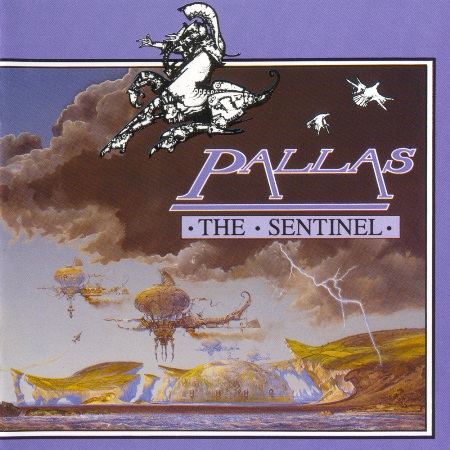
I think “sentinel” is a term that’s been used in sci-fi and fantasy for years, but it seemed to fit here. In all honesty, it was front of mind when I started writing it because I had just discovered the album of the same name by Scottish proggers Pallas:

the-sentinel-529a826f48b85

How can you look at that and not be inspired?

The main role of the Sentinels is to be gatherers of intelligence. A few of them are stationed in each of the numerous forts the Triumvirate erected on the southern bank of the Water Road following the first Neldathi uprising. There they collect information about the Neldathi and ensure the progress of the Triumvirate’s plan to keep the Neldathi from uniting again and threatening to come north.

Of those Sentinels, there is a small subgroup that provide an invaluable services. In the universe of The Water Road they’re called mind walkers, but you could also call them telepaths. Mind walkers can communicate with each other of long distances, allowing Sentinel agents deep in Neldathi territory to report back to the Sentinels in the forts. Mind walkers also serve as a means of long-distance communication for the military. Only a very small percentage of the Altrerian population has this talent and anyone who manifests it becomes a Sentinel. There are no Neldathi mind walkers.

Beyond the mind walkers and the Sentinels stationed at the forts along the Water Road, another group of Sentinels are stationed in Tolenor. Some serve as trainers and administrators at the Sentinel academy that’s in the Triumvirate complex at the city’s center. Others have a much less glamorous job – law enforcement. Since Tolenor is a city that doesn’t belong to any of the three Triumvirate members, the alliance itself is responsible for keeping the peace.

Sentinels carry a distinctive weapon, a pikti. A pikti is a fighting pike, slightly taller than the average Altrerian, made out of the wood of a particular plant that grows only in one location in Telebria. Through a secret process, the wood becomes hard as steel but much lighter, resulting in a staff that is glimmering black. Due to their rarity and difficulty of use (pikti training is a key aspect of a Sentinel’s time at the academy) it is unheard of to see someone carry a pikti who is not, or was not at some earlier time, a Sentinel.

Water Road Wednesday: Antrey Ranbren

Now that we’ve talked about where The Water Road trilogy takes place, it’s time to shift the focus to the people involved in the story. As you know from earlier WWW entries, nobody in The Water Road trilogy is a “person” in the sense that they’re human beings, but that doesn’t stop me from referring to them as “people” or “persons.”

The most important person in The Water Road trilogy is, without a doubt, Antrey Ranbren. The trilogy’s overall arc is her story, although it folds in a lot of other important characters along the way. Remember the post about how Napoleon’s exile and return sparked the idea that became The Water Road? Well, Antrey is Napoleon (after a fashion).

Antrey is a woman between worlds. In a world divided by species, by nation, and by clan, she has none of them. Antrey is of “mixed heritage” (as they say in more polite circles), product of an Altrerian father and Neldathi mother. Her surname, Ranbren, is a generic one for such offspring. They are generally shunned by both Altrerian and Neldathi societies, often left to fend for themselves in Altrerian brothels (children of mixed heritage cannot have offspring of their own, conveniently enough).

As a result of her parentage, Antrey was exiled from Clan Dost as a youth and made her way to Tolenor, the home of the Triumvirate. There she caught the attention of Alban Ventris, Clerk to the Grand Council of the Triumvirate. Alban took her into his home, taught her to read and write, and made her his assistant. It’s a good life, better than she ever expected, but it doesn’t make her any more a part of regular society:

It wasn’t as if she could blend in with the crowds. The city was jammed full of Altrerians of every shade of green, from the pale northern Telebrians to the dark hued Arborians. With her pale turquoise skin, Antrey was distinctive, a small patch of clear sky on an overcast day. At least she inherited her father’s slight Altrerian frame. It was difficult enough looking different. Having to poke out above the heads of everyone else by a foot or more would have been unbearable. She did her best to try and conceal her otherness. She kept her black hair, from her mother’s side, closely cropped so as to be almost unnoticeable. She did her best to ensure that as little skin was visible to the public as possible. Despite her best efforts, she stood out.

Most importantly, it’s a life that’s put her in a place to learn a secret that will change the whole world, not just hers, forever.

Water Road: Wednesday: The Triumvirate

As I mentioned a few weeks ago, there are a pair of nation-states north of the Water Road, along with a coalition of city states. When The Water Road begins, they’re all joined in an alliance called the Triumvirate. And I don’t mean these guys:

triumvirate

The where and why of the Triumvirate says a lot of what happens all during The Water Road trilogy.

More than a century before The Water Road begins the lay of the Altrerian political landscape is this:

On the west coast was the United Guilds of Altreria, a society organized around trades and vocations. Guilders don’t have families and tend to be very practical and open to new ideas. They were the first to jump on the Great Awakening, a movement during which most people lost belief in the gods.

On the east coast was the Bonded Realms of Greater & Lesser Telebria. As it suggests, the kingdom is a union of two smaller kingdoms, one each north and south of the River Teleb. It has a king (naturally), Ibel IV, but his power has largely been sapped away by parliament. Still, he’s a powerful figurehead and can definitely throw his weight around every now and then. Telebrians tend to be very traditional and stuck in old ways of doing things.

In between was the Arbor, a thickly forested portion of land consisting of lots of disparate cities and villages. Of those, seven are ancient walled cities of the most importance: Tomondala, Kerkondala, Vertidala, Maladondala, Felandala, Nevskondala, Durlandala (“dala” means “great walled city” in the ancient Altrerian tongue). They tend to be fiercely independent and suspicious of outsiders.

Around this time, a Neldathi leader named Sirilo united some of the clans and launched an invasion of Altreria. This was the First Great Neldathi Uprising. The Neldathi army rampaged across the Guildlands and threatened the rest of the continent. The Guilders and the Telebrians got together to form a defense alliance. However, they realized that without the Arbor involved that could provide Sirilo’s army a place to hide out, lick their wounds, and regroup. They went to the seven cities in the Arbor and convinced them to form a loose confederation, which became the Confederated States of the Arbor.

Thus, the Triumvirate was born, an alliance consisting of three equal partners – the Guilds, the Telebrians, and the Confederation. It established a city, Tolenor, on an island in the Bay of Sins on what was, essentially, neutral territory. It also served its purpose – a Triumvirate army chased Sirilo and the Neldathi back south of the Water Road, crushing the Rising at the Battle of the Hogarth Pass.

With the Rising crushed, the Triumvirate carried on, dedicated to keeping the Neldathi from unifying again and threatening the land north of the Water Road. Among other things, it established a string of forts along the southern bank of the river, in Neldathi territory. At the time The Water Road begins it’s been successful. But that’s all about to change.

Water Road: Wednesday: The Neldathi Clans

As I mentioned last week, the Neldathi, who live south of the Water Road in the universe of The Water Road, are physically quite distinct from the Altrerians who live to the north. They’re different species, in fact, although they can produce infertile offspring. When it comes to how their societies work, the differences are even more pronounced.

While the Altrerians are organized into what we might call nation states (or city states, at least in the case of the Arbor), the Neldathi are organized into clans. Each clan is ruled by a thek (or chief), selected in various ways, from based on heredity to something more like democracy (without the coin flips). Some clans are patriarchal, some matriarchal, others more egalitarian. In other words, there’s a good deal of variety to how each clan is set up.

There are several other positions of authority in Neldathi clans aside from theks. Two of the most important are War Leader (which is just what it sounds like) and Master of the Hunt, each of which is responsible for ensuring the clan’s survival. Speakers of Time are individuals who become walking storehouses of knowledge – libraries with legs, essentially – and pass on the clan’s history, traditions, and laws. Finally, kels act as judges, settling disputes between clan members.

The Neldathi are nomads, which is why they don’t have “states” as we (or the Altrerians) think of them. That doesn’t mean they aren’t territorial. Each clan has a Great Circuit, a route along which they regularly move through the year. Each guards its circuit jealously. Three clans have circuits that cover the northernmost ground, near the Water Road itself – the Dost, Kohar, and Haglein. Three more stick toward the southern coast and the Islander cities – the Mughein, Elein, and Sheylan. That leaves five others – the Chellein, Akan, Volakeyn, Uzkaleyn, and Paleyn – who roam the most mountainous ground in the middle.

The Great Circuit’s aren’t defined with great particularity and clans don’t necessarily travel them in regular cycles. As a result, it’s not uncommon for neighboring clans to run into one another, which leads to violence. For example, the Volakeyn and the Akan have circuits that border one another. If they happen to wind up in the same space at the same time, they’ll fight over resources, same as anybody else. Neldathi don’t fight wars of conquest – they’d have no means of securing territory – but they do fight.

In fact, the Neldathi have a history of long-simmering feuds between clans, for several reasons. One is that if clans meet when circuits overlap, that frequently means resources are limited in that area and one side is bound to lash out. Another is that the same clans routinely interact with each other, breeding bad blood. Finally, the Speakers of Time tell stories of glory won in battle and of the evil done to their clans by their enemies. That allows feuds to grow and fester between certain clans.

That last feature, in particular, provides an opening that might be exploited by outsiders.

When Magic Isn’t

I recently got around to reading the first of Brandon Sanderson’s Mistborn series, The Final Empire. It’s pretty good (full Weekly Read coming up later? Perhaps!). One of the distinguishing features of the series is the system of “magic” that it uses. The use of quotes is intentional, because about two-thirds of the way through the book I started to wonder if Sanderson was really dealing in magic at all.

The magic in Mistborn revolves around metals and what people can do with them. Allomancers can ingest small portions of certain metals, “burn” them, and thereby enhance their physical and mental powers. “Mistings” can burn only one particular metal, while “Mistborn” can burn all of them. Mistings are useful. My particular favorites were the “soothers,” who are able to calm or inflame another’s emotions to make them more cooperative. Mistborn, on the other hand, and basically superheroes, able to leap tall keeps in single bounds, possess extraordinary strength, and heal wounds more quickly.

Actually, the better analogy would be to characters in a video game. Indeed, one reviewer knocked Sanderson’s system for “sometimes feel[ing] a little like a video game trick (press X-Y-X-X to burn steel!). And, honestly, once you get past the “this is what this metal does” exposition, the constant references to characters burning this and pulling on that get old. It’s work-a-day, it’s formulaic it’s . . .

Not all that magical.

Which isn’t, inherently, a bad thing. I really like Allomancy (and the related Feruchemy that plays a role, too) – it’s certainly different than casting spells, waving around wands and such. But it does call for different characters wielding it. “Working magic” is my mind conjures someone like the wrinkled, slow, puppet-based Yoda of the first Star Wars trilogy, rather than the CGI-spawned ass kicker of the prequels. It takes some getting used to.

And it can seem kind of out of place for what is, after all, supposed to be fantasy. I’m not one to suggest fantasy has to have magic – far from it! The Water Road trilogy has not a whit of magic in it. But if you are going to build a world with magic, shouldn’t be a bit more magical and mysterious? Indeed, as one commenter put it elsewhere:

I’m inclined to label Sanderson’s Mistborn as hard sci-fi, because of the way he fleshes out the abilities of allomancers. This might seem odd, because the author really makes it look like magic. But the way they invoke their power, the limitations on its usage and strict adherence to the framework of physical laws that we the readers are already familiar with, strike me as less magical, and more of an empirically-discovered science, and thus some form of sci-fi rather than fantasy.

Putting to one side the hard/soft discussion, that sounds about right. Part of what makes magic special is that it’s inherently vague, squishy, and unpredictable. It shouldn’t work all the time, just because you know how to work with the constituent parts. It’s about corralling the elements and playing with the very stuff of existence, after all, not just figuring out how to use the natural world to do things better.

Or not. One of the great things about fantasy is that it’s only bounded by your imagination. I don’t think I’d come up with a system like Sanderson’s, but his works for his world and it’s consistent. It’s hard to ask more than that, even if, maybe, I do.

SpongebobMagic

Water Road: Wednesday: The Neldathi & Their Lands

Although the Altrerians lend their name to the land in which The Water Road takes place, it’s not theirs alone. The land to the south of the Water Road is quite different from that to the north and includes a very different species of inhabitants.

For starters, the Neldathi don’t have green skin, but blue, although some have complexions that near completely white. They’re still humanoid, but where the Altrerians are smaller than your average human, the Neldathi are bigger. For a sense of scale, Rob Gronkowski would on the small side of average for a Neldathi. Thus they’re strong, but also slower of foot and, to the Altrerians, slower of thought, as well. More on them as a people next week.

The lands south of the Water Road are defined by a series of rugged mountain ranges, all named by and after Altrerians, although very few of them live there. The mountains begin to rise just south of the river, becoming fearsome snow-capped peaks in short order. The ranges often run up against one another, sometimes parallel to each other. Some of the mountains are covered with great stands of timber. It’s forbidding territory, a place that’s referred to in curses and hushed tones by Altrerians.

Because the continent of Altreria is in the southern hemisphere, the further south one goes the colder it gets. The lands south of the Water Road, therefore, are frequently blanketed in snow, making existence there difficult. Neither the climate nor terrain lends itself to the kind of settlements that developed to the north. Unlike the north, there are no great cities in the south.

Which is not to say there are no cities at all. When the land nears the coast, warm currents provide a more hospitable climate. In four locations along the southern coast, the Slaisal Islanders have built cities, way stations for use during their trade with the Neldathi. The Islander cities are the one place where the Neldathi clans share space, along with a small population of Islander sailors and the occasional Altrerian, mostly traders and the like – or at least they appear to be.

Water Road Wednesday: Altreria & Altrerians

In the universe of The Water Road the name “Altreria” carries several responsibilities.

For one thing, Altreria is the name of the land in which the story takes place, by which I mean all of it. It is that world’s equivalent to “Earth,” for lack of a better comparison.

Altreria also refers to the world’s only major landmass. It’s a continent that runs roughly north to south (think of Australia turned on its side and twisted a bit) and sits in the southern hemisphere, so traditional American/European directional notions (north is cold, south is warm) are reversed. There’s also a chain of islands, the Slaisal Islands, off the northeast coast. The Water Road itself runs from west to east – from Great Basin Lake to the Bay of Sins – across its width about two-third’s of the way down the continent. To the north live Altrerians, with Neldathis to the south. More of them later, of course.

Altreria also refers to the land north of the Water Road – hence the reason those who live there are called Altrerians (if you’re noticing that they seem to control the vocabulary of geography in this world, you’re right). That land’s most obvious distinguishing features are two other rivers, the River Innis and the River Adon, that run north to south through the middle third of the continent. North of the source of those rivers are the Badlands – a dry, dusty, and hot region with very little in it.

Those rivers also help define the political landscape of Altreria. To the east, between the River Adon and the coast, is the Kingdom of Telebria (fully the “Bonded Realms of Greater & Lesser Telebria” – they’re a bit picky about it). Southern Telebria is home to the Endless Hills, which lend their name to the second book of the trilogy. To the west, between the River Innis and the coast, are the United Guilds of Altreria. In between is a dense forest known as the Arbor, which consists of numerous city states gathered together in a confederation. Again, more of those later.

Altreria has several major cities of note. In Telebria, on the east coast is Sermont on the Sea, the kingdom’s capital. In the west, Innisport, the largest of the Guilder cities, lays at the confluence of the River Innis and the Water Road. Finally, there’s Tolenor, a fairly recent settlement, a planned city built on an island in the Bay of Sins. It’s home to the Triumvirate, of which – yet again – more later!

As for the inhabitants of Altreria, they’re not human. No one in The Water Road is. They’re bald humanoids, a bit smaller than we are with skin that’s green, of one hue or another. Generally those born deep in the Arbor have dark green skin, while those born closer to the Water Road wind up nearly white, with just hints of light green. They’re not particularly strong, but they’re quick, cunning, and good strategists.

That’s not all (obviously!), of course, but that gives you a taste of the world of The Water Road. Or at least the lay of the land, so to speak.