Cheating? Brilliant? A Little of Both

The World Cup gets underway this week. Even without the United States involved (*sniff*) I’m still looking forward to the tournament. Beyond the month-long celebration of world-class soccer, it always seems to bring some really odd stories out in the run up to the tournament. Some are amusing, some less so.

This one falls kind of in between.

Tunisia are returning to the World Cup for the first time since 2006 after topping their group in qualifying. That means playing a series of friendlies (soccer-talk for “exhibition”) in the weeks leading up to the Cup in order to prepare. That’s bad timing because the Tunisian players are Muslims and it’s currently Ramadan. That means not drinking or eating anything between sunrise and sunset for a month. This year, that month is May 15 to June 14.

You can see the problem. Soccer is famously taxing when it comes to physical stamina:

So playing the same at the highest level while you can’t eat or drink would be a real pain in the ass.

Tunisian goalkeeper Mouez Hassen appears to have found a clever solution:

In friendly matches against Portugal then Turkey, goalkeeper Mouez Hassen appeared to feign injury at sundown, when the fast comes to an end.

As he lay on the pitch receiving medical treatment, his teammates rushed to the sidelines to drink water and snack on dates.

And it produced immediate results.

Down 2-1 to European champions Portugal, Tunisia rebounded six minutes after Hassen’s injury break by scoring an equalizer and ended the match 2-2.

Days later against Turkey, Hassen stopped play by lying on his back.

Again, his teammates ate dates and drank water provided to them by waiting coaching staff. That match also ended 2-2.

* * *

Pundits in Tunisia were quick to note the timing of the goalkeeper’s injuries in the second half of both matches – in the 58th and 47th minutes of play respectively.

This coincided with the time of sunset, which is when Iftar – the breaking of the fast usually with dates and water – begins for Muslims observing Ramadan.

In other words:

WhatYouDidThere

I’m torn about how to think about this.

Make no mistake, Hassen was cheating. Simulation is a violation of the rules of the game. While it usually comes up in situations where a player is trying to draw a foul or a penalty kick it applies just as much when a player feigns injury for some reason. That happens late in games when one team is trying to kill time or simply blunt the momentum of the other side when it’s seeking a game-winning or game-tying goal.

On the other hand, the benefit to his team wasn’t something completely unusual in modern soccer. If a player gets hurt – enough that the game stops for trainers to trot out on the field and tend to him – the teams routinely take a chance to get a drink. I’ve seen players slurp Gatorade-style goo from tubes on the sideline, too. Given the rigors of a soccer match, it’s not unusual for players to take any chance they can to hydrate and such.

Thus, part of me wants to chock this up to “creative gamesmanship” and give it a pass. And it happened in friendlies, anyway, so there wasn’t anything really at stake (Ramadan will be over by the time the Cup starts, so it won’t come up there). But it’s still faking an injury to gain an advantage, however slight, and that’s a chicken shit thing to do.

So, no more of this, folks. But, you know, pretty clever of you to think of it in the first place.

Another ROSFest Down, Many More to Go

This year marked the 15th anniversary of ROSFest – the annual Rites of Spring Festival of progressive rock. Born near Philadelphia, it’s called the Majestic Theater in Gettysburg home since I’ve been going in 2011. The fest this year was as smoothly run as ever, with a lineup that wound up being one of the best I’ve seen. So what about those bands?

First up on Friday night was District 97, a band from Chicago who, it happens, were also at ROSFest for the first time in 2011. They went over really well, but their brand of heavy modern prog didn’t connect with me very much. So my expectations for this set was low, but I was pleasantly surprised. I liked the new material (from a forthcoming album they’re currently crowd funding) better than the old, so I’ll keep an ear on them going forward.

Headlining Friday was legendary fusion band Brand X, complete with original members Percy Jones (bass) and John Goodsall (guitar), who were joined by a drummer, keyboard player, and percussionist. They were, to be blunt, blazing. Any thought that a band that’s been around since the mid 1970s might be mellowing in their old age was put to bed early. All their stuff started to sound a bit samey after two hours, but it was an impressive kind of consistency.

Saturday began with a semi-local band, Cell 15, which at least has the most interesting origin story for ROSFest this year. The lead guy/drummer/keyboard player explained that he got out of prison in 1992 and that the first Cell 15 album was largely written while he was incarcerated. Good on him for getting out and turning his life around (from someone who sees people try, and fail, to do the same thing every day). The music itself was fairly standard Americanized symphonic prog (think Kansas and Spock’s Beard), which I enjoyed. However, the band relied way too heavily on canned music, particularly for very important and obvious synth leads. The reliance on the canned stuff is all the weirder given that they had a second drummer join them for a few tunes and, based on their new CD that I got, the main guy isn’t even the drummer on the album! Frustrating.

Up next was another American band, LA’s Perfect Beings. They were invited to ROSFest a couple of years ago, but two band members leaving put the kibosh on that. However, in prepping for that year’s fest I got their second album, which was pretty good, but nothing special. Their set this year focused on their new album, Vier, and was exceptional. In a weekend that sometimes tends to the showy and ostentatious, they made great use of quiet passages and empty space (somewhat like Marillion does, although they don’t sound a thing like them). My favorite surprise set of the weekend.

Italy’s Barock Project was the first band announced for this year’s festival, to a lot of enthusiasm. It’s easy to see why. This group of young guys (after one particular catchy tune the band leader declared “sometimes we’re a boy band!”) belts out a brand of what I’m going to start calling “up tempo party prog.” It’s kind of the same vibe as Moon Safari, although the two bands sound nothing alike. The result was a fun show, with lots of energy, but the music didn’t really stick with me. The highlight was a brief instrumental workout where the keyboard player channeled the spirit of Keith Emerson. They, too, appeared to have some canned stuff, but at least it was mostly in the background.

Years ago I was pawing through CDs in my local borders and came across an album from a band called Threshold. Somewhere in my mind I associated he name with a Celtic-influence prog band from Ohio, so I snatched it up. It seemed like a rare find. It wasn’t until I got home that I realized Threshold was actually a British prog metal band. It was not at all what I was expecting, but I enjoyed it nonetheless. When they were announced as the Saturday headliner I was interested to see if that album (Critical Mass, if you’re scoring at home) was representative of their stuff. Turns out it was, although they didn’t play anything from that album at ROSFest. They play melody proggy metal that doesn’t dip into the “balls ‘n’ chunk” aspects of metal too much. I enjoyed it. Tip to the lead singer though – don’t demand the audience sing along unless you’re sure they know the words!

Sunday morning, the “Church of Prog” slot, brought not one but two bands, playing short sets with a quick turnover. First up was Valdez, the current project of British ex-pat Simon Godfrey (who was also at ROSFest 2011 with Tinyfish – maybe he came and never left?). I was pleasantly surprised to see the band also included Tom Hyatt (of echolyn fame) on bass. Being completely unfamiliar with their stuff I was pleased with the set – melodic, proggy in spots, anthemic in others. Plus, Godfrey is a great front man (when one person in the crowd responded to a song announcement, he waited just a sec, then deadpanned, “thanks, Mum”). A highlight.

The other Church of Prog band was Lines in the Sky from Tennessee. Unfortunately for them, my brain had reached music saturation at that point, and I left after a few tunes.

Have you ever heard prog from Peru? In the flesh? I have! Flor de Loto took the stage Sunday afternoon and put on another high energy set full of riffy (a little too riffy, in spots) heavy prog. The most notable aspects of their set for me were the Spanish vocals and the presence in the band of a dedicated flautist, who mostly used native Andean instruments (he was introduced both as “the last Inca” and the “Ian Anderson of the Andes”). Also, their keyboard player fired back at the guy from Barock Project with a solo that owed a serious debt to Rick Wakeman. Fun stuff.

The first note I wrote about Special Providence (from Hungary) was “holy shit that’s a lot of notes.” If jazz metal is a thing, this band is the gold standard. They played really dense, seriously complex instrumental music that got all weird with rhythms and such. Sometimes I wasn’t convinced that the band seemed to be on the same page, but it all tended to work out. I preferred the tunes that leaned more heavily on the fusion side of things than the metal. An impressive set that grew on me the further it went on (which rarely happens).

Wrapping up things this year was Premiata Forneria Marconi – PFM. If you read my post about 10 influential albums, you’ll know that PFM is an important band to me. I was stoked to see them live, even if there’s very little of the original band left. No matter. This wasn’t the same guys who did Storia di un Minuto or Per Un Amico, but they played that material with a lot of heart, soul, and magic. The newer stuff wasn’t bad, either, but it pales in comparison to the classics. To have heard them played live to their fullest extent (like Brand X, these guys aren’t slowing down) was awesome and a great way to end the weekend.

My one beef, which is really minor, involves encores. We’ve all grown used to the “obligatory” encore, where the band leaves the stage with everyone in the building knowing they’re coming back for more. It’s a dumb ritual, but at least it seems somewhat organic. For at least a couple of sets at ROSFest this year, somebody (organizer George, I think) off stage took to the mic to urge the crowd on to “bring them back” to the stage. That, to me, is a bridge too far. We’re already passed the point where the encores are really genuine; stage managing them just seems tacky.

Will that keep me from coming back in 2019, with already announced headliners Riverside? Not on your life.

rosfest2018

UPDATE: Or, it appears, probably not. Shortly after this post went live the organizer of ROSFest announced that the festival was moving to Sarasota, Florida. A pleasant drive of a few hours turned into an epic road trip, or (even worse) flying. So it looks like this was my last ROSFest, after all. Fuck.

Or, Just Be a Fan of the Game

The old saw goes that things that matter little lead to the deepest, angriest arguments. If nothing else, sports proves that over and over. Let’s be honest – unless you’re actually on a professional team or work for the organization, whether one group of super wealthy athletes beat another on the field/court/pitch/track doesn’t really change your life.

To be clear – I’m not shitting on sports in general. I’m a big sports fan, although my tastes tend to run more toward niche sports (hello soccer and non-NASCAR auto racing!) than the American big three. Does it give me a little thrill when DC United wins a game or my alma mater makes a deep run in the NCAA tournament? Of course! Does it ruin my day if they don’t? Of course not! Did I mention DC United? If their success was really tied to my mental health I’d offed myself years ago.

One of the things that most riles up sports fan – even more than the evergreen battle of artificial turf versus natural grass – is when people who haven’t “paid their dues” with a particular team jump on the bandwagon when they do well. They’re usually called “fair weather” fans, since they flee the team when they have a downturn. It’s the sports equivalent of a person with loose sexual morals – you’ll root for just about anyone, won’t you?

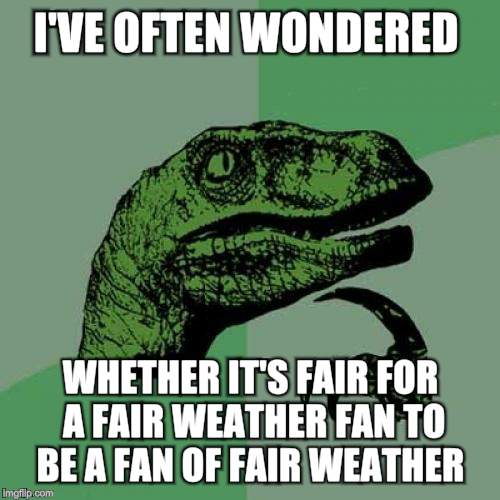
FairWeather2

Over at The Atlantic, Derek Thompson argues in favor of this kind of sports libidinous. He’s a sports slut and is proud of it:

But I’m done apologizing. In fact, I’m pretty sure that I’m right and everybody else is wrong. Rooting for winners is more than acceptable—it’s commendable. Fans shouldn’t put up with awfully managed teams for decades just because their parents liked those teams, as if sports were governed by the same rules and customs as medieval inheritance. Fans should feel free to shop for teams the way they do for any other product.

What I’m proposing here is a theory of fluid fandom that would encourage, as opposed to stigmatize, promiscuous sports allegiances. By permanently anchoring themselves to teams from their hometown or even an adopted town, sports fans consign themselves to needless misery. They also distort the marketplace by sending a signal to team owners that winning is orthogonal to fans’ long-term interests. Fluid fandom, I submit, is the emotionally, civically, and maybe even morally superior way to consume sports.

I kind of like that approach and, if done openly, I don’t think most sports fans would have a real problem with it. I think most fans have problems with bandwagon jumpers not because they’re there, but because they sometimes imply that they’re enjoying a team’s success as much as someone who’s suffered through years of defeat and disaster. Honesty can go a long way.

Along that like I’d like to lay out a third course, one that I frequently follow, particular when it comes to racing. It’s simple – be a fan of the sport, not a fan of a particular team. In other words, don’t turn yourself into a Cavs fan as a reason to watch the NBA Playoffs; watch the playoffs because you’re a fan of basketball (or the NBA’s version of it, at least) itself.

I’ve done that with racing for years. I’ve never really had a favorite driver and, beyond a nominal attachment to Ferrari in Formula 1, never really had a favorite team. I tend to root for underdogs, but that naturally changes from year to year (and even race to race). I’d like to see Haas do well, since it’s been so long since there was an American presence in F1, but my life doesn’t rise and fall on their exploits. For everything else – Indy cars, sports cars, touring cars – I just want to see good racing.

Same goes for soccer, largely. I do have favorites – DC United for the US, Leeds United for the rest of the world (like literary rights) – and, of course, I pull for the United States national teams (men’s, women’s, and youth). But that only takes in a tiny fraction of the amount of soccer out there. Truth is, I’ll watch damned near any soccer game I can find. Do I care who wins the Champions’ League semi between Roma and Liverpool? Not really, but I’m damned sure going to watch it. Same with this summer’s World Cup, since, sadly, there’s no American rooting interest. Even if not rooting for either team might make law enforcement suspicious. See, US v. Manzo-Jurado, 547 F.3d 928 (9th Cir. 2006)(among the factors cited by cops to justify stop of defendant was that he and his friend were at a high school football game but were not rooting for either team).

What I’d say to Thompson, then, is that you’re not doing anything wrong, but you could do it better. Unless you have a genuine interest in a particular team or player, just give yourself over to the pleasure of the game. It’s what you’re most interested in, anyway. And you won’t piss off those losers for whom this stuff is life and death.

Besides, it frees your mind to ponder other things:

FairWeather1

My Ten Albums

There’s been a thing going around Facebook for the past few weeks where, for ten days, people posted cover from a different album that made an impact on them and they’re still listening to. The whole point was to not explain the choices – but there’s too much blog fodder here to pass up. So here are my ten, in the order they went up – which is to say, pretty much randomly as pulled from my brain. I should point out these aren’t necessarily favorites or “best” albums by these artists, although they’re all pretty great (your mileage may vary, of course).

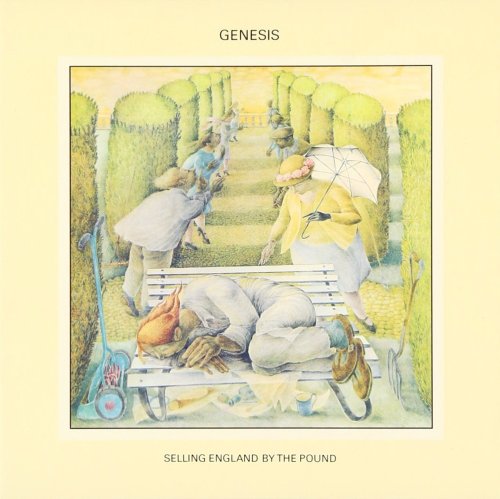
Genesis – Selling England By the Pound (1973)

 SEbtP

 I can’t say that this is the first Gabriel-era Genesis album I heard (my brother, Todd, had most, if not all, of them), but it is the one I first fell in love with. It was, to use an analogy I’ll come back to later, my gateway drug for progressive rock. Swelling mellotrons, soaring guitars, lyrics that were completely beyond comprehension to a grade schooler living in 1980s West Virginia – how could I resist?

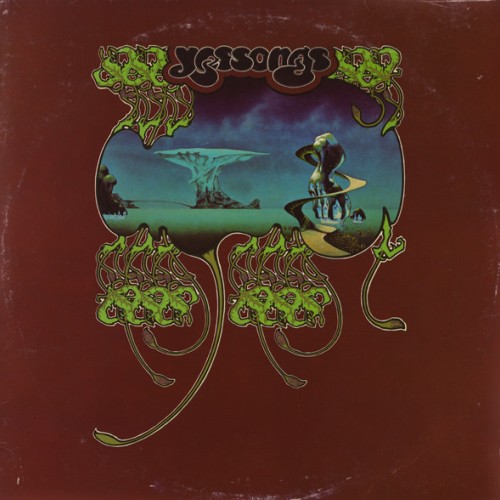
Yes – Yessongs (1973)

YesSongs

Growing up when I did my music delivery vehicle of choice was (and still is) the CD, but I was just old enough to catch the end of the (first) age of vinyl. I actually bought a few LPs, this being the one that stood out. Not only because it’s 3 albums full of Yes in its prime, but because of that amazing Roger Dean gatefold sleeve. Appreciating album art is one of the great lost joys of the modern streaming generation.

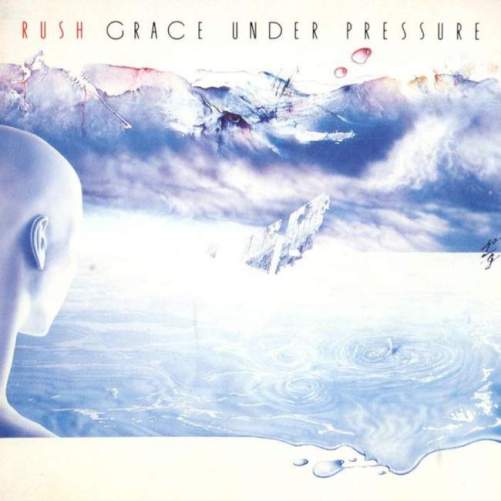
Rush – Grace Under Pressure (1984)

GUP

This definitely falls into the “not my favorite” category (although I like it just fine), but this album makes the list because it was the first “new” album by a favorite band I ever bought. On cassette, no less. Sitting down to digest any album that’s new to you is fun, but digging into a completely new one by a favorite artist is a real treat, particularly back in the pre-Internet days when you might have little idea of what it actually sounded like!

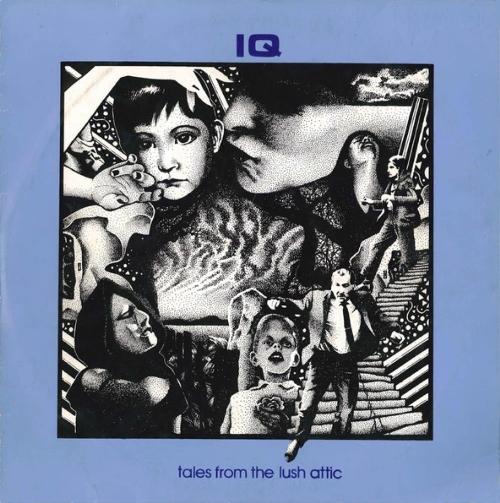
IQ – Tales From the Lush Attic (1983)

 Lush Attic

 It’s no shock to say that progressive rock is a niche genre, at least since the heydays of the mid 1970s. That means that finding albums for me has rarely been as simple as heading down to the record store and hunting for something interest. Mail order catalogs and web retailers are a must. This album makes the list because it was in the first order I ever made from a mail order catalog (along with Camel’s Mirage and Gentle Giant’s Octopus) – not even over the Internet! There are better IQ albums, but it’s a landmark for my exploration of prog. And the cover’s cool.

echolyn – as the world (1995)

AtW

Mail order aside, sometimes you stumble across something that seems interesting and you take a chance. When I found as the world in the bin at the mighty Discount Den in Morgantown back in my college days I knew, vaguely, that they were a prog band. And I saw that this album released on a major label and had a big suite in the middle of it, so I thought I’d give it a shot. Took it home and was hooked on this band from the first track (which is all vocal harmonies and strings). Sometimes you get lucky, so it’s worth playing the game now and then.

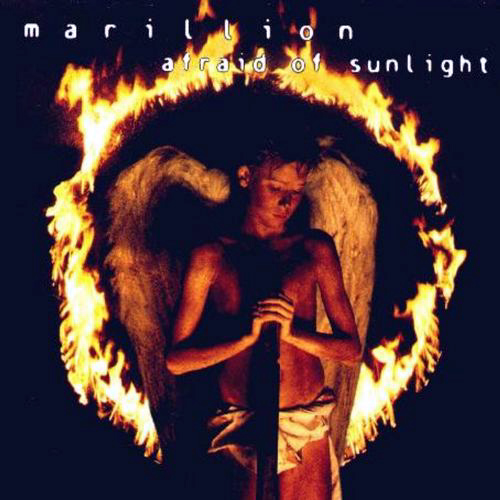
Marillion – Afraid of Sunlight (1995)

AoS

You’re rarely lucky enough to discover a favorite band when their brand new. Usually, you come in somewhere in the middle of things, where a band’s heady back catalog can make the prospect of new music from them both tantalizing and a little worrying. Will the new stuff measure up to the old? Afraid of Sunlight was my first “new” Marillion album and, at the time, I didn’t care for much of it. It’s since gone on to be one of my favorite Marillion albums (favorites period, really), but the experience of being uneasy with it to begin with it something I’ve repeated many times over the years.

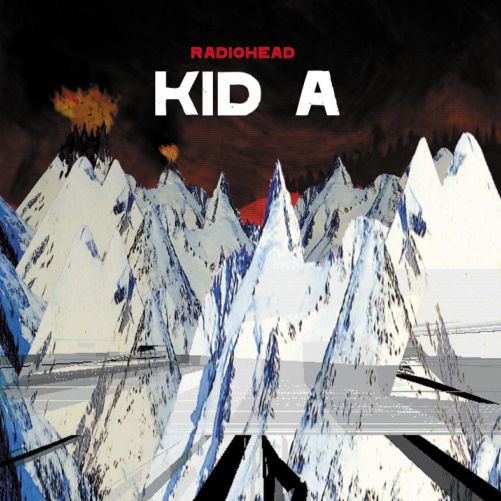
Radiohead – Kid A (2000)

KidA

I didn’t know I needed Kid A until I saw Radiohead perform “Idioteque” on Saturday Night Live. I’d come late to OK Computer and knew their new album wasn’t supposed to be anything like it, so I wasn’t all that interested. That performance changed my mind, in more ways than one. Not only did it cause me to buy the album, it caused me to open up an entirely different area of music to check out. Kid A was, for lack of a better word, my gateway drug to electronic music. I wouldn’t make the conscious choice to explore Kraftwerk or OMD or The Orb for another couple years, but this planted the seeds.

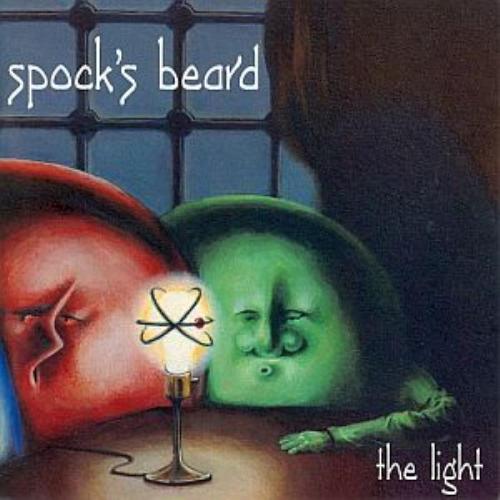
Spock’s Beard – The Light (1995)

TheLight

These days we take for granted the ability to sample music on the internet and buy with a press of a button. It was not always so. The Light was my first experience with internet commerce and it was a little rocky. I took an hour or so to download a few 30-second clips from songs (it was the guitar break in “Go the Way You Go” that sold me), then had to actually mail a check to California. It came back – twice – requiring a phone call from guitarist Alan Morse. When he found out I was at WVU he sang me a chorus of “Country Roads.” We got things straightened out and I became a Beard fan for life.

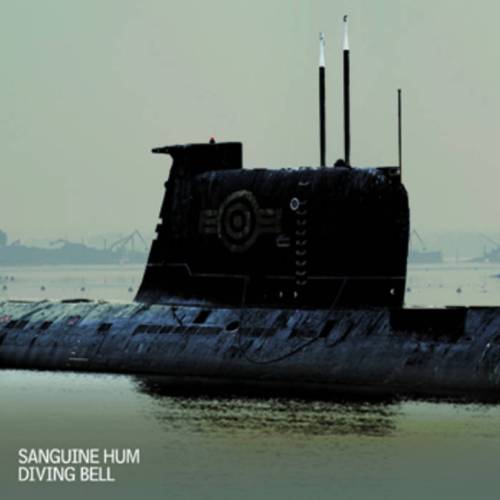
Sanguine Hum – Diving Bell (2010)

DivingBell

One of the great things about going to prog festivals is that I get exposed to lots of new bands. I’ve bought a lot of albums over the years because of that, but this one is special. Going into Sanguine Hum’s 2012 performance at ROSFest I knew nothing about them. I went in as cold as could be, completely ignorant. I didn’t just like what I heard – I was completely blown away. Ironically, I wound up getting this, the band’s only album at the time, from Amazon because the vendors had sold out and the band’s stash didn’t make it from the UK (I wound up snagging a couple EPs from the band’s prior incarnation, the wonderfully monikered Antique Seeking Nuns). Fresh, exciting, powerful new music is out there, even in the 2010s.

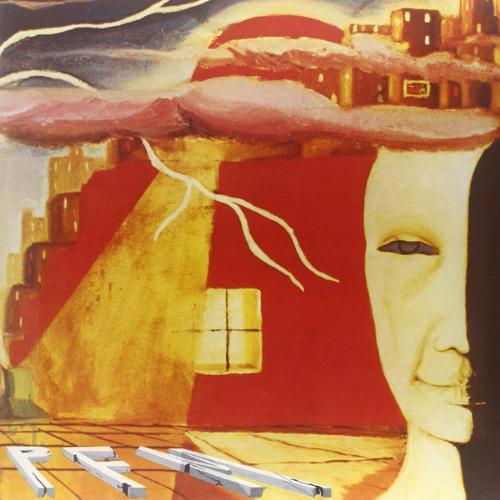
Premiata Forneria Marconi – Storia di un Minuto (1972)

Storia

Progressive rock is an outgrowth of a particular time in the UK, but it spread across the globe and resulted in some really rich regional scenes. Italy, in particular, was an early hotbed (Genesis and Van der Graff Generator both hit it big there first). This was the first album I got that was really “foreign,” without any English to be found, either in the lyrics or the liner notes (two times over – it’s a Japanese pressing!) and it convinced me that wasn’t going to be a stumbling block to discovering some wonderful music.

Homeland Is Through the 49-State Looking Glass, People!

For its first couple of seasons, Homeland was among the best TV on the planet. Tense and twisty as any good thriller, it had the overlay of asking interesting questions about what drives people (in this case the lily-white costar) to terrorism? Things have slipped considerably since then, but it’s still an entertaining, and occasionally thrilling, show.

The further it’s gone, however, the further Homeland has moved into its own alternate universe. That’s only natural – any fiction is building its own world, after all. But after six plus seasons, Homeland’s America doesn’t look quite like ours does, and not just because President Trump was too wild a plot twist for a show like that.

In its current season, Homeland is charting the fall out of a presidential election that ended with an attempted assassination. One of the newer characters, O’Keefe, is an Alex Jones style radio/internet personality who starts the season on the run from the new president’s henchpersons. He hides out with numerous sympathizers and broadcasts screeds of resistance.

Which brings us to West Virginia.

In the second episode of this season O’Keefe makes his way to a farm in a rural area that becomes his final safe house. When the family who lives there (and some of their neighbors) welcome him, it’s with a story about a site nearby where the first battle of the Civil War was fought. It’s made clear that the site is Philippi, which places the action in West Virginia.

At the risk of sounding like Grandpa Simpson, I am not making this up. See this write up of the fourth episode:

With the FBI surrounding his West Virginia hideout, O’Keefe and his loyal listeners settle in for a long siege with power generators, jugs of water — and lots and lots of guns.

Or this article from a Virginia newspaper about the actual location where those scenes were shot:

Landon Graham said he was approached in September 2017 about using his rural property to serve as the location for the hideout, which in the show is supposed to be somewhere in West Virginia.

‘They wanted something that looked like West Virginia because that is where the scene was supposed to be. But getting to West Virginia is a nightmare so it’s better to be near Richmond,’ he said.

And still, in this week’s episode, which takes place in the aftermath of a deadly raid on at the safe house, O’Keefe is taken into custody and taken to . . . Richmond, Virginia. This shift of location is odd for a couple of reasons.

First, assuming O’Keefe is being charged with a federal crime (which he surely is), he’d need to be taken to a court in the district in which he was arrested – that being the Northern District of West Virginia (I chuckled imagining my colleagues dealing with the guy). Clarksburg is surely closer to the fictional Lucasville than Richmond, which is in the wrong district, anyway.

Second, there’s later a memorial service organized for those who died in the shootout, which is also organized in Richmond. Again, why have such an event several hours away from where the event occurred? It would be like having a memorial for the Parkland shooting students in Georgia. It took place in a church, not a huge stadium or something. Let me assure you, there’s no shortage of churches in north central West Virginia.

So what’s up? Is this just sloppy storytelling on the part of Homeland? Did they suddenly forget that West Virginia is, in fact, its own state and has been for 155 years? Surely the writers of a critically praised, major network TV series wouldn’t so cavalierly wipe an entire state off the map by sheer negligence.

No, I’ll give them the benefit of the doubt. Instead, I’ll choose to believe that in the land of Homeland, West Virginia never actually existed. All those references earlier this season were really to “west Virginia.” Yeah, yeah, that’s it! It has to be. What other explanation is there? They’re playing with the very fabric of existence, people! Millhouse was right!

Milhouse


People Are Dopes

As the song says, “you can’t get something for nothing”, but that doesn’t keep businesses from trying. Think about the free advertising your local car dealer gets from those plastic license plate brackets they put on before you drive off the lot. Or the self check out at the local grocery store. Or even the increasing trend of replacing actual human customer service with detailed FAQs and AI. In all of these situations businesses are asking (well, requiring) you to do something extra for them without any compensation.

Hotels may be the worst. You’ve no doubt seen the cards in most hotel rooms these days explaining how you can avoid the hassle of housekeeping – fresh towels, new sheets – by putting them in a specific place or whatever. Framed as paeans to the environment, make no mistake – the main motivation is the bottom line. If enough guests forego services, it costs the company less. Voila.

Now they’re being really brazen about it. A recent New York Times article explores how various hotels and resorts are beginning to ask up front if guest want to skip the housekeeping by offering incentives. Piddling small incentives, if you ask me – $5 credits for food and drinks or at the spa or fitness center, rewards points for their loyalty programs, those sorts of things. My favorite, however, is this one:

Starwood launched its initiative at the Sheraton Seattle in 2008. Guests who declined housekeeping service for up to three consecutive days received a choice of either 500 Starpoints (in its Starwood Preferred Guests program) or a $5 food and beverage gift card.

Wow – three whole days without a service built into the room rate and you get five entire bucks for it!

I don’t object to the basic practice here – I’ve cancelled housekeeping services before when I’ve been on the road. But that’s a variance from the norm that I’m requesting as a customer. I’ve got no reason to expect compensation. But if the offer flows the other way, there should be some real compensation involved. Want to offer me a lower level of service? Drop the price of the room.

But people, generally, are dopes when it comes to such things. So programs like this will likely spread through the industry and companies will exploit this new way to help pad the bottom line.

To put it another way, when one of my financial management companies sends me a mailing telling me I could opt for electronic delivery, because “we’re fond of paper . . . in its original form,” I don’t think they’re really talking about the environment. Although, I guess green is the color of healthy trees. See how sneaky they are?

Don’t be a dope!

Kermit Fuck

Si, Mauricio

In many ways it was typical FA Cup fare. Third-tier Rochdale (of England’s League One) hosted top-tier Tottenham and held the biggies to a 1-1 draw. Since the FA Cup revels in tradition, rather than finishing things off right there with extra time or a penalty shootout, the teams met again 10 days later for a replay at Tottenham’s temporary home at Wembley Stadium. As often happens, the biggies didn’t slouch the at the second chance and throttled the plucky upstarts 6-1. It was not a game for the ages.

Nor was it a game where the Video Assistant Referee (“VAR”) should have come in for much scrutiny. After all, Tottenham was clearly the superior side and deserved to advance. This wasn’t a game decided on a bad call. Alas, with VAR, it’s never that clean:

Its influence on Wednesday’s game at Wembley cannot be overstated.

At times, fans had no idea what was going on as the referee waited for instructions in his earpiece and the half-time whistle was greeted by a chorus of boos from home supporters.

Lamela’s early goal was disallowed after the VAR ruled Llorente had pulled Harrison McGahey’s shirt – but it took about a minute for the officials to reach their decision, by which time both teams had lined up for the game to restart.

After Son had fired Spurs ahead from 12 yards when he was afforded too much space, the hosts were awarded a penalty when Trippier was fouled by Matt Done. At first, the referee gave a free-kick on the edge of the area before pointing to the spot after another VAR delay.

Son scored from the spot but the celebrations were cut short when Tierney ruled it out without allowing it to be retaken because the South Korea forward, who was booked, had stopped in his run-up.

That sparked more jeers from fans as Spurs boss Mauricio Pochettino looked on in disbelief.

Fortunately for the home side, it did not ruin their night.

In other words, VAR did precisely the thing that its detractors, me included (and don’t get my wife started!), have said from the very beginning – that it destroys the flow of the game, the constant action, for very little reward.

For Pochettino, it was all too much:

the first half was a little bit embarrassing for everyone. I think it’s difficult to keep focus on playing football. I am not sure that that system is going to help. I love the football as football was born. That is why we love the game that we know.

I think football, we are talking about emotion, the context of emotion. If we are going to kill the emotion then the fans, the people who love football, I don’t think are so happy about what they saw today.

He’s not wrong (hence the title of this post). The comeback to soccer’s detractors when they complain that there aren’t enough goals and such is that precisely because they’re so rare the actual moment of scoring (or being scored upon) is a rush. VAR detracts from that for precisely the reasons Pochettino lays out. It’s one thing to have an apparent goal waved off instantly because somebody was offside. To have to wait a few minutes to figure out what’s going on just sucks.

That’s the real problem with VAR (or replay in American football) – it makes some fundamental changes to the game in pursuit of something it can’t deliver: mistake-free officiating. There’s no VAR in the Premier League (yet), but during a game this weekend the announcers – all former players – poured over replays of a potential penalty and, amusingly but not surprisingly, came up with three different opinions on the correct call. It’s one thing to use technology to aid goal-line decisions, as it’s a bright line test. But most other decisions in the beautiful game are, to some extent, subjective and there are no right answers. Stopping the flow of the game cold to go in search of them is a fool’s errand.

But, not of this seems to matter much, as the momentum for VAR rolls on. This past weekend, The International Football Association Board, the folks responsible for crafting the Laws of the Game officially embraced VAR. It’s here to stay, unfortunately (starting with this summer’s World Cup).

Yeah, OK, Now Tell Us Why

Sometimes science tells us things we already know. That’s good, because as “duh!” as those things sound, it’s good to have common experience backed up by rigorous study.

A similar thing popped up the other week. Most people, if their honest with themselves, will admit that their taste in music (popular music, at any rate) is inextricably linked to their youth. What you loved growing up is likely to stick with you. In other words, you eventually become your parents and think what the kids today listen to is noise and/or garbage (and possibly unAmerican!).

Seth Stevens-Davidowitz, writing in the New York Times (via), explains how he dove deep into the dataset that is Spotify. Using “data on how frequently every song is listened to by men and women of each particular age” he learned that:

The patterns were clear. Even though there is a recognized canon of rock music, there are big differences by birth year in how popular a song is.

Consider, for example, the song ‘Creep,’ by Radiohead. This is the 164th most popular song among men who are now 38 years old. But it is not in the top 300 for the cohort born 10 years earlier or 10 years later.

Note that they men who most like ‘Creep’ now were roughly 14 when the song came out in 1993. In fact, this is a consistent pattern.

He shows this over and over again with songs by artists as diverse as The Cure, Roy Orbison, and Van Morrison.

As I said, this isn’t much of a surprise. We all know people whose musical tastes calcified in 10th grade.

Even though I consider myself pretty open minded when it comes to music, I have to admit that my sweet spot, go to favorite kind of stuff, progressive rock, is what I first got hooked on when I was a kid. Sure, my horizons have expanded over the years (ironically, part of that includes rediscovering the pop music I shunned as a kid), but I most happily fall back into the arms of the Genesis, Yes, and Rush stuff I discovered when I was young.

Now that we have some deep data diving confirming this bit of common sense, the next hurdle is figuring out why this is the case. Stevens-Davidowitz’s survey doesn’t directly address that question, although he says in passing:

This also adds one more piece of evidence to the growing scientific consensus that we never really leave middle school and high school.

But why should that be the case? Peoples’ tastes change through their lives when it comes to other things. We eat different things, read different books, and watch different movies. What is it about music that ties it so tightly to adolescence? Maybe it’s because, for most people, that’s when music is most important to them and their identity. Music later in life tends to fade into the background (and not in an interesting way). Or maybe it’s pure nostalgia (although, again, not for other things?).

Either way, the answers lie beyond my range as a humble writer and lawyer. So get on it, science! Don’t just confirm what we know, tell us why!

The Right Timing for Forbidden Fruit

A little while back the AV Club had a Q&A based around the question:

What’s the funniest time your parents banned a piece of pop culture from you?

Some of the answers are pretty funny (Christian rocker Carman? Really?), but it made me think of a different angle on the question. That is, does being prohibited from consuming some piece of pop culture at a young age set you up to better appreciate it when you’re older? I think it might.

There wasn’t a lot that was off limits in my house growing up. Part of that is down to my parents not being stuck up moralists fighting a losing battle against the moral decay of the world around them (or whatever turns people into censors). Part of it, also, was down to the fact that I had older brothers – one 10 years, the other 13 – who were old enough to handle just about anything, so stuff inevitably found its way to me. There must have been some control exercised somewhere along the line, but with one exception, I can’t remember any.

That exception involved, of all things, Yes.

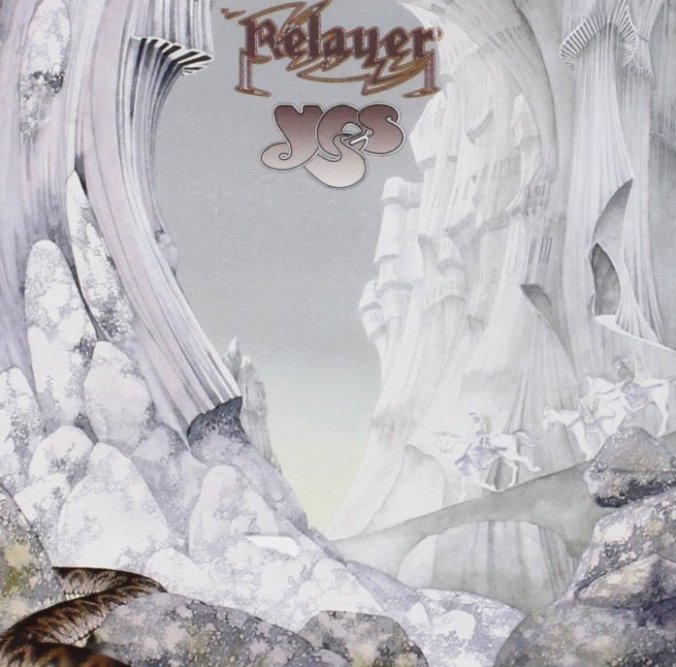
Let’s go back to the spring of 1974. After a lavish tour for the equally lavish double album Tales from Topographic Oceans, keyboard player Rick Wakeman has had enough and leaves Yes. His replacement turns out to be Swiss ace Patrick Moraz. Equally skillful, he deploys a sonic pallet that’s a little more edgy and brings in some influences of jazz fusion to the band. His one studio album with the band, Relayer, sounds like nothing else in their catalog and is, to some (me included) the last really great Yes album.

One of my brothers had it on vinyl and, one day in my misspent youth (I was either in late elementary or early junior high school), I was recording it onto cassette. Back in those days, kids, if you were recording something like that it took as long as the music lasted. In other words, you listened while you recorded. I was in the middle of side one when my mother showed up. Somehow she figured out (probably because I told her) that side one of Relayer is an epic called “The Gates of Delirium.”

That was all my mother needed to hear. It was about drugs and I wasn’t supposed to be listening to anything like that.

And that was that. Relayer was out of my reach, at least for the next decade or so. I returned to it in college, when I discovered the progressive underground online and really started exploring music. What struck me about Relayer – all of it, not just “Gates” – is how damned weird it is.

Yes, for as much as I love them and as big a part they played in the development of progressive rock, have never been one of the weirder outposts of the genre. Even of the Big 5 King Crimson and (arguably) Emerson, Lake, & Palmer went further out there than Yes did. What Yes did was traffic in classically-inspired epics of precise arrangement and performance. It was pushing some boundaries of rock, but not all of them.

Relayer is different. It’s wooly and wild in a way that Yes albums before or after were not. As I mentioned above, the sounds Moraz generates are fuzzier, spikier, and just more rude than Wakeman. Throw in the fusion influences and much of Relayer (3/4ths of it, at any rate) sound like it’s about to vibrate up off the planet at any time. Yes hit heights during their long career afterward, but not like this.

What’s clear to me is that had I really tried to get my head around Relayer when I was in junior high I probably couldn’t have. I would have written it off as “too weird” and moved on (I nearly did that with King Crimson’s “Elephant Talk,” which I heard somewhere and thought “what’s this shit?”). So my mother’s impulse to censor probably turned out well, in the end.

As for the motive? “The Gates of Delirium” isn’t about drugs at all:
“THE GATES OF DELIRIUM,” with Yes (RELAYER, 1974): Based on Leo Tolstoy’s “War and Peace,” this album-opening nearly 22-minute composition famously erupts into this lengthy all-instrumental battle scene only to finally settle into a quiet peace prayer called “Soon,” which was later edited out for a single. Recorded with keyboardist Patrick Moraz, after Rick Wakeman’s departure, Relayer has a harder, more guitar-oriented sound — something nowhere more obvious than during the cacophonous middle section. The tune, Anderson says, was constructed in tandem segments.

Anderson: I sort of wrote the thing on piano, very badly, then went in and played it for them – again, very badly – but they understood it. I told them how we would start it, then made the thundering sounds. I talked about this enormous energy, and then went into the battlefield section, then out of that we would all sing ‘Soon.’ We all worked on it together. They started working on the first section, then I would work in the second section and so on. We stayed ahead of the rehearsals. Steve and I wrote all the parts out on cassettes, and I would be listening and working on the next part so we would keep the structure. Thankfully, they got it.

Regardless – thanks, Mom! You probably helped me better appreciate a late-prog masterpiece!

Relayer

What’s a Director Worth?

It’s awards season, which means an annual tally of the talented in the world of movies. Among the most recognized are directors, who get recognized separately at awards like the Oscars and the Golden Globes. Often, but not always, the best director nominees track those for best picture, although that’s gotten a little muddy since we have more best picture nominees these days. That being said, what’s a director worth when it comes to the finished product? Is a great film always the result of great direction?

Mike D’Angelo, over at the AV Club, goes at the issue from the other direction and asks if there are situations where the “best-directed movie isn’t among the best of the year.” The example he provides from 2017 is A Ghost Story, which he calls “last year’s most stunning directorial achievement” but involves an “unexpected turn” in the story that is “enough of a deal-breaker” to keep it from being one of his best films of the year. From his description (I haven’t seen the movie) it sounds like a good argument.

GhostStory

Nor would it be unprecedented. It’s not unheard of for a director to be recognized for doing something really different technically or structurally without the final product also being recognized as superior. In 2013 Ang Lee won Best Director for Life of Pi, which involved a lot of technical wizardry that really pushed the bounds of film. It didn’t win best picture, however, losing out to Argo (which, ironically, didn’t even get a directing nod for Ben Affleck). One could make the same argument about Gravity the following year, for which Alfonso Cuaron took home Best Director, while 12 Years a Slave took home best picture (though Steve McQueen was nominated that year).

Where I think D’Angelo goes wrong is in trying to shift, and narrow, the focus of what makes a great director:

Rather than just give up and conclude that the best films must logically be the best-directed films, I instead try to determine, when voting for Best Director in year-end critics’ polls, which movies most impressed me from a purely visual standpoint. Admittedly, there’s plenty of crossover there with various technical categories—cinematography, editing, art direction, costume design—but I generally boil it down to a simple question: ‘Who knew exactly where to put the camera?’ When I come at it from that angle, Picture and Director diverge just enough to make things interesting.

It may make things interesting, but it gives short shrift to a lot of what a director does. You don’t have to be an auteur worshiper (D’Angelo labels himself a “softcore auteurist”) to recognize that a director is the one person most responsible for how a film winds up. Not the only one, certainly, but unless they are overrun by studio dipshits directors have what Bill Bruford, in listing his credits for a solo album, called “final say.” The buck ends with them.

To give one example where a film is shaped by the director’s “vision,” but not necessarily his camera techniques, consider Richard Linklater’s Boyhood. It’s a coming-of-age story shot, essentially in real time. Over the course of eleven years, Linklater filmed sequences with the same cast, including the central character, a boy who literally grew up on screen. The entire setup was his idea and he stewarded it through to completion.

Boyhood

Which is not to say identifying a talented director takes no more effort than finding a list of the best movies of a particular year. Sometimes they bring something so different to the table that the end result isn’t that important. More often than not, though, it is. It’s just really hard to quantify. It’s the Potter Stewart situation of the film world.