Weekly Read: Imbeciles: The Supreme Court, American Eugenics, and the Sterilization of Carrie Buck

It is better for all the world, if instead of waiting to execute degenerate offspring for crime, or to let them starve for their imbecility, society can prevent those who are manifestly unfit from continuing their kind. The principle that sustains compulsory vaccination is broad enough Three generations of imbeciles are enough.

– Buck v. Bell, 274 U.S. 200, 207 (1927)

In the rogues gallery of bad Supreme Court decisions – things like Dred Scott, Plessy, and Korematsu  – few had summed their own awfulness up so succinctly as Buck v. Bell, in which the Supreme Court upheld the constitutionality of Virginia’s law allowing the forced sterilization of the “feeble minded.” The decision was nearly unanimous (the lone dissenter didn’t write an opinion explaining his vote) and, horrifically, it is still “good law” in the 21st Century (a claim is shares with Korematsu).

Imbeciles, by lawyer turned journalist Adam Cohen, isn’t a deep legal analysis of Buck itself. Instead, it tells the story of the case by focusing on four people involved in it. First (and last) is Carrie Buck, the Virginia woman eventually sterilized for being “feeble minded.” Second is Albert Priddy, who ran the Virginia institution where Buck was committed prior to her sterilization (he dropped out before the case hit the Court, being replaced by Bell). Third is Aubrey Strode, the Virginia legislator and lawyer who helped pass the law and then defend it in court. Finally, there’s Olive Wendell Holmes, the Supreme Court Justice who authored the opinion. The result is an interesting, depressing, and angering story that provides a lot of needed background to the Court’s brief (5 paragraphs) opinion.

Cohen structures the book so that we begin with Buck’s life up to the case began and end with her life after her sterilization. In between, we get a chapter each on the background of the other guys and then a chapter covering their intersection with the case. It’s a fairly effective way to structure things, although not carried off very creatively (each chapter title is just someone’s name, like a George R.R. Martin tome). It also leads to some redundancy, particularly as Cohen uses Priddy’s and Strode’s background chapters as means to sketch out the broader picture of the eugenics movement.

That movement, though eventually discredited and forgotten (the Nazis being enthusiastic adopters of eugenics helped it slip down the memory hole), echoes in the 21st Century political diatribes about immigration and wall building. Indeed, the sterilization arguments were basically the same as the arguments for restricting the immigration of “undesirables,” with the added twist of them already being in the United States. Beyond that, sterilization was largely a way for society to deal with a perceived problem on the cheap – it was too expensive to warehouse the “feeble minded” in a more beneficent way. Sterilization followed by release into society was cheap, easy, and, thanks to the Supreme Court, perfectly legal.

I’ve read some complaints from readers that Cohen spends too much time diving into the biographies of his subjects, to the detriment of a broader understanding of the eugenics movement. I think that misses the point, somewhat. Cohen presents a good argument that Buck v. Bell was as much the result of those biographies as it was legal theory or factual findings. It’s not a complete success (Holmes may have been predisposed to support eugenics, but this wasn’t a close case), but I find it fairly persuasive. For example, see here for a law review article putting Holmes’s vote down his experiences during the Civil War (something Cohen touches on).

The personal relationships explain how the law’s most dubious component came into being. Strode drafted the law, perhaps in a way that meant to slow down its implementation. For example, he refused calls to have the sterilization scheme applied to all Virginians, rather than only those in state custody. Similar provisions in other states had been struck down on equal protection grounds. Cohen argues that while Strode was a skilled lawyer and advocate, he wasn’t the eugenic evangelist that Priddy and others were.

One of those provisions of the law was a requirement that it not go into effect until the Supreme Court approved it. On the face of it, this seems like a good thing – why not wait for the high court to weigh in? But that’s not the way the American legal system is designed to function. Courts (up to and including the Supreme Court) only adjudicate live “cases and controversies” – meaning actual disputes that require a resolution. That’s why issues of standing are so important, as there can be no actual dispute if someone doesn’t have the ability to seek redress against the other party. Our system is designed to allow two interested parties to argue against each other, present evidence to support their claims, and ultimately allow a neutral third party to pick a winner. It’s trial by combat, only less bloody and more mentally taxing.

By requiring the Virginia law to be blessed by the Supreme Court before it went into effect, Strode effectively set the stage for the farce that was Buck v. Bell. Cohen lays out how Priddy, Strode and others essentially conspired to produce a “test case” for the Court. Now, test cases and strategic litigation on social issues isn’t a bad thing – the one that always stands out to me is how the plaintiff in Brown v. Board of Education was chosen partly because the black school she attended was actually better than the closer white school she would have otherwise attended (that took the idea that it was separate, but not equal, off the table and forced the discrimination issue to the fore). But that’s different than a setup. Buck v. Bell was a setup.

That was largely true for two reasons. First, Buck herself was largely kept in the dark about the whole thing, both the operation to sterilize her and the litigation about it. It’s hard to have a real case or controversy if the plaintiff isn’t really driving the bus. Second, and more importantly, Buck’s lawyer, Whitehead, was in on it from the get go. He was friends with Strode and Priddy and did nothing that a competent lawyer would think of as competent. With only token resistance, Strode rolled through the courts and up to the Supreme Court, getting the ruling everybody wanted (and needed). This is, perhaps, the biggest flaw in Cohen’s argument that Strode wasn’t quite as on board with eugenic sterilization as the rest of those involved – he knew how the system was supposed to work and proceeded with the farce, anyway.

Ultimately, the focus is on Carrie Buck, who opens and closes the book. It’s a natural through line for the story of her particular case (obviously), but a little bit dangerous as a thread holding together a book about eugenics as a broader movement. That’s because, as Cohen makes clear again and again, there simply wasn’t evidence to support the conclusion that Buck was “feeble minded.” In fact, she appears to have been a perfectly normal person of average intelligence. As a result, the book comes dangerously close to suggesting that the real injustice is that Buck wasn’t actually a moron, rather than the state mandated sterilization of anybody. It’s a bit like telling the story of prison overcrowding through the eyes of someone who was wrongfully convicted. It’s powerful, but perhaps not for the right reason.

Imbeciles is a compelling story of a Supreme Court case, the people who guided it, and the woman who got caught up in its wake. Highly recommended.


imbeciles

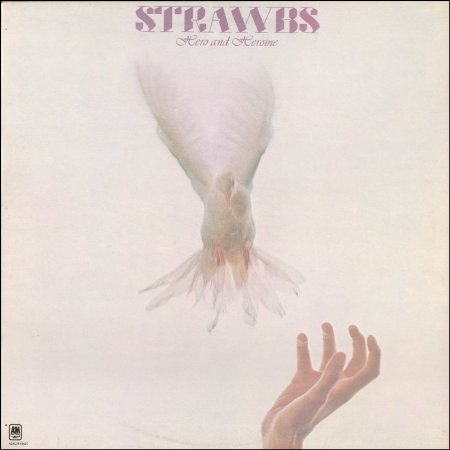
Weekly Listen: Hero and Heroine

I hadn’t had any exposure to The Strawbs until I saw them at ROSFest last year. Originally announced as the Friday headliner, they wound up squished into a crammed Saturday schedule after some travel difficulties. They took the stage and roared through a single album, 1974’s Hero and Heroine. For a bunch of guys pushing retirement age, they were pretty damned good.

As I said, I went into that set cold. I knew, vaguely, that the band had a folksy background and had (at some point) included Rick Wakeman, but I was ignorant otherwise. I was, therefore, in the perfect frame of mind to absorb Hero and Heroine. There’s definitely folksy roots, but they rock on occasion (in a way that similar folksy based proggers like, say, Renaissance never do) and there was some interesting keyboard work going on. Sure, Dave Cousins’s voice had seen better days (did I mention retirement age?), but he still grabbed the tunes by the balls and delivered a great performance.

Needless to say, I had to pick up a copy of this album.

I headed downstairs to where the band’s merch table was. Sure enough, they had a whole stack of the album for sale. Or, at least, a version of the album:

hhnew

Dubbed Hero and Heroine In Ascencia, it was a newly recorded version, rather than the original release. I didn’t really think twice about picking it up, since I figured there was a good reason for the new recording (other bands have, for legal reasons, rerecorded their own work to obtain the rights). Besides, this one was recorded by the band I’d just seen (aside from the keyboard player) – bonus!

 Repeated listens really drove home just how rough Cousins’s voice is, though. With the energy of a live setting it’s one thing, but in the studio you get more picky. So I started wondering what the original sounded like, how the two would compare against each other. Sure enough, the original is legitimately available, so I grabbed if from Amazon and took a listen.

hhold

Aside from some slight rearranging of a few bits, both albums play the same. The performances, however, are very different. The 1974 version sounds much younger. It emphasizes the band’s folksy qualities. Cousins’s voice is pure, youthful, and full of life. It comes off well, just this side of being too “twee.”

The new version, by contrast (and perhaps surprisingly, given the older lineup) is more powerful, rocks harder, and just has more guts to it. Cousins’s voice has lost its youthful vigor, but that even works in its favor. Where the original sounds like a tale of love told through the eyes of a young man, one either living it or perhaps aspiring to it, the new version sounds like the pained reminiscences of an old man looking back on his own history. A lyric like “after all, it’s just the revolution I despised,” comes off as cocky and simple minded in the older version, but bitter and knowing in the new version. The shift of perspective gives the whole thing more depth.

Now, I may be full of shit about this. In fact, I wonder if my opinion would be flipped if I had first heard this album back in college or law school when I rediscovered prog. After all, it would have been the original and I would have been younger, so maybe I would have looked at the newer version in the way I look at the modern version of Yes – a pale facsimile of the genuine article. Certainly, by the time I was sitting in the Majestic Theater on a Saturday afternoon this year I was in a different head space than I was back then.

That’s one of the things about music (or any piece of art) that’s both wonderful and frustrating – you bring so much of yourself to it that it’s hard to ever get a “true” read on it. You only get one chance to make a first impression, after all, and when and how that impression gets made might make it hard to ever overcome it.

The bottom line, I suppose, is that the new version of Hero and Heroine speaks to my cynical side in a way that the original version doesn’t to my romantic side. That probably says more about me than it does about the album, which is pretty damned good in any event.

Albums That Change Your Life

A few days ago there was a trending hashtag on Twitter for #3AlbumsThatChangedMyLife. When I saw it pop up, I had to play along:

I like this framing better than the typical list of “favorites” or desert island discs (do they even do that anymore in the iTunes and playlist age?) since it leans right in to the subjectivity of musical experience. There are no wrong answers to this question. Or so I hope . . .

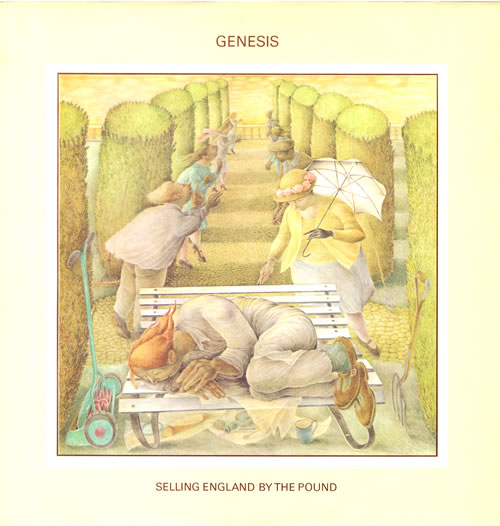
Selling England By the Pound

sebtp

To my mind, Selling England By the Pound isn’t just peak Genesis, it’s the template for much of what we call symphonic prog these days. The only thing it lacks is the truly oversized epic, but everything else is there – lush symphonic arrangements, lengthy instrumental passages, contrasting pastoral and bombastic passages. Throw in a set of very English lyrics and it’s hard to argue it gets any better than this.

But that’s not what makes it a life changer for me. I can’t see SEBtB was the first old school Genesis album I heard – my brother had everything from Nursery Cryme through Duke – but it was the first one I connected with. I’m not quite sure why. The macabre sensibility of Nursery Cryme or the sci-fi aspects of Foxtrot would seem to have been more obvious choices. But for some reason the album with the sleeping lawn mower on the cover and references to British politics and gang wars is what sucked me in. It wasn’t the only album that made me a prog fan, but it’s probably the one most responsible.

Special mention, probably, for starting my lifelong love affair with the Mellotron. The world’s first sampling keyboard, it was supposed to put classical musicians out of business, but it never really created lifelike sounds in the end – which is what makes it so cool! The intro to “Watcher of the Skies” from Foxtrot is probably the definitive Genesis Tron moment, but for me the part of “Dancing Out With the Moonlit Knight” where the choral tapes kick in gives me goose bumps every time.

Brave

brave

When I got into Marillion in college, the fan base was split in the kind of way that happens when long-lived bands have major lineup changes. In this case, the fissure was between the early Fish-fronted version of the band and the then (and still) current version fronted by Steve Hogarth (aka “H”). The battle lines, as I understood it at the time, were that that Fish years hewed more truly to the band’s progressive rock roots, while the H years were all about mediocre attempts at mainstream success. As a result, after my gateway dose of Marillion (Misplaced Childhood) I focused on absorbing the Fish-era stuff.

Then I heard about Brave – a concept album, one with some long multi-part songs and a dark exploration of a potential suicide. This didn’t sound like the stuff of a low-rent Phil Collins desperate for pop glory. I decided it was worth checking out, even as part of me figured it would be a flop and send me back into the loving arms of the earlier material.

Holy hell, did I have that wrong! Brave wasn’t just a great, deep, layered progressive rock record, it’s one of the best albums I’ve ever heard. Yeah, it was different from the early days, more ambient and less overtly “prog,” but damn, it’s good. And that H guy’s no slouch! Hell, Brave even made its way into one of my books.

This was important not only because I discovered a great album, but because I learned that Marillion wasn’t a thing of the past. As a band they had a lot of life left in them (still do – seeing them again at the end of October!) and became one of my absolute favorites.

What makes it all the more impressive – Brave isn’t even my favorite H-era Marillion album.

Kid A

kida

Kid A didn’t work the sea change in my musical world that the others did. Instead, it set something going in my brain that slow burned its way into an appreciation of an entirely different kind of music.

I was late to OK Computer and wasn’t completely on board the Radiohead train when Kid A came out. What I read about it – electronic, experimental – didn’t really intrigue me. Then I saw this:

The song itself didn’t grab me so much as Johnny Greenwood (?) sitting at the front of the stage, swapping patch cords and twiddling knobs on a modular synthesizer. Not a keyboard in sight (RIP, Don Buchla, by the way). I went out and got the album and, it turned out, I really dug it. I’ve been on the train ever since.

The funny this is, at the time, I didn’t think to myself, “self, you’re listening to electronic music now.” Radiohead’s been drafted in by the prog crowd and Kid A (and just about everything else) is certainly adventurous and genre diverse to fit the bill. Nonetheless, it was definitely the gateway drug. It was a while before I consciously decided to check out Kraftwerk and Jarre (I think Richard Barbieri’s first solo album was a way station), but I got there and fell hard (much to my wife’s dismay). It was only a matter of time once I’d heard Kid A and let it seep into my brain.

So those are my three. What are yours?

Practicing Law Can Be Frustrating

There’s a scene in Clerks when Randle explains, “this job would be great, if it wasn’t for all the fucking customers.” Practicing law is a wonderful job (I think so, anyway) that allows you to do interesting work that has real impact in peoples’ lives. It can also be frustrating, particularly when you’re working with a difficult client. Indeed, sometimes it seems like a great job, but for the clients. Rigid procedural rules don’t help, either. Sometimes they make the perfect storm

Imagine you represent a client charged with a federal crime. You manage to get him out a bond but, in a flash, he takes off. Disappears. Neither you nor law enforcement has any idea where he is. Nonetheless, the world moves on and the codefendant in your case makes a routine motion to continue the trial date. Local rules require that you inform the court of whether your client objects to this or not – your client who is currently on the lamb. How do you deal with this impossible task? By deploying some weapons grade snark:

’As this Court is well aware, Mr. Jeffs is currently not available to inform his counsel whether or not he agrees to the Continuance. Whether his absence is based on absconding, as oft alleged by the Government in their filings, or whether he was taken and secreted against his will, or whether he experienced the miracle of rapture is unknown to counsel,’ Kathryn Nester wrote. ‘However, his absence prevents counsel from obtaining his approval and thus further prevents counsel from filing a joinder with the Motion to Continue Current Trial Date in compliance with the local rules.’

Now, I don’t think I’d get quite that snarky in a legal pleading, but Kathy Nester is the Federal Public Defender in Utah. If she’s done it, she’s probably earned the right to do it through her years of work before that court. Must have felt good to type that, though.

Here’s the funny thing – I didn’t hear about this on a legal blog or through the Federal Defender grapevine. I found it over at PZ Myers’s blog, where he plays up the silliness of someone “arguing” that their client was raptured in court. Problem is, it’s pretty clear she’s joking. That someone or something has been “raptured” is a running joke in my house, after all (my wife and I lose things constantly – maybe it’s gnomes? *).

Neither Myers, nor the immediate post he linked to at RawStory, use the full quote. Specifically, they don’t have the last line about “compliance with the local rules.” Nester was required, by an inflexible rule, to answer a question she cannot answer – what does her client think about continuing the case? It’s an absurd situation that calls for a similarly absurd response.

I think we can safely say that she’s not going to try and spin this into a alibi defense, you know?

* That’s a joke, too. Seriously.

On the Current State of Formula 1

Let me start by saying that I’ve been watching Formula 1 for a long time. Back before my family had a VCR, I was up early on Sundays attending the only church I’ve ever known – the Church of the Holy Horsepower. In college I’d get up way too early on Sunday and go down the common room to watch a race. More recently, I’ve regularly recorded races and watched them later the same day.

Not so much this year or last. Not out of any real decision, just out of inertia (or the lack thereof, I suppose). But I managed to record the British Grand Prix this weekend. Having watched it, I’m reminded why I’m not making such an effort any more. There’s just too many things wrong with the sport right now for me to care a great deal about it.

Mercedes Dominance. F1 right now belongs to Mercedes. Everyone else is fighting for third place (at best). To make things worse,  Lewis Hamilton seems so much better than Nico Rosberg that it’s rarely a race between them, barring some outside force intervening. At least they’re just as likely to bang into each other when the share real estate as not.

One-team domination is nothing new to F1 – I remember 1988, when McLaren won every race but one. But in years past the cars looked and sounded better and things seemed more open. Oh, and cars used to blow up for no good reason, too – modern F1 cars are incredibly reliable. The regulations are so tight that there’s little room for other teams to find interesting ways to make up speed.

Plus, I’ll just say it – I’m a Ferrari fan and they suck right now. So there’s that.

Being Overly Protective. I understand the drive to make the sport as safety as possible. Racing in the rain is, by definition, dangerous and the death of Jules Bianchi in a downpour in Japan in 2014 is still fresh in the memory. But, still, there was no reason for the first five laps of the British GP to be run behind the safety car. It wasn’t even raining anymore. I’ve seen F1, Indycar, and top-level sports car racing all run in worse conditions.

Rain, of course, upsets the usual order, which should be a welcome thing in a top-heavy sport. I suspect that the powers that be are concerned that too many modern drivers can’t really handle the rain (or will be further left in the wake of Hamilton, who cleared almost four seconds from his closest pursuer on the first green flag lap) and they don’t want too much upset to the regular order. It’s a shame – Senna would have had no problem in that rain.

Dumb Rules Dumbly Enforced. A pair of dumb rules, and their odd enforcement, reared their heads this weekend. Neither has any real place in top flight motorsports and seem to be examples of the powers that be trying too hard to control things.

The first showed up in qualifying. Rule one of racing is keep the car on track, right? But the modern F1 track, with low curbs and paved run off areas, invites overdriving. Cars routinely run wide  as drivers try to grab an ounce more speed, shave another thousandth of a second off their lap. Now the stewards keep eyes peeled to see if the “track limits” are violated and . . .  sometimes call penalties about it. And sometimes don’t. If the track rewards drivers for going off of it, that’s the track’s fault, not the drivers’. It’s a layer of bureaucracy no sport needs.

The second popped up in the race itself, near the end. Drivers are able to communicate with their teams by radio (and vice versa), which, in years past, has allowed teams to tell drivers how hard to push and change strategy on the fly. Now, however, communications are severely limited and, for instance, Mercedes violated the rules by telling Rosberg how to keep his car from stopping on course as the race ended. It appears that the rule was applied correctly, but it’d terminally dumb. Either have radio communications or don’t, but thinly slicing what can and can’t be said adds another layer that’s about anything but racing.

At its best, Formula 1 is the pinnacle of motorsport, a kill or be killed dog fight among not only drivers but teams and manufacturers. The modern era won’t allow for free spending and a completely open set of regulations, I get that. But regulations need to be smarter and answer one question: does this make the racing better?


Rosberg_Bahrain_2016_1

Nico Rosberg this year at Bahrain. Photo by Dave Jeffreys, courtesy of Wikimedia Commons.

A Bit of Perspective

Another year down and the United States national team finds itself doing the major tournament post mortem, this time following the Copa America Centenario. The 100-year anniversary of the South American championship was expanded to 16 teams, shipped north, and enjoyed record-breaking attendance. How’d the US do?

Not bad, if we’re being perfectly honest, going out in the semifinal to Argentina and losing to Colombia (for the second time) in the consolation match. Along the way we won our group, held off Ecuador (currently second in South America’s brutal World Cup Qualifying proceeding), and reached the goal that manager Jurgen Klinsman set for us.

Are we completely happy? Of course not, these are US soccer fans we’re talking about!  We’re a notoriously fickle bunch. I, myself, still think Klinsman isn’t very good at the actual game managing stuff (which is, you know, important). The lineup he chose for the Argentina game was like waving a white flag (or a red flag in front of a bull – take your choice) and had not even the slimmest chances of winning. But do I think the right lineup would have beaten Messi and company? Almost certainly not. Still, might as well go down fighting.

More importantly, let’s keep the whole thing in perspective. The FIFA rankings (flawed as they are) of the Copa semifinalists was 1 (Argentina), 3 (Chile), 8 (Colombia), and . . . 32 (United States). We were punching above our weight. Maybe we could have done it better, but at the end of the say, it seems like things fell about where they should.

Besides, it could have been worse. Mexico was humiliated by Chile, 7-1:

Yeah, we got bounced 4-0 by Argentina, but that’s still kind of reasonable. And it was in the semifinal, not the quarterfinal. And, for all our faults that night, we never gave up.

Beyond that, consider what befell the birthplace of the game, England, yesterday in the European Championships:

Iceland has a total population of about 330,000 people – that’s one-sixth the size of West Virginia, not to mention England.

And that’s not even considering a power like Brazil and Uruguay, who failed to make it out of their groups at the Copa, or the Dutch who didn’t even qualify for the expanded 24-team Euros!

I’m not saying I think the US is better than we actually are. But we’re not that bad, either. We pretty consistently do well in tournaments like this, even if we want to do better. It’s important not to lose that drive to improve. In the process, we shouldn’t give short shrift to what we actually achieve.

USSoccer Logo

Another Reason Judicial Elections Are Dumb

This year, for the first time in West Virginia, our judicial elections will be “non-partisan,” meaning candidates won’t be designated as belonging to a political party. That’s a shame, because that’s at least a useful data point to consider, even if it’s not definitive.

I’ve never been a fan of electing judges. Judges are supposed to be impartial servants to the law, not popular opinion. There are times when they should do the exact opposite of what the Twitter-mob wants. Insulation from the political process (with the acknowledgment that complete insulation is impossible) is critical if we expect the “rule of law” to mean anything.

Beyond such philosophical issues, there’s another reason that judicial elections are just dumb, one that I’ve been particularly aware of here as we begin to see campaigns for the West Virginia Supreme Court of Appeals get into full swing. People generally vote for politicians based on what they promise to do, either for particular groups of voters or the nation/state/county as a whole. It’s crass sometimes, but that’s how democracy works.

Here’s the problem when it comes to judicial elections – judges can’t make promises like that. For one thing, while the hoary right-wing chestnut that “judges don’t make law” is as silly as ever, courts are limited to issues brought before them in actual disputes between parties. No court has the power to simply issue an opinion on its own. For another, rules of judicial ethics prohibit candidates from promising to rule in particular ways on issues that may come before them. No judge can say if they’re elected they’ll rule a particular way on an issue or in favor of a particular party.

But if a judicial candidate can’t say “vote for me so I can do X,” what can they do? It comes down to a choice between meaningless fluff and vague non-sequitors.

In the current WV Supreme Court race the fluff angle belongs to Bill Wooten. His ads that I’ve seen (can’t find them online – how can a candidate for office in 2016 not have a web page?!?) all star his grandkids and highlight his role as a grandfather. Which is great (the kids are cute), but what does that have to do with his ability to be a justice? I realize that a big part of politics, at least locally, is name recognition, so the fluff accomplishes that (see also gubernatorial candidate Booth Goodwin’s ad about his WV birthmark), but it’s awfully thin gruel if you’re trying to figure out who to vote for.

At least fluff doesn’t promise anything more than that. This ad, from Beth Walker, promises something she can’t deliver:

Since when do Supreme Court justices decide to increase penalties for crimes? Putting to one side the foolishness of her plan (Really? We haven’t tried locking people in cages for selling drugs yet?), it’s just empty rhetoric. The cynic in me says all political rhetoric is empty – promises made are rarely kept, after all – but at least they’re plausible. The get tough promise is particularly odd in West Virginia, where sentencing is purely statutory and tied in with a parole system. Unlike the federal system, judges don’t have an awful lot of say on how long someone stays in prison.

That’s not to lay the blame at the feet of these, or any other, candidates. It’s not their ads that are dumb (although I disagree with Walker’s policy position), it’s the game they’re playing that is. They’re doing their best to convince people to vote for them in an election where they can’t promise to do anything if elected. It’s bound to lead to meaningless drivel in commercials. Which is kind of the point – is this any way to select the men and women who preside over the justice system?


You Want Choices? You Got Choices!

The further we trudge down the path toward the presidential election, the sicker just about all of us are getting of the major candidates left in the race. Thankfully, there are so many more to burn through! Ed Brayton has surveyed some of the 1669 (you read that right) people who have filed to run for president and it is, let me tell you, an interesting bunch. Here’s a taste:

If you’re feeling a bit weird, you could try Sir TrippyCup aka Young Trippz aka The GOAT aka The Prophet aka Earl, if you’re not into the whole, ya know, brevity thing. And if you’re into the whole medieval fantasy thing, you could vote for Actual Literal Dragon. President Frederickson Asshat Kazoo does kind of roll of the tongue, doesn’t it?

There are lots of religious figures running. Jesus Christ himself is taking a shot at it. I can’t wait for the debate between him and The Antichrist. That just has to be moderated by Glenn Beck. And if you’re tired of voting for the lesser of two evils, you might cast your vote for Dr. Ourlordandsavior Cthulu (I can’t imagine how he found time to go to medical school with his busy schedule of devouring souls). I suspect Lesale Venomancer Deathbringer is just trying to get a cabinet position as Secretary of Defense. And for all the Satanists on your shopping list, there’s always Mrs. Luci Fer. She’s apparently running against her husband, His Royal Majesty Satan, Lord of the Underworld, Prince of Darkness. I doubt that guy will do anything about global warming. But I’m sure Abraham Israel will sacrifice whatever it takes to get the job done.

Every name has a link to the actual FEC filing for that candidate – he’s not making these up! Hell, I’m surprised these guys aren’t listed yet:

BillOpus1

Those are candidates I could get behind!

BillOpus2

What Vinyl Can Learn From The Americans

Almost every piece of fiction is, in fact, about creating an alternate reality. No matter the verisimilitude of a story, not matter how “real” the characters feel, the simple truth is they aren’t. They’re creations of a writer who controls their every movement and word. Our world is not their world for the basic reason that they don’t exist in our world.

Alternate histories, of course, take this premise and run with it. What if the Allies lost World War II? What if the American Revolution never happened? Stories that ask such questions are all about messing with history. The only limits on the changes you make are whether they make some sense in relation to the big change.

Things are a little trickier when you’re telling a story set in the past that doesn’t have quite the same ambition. If you’re not really changing the past, how much of “history” as we know it can you play with? And how? Two current TV shows deal with this issue, one much more successfully.

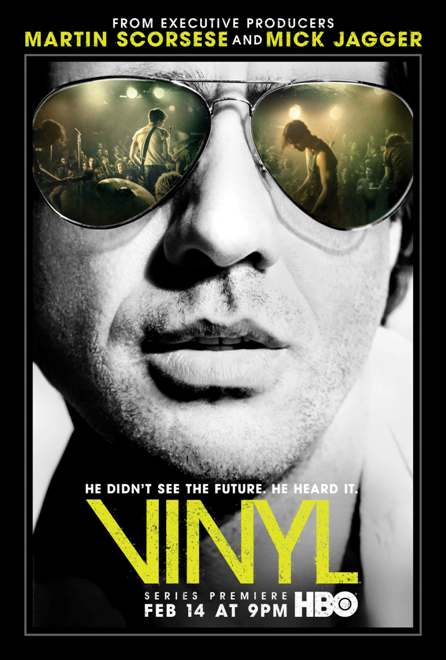
Vinyl, on HBO, has a hell of a pedigree. The show, about the head of a struggling record company in the early-to-mid 1970s, boasts Martin Scorsese, Mick Jagger, and Terrence Winter (of The Sopranos and Boardwalk Empire fame) among its creative forces. The company is on the brink, the main character is a coked-up killer, and, well, there are other complications. It’s gotten a fairly cool reception from critics, but has already been renewed for a second season. I’m not sure I’ll be on board for it.

Vinyl-Key-Art-FINAL

Although I have several issues with the show, the one that really drives me nuts (and prompted this post) involves how the fictional record label interacts with real world stars. Already this season we’ve seen our heroes interact with Led Zeppelin, David Bowie, Alice Cooper, and Elvis. While there’s a chance to play that for fun, or verisimilitude boosting background, the show doesn’t go that route. Instead, we’re shown multiple instances of the fictional record label trying to do business with these luminaries that we know won’t because we’re still in the “real” world. Whatever conversations you might dream up for Alice Cooper to say in your version of 1973, you’re not going so far as to have him sign with a fictional record label. It drains these incidents of any tension or drama, regardless of how well they’re executed.

Compare that approach with the one taken by FX’s The Americans. It’s got considerably higher fictional stakes – telling the story of a pair of Soviet spies posing as a suburban American family during height of the Cold War 1980s. They should bump into historical biggies every week, yet they don’t. In fact, the only major historical fact in play in the series is the one that hangs over the whole thing like a specter – we know that these folks play for the losing team.

the-americans

Yet, the drama of the series still works because our “heroes” aren’t interacting with bigger specific historical events that have happened around them. They never try to assassinate Reagan, for example (although I suppose you could conspiracy theory that one into real history), or engage in some epic act of sabotage that didn’t happen in the real world. As a result, we’re more caught up in the tension of their existence because we’re unsure how their small part of the larger story is going to play out.

Vinyl lacks that. Whatever the fate of American Century Records will turn out to be it has fuck all to do with hitching its star to David Bowie or Elvis. It’s a much better show when it’s playing with its fictional artists, people in whom viewers can invest some real emotion.

It’s fun to play around with history. But I think you have to have a solid idea of why you’re doing it and how your fictional characters are going to fit into that history. Are they swept along with the tide we all know or are they changing it into something entirely different? It’s a fine line and easy to wind up on the wrong side of it.

Same As It Ever Was

On my old blogs, where I discussed legal stuff more often, I talked about how conflicted defense attorneys are about defendants who “roll” on each other – that is, who testify against another defendant in return for either a reduced sentence or beneficial plea bargain from the prosecution. That conflict came to mind while reading about a similar situation that occurred on the other side of the planet.

The Master of Confessions is journalist Thierry Cruvellier’s account of the trial of “Duch” before the name, the international court currently trying former members of the Khmer Rouge for crimes against humanity. Duch was the lead interrogator at the Tuol Sleng prison I mentioned a while back, also known as S-21. Duch’s job was to get people to confess not only their crimes against the revolution, but to rat out others in their “line,” a process known as denunciation.

One of the interesting things about the book is that Cruvellier isn’t writing history. He’s writing about it, but he’s doing it from the vantage point of his own observation of the trials (and other similar trials around the world). Thus, it gives him room to make astute observations that might not be so well placed in a work a pure history.

On the subjection of denunciations, he writes (paragraph breaks added by me):

The court openly hates the very idea of denunciation. Given that at S-21 thousands were tortured and mercilessly killed, the court vehemently rejects the validity of the denunciations obtained there. But in other circumstances, the international legal establishment can be more accommodating.

Mandatory denunciation (though obtained without torture) is a crucial element in many confessions made before international tribunals and, in these circumstances, lawyers find that their consciences remain quite untroubled by it. On the contrary, they actively encourage it. A defendant who pleads guilty to a UN tribunal is told to denounce his accomplices if he wants to win over the prosecutor and earn the judges’ leniency. He isn’t forced to name names under torture, of course, but if he wants to make the most of his guilty plea and obtain a lighter sentence, then he has no real choice but to comply.

Rwanda’s community courts, known as Gacaca courts, which have been so misguidedly praised over the past ten years, feed off of mass denunciations. Though they don’t torture people, snitching is inextricably linked to confessions in Gacaca courts. The result is an all-consuming, rampant, and poisonous judicial operation that had produced more than a million suspects. Throughout Rwanda, the pressure to name one’s accomplices has given rise to slander so great it wouldn’t be out of place in the archives of S-21.

‘Denunciation is another form of lying,’ Francois Bizot, a survivor of imprisonment by the Khmer Rouge, says in court. International justice, it seems, only hates lying in certain circumstances.

This captures the essential issue when it comes to defense attorneys and rolling codefendants. On the one hand, their testimony is inherently suspect because it’s being given in return for something of value – more lenient treatment. Indeed, a federal court once recognized this for what it is – bribery – but swiftly backpedaled upon realization that banning the practice would bring the criminal justice system screeching to a halt. On the other hand, providing what the federal system calls “substantial assistance” is often the only way one of our clients can help reduce their sentence.

Which goes to show, I guess, that “justice” and what it looks like isn’t so different, whether you’re dealing with petty drug dealers in West Virginia or the architects of mass murder in Cambodia.