Yeah, OK, Now Tell Us Why

Sometimes science tells us things we already know. That’s good, because as “duh!” as those things sound, it’s good to have common experience backed up by rigorous study.

A similar thing popped up the other week. Most people, if their honest with themselves, will admit that their taste in music (popular music, at any rate) is inextricably linked to their youth. What you loved growing up is likely to stick with you. In other words, you eventually become your parents and think what the kids today listen to is noise and/or garbage (and possibly unAmerican!).

Seth Stevens-Davidowitz, writing in the New York Times (via), explains how he dove deep into the dataset that is Spotify. Using “data on how frequently every song is listened to by men and women of each particular age” he learned that:

The patterns were clear. Even though there is a recognized canon of rock music, there are big differences by birth year in how popular a song is.

Consider, for example, the song ‘Creep,’ by Radiohead. This is the 164th most popular song among men who are now 38 years old. But it is not in the top 300 for the cohort born 10 years earlier or 10 years later.

Note that they men who most like ‘Creep’ now were roughly 14 when the song came out in 1993. In fact, this is a consistent pattern.

He shows this over and over again with songs by artists as diverse as The Cure, Roy Orbison, and Van Morrison.

As I said, this isn’t much of a surprise. We all know people whose musical tastes calcified in 10th grade.

Even though I consider myself pretty open minded when it comes to music, I have to admit that my sweet spot, go to favorite kind of stuff, progressive rock, is what I first got hooked on when I was a kid. Sure, my horizons have expanded over the years (ironically, part of that includes rediscovering the pop music I shunned as a kid), but I most happily fall back into the arms of the Genesis, Yes, and Rush stuff I discovered when I was young.

Now that we have some deep data diving confirming this bit of common sense, the next hurdle is figuring out why this is the case. Stevens-Davidowitz’s survey doesn’t directly address that question, although he says in passing:

This also adds one more piece of evidence to the growing scientific consensus that we never really leave middle school and high school.

But why should that be the case? Peoples’ tastes change through their lives when it comes to other things. We eat different things, read different books, and watch different movies. What is it about music that ties it so tightly to adolescence? Maybe it’s because, for most people, that’s when music is most important to them and their identity. Music later in life tends to fade into the background (and not in an interesting way). Or maybe it’s pure nostalgia (although, again, not for other things?).

Either way, the answers lie beyond my range as a humble writer and lawyer. So get on it, science! Don’t just confirm what we know, tell us why!

Weekly Read: The Long Way to a Small Angry Planet

There are a lot of things to like about The Long Way to a Small Angry Planet. It’s set in an interesting universe where humans aren’t dominant and there are lots of interesting alien species to deal with. The characters, for the most part, are interesting and fun to spend time with. And the writing it pretty quippy and moves at a good clip. It should be a fun read and it is, but it doesn’t go much further than that.

I’ve read a lot of commentary about the book that it’s about characters and not plot. While that’s true it wouldn’t be correct to say “nothing happens” in the book. Several things – exciting things! – happen. It’s just that they’re resolved fairly easily and don’t really have any impact on things going forward.

Take, for example, an early crisis. The ship, Wayfarer, is off on the titular long trip in order to bore a new wormhole in space. Fairly early in this journey they’re set upon by pirates! A sticky enough situation, made all the more so by the fact that the ship’s captain is a pacifist and, thus, everyone on the ship is unarmed. That is a fantastic twist on a typical space opera trope. It’s not really a spoiler to say they talk themselves out of it. It’s a pretty exciting scene.

Yet it has almost no residual effect. One character has a brief bit of PTSD, but it goes away just as quickly. More annoying, our heroes escape the pirates by giving them some of their supplies – supplies which, apparently, were completely superfluous to the main mission. Thus, while there’s talk about getting reimbursed for them, there’s no complaint that it will make their job harder or require extra stops along the way. It’s a problem, it’s solved, and the book plows ahead.

The effect is kind of like an old-fashioned TV show from before the current golden age of serialized TV. Each episode is basically a standalone story, with little ongoing plot to drive things along. Thus, along The Long Way . . . we get “episodes” for just about all of the Wayfarer’s crew that all play out the same way – some crises appears, it’s resolved, and everyone goes on their merry way.

Consider Rosemary, who if not the main character of the book (it bounces POVs around a bunch), is at last our audience surrogate, the new person on the ship who has to learn how things work (our Tim Bayliss, if you will). We know from the beginning that she has a big secret in her past. If she’s not running from something, she’s at least in search of a new start in a new life. We find out why about halfway through (her father’s a war criminal, in essence) and she worries this will impact the life she’s made on the ship, cost her friends. It doesn’t, because everyone on board is so incredibly understanding – even the alien chef/doctor (another neat touch) whose species is about to be extinct due to the war Rosemary’s father fueled. A great potential for tension is completely squandered.

And so it goes. With the exception of the ship’s algae specialist (that’s what fuels the ship – don’t ask, it’s never explained) everybody gets along swimmingly through the voyage. When his “episode” comes it falls flat because we suddenly need to care about somebody nobody else does (particular shame given the issues it raises). The goal of the actual “long trip” basically disappears once they embark, only to rear its head at the very end.

I’ve seen lots of references to “imagination” in reviews praising The Long Way . . . and that’s a spot on description. Becky Chambers let her imagination run wild in creating the universe in which the book is set. It’s just a shame more interesting things don’t happen in it. In that way it reminds me a bit of The Goblin Emperor, another book with a fascinating setting and interesting characters that didn’t really amount to much.

There’s something to be said for an author who just takes her readers and drops them into a fascinating place filled with interesting characters. Ultimately, I want a little bit more than that. Others might not care so much and, so, your mileage may vary when it comes to The Long Way to a Small Angry Planet. Still recommended, if with a little hesitation.

LongWay Cover.png

The Right Timing for Forbidden Fruit

A little while back the AV Club had a Q&A based around the question:

What’s the funniest time your parents banned a piece of pop culture from you?

Some of the answers are pretty funny (Christian rocker Carman? Really?), but it made me think of a different angle on the question. That is, does being prohibited from consuming some piece of pop culture at a young age set you up to better appreciate it when you’re older? I think it might.

There wasn’t a lot that was off limits in my house growing up. Part of that is down to my parents not being stuck up moralists fighting a losing battle against the moral decay of the world around them (or whatever turns people into censors). Part of it, also, was down to the fact that I had older brothers – one 10 years, the other 13 – who were old enough to handle just about anything, so stuff inevitably found its way to me. There must have been some control exercised somewhere along the line, but with one exception, I can’t remember any.

That exception involved, of all things, Yes.

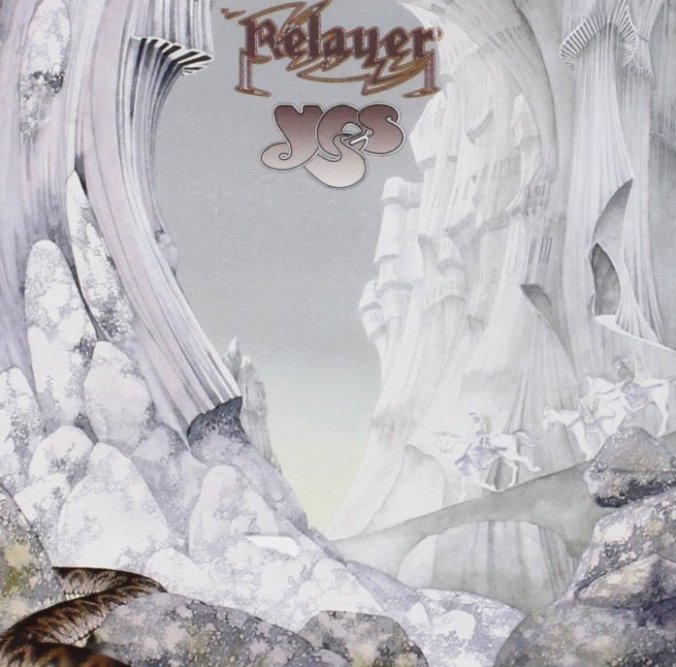
Let’s go back to the spring of 1974. After a lavish tour for the equally lavish double album Tales from Topographic Oceans, keyboard player Rick Wakeman has had enough and leaves Yes. His replacement turns out to be Swiss ace Patrick Moraz. Equally skillful, he deploys a sonic pallet that’s a little more edgy and brings in some influences of jazz fusion to the band. His one studio album with the band, Relayer, sounds like nothing else in their catalog and is, to some (me included) the last really great Yes album.

One of my brothers had it on vinyl and, one day in my misspent youth (I was either in late elementary or early junior high school), I was recording it onto cassette. Back in those days, kids, if you were recording something like that it took as long as the music lasted. In other words, you listened while you recorded. I was in the middle of side one when my mother showed up. Somehow she figured out (probably because I told her) that side one of Relayer is an epic called “The Gates of Delirium.”

That was all my mother needed to hear. It was about drugs and I wasn’t supposed to be listening to anything like that.

And that was that. Relayer was out of my reach, at least for the next decade or so. I returned to it in college, when I discovered the progressive underground online and really started exploring music. What struck me about Relayer – all of it, not just “Gates” – is how damned weird it is.

Yes, for as much as I love them and as big a part they played in the development of progressive rock, have never been one of the weirder outposts of the genre. Even of the Big 5 King Crimson and (arguably) Emerson, Lake, & Palmer went further out there than Yes did. What Yes did was traffic in classically-inspired epics of precise arrangement and performance. It was pushing some boundaries of rock, but not all of them.

Relayer is different. It’s wooly and wild in a way that Yes albums before or after were not. As I mentioned above, the sounds Moraz generates are fuzzier, spikier, and just more rude than Wakeman. Throw in the fusion influences and much of Relayer (3/4ths of it, at any rate) sound like it’s about to vibrate up off the planet at any time. Yes hit heights during their long career afterward, but not like this.

What’s clear to me is that had I really tried to get my head around Relayer when I was in junior high I probably couldn’t have. I would have written it off as “too weird” and moved on (I nearly did that with King Crimson’s “Elephant Talk,” which I heard somewhere and thought “what’s this shit?”). So my mother’s impulse to censor probably turned out well, in the end.

As for the motive? “The Gates of Delirium” isn’t about drugs at all:
“THE GATES OF DELIRIUM,” with Yes (RELAYER, 1974): Based on Leo Tolstoy’s “War and Peace,” this album-opening nearly 22-minute composition famously erupts into this lengthy all-instrumental battle scene only to finally settle into a quiet peace prayer called “Soon,” which was later edited out for a single. Recorded with keyboardist Patrick Moraz, after Rick Wakeman’s departure, Relayer has a harder, more guitar-oriented sound — something nowhere more obvious than during the cacophonous middle section. The tune, Anderson says, was constructed in tandem segments.

Anderson: I sort of wrote the thing on piano, very badly, then went in and played it for them – again, very badly – but they understood it. I told them how we would start it, then made the thundering sounds. I talked about this enormous energy, and then went into the battlefield section, then out of that we would all sing ‘Soon.’ We all worked on it together. They started working on the first section, then I would work in the second section and so on. We stayed ahead of the rehearsals. Steve and I wrote all the parts out on cassettes, and I would be listening and working on the next part so we would keep the structure. Thankfully, they got it.

Regardless – thanks, Mom! You probably helped me better appreciate a late-prog masterpiece!

Relayer

Weekly Read: The Lost City of Z

I generally roll my eyes at people who see a movie based on a book and then tut tut that “the book was better.” Even as a writer, it comes off as snobbish to me. The written word is a different medium than film, which makes adaptations their own things. One’s rarely “better,” even in a subjective sense, than the other. They’re just different.

The film, The Lost City of Z (released last year), got a good amount of praise when it was released. I’ve even seen people list it as being snubbed in the Oscar race. It’s the story of Percy Fawcett, who repeatedly search the Amazon jungle for evidence of a lost city in the early part of the last century. The wife and I put it on our list of flicks to see and, the other weekend, were able to pay per view it. My thoughts at the time was that it was a fine flick, but it suffered in comparison to such jungle fever dreams as Aguirre, The Wrath of God.

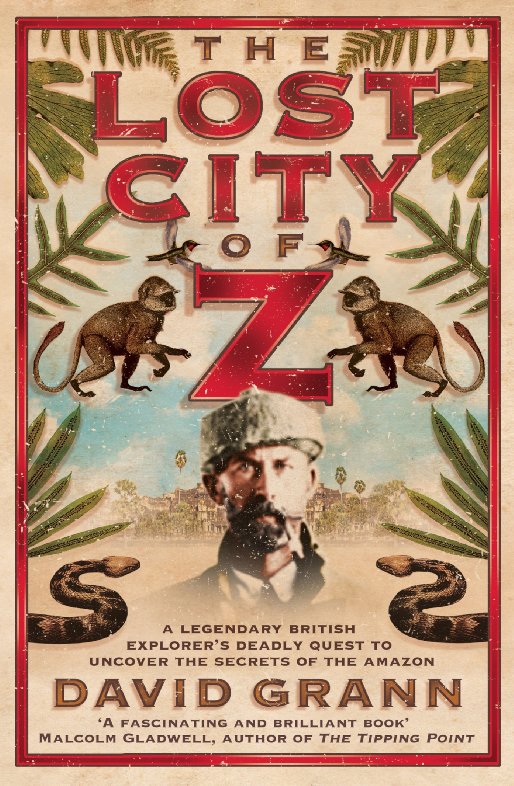
It did interest me enough to go read the book upon which the movie is based. Also called The Lost City of Z, it weaves the history of Fawcett’s expeditions in with the attempt of author David Grann to track down evidence of Fawcett’s final expedition (no spoiler alert – Fawcett’s disappearance in 1925 is one of the everlasting mysteries of the golden age of exploration). I’m glad I did, not just because the book provides more detail than any movie possibly could, but it makes clear that large hunks of the movie are complete and utter fiction.

Let me clarify that I’m not talking about whether the film itself, or the book, is “accurate” from an historical standpoint. There was a lively debate at the time the movie came out with historians arguing that it portrayed Fawcett in a much more positive, progressive light than the historical record supports (also, he sucked at exploring). Naturally, the director’s response to this was, in essence, “it’s art and you can’t talk like that about it.” That’s not what I’m really interested in. However, I will note this observation from one critique of the movie version of Fawcett:

The original book, by David Grann, was much more intelligent and nuanced, as one would expect from a staff writer on the New Yorker. But everything has gone wrong in its clumsy adaptation for the screen by director James Gray, who has written his own script and then filmed it with great reverence – almost always a mistake.

That sounds about right, although “clumsy” is perhaps too kind. It’s simply bizarre for a movie based on a particular non-fiction book – it even uses the title! – to break from the book in so many fundamental ways. I’m not talking about the inevitable compression that happens to turn a biography into a movie – that Fawcett had 8 Amazon expeditions, not 3, or that he and his son had a third person on their final voyage makes sense. I’m talking about things that get the character so wrong I don’t understand why the writer/director used the name of a real person.

For example, one of the most obvious diversions from the book is the in the film Fawcett is portrayed as having fallen into exploration after being tapped by the military and Royal Geographical Society to survey a river on the border of Brazil and Bolivia. In fact, Fawcett caught the exploration bug while stationed in Sri Lanka (then Ceylon) when he fell hard for a story of buried treasure (he didn’t find that, either). He’d already attended a 1-year course at the RGS before the surveying mission came up.

Or take the depiction of Fawcett’s relationship with his eldest son, Jack. In the film Jack is shown as an angry kid, raging against his father as a failure after an expedition collapses spectacularly (bonus point – the book never mentions that Fawcett resigned from the RGS in the aftermath, as the film portrays). They’re reconnection as they plan the last expedition is a moving part of the film. But, according to Grann’s book at least (the source material for the film!), the two were always close and Jack wanted to join his father in his explorations almost as soon as he could.

But the most egregious example involves World War I. Fawcett was well into his Amazon explorations when the war broke out. He went back to England and, eventually, to the Western Front. The film portrays Fawcett leading a Paths of Glory style assault over the top (after consulting with a Madame Blavatsky type – she died in 1891) during which he’s wounded by gas. No just wounded – blinded. A doctor even tells the blind Fawcett that he’ll never see the jungle again. This is utter fiction, unless Grann decided to skip the episode completely in his book. Fawcett wasn’t wounded, much less blinded, and didn’t sit around the English countryside recuperating for years until his son convinced him to give it one more go. Why the director (who also wrote the script) decided to put it in is anybody’s guess.

Somebody could have made a really interesting movie out of the Grann’s book. Even without the modern day overlay of Grann’s own expedition, the atmosphere of doom that clung to Fawcett’s final expedition could have really worked as the backbone of the movie (cover what else needs to be covered in flashbacks). Or, alternately, somebody could have used Fawcett as the basis for a truly fictional character and played around with the details as he saw fit. The Lost City of Z the movie isn’t either of those and it suffers for it. The Fawcett of the book is much more interesting than his celluloid counterpart.

But it did lead me to the book, for which I thank it. For, in this instance, the tutters would be right – the book really is better than the movie.

lost city z bookLost City of Z film

What’s a Director Worth?

It’s awards season, which means an annual tally of the talented in the world of movies. Among the most recognized are directors, who get recognized separately at awards like the Oscars and the Golden Globes. Often, but not always, the best director nominees track those for best picture, although that’s gotten a little muddy since we have more best picture nominees these days. That being said, what’s a director worth when it comes to the finished product? Is a great film always the result of great direction?

Mike D’Angelo, over at the AV Club, goes at the issue from the other direction and asks if there are situations where the “best-directed movie isn’t among the best of the year.” The example he provides from 2017 is A Ghost Story, which he calls “last year’s most stunning directorial achievement” but involves an “unexpected turn” in the story that is “enough of a deal-breaker” to keep it from being one of his best films of the year. From his description (I haven’t seen the movie) it sounds like a good argument.

GhostStory

Nor would it be unprecedented. It’s not unheard of for a director to be recognized for doing something really different technically or structurally without the final product also being recognized as superior. In 2013 Ang Lee won Best Director for Life of Pi, which involved a lot of technical wizardry that really pushed the bounds of film. It didn’t win best picture, however, losing out to Argo (which, ironically, didn’t even get a directing nod for Ben Affleck). One could make the same argument about Gravity the following year, for which Alfonso Cuaron took home Best Director, while 12 Years a Slave took home best picture (though Steve McQueen was nominated that year).

Where I think D’Angelo goes wrong is in trying to shift, and narrow, the focus of what makes a great director:

Rather than just give up and conclude that the best films must logically be the best-directed films, I instead try to determine, when voting for Best Director in year-end critics’ polls, which movies most impressed me from a purely visual standpoint. Admittedly, there’s plenty of crossover there with various technical categories—cinematography, editing, art direction, costume design—but I generally boil it down to a simple question: ‘Who knew exactly where to put the camera?’ When I come at it from that angle, Picture and Director diverge just enough to make things interesting.

It may make things interesting, but it gives short shrift to a lot of what a director does. You don’t have to be an auteur worshiper (D’Angelo labels himself a “softcore auteurist”) to recognize that a director is the one person most responsible for how a film winds up. Not the only one, certainly, but unless they are overrun by studio dipshits directors have what Bill Bruford, in listing his credits for a solo album, called “final say.” The buck ends with them.

To give one example where a film is shaped by the director’s “vision,” but not necessarily his camera techniques, consider Richard Linklater’s Boyhood. It’s a coming-of-age story shot, essentially in real time. Over the course of eleven years, Linklater filmed sequences with the same cast, including the central character, a boy who literally grew up on screen. The entire setup was his idea and he stewarded it through to completion.

Boyhood

Which is not to say identifying a talented director takes no more effort than finding a list of the best movies of a particular year. Sometimes they bring something so different to the table that the end result isn’t that important. More often than not, though, it is. It’s just really hard to quantify. It’s the Potter Stewart situation of the film world.

We All Need Some Light

The other day at work I was doing some research at a different end of the West Virginia Code that normal and came across a provision that made absolutely no sense to me. It’s WV Code §2-1-2, titled “Ancient Lights” for those playing at home:

The common law of England in regard to ancient lights is not in force in this state.

The background for this is that the prior section (WV Code §2-1-1) adopts English common law “except as altered by the general assembly of Virginia” before June 20, 1863. In other words, we adopted Virginia’s law as is when we left the commonwealth during the Civil War. But apparently it was important to exclude from that this law on “ancient lights.” So what are we missing here in the Mountain State?

Turns out it’s a right to light! In some places, at least. Specifically, it’s a kind of easement, which is a property interest that someone has in someone else’s property – think of someone who has the legal right to use a path across their next door neighbor’s property. In England, if a person has a building with windows that for 20 years have received daylight they can prevent someone else from building in a way as to obstruct the light.

Thus, you have things like this on some old English buildings:

Ancient_lights_signs_Clerkenwell FULL

Pic by Mike Newman via Wikimedia Commons

As it happens, West Virginia isn’t alone in not adopting this doctrine, so very few Americans actually have an enforceable right to light. Which is a shame, since, as the song says, we all need some light.

Author Interview – Eliot Parker

A few words with mystery writer Eliot Parker, current president of West Virginia Writers, Inc.

Who are you? Where are you? What kind of stuff do you write?

I’m Eliot Parker. I am a West Virginia native. I live in Huntington, West Virginia. I write mystery/thriller novels and short stories.

Tell us about your most recent book, story, or other project

My latest novel is titled Code for Murder. It features Cleveland Homicide Detective Stacy Tavitt who is looking for the killer of Cleveland Browns football player Devon Baker. With little forensic evidence connecting anyone to the case, Stacy sets out to find the killer. When potential suspects in the case are murdered, Stacy realizes Devon Baker’s killer may be more familiar to her than she realizes.

CodeforMurderCover

In what genre do you primarily write? Why did you choose that one?

 I write in the mystery/thriller genre. I got interested in that genre when I was a kid. The first series of books I really enjoyed were the Encyclopedia Brown young adult books. I also loved the Scholastic “Choose Your Mystery” book series where you (as the reader) could choose the decisions and actions that characters made throughout the book. The fun part was going back and reading the book and making different choices to see what happened to the characters. From then, I was hooked as a mystery/thriller reader and those same passions for that genre carry over into my writing.

I’ve asked this question of another writer who works in your genres, so I’ll ask it again to see if you agree – what’s the difference between “mystery” and “thriller”? Aren’t all thrillers about figuring out the mystery of what’s happening?

To me, a thriller can be defined as a story in which the audience is waiting for something significant to happen.  A mystery is a story of revelation, with the action more mental than physical.

Eliot

Tell us briefly about your writing process, from once you’ve got an idea down to having a finished product ready for publication.

I write a little bit each day, five days a week. I use post-it-notes to help me organize characters, plot, setting, etc. I usually get up early in the mornings and write for 30-45 minutes. On weekends, I write more and holiday and summer breaks from school (I teach at Mountwest Community and Technical College) allow me to write more. It takes me about a year-and-a-half to get the first draft of a novel completed.

How complete is a “first draft” (since it’s a year and a half in the making)? What goes on after you reach that point?

A first draft for me is one that is complete. It has the exposition, the climax, and the resolution written. This doesn’t mean that all of the writing is great. In fact, a good bit of it will end up taken out of the book or revised significantly. However, when those three parts are complete, I know I have a first draft. After that point, I step away from the manuscript for several weeks (sometimes months). This allows my mind to remove itself from the characters, plot, etc. of the book. Then, when I go back and read it again with fresh eyes, I feel like I am approaching the story completely new, much like a new reader might do.

Who is the favorite character you’ve created? Why?

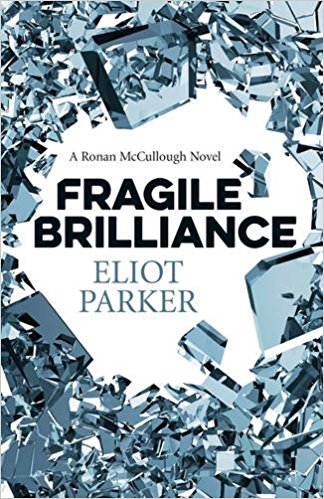
I love all of my characters. Choosing a favorite character is like asking a parent to choose their favorite child. However, my favorite character is Ronan McCullough. He appeared in my novel Fragile Brilliance. I love him because is tough, reckless, but principled. He is my favorite character because it’s so easy for me to get inside his head and his voice when I start writing. I don’t always have that same strong connection with other characters I have created.

FragileCover

What’s the weirdest subject you’ve had to research as a  that you never would have otherwise?

 In the sequel to Fragile Brilliance, titled A Knife’s Edge, I researched innovative technology being developed that allows law enforcement and hospitals to diagnose a host of illness and physical conditions with just one drop of blood, instead of the vials of blood that are required now. I learned more about blood, blood testing, and the process of analyzing blood through my research. I would never have sought out that information on my own if it wasn’t for the book. Blood freaks me out!

What’s the one thing you’ve learned, the hard way, as a writer that you’d share to help others avoid?

 The real part of writing is revision. Writers should know that the first draft is just that, the beginning of the process. Don’t be afraid or surprised to find yourself having to toss out at least 1/3 of what is written and then heavily revise the other 2/3. It’s that process of intense, detailed revision where the novel really finds is core truth and the characters really become what you envision them to be as a writer.

If you won $1 million (tax free, to keep the numbers round and juicy), how would it change your writing life?

 Absolutely! I would quit my job and be a writer full-time. I am working on that now, anyway, minus the lottery winnings.

What’s the last great book you read or new author you discovered?

 The last great book I read was Call Me By Your Name by Andre Aciman. It’s a powerful, moving story about love, saying goodbye, and the pain that comes when we cannot be with the one person that we love more than anything else in the world.

What do you think you’re next project will be?

 I finished the third revision of the next Ronan McCullough novel, titled A Knife’s Edge. It will be out in early 2019. I also have an outline finished for the next Stacy Tavitt novel. I am also working on compiling some short stories that have been published in literary magazines (and some that have not) for a short story collection.

Do you approach your short stories different from your novels (in terms of planning, revising, etc.)? If so, how?

I approach my short stories in the same manner that I do my novels. The only difference is that with short stories, the time spent with those characters and that setting is much shorter.

Weekly Watch: The Shape of Water

The other weekend my wife and I decided to go to the movies. It’s that time of year where all the stuff that was in limited release at the end of last year for Oscar consideration is starting to trickle out to our neck of the woods. We checked the listings and came down to seeing either The Post, the new Spielberg take on the Pentagon Papers, or The Shape of Water, Guillermo del Toro’s latest. The wife decided on the latter, figuring it was more the kind of movie that should be seen in the theater.

Boy was she ever right (as usual).

Mostly when I think of “see it in the theater” movies I’m thinking of the big, popcorn movies that dominate the box office most of the year – superheroes, big sci-fi/fantasy franchises, or action movies (the wife has a disturbing affection for the Fast and Furious movies). Things that really play into the “bigger is better” idea and make it worth dealing with the public to watch in super wide vision, rather than just on the TV.

The Shape of Water isn’t one of those movies. It looks beautiful, don’t get me wrong, and it has some praise worthy effects, but it’s not interested in them as an end, as so many big movies are. Rather, what makes The Shape of Water the kind of movie you want to see in the theater is that it’s the kind best experienced when you turn the lights off, shut out the real world, and give yourself over to it completely.

That’s because The Shape of Water is, essentially, a fairy tale. Voice overs at the beginning and end of the film make this about as explicitly as they could without just saying “this is a fairy tale.” It’s not a movie for your logical, rational mind; it’s for your heart or spirit or soul or whatever place it is where your feels live. That’s not for everybody – witness the low ratings from some IMDB commenters who ding the movie for not being “realistic.” Problem is, the movie never sets out to be realistic.

I mean, “realistic” isn’t a word that should be anywhere near a story about a mute woman who falls in love with The Creature from the Black Lagoon (or Abe Sapien – take your pick). Just so stories aren’t realistic – or else they wouldn’t be just-so stories – and that’s what this is. A collection of outsiders – mute woman, gay man, African-American woman, a communist – band together to save another odd outsider, battling all the way against forces of conformity.

By turning away from realism del Toro is able to give the film a lyrical, dreamlike quality. When a black and white musical number pops up in the second half of the film, it seems perfectly in place. Another scene, wherein the aquatic containment properties of the common apartment bathroom are pushed beyond all sense, works just as well. Del Toro, aided by an amazing cast, weaves a spell, but it has to be one you’re willing to fall for.

But don’t take it from me. The Shape of Water now had 13 Oscar nominations, including Best Picture and Best Director. You want to see it, and the best place to see it is in a large, dark room where you can let it completely absorb you.

ShapeofWater

New Cover, Same Great Stories!

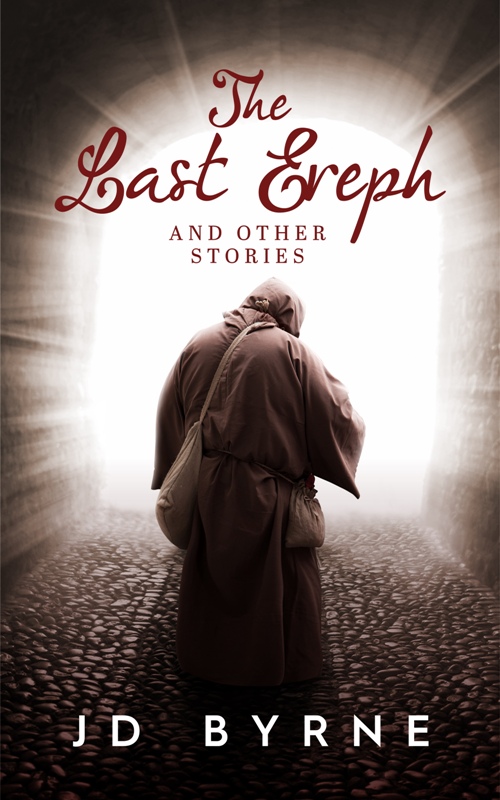
Releasing my first book, The Last Ereph and Other Stories, was a huge learning process for me. One of the things I learned was that I’m not very good when it comes to the visual side of things. I thought I could bang out a good cover all on my own. Others do it, right? How hard can it be.

Really fucking hard, it turns out. As I’ve moved forward and released other books I’ve looked back on The Last Ereph . . . and wanted to give it the suit it really deserved. Now I have:

Ereph Cover 2.0 (KDP) 500 x 800

This one is courtesy of James at GoOnWrite. But rest, assured, the stories inside (ten in all) are the same high quality as before.

Get the new, more stylish, The Last Ereph and Other Stories here:

Kindle
Barnes & Noble
Kobo
iBooks
Inktera
Scribd
Playster

Author Interview – Cat Pleska

For our first interview of 2018 it’s back to West Virginia to talk with memoirist and editor Cat Pleska.

Who are you? Where are you? What kind of stuff do you write?

I’m a native West Virginian, 7th generation. I have a BA in English, MA in Humanities, and an MFA in Creative Nonfiction. I am an educator, author, and storyteller. I teach full time in an online Master of Liberal Studies program at Arizona State University (go Sun Devils!). I’ve taught at the higher Ed level for 18 years and have taught writing workshops in memoir and personal essay for many years. I have been a History Alive! character (photographer Frances B. Johnston), an essayist for West Virginia Public Radio (7 years), a book reviewer for The Charleston Gazette, and am a reviewer for West Virginia University Press. I am the president of a small nonprofit, 40-year-old WV traditional press, Mountain State Press. I am a cat lady (bordering on crazy cat lady with 6 cats currently), married to Dan, mother to Katie, and pup mom to one dog.

Tell us about your most recent book, story, or other project.

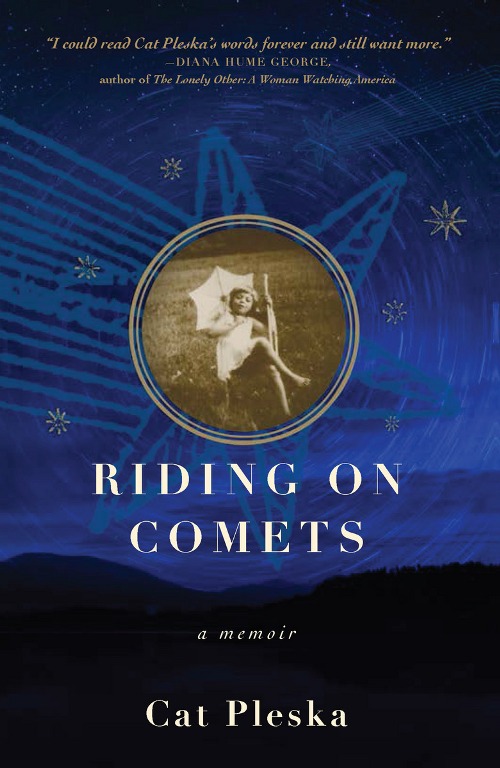
My memoir, Riding on Comets, was published by West Virginia University Press in 2015. About 15 years in the writing, it is a tremendous life accomplishment for me. I’ve edited 10 books, several through the Press and for another book company, Woodland Press. Most recently, Mountain State Press published Voices on Unity: Coming Together, Falling Apart, with 35 writers across the country (22 from WV) speaking to the difficulties of unity in these troubling times. I wanted for writers to have a format, a forum in which to practice what they do best when dramatic times present themselves, and they each stepped up to the plate creating poetry, prose, and song to exercise their right to speak out and speak up. I am super excited about my new book project, working title: The I’s Have It, a travel/personal essay collection about my travels in Iceland and Ireland. I hope to have it completed by summer and ready for revision throughout the fall.
Comets Cover

In what genre do you primarily write? Why did you choose that one?

I write primarily in nonfiction—specifically creative nonfiction, as I like personal writing the best. I call myself a memoirist and personal essayist and that is what I’m published in. The occasional fiction piece or poem floats out, but rarely. Because I come from a family of storytellers, and these were tellers of personal stories, not local or regional tales many might know, I was born into the sense of hearing and imagining in my mind the stories of my people first of all. They did not make up stories; rather, they were true stories told on themselves, so to speak, many times to make you laugh or to make you cry. Each time they told a story, which was every time they gathered, the story was the same—the details did not change. So, truth, to me, was always important. When I heard about creative nonfiction back in . . . the early 90s (when I was in college), I was intrigued. I found out creative nonfiction is the truth told with creative techniques (not making it up), but rather the same way one would tell any story: scene, dialog, description. I was blessed with a partial hyperthymesia, which is recall for one’s childhood. Plus, I was lucky enough to simply ask my family for confirmation of details all through my life.

Have you ever had a situation where you were “stuck” in your writing and could see an easy solution if you were writing fictions and could make things up but had trouble sticking to the truth? If so, how did you work around that?

The truth is I was never “stuck” in my writing due to the fact that I was writing nonfiction. The training I had in fictional techniques (this is about using craft, not lying) helped me present what many think are unessential details as essential, because in truth, they are essential. I let the details tell the story of what really happened. So, if I’m writing about going trick or treating, when I was a child, for example, what’s so significant about that event? Well, what’s significant were the costumes I chose: powerful women characters. What else? That I  wandered neighborhoods as a 9 year old alone. What else? That when I returned, I stood by the front door, looking through the storm door glass and saw a massive orange streak of lightning pattern across an absolutely clear sky. Then it streaked again. I end the story with me wondering what that phenomenon was and what it meant. I really did wonder this. After that piece is one in which my dad disappears at Christmas, drunk again. My mom worrying herself into a state of ill health over his drinking jags. What happened to him? Was he all right? What was going to happen when he returned—if he returned? Although it is exactly what happened, you can see how that the event with the foreboding lightning occurred in Oct. and then comes the Christmas story, and the reader might see the strange phenomenon as foreshadowing. That is what we do with our lives: we look for cause and effect. If someone is stuck in a nonfiction story, that’s my go to: this happened (why? which may cause me to back up with a story that explains) or this happened next: are they connected? Once you explore using those questions, it becomes clear you don’t need to alter anything to become unstuck. I just relax and let the real details flow, letting them do the work of revelation, metaphor, symbolism.

Tell us briefly about your writing process, from once you’ve got an idea down to having a finished product ready for publication.

My ideas usually come from reading, especially other memoirs/essays, but also from the two professional magazines I subscribe to: Writers Chronicle and Poets and Writers. I also get ideas from any number of other places I read, from newspapers, to literary magazines, to National Geographic, to Smithsonian, to fiction. I often just hear a word, such as the one I used above, hyperthymesia, and that’ll send me off into thinking about its definition and what it really means to be along that spectrum. I’ll do further research and then think of personal instances that might fit to include as scene and exposition. Sometimes my ideas come from conversations with people who’ll say to me: you should write about that. Sometimes I’ll review prompts from workshops I’ve been in. My ideas come from words, and it just goes from there.

How do you find people you trust to provide the kind of feedback you need during the editing/polishing process?

That’s actually been a long process and it was by trial and error. First of all, I was in college taking creative writing courses and then in workshops across the country, so I learned what effective criticism is and who knows how to do it and who does not. It is as hard to learn to criticize as it is to write in the first place. The skills are different, and not all writers hone how to criticize effectively. Sometimes, they don’t even know they should learn, but learning how to effectively criticize means you learn more about your own writing in ways you hadn’t thought about. I was in writing critique groups early on, too. But I learned over the years that not all groups work well. I have been in a few in the last few years that were very effective, but eventually, I needed to just write and find a handful of people who are skilled readers—for me (and as a general rule, close in development as a writer as you are). In turn, I am often a reader for them, but not always. And there are people I read for who don’t read for me, and that’s fine. I select who I’ll read, based on what they write, how they write, and the skills I’ve learned that would be helpful to them. Not every reader is a good reader for you and you must learn that. Having my work critiqued is never easy for me—to hear. But I’ve learned to shut out the protesting ego and just listen. I wait a couple days before I approach the piece for possible changes, re-read what they’ve written and then decide in a cold, clear light of a new day if the suggestions are valuable for my piece or not.

Who is the favorite character you’ve created? Why?

Since I’m a creative nonfictionist, I don’t make up characters, but I certainly do develop them. You cannot just write about a person and say, well, she’s this or that. You have to show who that person is. For example, when I wrote about my father in my memoir, it would be easy to make him a bad guy since he was an alcoholic. But my dad was also very intelligent, a hard worker, and when sober a really funny, kind man. You have to create the rounded character even though they are not made up. You have to do your homework. I and my family had to come alive on the pages of my memoir and the same goes for any essays I write about anyone. Real people, researched, and fully, roundly viewed. I have no favorites, although I am fond of myself when I was small, say 5. I say that because that was when I became more aware and absorbed the world around me. Things came alive and so did I. My curiosity was profound and my skill as an observer, as an only child in a world of giants, set me off on my life as a writer more than anything else.

What’s the weirdest subject you’ve had to research as a writer that you never would have otherwise?

The current essay I’m writing about is the Penis Museum in Iceland sort of tops that list. I visited there, but I’d read about it before I went to Iceland. After being there and being . . . rather amazed (I mean, a sperm whale penis? Wow!) I’m still doing some research. In fact, I stumbled across a video interview with a guy who’s gifting his penis in his will to the museum. Apparently 9 inches, un-inflated, as it were, is pretty amazing.

What’s the one thing you’ve learned, the hard way, as a writer that you’d share to help others avoid?

 This is crucial to do: edit, edit, edit, revise, revise, revise then let people read it to edit/revise again and again. Do not ever put a book out there that you haven’t gotten professional editing for. Avoid that urge that this is all you can do and it’s good enough. Take out a loan if you have to, but get it professionally polished. Realize that not everyone is going to love your book. Or read it. Do not worry about that. Why should everyone? Not everyone likes Shakespeare, the bible, Fifty Shades of Grey. Don’t expect 7 billion people will like your writing, no matter how excellent it is. Avoid that expectation and realize there are even some good friends who aren’t going to read it. That’s fine. Don’t sweat it. Concentrate on and be grateful for those who do read it. Be kind. Be confident you’ve got a good book/writing, and you will if you’ve done your homework. Mostly, enjoy the writing. The sales will come.

Unity Cover

If you won $1 million (tax free, to keep the numbers round and juicy), how would it change your writing life?

I would travel half the year and write the other half. When I was 16, I wrote a letter to a person in which I said, “What I want to do when I grow up is to travel and to write.” And that dream has not changed. I’ve been to 8 countries, 4 continents (including no continent—that’s in Iceland and it literally is not any continent, but is a small stretch of land between the American continent and European/Asian continent), and it’s not enough. I’ve written all my life, have been published since 1990, and it’s not enough. So, 1 million in my pocket would set me free to do and be even more. It would be a tremendous blessing.

What’s the last great book you read or new author you discovered?

I’m sort of into the Icelandic authors right now, but I have so many books to be read . . . I’m not ashamed nor will I stop as long as a I have a dime in my pocket buying books—lots of them. I do not care one fig they’re all over the place around here. I’ll get to them as long as the eyeballs last.

Why Iceland? Both as a travel destination and as a focus of your reading?

Because I always wanted to travel since I was very young, my heart leaps up when I come upon a chance to do so. In the case of Iceland, it actually hadn’t been on my radar but a conference called NonfictionNow came up and it was taking place in Reykjavik, Iceland, and I both wanted to go to that conference, one that I had never attended, and to Iceland because a little reading about it told me I’d probably love it (I do!). So, I wrote a paper to submit for a round table event and it was accepted. So, off to Iceland I go. The diversity of attendees was quite fascinating and the conversations were enlightening. But it was the land and its people that fascinated me most. What I found there was a land still forming, but which had a history rich and engaging and that Icelandic is a language spoken that the Vikings would still understand from a thousand years ago. It’s a land where the very pragmatic people believe in elves and trolls (about 50%), where the ministry of highways employs “Troll whispers” to help in highway design. Where there are waterfalls that appear to fall to the center of the Earth, geysers flume, and the land is an incredible glowing green (Greenland is ice; Iceland is green—go figure!). These are just some of the elements that attracted me to Iceland, but the possibility of this still forming land and fascinating citizens (they just voted into law that a company cannot pay a women less than a man for an equal job) fire my imagination of what it would be like to live there. So, I write about it, dream about it, consider what it would mean if I lived there. And by the way: Icelanders love literature, have 100% literacy rate, and almost everyone publishes.

What do you think your next project will be?

As I mentioned, it’ll be The I’s Have It, but beyond that is a novel. I once thought I had two novel ideas and for years I’ve danced around with writing them both from time to time, never really getting very far. A few pages on each at best. But in 2016, I was in Shepherdstown at a local diner for breakfast. It was crowded, so my husband and I were sitting at the counter, drinking coffee, waiting for our order. I was watching the wait staff weave around one another behind the counter, as if they were braiding invisible strands of hair. They moved steadily, efficiently and smoothly and suddenly I realized—this came out of nowhere—that I was not writing two novels; they were the same novel and needed to be joined; that is, braided together. Once I realize that, I started writing the book anew. I was happily into my third chapter when a character came forward that I thought was going to be a minor one, and BOOM! She took over. I haven’t been back to it for while, as I’ve got to reconfigure the whole dang thing—in a way. All I’ve written will work but now it has to be meshed in a new way and I have to think about the structure/theme. Hey! It’s what writers do!

What’s different about the mechanics of writing fiction versus nonfiction?

As for the mechanics, there is not much difference. A good story is a good story, and the elements that make for a good story don’t differ, regardless of what genre you’re writing in (exceptions are hard news writing, scholarly writing, some biographies, although the latter two benefit from using the common mechanics of writing story). Having a facility for detail and good memory, in addition to the fact finding and checking, is a good thing for a memoirist and personal essayist, and a fiction writer as well. My early passive training in a family of storytellers caused me to have a facility with language, sensory detail, dialog, description. Just as someone writing fiction, I know I must have an opening sentence in my nonfiction that captures the audience. I know I have to provide details so the reader can “see” in their mind’s eye what’s going on; There has to be a narrative arc, something connecting the main story themes throughout; I have to build in tension; and writers of any genre who wish to tell a story, true or not, need to think about the universality of what they are writing about: why would anyone read it and care? In the end, the only major difference between writing creative nonfiction and fiction is whether or not you’re careful about fact—what really happened. But you have to break down that fact and think: but what does it mean? What do I think about it and know from it? How did it happen and what was the result? Life is story, and if we’re lucky, we get to tell it.