There’s been some interesting talk online about some of the economics of writing or, rather, being a writer. I have a day job I love that pays the bills, so this isn’t something I lose a lot of sleep about, but if you enjoy reading books or watching movies or listening to music, it’s worth remembering that the people that make them have all have bills to pay and families to feed, too.
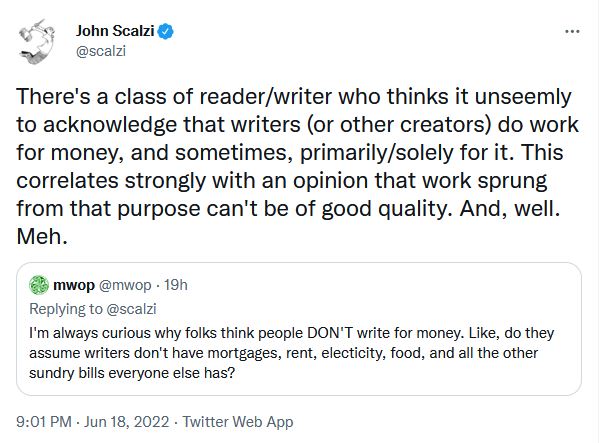
Things sort of got summed up by John Scalzi on Twitter over the weekend:
I suppose this is an offshoot of the idea that artists need to suffer to make great art, which always kind of mystified me. Yes, there are writers and musicians that are tortured souls and managed to turn that into great, moving works of art. But there are just as many who seem pretty well adjusted and just love doing what they’re doing, the only real suffering coming from when people expect them to continue entertaining them for free or, worse, “for exposure.” “Happy” and “artist” should be used in the same sentence together a lot, I’d thihk.
Growing up, I sort of assumed that anybody who wrote a book or released an album made their livings doing that. It really wasn’t until I dove into the progressive rock world in college that I realized how many amazing musicians actually had day jobs to pay the bills (hopefully in music or some related field, but oftentimes not). That sort of opened my eyes about how economics and the arts intersect in the United States.
Now in the era of streaming services things are even worse for musicians. The per-play rate for a song on even the most generous service is pennies (and often a fraction of that). Fans need to realize that if they want more of their favorite music, they need to do more than just stream it. Buy LPs or cassettes, if your that particular kind of hipster. Or buy downloads directly from the band (or via something like Bandcamp) as a way that puts the most money directly in their pockets. Love and adulation is great, but it doesn’t pay the rent.
But whatever you do, don’t buy it, listen to it, and then return it.
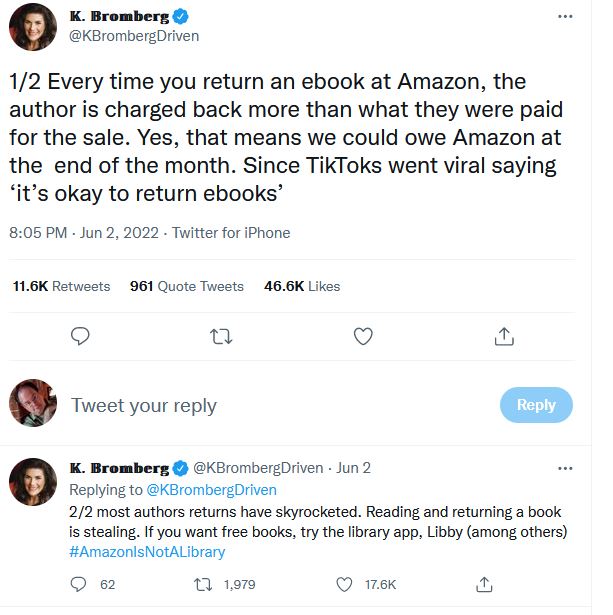
I didn’t even realize this was a thing until posts like this started circulating from writers no Twitter:
As this article explains, Amazon allows you to return Kindle books within a week after purchasing them. Although this is to allow refunds for “accidental” purchases (mistakes happen, after all), some folks have spread this as a “hack” to allow readers to buy a book, read it quickly, and then return it for a refund:
It’s not immediately clear if new videos about returning e-books in the form of a “Kindle hack” were being spread around, but it was the subject of discussion on BookTok several months back as a debate over whether returning a fully read Kindle book could be considered “stealing.” Some who think the claim is nonsense compare returning a book you don’t like to returning a top that doesn’t fit or being comped for a meal when you find a bug in your food.
It should be obvious that returning a book that you read to completion is nothing at all like returning a piece of clothing that didn’t fit or getting bugged food for free. In both of those situations the product you received was defective in some way. They analogize to situations with books where you honestly buy the wrong one, get something other than is advertised (it’s a short story, not a novel, for example), or the file is corrupt and unusable.
But if you buy a book (or an album or a movie) and you read it then that’s it, you’ve got no right to a refund. It doesn’t even matter if you didn’t finish it because you thought it sucked. There’s a certain about of buyer beware that applies to any purchase, but that’s doubly true for art. It’s simply impossible to buy something to which reactions are so subjective with an expectation that you’ve got a money-back guarantee. Trying a new author or checking out a new band is an act of faith, of hope that it will be amazing, but you’ve got to be willing to accept that it might not be.
To return to the restaurant analogy, if you and a friend decide to try a new place that has a great reputation and seems just up your alley, but you don’t find that it met your expectations, you still have to pay for the meal. Sometimes, where matters of taste are involved, things don’t work out the way we want them to. That’s life.
A good rule of thumb for negotiating the world or books, music, or any other artistic thing in the modern era is to ask, “is this going to mess with the livelihood of the person (or persons) who created this?” before doing something that impacts their bottom line. If the answer is “yes,” think long and hard as to whether that’s justified. Deep down, I think you’ll realize it very rarely is. At the very least, before you start demanding your money back it ought to rise to this level:
I’m not going to say that finding a great story to tell is easy, but in some ways coming up with the story itself can be easier than figuring out the proper form to tell it.
I’ve been thinking about this as the wife and I have been watching Gaslit, the Starz series about Watergate that wrapped up this past weekend.
See, the thing about Gaslit – from its title to its marketing (as you can see above) – is that it promises a new angle on Watergate. It was supposed to be focused on Martha Mitchell, a political celebrity and wife of Nixon’s one-time Attorney General John Mitchell. She knew all about Watergate and told the truth about it, only to be destroyed privately and publicly by, among others, her husband.
That is a fascinating story, horribly relevant in the world of #MeToo, that would provide some interesting insight into the general Watergate story we’ve all see over and over again. Only it really isn’t. Instead, Martha’s story is buried in the mix, forced to share or cede time to a cast of characters we’ve seen before and about whom the show has little to say.
Take the penultimate episode, which splits time about equally with Martha’s testimony before the Watergate committee – behind closed doors, ambushed by accusation of mental illness – and the struggle of Gordon Liddy in prison to kill a rat. Really, is that what the series is about? It doesn’t help that every time Liddy opens his mouth it sounds like he’s just one step away from lapsing into Doctor Evil’s meat helmet speech.
In other words, there’s a pretty good movie struggling to escape from an eight-episode limited series. A tight two hours or so that trusts the audience to already know what Watergate is and focus on the relationship of the Mitchells (played well here by Julia Roberts and Sean Penn), how it pulls apart, and the effect that daring to tell the truth had on her. It’s particularly sad that we didn’t get that movie, given that we’re in the fiftieth anniversary year of Watergate and we’re going to get lots of other general retrospectives on the scandal, including the one currently on CNN featuring John Dean (who gets a goodly amount of screen time in Gaslit as a Porsche-driving climber who kind of lucks into doing the right thing, eventually).
It’s entirely possible that Gaslit was only ever supposed to be a big ensemble piece and the purported focus on Martha came later, which would explain why much of it is not her story. It’s also possible that the Martha story was what drove the creators, but the network guided into a more blown out story. Obviously, you can’t tell at this point.
What you can tell is that whatever Gaslit is, it’s not what it wants to be or purports to be. Which is a shame, because with the talent on screen it could have been so much more if it had been so much less.
To wrap up the months of lists, it’s only natural to turn our attention to books. Just choosing ten favorite books is tough – so I’m going to cheat. A few years ago I did a post about ten books that were “particularly important to me,” spun off from a Facebook thing that was going around. Those are all favorites, right? Sure. There’s a difference between “favorite” and “important,” but I’m not sure that’s a hair worth splitting.
That said, I’ve read an awful lot more books since I did that, so rather than take apart that first list, I’m just going to add to it. So, these ten books are all recent favorites (recent to me, at least) and I love these and the old ones so much I don’t want to knock any of those off to make room. It’s my list after all, right? Speaking of, if Saga, by Bryan K . Vaughn and Fiona Staples was complete, it would be on this list in a heartbeat, but I worry about them sticking the landing (it’s still only about halfway through, after all). Thankfully, that leaves an open spot on the list (for now).
The only other cheat for this list is that I decided to consider series as a single entry, so I could consider those in their entirety. Other than that, no rules. Also apologies for the wonky order, as I originally had them listed by series title but the formatting looked awful. Honestly, they’re in alphabetical order! That said, let ‘er rip . . .
The Mechanical (2015) – The Rising (2015) – The Liberation (2016)
It’s 1926, but not the 1926 we remember. There is no Lost Generation following the First World War, no Jazz Age, no impending economic collapse. Instead, the world, or at least the largest part of it, is ruled over by the Dutch. How have the Dutch managed this feat? Magic, of course.
That’s the basic setup for the Alchemy Wars trilogy – one of the “clakkers” created by a combination of Dutch magic (here called “alchemy”) and steampunkish technology gets a case of free will and a war of liberation is on. Along the way, we get a heavy dose of live in the world’s only non-Dutch outpost – a rump New France based around Montreal. The Mechanical is a brilliant opening book, full of world building and questions on the nature of being. The Rising gets a little too action heavy, at the expense of the philosophical questions, but The Liberation rebounds, bolstered by some temporal sleight of hand that shouldn’t work as well as it does.
American Heiress: The Wild Saga of the Kidnapping, Crimes and Trial of Patty Hearst (2016)
by Jeffrey Toobin
Just by growing up when I did and sitting in the culture I knew the outlines of Patty Hearst’s story – she was a rich young woman who was kidnapped by radicals and eventually wound up taking part in some of their violent activities. I was vaguely aware of the debate about whether she was really transformed into a believe or just going along out of fear. Toobin’s (yeah, I know) book does a really good job of filling in not just her specific story, but the time period out of which it arose. I had no idea bombings were so common in the 1970s! He also manages to dig into the argument on Hearst’s culpability deeply enough to allow people to draw their own conclusions, if you even can (I’m not sure I have). Super bummed that any adaptations of this book apparently aren’t going to happen.
The Ball Is Round: A Global History of Soccer (2006)
by David Goldblatt
While soccer is my favorite sport, I admit that I’d not really dug too deeply into the history of it. I had a handle on the big stuff – Uruguay’s early success, our upset of England in 1950, Pele – but the development of the game itself was mostly a black hole for me. No longer, having absorbed this deep history of the development of the beautiful game. What amazed me is how much of the game’s reach today is the result of British influence overseas, both through empire and commercial power (Barcelona, AC Milan, and a host of South American clubs have English or Scottish origins). There’s such a wealth of interesting history that plays into the current state of the game that it’s easy to overlook some of the “you are there!” portions that try to describe game action but can only come up short.
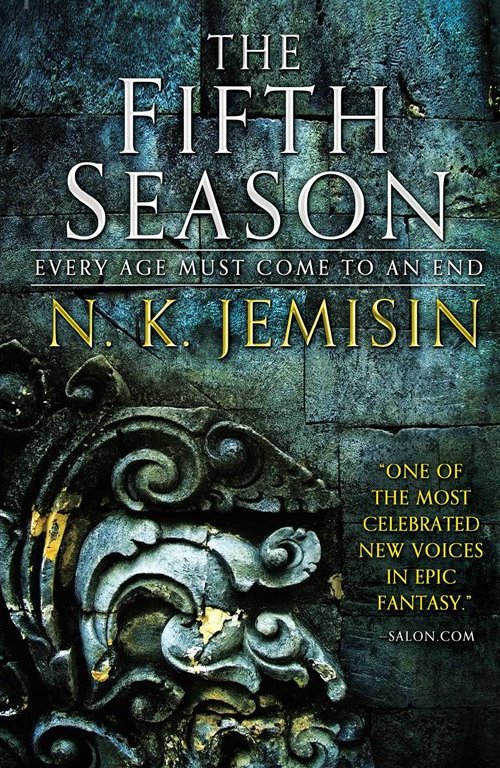
The Fifth Season (2015) – The Obelisk Gate (2016) – The Stone Sky (2017)
by N.K. Jemisin
I mean, these books only won the Hugo Award back-to-back-to-back, a feat never before accomplished, so it’s safe to say they’re pretty good. The Fifth Season is flat out brilliant, a structural bit of leger de main that completely reconceptualizes all that came before when you reach the end. The other two can’t quite reach that height, but that’s no slight. The world building is amazing. Jemisin has an amazing knack for brilliant scenes, the basic building blocks of writing. They’re not light reads, but well worth the emotional toil they’ll wreak upon you.
Children of Time (2015)
by Adrian Tchaikovsky
The main characters in this book are spiders. That is not a joke. They’re jumped up, hyper-evolved spiders, benefiting from a fuck up in human settlement on another planet. Science fiction has the ability to put readers in the head of truly alien creatures and Tchaikovsky did that here. But there’s also a second story line, of another ship full of humans (some on ice) where things are going to shit. They cross paths, of course. The next book in the trilogy, Children of Ruin, is just about as good. The only think keeping me from putting the whole trilogy on here is that it isn’t finished yet!
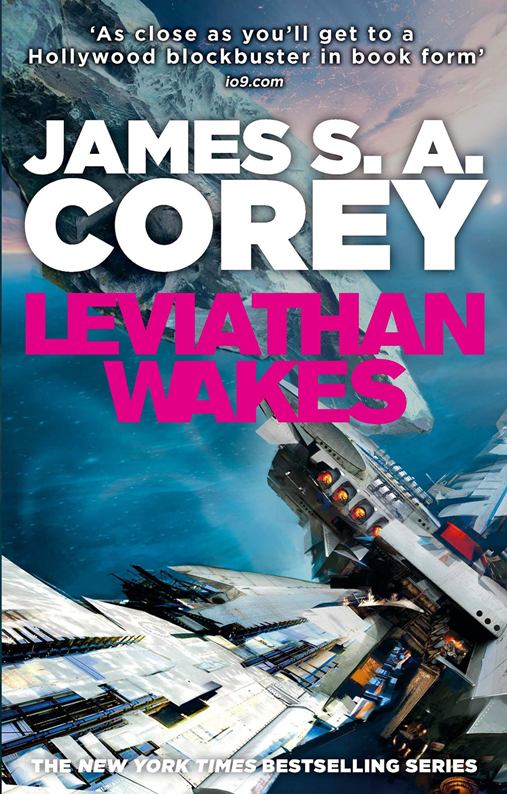
I’ve sort of concluded that the trilogy is the ultimate best length for a series. It’s long enough to tell tales of grand scope, but tight enough not to get away from the author. As a result, I rarely go more than a couple of books into a lengthy series unless I completely love it. Clearly, the fact that I’ve read all nine books in the Expanse series (and consumed all of the excellent TV adaptation) means that I loved this. It’s not all brilliant (looking at you, Cibola Burn), but the world that’s built is amazingly realistic (it feels that way, at least) and it’s full of characters I came to really care about. And, I have to say, I think the writers really nailed the ending in a way that was satisfying and felt complete. If you’re looking for a near-future space opera to simply lose yourself in, this is it.
The Half-Made World (2010) – The Rise of Ransom City (2012)
by Felix Gilman
The world of The Half-Made World looks a lot like the American west during the late 19th century, with white settlers streaming into “untamed” territory and finding conflict with the natives, not to mention each other. What really distinguishes this world is an ongoing (never-ending?) conflict between The Line (the embodiment of technological process in sentient train engines) and The Gun (chaos and immorality) that plays out in a world that is literally still in the process of being made. It’s a brilliant setup and serves to bring to life one of the most interesting characters I’ve ever encountered, John Creedmore. An agent of The Gun, Creedmore is a killer and a thug, but he’s also in thrall to a demon that lives in his gun. His struggle to leave it behind is exceptionally well done. Set in the same world and sharing some characters, this is more a pair of great standalone books (with The Half-Made World getting the nod) than an ongoing serious. Unless Gilman decides to give us another glimpse.
Hogfather (1996)
by Terry Pratchett
Generally speaking, I don’t reread books. It happens every now and then, but for the most part I’d rather move on to newer things, given the increasingly absurd size of my to-be-read pile. That is to say, Hogfather has a special place in my heart as I read it every year during the Christmas season. It’s a story of Hogswatch, the Discworld variant of Christmas, in which someone is trying to kill the Hogfather (i.e., Santa) leaving Death to fulfill his duties and Death’s granddaughter to stop all of existence from coming undone. It’s funny, sweetly nostalgic without overlooking how narrow nostalgia can be, and just all over brilliant. It warms my holiday cockles in a way that nothing else much does.
Say Nothing: A True Story of Murder and Memory in Northern Ireland (2018)
by Patrick Radden Keefe
Speaking of rereading books. I just went through a jag reading about Irish history, finishing up with a history of the (provisional) IRA, so I decided to dive back into Say Nothing, which covers The Troubles but on a more personal and street-level way. It also deals with questions of memory and how we talk about, and study, the past. It’s simply brilliant on every level. I can’t recommend it enough.
Sex Criminals (2014-2020)
by Matt Fraction & Chip Zdarsky
When I saw a story somewhere about a comic called Sex Criminals I thought it might be about the kind of people I represent in my day job as a defense attorney. How surprised I was that it was about people who had sex and then committed crimes! That’s because time literally stops when the two main characters (and several others, as things go on) have an orgasm, allowing them to get up to all kinds of nonsense (one of them takes the time to drop a shit in a plant in his boss’ office). If that was the entire joke the series couldn’t have run for more than thirty issues, but the series builds into a deeper exploration of relationships, depression, and other things. It wrapped up in 2020 in pretty satisfying fashion.
That’s it! The end of lists! Regular programming returns next week (probably).
So, the original plan for the “month of lists” is lying in ruins along the side of the road at this point – given that it’s now June. Perhaps because of that, I’ve decided to cheat a little bit and expand the favorite movie list from the twenty in Steven Wilson’s book to twenty-three. Why? Well, why not? Also, paring this list down proved harder than I’d imagined (if I could get down to only 100 songs, right?) and I didn’t feel like cutting any others. Twenty-three it is. Think of some as bonus tracks, I guess.
As with the favorite songs list, the operative frame for this list is “favorites.” There’s at least one movie on this list that is generally regarded as bad, but I love it anyway and it’s a fav. Likewise, this list omits some really excellent movies that are, nonetheless, so emotionally destructive that I have no desire to see again – things like Requiem for a Dream, Graveyard of the Fireflies, and Hunger. It also omits some really great things that I really like, but nonetheless wouldn’t quite call a “favorite” – like, say, Citizen Cain.
Oh, and spoilers will abound. Most of these movies have been out for years so, really, you’ve got nothing about which to complain.
With that said, away we go . . .
Amadeus (1984) Directed by Milos Forman Written by Peter Shaffer
I’m not the biggest fan of Mozart, years of slaving away at his magical clarinet concerto notwithstanding. When it comes to orchestral stuff my preference runs to the later romantic and early modern composers. Which is why a lot of what is in Amadeus – the music, the operas – wouldn’t do much for me if the actual story itself wasn’t so compelling. Yes, I know, it’s not historically accurate (neither is Shakespeare – let it go), but I’m a sucker for a story about rivals involved in a petty dance of destruction (see also, The Prestige, below). That the film is beautiful to look at, centered on a pair of great performances, and a joy to listen to is what probably pushed this to the list ahead of my other Forman favorite, The People Versus Larry Flynt.
Blade Runner (1982) Directed by Ridley Scott Written by Hampton Fancher & David Peoples
I was working on (or at least thinking about) this list when the news came down that Vangelis had died. Blade Runner is a triumph of atmosphere, visual and audible, more than anything else. Without Vangelis’ score, a ground-breaking electronic soundscape making full use of the new(ish) Yamaha CS-80 synth, it wouldn’t have worked nearly as well. I mean, yes, the whole concept is interesting and asks questions about what it means to be human and everything, but even if Blade Runner was just the visuals, the music, and Roy Batty’s “tears in the rain” speech it would still make this list.
The Blues Brothers (1980) Directed by John Landis Written by Dan Akroyd & John Landis
The blame or praise for this one being on the list lies solely with my older brothers, who introduced me to The Blues Brothers (the band and the movie) at an early, impressionable age. The music is the highlight here, with the band joined by R&B luminaries like Aretha Franklin, John Lee Hooker, and Ray Charles (among others) – hell, Joe Walsh even turns up in the “Jailhouse Rock” scene in the end! And there will never be a more touching and poignant version of “Stand By Your Man” put to film. But the straight comedy bits are mostly gold, too, including the running bit with a murderous Carrie Fisher that only gets explained when it has to. Also, there’s a little car chase that’s kind of fun.
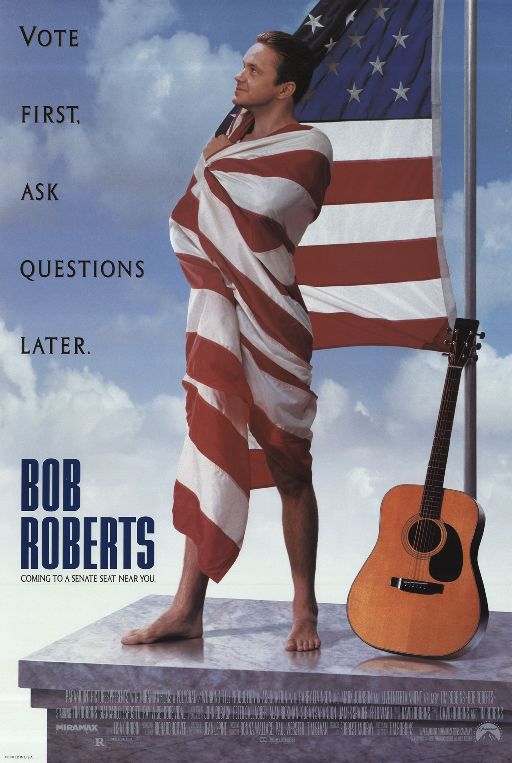
Bob Roberts (1992) Directed by Tim Robbins Written by Tim Robbins
Whoo, boy, here’s one that continues to be sadly relevant in the modern world. The titular Bob Roberts is a “conservative folk singer” who made millions with junk bonds, hostile takeovers, and the like and decides to run for the US Senate in Pennsylvania. His opponent is an old-line liberal Democrat (basically a Ted Kennedy stand in) played to smarmy perfection by Gore Vidal (basically playing himself). The movie follows the Roberts campaign (run by Alan Rickman) as scandal swirls around it related to drugs and overseas shenanigans (rooted out by journalist Giancarlo Esposito). The songs are deadpan perfect (one anthem is “The Times Are Changing Back”). But what really sells it these days is the way a near-cult following grows around Roberts (including a young Jack Black) that, when it’s shown in the end that he’s a complete fraud, simply doesn’t care. Prescient, no?
Brazil (1985) Directed by Terry Gilliam Written by Terry Gilliam, Tom Stoppard & Charles McKeown
If I was forced to name an absolute favorite movie, this might wind up being it. I love the blending of “reality” and fantasy. I love the dark humor, with several running jokes. I love Robert de Niro almost unrecognizable until he’s swallowed up by a massed ball of waste paper. But I also love the story behind the movie, the battle Gilliam had to fight to get it released the way he wanted it (in the United States, anyway) and the amazingly odd edit the studio chief put together of it. Gilliam said he wanted to make a movie where the happy ending was a man going insane, which the studio cut reduced to a triumphant “love conquers all” ending. Gilliam’s vision is brilliant. The oddball alternate reality version is an fascinating comparison.
Breaker Morant (1980) Directed by Bruce Beresford Written by Jonathan Hardy, David Stevens & Bruce Beresford
I saw this for the first time in a military history class in college, which makes sense. It’s a true story from the Second Boer War where a trio of Australian soldiers are put on trial for killing prisoners and deals with the clash between established notions of just war (don’t kill prisoners!) and the evolving nature of war itself (guerilla tactics and how to respond to them). They’re given an inexperienced Australian solicitor to defend them and it’s made clear that they’re to be (in the words of a book the one whose death sentence is commuted) Scapegoats of the Empire. It’s an idea movie, a great lawyer movie, and contains one of the best last lines in all of cinema.
Clerks (1994) Directed by Kevin Smith Written by Kevin Smith
Dogma deals with bigger ideas, but dammit, Clerks is just funnier. It’s dumb in a lot of ways and far from a work of distinction when it comes to visuals, but it’s full of individually hilarious scenes and conversations that really probably have no place being in a movie. Yes, the second Death Star discussion (*ahem* see below), but also there is the stuff about position dictating behavior and the contrast between Dante’s life of obligation and Randall’s care-free approach to living (note they both wind up largely in the same place). Plus, this is another one of the those movies with a great story behind it.
Do the Right Thing (1989) Directed by Spike Lee Written by Spike Lee
Another movie that’s decades old, yet sadly remains so relevant today. You could easily see the spark that grows into the literal fire at the end of the movie happening today online, with sides quickly drawn over a small, but meaningful, incident that touches on the history of racism in this country. Oh, and don’t forget the horrific act of senseless police violence that ultimate sets off the tinder keg. The cast here is amazing, as is the score, as Lee manages to pull together an ensemble of characters that are each well drawn and compelling in their own right. It’s a joy in a lot of spots, until it hits you in the face.
Dr. Strangelove or: How I Learned to Stop Worrying and Love the Bomb (1964) Directed by Stanley Kubrick Written by Stanley Kubrick, Terry Southern & Peter George
Another for the “still relevant after all these years” file. Strangelove is a master class in making a comedy that is not inherently funny. It works so well because everybody is playing everything perfectly straight (the “you can’t fight in the war room” is not really a punch line), which keeps it both darkly funny and terrifying. There’s an additional gloss to the proceedings these days as General Ripper comes off as the prototypical Q-follower and represents the danger of those folks actually gaining power. Which, in some cases, they have. Where’s my falling bomb and ten-gallon hat?
The Empire Strikes Back (1980) Directed by Irvin Kershner Written by Leigh Brackett & Lawrence Kasdan
I am of a vintage that the original Star Wars trilogy is the one that means the most for me – I remember seeing Empire in the theater (I think on vacation visiting my aunt in Philly?) and still being slightly terrified by the guys walking up and down the aisles dressed as Darth Vader and a pair of Stormtroopers. Going back to Clerks, Dante is right that Empire is the best of the movies (including the two newer trilogies, which are OK), but not just because of the downer ending (life, Dante says, is a series of down endings). It’s because it’s a brilliant middle part in a trilogy, moving the entire plot along while deepening our understanding of the characters and telling a fairly self-contained story. There’s no wheel spinning here. Plus, the whole Vader-is-Luke’s-dad reveal really worked (in a way it couldn’t today in the age of spoilers).
Fargo (1996) Directed by Joel Coen Written by Joel Coen & Ethan Coen
Few movies set outside LA or New York have such a firm sense of place as Fargo. From the frozen wastelands to the urban sprawl to the accents, there’s nothing that’s ever really felt like this movie. It’s a story that drills down on one of the great truths of criminality – crooks are usually undone by their own fuck ups, not necessarily by brilliant police work. It’s worth noting that Marge’s best quality isn’t a particularly keen eye or Sherlock-style deductive logic, but sheer persistence and basic goodness. She has a good bullshit detector, not because she’s super cynical, but because she isn’t. It’s why the creepy stuff with guy from high school is there, to show she still has blind spots. But I’ll give Marge her due – I use “he’s fleeing the interview!” way more often then I should in casual conversation.
A Few Good Men (1992) Directed by Rob Reiner Written by Aaron Sorkin
I joked once to my wife that if we’re scrolling through the TV and this is on that I have to stop and watch it or risk being disbarred. It’s not quite like that, but I am pulled into this pretty much any time I see it. Part of it, of course, is that it’s a quintessential lawyer movie, with defense attorney’s striving fully to save their clients’ lives. But part of it is I really fall for Sorkin’s dialog. I know it’s not realistic – people don’t talk that way! – but who cares? I also love the ending, after Nicholson’s epic meltdown, because it’s so true to the life of a defense attorney – yes, you won on the most serious charge, but your guys were still convicted of something and got kicked out of the Marines (which is what they wanted to avoid in the first place). Criminal defense is all about partial victories and learning to revel in them.
Flash Gordon (1980) Directed by Mike Hodges Written by Lorenzo Semple, Jr.
I refuse to buy into the concept of “guilty pleasures.” It’s just a way for people to feel good about liking stuff that others don’t, which is bullshit – love what you love when it comes to art. I love Flash Gordon for all the cheese and questionable swashbuckling that runs all the way through it. There are a couple of really good lines in there (“tell me more about this man Houdini” gets me every time) and the whole big finish, with Queen blasting out the soundtrack, is as good as it gets. Special shout out to Max von Sydow, who somehow managed to appear in a lot of movies I love that are, let’s say, not that well received – Victory, Strange Brew, David Lynch’s Dune. I don’t know what that says about him. Or me.
Ikiru (1952) Directed by Akira Kurosawa Written by Akira Kurosawa, Shinobu Hashimoto & Hideo Oguni
Kurosawa is one of my favorite directors and my first instinct was to go with one of his more typical samurai movies (probably Ran, his visually sumptuous take on King Lear), but this movie kept picking at the back of my brain. There’s no fight scenes, no swordplay, but it’s haunting and beautiful. A meditation on life, death, and legacies, it’s a very humanistic film. The underlying message is that there is only one life we’re given that we can make a difference in peoples’ lives, even if only in small ways. More than that, it’s worth trying to do that.
LA Confidential (1997) Directed by Curtis Hanson Written by Brian Helgeland & Curtis Hanson
I’m not generally one to get bogged down in book versus movie comparisons (they’re different art forms with different strengths, weaknesses, and goals), but there’s an interesting detail in the novel LA Confidential that didn’t make it into the film. In the movie we hear that straight arrow cop Edmund Exley is a war hero, but only in the book do we learn that his status is a fraud. Thus, novel Exley comes to the story of LA Confidential – an interwoven tale of murder and utter corruption among the LAPD (based, as they say, on actual events) – with more baggage than his film counterpoint. I’m not sure which works better, though I tend to lean toward the movie, since it makes Exley’s awakening to moral compromise more heartbreaking. Oh, and the more times I watch this, the more I really feel for Russell Crowe’s meathead muscle who wants to be so much more.
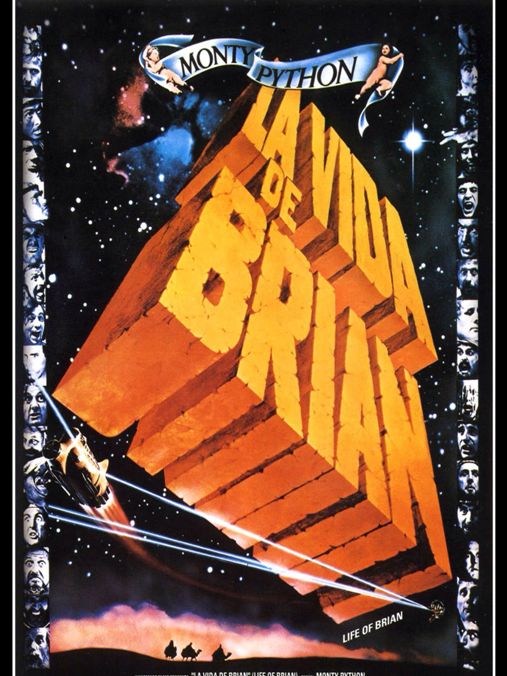
Monty Python’s Life of Brian (1979) Directed by Terry Jones Written by Graham Champan, John Cleese, Terry Gilliam, Eric Idle, Terry Jones & Michael Palin
Grail is probably funnier, although in a different way, but I think this is a much better movie. It’s less a collection of (albeit hilarious) set pieces and actually does tell a pretty well thought out story. Of course, it’s funny as hell and tears apart various sacred cows, religious and political. All of that’s still relevant, too, from the way people become mindless followers to the splintering of movements over the most minute details to the inertia of inaction. Plus, it ends with a jolly tune!
Matewan (1987) Directed by John Sayles Written by John Sayles
It’s a pity that we’ve never gotten a movie about the West Virginia Mine Wars. Given the scale of the thing (the largest armed insurrection since the Civil War, the use of aircraft, etc.) it would make for an obvious movie subject. But if we can’t get that, Sayles’ exploration of the struggles to organize the mines in southern West Virginia at least gives a good sense of what might drive people to take up arms eventually. There are several people in the cast that were Sayles’ regulars who would go on to bigger (though not necessarily better) things, too, which is always fun.
Metropolis (1927) Directed by Fritz Lang Written by Thea von Harbou
Pretty much every science fiction movie involving some kind of robot can trace its visual lineage back to this movie. It was so innovative for its time, so unlike anything that had ever been seen, that even if the story portions of the film completely sucked it would be a masterpiece. They don’t, although honestly it’s hard to gauge sometimes given that it’s a silent film with title cards and what not. Given that it’s a silent film, it’s had an interesting afterlife when it comes to soundtracks, most famously a 1984 version produced by Giorgio Morodor with input from (among others), Pat Benatar, Jon Anderson, and Loverboy. Honestly, there’s music out there for just about every taste to go along with this movie.
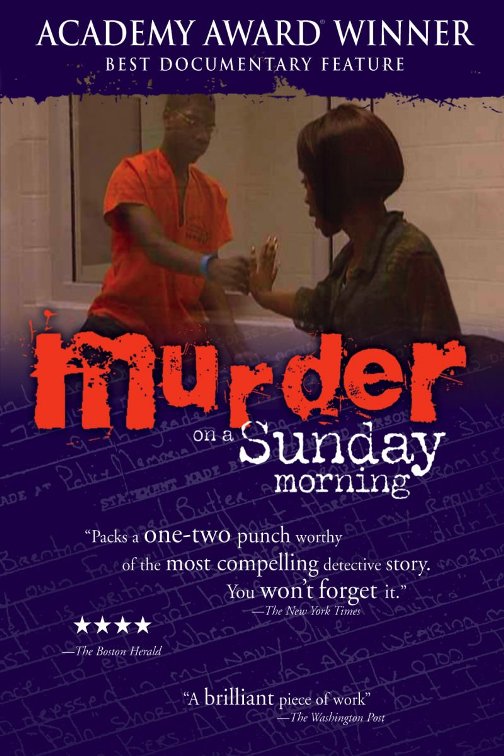
Murder on a Sunday Morning (2001) Directed by Jean-Xavier de Lestrade
Public defenders, or anybody who practices criminal defense with regularity, inevitably get the “how do you defend those people?” question, where “those people” are, in the questioner’s mind, criminals. There are many answers to that question, but one of them is that if you don’t do everything you can (within the bounds of the law) in representing every defendant then you’ll be in no position to save a defendant who is actually innocent. This documentary presents one of those cases, as a defense team fights to save a 15-year-old from being convicted of a murder he didn’t commit. Thankfully, they did. This film won an Oscar, but Lestrade went on to even bigger things by essentially giving birth to the modern limited-series true-crime documentary with the (original version of) The Staircase.
The Prestige (2006) Directed by Christopher Nolan Written by Christopher Nolan & Jonathan Nolan
As I said earlier, I really dig stories about rivals who go to unhinged ends to one up each other. That’s the driving feature of The Prestige (which is why the book suffers by comparison, as it’s burdened with a needless frame story that distracts from the good stuff), but there’s a good bit of other weirdness going on that creates an interesting atmosphere. Nested timelines can be tricky, but the Nolans pull it off in a way that only deepens the back-and-forth between the two magicians. Plus, it’s got David Bowie as an otherworldly Tesla!
This Is Spinal Tap (1984) Directed by Rob Reiner Written by Rob Reiner, Christopher Guest, Michael McKean & Harry Shearer
Yeah, I’m surprised that the only director represented here twice (as a director – sorry, Terry Gilliam) is Rob Reiner. If A Few Good Men is one of my go-to lawyer movies, Spinal Tap is my go to music movie. It’s more of a collection of set pieces than a moving narrative, but almost each of them are hilarious and the music is just good enough to make you bang your head while realizing why Tap wasn’t the hugest band in the universe. It’s easier to show the rapid ascent of success (see below), but the lengthy ride back down is laden with more comic possibilities. That’s how you get to 11.
The Sweet Hereafter (1997) Directed by Atom Egoyan Written by Atom Egoyan
Fun fact – most lawyers aren’t litigators. I’m not. There are more of us who make our livings representing clients out of court – trial courts, particularly – than in it. This is my favorite movie about being a lawyer, even though there’s no dramatic courtroom climax or wronged client who needs defended. Instead, it’s about the toll it takes on a person’s psyche to make a living by inserting yourself into the tragedies of others. In this case, it’s the aftermath of a school bus crash in a remote Canadian town that killed most of the town’s children. Even if you’re trying to help, nobody is happy to see you and nobody is really happy with the limits of what you can do for them. This is also one of those examples of the movie improving on the book (as author Russell Banks admitted).
That Thing You Do! (1996) Directed by Tom Hanks Written by Tom Hanks
Movies about fictional creatives are difficult because it can be really hard to get whatever they create right. Spinal Tap does it with regard to low-brow metal and That Thing You Do! nails it with regard to early 1960s pop. The titular song in this movie brilliantly manages to be catchy enough to believable as a one hit wonder (sorry, Oneder) while not wearing out its welcome since you have to hear it over and over through the movie. The rest of the movie works really well, too, capturing the giddy highs of a completely unexpected rise to the top, without a hugely downer ending when the bottom falls out.
I know that I decided this was going to be my month of lists, but other writing circumstances have conspired to push the final two installments back a week (or two). I’m working on a short story (with an interesting subject) to submit to an anthology that’s due on May 24. I need to focus my energies on that until then, so while I will be back with lists of favorite movies and books, they’ll be delayed a bit.
To kick off the substantive part of my month of lists, I figured I’d being where Steven Wilson did, with my 100 favorite songs. This was an interesting exercise, as while there are some common artists and even albums between our two lists, there aren’t any common songs. And, of course, my list has a couple of Steven Wilson-related tracks, whereas his list did not (nor did it have any of mine!). Before we dig in, a few ground rules.
First, when I say “favorites” that is just what I mean. Making a list of “best” anythings when it comes to art is a fool’s errand. These are just songs I really like. I make no claim that you will love them, too.
Second, I didn’t select these as particular best examples of what I love about these bands and artists (although many ended up that way). In other words, there was always going to be a Genesis track on here, but I didn’t select it based on how paradigmatic it was of their glory years, just because I really really love it.
Third, I imposed a limit of one song per band/artist on this list. Even with that, my first go had about 200 songs on it. I thought if we’re really talking “favorites” then let’s keep it as just that. That said, some musicians show up multiple times in different bands.
Finally, I made the executive decision to include as one unit multiple songs that segue into one another. If you can listen to them all in a hunk without a break, I counted them as one “song.” Is it cheating? No, because it’s my list and my rules!
So, on with the show. In alphabetical order by song title . . .
“3 Years Older, “ by Steven Wilson from Hand.Cannot.Erase (2015): A perfect blending of Wilson’s prog side and his penchant for memorable pop/rock hooks.
“Almost Medieval,” by The Human League from Reproduction (1979): Rough, early synth pop. All the grit and fuzz of early synths without the slick finish the 1980s would bring. How can you not love a song about a gibbet, anyway?
“Another Murder of the Day,” by Tony Banks (w/Fish) from Still (1991): A sort of “what if?” track, with Fish providing lyrics and vocals. Imagine Calling All Stations with him on board?
“The Ballad of Jenny Ledge,” by Toy Matinee from Toy Matinee (1990): The most fully brilliant result of the brief collaboration between producer extraordinaire Patrick Leonard and the gone-too-soon Kevin Gilbert (another Calling All Stations “what if?”).
“La Ballata de S’lopsoa ‘e Mannorri,” by DFA from 4th (2008): DFA’s muscular Canterbury-influenced prog is taken to another level by the collaboration with a female vocal group on this folk-inspired tune.
“Bass Folk Song,” by Return to Forever from Return to the Seventh Galaxy (1996): Furious bass-led fusion, with lots of juice distorted electric piano to boot.
“Beat Box Guitar,” by Adrian Belew from Side One (2004): An infectious mix of electronics and guitar heroism. Nominated for a Grammy, even!
“Between the Wheels,” by Rush from Grace Under Pressure (1984): An overlooked gem, in my opinion. Love Alex’s solo.
“Bring Out the Sun (So Alive),” by Von Hertzen Brothers from Love Remains the Same (2008): Love the way this one builds to about the halfway point, then shifts gears and does it all again.
“Canto Nomande Per un Prigioniero Politico,” by Banco from Io Sono Il Libero (1973): Banco at their lush, romantic best.
“A Cat With Seven Souls,” by Steve Hogarth & Richard Barbieri from Not the Weapon But the Hand (2012): Love the combination of Barbieri’s gauzy atmospherics and H’s voice.
“Catwalk,” by Oblivion Sun from Oblivion Sun (2007): As an author, how can I not be a huge fan of a song about someone helping out the Cheshire Cat with a story? Oh, and that slinky Minimoog solo, too.
“Celebrity,” by I Am the Manic Whale from Things Unseen (2020): An epic that manages both to make fun of artsy “competition” reality shows, while showing genuine respect for the people who are good enough to do well on them.
“Chat Show,” by Sanguine Hum from Now We Have Light (2015): The central track on a concept album about the buttered cat phenomenon. Top that!
“Cinema Show,” by Genesis from Seconds Out (1977): My favorite performance of my favorite hunk of classic Genesis. They didn’t get better than this.
“The Clever Use of Shadows,” by Nathan Mahl from The Clever Use of Shadows (1999): Deeply cynical lyrics and amazing keyboard parts. What more do you need?
“Close to the Edge,” by Yes from Yessongs (1973): The definitive version of the band’s definitive song (if you ask me). Carries some extra energy from the studio version (although it lacks Bill Bruford).
“Closet Chronicles,” by Kansas from Two for the Show (1978): A great (and sad) story song carried along by some amazing playing. The live version rules.
“Clownhead,” by Dreadnaught from The American Standard (2001): I don’t really know what a “clownhead” is (a descendant of Krusty?) but I love this weird, off-kilter album closer regardless.
“The Crane Wife 1, 2, & 3,” by The Decembrists from We All Raise Our Voices to the Air (2012): Spread across the studio album of the same name, I love hearing it all from stem to stern.
“Day of the Cow 1 > Snowcow > Day of the Cow 2,” by Mike Keneally from Hat (1992): A perfect encapsulation of Keneally – weird, fun, and amazingly musical. Should I mention it’s about a bovine apocalypse?
“De Futura,” by Magma from Udu Wudu (1976): Now this is an apocalypse! The last half is basically the same riff over and over getting just slightly faster until the whole thing feels like it’s going to spin apart (in a good way).
“Deus ex Machina,” by Deus ex Machina from Deus ex Machina (1992): It’s a band name, it’s an album name, it’s a song name! And everything’s in Latin – what’s not to love!
“Dixie Chicken,” by Little Feat from Waiting for Columbus (1978): I love a great story song and they don’t come much better than this. The live version gets the nice Dixieland break from the Tower of Power horns.
“The Dream,” by Robert Cray from Showdown! (1985): Best line in a blue song ever: “When I reached out to hold her / Oh, I woke my wife instead!”
“Driving to Amsterdam,” by Khan from Space Shanty (1972): Loosy, jammy goodness. If this is what a “Nederlander dream” sounds like, I’m on board.
“Les etudes d’organism,” by Thinking Plague from In Extremis (1998): 14 minutes of pure weirdness, punctuated with ambient and symphonic beauty. Dark beauty, but still.
“Even Less,” by Porcupine Tree from Recordings (2001): This is the full version, not the first half as it appeared on Stupid Dream. I like the dreamy interlude in the middle and the recapitulation in the end.
“Felona > Le solitudine di chi protegge il mondo > L’iquillibiro,” by Le Orme from Felona y Sorona (1973): Light, graceful Italian goodness. An alt-universe ELP that admired Renaissance instead of Hendrix.
“Fitter Stoke Has a Bath,” by Hatfield and the North from Rotter’s Club (1975): I’m also a sucker for songs about musicians, particularly ones like this, that try to rub some of the glamour off their image.
“Free Will and Testament,” by Robert Wyatt from Shleep (1997): “What kind of spider understand arachnophobia?” I dunno, Robert, but it’s worth pondering.
“Games Without Frontiers,” by Peter Gabriel from Peter Gabriel (Melt) (1980): When I was young I thought the French refrain was “she’s so funky.” That kind of works, anyway, you know?
“Go!,” by Public Service Broadcasting from The Race for Space (2015): Not the “best” song from this album (I’d go with “Sputnik”), but this one makes me giddy every time. The newsreel clips are spliced up here expertly.
“The Gooberville Ballroom Dancer,” by Beardfish from The Sane Day (2005): “He was a filthy motherfucker by the name of Dwight” – hell of a first line, particularly when it’s your opening tune at your first American prog festival!
“Head Over Heels > Broken,” by Tears for Fears from Songs from the Big Chair (1985): It says something when the third (or fourth?) hit from an album is this good.
“Hell’s Kitchen> Lines in the Sand,” by Dream Theater from Falling Into Infinity (1997): I know this isn’t Dream Theater’s most loved album (and rightly so), but these two tracks work really well together, the jammy instrumental turning into a solid tune, with a great chord progression in the chorus (and King’s X’s Doug Pinnick!).
“Hereafter,” by The Dregs from Bring ‘em Back Alive (1992): Not that the Dregs didn’t frequently blaze, but I really love this laidback jam.
“Hibou, Anemone and Bear,” by Soft Machine from Volume 2 (1969): Fuzzed bass, many woodwind overdubs, and lyrical silliness. My preferred variant of Soft Machine.
“Hostsejd,” by Anglagard from Epilog (1994): My first exposure to the amazing retro-symph prog from Sweden that helped kick off prog’s third wave.
“I Dream of Wires,” by Gary Numan from Telekon (1980): It took me many listens before I realized that this song is about an electrician worried about remaining employed in a wired world. I always figured it was about synth patch chords.
“Idioteque,” by Radiohead from Kid A (2000): Speaking of synth patch chords. Officially the weirdest thing I’ve ever seen performed on Saturday Night Live.
“Impressioni di settembre,” by PFM from Storia di un Minuto (1972): My first impression (so to speak) of Italian prog. That Minimoog solo!
“In Earnest,” by The Tangent from A Place In the Queue (2006): My favorite epic of the modern prog era. The last verse chokes me up still.
“In Every Dream Home a Heartache,” by Roxy Music from For Your Pleasure (1973): Roxy’s not really my thing, but this mix of weirdo confession that explodes into rock and roll goodness is great.
“In the Dead of Night > By the Light of Day > Presto Vivace & Reprise,” by UK from UK (1978): Prog’s last gasp in the 1970s, really – but what a gasp.
“Intentions Clear,” by Umphrey’s McGee from The Bottom Half (2007): For an odds and sods collection, this is a pretty good album. I prefer this version to the “real” one on Safety In Numbers.
“Internal Exile,” by Fish from Internal Exile (1991): Fish’s love song to his native Scotland, in which I hear lots of echoes of West Virginia (in the bridge, particularly).
“The Invisible Man,” by Marillion from Marbles (2004): This is what modern Marillion is all about – layers of sound for days, atmosphere all about, with H’s emotive vocal on the top.
“Invisible Sun,” by The Police from Ghost in the Machine (1981): Favorite song by The Police. Simple as that.
“Judas Unrepentant,” by Big Big Train from English Electric, Vol. 1 (2012): I’ve written about this song before. I love me songs about interesting criminals.
“King of Number 33,” by DeExpus from King of Number 33 (2011): Another song about an interesting criminal, but this time one who is completely out of his mind. Delusion and nifty solos across 25 or so minutes.
“Lady Fantasy,” by Camel from Mirage (1974): The instrumental workout in the last half of this it just peak Camel. They did not better, IMHO.
“Le Fantome de M.C. Escher,” by Miridor from Mekano! (2001): If there’s such a thing as “fun” avant garde prog, Miriodor is it. That said, the way this ends in an unholy mishmash of noise kind of makes you wonder.
“Liberty City,” by Jaco Pastorious from The Birthday Concert (1995): Jaco with a big band in full song filling his sails.
“Life During Wartime,” by Talking Heads from Stop Making Sense (1984): Rampant paranoia with a driving beat.
“Lochs of Dread,” by Bela Fleck & the Flecktones from Live Art (1996): A banjo player grooving on a reggae riff, held down by his synth-drum drummer and a guest on bass clarinet. If that doesn’t define all that’s great about Bela Fleck and the Flecktones, I don’t know what does (great title, too).
“Man-Erg,” by Van der Graff Generator from Pawn Hearts (1971): Musically and lyrically the best VdGG ever did. Hopeful and frightening in equal measure.
“Memetic Pandemic,” by 3rDegree from The Long Division (2012): The highlight of 3rDegree’s political opus.
“Microdeath Softstar,” by Phideaux from Doomsday Afternoon (2007): In some ways it’s a theme song for the modern age (written 15 years ago).
“Moonwalk,” by Moon Safari from The Gettysburg Address (2012): The first song of the first set released where I was in the room when it was recorded. Good tune, too.
“Neon Lights,” by Kraftwerk from The Man-Machine (1977): Kraftwerk’s “Cinema Show,” if you will – starts off with a pleasant enough song section, before transitioning into an extended instrumental coda.
“New Holy Ground,” by Orchestral Maneuvers in the Dark from History of Modern (2010): Few bands get back together decades later and produce new stuff worth listening to. They’ve done it a lot.
“No Sign of Yesterday,” by Men at Work from Cargo (1983): It’s like melancholy set music. With a nifty guitar solo in the end.
“No Thugs In Our House,” by XTC from English Settlement (1982): I had a conversation once with a client’s mother. She had no idea why her son was spending years in a federal prison. This song makes me think of her.
“On Reflection,” by Gentle Giant from Playing the Fool (1977): I chose the live version of this song because they take apart the original, rearrange it, and make the end product even more jaw-droppingly impressive to perform it live.
“One of Our Submarines,” by Thomas Dolby (1982): Inspired by a true family story (as I understand it). Better than anything that was actually on The Golden Age of Wireless (which is excellent).
“Out In the Darkness,” by Martin Orford (w/Steve Thorne) from The Old Road (2008): Atheists need anthems, too. Particularly in times like these.
“Oxygene, pt. 2,” by Jean-Michel Jarre from Oxygene (1976): Where things really get moving in this electronic classic.
“Poisoned Youth,” by England from Garden Shed (1977): England were not particularly original in the context of 1970s prog, but they put all the pieces together in a pretty satisfying way in this epic.
“Present from Nancy,” by Supersister from Present from Nancy (1970): Canterbury wasn’t just an English thing, as these Dutch boys prove. With a dash of Zappa here and there.
“Racing In A,” by Steve Hackett from Please Don’t Touch (1978): One of my earliest favorites (thanks to my brother), which breaks off from a full-throated song into a solo nylon-string guitar outro.
Recycled Side 1 by Nektar from Recycled (1975): Okay, this really is cheating, but these seven songs all run together, honest (as do the four on side two). Larry Fast’s synth programming really elevated these guys.
“Remurdered,” by Mogwai from Rave Tapes (2014): Love Mogwai in general, but really love it when they dig into the electronic sounds, as in here.
“S.A.L.T.,” by The Orb from Orblivion(1997): The unhinged preaching film clips (from the Mike Leigh movie Naked) are almost enough to put this on the list, but the way the beats and soundscapes get deeper and more paranoid as the go along really sells it. “Do you ever get a feeling your being followed?”
“Safe In Hell,” by The Bears from Car Caught Fire (2001): Leave it to Adrian Belew and crew to take an alternative look at half of the afterlife.
“Seven Is a Jolly Good Time,” by Egg (1969): If prog had a theme song, how could it not be this single (which sank without a trace upon release) that extols the joys of playing in odd time signatures? Still stunned no band has whipped this out at a prog festival.
“The Seventh House,” by IQ from The Seventh House (2000): A perfect epic of World War I loss and remembrance. Still don’t quite know what the “seventh house” is, though.
“Sheep,” by Pink Floyd from Animals (1977): It’s all about that chord progression from Gilmour in the end. And the tinkly electric piano from Wright in the beginning.
“Solar Musick Suite,” by Steve Hillage from Fish Rising (1975): Hillage’s stuff seems to uncoil like a snake, solid but ever shifting.
“Some Memorial,” by echolyn from echolyn (Window) (2012): It starts sort of wistful and cynical, but builds into a climax with some of my favorite lyrics about the end of things.
“Soterargarten 1,” by Gosta Berlngs Saga from Glue Works (2011): Uses repetition to great effect, building up to the amazing ending.
“Squarer for Maud,” by National Health from Of Queues and Cures (1978): Maybe my favorite bit of Canterbury ever. Another song that goes one direction, breaks for something completely different (spoken word interlude!), then gets to business.
“St. Elmo’s Fire,” by Brian Eno from Another Green World (1975): A very good lush pop tune becomes great with Eno’s decision to let Robert Fripp rip right through it from time to time.
“Stander on the Mountain,” by Bruce Hornsby from Here Come the Noisemakers (2000): The older I get, the more this story of faded glories and the people who can’t let them go sticks with me.
“Starless,” by King Crimson from Red (1974): Another one (like “Cinema Show” and “Neon Lights”) that starts as a “song” proper and then slides into a feverish instrumental final. How long does Fripp play that one note?
“Surrender,” by Cheap Trick from At Buddokan (1979): High point of the best side of pure rock and roll ever recorded? I’d say yes.
“Telephasic Workshop,” by Boards of Canada from Music Has a Right to Children (1998): Trip hop and burbly synths. I love that I can listen to this and not have the first idea of how it’s really made.
“The Doorway,” by Spock’s Beard from Beware of Darkness (1996): I love those first five Beard albums (I got in on the ground floor, sort of) and this exemplifies why.
“There’s Something On Your Mind,” by BB King (w/Etta James) from Blues Summit (1993): Great duet by two giants who are no longer with us, sold with all their heart and soul.
“Thick as a Brick,” by Jethro Tull from Thick as a Brick (1972): Technically an entire album, I guess? It’s just one long song broken across two LP sides. Would have to make it for the fake newspaper artwork, regardless.
“Toujours plus à l’est,” by Univers Zero from Live (2006): What did I say earlier about “fun” avant garde stuff? UZ has done much denser and darker stuff, but I love this spritely little thing. Dig the clarinet!
“Trilogy,” by Emerson, Lake & Palmer from Trilogy (1972): My favorite synthesis of ELP’s push/pull struggle between Greg Lake’s romantic balladry and Keith Emerson’s keyboard pyrotechnics.
“Vertiges,” by Present from Barbarro (ma non troppo) (2009): This makes the list for the thundering piano runs up and down the keyboard.
“Village of the Sun > Echidna’s Arf (of You) > Don’t You Ever Wash That Thing?,” by Zappa from Roxy & Elsewhere (1974): Everything I love about Zappa – a silly song (although not as silly as usual) followed by mind-blowing musical workouts. It’s a whole side, yes, but it goes by in a flash.
“Warriors,” by Synergy from Electronic Realizations for Rock Orchestra (1975): Probably my favorite “composed” bit of electronica. I could see this transcribe for a human ensemble very easily. All done with a single Minimoog and a Mellotron.
“Whalehead,” by Moth Vellum from Moth Vellum (2007): This album has grown and grown in esteem for me over the years.
“What Looks Good On the Outside,” by Animal Logic from Animal Logic II (1991): It’s not necessarily what you’d expect from the rhythm section of The Police & Return to Forever, but it’s some seriously good grown-up pop.
“With a Car Like That You Must Be Knee Deep In Whores,” by Forever Einstein from Down With Gravity (2000): It’s here for the title, yes, although it’s a groovy little tune. Don’t worry, it’s instrumental!
“World Through My Eyes,” by RPWL from World Through My Eyes (2005): This makes the list mostly for the awesome synth solo that resolves into the guitar solo near the end. Sublime stuff.
“Yellow Submarine,” by The Beatles from Revolver (1966): I probably loved this movie before I really digested The Beatles’ music. Good way to wrap things up.
Here are some fun facts about this list.
The list covers 54 years, from 1966 (The Beatles) to 2020 (I am the Manic Whale)
There’s a cluster of great live albums there from 1977 to 1979
The musician most represented on the list (I think) is keyboard maestro Dave Stewart, who was a key member of Egg, Hatfield and the North, and National Health, as well as playing with Steve Hillage in Kahn and on his first solo record
My absolute top favorite? Not going to say! It’s been hard enough to whittle things down to 100!
I recently read Steven Wilson’s semi-memoir Limited Edition of One.
I say “semi-memoir” because interspersed with more typical chapters detailing the history of his career with No-Man, Porcupine Tree, and as a solo artist, Wilson inserts chapters where he discusses his views about the music industry and other things. It’s a pretty good read, particularly if you’re a fan of his music.
One of the recurring themes of the book is that Wilson loves making lists and several chapters are given over to lists of various things. In one chapter, he rips of lists of his favorite (?) songs, films, and books. As I listened to his lists, I noted that he and I had some common tastes and I thought, “there’s some blog fodder here!” I’ve done similar things at the close ofthe 2020s and on myoldblogs as well.
Thus, here we have arrived in what I’m calling “The Month of Lists.” For the rest of May, I’ll be laying out my favorite songs, movies, and books in the same numbers Wilson did – 100, 20, and 10. The length of any list like that is arbitrary, anyway, so why not? In each post, I’ll explain the criteria and limitations I used to put together my lists and provide some brief explanations. Should be fun, right? Here’s hoping.
One of the little bits of world building for the Unari Empire books that I had fun with was thinking through the newspaper situation in Cye. Given the steampunk(ish) setting, it’s the most plausible form of mass media and how it’s regulated says interesting things about the world. Hence, the “real” newspapers are known by how closely aligned they are with the Imperial regime, since to officially publish they need a literal seal approval.
When it came time to write Widows of the Empire I needed to expand my thinking a bit and figure what underground papers might look like and what they might be called. I settled on small papers crammed with type, so much that each page looked nearly black. Naturally, characters refer to them as the “black pages.”
This is not an accident.
Readers of The Water Road and its sequels know that I use a lot of musical references in my books. Lots of places in that series are named after musicians, the more obscure the better! The “black pages” are no different, as I’ve stolen the name from a song (or a few) by Frank Zappa.
Frank originally wrote “The Black Page” as a percussion feature, kind of on a dare. After an orchestral session, drummer Terry Bozio related that some of those players talked about the fear of facing “the black page,” prompting Frank to write his own. The song evolved from a short piece for drums and percussion into a song for a full band, in various guises.
In this video, musician Doug Helvering works through the first two versions of the song, with excerpts from the score to prove the that the song was well named:
A decade after that second version, the song morphed again, into a “New Age Version” that was performed on Zappa’s final tour:
Even laid back, it’s kind of a bear.
Names can be tricky for fantasy and science fiction writers. My suggestion – take inspiration wherever you can, even if it’s in an insanely complex song.
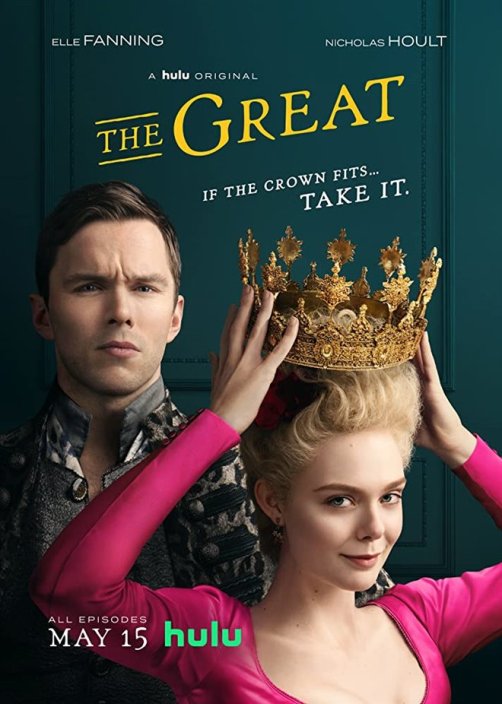
Over the winter my wife and I discovered The Great*, the Hulu series about (very loosely) the early reign of Russian empress Catherine the Great.
While I’m not certain the series quite lives up to the title, it is very entertaining and, in spots, riotously funny. What it definitely lives up to is the little asterisk the end of the title (as displayed in the opening credits, at least), which notes it is either “An Occasionally True Story” (season one) or “An Almost Entirely Untrue Story” (season two).
This post is very much not going to take the show’s creators to task for playing fast and loose with history, particularly since they admit it up front. Truth is, literature and theater and film/TV is full of examples of historical persons or events remolded for dramatic purposes. I know Salieri didn’t really work Mozart to death (they were pretty good buds!), but I still love Amadeus. Dollars to donvts Julius Caesar did not turn to Brutus and “et tu, Brute?” him in real life, but Shakespeare makes it work.
But as a writer, I wonder about the choices other writers made when playing with history. History is full of lots of interesting story fuel, after all. I’ve used some of it myself. I’ve said before that the idea for the basic arc of The Water Road trilogy came from seeing an “on this day” thing on Wikipedia about the anniversary of Napoleon’s return from exile to start the Hundred Days. I thought that sounded like something out of a fantasy series – a vanquished foe returning to the world to wreak further havoc – and wheels started turning in my head.
What never occurred to me was the make the story about Napoleon. I didn’t want to tell his story, but another one that might have echoes of his. Being a fantasy writer that’s not an issue, but with more traditional fiction things can get complicated. After all, a made up character doing made up things is the grist of fiction – sometimes everything even happens in made up places. But a made up town or neighborhood is one thing, what about a made up country?
I got to thinking about this again due to this piece in the New York Times about the recent glut of true-crime limited series that are all over streaming services. Things like Netflix’s Inventing Anna and Hulu’s The Dropout (both pretty good, though I’d go with the latter) are telling true-crime stories of recent vintage that, in most cases, have been thoroughly aired in other settings (Inventing Anna came out of a long-form magazine piece, The Dropout from a podcast of the same name). I don’t agree that just because these stories have been told in other mediums means the fictionalized TV versions are superfluous (not everybody consumes podcasts), but the author makes an interesting point:
Now, it is absolutely true that real life does not always give you neat “Rosebud” explanations; real people are often simply jumbles of unresolved contradictions. But that’s one reason we have drama: to make emotional, if not literal, sense of this kind of figure. (Hence Orson Welles reimagined William Randolph Hearst as Charles Foster Kane.)
Indeed, it seems much easier if you want to tell a story about a particular kind of person to do it with a fictional character rather than a real-life one. Legal issues aside, it allows you to mold and shape the story as dramatic (or comedic!) stakes dictate, without worrying about people complaining that you’re not “getting it right.” After all, fantasy only has to be compelling, not accurate.
So why not, if you want to tell a story that pretty much set in a fantastic version of a historical place, why not make it fantasy? What’s the pull of using a historical figure whose actual history you’re going to discard anyway? I suppose it’s easier to market a series about Catherine the Great (who’s not that well know in the US, anyway) with an ahistorical twist than it is to sell a bloody, bawdy, fantasy series nobody’s heard of before.
As I said, it’s silly to get bent out of shape about The Great’s lack of rigorous historicity. They’re doing something much more fun and not even hiding the fact. Nonetheless, it does make you think.
Come, join us in our fantasy worlds. The water’s fine – unless that’s not what you want! Huzzah!
Beginning in 1955, Donald Campbell piloted Bluebird K7, the world’s first functional jet-powered hydroplane, to a slew of water speed records. He didn’t just break the record, he shattered it over and over again – the record he initially broke was 178 miles per hour, while his last complete run, nine years later, was over 276 miles per hour.
On January 4, 1967, Campbell took Bluebird to Coniston Water in England’s Lake District for another run, hoping to hit 300 miles per hour. After making the run one direction at over 297 miles per hour, Campbell began the return run. Then, tragedy struck:
It was big news in the UK, big enough that young Steve Hogarth, while not quite grasping what had happened, noted the emotional impact Campbell’s death had on his mother. Flash forward three decades and Hogarth, aka “H,” and his band Marillion release Afraid of Sunlight, my personal favorite album of theirs. One track, “Out of this World,” is about Campbell and his fatal voyage, complete with some snippets of radio traffic from that day.
So far not that interesting, right? A band writing a song about a tragic historical event is hardly rare (Marillion themselves have jokingly been referred to as a band specializing in songs about “death and water”). What’s really cool is what happened afterward. Bill Smith was not just a Marillion fan (he even sort of promoted a solo Fish show in Newcastle!), but an experienced salvage diver. Inspired by the song, he led a team that found Bluebird and raised it from the depths. The official photographer for the event? Steve Rothery, Marillion guitarist. You can hear more about that day on the latest episode of Hogarth’s podcast, The Corona Diaries, which includes an interview with Smith.
Again, that would be an interesting enough story, but it goes even further. Smith and his team restored Bluebird and, in 2018, it was in the water again, on Loch Fad in Scotland, where it hit 150 miles per hour.
Sadly, that wasn’t the end of things. There appears to be an ongoing legal dispute over where Bluebird should make its final landing. According to the BBC, the Campbell family promised Bluebird to a local Coniston museum (that has built a wing specifically to house the restored craft). Smith, however, argues that because some of the restored craft is made up of new parts, he “co-owns the craft.” Interestingly, in the podcast, Smith points out that the usual finders-keepers salvage law of the open ocean doesn’t apply to inland waterways.
I suppose it’s inevitable that when someone’s legacy is at stake the parties involved wind up at odds. I don’t think it’s a matter of money more than it is pride and obligation. I hope there’s a happy ending in there somewhere, a resolution that can please all the parties involved, if not completely.
All in all, there’s probably at least another song in all this.
















 JD Byrne