2024 – My Year In Books

Happy New Year! It’s the time when I take a look back at the year just past and highlight some of my favorite, or just most interesting, media I consumed (not necessarily new, but at least new to me). First up, naturally, let’s talk about books . . .

I thought I read a bunch of books in 2024 until I compared notes with my wife who read twice as many! She consumes books like food and hasn’t fallen prey to the siren song of podcasts like I have, so she has more focused. Still, I read nearly fifty books in 2024 (in addition to publishing one!) and some were particular favorites.

My Effin’ Life by Geddy Lee (2023)

Rush is my “first favorite band,” the one that initially seeded in me the need to hear everything they did, new or old. No surprise, then, that I’d jump at the chance to read bassist/vocalist/keyboardist Geddy Lee’s memoir. It is, of course, heavy on the history of Rush, particularly the early days, but it exceeds the typical rock doc book in a couple of ways. One is Lee’s exploration of his heritage – his parents survived the Holocaust then met as refugees in Canada – which is fascinating. The other is his recounting of the final days of the band and the death of drummer Neil Peart. Recommended for Rush fans for sure, but even those who might only know “Tom Sawyer” from the radio will dig it.

The Book Eaters by Sunyi Dean (2023)
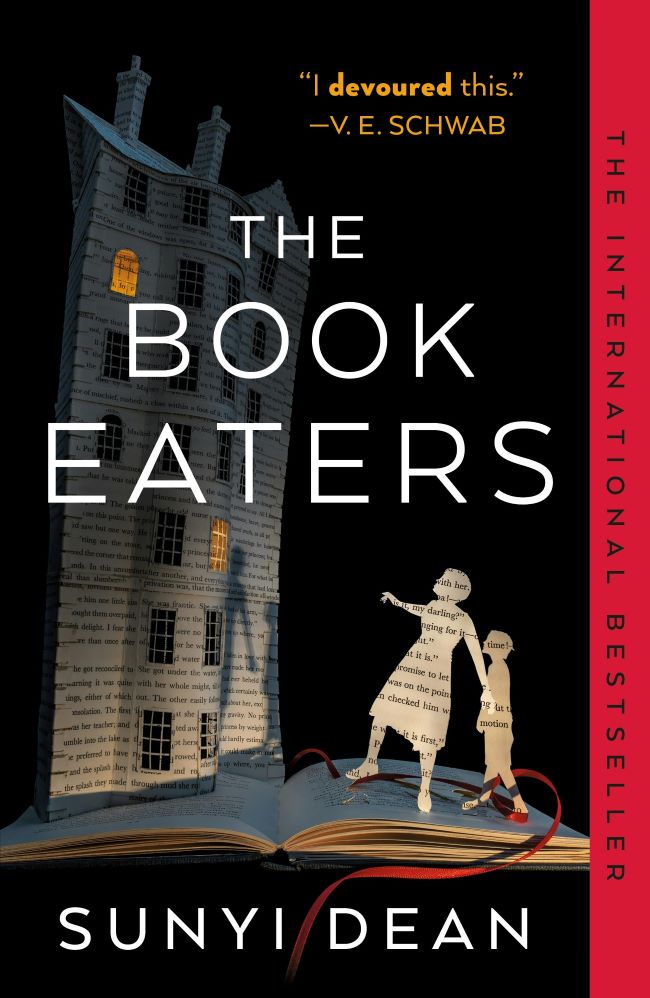
It’s a great pitch for a book – what if there were people (well, maybe not quite “people”) in the world who survived by eating books, taking in all the stories or knowledge written therein? What I expected from The Book Eaters was a fairy tale about the nourishing nature of books and words, something ethereal and mystical. What I got instead was a really cool spin on vampires (not all these “people” eat books) and problems of family and belonging. Rarely can you say the book delivered something completely different than expected and was all the better for it.

Stillwater #1 by Chip Zdarsky, Ramón Pérez, & Mike Spicer  (2021)

Lots of stories question whether the idea of immortality is a good one, but usually on the scale of the individual? What if there was entire town where no one aged or could die? Like, if somebody jumps off a building and spalts on the sidewalk that’s not the end of things? That’s the setup of Stillwater. The first volume introduces up to someone who managed to get out as a child, only to be lured back. Naturally, things aren’t as grand as one might think they’d be in a town stripped of death. Can’t wait to see where it goes.

Desperate Remedies: Psychiatry’s Turbulent Quest to Cure Mental Illness by Andrew Scull (2024)
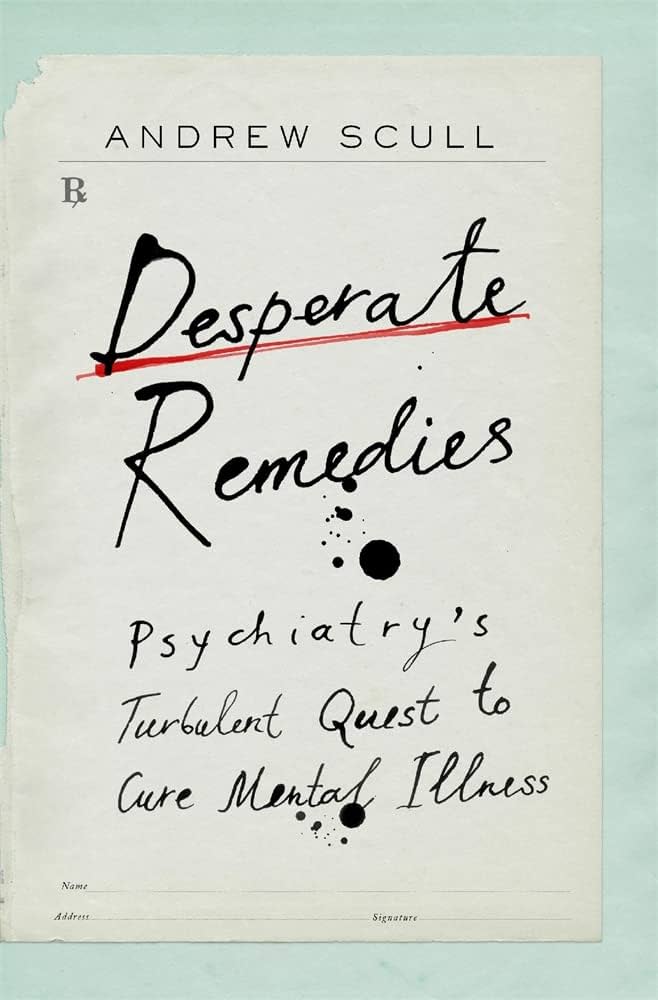
The only thing more depressing I read in 2024 came out of the daily news. This survey of the history of relatively modern attempts to treat mental illness is fascinating for showing how we have lurched from one theory of mental illness to the next, each with its own miracle cures that never seem to actually come to fruition. What comes through is that, even today, we don’t have a good handle on what actually causes mental illness (in its various forms) and that makes it nearly impossible to treat. Like I said, depressing stuff, but it does at least provide some hope that we’ll keep bashing away at the problem.

A Thread of Violence: A Story of Truth, Invention, and Murder by Mark O’Connell (2023)

There’s a version of this book – telling the story of a murderer in 1980s Ireland whose friendship with the Attorney General threatened to bring down the government – that’s a straightforward telling of the tale, which needs little pumping up to be really interested. This isn’t that book. Rather, what makes O’Connell’s angle interesting is that his grandparents lived next door to where the killer was apprehended and he’d always felt the shadow of that incident lurking over him. His conversations with the killer, who still doesn’t quite seem to grasp what he’s done, dive into issues of identity and memory that are fascinating.

Jonathan Strange & Mr. Norrell by Susanna Clarke (2004)
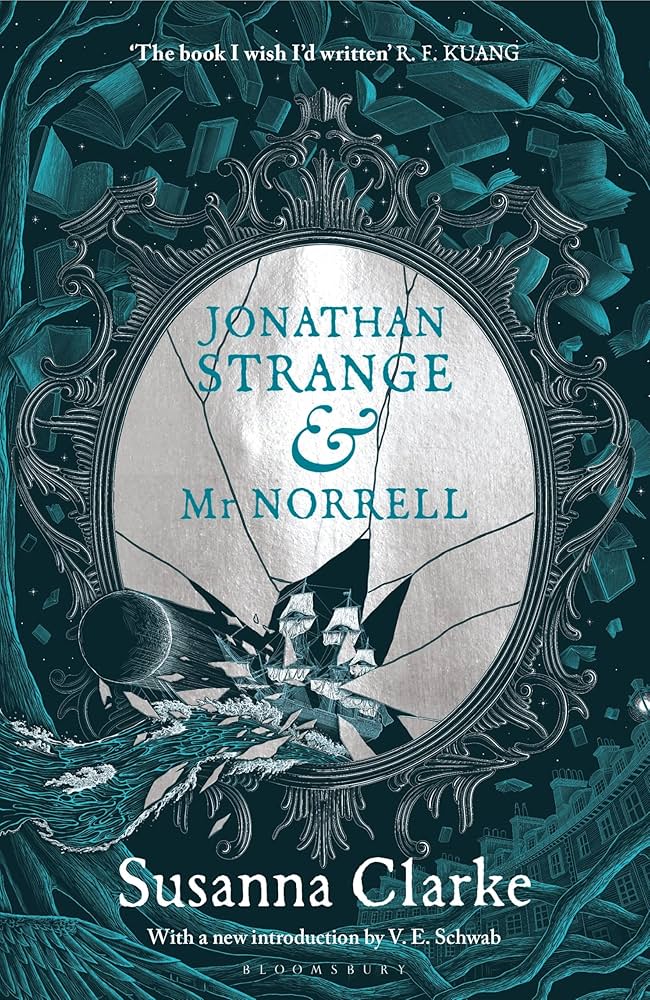
This is kind of a cheat, as I read and loved this when it first came out two decades ago. That anniversary led to a new edition and lots of coverage, so I decided to dive back into it and see if it held up after all this time. Happily, it does. I was a little worried that, with lots of writing under my belt, I might feel more picky about things, but it turns out I just admire Clarke’s work all the more. It’s so immersive, just pulling you into the world that she builds slowly and steadily. I went in willing to consider this one of the great books of the century and left being certain that’s the case.
The Obligatory Holiday Post

So, 2024 has been a year. It began with on a serious down note, produced its share of highs along the way, and then slouched towards . . . well, whatever we’re doing now. Oy.

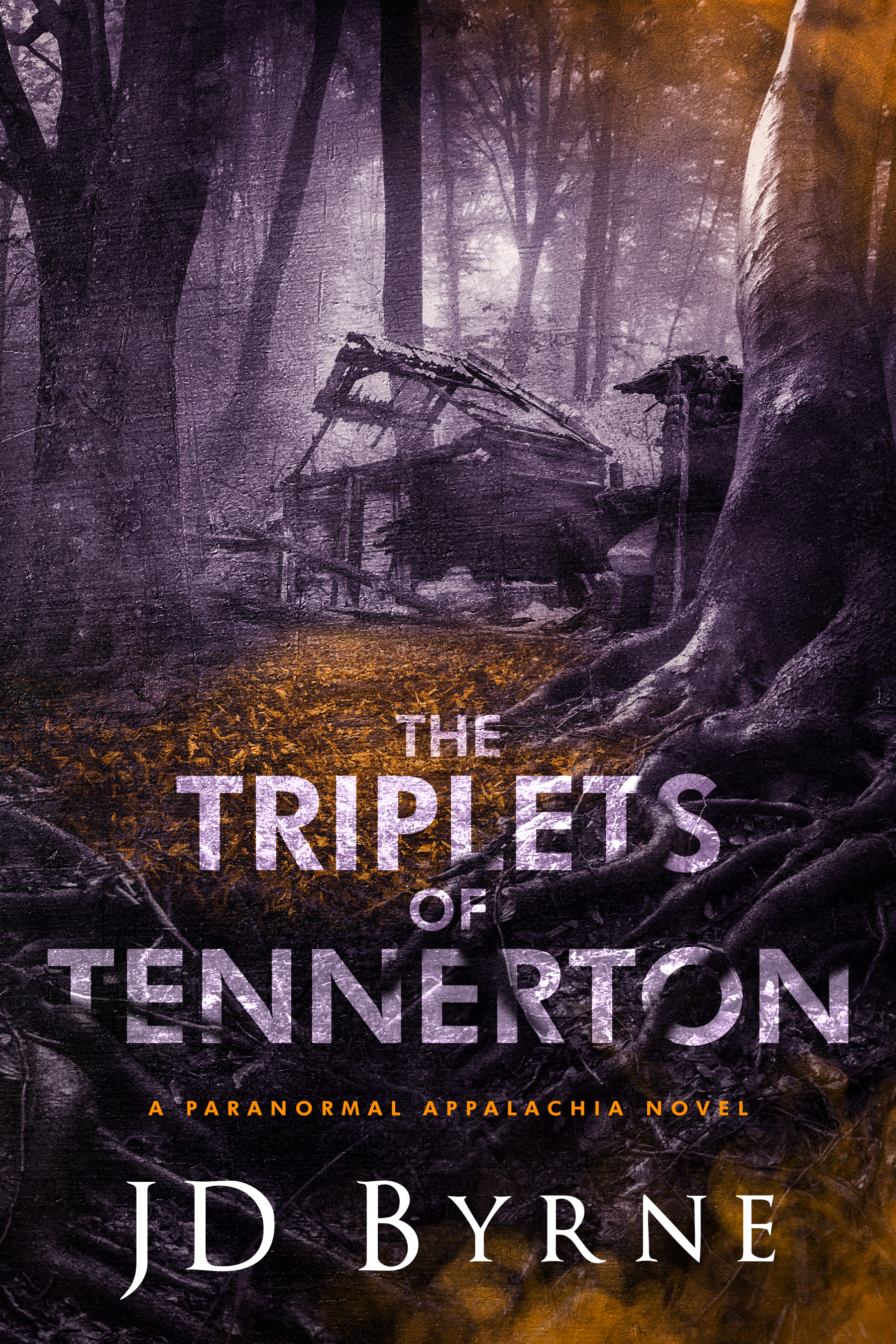
Without a doubt, my personal high point was the release of The Triplets of Tennerton, the second book in the newly refashioned Paranormal Appalachian series.

On the back of that release I got to do lots of in-person events and talk to lots of people about it all over the state. It’s the most fun I’ve had with a book launch and came at a very good time for me. Even won an award!

If you’re interested in Triplets you can read excerpts from it here and here and a little about the real world inspiration for the murder mystery at its heart here. I even did an interview of my own self about the book that you can check out here.

In fact, if you’re still doing some Xmas shopping, or maybe you’re looking for a present for yourself (you deserve it!), both Triplets and the original Ben Potter story, Moore Hollow, are on sale in eBook form for 99 cents for the rest of the year. Get Triplets here (Kindle) or here (other formats) and Moore Hollow here (Kindle) or here (other formats). There’s paperback versions of each book, too, available here and here or locally at Cicada Books & Coffee in Huntington and Plot Twist Books in South Charleston.

So, I hope you get some time to read or hang out with friends and loved ones over the next few weeks, regardless of what holidays you celebrate (if any!).

I’ll be back in 2025. Until then, have some seasonally appropriate tunes.

Absorb (and Be Confounded) First, Understand Second

I have never read Ulysses. I don’t think that’s a major confession (certainly a lesser one that I’ve never read Tolkien, given my genre of choice), given that while it’s one of the most famous works of English literature it’s also got a reputation as one of the most difficult to read. Not a breezy beach romp is Joyce’s chronicle of a day in Dublin.

It’s a reputation reinforced by things like this column on Slate from last month, in which the author staggers under the idea that his book club was going to “raw dog” Ulysses, rather than read it with some kind of supporting, explanatory work alongside. Putting to one side the continuing attempts to make “raw dogging” a thing, isn’t that the way you should first approach a work of art? If you need to have someone else tell you what it means from the jump what’s the point?

Without a doubt there are books, movies, and albums that cannot be fully appreciated on the first go. The one my mind goes to immediate is Memento, Christopher Nolan’s early breakthrough that’s told (in essence) backwards. It’s definitely a movie that rewards rewatching once you have a better idea of what’s going on, but it’s worth experiencing on your own at first to get the full effect. Seeking outside meaning before you watch it yourself spoils part of the fun.

The difference comes from wanting to understand what you’ve already seen or read versus wanting to have a complete understanding of the work the first time you experience it. I’m not saying that are that requires that kind of work is inherently better than stuff that’s more direct and accessible from the jump – there are different kinds of pleasures when it comes to art and sometimes that pleasure is teasing out just what the artist means after you know what they’re saying.

A lot of my favorite music is British. As a result, sometimes there are references in it that I, as an American, just don’t get. I’ve spent time figuring out just what Fish was saying about 1980s Brittain on the first four Marillion albums. That I didn’t understand it all when I first heard them wasn’t important, but learning the details afterwards only deepened my understanding of the songs.

I do the same thing with books and movies. After I finish one I have a ritual in which I scour various review sites – Goodreads, Letterboxd, etc. – as well as critic’s reviews and other write ups, not just to see if my opinion of the work matches consensus (a lot of times it doesn’t!) but to see if other people have insight into what I’ve just read or watched. I love learning about how movies or albums are made and what weird sausage-making process was involved in the final product and how much of the creators’ original ideas came through (if any).

Sitting down to read a book or watch a movie shouldn’t feel like work. Having to do so with a separate work open beside you to make sure you “get” what you’re reading or watching sure seems like work to me. It’s what I do in my day job – I look at a case that requires me to dig into a statute or regulation to figure out what it really means, which requires me to jump to another case, which requires me to look at a historical version of the statute to see how it’s changed over time. I don’t want to have to do that in my spare time. Who does?

Works of art are, in essence, sales pitches. Are you, consumer of art, entranced or intrigued or outraged enough by what you see/hear/read to linger? To borrow a phrase, would you like to know more? That’s the point to at which you might expect a reader or viewer to start digging into supplementary materials. Before you set the hook, however, they really ought to be left to muddle through on their own.

Now, if you don’t mind, I’m going to go listen to this song for the umpteenth time and, once again, try and figure out what Jon Anderson is on about:

On the Freedom of Mediocrity

Over the weekend my alma mater’s football regular season ended in a pretty humiliating 52-15 ass whoopin’ at the hands of the Texas Tech Red Raiders. “Regular season,” of course, because in the modern era a team that struggles to 6-6 still gets to go to a bowl game nobody’s ever heard of before, so there’s still the chance to finish the season with a losing record! The nature of the defeat led to the firing of head coach Neal Brown, who leaves with a middling 37-35 record over six years.

Six years ago, nearly to the day, I wrote a piece  examining the WVU football program and making the “sobering, but fairly obvious, conclusion” that we are “only a mediocre football program.” In that post I characterized the acceptance of mediocrity as “heartbreak,” but over the ensuing years I’ve come to view it differently – it’s really more liberating than heartbreaking.

The shift of perspective came not so much from WVU football, but from following the US Men’s National Team during those six years. 2018, of course, marked the World Cup in Russia for which we did not qualify, the first time in decades we’d been absent from soccer’s biggest stage. The time since has been an interesting experience when it comes to fandom.

On the one hand, these have been halcyon days for the USMNT. More American players than ever ply their trade at top European clubs. Hell, Christian Pulisic played a regular role for a Chelsea team that won the Champion’s League in 2021 and is currently tearing it up for AC Milan. And the team, as a whole, rebounded. We qualified for the 2022 World Cup and have reestablished the US as the dominant player in our region, winning all three editions of the new CONCACAF Nations League over old rivals (Mexico) and new (Canada).

On the other, we kind of appear to have found our ceiling and it’s not elite. In the World Cup we did about as well as we ever do, making it out of the group stage and losing in the first knockout round. And while being kings of CONCACAF is better than the alternative, the truth is our region is one of the weakest and coming out on top here isn’t saying a whole lot.

Where does that leave the USMNT? About where we’ve been over the past few decades. Our current FIFA ranking (for what those are worth) is 16, which is not bad when you consider there are 210 members of FIFA. A solid top-20 program is nothing to scoff at, but it’s hardly exceptional. We’d not be favorites to win any major tournament outside our own region and haven’t had a signature win against a European or South American power for a long while.

Overall, it’s hard to conclude that, in global terms, the USMNT is fundamentally mediocre.

Capable of big results, sure, but also frequently struggling to defeat Central American nations with a fraction of the population, too. We are entirely capable of making a deep run in the World Cup we co-host in 2026, but it will be a great story precisely because it would involve some upsets.

And I’m OK with that. I’ve come to terms with the fact that we will never be Brazil or France or Argentina or Germany (seriously, only eight countries have ever won the World Cup!). At best, in the right circumstances – a particular group of skilled and experienced players, a coach who can maximize all that, a favorable draw, etc. – we can make a good run and maybe even win the thing, if we get lucky. You know? That’ll be way more fun, anyway, than constantly worrying if we’re falling short of a goal we can never achieve in the first place.

I should, at this point, assure readers that I’m not arguing in favor of giving over to mediocrity in every part of your life. When it comes to your work, your family, and other important things you should always try to be the best version of yourself you can be. I’m talking about interacting with stuff that is, fundamentally, beyond your control. I have absolutely no control over whether WVU wins their bowl game or whether the USMNT wins another Nations League title next spring.

But when it comes to sports, it’s a pretty good deal. Particularly for things like colleges and national teams that, maybe, you can’t just up and dump for better teams, tamping down expectations means that when they win it’s great and when they don’t, eh, it’s no big deal. Sport is a diversion, right? It’s supposed to be fun? For all the talk hard-core fans of INSERT TEAM HERE make about how difficult it is to be a fan, if you really aren’t enjoying it then get another hobby – life’s too damned short.

So, come with me, friends. Embrace the almost certain mediocrity of your favorite teams. Wins will mean more, losses won’t hurt. Return sport to the proper place in your life!

Let’s Twist Again

DISCLAIMER: Again, this post gets into very spoilery details of a couple of recent Apple+ shows, Sugar and Disclaimer. If you’ve not seen either and want to experience them cold, bookmark this and come back later. Otherwise, onward!

There are, at least, two kinds of twists that writers can employ. One simply pulls the rug out from underneath you and changes the game going forward, but doesn’t do much to recontextualized what you’ve already seen. A few weeks ago I talked about the big “Colin Farrell is a blue alien” twist on Sugar, which falls into that category. Whatever the reveal entails for the show’s second season, it doesn’t cause you to look back at what came before and nod knowingly about how things have changed.

Another kind of twist is just the opposite, one that really turns all that came before on its head and makes you seriously rethink all you’ve already seen. Another recent Apple+ endeavor, Disclaimer, does just that.

Written and directed by Alfonso Cuaron (adapted from a novel of the same name by Renee Knight), Disclaimer is about a celebrated journalist/documentarian and mother, Catherine, (played by Cate Blanchett) whose life is turned upside down by the appearance of a slim work of fiction (no way it’s long enough to be a “novel”) that appears to be based on a traumatic event from her past. The book is self-published by the father, Stephen, (Kevin Kline) of a 19-year-old son, Jonathan, who died in said traumatic event, although the book was written by his deceased wife.

This is all, it turns out, a plot of the Stephen’s to ruin the Catherine’s life, as well of that of her husband and adult son, Nicholas. The book tells the story of a younger Catherine seducing Jonathan who then, in his besotted horniness, drowns rescuing five-year-old Nicholas from dangerous seas. It paints Catherine as not just an adulterous but a bad mother, concerned only with her own hedonistic pleasures rather than taking care of her kid.

But that story is, of course, fiction. You can tell by the way it’s shot and the fade ins/outs used to transition in and out of those scenes. Fiction can get at big truths sometimes in a better way than nonfiction, but in terms of the details of reality it has issues, particularly given the fairly flimsy basis (some apparently-sexy photographs) upon which this fiction is based.

The twist, which finally arrives at in the seventh and final episode but isn’t much of a surprise,* is Catherine’s side of the story: it was not a fling, an affair, or a lost weekend, it was sexual assault. She tells Stephen about how she didn’t actually know Jonathan, but that he managed to get into her unlocked hotel room, threaten her and her son with a knife, and then repeatedly assault her over the course of hours. This, of course, makes all we’ve seen before feel very different as a lot of what Catherine does can be viewed through the lens of her being a survivor of sexual assault, not just a brittle hothead.

Does that mean the twist works? I think it depends on the audience. This review goes into good detail as to why it doesn’t, although it can be summed up fairly succinctly: it’s not really much of a twist. It’s not hidden where the book comes from or what it is (apparently there’s a little bit more mystery in the novel) and you quickly realize that what you’re seeing in the gauzy Italian flashbacks is the product of someone’s imagination. It’s only a matter of figuring out when the other shoe drops, which the show gives away easily. Seriously, there’s a trigger warning before every episode about (among other things) sexual violence, none of which shows up in the first six episodes – guess what happens in the seventh?

But that assumes that the only point of a twist is to shock and surprise, to leave an audience thinking “I did not see that coming!” What if you’re after something else? Interviews with Cuaron (like this one) suggest that he was more interested in luring viewers into the headspace of those who read the book cold – several of whom comment that the Cahterine stand in “got what was coming to her” and that was a good thing – to judge her as a mother and a human being. The twist, then, forces viewers to confront their own biases and assumptions. It should make them feel bad about themselves.

Still, the “this is not exactly a twist” does undercut that idea a bit. So does the fact that Disclaimer is so very much. Cuaron is on record as saying this couldn’t have been done as a movie, but lots of viewers and critics, including yours truly, think otherwise. It would have to choose which movie to be – the serious study of grief, untold truths, and the aftereffects of abuse or the very pulpy revenge story in which Kevin Kline in old man makeup turns into a would-be murderer (the whole time I kind of wanted him to slip it Mr. Fischoeder territory, maybe have a golf cart). Part of the issue with the series is that it whiplashes back and forth in tone.

And then there’s the endless voiceovers (in at least two, if not three, voices and POVs) that mostly exist to make sure anybody who’s never watched a moving picture before doesn’t miss important stuff. There’s one scene, a flashback when Stephen and his wife go to Italy to recover their son’s body, and he finds evidence the kid’s been smoking again in his hotel room. The wife snaps that it was probably due to the girlfriend, and the Kline in voiceover explains that the wife never really liked the girlfriend. No shit!

Which is frustrating, because there are several good stretches in Disclaimer, some good performances, and it looks great (in the sense that sometimes “great” means drab and dingy). And the whole idea of luring viewers into one state of mind about Catherine then pulling a switcheroo has promise, but the whole fails to come together as a whole. And the twist, while vital to what it’s trying to do, doesn’t land like it should given what came before it.

As I said in my other post, twists are hard to get right. They’re also risky. If the point is to change a viewer or reader’s focus on all that came before it risks ruing it. A “gotcha!” twist my land flat, but it doesn’t necessarily blow up the rest of the work. I’m not saying the twist in Disclaimer ruins it, but I think there were much more interesting ways to reach the point it was trying to make.

Some Thoughts on “The Northman”

I really enjoyed Robert Eggers’ first two films, The Witch and The Lighthouse. They both ooze atmosphere and can get by on that alone, but they’re also seriously weird, to boot. The kind of movies you walk away from asking, “what did I just see?” So while Viking revenge fantasy isn’t necessarily high on my list of favs, I did take the chance to watch his latest, The Northman when it came along.

The Northman is the story of Amleth, a 10th-century Viking prince who sees his father killed by his uncle, who then promptly carries off his mother. Amleth vows revenge and if you think this sounds a little like Hamlet, you’re right – they both riff on the same legend. His journey involves Viking raids, mysterious seers (one of who is played by Bjork!), a witchy ally, and, eventually, a mano-a-mano battle on an active volcano (shades of Revenge of the Sith? You bet!). It’s worth a watch, even if not up to the same level as Eggers’ prior work.

I do have some thoughts . . .

Can something be too accurate?

Eggers has a reputation for exacting precision in world building, going all in an getting the details right of the world of each particular movie. Not for nothing have all three Eggers films been set in the past (in one interview he laughed at the idea of making a contemporary film). For The Northman he engaged several experts on Viking history, ritual, and the like to create a world that sure feels awfully “real,” even if does involve things like unshakable faith, sorcery, and Valkyries carrying souls to Valhalla (as detailed in this profile).

I dig the detail. The world of The Northman is so gritty and granular that it feels “real,” even if there’s a lot about it that doesn’t exactly jive with reality. But can it go to far? I found a couple of reviews (one here, for example) that suggested that Eggers and crew get so caught up in details and being “right” about all sorts of small things that maybe other important parts of movie making get lost in the shuffle.

There are parts of The Northman that seem to be there solely because Eggers (or Alexander Skarsgard, who plays Amleth and was a producer) found out some cool things about Viking lore and wanted to put them on screen. I have no objection to that, but your mileage may differ. In fact, I can’t think of anything that feels like it could have been done “better” by fudging the details of the setting (most of the dialogue is in English, to be fair), so I don’t think Eggers puts verisimilitude as the highest and only value, but it’s clearly important. The film’s flaws (Amleth is a pretty boring hero with no apparent inner life or ability to reconsider his fate) are more down to the kind of story Eggers wants to tell rather than a fault in how it’s told.

Destiny versus storytelling

As I mentioned above, the legend of Amleth was the basis for Hamlet long before The Northman, but it makes for an interesting point of comparison. As this New Yorker review explains, Eggers’ Amleth is really nothing like Shakespeare’s melancholy Dane:

In regressing to Shakespeare before Shakespeare, Eggers replaces intricate and complex poetry with thudding banalities. He voids Amleth—a muscular warrior raised in crude ways and trained in cruder ones—of any inwardness, as if in fear of rendering him effete or off-putting. Eggers’s action-film Hamlet is neither bookish nor inhibited nor speculative nor plotting with far-reaching imagination of complicated stratagems—nor witty nor, above all, endowed with a sense of humor.

In other words, Hamlet is a tragic figure you can at least sympathize with – Amleth, not so much. Again, I don’t think this is a fault in Eggers’ execution as much as it is the kind of story he’s telling and the kind of world he’s telling it in. In Amleth’s world the constraints of fate are as real and binding on him as the law of gravity. If his destiny is to take revenge on his uncle it matters not that his uncle’s already had his downfall (his kingdom was taken by another king and he was exiled) or that his mother comes clean about who Amleth’s father really was (and her role in his death). Even the promise of a normal life in Orkney with the witch and their children can’t keep him from his destiny.

That’s the problem with destiny or fate or prophecy as a storyteller. Generally, writers and readers/viewers want characters – heroes, at any rate – who have agency. Or if they don’t they at least recognize that fact and rail against it or unsuccessfully avoid their fate. Tragedy is when you can’t stop yourself from doing what you shouldn’t, not when you just shrug your shoulders and go along for the ride. That said, the idea of a life free from moral choice – if I’m fated to die on a volcano, why live a moral, upstanding life – is one worth exploring, but it’s not what Eggers was after, for better or worse.

And, yes, the actual film doesn’t match the tagline on the poster.

The berserker and the office drone

Through sheer serendipity I saw The Northman while one episode away from end (of the first season?) of Sweatpea, a British TV offering showing on Starz in the United States.

Sweatpea is about an outwardly mild and meek office drone, Rhiannon, who been bullied by various people all her life and starts working towards bloody vengeance. Her primary target is Julia, a school bully (leader of a clique, in fact) whose abuse was so bad Rhiannon was literally tearing her hair out. Julie is first and foremost on Rhiannon’s list of “people I’d like to kill,” so she kidnaps her with every intent of doing her in.

Except there’s a complication – Julia, it seems, is a victim of her own, as her fiancé is abusive to her. Rhiannon is thus confronted with a person she wants dead who is suffering through the same stuff she’s gone through – but does that make right all the abuse Julie perpetrated in the first place? I don’t know how it’s going to play out as I write this, but the contrast with Amleth is striking. If Rhiannon goes through with killing Julia it will no doubt be her choice and I doubt it will be portrayed as glorious. Certainly, she’s not going to be flown off into Valhalla. But, then again, she lives in a modern world where things like fate and destiny are only found in, well, in movies and the like.

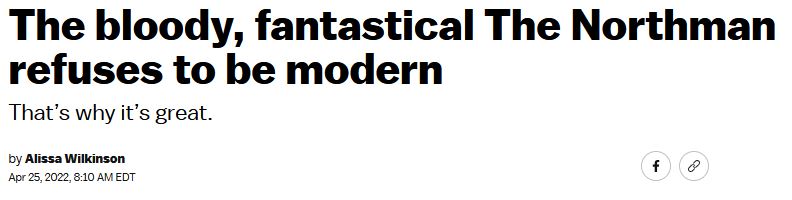
This Vox review has an interesting take on The Northman:

I wouldn’t go so far as “great,” but Eggers’ refusal to try and tell a story that’s such a throwback at least makes for an interesting watch. Consume in a darkened room and you may wind up thinking you’re back in Iceland, with the spirits of the dead all about you.

Now THAT’S a Twist!

NOTE: I don’t normally warn about spoilers, but if you’re at all interested in the Apple TV+ series Sugar, I would bail out at this point. I do recommend the show, so go check it out and come back when you’ve had a chance to see it for yourself.

Twists are hard to get right. Leave too many breadcrumbs in the early parts of the story and people will see it coming. Don’t leave enough and the twist comes along and makes no sense, as if it was just thrown in for shock. There’s a happy medium, where the twist isn’t obvious but, upon reflection, makes perfect sense in light of what came before it.

In many ways, I wish I hadn’t read anything about Sugar, the Apple TV+ series, before we watched.

We were always going to watch it because Colin Farrell is in it and he’s one of my wife’s “guys,” which is fine with me since he usually does interesting stuff. Still, I read a review when the show first came out, just to get a feel for the series, and it said straight up there was a big twist coming near the end of the season that, essentially, turned it into an entirely different show. That review wasn’t wrong.

Farrell plays John Sugar, a high-end private eye who specializes in finding people who have gone missing. Naturally, he has a mysterious past and an affinity for old movies (primarily film noir). After a prologue that sees him rescue the missing child of a high-ranking member of the Yakuza, he returned to Los Angeles where he takes a case of another missing girl, the granddaughter of a famous film producer. Sugar’s handler or partner (it’s unclear which, at first) tries to keep him from taking the gig, apparently because it’s too close to home – Sugar’s sister went missing when he was younger and the missing girl reminds him of her.

So far, so neo-noir. For six of the show’s eight episodes the series hums along in that mode as Sugar pulls back the veil on a sleazy underworld into which the missing girl has disappeared. It’s not anything we haven’t seen before, but it’s well done and an enjoyable watch. Then at the end of the that episode, after a furious explosion of violence, Sugar, alone in a hotel bathroom, decides to just “go home” for a while. He injects something into his neck and we watch as Farrel turns into a bald, blue alien.

No, not one of those.

It’s a hell of a swing, creatively, to turn the show’s premise on its head three-quarters of the way through. Except it really doesn’t. Sugar is part of a group of aliens on Earth to “observe and report” and their existence is now in jeopardy, but that’s about it. He still needs to find the girl and solve the mystery, except “aliens” is kind of sprinkled over the top.

Does the twist work? I’m still not sure. As I said, the big reveal doesn’t actually shift things all that much. Part of me thinks the sci-fi/noir blend might have worked better if we’d known about the alien stuff from the jump. The conflict between the “observe/report” mission and Sugar’s inherent need to help people would have been a good source of tension, particularly given the end resolution to the mystery of the missing girl.

But even if the twist does work, it seems to me that such a shift in the narrative so deep in the show (or book or whatever) makes it a difficult sell for audiences. After all, there are people who love noir movies that will never go near sci-fi and vice versa (one of the interesting things about having a table at book festivals is people often have no hesitation in telling me they don’t read “that kind of thing”!). How do you reach both audiences without spoiling the entire setup?

It makes me think of story ideas I’ve had that have made me wonder just how to present them. For example, I have a long-standing idea (it was my first failed NaNoWriMo project) about a regular guy who finds a book that purports to be filled with magic spells, which he uses to try and make a better life for himself (it backfires, obviously). I’ve toyed with rewriting that idea as a kind of epistolary novel (letters to his lawyer), but I wonder if that would lead to questioning whether the “magic” stuff is just conman bullshit or if it’s real? Does it make a difference if I’m generally a fantasy writer? Do readers have expectations?

I can only imagine someone who had settled into a nice, twisty neo-noir watching Farrell go blue at the end of that episode. Would they feel betrayed? Or would they be so invested in what was going on that they would just roll with it? Maybe that’s the point – being up front about the sci-fi element would scare some people away in a way that dropping it near the end wouldn’t.

While I still can’t say whether the twist really worked, it appears we’re going to have another chance to find out. Sugar has been renewed for a second season and it’ll be impossible to move forward without addressing the elephant in the room now.

Or the alien.

Happy Halloween! Have Some Free Stories! Again!

It’s been a while since I shared my collection of Halloween stories that have collected over the years. All those linked below you can read here on my blog for free.

In addition, there’s a very early spooky story of mine, “The Mask,” that’s available at the Flash Fiction Podcast (it’s also in The Last Ereph and Other Stories, if you’re interested). And in addition to that, if you’re into the idea of demons policing their own, I contributed a story, “The Consequences of Sin,” to The Dancing Plague: A Collection of Utter Speculation, which you can get here (paperback) or here (Kindle eBook).

Enjoy!

“Shift Change” (2020)

The year of the plague, was hard on everybody, demons included. Picture something like the opening of an episode of Hill Street Blues, but not quite, and you’ll have the right idea. Everybody’s got a job to do.

“The Invited Guest” (2017)

Devil summoning is a an old trope, but I thought I’d have some fun with it. This arose, if I’m remembering it right, from a factoid I learned about raising the devil by tossing a heel of bread over your shoulder into a fire. Probably won’t work (playing a tri-tone while you do won’t help). The title is a riff on a Marillion song, naturally.

“All the Wishes” (2016)

This is the second of two stories that Eric mandated be precisely 100 words long – not up to 100, exactly 100. It’s a fun, if frustrating, exercise. This story is about wishing well (or not).

“Quotas” (2015)

The first of the 100-word stories, it shares some thematic connection with “Shift Change.” Apparently I’m interested in how demons make a living.

How to Do an Info Dump

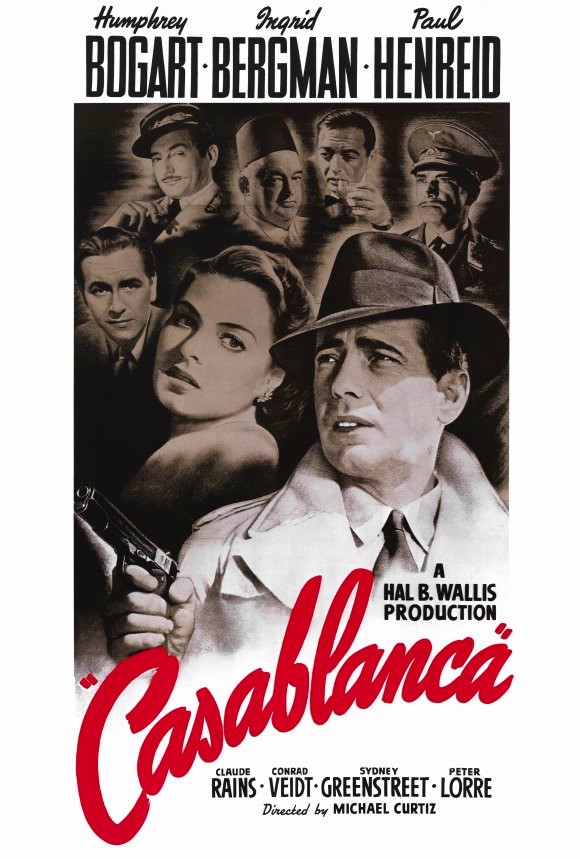
A few weeks ago my wife and I watched Casablanca. I’d seen in long ago, way before I was really into movies (contrary to what my wife thinks, we’d never seen it together) and it seemed like something worth revisiting.

It’s as good as advertised, a rare example of a film of that vintage that’s not just great in the context of its times but has aged very well.

Something really struck me about one of the early scenes. A lot of the action in Casablanca takes place at Rick’s, the club run by Humphrey Bogart’s character. Our introductory scene to that place is one of the long shots (like the famous Copacabana entrance shot in Goodfellas) that lets us get the scope and feel of the place, all the while dropping in on various conversations as the cameras pass by (and getting a song from Sam).

Two of those conversations are a great example of how to get a viewer necessary information about the world we’re in without being too heavy handed about it. The movie is set in the early part of the Second World War and the city of Casablanca itself is a kind of waypoint for refugees fleeing the conflict, somewhat under Nazi control but not entirely (or at least they want it to look that way). That people are desperate is part of the fabric of the film.

In the first conversation, a well-dressed but clearly distressed woman is negotiation the sale of some diamond jewelry to a buyer. He offers her “two thousand four hundred” francs (presumably) for it, because the market is saturated with diamonds right now (presumably sold in similar circumstances). The woman clearly thinks this is too little, but as viewers we don’t really know if she’s right. After all, the piece she’s selling might have great sentimental value but be fairly common (of even a fraud). That bit of conversation leaves us hanging somewhat, partly because the camera has other places it needs to be. There’s no time for context.

We shortly get the context, anyway. The camera pans across another conversation, lingering just long enough for us to overhear a man negotiating with a smuggler to get him out of the city. The price? 15,000 francs – “in cash,” he says, more than once. Instantly we know that the woman with the jewelry is probably getting screwed on the price, but she has to sell because she’s raising money to get out of town. It’s a perverse example of supply and demand, played out over the course of a minute or so. “Info dumps” are sometimes relegated to the concerns of fantasy and sci-fi writers, but the truth is that all fiction requires the kind of world building that can lead to info dumps. Casablanca has a great example, right up front, of how to do that quickly, efficiently, and without bogging down the important part – getting to Bogey!

Why Messi Can’t Be the MLS MVP (This Year, At Least)

The Major League Soccer regular season wraps up on the other side of this current international break. Every team but one will be in action on “decision day,” as the final playoff spots are booked and seedings secured. DC United are still alive for playoff berth (it’s been a few years), so I’m fairly excited.

With the regular season winding up, that means there’s talk about end-of-season awards, including who should be named Most Valuable Player. An early favorite for that award at the start of the season would have been Lionel Messi, who was expected the lead Inter Miami CF to the Supporters’ Shield (awarded to the team with the best regular season record), top playoff seed and, eventually, MLS Cup. But a funny thing happened on the way to that Supporters’ Shield, which the club wrapped up a couple of weeks ago – Miami proved that maybe they didn’t really need Messi that much after all.

Before we go any further, I’m not here to rip on Messi’s talent or career. He’s an amazing player, easily in the running for GOAT status when it comes to soccer, and I’ve enjoyed watching him play even though he’s never played for any of my teams. I’m just talking about whether, in this particular season, Messi deserves the title of MLS MVP.

Let’s get the numbers (all sourced from FotMob) out of the way – going into the final weekend of play Messi has scored 17 goals and dished out 10 assists in only 18 games. That’s an insane rate of production, down to a combination of Messi’s freakish talent and MLS not exactly being the most competitive league in the world. For context, DC United’s Christian Benteke, who leads the league in goals scored, has 23 in 29 games (with 5 assists to boot), while assist leader Luciano Acosta (of FC Cincinnati – and formerly DC United!) has 16 assists and 14 goals in 31 games. If it was just a matter of per-game production, Messi is the easy choice.

But that’s not the award. There are purely stat-based awards for scorers and assisters and such. One could argue that those should be based on something other than raw numbers (goals per 90 minutes played, or something), but that’s a debate for another day. Other leagues award the best player. The crux of the biscuit when it comes to MVP awards, however, is the word in the middle – “valuable.” What does it mean to be the most “valuable” player on a particular team, much less in the league?

By one measure Messi would clearly be the most valuable player in MLS, given the eyeballs and money he’s brought to the league. Messi isn’t the league’s first big signing  (his owner/operator at Miami, David Beckham, literally changed the way MLS operated when he came to the Galaxy in 2007), but there’s no denying he’s had a huge impact on the league’s profile globally. Haters may call it a “retirement league,” but if the retirees are the best who ever played the game does anybody really care?

Of course, that’s not what “valuable” really means in this context. It has to do with on the field performance, what a player means to the success of his team. That said, it’s not purely about who has the most talent or who had the gaudiest stats. Therein lies the problem with Messi being MVP, at least this year.

The 2024 MLS season was semi-interrupted by Copa America, with the nominally South American championship being held in the United States. Messi, of course, played for Argentina in that tournament. His last MLS match prior to the tournament was a 3-3 draw with St. Louis City on June 1. At the time, 18 games into the season, Miami was in first place in the Eastern Conference and overall with 35 points, 2 points clear of Cincy.

While Copa America was going on, Miami played 5 MLS games (the league doesn’t actually stop for these big tournaments, which makes it look pretty amateur, honestly), of which it won 4. The only blemish was a 6-1 drubbing by Cincinnati. In spite of that, Miami slipped behind Cincy by a point at the top of the table. Maybe Messi’s absence was a big deal?

Here’s the thing – Messi was injured during Copa America and didn’t play again for Miami until September 14. In the interim, Miami played 4 more league games (we’ll leave to one side the Leagues Cup), all of which they won, including a 2-0 win over their Cincy nemesis. As a result, when Messi came back, Miami was right where they were when he left for Copa America – at the top of the table and 8 points clear of Cincy.

In other words, while Messi was away for either international duty or due to injury, Miami played 9 league games, won all but one of them, and were in the same place in the table as when Messi left, but even more secure in that perch. Given that, how can it be said that Messi was the “most valuable” member of that team? Sure, the other big name players that have flocked to Miami over the past few years – Jori Alba, Luis Suarez – are largely there because of Messi, but evidence suggests if Messi had simply vanished from the face of the Earth during preseason Miami would have been just fine.

Who is the most “valuable” player from MLS this season? I can’t say, as I haven’t seen many games outside of DC United’s and I’m biased towards Benteke because of that. But I am fairly certain it’s not Messi, at least not this year. Best player in the league? Almost certainly. The most valuable on a team that barely noted his absence? Certainly not.