I never thought about whether there was a “fourth album curse” until the other day when I saw this AV Club article about fourth albums that beat the curse. The concept is pretty thinly sourced – a 2011 discussion forum thread and an article about Franz Ferdinand, in which its leader said:
Alex Kapranos once found himself dreading an inevitable milestone with his band, Franz Ferdinand: their fourth album. “At that point a lot of people are going, ‘Why are you still here? Why are you still doing stuff?,’” he recalls.
I can sort of see his point. By the time an artist has been around to release a fourth album the novelty has worn off and, depending on who they are, things can start to get a little familiar. With Beardfish, for example, I jumped on the train with their second album, The Sane Day, which is great.

I really liked the next two as well (the Sleeping in Traffic duology), but by the time Destined Solitaire rolled around – my fourth album with them, their fifth overall – the sheen had worn off. It’s not a bad album, by any stretch, but it failed to wow me and nothing they’ve done since has sparked the same sonic joy for me.
But let’s assume the premise is true – arguendo, as they say in the legal world – and see if there are some other artists who knocked it out of the park on their fourth (studio) album and avoided this so-called curse.
The one that immediately sprang to mind when I read the article (it showed up in the first comment, too), was 2112 by Rush.
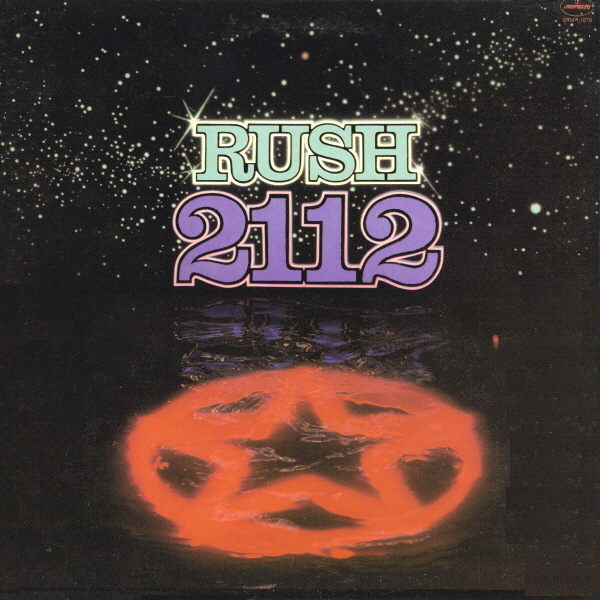
Although their self-titled debut had gotten some traction, Rush’s second and third albums hadn’t really moved the needle. Faced with a record company giving them one last chance to produce a hit they decided to say “fuck it,” do their own thing and, if necessary, go down swinging. Alas, the album, particularly the side-long title track, really clicked with a certain group of fans and the rest is history. 2112 is literally the album that made Rush what they turned out to be.
Another band whose fourth album, propelled by a side-long title track, signaled their trailblazing future was Kraftwerk with Autobahn.
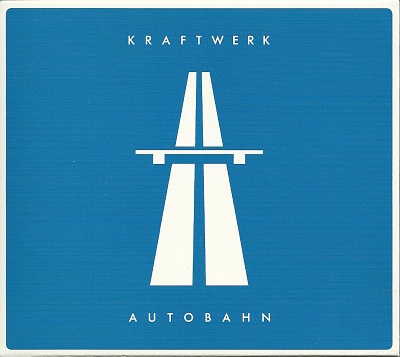
Up to that time, Kraftwerk had been of a piece with the rest of the Krautrock scene, experimental and not generating much particular notice. Autobahn marked the full embrace of electronic sounds (although there’s still some guitar and flute in there) that would find full flower on later classics like Trans-Europe Express and The Man Machine and set the scene for the synthpop and electronic music boom of the modern age.
An artist of a completely different variety, but with a similar swerve, is Bruce Hornsby. After the megahit of “The Way It Is,” his next two albums with the Range produced reduced commercial returns (although they’re both pretty good). For Harbor Lights, his fourth album, he changed things up.

For one thing he ditched The Range, not just in name but in body, aside from drummer John Molo. In their place he brought in a host of players with jazz (and related) cred, including Pat Metheny, Branford Marsalis, Jerry Garcia, and Phil Collins. The music brings in more influences from jazz, bluegrass, and classical music that would define Hornsby’s music in the years to come. It’s not a Kid A seismic shift, but it’s pretty significant.
Somewhat closer to the spirit of Kid A was Dazzle Ships by Orchestral Manoeuvres in the Dark.

After several successful albums, capped by Architecture & Morality, the band did a swerve into samples, found sounds, and collages. There are a few pop-facing songs, sure, but it’s more experimental and, as a result, kind of bombed compared to previous releases. It didn’t shift OMD’s style or anything, but it’s a solid example of a band using its success as a chance to do something different and mostly succeeding.
Finally, echolyn’s fourth album, Cowboy Poems Free, certainly belongs on this list.

It was their third album, As the World, that was supposed to be the big one, an unabashedly progressive rock record released by a major label (Sony) in the middle of the grunge-fueled 1990s. However, personnel at the label changed, the album was released with no real support, and the band broke up. But they returned in 2000 with Cowboy Poems, a little older and wiser (?), at least about the mechanisms of the record business. They’ve kept going (slowly, at times) ever since, release some really brilliant albums. For them, the fourth album was a “yeah, we can still do this” moment.
I’m sure there are plenty of fourth albums out there that fall flat, but, on balance, I’m not sure there’s such a thing as a fourth album curse if you can muster this many exceptions. Or maybe it’s more of a nuisance than a curse – in which case, why make such a big deal about it?
 JD Byrne