A few weeks ago my wife and I watched Casablanca. I’d seen in long ago, way before I was really into movies (contrary to what my wife thinks, we’d never seen it together) and it seemed like something worth revisiting.
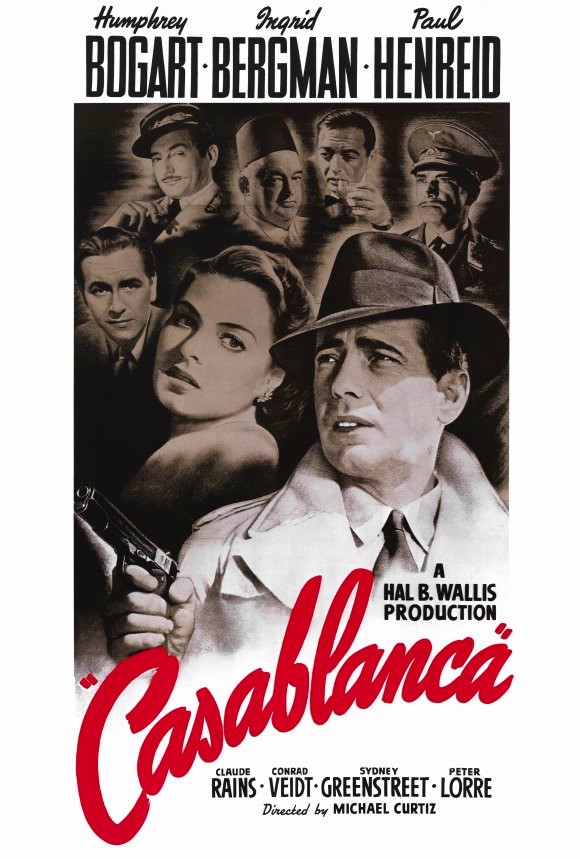
It’s as good as advertised, a rare example of a film of that vintage that’s not just great in the context of its times but has aged very well.
Something really struck me about one of the early scenes. A lot of the action in Casablanca takes place at Rick’s, the club run by Humphrey Bogart’s character. Our introductory scene to that place is one of the long shots (like the famous Copacabana entrance shot in Goodfellas) that lets us get the scope and feel of the place, all the while dropping in on various conversations as the cameras pass by (and getting a song from Sam).
Two of those conversations are a great example of how to get a viewer necessary information about the world we’re in without being too heavy handed about it. The movie is set in the early part of the Second World War and the city of Casablanca itself is a kind of waypoint for refugees fleeing the conflict, somewhat under Nazi control but not entirely (or at least they want it to look that way). That people are desperate is part of the fabric of the film.
In the first conversation, a well-dressed but clearly distressed woman is negotiation the sale of some diamond jewelry to a buyer. He offers her “two thousand four hundred” francs (presumably) for it, because the market is saturated with diamonds right now (presumably sold in similar circumstances). The woman clearly thinks this is too little, but as viewers we don’t really know if she’s right. After all, the piece she’s selling might have great sentimental value but be fairly common (of even a fraud). That bit of conversation leaves us hanging somewhat, partly because the camera has other places it needs to be. There’s no time for context.
We shortly get the context, anyway. The camera pans across another conversation, lingering just long enough for us to overhear a man negotiating with a smuggler to get him out of the city. The price? 15,000 francs – “in cash,” he says, more than once. Instantly we know that the woman with the jewelry is probably getting screwed on the price, but she has to sell because she’s raising money to get out of town. It’s a perverse example of supply and demand, played out over the course of a minute or so. “Info dumps” are sometimes relegated to the concerns of fantasy and sci-fi writers, but the truth is that all fiction requires the kind of world building that can lead to info dumps. Casablanca has a great example, right up front, of how to do that quickly, efficiently, and without bogging down the important part – getting to Bogey!
 JD Byrne