Was Silo Darkly Commenting on a Classic Star Trek Quote?

It’s one of the most iconic moments in all of Star Trek lore – hell, in all of science fiction. The “death” of Spock:

Spock’s mantra is a callback to his earlier pontification of the maxim that “the needs of the many outweigh the needs of the few.” It’s a stirring call to sacrifice for the betterment of your fellow being, a dictum that sounds throughout different ethical systems and religions. A personal best practice it’s hard to argue with (if also hard to follow).

But it’s also kind of fucked up, if you think about it.

I think the writers of Silo thought about it. Adapted from the Wool series by Hugh Howey, Silo’s first season on Apple TV wrapped up not too long ago. It’s a slice of post-apocalyptic sci-fi with a twist – it takes place almost entirely in a silo that stretches for dozens of levels underground, where survivors of some catastrophe eke out an existence via strict rules and superb logistic coordination.

Naturally there are secrets and lies and all that good stuff, which the main character doggedly sets out to uncover. Hovering over her is the interim mayor of the silo, played by Tim Robbins, who eventually turns heel and when he does he says a quite interesting thing:

Holy shit – “the needs of the many” – significant pause – “require the sacrifices of a few.” I can’t be the only one who thinks that’s not a coincidence.

Star Trek is generally thought of as utopian, aspirational sci-fi. Sure, there are baddies like Romulans and The Borg and The Dominion running around making the universe a mess, but, for the most part, life in Trek land is pretty good. Most people in the Federation get to lead a life they feel is fulfilling and, it appears, nobody has to do shit work for money. It’s not quite as decadent as The Culture universe, but it’s getting there.

Trek isn’t unique in presenting a positive human future (indeed, there’s some argument that sci-fi by definition has to be of that persuasion), but it’s probably the best well known. And its achieved that in a world that, at least in the last few decades, seems much more interested in exploring various dystopias than it is speculating how science might solve humanity’s problems. Silo fits snuggly into that dystopian field and stands as almost a challenge to the Trek view of the future.

Which is why I can’t believe its swerve on “the needs of the many” is an accident. There’s no reason it should be. As I said, Spock’s maxim is a generous rule of thumb to guide personal interactions. As a societal principle, however, it doesn’t take took long until it looks pretty dangerous. You don’t have to go very long down the slippery slope before you’re severely restricting personal freedom in name of the greater good (see also, Omelas, of course).

What makes dystopias so rich is that their fundamental dilemma is one we deal with everyday in the real world. I have to strain my imagination to imagine a world of little scarcity where anything I can dream of needing can be pumped out of a replicator. On the other hand, it’s not too far to buy into a society run by a guy who thinks the only way for life to survive is to brutally crush dissent, given human history since, well, ever.

It doesn’t make one better than the other, but we rarely see them in conversation with each other. I think that’s what Silo was doing. As a slogan, “the needs of the many outweigh the needs of the few” looks good on a coffee mug, but that doesn’t mean it can lead society to some very dark places. The road to hell being paved with good intentions and all that.

The Prequel Problem

Ending stories is hard – trust me. But figuring out the right place to start them can be just as hard. That’s true for all kinds of stories, but particularly fantasy or sci-fi stories where you have to build the whole world around the story you’re telling and the characters involved. By definition their world existed before their story did and will continue to do so once it’s over (barring apocalypse, of course).

Which explains the popularity of prequels. There’s so much backstory to dig through, most of it only hinted at, that there appears to be a rich environment to exploit. It must also seem like a fairly safe investment, since you’re dealing with, if not familiar and fan-favorite characters, at least events and histories in which the fans are already invested.

But there’s an inherent problem with prequels – they’re playing in a universe in which the future is already known to us. That can box writers in and sometimes make it difficult for the prequel to stand on its own as a piece of compelling drama, something we should care about for its own merits.

I thought a lot about this problem over the weekend as the wife and I (at her suggestion!) finally caught up with the Obi-Wan Kenobi series.

The six-episode series is set in the time between Rise of the Sith, with its culling of the Jedi, and the original Star Wars (aka A New Hope), a time during which, for all we knew, Obi-Wan was living off the grid on Tatooine keeping tabs on Luke Skywalker. Years pass, of course, so the idea that he didn’t get into anything worthy of telling a story about is pretty sad, but do the writers use that freedom to do something really interesting?

No, not really.

The inciting incident of the series is when Princess Leia is kidnapped on Alderaan (nice planet – too bad it goes boom) by, of all people, Flea. This is part of a plan to draw out Obi-Wan so some Jedi hunters can get him. Those Inquisitors are kind of interesting and could have been explored in some depth, but they have a boss and his name is Darth Vader. And so, the series largely revolves around maneuvering Vader and Obi-Wan into the same space.

As a result, we get two solid confrontations between them, the second of which would have felt like a pretty epic duel if it had any kind of stakes. It couldn’t, however, because of the prequel problem: both Vader and Obi-Wan survive to fight again in Star Wars, so neither can be killed or even seriously injured in ways that conflict with the “future.” Likewise, young Leia (who, as you might expect, is quite the scamp) is never in any real danger, as we know she survives unscathed. Indeed, the series punts her offscreen for the final episode mostly, as it rushes back to Tatooine for a confrontation between one of the Inquisitors and Luke’s family – which, again, we know will ultimately come to nothing.

It didn’t have to be that way. Using Leia’s kidnapping to lure Obi-Wan out of hiding was a solid idea. Imagine if she’d mostly stayed off screen (a MacGuffin, if you will) while he scrapped with and evaded Inquisitors and grew into his status as a hero. There’s actually a good character arc in the series, as Obi-Wan goes from trying to lay low and hide to being more engaged with the Rebellion. Isn’t that a cool enough story to tell? Do we need the Vader stuff? Do we need any suggestion that Leia or Luke will be harmed?

Star Wars knows how to do this. Rogue One is regarded by a lot of people as the best Star Wars movie since the original trilogy, even though we knew precisely how it was going to end. What made it work was that existing characters were largely absent and we got to know and care about a whole new cast so that when they made the necessary sacrifices to complete their mission it landed with some heft.

Ultimately, I think the prequel problem is a matter of characters rather than universes. After all, we read historical fiction all the time that involves real events. It’s not what happens to characters, it how it effects them, changes them, that matters. But when your prequel ties itself to characters who can’t change, that becomes a problem. I’ve dinged Star Trek – Strange New Worlds for tying itself too closely to characters steeped in Trek lore, rather than freely exploring people we know nothing about.

I’ve never really been interested in the idea of writing prequels. I had a prequel story, of a sort, for one of the characters in the Unari Empire trilogy that I almost wrote, but ultimately decided that all that was important about him was in one of the books already. Generally speaking, I’d rather go on and dive into a new world with new characters than revisit old ground.

But if you asked nicely . . .

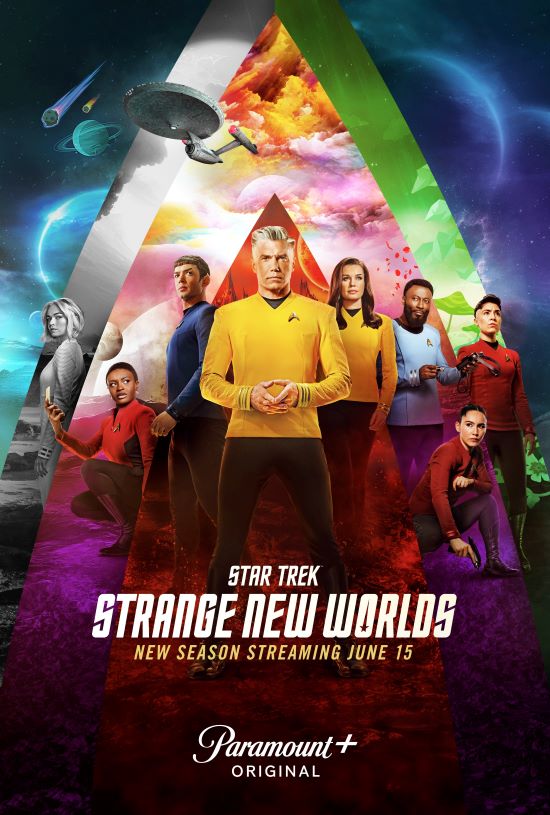
Weekly Watch: Star Trek – Strange New Worlds (Season Two)

Seeing as how the second season of Star Trek – Strange New Worlds just wrapped up, I thought I’d follow up on my review of the first season. If you’ll recall, I was pleasantly surprised and looking forward to a second season:

I’m cautiously optimistic about the second season. Given results thus far, I’m willing to give everyone the benefit of the doubt that we won’t be overwhelmed by Kirks (Jim’s brother is on this ship, too, for some reason) and we’ll be introduced to more strange new worlds.

What gave me pause about the first season was the need of the writers to try and keep looping SNW back into the wider series mythology rather than do some really new stuff. Did we really need Kirks? Did we really need the security chief to be related (however distantly) to one of Trek’s greatest villains? Why weren’t the Gorn anything other than, you know, the Gorn we all knew?

I wish I could say all my concerns were alleviated, but the truth is that in season two SNW leaned into some of the things that I most disliked about the first season. That said, it was still damned entertaining and, maybe through sheer repetition, I’m starting to be worn down on those concerns.

Let’s start with the Kirks. James Kirk showed up in one episode of the first season, a nifty retelling of a classic episode from the original Trek. It made sense, but I worried where it would lead. Where it led was that Kirk appearing in three episodes this season, getting major screen time without any great effect. Simply put, there’s no reason that his role in those episodes couldn’t have be filled by a wholly new character. Kirk has now had multiple encounters, including a fairly personal one, with a person named “Noonien-Singh” and yet said nothing about that when Khan first showed up in the show. It’s a minor nit, but one that bugs me over and over – what’s gained by tying this into the established Trek mythos?

Likewise, the series appears to be doubling down on making the Gorn the Borg of this series. I’m not against creepy space monsters, but wasn’t part of what made the initial appearance of the Gorn in original Trek work so well is nobody knew anything about them? Why not create an entirely new beastie to menace this version of the Enterprise? Maybe my feelings here are partially colored by the fact that war Trek is my least favorite Trek variant and that seems to be the role of the Gorn moving forward.

That being said, I still really enjoyed this season for the most part. A big part of that is that, while at the same time grasping for connections to prior Trek lore, the SNW creative crew is also willing to really push the limits of what a Trek show can be. That came through loud and clear in two episodes from this season.

The first was a crossover episode with the animated Lower Decks series, in which two of the characters from that show travel back in time (and into live action) and interact with the Enterprise crew. I’ll admit that I don’t get Lower Decks – it’s too fast and hyper to be funny to me – but I thought this episode was really great, from the animated opening credit sequence to the animated outro with the Enterprise crew getting ripped on some sort of booze. And I appreciated the two Lower Decks characters, in a rare moment alone, making a joke about how slowly everybody talked. Good humored timey-wimey fun.

The second was the big musical episode. I’m not a huge fan of musicals and I found the actual music here pretty samey and dull (exception being the acapella version of the theme music in the opening credits, which was great) and the idea, that some outside entity is forcing the crew to sing their true feelings, is straight out of the better-executed Buffy musical episode, but, still, it’s hard not to like the curveball this episode was. And without it we’d never have gotten Klingons as the galaxy’s scariest boy band, a sight I wouldn’t want to miss.

My favorite episodes were a couple that dealt with characters grappling with their pasts. “Among the Lotus Eaters” took a quick line from the original Trek pilot about one of Pike’s regrets and fleshed that story out (a pretty good example of raiding the lore for story ideas) and spun it into an interesting meditation on memory and forgetting. “Under the Cloak of War” dove into Dr. M’Benga’s history and that of a Klingon war criminal and how they were struggling to come to grips with their pasts. I’m not a big fan of M’Benga’s ability to eat space spinach and go berserker on numerous Klingons, but I like the general idea of a healer growing out of a warrior. The Uhura-focused episode, “Lost In Translation,” was also pretty good.

All in all I found the second season of SNW a lot like the first – really good most of the time, with some choices that I wish had gone differently. It is by far my favorite of the nu Trek stuff. And, if anything, I’d like for a few more episodes per season to let things breathe a bit (the Spock/Chapel situation flamed out way too quickly). But mostly, I hope going forward they’ll heed the call to explore “strange new worlds” and give us more of that and less backward-looking connections to Trek lore.

I’ll be watching, regardless.

But What Is a Happy Ending?

As the Tears for Fears song goes, everybody loves a happy ending. That said, what makes an ending a happy one? Does that depend on the person doing the reading or watching? And does it matter whether we’re looking at a more meta or personal level?

I stumbled into these questions recently after finishing Paul Tremblay’s The Cabin at the End of the World, which became the movie Knock at the Cabin, directed by M. Night Shyamalan and released last year. It was the movie promos that made me want to read the book (I’ve not had good luck with Shaymalan’s movies over the years) so I was always interested in how the adaptation went. The endings of the book and movie differ quite a bit and raise some interesting questions about what constitutes a “happy” ending.

Needless to say, the post from here on out is going to be spoiler heavy, so if you don’t want to know about any of this, head away now.

The plot of the book and film are pretty close, until a certain point. They both start with a young girl playing outside a remote country cabin where she and her two fathers are on vacation. She’s approached by a large, friendly guy who winds up having three friends with him. He gives the family a startling ultimatum – the end of the world is upon us and the only way to stop it is for one of the family members to be sacrificed. It’s sort of a horror/mythical take on Sophie’s Choice.

Naturally, the family refuses to kill one of their own and the tension ramps up from there. The interlopers start to kill each other and there’s some evidence from the outside world (via TV) that maybe it really is the end of days. Tragedies are happening and the big dude in charge may or may not know of them in advance. In the book, at least (I haven’t seen the movie yet), it’s left very vague whether the intruders are religious fanatics, simply nuts (but I repeat myself), or are really telling the truth.

Here’s where things part ways, significantly, between book and movie. In the book there is a struggle over a gun that leaves the little girl dead. Eventually the dads escape (all the intruders die) and they confront the question of sacrificing one of themselves just in case the world is really ending (one is now more of a believer than the other). Ultimately they decide not to, essentially concluding that any kind of God that would require such a thing isn’t worth obeying, and they walk off into a brewing storm that may or may not just be a storm. In the movie, by contrast, the girl is not shot and one of the dads decides to sacrifice himself to save the world on her behalf. The girl and her remaining father leave and find evidence that the sacrifice really is stopping the world from ending.

Per this interview with the LA Times (via), Tremblay explains that while he generally likes the movie, he prefers his ending to Shaymalan’s. No big surprise there. Endings are hard and if you get what you think is a good one you’re kind of protective of it. But what really interested me was Tremblay’s explanation as to why:

I think the movie’s ending is way darker than my book. I don’t mean to say this flippantly. But politics aside, on a character level, the idea of, “What are Andrew and Wen going to do now”? Not only did they just kill Eric – how will they go on with that knowledge – but also with the knowledge that this supreme being that controls the universe was so unremittingly cruel to them? I would never write a sequel . . . but I’m actually weirdly interested in a story of what Wen and Andrew do now.

He further explains:

at a certain point in telling the story it didn’t matter to me if the apocalypse was happening because the story to me became, “What were Eric and Andrew going to choose?”

That was the story: their choice. Their ultimate rejection of fear and cruelty, whether or not the apocalypse is happening. What has happened in the cabin and what they’re presented with is wrong; it’s immoral, and they refuse. And I find that hopeful . . ..

This is weird on its face. The movie ending is clearly the happier one, right? The little girl lives. While one of her dads decides to sacrifice himself (which is honestly where I thought the book was going) at least we know it wasn’t in vain and it really did save the world. For a story full of psychological terror that seems like the best possible outcome.

But I think that framing depends on whether you look at the story from a personal or meta level. On a meta level this story is the trolley problem on steroids. Forget five strangers on the tracks versus one, we’re talking about survival of life on Earth – billions of people – against the life of one person who is, to you, particularly beloved. By pure utilitarian calculus this is a fairly easy call (the needs of the many, as Spock would say). Of course, that presumed that the apocalypse is really happening and the requested sacrifice could really stop it.

A similar dilemma animated the season finale of The Last of Us (and the end of the game, so far as I’ve read), in which Joel was faced with Ellie being operated on in a way that would kill her but that might lead to a cure for the pandemic that was ravaging humanity. Rather than give it much thought, he broke very bad (badder than before, at any rate) and killed anyone who got between he and Ellie. He saved her, thus potentially condemning the rest of the people on the planet.

Is that a happy ending? It sure is for Joel, who doesn’t have to go through the trauma of losing (in essence) another daughter. Is it for Ellie? Hard to tell, since she didn’t really get much choice in the matter (either way). Is it for humanity? If it was going to lead to a cure, fuck no, but if it wasn’t?

My point isn’t to take sides (although I have my preferences, like anybody), but to point out that any on person’s conception of a “happy” ending might not match someone else’s. In a way, that’s a great thing for writers. Endings are hard and the knowledge that people can interpret a particular ending so differently means it’s folly to try and please people. But in another, it means more to think about when trying to shoot for a happy ending.

As always, the best course is to think hard about what you’re going to do and why you want to do it. That way at least you’ll have a satisfactory conclusion to the story you want to tell.

Weekly Watch/Read Quick Hits

Sometimes, you just want to say a little about some interesting things . . .

Operation Nemesis: The Assassination Plot that Avenged the Armenian Genocide, by Eric Bogosian

On March 15, 1921, a man named Soghomon Tehlirian stepped up to a former high-ranking Turkish official, Talaat Pasha, and shot him dead. At his trial, Tehlirian told of how he had witnesses the murder of his family as part of the Armenian Genocide and had taken the chance to kill Pasha for his role in it (he’d been convicted of his complicity in absentia after World War I). Actor and writer Eric Bogosian thought that story would make a great movie and started writing a screenplay, only to find in his research that Tehlirian didn’t act alone, but was one part of a wide ranging conspiracy called Operation Nemesis to seek some measure of justice for those killed during the genocide. Bogosian wound up writing this book, which is plenty fascinating, but doesn’t quite live up to its goal of getting deep inside the conspiracy, focusing mostly on Tehlerian and his particular act. Fun fact – Bogosian was in Atom Egoyan’s brilliant Ararat, which is partly about making a movie about the Armenian Genocide – he plays the screenwriter.

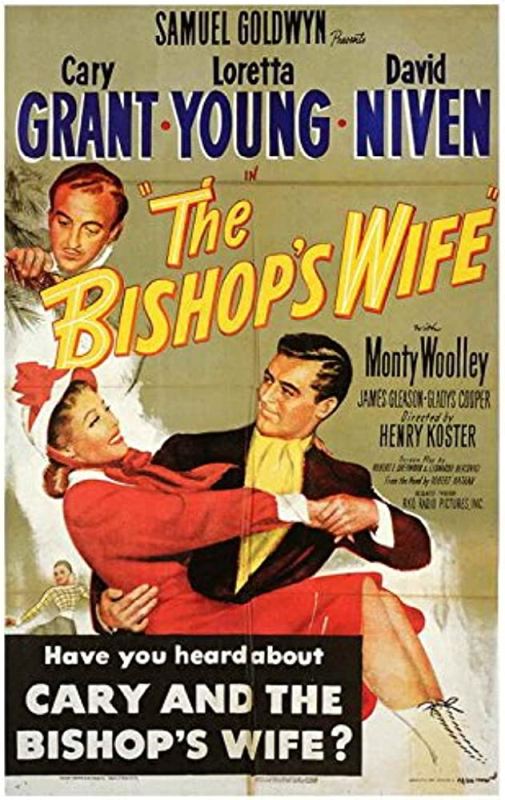
The Bishop’s Wife

Every holiday season my wife TiVos just about every Christmas movie she can find and I’m always interested in something that’s older that I haven’t seen before. This one (from 1947) is one of the weirder holiday movies I’ve ever seen. Cary Grant plays an angel who comes to the aid of the titular bishop, mostly by wooing his wife (in some markets it was billed Cary and the Bishop’s Wife so as to not seem too religious). I’m not kidding. The bishop makes promises to do all sorts of thing with his wife, but has to cancel to go beg for money to build a pointless cathedral, so Cary steps in and does it all. I kind of like the theory floated by gpph at Rate Your Music that Cary might actually be a demon, more than an angel – that probably would have been a better movie! Still, this is a Christmas movie with precious little of “there’s only one proper way to celebrate Christmas and we’ll beat you over the head with it until you conform,” so that’s a major plus in my book.

Sea of Tranquility

I really really loved Emily St. John Mandel’s Station Eleven (and her recent work to get her divorce cited on her Wikipedia page) and so was a little disappointed with Sea of Tranquility. It starts really well, laying out multiple timelines and a singular bit of weirdness that appears to link them all. When things lose steam, for me, is when we get deep into the time travel stuff at the book’s core, which I just don’t find that compelling (it’s wrapped around the “what if we’re living in a simulation, man?” speculation and at least comes to the correct answer – who cares!). That said, Mandel is just great on a scene level and there are really excellent bits here and there that make it worth the (relatively short) read.

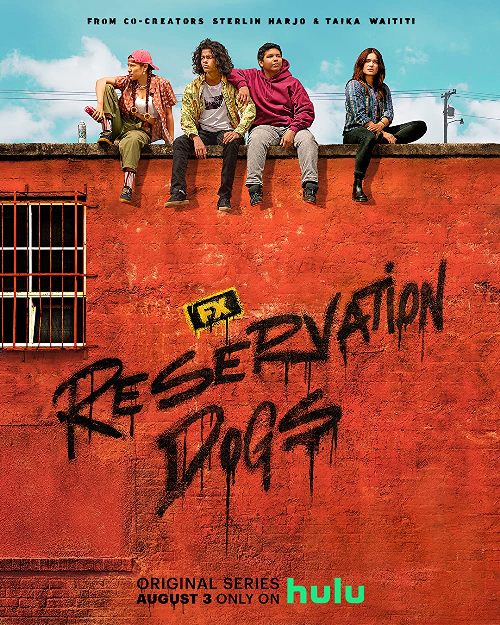
Reservation Dogs

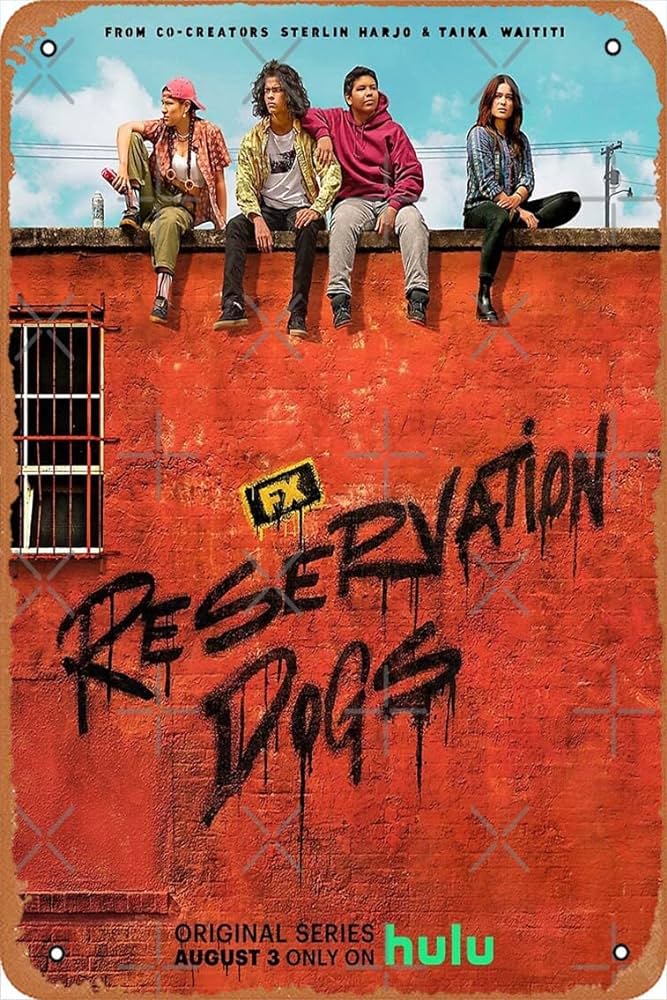
This Hulu series (18 episodes over two seasons so far) has been on our radar for a while, but we only got around to actually digging into it recently. Thankfully, it’s as brilliant as the reviews made it out to be. It’s about four Native American teenagers on a reservation in Oklahoma dealing not only with the regular realities of life, but also the suicide of their best friend, which hangs over the series thus far. If that makes it sound depressing and serious it can certainly be serious (and touching – a scene in the second season finale made me choke up), but it’s hilariously funny in other parts, as well.

Does Size Matter?

Get your minds out of the gutter, folks, I’m talking about books here.

A while back I came across this column:

The argument is as the headline states it – that novels used to be longer and the fact that people don’t read long novels anymore is a problem. I don’t find it a very compelling argument, for several reasons.

The jumping off point for this observation was the then-looming 100-year anniversaries of two very famous long books – James Joyce’s Ulysses and Marcel Proust’s In Search of Lost Time (its English translation, anyway). The overwhelming mood of the column is a “they just don’t make ‘em like the used to” and wouldn’t things be better if modern popular culture supported such massive works? Fiction, the author argues, helps build empathy for others and generally leads to a more civilized, less violent society. I don’t disagree (although the cynic in me says look at the 20th Century), but I’m not sure book length makes much of a difference.

Joyce and Proust are odd standard bearers for this argument, too, given that they’re ultimately more talked about then read. Were either best sellers in their time? The author labels them “gravely under-read,” so presumably not. “Proust” has enough pop culture currency to be a solid basis for a silly sketch about trying to summarize his work, but how many people have any idea what it says? As for Joyce, even the author of this column concedes that there are parts of it that are “skippable,” which sounds like a concession that Ulysses is just too damned long.

More to the point, the column ignores or downplays evidence that consumers of media (in whatever form) are more than happy to give over lots of time to various works. He bemoans the fact that Netflix allows viewers to watch things a increased speeds, “as if 90 minutes is now considered an unreasonable amount of time to spend watching a 90-minute movie.” This is slightly out of touch, as the ballooning of movie lengths is pretty regularly commented on. As for Netflix itself, a recurring criticism of its popular documentary shows is that they take what should be a feature-length story and stretch it over hours and hours. Yet people still dive in.

There’s a glancing mention of popular fiction, specifically a recognition that the Harry Potter books that kids eat up are lengthy, but then regret that “between youth and middle age, out enthusiasm for chunky novels recedes.” But is that true? Fantasy and science fiction are two of the most popular fiction genres and they often produce true door stoppers. Per this graphic from Electric Lit Ulysses is 265,000 words, which is a bunch. But A Game of Thrones, which has sold scads of copies, is 292,000 and it’s the shortest book in that series. Eye of the World, the first of the Wheel of Time series is nearly 306,000 words. Again, it’s sold loads.

Both of those are the first installments of a lengthy series, of course, which gets another overlooked truth of the modern book market – readers really like long, mutli-volume works they can dive into and immerse themselves in. Those series run into the millions of words. In Search of Lost Time, of course, was itself a series of seven books (topping out at just over 1.2 million words – Martin’s at 1.7 with A Song of Ice and Fire and isn’t done yet!). Going back to movies, what does it say that the most successful popular film series of our era tells a complete, interwoven story, over two-dozen-plus movies (not to mention related TV series)? It’s not an indication that people aren’t willing to devote considerable attention to media that moves them.

I’m not trying to equate popular novel series or the Marvel movies with two classics of world literature, but the thesis of this column isn’t that people aren’t reading the right kind of books (although that’s implied), but that they’re not reading ones that are long enough. But that’s simply not true. In whatever form you consume you media – book, film, or TV – people eagerly consume epic stories all the time.

There’s a musical analogy here, too. Progressive rock is famous for artists who indulge in lengthy songs, including side-long epics like “Supper’s Ready” or “Close to the Edge.” It’s to the point that some newer artists think length is as important as anything else when it comes to prog. But the truth is that Gentle Giant did more interesting things in 4 minutes than many bands can do in 20. The only issue should be how long should a particular song – or book or movie – be to get the job done? Sometimes it’s short, sometimes it’s not.

Or, as the old saying goes:

2022 – My Year In Media

Looking back on the various media items I consumed the past year – I really need to keep better track of some of them – I was looking for some kind of trend or meaning for what stuck with me. Alas, there really isn’t any, so here’s just a collection of interesting things, both new for 2022 and new to me for 2022.

Music

I didn’t get to sample a whole lot of “new” music in 2022, but it’s unlikely that any would have perched higher in my soul than Marillion’s latest, An Hour Before It’s Dark.

Grappling with COVID-induced lockdowns and fears (which vocalist/lyricist Steve Hogarth initially said they weren’t going to do), the album manages to both dredge up some of the worst of it and still end on a beautiful, hopeful note. It’s not as great an album as Fuck Everyone And Run, but that’s not much of a criticism. That the band has been at it so long and is still so good is either inspirational or enough to make you give up. Either way, I can’t wait for the next one.

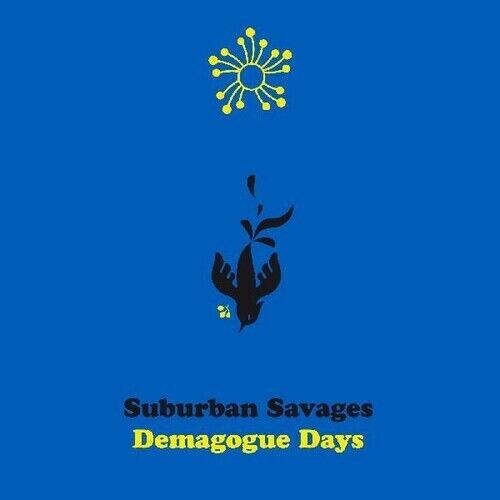
In terms of “old” stuff, the complete out-of-the-blue find I had in 2022 was Norwegian band Suburban Savages and their 2021 release Demagogue Days.

Stylistically they’re hard to pin down, with a foot each in surreal Canterbury-style progressive rock and the other in the more avant garde side of things. There’s also a lot of great synth work, which naturally attracts my ears. The title track may be the catchiest use of 7/4 since “Solsbury Hill,” too!

Movies

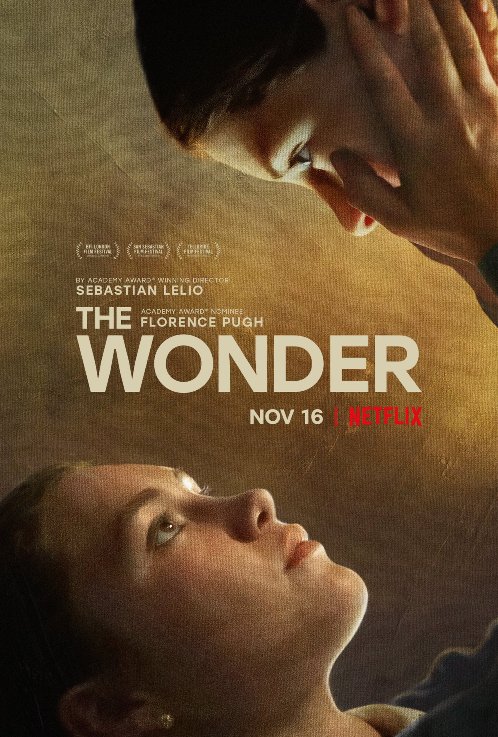
The wife and I still haven’t seen a movie in the theater since COVID hit (more out of inertia more than anything else, I think), so I didn’t get to see a lot of “new” movies in 2022, although we did get to catch up on several big-name flicks over the holidays, most of which (Nope, Glass Onion, etc.) were solidly “meh” in my mind. The standout from 2022, for my money, is The Wonder.

It’s a small, quiet film about an English nurse in post-famine Ireland who is brought in to observe a teenage girl who allegedly is surviving without eating anything. It’s no spoiler to say she’s not what she appears, but the way those around her deal with it are fascinating. The movie has a creepy atmosphere that doesn’t really read “horror,” but makes it feel that way anyway.

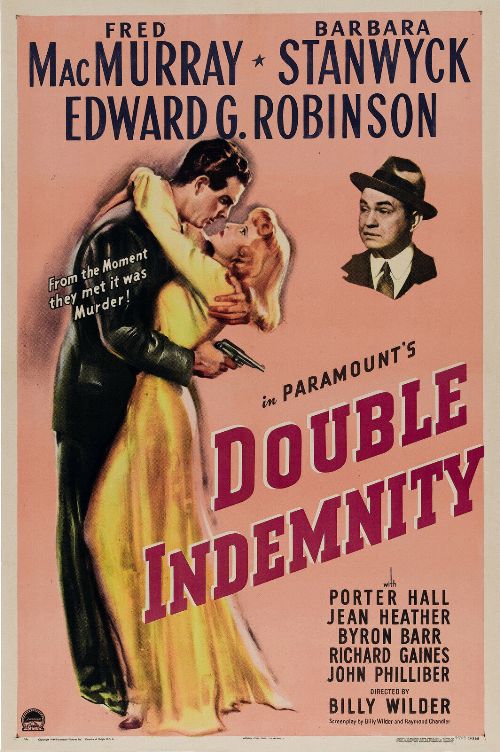
For some reason, in 2022, I decided to regularly take a look at the offerings on Turner Classic Movies. As a result, we wound up watching a lot of movies from the 1930s and 1940s, classics that I’d never seen before. Top of the heap for me was Double Indemnity, the 1944 noir classic directed by Billy Wilder.

It’s a pretty sleazy tale for the middle of Code-era Hollywood, but everybody gets theirs in the end, so I suppose that’s justice. All I know is that it’s a ball to watch the plotting and scheming unfold. You can see the DNA in a lot of modern thrillers in it.

I also wanted to give some love to a pair of documentaries I saw this year that dealt with overlooked aspects of music history.

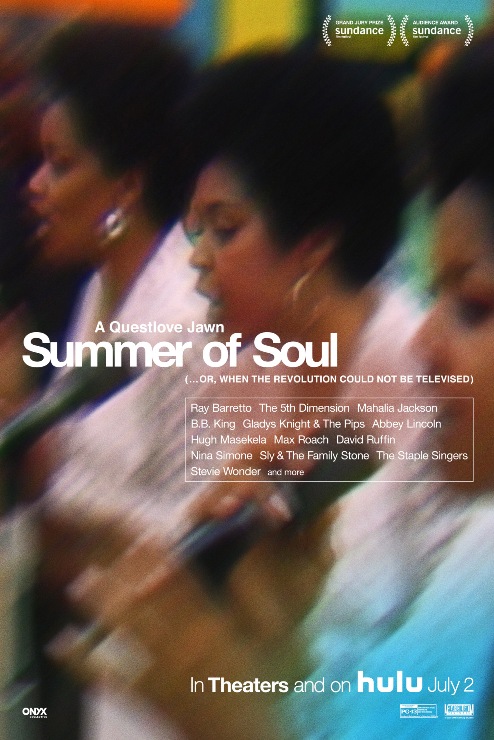
The first, which hardly needs my approval (it won an Oscar, after all), is Summer of Soul, directed by musician Questlove.

It’s about a series of concerts held in Harlem during the summer of 1969, the same year as Woodstock (which overshadowed these shows in the popular conscience). A lot of them were recorded for proposed TV specials that never really happened, so there was a rich treasure trove of performances from the likes of BB King, Stevie Wonder, and Nina Simone. But the movie also gives a lot of context for why these concerts were such a big deal at the time, along with modern feedback from several attendees (and a few performers).

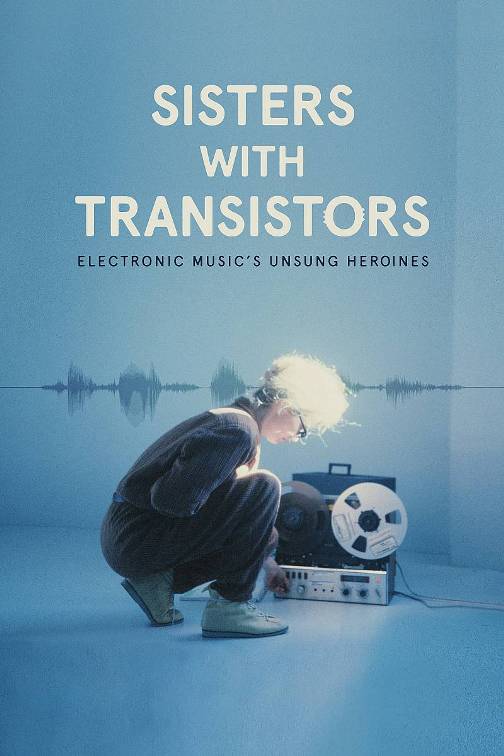
The other gets at the overlooked contributions of women to the development of early electronic music, Sisters With Transistors.

It focuses on real pioneers, including Delia Derbyshire (responsible for the Dr. Who theme, the assembly of which is amazing) and Wendy Carlos (of Switched on Bach fame), so lots of cool archival footage.

TV/Streaming

Looking back I’ve already written a lot about some TV shows in the past year, with some thoughts on the finale of Better Call Saul, the first season of Star Trek: Strange New Worlds, and the fascinating documentary series The Most Dangerous Animal of All. I wanted to highlight a few others, too.

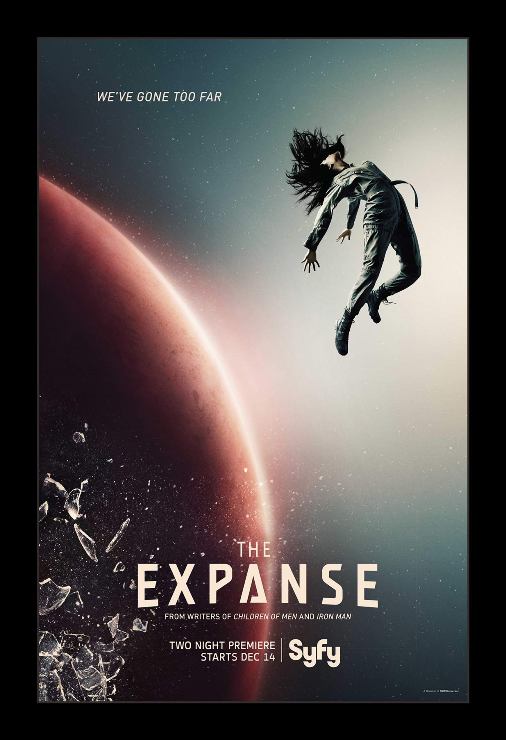
First, exiting the stage along with Better Call Saul was, for me, the best sci-fi series of its generation, The Expanse.

As it happens, I read the first book in the series (which I highlighted in my list of favorite recent books last year) before the TV show started so I was already primed to like it, but the adaptation was really excellent. Maybe it lacked swoopy spaceships, but it had compelling characters dealing with real human issues against a backdrop of an existential threat to our species. They didn’t even bowdlerize Avasarala!

One that both came and went in 2022, in that it won’t get a second season, is Archive 81.

Based on a podcast (which does continue past this only season), it’s about a guy hired to digitize a series of videotapes that pull him into a mystery/conspiracy involving a cult and a huge apartment fire decades before. It’s creepy and atmospheric and the cult aspect actually works better than I thought it would. I think the season could stand on its own, but there was clearly an expectation of more given the ending. Oh well.

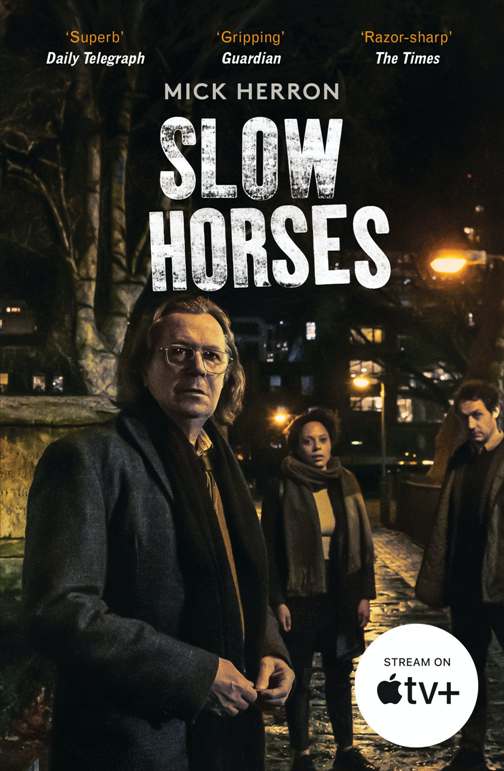
Hopefully, since we’ve already gotten two (short) seasons, we won’t be denied more of Slow Horses.

Based on the books by Mick Herron, the series is about a clutch of essentially exiled British intelligence agents who either are, or are perceived to be, useless fuck ups. Until somebody thinks they might be useful and then the shit hits the fan. I read the first book before diving into the series and the adaptation was incredibly faithful, right down to Jackson Lamb’s championship flatulence.

Books

I loved Susanna Clarke’s Jonathan Strange & Mr. Norrell when it came out and had kind of given up on getting anything else from her when Piranesi appeared in 2020.

It took me a couple of years to get to it, perhaps worried that the slighter volume wouldn’t measure up to its predecessor. I shouldn’t have worried. It’s a beautiful, expertly crafted book and completely different from Strange & Norrell. If you’ve heard people praise Clarke’s work by find the first book’s length a bit daunting, start here. You won’t be disappointed.

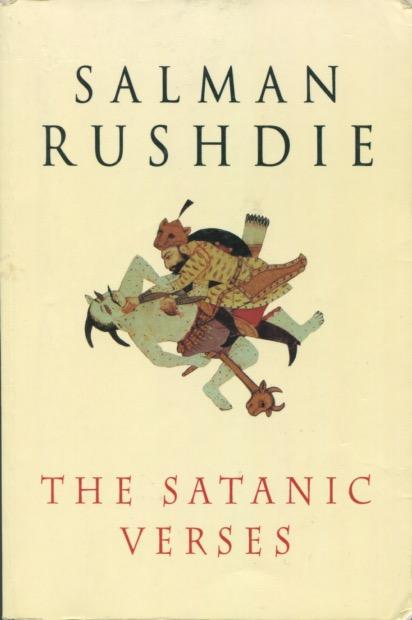
After Salman Rushdie was cowardly attacked in New York in August I finally decided to jump into The Satanic Verses.

It was, admittedly, a lot, with a narrative that jumps all over the place in terms of time, place, and tone. Beyond that, Rushdie isn’t exactly sparse with words, spinning sentences that sometimes seem to wrap around you two or three times before the period comes. I found it challenging and exhilarating all at once.

Finally, 2022 was the year I finished up the saga of necromancer Johannes Cabal, with The Brothers Cabal and The Fall of the House of Cabal.

I had a couple of quibbles (I don’t find the fictional nations in the middle of otherwise recognizable Europe very compelling), but overall it was a great ending to the tale of one of my favorite characters. Johannes is deeply cynical, but also funny and honest. You may not like him, but it’s hard to argue with him (to borrow a phrase from Clerks, “he’s blunt, but he makes a point”). The story of his brother, Horst’s, struggles with being a vampire were a fresh take on that theme.

Podcasts

In spite of hosting one, I haven’t really been a podcast listener until this year. For the most part I cherry pick episodes here and there on things that interest me, but there are a couple that became more regular listens this year.

The more entertaining of the two is Discord and Rhyme.

It’s a podcast in which a rotating cast of young(ish) music writers gather to talk through one of their favorite albums. What drew my attention when I was scanning through the back episodes was how many of them involve progressive rock (and adjacent) bands. It’s heartening to hear people not raised in the early 1970s who genuinely like that kind of music (most of them have parents to blame). But even on other albums what works the best is that they’re all coming from a place of love (or at least like) for particular albums, so the talk is engaging, informative, and enthusiastic. It’s much more fun to praise something you love than to tear down something you don’t.

The more aggravating of the two was Hoaxed.

A six-episode podcast, it dives into an incident from the UK in 2014 in which two children accused their father of being part of a cult of devil-worshiping pedophiles. Shades of the 1980s Satanic panic when the kids recant and it turns out that they were put up to it by their mother and her very odd boyfriend. That’s enough to hook you, but the story goes on to cover the backlash against the community when the charges fell apart and whether anybody will ever be held accountable for the damage done. It’s like a QAnon story in miniature. All right – bring on 2023!

Weekly Watch: The Most Dangerous Animal of All

One of my favorite David Fincher movies (of which there are several) is Zodiac. What makes it work so well isn’t that it “solves” one of the most infamous cold cases in American history, but that it compellingly portrays how the obsession with trying to solve something that might not be solvable can ruin a person’s life. In the end, it becomes less a triumph of perseverance and grit than a pathetic throwing away of a life’s potential.

The four-episode documentary series The Most Dangerous Animal of All, adapted from a book of the same name, is an interesting companion piece to Zodiac, although I’d hesitate to call it perfect.

It’s about Gary Stewart, who was adopted as an infant into a loving family. For decades, he struggled with questions of his real identity and what it meant to be abandoned by his birth parents, so he started working to track them down. He found his birth mother easily enough and through her learned that his father was a guy named Earl Van Best, Jr.

Best was a bad dude at the time he met Stewart’s mother. And by “met” I really mean kidnapped, raped, and abused. He was 27 years old at the time, she was only 14. Their “love affair” even made headlines, allowing Stewart to get not just a feel for the circumstances of his birth but pictures and even some in-court film of his father when he was eventually caught, convicted, and sentenced for his crimes.

All that was bad enough, but then Stewart, armed with a mugshot of his father, saw a documentary on the Zodiac killer and that iconic drawing of the suspect:

Stewart realized it looked a lot like his father. This sets him off on an odyssey to determine whether his father was, in fact, Zodiac and solve this coldest of cold cases. Through the first three of the four episodes, Stewart marshals his evidence and it sounds pretty compelling. He wrote the book upon which the series was based and then, well, it all went to shit.

What’s particularly interesting is, according to this article, said going to shit started happening while this documentary was in production. This left the creators in a pickle – how to deal with the evidence that seemed to show that Stewart’s argument that Best was Zodiac was full of shit? The way they handled it was to present, point by point, experts debunking each of Stewart’s claims – to him. Essentially, they made the documentary on one track, all the while building the case against Best as the Zodiac (culminating in records showing he wasn’t even in the United States when the Zodiac killings took place) on another, only bringing them together in the end.

The result is compellingly awkward. You might expect that Stewart, confronted with the evidence contradicting his theory (some of which implies he just made shit up), that Stewart would come clean or break down in some way, blame the stress of his quest for driving him down this particular rabbit hole. Instead, he steadfastly holds onto his conclusion that his birth father – who had nothing to do with raising him – is the Zodiac killer.

To what end? It’s not clear. Maybe it’s because Stewart is so desperate for a personal history, an identity that latching onto one that horrible is preferable to not having one at all. Maybe it’s that, if he’s going to be the offspring of a monster, anyway (which Best, by all evidence, was), might as well be the offspring of one of the most infamous (and unidentified) monsters of all time? Or, maybe it was all a grift, with Stewart coming up with a slick way to monetize his search into his background.

I don’t think it’s the last one. From the documentary it really appears that Stewart believes the story he’s trying to sell. Either of the others are heart wrenching, in their own way, and make you feel sorry for him. Which is what makes this series so compelling – come for the potential true crime bombshell, stay for the fascinating portrait of a man who is so wrapped up in the distant past that he can’t come to grips with the more recent version.

Talking Is Good 

Better Call Saul wound up being one of my favorite bits of TV ever (Emmy voters be damned!).

I even like it better than Breaking Bad (which I’ve now seen all of, thank you). Partly it’s because Jimmy/Saul is a lawyer and so his character resonates more with me (he is one of our patron saints, after all), but mostly I think it’s because I find Jimmy/Saul’s character arc more compelling than Walter White’s. White’s was more viscerally terrifying at time, but the fate of Jimmy/Saul (not to mention Kim Wexler) hit me right in the feels.

So why was I so disappointed by the series finale? It wasn’t bad, far from it, and I’ve got no real beef with how character arcs wrapped up. I sort of thought the very end should have come while Jimmy/Saul was on the bus headed to prison and all the other inmates were chanting “better call Saul!”, as it would have indicated just how he was never going to be able to outrun his past, but I don’t begrudge he and Kim one last smoke.

A nitpick here about that prison, though. My federal public defender self got overly excited during the scene where Jimmy/Saul is negotiating his deal with the Government. There was talk of the US Sentencing Guidelines! He even mentioned being sent to FCI Butner, a real facility in North Carolina where Bernie Madoff (not to mention several of my clients over the years) did his time. Hooray for verisimilitude! So why, then, was his final destination a fictional prison, ADX Montrose, that was clearly a stand in for ADX Florence, the real “Alcatraz of the Rockies?” There must be a reason, but damned if I can figure it out. Maybe I’m just miffed because Montrose was the name of my elementary school.

Anyway, back to the bigger question – what was it about the finale that left me unsatisfied? Ultimately, I think it was that everything happened too quickly. Better Call Saul (like Breaking Bad before it) was never a show to rush things, sometimes coming in for criticism for being too slow to move things along (a criticism with which I don’t agree, by the way). You couldn’t say that about the finale, though, which breezes through a good chunk of time in a single hour (mostly). It felt a little forced.

Was it because I wanted more Guideline talk? Not really, but I think “talk” was something that was missing. By the time the finale rolled around the show’s two main characters, Jimmy/Saul and Kim, were worlds apart (geographically and otherwise) not just from themselves, but from anybody else. Kim had coworkers and a boyfriend down in Florida but was keeping them at arm’s length. There certainly wasn’t anyone she could confide in about things. Jimmy/Saul didn’t even really have that much, unless you count all those cinnamon roll delivers to the guy from Parks and Rec.

As a result, the decisions they make and the way they reach those decision occur entirely inside the characters’ heads. I’m not saying they don’t make sense in the end, but there’s no way to really have them grapple with their decisions because there’s no one for them to talk to. As it happens, I just read the novel Fletch (the movie was better) which gets around this clumsily by having the titular reporter dictate his thoughts into a tape recorder which is at least something.

Of course, it’s easier to handle a situation like this on paper than it is on screen. Novelists or short story writers can easily open up a character’s skull and dive in, charting as the synapses fire while the character develops a plan. Short of a voiceover there’s no good way to do the same on film or television (or radio/podcast), aside from having characters talk to other people. Which is why it’s worth thinking about how characters are going to work things out if you strip away anybody else to talk to.

Talking, as the song says, is good. It’s a good rule for real life and it’s an even better thing to keep in mind when writing fiction.

Weekly Watch: Star Trek: Strange New Worlds

Last year, in my review of the first season of Star Trek: Discovery, I laid out how I’m not really a fan of nu-Trek and was happy to let the rest of that series go on without me. What really dragged it down for me was that it didn’t feel very “Trekky” and it was too slavishly devoted to the modern streaming serialized storytelling ideal.

So along comes Star Trek: Strange New Worlds. Another prequel (of sorts), but also a spinoff of something that occurred in a subsequence season of Discovery, Strange New Worlds gets us back on the Enterprise during the time it was commanded by Christopher Pike. Pike is well known to original Trek fans as the guy from the pilot (replaced by Kirk for the series), with said pilot being cut up for use in a later episode that reveals Pike to be horribly injured, but with great loyalty from Spock.

 Although I’m skeptical of prequels, I thought I’d give Strange New Worlds a shot, for a few reasons. First, since there’s not a lot out there on the pre-Kirk Enterprise, I figured there was some room to tell some cool stories. Second, given that this is the Enterprise we’re talking about here and the name of the show is Strange New Worlds, I hoped it would lean into the exploration angle more than Discovery did. Finally, what I read about the show suggested it was going to be less serialized and more “mission-of-the-week,” which, again, provided some room for good stories (and to not be stuck dealing with the aftereffects of bad ones).

I’m fairly happy with how Strange New Worlds met those expectations. The prequel part is the least successful, I feel. It’s one thing to have certain characters involved because we know they were there from original Trek (Spock & Chapel, mostly), but is there a particular reason the security chief has to be named Noonien-Singh?. And isn’t Kirk’s fight with the rubber-suited guy supposed to be first contact with the Gorn? Then there’s the final episode of the first season, which is a take on the original Trek episode “Balance of Terror” (the one where we first meet the Romulans), where Kirk himself shows up. There’s more of him promised for season two, as well, which makes me worry that the writers aren’t confident in the new stories they have to tell and will keep wrapping in known characters from the show as crutches. I won’t get into potential continuity issues with the original Trek stuff (it makes my head hurt) except to say, again, what’s the point of a prequel if it doesn’t lock in certain things about your world?

 All that said, most of the stories told in the first season of Strange New Worlds are really good, some inching towards great. As promised, the episodes do tend to stand alone, which provides a good variety of atmospheres (so to speak). “Children of the Comet” is a pretty cool culture clash story, with the do-gooders on the Enterprise confronted with religious dogma. “Spock Amok,” in addition to having fun body-switching, has a diplomatic plot that reminded me of something out of Babylon 5 (high praise from me). “The Elysian Kingdom” was probably my favorite, using a typical old-school Trek plot device (an energy being!) as an excuse to dress everybody up in fantasy garb to push to a really heart-wrenching ending (sort of). Then there’s the aforementioned “A Quality of Mercy,” which “what if?”s that classic Trek episode in a pretty satisfying way.

My only real beef is that the writers had a lot of issues with endings (I can sympathize – endings are hard). Take “The Elysian Kingdom,” for example, which looks like it’s going to end on a note of melancholy uncertainty as the ship’s doctor says goodbye to his ill daughter who is going to live with/as the nearby energy being. Rather than leave this unsettled – you think you do the best thing but how can you know? – the writers went ahead and threw in a little more to make sure of a happy ending. Not bad, but could have been better. There were a couple of other episodes that went the same way, headed towards really great but they couldn’t stick the landing. Or, alternately, they didn’t do more with it, as in the episode that was less a riff than a cover of “The Ones Who Walk Away from Omelas” (should have started with that ending and explored what it means).

And I have to say that while these stories were mostly self contained, there was an overarching theme to the season in terms of characters, particularly Pike. Apparently, in the Discovery episodes that spawned Strange New Worlds, Pike learns his eventual fate as we’ve seen from original Trek (it’s unclear if he learned he’ll become a running joke on Futurama) and so in this season he’s trying to figure out if there’s a way around that end. That’s what triggers “A Quality of Mercy,” but Pike confronts it several other times during the season. It’s well done.

Which is to say, I’m cautiously optimistic about the second season. Given results thus far, I’m willing to give everyone the benefit of the doubt that we won’t be overwhelmed by Kirks (Jim’s brother is on this ship, too, for some reason) and we’ll be introduced to more strange new worlds.