Author Interview – J.J. Green

Breaking cover during NaNoWriMo to bring you this conversation with J.J. Green.

Who are you? Where are you? What kind of stuff do you write?

I write under the name J.J. Green, but that’s only because I think it sounds cooler than Jenny Green. I’m British/Australian but I’ve been living in Taiwan for six years and plan on being here for another two at least. I’ve also lived in Laos. I write space opera and humorous sci-fi, and I’m hoping to begin writing thrillers under a pseudonym later in 2018.

How has living abroad impacted your writing? 

The simpler, cheaper lifestyle has made it easier to find time to write compared to living in the UK when I needed to work a full time job to support myself and my family. On the other hand, I find it much harder to go to conventions and conferences so my networking is confined mostly to the internet. I recently went to the 20 Books to 50 K writers’ conferences and it was great to finally meet some fellow writers face to face.

Tell us about your most recent book, story, or other project.

I recently finished my second sci-fi series! Called Shadows of the Void, it’s a ten-book space opera that progresses from a mysterious life form discovered on a remote planet to an all-out galactic war. The protagonists are a Martian security officer and an Australian starship pilot. The two characters are made for each other but it takes them a while to realize it.

Now that Shadows of the Void is complete, I’ve begun a new series, a space colonization saga. The prequel to the new series appears in an anthology called The Expanding Universe 2 under the title, Space Colony One: Night of Flames.

Generation Ebook1400x933

In what genre do you primarily write? Why did you choose that one?

Science fiction has been my favourite genre since I first encountered it when I was around eleven. I love everything sci-fi from H.G. Wells to Neal Stephenson, so it was the obvious choice when I decided I was going to take the plunge and write novels. I also love mysteries and thrillers, though, so I’m kind of torn. I like to include some elements of both of them in my science fiction.

Tell us briefly about your writing process, from once you’ve got an idea down to having a finished product ready for publication.

I try to have a plan but often the ideas don’t flesh out until I begin to write, and then they may change shape. Sometimes I re-read my plan after I’ve finished a book and think, oh, so that’s what I wanted to write.

I generally try to write as much as I can as often as I can. I aim for 3000 words a day as a minimum, but if something breaks my routine I usually miss that target.

After finishing the first draft, I go over the story again, correcting mistakes, filling out thin parts, checking for consistency, adding items I needed to research and improving the flow of the language. Then the manuscript goes to my editor, who finds more mistakes and gives me her gut-feel feedback as a reader. I fix the extra mistakes and tweak things according to how she’s seen them, then I publish.

How did you go about finding an editor that you trust and could develop a good working relationship with?

I’m very lucky in that I got to know a very good editor through my writers’ group. I knew from firsthand experience that she has an eagle eye for writing errors and because she’s a writer herself she has a good feel for what works and doesn’t work at sentence level. What’s more, she reads science fiction and fantasy, so she’s my target audience.

Who is the favorite character you’ve created? Why?

My favourite character is in my first series. Her name is Carrie Hatchett, and she’s a Transgalactic Intercultural Community Crisis Liaison Officer. What she lacks in smarts she makes up for in enthusiasm and effort and she usually saves the day, though she manages to get herself into quite a few scrapes along the way.

Carrie’s like a female Doctor Who in what she does, but she isn’t anywhere near as intelligent as the Doctor and she has only one—very big—heart.

Mission Improbable ecover (3)1000x1500

What’s the weirdest subject you’ve had to research as a writer that you never would have otherwise?

That’s a hard one to answer as I love to read about strange things that have no bearing on my life whatsoever, so I can’t honestly say that I wouldn’t have researched something if it weren’t for the fact I was writing about it.

Having said that, probably the most esoteric subject I’ve ever researched for writing purposes was Ediacaran life forms. They were organisms that evolved very early on in Earth’s history and they were soft-bodied, so little information about them has been gleaned from their fossils. The reason I was researching them was because I polled my readers on what animals to include in my Shadows of the Void series, and that was one of the suggestions. The Ediacarans went on to become the alien creatures called Paths (due to their telepathic/empathic abilities).

How did you poll your readers? Are there any other ideas you might leave up to their whims?

I’m afraid my polling skills are very amateurish. I simply ask my readers questions and ask them to reply on Facebook, Tweet me or write me an email. My method isn’t very scientific, but it helps me build a rapport with my readers, which I love.

What’s the one thing you’ve learned, the hard way, as a writer that you’d share to help others avoid?

There are so many to choose from! I would say, understand book covers before you shell out hundreds of dollars. I paid a couple of hundred for a nice, well-made cover that didn’t fit my genre at all. As a result, I received some negative reviews from readers whose expectations hadn’t been met. After that experience, I spent hours looking at covers in my genre and learning what elements were similar and what made a cover look good. I also learned the names of famous designers in the genre.

If you won $1 million (tax free, to keep the numbers round and juicy), how would it change your writing life?

It wouldn’t stop me from writing, that’s for sure, but I would finally be able to invest seriously in my self-publishing business. A little extra cash to pay for amazing covers and promotion might give me the kick start I need to progress to the next level. Bootstrapping is hard sometimes.

What’s the last great book you read or new author you discovered?

I recently began reading M.D. Cooper’s Aeon 14 series, which is pretty awesome and very useful for me because it’s full of hard sci-fi tidbits.

What do you think you’re next project will be?

As well as the space colonization series I mentioned above I’ve also begun work on a space fantasy series. I’m not so sure on the format that will take yet, but it involves a star mage who’s searching for the rest of her clan and the origin of humankind. The magic is based on the Chinese Wu Xing system, which describes interactions and relationships between objects through classification according to five planets or elements. I’ve written the prequel but the rest will have to wait until I’ve wrapped up the space colonization series.

Get in touch with J.J. on the Web, Facebook, and Twitter.

November Plans

Folks may know that November is National Novel Writing Month or NaNoWriMo. The idea is to write 50,000 words in a month, which is technically long enough to be classified as a novel (although most modern novels are much longer). I’ve done it several times, the last time being 2015 when I used it to start The Bay of Sins. After being otherwise involved last year, I’ve decided to jump back in for NaNoWriMo 2017.

NaNo2017

That means a couple of things.

First, it means that the first book of my new steampunk series, Empire Falls, is done! Well, the first draft is, at any rate. The Orb of Triska was fun to write and came fairly quickly, clearing the decks to let me jump into something fresh for NaNo. So I’ll put it to the side and get cracking on something different for me – a space opera adventure! It’s based on an idea I’ve had for a while, so I’m excited to get working on it. You can track my progress here:

Second, it means that traffic on the blog will be very light this month. I’ll have a couple of interviews, but other than that I don’t plan for much to be happening ‘round these parts until December. You’ll have to entertain yourselves.

Wish me luck!

WriteAllTheThings

Speculative Fiction and the “Real” World

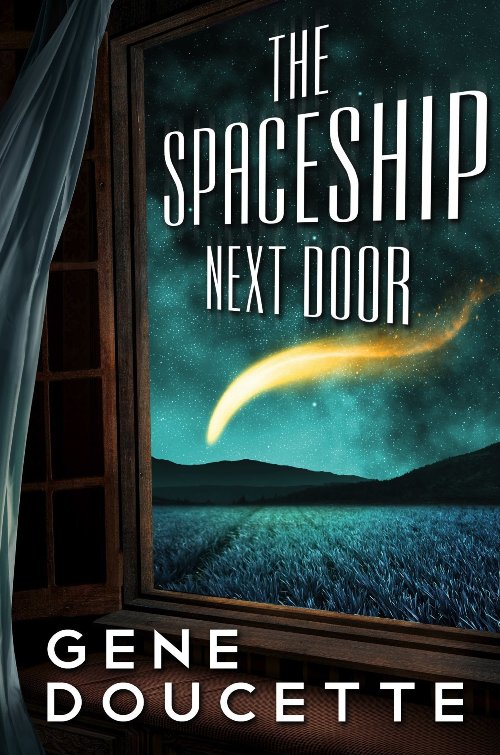
A little while back I reviewed The Spaceship Next Door and while I enjoyed it there was something about it that bothered me. It kept picking at my writer brain until I finally figured it out. It’s a small thing and nothing at all to change my earlier recommendation (TLDR – go read it), but it’s still something worth pondering.

Spaceship . . . was released at the end of 2015. It’s safe to say it was written sometime in the year or two before that. At the very least, we’re not talking about a book that sat in a trunk for decades before it saw the light of day. By all indications, it takes place in the time in which it was written, which is to say pretty much right now. There are smart phones, ubiquitous wi-fi, and other trappings of second decade of the 21st Century. And we’re clearly talking about 21st Century America, as the book is set in Massachusetts (albeit in a fictional town).

The book also has a considerable military presence, as one might imagine for a story where a spaceship suddenly lands in the countryside and then sits around for a bit. There’s more than one soldier who is a minor character and other characters interact with even more Army folks.

This is where something started bugging me. If we’re dealing with military matters in a world that’s otherwise our own – why is there almost no mention of Iraq or Afghanistan?

I’m not saying that any book set in modern America has to comment on our never-ending military adventures (full disclosure – Moore Hollow doesn’t). Nor do I expect a domestically set sci-fi tale to dive deeply into the matter. Still, it’s a little weird that, aside from one brief mention late in the book, they never come up. There’s at least one scene where one of the soldiers (maybe the general – I can’t remember) is talking about what a good posting this is. A quick “beats dodging IEDs in Baghdad” or something similar would have worked.

This is the risk that comes from writing fiction set in the “real” world, but I can’t put my finger on why this particular aspect of it irked me. It didn’t bother me that the president (who shows up near the end) isn’t Obama (or any other actual US president), so why does the military thing? I can’t say. Maybe, for this kind of thing, this is my flying snowman moment, even if it’s not so serious as to destroy my suspension of disbelief.

There’s probably no wrong way or right way for a writer to handle a situation like this. But at the very least, writers should be aware of the issue and give it some consideration – is there something in your not-quite-real world that’s going to make people cock their heads and bit and wonder, “huh?” We want our stories to be immersive, not confusing, after all.

Or maybe I’m just a moron.

sloth-dat-reality

Author Interview – John Triptych

This time we’re headed to Asia to chat with science fiction & thriller writer John Triptych.

Who are you? Where are you? What kind of stuff do you write?

Hi, I’m John and I write science fiction and thriller novels. Right now I live out in Asia because I’m planning to settle here permanently. I’m a semi-retired businessman who decided to write novels because it’s always been my dream to be an author.

Why did you relocate to Asia and do you think your new surroundings will impact your fiction?

I worked as an expat, traveling and living in different parts of the world for almost 20 years so the area was pretty familiar to me. I also found the cost of living is much, much lower, and I didn’t have to work as hard yet still maintain my lifestyle if I stayed in the US. There’s plenty of American retirees living in the Third World and they live like kings!

As far as my surroundings having a say in my writing … it’s very strange in that I actually write more about the US ever since I’ve moved away, so while I’m in another part of the world, I still write about things I’ve experienced before.

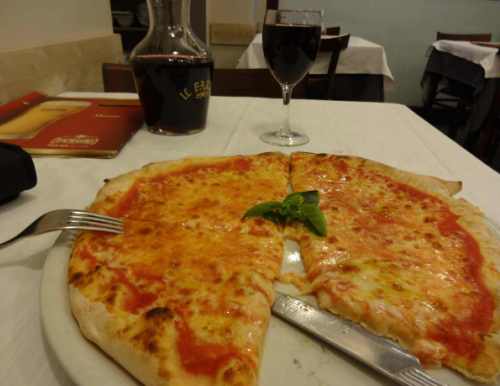
Pizza as Author Pic

I ask writers to send me a picture – John sent me a picture of a genuine Roman pizza!

Tell us about your most recent book, story, or other project.

I’m currently finishing up the first book in a new series called Alien Rebellion. Its set a few hundred years in the future, and there’s a human colony on an alien planet that’s undergoing some … drastic changes to put it lightly. It’s sort of like a cross between James Cameron’s Avatar movie and the anthropological science fiction of Ursula K Le Guin, and a bit of James Clavell too.

In what genre do you primarily write? Why did you choose that one?

I primarily write science fiction. I like writing in this genre because there are no limits to your imagination. You can create entire worlds from scratch and I love doing that. I have a background in tabletop role-playing games and even as a kid I loved to create my own little worlds, sort of like a self-centered demigod.

Tell us briefly about your writing process, from once you’ve got an idea down to having a finished product ready for publication.

I start out with nothing more than a concept. From there I think of an initial scene and start writing. I don’t plot in advance and I just create the story and characters on the fly. I’m a two-finger typist so it takes me a long time to write (and I stop every now and then to do research on the internet too whenever an idea pops up) but I still somehow get it done!

Once the manuscript is finished I go through it a few times before submitting it to the editor. After she sends it back to me I go through it again to see if we’ve both missed any errors. I also contact the cover artist and give them my idea on what the cover ought to look like.

The moment I am happy with everything I send it to the formatter to put it all together.

How deep does your “concept” go? Does it include the universe in which you’re going to tell the story, or just the basic 1-sentence hook? The idea of writing sci-fi off the cuff without a lot of preparation gives me hives!

The whole concept revolves a lot on instinct and feel for me. My background in playing RPGs and constant daydreaming seems to have affected a strange sense of deja-vu when I write, and everything just comes together somehow. I can’t fully explain the process, but I try to imagine myself living in that world, down to the smallest detail, and everything starts to gel to the point where I am overwhelmed by details.

It’s almost like a strange awareness of being able to project yourself into a whole different universe. You start to imagine what a table looks like in that place, and how stuff works, as well as the other little things that add to it.

Who is the favorite character you’ve created? Why?

The protagonist of my Ace of Space series: Stilicho Jones. I like writing him because he is my alter ego. Stilicho is a mercenary who is out for himself and he’s a smart aleck to boot. Some readers get turned off by his smugness but I love writing him since he jokes around a lot, and it helps because I felt my earlier novels were all too grim.

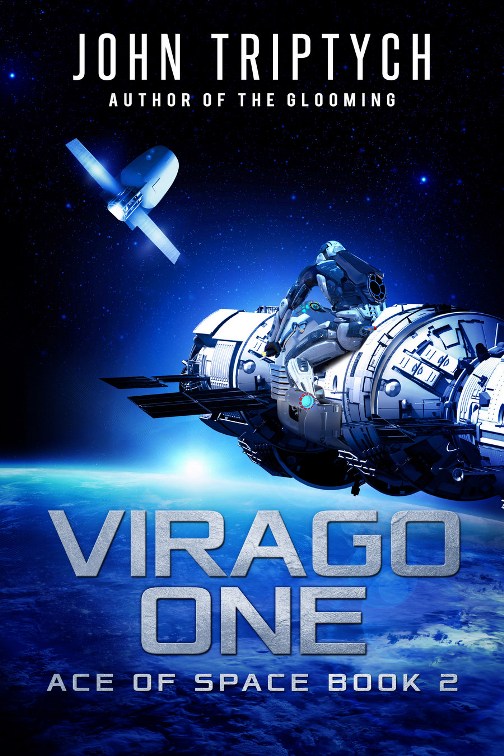
Ace of Space Cover

What’s the weirdest subject you’ve had to research as a writer that you never would have otherwise?

My Wrath of the Old Gods series is a mythological post apocalyptic storyline about the ancient pagan gods returning to modern day earth and causing all sorts of mayhem, so I had to research some very obscure deities because I wanted to get to the root of all these mythological stories and strip away popular misconceptions in order to get into what the old pagans gods were really like.

One of these gods I stumbled upon was a Hebrew god (or demon) named Peor (or Ba’al Pe’or, depending on the sources), literally the god of defecation! I added him into the third book of the series since there’s a subplot with one of the main characters trying to escape from hell. Great fun!

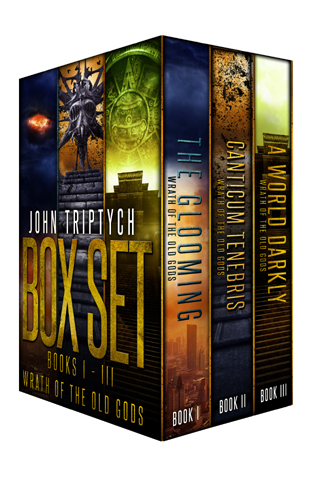
Wrath of Old Gods box

What’s the one thing you’ve learned, the hard way, as a writer that you’d share to help others avoid?

Hoo boy! I’ve learned a lot of things. One is you have to find a good editor. It’s not easy, but it will save you a lot of hassles in the end. Don’t be cheap, because good editors cost money.

Could you give an example of a time where an editor’s feedback really improved your finished work?

One of my editors is very good- she does a two step editing process. The first is that she just reads through the story, much like a beta reader, and looks for inconsistencies with the plot, characters, etc. and then sends me back the manuscript for rewriting. I go through her list of suggestions (like why would a character do this when he did this before, or that was a bad line, change it, etc.).

Once I’ve made my changes, then I send it back to her- after which she looks for grammatical errors, spelling and stuff. Once all that is done she sends it back to me again. All in all, she makes me realize about things I didn’t think about the first time over, and it has dramatically improved the quality of my work, though I still have a ways to go!

If you won $1 million (tax free, to keep the numbers round and juicy), how would it change your writing life?

Not much, to be honest! I’m semi-retired in the tropics and I live a fairly easy life. The books I’ve written have given me enough earnings to take care of my daily expenses so money isn’t too much of an issue. I guess one change would be is that I will probably take more international trips to do field research lol.

What’s the last great book you read or new author you discovered?

I don’t read a whole lot of indie books, and I always make it a habit to browse in the nearby used bookstores for some old tried and true stuff. A recent good book I’m currently reading is A Stranger is Watching by Mary Higgins Clark. It’s a classic suspense thriller that’s been made into movies more than once. I read a lot of books in different genres because of my varied tastes.

What do you think you’re next project will be?

An epic space opera series with some hard sci-fi elements. I’m currently doing research to make sure the space battles will have a bit of realism to them, but at the same time I’ve thought up an epic storyline that should interest most readers. Hopefully I will finish the first book sometime next year!

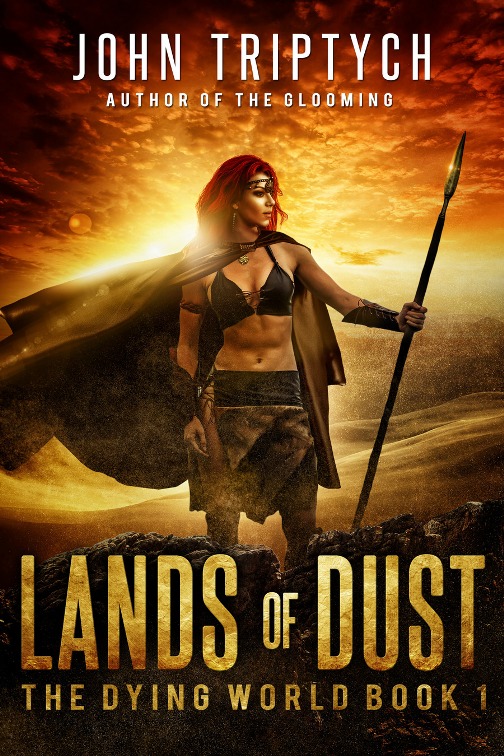
I am also writing more sequels to my hard sci-fi series Ace of Space, and my planetary romance series The Dying World. So plenty of the new and the usual too. I like variety.

2016-343 eBook John Triptych, Lands of Dust B01- small

Catch up with John on his blog, Amazon, Twitter, or Facebook.

Weekly Read: The Spaceship Next Door

I have a soft spot for books that deal in tropes that don’t conform to reader expectation. After all, I wrote a whole book about zombies where never a brain is eaten. The Spaceship Next Door, therefore, hooked me early on with a great twist on one trope, before throwing in a second for free along the way.

The hook is this – one night a spaceship from another planet lands in rural Massachusetts. Then – nothing happens. There’s no alien invasion. There’s no dire warning about what we’re doing to the planet, ala The Day the Earth Stood Still. There’s not even a massive overreaction by the government, although the town of Sorrow Falls essentially succumbs to a velvet-glove version of martial law. Mostly, the ship just sits there and makes people wonder what the hell is going on.

Three years after landing, something finally does happen.

Much like the ship, the book isn’t in too much of a hurry to get to that thing. Some will complain that this makes the book slow, but I think it’s time well spent with 16-year old Annie Collins, who is kind of the town’s goodwill ambassador to the outside world. She’s given the task for shepherding around a “reporter” (actually a government scientist – he fools nobody), which allows us not only to meet a bunch of characters, but dive deep into the history of Sorrow Falls. To the book’s credit, this doesn’t result in a whole bunch of characters who are nothing more than walking quirks. They all seem real, if a bit off.

I should mention the second trope, because it’s what pops up when things start happening. In a word – zombies. Except, really, they’re not. But they behave kind of like zombies (no brain eating!). Annie and her government guy even have a funny conversation where they try to come up with a better term, but nothing really works. Besides, the zombies tie back in to what the ship is doing (naturally), which lets the book continue its twisty way with first contact stories.

The Spaceship Next Door isn’t perfect. The ending gets a little jumbled and there’s a bit of hand waving at the final post (one of the final chapters is tilted “Deus Ex Machina,” so it’s not like you aren’t warned). Even in light of that, it’s a quick, fun read with a couple of really good laughs sprinkled in. If you like your tropes a little twisted, I highly recommend this one.

SpaceshipNextDoor

What I’ve Been Up To

With The Water Road trilogy wrapped up I figured this might be a good time to check in and let folks know what I’m doing, writer wise. The TLDR version – cranking through some short stories and trying to plan the next big project.

Short Stories

After the epic feel of The Water Road I decided to dig back into my bag o’ ideas and work up a couple of the shorter ones. This isn’t to suggest that returning to short stories is a way to “take it easy” or some such. Building worlds and characters in a few thousand words, versus hundreds of pages, can be a challenge in its own right. It’s a different discipline in the writing world, but one that’s very rewarding.

The first of the new stories is “To the Sound of Birds.” It was inspired by some very odd noises I heard during an autocross years ago. Animal noises, of a sort, coming from the woods across the street from the venue. The idea came to me then and I’d kicked it around for a while before I got a chance to sit down and finish it. I’m about to try and find it a home and let it loose upon the world.

The other isn’t quite finished, but should be in a week or so. It’s called “The Miracle at MarvoMart” and is about a guy who gets in over his head with a good thing that turns very bad. This one, too, came from an idea that occurred during an autocross – more precisely, during a bathroom break. I never set out to write a story set largely in a public men’s room, but that’s where I’ve ended up!

Aside from those two, I’ve also pulled out and polished a story I wrote a while ago in which the main character is this little girl:

MaiaTalkstoYou

Along with her two feline companions (at the time the story was written). It’s about what the animals get up to while their people aren’t around. It involves dragons and a whole unexplored world under the house. At one time it was going to be a series of stories, but I never got past the first one. An anthology popped up that I thought this story would be good for, so I sent it in. We’ll see if anything comes of it. Don’t worry, it’s for grownups – they curse and such.

I’m also working on one final story in The Water Road universe, set between The Endless Hills and The Bay of Sins. It would explain why, when two characters meet in The Bay of Sins, they are not particularly fond of one another.

The Next Big Thing

As I’ve said before I’m having a hard time figuring out what my next novel project will be. I have a lot of ideas, but none of them have roared up and demanded to be written right the fuck now (at least not yet).

One of the issues is that before I even think about ideas there’s a preliminary question to answer – should my next project be a standalone novel or the first in a new series? Some ideas lend themselves better to one or the other, but there are pros and cons to each choice. A stand alone novel probably sees the light of day sooner, but a series gives me the opportunity to really dig into a new world in detail. Until I make that decision, it’s hard to know where I’m headed.

As far as series ideas, the main one would be a several volume steampunkish fantasy set in a global superpower that’s slowly falling apart. I’ve done a lot of background work on it, so it’s probably the most “shovel ready.” Another series idea is to expand the universe of my short story “The Last Ereph” into a common setting for a bunch of unrelated stories. Finally, there’s a trilogy about the nature of magic I’ve been toying with.

The stand alone ideas are more wide ranging. For one thing, they include a couple of ideas that fall solidly into the science fiction category. I’ve written some short sci-fi, but my longer projects have all tended toward fantasy. I’d like to change that, so that might be a deciding factor. One of those idea is more serious, philosophical, and somewhat relevant to the current political climate. Another is more of a fun, planet-trotting adventure. As for fantasy ideas, one that I’m keen on doing (at some point) is my version of the standard fantasy quest, although it has a neat twist at the core of it (or so I think).

So that’s where I am. At least right now as I post this. From here on out – who knows?

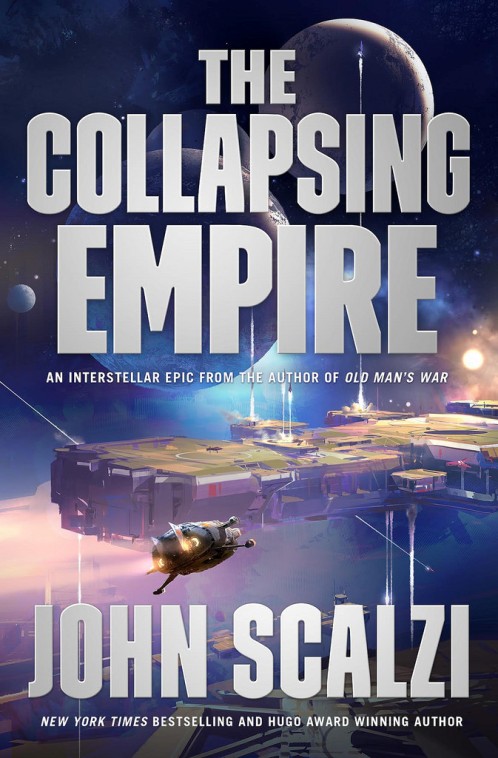
Weekly Read: The Collapsing Empire

I don’t think this is unique to me, but it’s at least unusual that my entry into the realm of John Scalzi fan began not with his books, but with his blog, Whatever. I was a regular reader there for a few years before I started working through his ever expanding bibliography.

What’s more unusual is that, for the most part, I don’t care for Scalzi’s most well developed universe, the Old Man’s War series. I read the first book and liked it well enough, but military sci-fi has never been my favorite corner of the genre. I’m much more into Scalzi’s stand alone work, from The Android’s Dream to Redshirts to Lock In. Which is to say I was stoked when I heard Scalzi was opening up another space opera series.

The Collapsing Empire has, at its core (or “Hub,” I suppose) a terrific idea. Humanity is spread across a multitude of worlds (Earth not being one of them, anymore), thanks to a faster-than-light McGuffin called “The Flow.” The Flow works . . . well, nobody is really sure why it works. But it does work, like a hyperspace equivalent of the jet stream or ocean currents, carrying spaceships along at post-light speed and making interstellar travel possible, if a pain in the ass.

Since people can only go where The Flow takes them, there are certain routes of travel. All lead to a planet called Hub, where the titular empire is headquartered. On the other end of the travelled galaxy is End, a sort of Australia (they send the troublemakers there) that, also, happens to be the only place where humans live under the open sky. The problem, as the book begins, is that The Flow is starting to fail. The bigger problem – most of the empire has no idea about it yet.

This is all background, against which a few stories play out. There’s a new emperox (not a typo – it’s a gender neutral imperial title) trying to figure out her new life. End is experiencing one of its periodic rebellions, although this one might actually stick. And someone is trying to inform the powers that be about the problem with the Flow. All of this is interesting, but none of it seems like a fully formed story.

That is The Collapsing Empire’s biggest problem – it’s not a complete story. Even in the context of a series (of which this is the first), it’s not too much to expect an individual volume to actually have some resolution. This doesn’t, really. In the end, it feels more like an extended, epic prologue or a backfill sequel than it does a novel of its own.

Which is a shame, because until you realize that the end is coming and there’s no way things are going to even try to wrap up, The Collapsing Empire is a fun read. Scalzi’s characters are well drawn and interesting. His great creation in this book is Lady Kiva, the “owner’s representative” on a ship that has to deal with The Flow and the rebellion on End.* She’s quick of wit, free with the word “fuck,” and willing to sleep with just about anything that moves. Think of her as Captain Jack Harkness’s long lost more vulgar cousin. The new emperox, Cardenia, isn’t developed quite as well, but her desire not to do the job sets up an interesting story going forward.**

Which brings me back to my complaint – this is all setup. It’s interesting setup. I’m definitely on board for the next book in the series, because I want to see how all this starts to shake out. But I’m left wanting more right now, something a little more solid and whole.

Still, I’m hooked. That counts for something.

* Bonus fun note – the ship names are great. A pair of sister ships are called the Yes Sir, That’s My Baby and No Sir, I Don’t Mean Maybe.

** Bonus fun note – the emperox has access to a “memory room,” in which she can summon the computer-generated simulacrum of any prior emperox. The discussions she has in there are all the better for the simulacra knowing just what they are.

CollapsingEmpire

Three Laws to Rule Them All!

If you’re any kind of science fiction fan, you’re familiar with Isaac Asimov. He didn’t come up with the concept of robots, but a lot of what we picture when we think about robots in fiction (and otherwise) flows from his stories and novels about robots.

Among his contributions are the Three Laws of Robotics. They debuted in a 1942 story called “Runaround” and go like this:

1. A robot may not injure a human being or, through inaction, allow a human being to come to harm.

2 A robot must obey the orders given it by human beings except where such orders would conflict with the First Law.

3. A robot must protect its own existence as long as such protection does not conflict with the First or Second Laws.

The Three Laws were a response to the hoary trope (even in 1942!) of robots run amok, turning on their masters. In other words, turning into Bender:

Bender

If you’re already programming them, why not program them not to kill you? Seems sensible.

Which is why, perhaps, one of my local legislators is appropriating Asimov’s Three Laws for West Virginia’s. Feast your eyes on House Bill 2881, introduced last week. It would amend “the Code of West Virginia, 1931” – dig our retro legal code! – by inserting language addressing legal requirements for a “robot” or “autonomous vehicle.” Anything look familiar?

§15-14-3. Minimum safety standards for robotic technology.

(a) A robot may not be enabled, by design or human command, to injure a human being.

(b) A robot shall be designed to obey the orders given to it by human beings except where such orders would conflict with subsection (a).

(c) A robot shall be designed to protect its own existence so long as such protection does not conflict with subsection (a) or subsection (b).

All right, it doesn’t track Asimov’s Three Laws word for word, but it’s pretty damned close. Frankly, given the dumb stuff our legislature tends to come up with, cribbing a law about robots from Asimov seems pretty astute, not to mention slightly ahead of the curve. It’s not like you can just throw the three together – you got to get the order right:

the_three_laws_of_robotics

What’s funny – or disturbing – is that Asimov himself wrote a short story about autonomous cars. It doesn’t end well. They may not take well to the Three Laws.

Maybe we should think about this a bit.

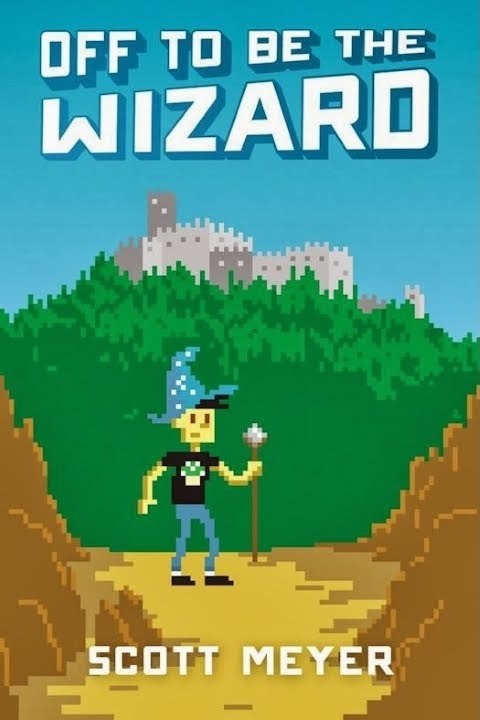
Weekly Read: Off to Be the Wizard

Off to Be the Wizard is a funny book. Very funny in some spots. It’s humor and general breeziness make it a quick read, but its charm can only carry it so far.

Martin is a computer geek. One night he discovers (on just about the very first page of the book – it works better than I expected) a text file, plays around with it, and discovers that chestnut sci-fi trope: that our world is really just a computer simulation, with parameters that can be endlessly modified. In short order he’s essentially practicing magic by summoning sums of money from thin air, teleporting, and travelling through time. It’s the first of those that gets him in trouble (damned Treasury agents) and cause him to flee not just to another place, but another time – medieval England.

At this point, I expected the story to turn into something like Doomsday Book, but with jokes, where Martin has to use his wits and “wizardry” to survive. Instead, Martin falls into a community of similar time travelers and spends most of the book interacting only with them. Aside from a few mentions here and there, the same story could have been told in the Old West, feudal Japan, or the prehistoric African plains. It’s a huge wasted opportunity and hints one of my main problems with the book.

That is, things are much too easy for Martin and his friends. Not only are they not subject to the vagaries of medieval life (aside from a wonderful running joke about stew), there isn’t even any real conflict happening until, about 3/4 of the way through the book, the author realizes there has to be. The resulting ending, with a big bad that comes out of nowhere and has a temporary menace that the rest of the book doesn’t justify, is too quick and perfunctory to mean much.

What that leaves is a bunch of Martin, mostly in the company of his older (and more interesting) mentor Phillip, learning how all the wizarding works. This provides some good chances for comedy, but the need to build up Martin’s need to pass “the trials” is undercut by there not actually being any. Aside from one run in with bullies, at no point does anything that might hint at a book-defining conflict pop up.

Along the way, anything that might complicate the wizards’ fairly easy life (typical time travel issues like changing the past/future, the ability to power computers in medieval England, etc.) get hand waved away. On the one hand, I like that – it’s a funny book, not a deeply thought out treatise on the potential hazards and difficulties of time travel. But still, having everything work out so easily almost renders the time travel pointless. No surprise, then, that Martin is never seriously pulled by a desire to return to his own time (to be fair, he’s never given a reason to be pulled).

That also keeps Martin from really interacting with the world he’s time travelled himself into. This is a particularly glaring missed opportunity because it really emphasizes the absence of women from the book. Martin’s mother gets a mention or two and there’s a crazy old woman with goat problems, but otherwise the only woman around is Gwen. She goes from a complete blank of a character (main defining feature – all the wizards want to do her) to,  magically, a big player when the plot finally cranks up. There’s no ground work laid for this and it comes completely out of the blue (deus ex vagina, perhaps?).

There are other women who have found the file and travelled back to this time, but they’ve all headed off to Atlantis, conveniently off screen (to be fair, the second book in the series goes there, so I’ve read). But that doesn’t explain why, in the day to day of living, Martin and his pals are able to avoid any contact with the opposite sex. It’s the kind of blind spot you’d expect in some of the foundational fantasy literature the book gently satirizes, but not something written in the second decade of the 21st Century.

That all sounds harsh, and maybe it is. But, like I said, being funny can take a book a long way and Off to Be the Wizard is funny. And in Philip, the wizard from a slightly older time who finds himself out of step with the more currently pop culturally savvy wizards (he knows not of The Simpsons, for instance), it has a really interesting, greatly drawn characters. Except for one thing – when, late in the book, he’s able to crank Genesis on his car stereo (yes, in medieval England – you’ll have to read the book), it’s completely out of character that it’s something from the poppy Phil Collins era (“That’s All,” to be specific – there’s a hilarious discussion of the video). I mean, come on! Surely “Watcher of the Skies” or the end of “Supper’s Ready” would have been more appropriate!

As I was saying – a fun book, a quick read with lots of laughs. However, its flaws stand out enough that I’m not interested in heading further into the series.

wizard

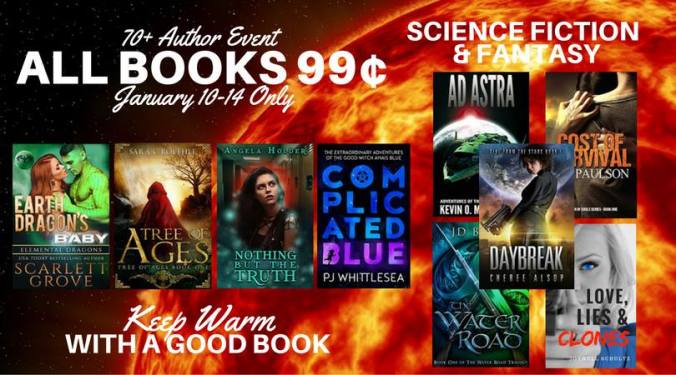
Over 70 Authors! 99-Cent Books! You Can’t Miss This!

janpromo4

To kick off the new year, I’ve joined with over 70 other writers of speculative fiction – fantasy, science fiction, horror, etc. – to spread the word about our 99-cent books.

For me that means The Water Road, of course, so if you haven’t checked it out yet this is the time. Be sure to look over the other offerings, too, because there’s bound to be something in there for just about everyone. The promo runs through January 14. See all the participating books here.

janpromo6