Weekly Listen: ROSFest 2017

I’ve returned from my annual trek to Gettysburg for the Rites of Spring Festival – aka ROSFest. This was ROSFest number seven for me, which  is low compared to some folks, but it doesn’t seem like I’ve been going that long!. Kudos as always to George Roldan and the crew who keep things running smoothly year after year.
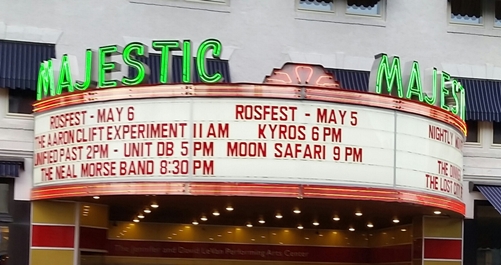
ROSFest Marquee

My thoughts on the bands:

Kyros – I liked them as Synathesia a couple years back and I think they’ve improved with (a little bit of) age. Their sound is heavy without being obnoxious and there’s lots of juicy keyboard work to go around (it’s a great ad for the Korg Kronos). Liked ‘em, bought the new album. Note – this was the first of three keyboardist/frontmen for the weekend – surely a record?

Moon Safari – I like, but don’t love, them (after about 90 minutes things just seem too sweet) but they delivered a good set, as expected based on their last appearance. The newer material didn’t thrill me. I continue to be amazed at their ability to harmonize after two hours.

Aaron Clift Experiment – I thought this was generally good, melodic stuff, although as somebody else pointed out it wasn’t particularly “proggy.” Only a few tunes really connected. I liked the fact that they brought a string quartet (once the sound guy saw they were there). But I disappointed that the keyboard player didn’t do more in a band with his name on it. Second keyboardist/frontman of the festival.

Unified Past –  These guys just didn’t work for me. Heavy prog with metal-style vocals with lots of instrumental pyrotechnics. Ephemeral Sun’s John Battema apparently stepped in at late notice to keep the band from having to cancel, so kudos to him – their material gave him quite a workout! I thought the Christ Squire “tribute” was odd, given that the bass player (with his Rick!) walked off stage for it.

dB Unit – The surprise of the fest for me. As other’s have mentioned, this was basically a few guys from Unitopia augmented by Steve Unruh (on violin, flute, and percussion). I only have one Unitopia album which is all right, so the idea of this collection of musicians didn’t thrill me. But the music was great and nice contrast from the metallic bombast of the rest of the day. Unruh is amazing. If they don’t make an album, I hope we get a recording of this set, at least. Slight demerit for using a bass backing track occasionally.

Neal Morse Band – Although I hadn’t heard much of Neal’s solo stuff going in, I knew what to expect musically from his days with Spock’s Beard, Transatlantic and, now, Flying Colors (whose second album I picked up). Aside from the prog-metal gloss on proceedings, it met expectations. Nothing stuck with me, but it was an enjoyable process as it went through. Neal and his band are all monster players and he’s a great frontman (number 3 in the . . . trinity of keyboard-based frontmen), so it was fun to watch.

The Fierce and the Dead – I suppose they were the “weird” band for the weekend, given the all-instrumental music. A great way to start Sunday. They reminded me of a heavier, more concise Forever Einstein (if that makes any sense). There were a few bits where they spaced out and kind of provided some breathing space. Great rapport with the audience. Pity they’re Arsenal fans!

Evership – This was another pleasant surprise. Young  band (they’ve been an actual band less than a year) cranking out adventurous (in terms of lyrical themes) symphonic prog with a heavy (but not overwhelming) edge. Lots of acoustic guitar work added a nice texture. Plus, they had cool toys on stage – a Theremin! a (pink) double-neck bass! a CP-80! Unfortunately, the lead guitar tone cut through my brain like a laser.

Edensong – Every year I skip out on one band (there’s only so much music a mind can handle) and I knew they’d be the one this year. I wanted to rest up for Anglagard and, having seen Edensong at 3RP long ago, knew their stuff really wasn’t for me. I hung around for a few tunes (all new, I think) and confirmed that thought. Major demerits for using obvious backing tracks (especially considering ACE’s string quartet from the day before).

Anglagard – This was my highest expectation of the weekend and they met it. They were a little looser (improvisational?) than I thought they’d be, but it worked. Loved bathing in the glow of real Melotron strings for the evening!

All in all another pretty good year.

Is Originality an Illusion?

On their second album echolyn has a multipart suite that chronicles their struggle to make their kind of music in a world that doesn’t really appreciate it. An early section is called “Only Twelve,” a reference to the fact that the Western musical scales only has 12 tones. It’s not that diverse a palate to work with. A later section, however, suggests that’s not the right way to think about it. It’s called “Twelve’s Enough.”

But recent evidence suggests that 12 might not really be enough. As this article lays out, more and more pop artists are getting sued for lifting bits of music from other sources (Ed Sheeran, whose music I couldn’t pick out of a sonic lineup, appears to be a great transgressor). This is not likely to be a result purely of coincidence:

[quote]Bennett [a forensic musicologist – JDB] then goes very deep into the maths, proposing a scenario where he and I each decide to write a melody. ‘I might start on C and you might start on E – two of the seven notes in the major scale. The odds [against us choosing the same note] aren’t exactly one in seven, but you get the idea. Then you come to the second note: I might choose D, you might choose another E. So then we’ve got a seven to the power of two probability, and that’s just within two pitch choices.’[/quote]

The analysis goes much deeper but as you can see from just two notes, the probabilities don’t look good for coincidence. That shouldn’t be a huge surprise. We interact with art – music, literature, you name it – from the day we’re born. How could we not internalize things and, perhaps, come to think of them as our own? As Bennett admits, there’s a line between copying and plagiarizing.

Having said all that, artists have always copied from one another. There are entire traditions – folk music and the blues come to mind – that are based on taking work done by others making it your own. Hell, it’s been said (by Picasso, possibly) that good artists copy, but great artists steal (http://quoteinvestigator.com/2013/03/06/artists-steal/).

The issue of going too far with borrowing is where this all meshes with the law of copyright. We want to protect creators and incentivize creativity, but we don’t want to shut down the natural drift of ideas that occurs in culture. Is the list of court cases about pop plagiarism an indictment of our current copyright scheme?

That’s the idea behind what is surely the best piece of legal/regulatory speculative fiction ever written, Spider Robinson’s “Melancholy Elephants.” It’s about a word where copyright protection is eternal and, as a result, it becomes increasingly difficult for people to create new things because everything can be traced to something that came before.

We haven’t reached that point yet, although we might be close. Before we go too far, it’s worth thinking about whether we want to live in a world where every idea, every melody, every story is owned by a single person (or corporate entity) for all of time.

Weekly Read: The Speed of Sound

Reviewing memoirs is a tricky thing. Essentially, it breaks down into answering three questions – Is the story of this person’s life interesting and worth reading about? Is the story told in such a way that elevates things beyond a simple “this is what happened” narrative? Does it say something profound about the world?

Thomas Dolby has the first part covered. If you only know him as the “She Blinded Me With Science Guy,” then his memoir The Speed of Sound: Breaking the Barriers Between Music and Technology will be a revelation. Only half the book is taken up with his music career. The other half deals with his second life as a Silicon Valley tech entrepreneur, a career that is probably reaching into the smart phone you’re using to read this.

Dolby’s music career is, in itself, pretty interesting as a cautionary tale of just how fickle the business is. Dolby found his first synth in the trash after being fired from his job at a produce shop. Via tinkering and experimentation he mastered the still relatively new tool and wound working with a lot of other people, either in their band or as a hired gun in the studio (the synths on Foreigner 4? All Dolby). Finally he was able to record his first album, The Golden Age of Wireless, which wasn’t doing much of anything until “She Blinded Me With Science” (not on the album itself, originally) broke big in the United States, thanks largely to MTV.

Wireless is now regarded as a classic and Dolby would spend the rest of the 1980s trying to replicate its success. That he didn’t owes less to the quality of music he was making than it does to commercial factors that were well beyond his control. The Flat Earth (which is brilliant), for example, tanked commercially largely due to the fact that his record label fired its main promo person (resulting in non-cooperation from his former contacts in the media) and picked a losing fight with MTV. Unable to back up the commercial success of Wireless, Dolby’s other albums sank like stones.

Which isn’t to say he got some interesting stories out of it. If nothing else, he wound up working with and rubbing elbows with lots of stars. There are anecdotes about David Bowie’s fear of flying (Dolby played with him at Live Aid), Michael Jackson’s nerdy interest in cutting edge music gear (Dolby’s “Hyperactive” was written for Jackson), and Eddie Van Halen’s (who played on Dolby’s album Astronauts and Heretics) lack of amusement about This Is Spinal Tap – because Van Halen thought it was about them! It’s all interesting, and fun, but it’s not very deep or dramatic. As I said, the downward slide of Dolby’s music career was due largely to factors outside of his control and since he was always a solo artist there aren’t any nasty inter-band dynamics to spice things up.

After four albums and lots of other session work, Dolby left the music business, but he didn’t leave the business of music. Always the tech head, Dolby was interested early on in making music a big part of the Internet experience (he refers to it as “sonicizing” the Web). He started a company that eventually became Beatnik. You probably don’t know it, but you likely use its tech every time your mobile phone rings (Dolby even had a role in selecting the ubiquitous “Nokia waltz”). The business world didn’t really suit Dolby, either (some of the ups and downs, caused by outside forces, echo what happened in his music career), so he eventually cashed out, returned with his family to the UK, and started making music again.

One of the disappointments with the book is the short shrift given to this last part of his career (that he’s turned yet another new page, teaching at Johns Hopkins University in Baltimore, is barely mentioned). In particular, I wanted to know something about the tour, the tech, and the conception of the tour that gave us The Sole Inhabitant, which is my favorite version of Dolby’s music. That’s par for the course, as the thing I wanted more of throughout was the nitty gritty of the music (I have the similar gripe about most music books or documentaries). We get a few tales of where songs came from (the genesis of “Wreck of the Fairchild” is particularly good), but little of the actual work of building up songs. Given Dolby’s nature as a tinkerer, rather than muse-inspired mouthpiece, I’d be interested in his process.

So, Dolby’s story is interesting, but that’s about all The Speed of Sound has going for it. The writing’s fine and pleasant, but nothing special. Dolby occasionally tells an anecdote that’s completely of its time, without meaningfully reflecting on it in any way (the Michael Jackson story ends with the appearance of neighborhood kids in their PJs, for example – this passes without comment). Likewise there’s nothing terribly profound in Dolby’s story. It’s a nice story about a guy who made a good life largely doing what he loves to do, which is mess around with music and tech stuff.  Good for him, certainly, but it doesn’t make for the meatiest of reads.

The bottom line is this – if you’re a fan of Dolby, or even just wonder what he’s been up to since he hit the “Where Are They Now?” file, The Speed of Sound is highly recommended. Otherwise, your time might be better spent elsewhere.

speedofsound

Where the Magic Happens

Recently one of the writers forums I’m on had people sharing pictures of their writing setups. It’s always interesting to see where everybody works, so I thought I’d share with the wider world.

studio2
As you can see, my writing station also doubles as noise making station. Essentially, my wife and I each have a room for our creative toys (she has a loom!), so all my stuff lives together.

studio3
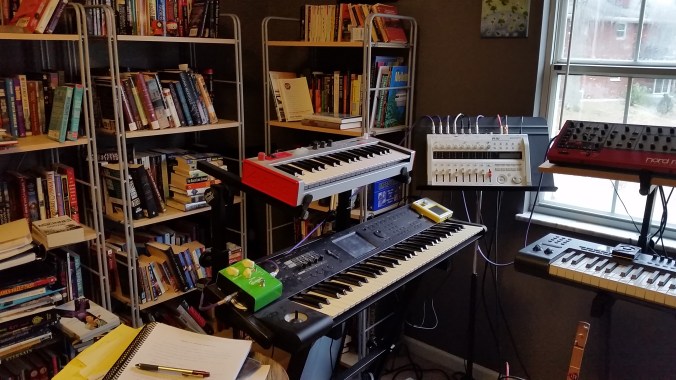
Note the books in the background, overwhelming their once well organized shelves (books are an essential part of any writer’s toolkit). As for the noise makers on the left there, that’s a Korg M50 workstation on the bottom (with fuzz box and Korg Kaosilator perched on top), with an Alesis Micron virtual analog synth on top. Both of those (and all the other hardware) runs into the Zoom R16 mixer/recorder there in the angle.

studio1
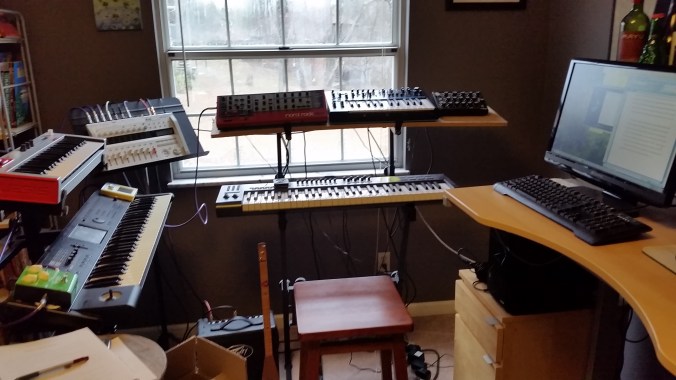
The PC there is where the writing happens and where the noises get collected and shaped into something interesting (hopefully). Yes, wine is sometimes involved – why do you ask? These noisemakers are, on top, a Nord Lead 2X virtual analog synth (in rack form), a Novation Bass Station II virtual analog synth, and a Moog Minitaur analog synth. On bottom is a M-Audio MIDI controller that I use for the Nord and the software synths on the PC. I use the Novation to control the Minitaur these days.

It’s not the most elegant setup, or the most efficient (notice I don’t really have a place to sit), but it works. For me, anyway.

Favorite Tunes of 2016

I know this is a bit late, since most “best of” lists tend to come out well before the year is out, but it kind of fits. I’d meant to write more about music this year, since it was a pretty good year, aside from the seemingly endless kill off of big time musical names (to cite just a few). But I didn’t, so here’s a quick amends.

A note about what this isn’t – it’s not a list of the “best” albums of 2016. For one thing, music is all subjective so talking about “best” is kind of pointless. For another, I couldn’t hope to listen to even a fraction of all the music that came out in 2016, so my choices are drawn from a small sample.

No, these are just eight albums that I thought were really good, that connected with me in  some way. They’re organized alphabetically, of course. No winners here.

Bent KneeSay So
My breakout band for the year. A collection of young kids (I can say that now – I’m old) from Boston who meld the furiosity and energy of prog metal or punk with delicate, almost ambient passages, all tied together with great vocals. They played both ROSFest – generally regarded as a more “safe” prog festival – and ProgDay – where anything does – this year and blew the roofs off the joint both times (metaphorically at ProgDay, since it’s outside). Say So doesn’t quite capture the power of their live show, but it comes awfully close.

Eveline’s GhostThe Painkeeper
Just prior to ROSFest, Greg Walker sent out one of his periodic Emails with new releases. Most of them have YouTube or Bandcamp links these days, so I spent some time clicking through. Once I heard the first few seconds of this Italian band, I knew I wanted to hear more. I didn’t realize (until I’d picked it up from Greg at ROSFest) just how good this album was. It takes the more complex/busy side of prog (think early echolyn), but never takes it too far. The songs are melodic and engaging, with some nice jazzy touches here and there.

Mike KeneallyScambot 2
Mike Keneally really contains multitudes – crafter of catchy hooks, exquisite guitar player, conjurer of bafflingly complex arrangements – but he rarely lets them all fly together at once like he has on the Scambot albums. This, the second in a planned trilogy about the titular “composer with no finished compositions” and “grump”, cracks right out of the gate and never lets up. It’s less aggressively weird than the first volume, but just as knotty, clever, and intense. As usual, Keneally pulls it off with the assistance of talent collaborators like Bryan Beller, Marco Minnemann, and Kris Myers (of Umphrey’s McGee fame). My only complaint is that the last track, “Proceed”, sounds like it has a lengthy ride out guitar solo in it that he didn’t decide to let out!

KnifeworldBottled Out of Eden
Although they sound nothing alike, Knifeworld reminds me a bit of Keneally, because main man Kavus Torabi (also of Gong and Guapo) manages to build musical confections that are, at once, complex, deep, and layered but also hooky and compelling. This album has a lighter vibe than the last one, but the tunes are just as sharp and interesting.

MarillionFuck Everyone And Run
Marillion’s not exactly ever been an “up with people” kind of group (there’s a joke that they specialize in “songs about water and death”), but FEAR is more pessimistic than usual. Lyrically, it’s largely bound up in the mess in which the world currently finds itself. The epics “El Dorado” and “The New Kings” both alternate between anger and disillusionment, while the kind of title track, “Living in FEAR,” provides some naive hope that maybe we easily panicked humans might not have to live that way (as I said, it’s a naive hope). Stuck in the middle is another epic, “The Leavers,” which, amazingly, has nothing to do with Brexit and is actually about life on the road. The epics all hang together really well (better than “Gaza” and “Montreal” from the last album) and there are plenty of patented Marillion moments sprinkled throughout. Is it, as advertised, their best since Marbles? Absolutely, even if it doesn’t live up to that milestone.

No More PainThe Spader EP
In the modern digital world the line between LPs and EPs is finer than ever (one of the AV Club’s best albums of the year was a “long player” that runs 21 minutes), but this 5-part epic is as long as many classic LPs of yore, so I think it stands on its own. No More Pain is another discovery of the year (thanks to ROSFest), a prog metal band from New Jersey that manages to be heavy and rocking without getting all “metally” in the way many bands do. Of course there are chops a plenty, but there’s also a sense of humor, which you’d have to have to produce an EP about and dedicated to an early supporter of the band (from the liner notes: “We are in independent group and stealing our music will make us very sad and we will cry little bitch tears as we text each other crying-face emojis”).

The Rube Goldberg MachineFragile Times
This is a quiet (the first track is called “Background Noise,” after all), small album (it’s not much longer than The Spader EP), but it’s full of nice moments. The band has a kind of post-rock sound, but shot through with more of a melodic sensibility. To borrow an observation from my brother (who said it about Marillion), there’s just enough proggy stuff going on to keep things interesting, but it doesn’t overwhelm the songs. Some really nice, melodic fretless bass work, too.

Thank You ScientistStranger Heads Prevail
Another entry from New Jersey (must be something proggy in the water), this band managed to avoid any drop off from their first album, Maps of Non-Existent Places. There’s a heaviness and lots of riffs that sound like they could come from a standard prog metal band, but the compositions are more interesting, not to mention the arrangements. Horns and violin are constants, with some tuned percussion popping up every now and then. Plus, they rock out at a solar powered milk farm. How can you not love that?

Like I said, not a bad year at all.

2016albumsoftheyear

Weekly Listen: Hero and Heroine

I hadn’t had any exposure to The Strawbs until I saw them at ROSFest last year. Originally announced as the Friday headliner, they wound up squished into a crammed Saturday schedule after some travel difficulties. They took the stage and roared through a single album, 1974’s Hero and Heroine. For a bunch of guys pushing retirement age, they were pretty damned good.

As I said, I went into that set cold. I knew, vaguely, that the band had a folksy background and had (at some point) included Rick Wakeman, but I was ignorant otherwise. I was, therefore, in the perfect frame of mind to absorb Hero and Heroine. There’s definitely folksy roots, but they rock on occasion (in a way that similar folksy based proggers like, say, Renaissance never do) and there was some interesting keyboard work going on. Sure, Dave Cousins’s voice had seen better days (did I mention retirement age?), but he still grabbed the tunes by the balls and delivered a great performance.

Needless to say, I had to pick up a copy of this album.

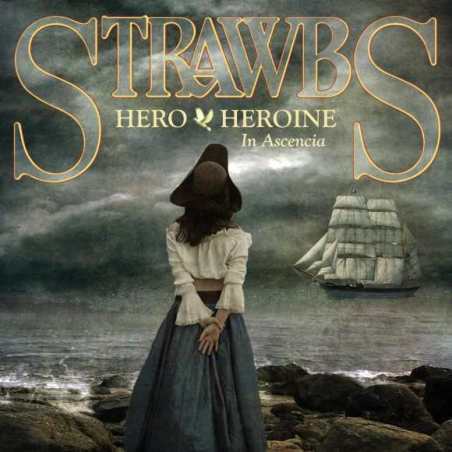
I headed downstairs to where the band’s merch table was. Sure enough, they had a whole stack of the album for sale. Or, at least, a version of the album:

hhnew

Dubbed Hero and Heroine In Ascencia, it was a newly recorded version, rather than the original release. I didn’t really think twice about picking it up, since I figured there was a good reason for the new recording (other bands have, for legal reasons, rerecorded their own work to obtain the rights). Besides, this one was recorded by the band I’d just seen (aside from the keyboard player) – bonus!

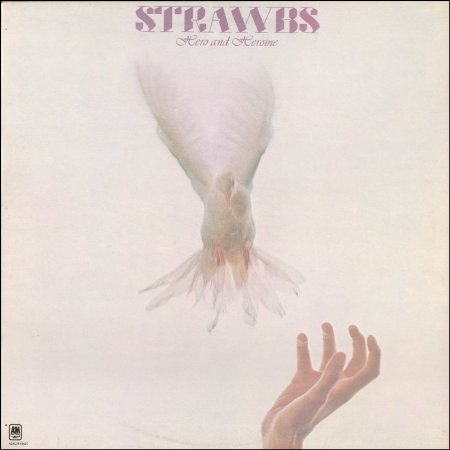
 Repeated listens really drove home just how rough Cousins’s voice is, though. With the energy of a live setting it’s one thing, but in the studio you get more picky. So I started wondering what the original sounded like, how the two would compare against each other. Sure enough, the original is legitimately available, so I grabbed if from Amazon and took a listen.

hhold

Aside from some slight rearranging of a few bits, both albums play the same. The performances, however, are very different. The 1974 version sounds much younger. It emphasizes the band’s folksy qualities. Cousins’s voice is pure, youthful, and full of life. It comes off well, just this side of being too “twee.”

The new version, by contrast (and perhaps surprisingly, given the older lineup) is more powerful, rocks harder, and just has more guts to it. Cousins’s voice has lost its youthful vigor, but that even works in its favor. Where the original sounds like a tale of love told through the eyes of a young man, one either living it or perhaps aspiring to it, the new version sounds like the pained reminiscences of an old man looking back on his own history. A lyric like “after all, it’s just the revolution I despised,” comes off as cocky and simple minded in the older version, but bitter and knowing in the new version. The shift of perspective gives the whole thing more depth.

Now, I may be full of shit about this. In fact, I wonder if my opinion would be flipped if I had first heard this album back in college or law school when I rediscovered prog. After all, it would have been the original and I would have been younger, so maybe I would have looked at the newer version in the way I look at the modern version of Yes – a pale facsimile of the genuine article. Certainly, by the time I was sitting in the Majestic Theater on a Saturday afternoon this year I was in a different head space than I was back then.

That’s one of the things about music (or any piece of art) that’s both wonderful and frustrating – you bring so much of yourself to it that it’s hard to ever get a “true” read on it. You only get one chance to make a first impression, after all, and when and how that impression gets made might make it hard to ever overcome it.

The bottom line, I suppose, is that the new version of Hero and Heroine speaks to my cynical side in a way that the original version doesn’t to my romantic side. That probably says more about me than it does about the album, which is pretty damned good in any event.

Albums That Change Your Life

A few days ago there was a trending hashtag on Twitter for #3AlbumsThatChangedMyLife. When I saw it pop up, I had to play along:

I like this framing better than the typical list of “favorites” or desert island discs (do they even do that anymore in the iTunes and playlist age?) since it leans right in to the subjectivity of musical experience. There are no wrong answers to this question. Or so I hope . . .

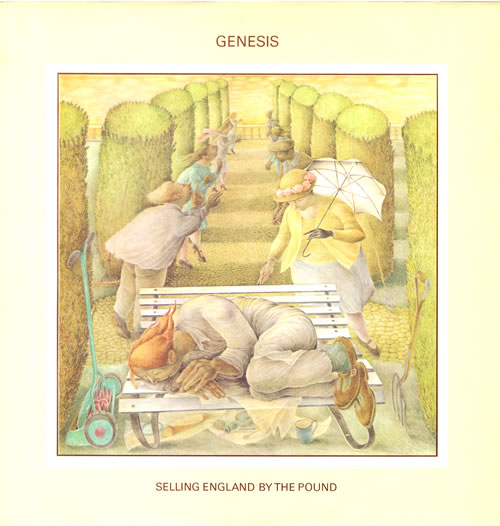
Selling England By the Pound

sebtp

To my mind, Selling England By the Pound isn’t just peak Genesis, it’s the template for much of what we call symphonic prog these days. The only thing it lacks is the truly oversized epic, but everything else is there – lush symphonic arrangements, lengthy instrumental passages, contrasting pastoral and bombastic passages. Throw in a set of very English lyrics and it’s hard to argue it gets any better than this.

But that’s not what makes it a life changer for me. I can’t see SEBtB was the first old school Genesis album I heard – my brother had everything from Nursery Cryme through Duke – but it was the first one I connected with. I’m not quite sure why. The macabre sensibility of Nursery Cryme or the sci-fi aspects of Foxtrot would seem to have been more obvious choices. But for some reason the album with the sleeping lawn mower on the cover and references to British politics and gang wars is what sucked me in. It wasn’t the only album that made me a prog fan, but it’s probably the one most responsible.

Special mention, probably, for starting my lifelong love affair with the Mellotron. The world’s first sampling keyboard, it was supposed to put classical musicians out of business, but it never really created lifelike sounds in the end – which is what makes it so cool! The intro to “Watcher of the Skies” from Foxtrot is probably the definitive Genesis Tron moment, but for me the part of “Dancing Out With the Moonlit Knight” where the choral tapes kick in gives me goose bumps every time.

Brave

brave

When I got into Marillion in college, the fan base was split in the kind of way that happens when long-lived bands have major lineup changes. In this case, the fissure was between the early Fish-fronted version of the band and the then (and still) current version fronted by Steve Hogarth (aka “H”). The battle lines, as I understood it at the time, were that that Fish years hewed more truly to the band’s progressive rock roots, while the H years were all about mediocre attempts at mainstream success. As a result, after my gateway dose of Marillion (Misplaced Childhood) I focused on absorbing the Fish-era stuff.

Then I heard about Brave – a concept album, one with some long multi-part songs and a dark exploration of a potential suicide. This didn’t sound like the stuff of a low-rent Phil Collins desperate for pop glory. I decided it was worth checking out, even as part of me figured it would be a flop and send me back into the loving arms of the earlier material.

Holy hell, did I have that wrong! Brave wasn’t just a great, deep, layered progressive rock record, it’s one of the best albums I’ve ever heard. Yeah, it was different from the early days, more ambient and less overtly “prog,” but damn, it’s good. And that H guy’s no slouch! Hell, Brave even made its way into one of my books.

This was important not only because I discovered a great album, but because I learned that Marillion wasn’t a thing of the past. As a band they had a lot of life left in them (still do – seeing them again at the end of October!) and became one of my absolute favorites.

What makes it all the more impressive – Brave isn’t even my favorite H-era Marillion album.

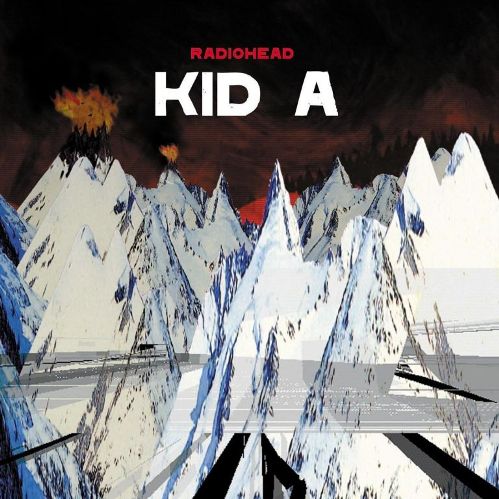
Kid A

kida

Kid A didn’t work the sea change in my musical world that the others did. Instead, it set something going in my brain that slow burned its way into an appreciation of an entirely different kind of music.

I was late to OK Computer and wasn’t completely on board the Radiohead train when Kid A came out. What I read about it – electronic, experimental – didn’t really intrigue me. Then I saw this:

The song itself didn’t grab me so much as Johnny Greenwood (?) sitting at the front of the stage, swapping patch cords and twiddling knobs on a modular synthesizer. Not a keyboard in sight (RIP, Don Buchla, by the way). I went out and got the album and, it turned out, I really dug it. I’ve been on the train ever since.

The funny this is, at the time, I didn’t think to myself, “self, you’re listening to electronic music now.” Radiohead’s been drafted in by the prog crowd and Kid A (and just about everything else) is certainly adventurous and genre diverse to fit the bill. Nonetheless, it was definitely the gateway drug. It was a while before I consciously decided to check out Kraftwerk and Jarre (I think Richard Barbieri’s first solo album was a way station), but I got there and fell hard (much to my wife’s dismay). It was only a matter of time once I’d heard Kid A and let it seep into my brain.

So those are my three. What are yours?

Weekly Read: How Music Works

Usually I write a review just after I finish a book, when it’s fresh in my memory and I’m inspired to say something about it. I finished this book two months ago and instantly wrote most of below. Then things happened and it kind of got away from me. I’ve returned to it several times, but can’t really muster up the enthusiasm to put the finishing touches on it. But it’s got some value, I think, so I present it here with this disclaimer. Given the book at issue, think of it as a demo version of a song that never got finished.

Book titles can be tricky things. We fictions writers have it easy, since we can do almost anything and it works, more or less (I lean towards using locations that are important to the story, hence Moore Hollow and The Water Road). Nonfiction writers have to be careful, though, because a title of a nonfiction book is almost a promise, a declaration of what kind of book the reader is getting into.

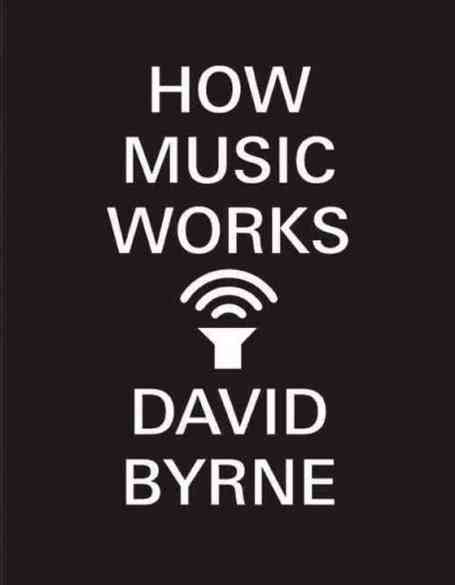
How Music Works is not a very good title for the book to which it’s attached. The title promises something like a pop science treatment on sound, how it’s produced and how it rattles around in our brains. Instead, as written by musician David Byrne (no relation, although I sometimes refer to him as “Uncle David” in an attempt to sound cool) of Talking Heads fame, it’s much more wide ranging and, yet, more personal overview of what shapes music that you listen to. It’s often interesting on its own terms, even if its terms it doesn’t want to recognize.

In the introduction, Cousin David says that the book isn’t about him, but he does use experiences  from his own career to illuminate certain subjects. And while it’s true that this isn’t just a rock star bio, Byrne nonetheless spends an awful lot of time canvassing his lengthy career. That’s not necessarily a bad thing – he knows of what he speaks. But it limits the discussion in a lot of places. He could have dived deeper into certain issues by seeking out interviews with others. For  example, he talks about how technology has changed the way music is recorded and that lots of professional recording is now done in home studios. He admits that some folks still prefer the big studio treatment, but doesn’t go into why and whether it’s something that’s going to live on.

Byrne’s probably at his best when he’s discussing the ways in which technology has changed the  way music is consumed. It’s not a new theory – that music was once mostly consumed as live performance, either by professionals or amateurs in the home, whereas now it’s mostly consumed in recorded form – but he gives it a comprehensive airing. It’s an interesting thing to ponder, to wonder how different music is when it’s something you do, rather than just something you experience.

In fact, my favorite part of the book is a chapter titled “Amateurism.” It’s less a celebration of mediocrity than it is celebrating the idea of people making art for themselves. It’s not an either or thing – Cousin David wouldn’t suggest nobody buy music from “professionals” anymore. But actually making music, even if you know it’s nowhere near “perfect” or worth sharing with a wide audience, can be very rewarding. Speaking for myself, I love actually making music (insert shameless plug), even if hardly anybody actually listens to it.

Having said that, it’s in this chapter that Byrne says something that’s gotten him in trouble. In talking about “high” art versus “low,” he writes:

I never got Bach, Mozart or Beethoven – and don’t feel any worse for it.

A lot of people, exemplified by this guy in the Amazon reviews, read this as Byrne shitting on classical music, deriding it as a means to lift up popular music. I don’t read it the same way.

Instead, I think he’s calling into question the idea of segregating music (and other forms of art) into “high” and “low,” which then tends to inform society’s ideas of what is worthy of support and what isn’t. He’s not wrong that lots of popular forms of music tend to have subversive elements (or at least are believed to be). It’s also true that the newly rich look to institutions of “high” art as a means of buying their way into high society. Notably, he doesn’t call for such things to stop or be illegal or anything like that. He just wonders what it might be like if a newly minted billionaire might decide to support a rock or hip-hop club that developed new acts, rather than sign up as a symphony patron.

I’ve never been a fan of tagging some music as “serious,” which, by definition, means the rest of it isn’t. Tell me Robert Fripp, perched on a stool near the back of a King Crimson stage barely visible, isn’t being serious about the music. Tell me that that a blues player, like the late BB King, who sweats his very soul into what he plays, wasn’t serious about his music. Hell, tell me that Frank Zappa, in the middle of some kind of stage buffoonery that looks like pure silliness, wasn’t deadly serious about his music. You can’t. Music, like most art, is as serious as you want to make it, but that doesn’t have a damned thing to do with whether you’re playing in a symphony hall or a greasy dive.

More than anything else, I just don’t see the great sin in saying “I never got” a piece of art or music and refusing to feel bad for it.

how music works

Water Road Wednesday: Naath of the Isle of Amreh

The Islanders – the inhabitants of the Slaisal Islands in The Water Road trilogy, not the hockey team – are an odd bunch.* In a world that’s defined by where you were born and lines between such places are brightly drawn, the Islanders go a different way.

Physically, as well as culturally, they have a lot in common with other Altrerians, particularly those in the Triumvirate. They aren’t, for example all stand offish the way the Azkiri are. But they don’t really want any part in the political stuff, much less the military expeditions. Folks in the Triumvirate view the Islanders as essentially hiding behind the protection they provide – it’s not like the Neldathi are going to sail up to the Slaisals anytime soon. The Islanders just see it as somebody else’s problem.

The irony is that the Islanders deal with the Neldathi more than the Triumvirate does. They trade with them and built four cities along the Neldathi coast (along with one on the northern coast, on the edge of Azkiri territory). Yet, they don’t have any particular affinity for the blues – they just do business with them. In a world with a lot of walls between cultures, the Islanders don’t pay attention to any of them.

Which is where Naath comes in. Born on Amreh, one of the many Slaisal Islands, he decided at an early age to go to sea. It was either that or be a fisherman and he never had any particular love for sharp hooks and the smell of fish guts. It would be wrong to say he wanted to see the world, but that’s precisely what he ended up doing. The pull of home at the end of a long voyage was strong, but at the end of the day, Naath belonged on the deck of a ship plowing through the ocean.

At the time The Water Road begins he had risen to be second in command of a trade ship called Gentle Giant – yes, it’s a prog referrence!

It’s the final part of paying his dues that’s going to lead to him having a ship of his own, maybe more than one. That’s the plan, anyway. At least until he rows onto the shore of bay in Dost territory and meets Antrey Ranbren.

Then his future, especially at sea, becomes much less certain.

* Maybe the hockey team is, too, for all I know. I’m not much of a hockey fan.

Water Road Wednesday: Leave a Message at the Beep

Thank you for calling Water Road Wednesday. We’re sorry, but your desire to learn more about the world of The Water Road trilogy cannot be fulfilled at this time. The author has been called away to the industrial north to attend a gathering of those who fight the good fight (none of which involve Neldathi, the Triumvirate, or anything like that).

PDComic

Regular service will return next week.

Until then, go tell the author’s niece (also a writer) happy birthday – she’s 21 today!

Or, if you need some companionship, just talk to the answering machine: