The River (and Hollow and Ereph) Is Wide

Well have I got some news for you, dear readers.

For the past couple of years the eBook versions of all my books have been available exclusively through Amazon (including via Kindle Unlimited). I’ve decided to try something different and expand my reach a bit, so I’m happy to announce that starting right now, everything – The Water Road trilogy, Moore Hollow, even The Last Ereph and Other Stories – is now available all across the Internet at places like Barnes & Noble, iBooks, and Scribd.

So if you’re a non-Kindle eBook fan, here’s where to get everything:

The Water Road Trilogy

The Water Road

Kindle | Paperback (Amazon)
Barnes & Noble
Kobo
iBooks
Inktera
Scribd
Playster

The Endless Hills

Kindle | Paperback (Amazon)
Barnes & Noble
Kobo
iBooks
Inktera
Scribd
Playster

The Bay of Sins

Kindle | Paperback (Amazon)
Barnes & Noble
Kobo
iBooks
Inktera
Scribd
Playster

Moore Hollow

Kindle | Paperback (Amazon)
Barnes & Noble
Kobo
iBooks
Inktera
Scribd
Playster

The Last Ereph and Other Stories

Kindle | Paperback (Amazon)
Barnes & Noble
Kobo
iBooks
Inktera
Scribd
Playster

In addition, if you buy any of my books in paperback, you’ll get a Kindle version absolutely free!

As for the inspiration for the title of this post – take it away Nick!

Moore Hollow Is Free – Three Days Only!

For the first time, and possibly the last, my debut novel, Moore Hollow is absolutely free at Amazon, today through Wednesday.

Moore Hollow is about a guy, Ben Potter, whose life is a shambles. As a journalist he’s hit rock bottom, writing dreck about monsters and ghouls to make ends meet after a big story blew up in his face. As a son he’s a disappointment, unwilling to follow his father, grandfather, and great grandfather into the family business. As a father, he’s mostly just not there.

Now a new assignment could change all that. All he has to do is go from London to the hills of West Virginia to investigate the strangest of stories his great grandfather told. Did a sleazy politician really raise the dead to try and win an election? And if he did, what happened to the zombies? Could they still exist? Ben needs to find out, to solve the mystery and find a way to get his life back on track.

But once he finds the answer, Ben has to face a whole new batch of problems. Does he use what he learns to put his life back on track? Or is he compelled to do the right thing, even if it leaves his life a mess?

The hardest part of a mystery is deciding what to do once you’ve solved it.

Pageflex Persona [document: PRS0000030_00047]

Get your free copy here before time runs out!

Albums That Change Your Life

A few days ago there was a trending hashtag on Twitter for #3AlbumsThatChangedMyLife. When I saw it pop up, I had to play along:

I like this framing better than the typical list of “favorites” or desert island discs (do they even do that anymore in the iTunes and playlist age?) since it leans right in to the subjectivity of musical experience. There are no wrong answers to this question. Or so I hope . . .

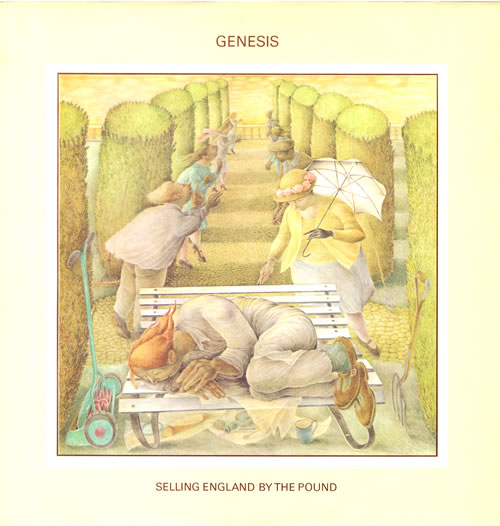
Selling England By the Pound

sebtp

To my mind, Selling England By the Pound isn’t just peak Genesis, it’s the template for much of what we call symphonic prog these days. The only thing it lacks is the truly oversized epic, but everything else is there – lush symphonic arrangements, lengthy instrumental passages, contrasting pastoral and bombastic passages. Throw in a set of very English lyrics and it’s hard to argue it gets any better than this.

But that’s not what makes it a life changer for me. I can’t see SEBtB was the first old school Genesis album I heard – my brother had everything from Nursery Cryme through Duke – but it was the first one I connected with. I’m not quite sure why. The macabre sensibility of Nursery Cryme or the sci-fi aspects of Foxtrot would seem to have been more obvious choices. But for some reason the album with the sleeping lawn mower on the cover and references to British politics and gang wars is what sucked me in. It wasn’t the only album that made me a prog fan, but it’s probably the one most responsible.

Special mention, probably, for starting my lifelong love affair with the Mellotron. The world’s first sampling keyboard, it was supposed to put classical musicians out of business, but it never really created lifelike sounds in the end – which is what makes it so cool! The intro to “Watcher of the Skies” from Foxtrot is probably the definitive Genesis Tron moment, but for me the part of “Dancing Out With the Moonlit Knight” where the choral tapes kick in gives me goose bumps every time.

Brave

brave

When I got into Marillion in college, the fan base was split in the kind of way that happens when long-lived bands have major lineup changes. In this case, the fissure was between the early Fish-fronted version of the band and the then (and still) current version fronted by Steve Hogarth (aka “H”). The battle lines, as I understood it at the time, were that that Fish years hewed more truly to the band’s progressive rock roots, while the H years were all about mediocre attempts at mainstream success. As a result, after my gateway dose of Marillion (Misplaced Childhood) I focused on absorbing the Fish-era stuff.

Then I heard about Brave – a concept album, one with some long multi-part songs and a dark exploration of a potential suicide. This didn’t sound like the stuff of a low-rent Phil Collins desperate for pop glory. I decided it was worth checking out, even as part of me figured it would be a flop and send me back into the loving arms of the earlier material.

Holy hell, did I have that wrong! Brave wasn’t just a great, deep, layered progressive rock record, it’s one of the best albums I’ve ever heard. Yeah, it was different from the early days, more ambient and less overtly “prog,” but damn, it’s good. And that H guy’s no slouch! Hell, Brave even made its way into one of my books.

This was important not only because I discovered a great album, but because I learned that Marillion wasn’t a thing of the past. As a band they had a lot of life left in them (still do – seeing them again at the end of October!) and became one of my absolute favorites.

What makes it all the more impressive – Brave isn’t even my favorite H-era Marillion album.

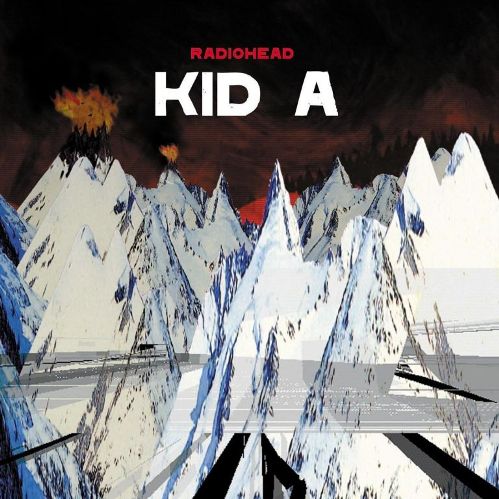
Kid A

kida

Kid A didn’t work the sea change in my musical world that the others did. Instead, it set something going in my brain that slow burned its way into an appreciation of an entirely different kind of music.

I was late to OK Computer and wasn’t completely on board the Radiohead train when Kid A came out. What I read about it – electronic, experimental – didn’t really intrigue me. Then I saw this:

The song itself didn’t grab me so much as Johnny Greenwood (?) sitting at the front of the stage, swapping patch cords and twiddling knobs on a modular synthesizer. Not a keyboard in sight (RIP, Don Buchla, by the way). I went out and got the album and, it turned out, I really dug it. I’ve been on the train ever since.

The funny this is, at the time, I didn’t think to myself, “self, you’re listening to electronic music now.” Radiohead’s been drafted in by the prog crowd and Kid A (and just about everything else) is certainly adventurous and genre diverse to fit the bill. Nonetheless, it was definitely the gateway drug. It was a while before I consciously decided to check out Kraftwerk and Jarre (I think Richard Barbieri’s first solo album was a way station), but I got there and fell hard (much to my wife’s dismay). It was only a matter of time once I’d heard Kid A and let it seep into my brain.

So those are my three. What are yours?

I’m at Tamarack!

I’m at Tamarack!

Opened in 1996, Tamarack (just outside of Beckley) is a showcase for West Virginia artists of various kinds. According to its website, it was the first of its kind – a center devoted to the promotion of regional arts. In the 20 years since its opening more than 7 million people have visited.

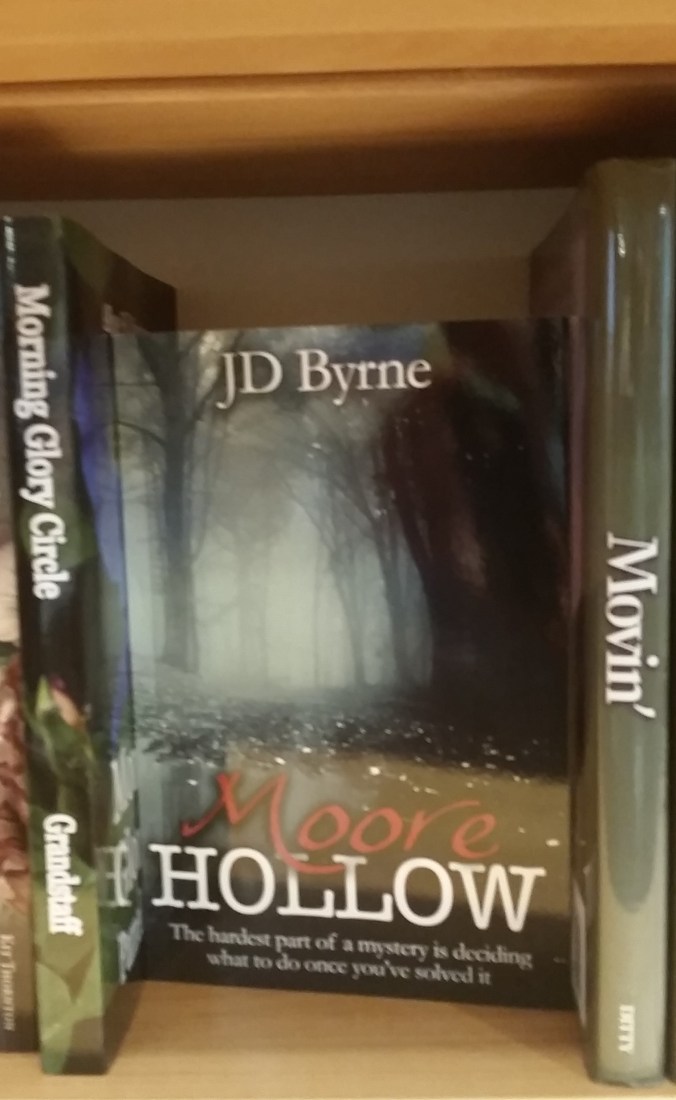
Items sold at Tamarack have been juried and approved, which means getting into the collection there is something of an accomplishment. So I’m very pleased to report that my first novel, Moore Hollow, is now available there:

Book@Tamarack1

Cell phone picture – pardon the quality

I think Moore Hollow is a natural fit for Tamarack, given that it’s set largely in West Virginia. It also ties a little bit into the political history of the state and, I hope, might give people a reason to rethink their perceptions of small mountain towns and the people who live there.

Of course, Moore Hollow is also still available from Amazon, as well.

What I’m Doing for the Next Month

Traffic here on the blog will be light-to-nonexistent for November while I participate – once again – in National Novel Writing Month, or NaNoWriMo.

NaNo-2015-Participant-Banner

Except for 2010 (I was editing) and 2014 (I was getting ready to spend two weeks in Cambodia), I’ve done NaNoWriMo every year since 2008. I’ve “won” – that means I’ve produced at least 50,000 words from scratch – four years and failed two other times.

I’ve found NaNo to be a good time to really focus down on writing and force myself to be productive every day. Moore Hollow, which came out last month, was my NaNo project for 2012. Meanwhile, The Water Road and The Endless Hills were projects for 2009 and 2013, respectively. As you can see, it takes a lot of time beyond NaNo to polish something into a finished product, even if it’s a winner.

All of which is a long way of saying that for November, NaNo and The Bay of Sins (book three of the trilogy of which The Water Road and The Endless Hills are the first two parts) is my first priority. I can’t say I won’t blog about anything – in fact I know of one thing I’ll have to blog about – but pretty much anything else will have to wait until December.

You can keep track of my progress, if you like:

Alternately, I’ll be posting occasionally to Twitter, so you can follow me there.

See you in December!

The Incredible Shrinking Second Draft

I have a weird way of handling second drafts, maybe a unique way.

It grew out of my day job, in which I sometimes have to synthesize argument originally made by other lawyers into a final brief. I quickly decided that just dumping someone else’s words into a brief and doing a quick edit wouldn’t work – we all have a different voice, after all. Just dumping was inelegant at best and headache inducing at worst.

Instead, I take the section provided by someone else and rewrite it in my own voice. The final product includes the same information, the same argument. But it sounds of a piece with what came before and what comes after. That’s the theory, at least.

I imported that system into my fiction writing. I take the first draft, print it out (usually as a PDF these days), then work my way back through it, rewriting from word one. That allows me to do a couple of things. Most importantly, it allows me to focus on the words themselves, the really bottom level grunt work of writing. That’s because I already know what happens to whom and where, so I don’t have to worry about plot stuff.

The other thing it does is it lets me fill in gaps that occurred in the first draft. Sometimes they’re gaps I didn’t realize at the time but that, as I go through it again at a brisker pace, make themselves known. Other times it’s because I was stuck on the first draft and didn’t want things to grind to a halt completely and I left myself a note to add something or expand something.

Either way, the usual has been for the manuscript to grow in the second draft. Moore Hollow was just over 50,000 words in the first graft, but grew to about 65,000 in the end. The Water Road, the first volume of the trilogy I have schedule for next year, grew from about 110,000 words to 135,000 in the end.

Which is what makes my experience with The Endless Hills kind of odd. This is the second book of The Water Road trilogy, and it wound up with about 127,000 words in the first draft. But after the second draft (which I finished last weekend), it’s actually dipped a bit, to 123,000. And that’s including a couple of new scenes or chapters that I had left behind in the first draft.

What the heck happened? A couple of things, both of them good (I hope).

First, I’ve become very sensitive about using dialog tags and trying to clean them out of my writing. For those not in the know, dialog tags are those things like:

“This is a dialog tag,” JD said, to nobody whatsoever.

There’s frequently skirmishes on writers forums about the need for them at all and whether, if you use them, you should just stick to “said” and let that be that. Earlier on I went the John Scalzi route and tried to use “said” exclusively and all the time. I think it goes back to my legal writing where ambiguity about who is speaking could be lethal to a legal argument. But for fiction tags can sometimes get in the way, particularly if you’ve only got a two-way conversation going on. So I took a lot of that stuff out on the second draft.

Second, I’ve also been trying to pare down my writing as a I go forward. Trying to do more with less, I guess you’d say. I’ve never been the most verbose of writers, but I’m not exactly Hemmingway brief, either. I think I’m getting better about tightening things up without sacrificing what’s important.

One of the things more experienced writers will tell you (if you listen) is that writing is as much craft as art. Becoming a better writer is partly down to learning how to do things better, from a mechanical point of view. Sitting down and writing something ten years after you started writing completely should be easier and be a better product when it’s finished.

At least that’s what I’m hoping!

Chasing the Dragon (After a Fashion)

There’s a thing long distance runners experience, a euphoria that comes over when they are almost completely exhausted, when they push through “the wall.” It’s called a runner’s high. It’s something I’ve heard about but never experienced – long distance anything, much less running, isn’t really my thing. But I think writers go through something similar.

I first noticed this in my day job. Doing appellate work for criminal defendants takes a certain kind of mindset. You’re representing people who have already been convicted (in most cases pleaded guilty) and been sentenced. The entire criminal justice system is now designed to keep those results in place – only about three percent of criminal cases in my circuit are reversed in appeal in some fashion.

Sitting down to work on an appeal, then, comes with a lot of negative baggage. Sometimes you don’t have any good issues to raise, but the client wants the appeal and you have to do the best with what you have. Other times you have what you think are good issues, but in the back of your mind know that the chances of success are still between slim and none.

That means when you start writing, you’re mostly thinking “this is shit. It’s pointless and it’s not going to work.” But somewhere along the line, usually a few days out from the deadline when the brief is all you’ve been working on for a couple of days, something happens. You start to believe in what you’re arguing. That argument that seemed hopeless before now seems pretty damned clever. In the push to finish the damned thing you now figure you’ve got a shot at winning.

You don’t, not really, but you think you do. It’s a writer’s high. You get so deep into it that any trace of doubt you once had is gone. It’s a pretty good buzz (and it usually wears off by the time you drive home).

Writing fiction can work in the same way.

I’ve been working on the second draft of the second volume of The Water Road, trilogy, The Endless Hills. It can be a slog. A few paragraphs here, a couple of pages there. If I get an hour or so on a weekend or day off I can maybe make it through a chapter and it feels like real progress. But because I’m focusing on more mechanical things sometimes the actual story seems obscure. Throw in breaks to get Moore Hollow published and promoted and I wonder if I’m doing anything worthwhile.

A couple of weekends ago, a bunch of things coalesced to give me lots of time to write. For one thing I didn’t have any other functions that weekend. For another, it was grey and rainy most of the weekend, so there was hardly a desire to go out (or, even worse, a need to do yard work). So I cloistered myself away in my studio and got to work.

Over several hours, spread across two days, I cranked through more than fifty pages of manuscript, about 8000 words. It’s not a huge chunk of the book (the first draft was 127,000 words), but it was enough – it covered several chapters – to get me back into the story a bit. It helped that I was working through the climax of the book, a bloody engagement between two armies called the Battle of Tivol Market. The rubber, so to speak was meeting the road.

Around mid afternoon on Sunday I had about reached my limit. I had other things I wanted to do (the pull of the PS3 and a room full of synths can be strong), but I also knew I needed to keep going. But powered by interesting electronic burbles from Bandcamp, I pushed on. After too long, the writer’s high started to kick in.

Not only did the actual writing get easier, like I had crested a rise and started to run downhill, but it seemed better. Connections between characters, the flow of the action (spread across four different POVs), and the endgame all came into focus. Just like when I reach this point in a brief and I think I might win, I started to think this was pretty good!

Maybe it isn’t (more editing is needed, of course). But it feels good, regardless, to suddenly have something flowing from your fingers that seems to be working! It gives you confidence to keep going, to keep plugging away, word after word, even when it seems like drudgery.

That’s my dragon to chase. Gotta get back at it.

Moore Hollow Monday – A Little History

Let me be very clear – Moore Hollow is a complete work of fiction. It takes place in a town I made up, Jenkinsville, which is the county seat of the equally imaginary Vandalia County. Still, that doesn’t mean there isn’t a little truth tucked away in there.

There are stories – rumors, in most instances – around elections in which people say that the dead continue to vote. It’s so pervasive that it led one small investigator to proclaim:

Oh my God! The dead have risen and are voting Republican.

Seriously, the problem arises because voter rolls don’t get purged very often, or very well, resulting in people who have died remaining eligible to vote (in a very hyper technical ignore the stink of rotting flesh kind of way). A Pew study in 2012 found that as many as 1.8 million dead people were still on the voter rolls. Still, there’s a pretty good gap between dead people still on the rolls and dead people actually voting.

In the wake of the 2012 election lots of officials in South Carolina asserted that hundreds of dead people had voted, an assertion made mostly in the context of the GOP push for stricter voter ID laws. More than 900, they said. As one lawmaker quipped:

We must have certainty in South Carolina that zombies aren’t voting.

Only, as with most things involving voting, the truth was much less sensational. The 953 votes found to have been cast by the (un?)dead weren’t cast in 2012, but in 74 separate elections over the course of seven years. In fact, the dead voters could be traced to a much more mundane explanation:

The report confirms what the State Election Commission had found after preliminarily examining some of the allegations: The so-called votes by dead people were the result of clerical errors or mistaken identities.

For instance, sometimes a son had the same name as a deceased father, and poll workers mixed up a dead father with a living son. (This happened 92 times in the initial probe, and then further investigation found seven more examples.)

That being said, examples of dead people voting pop up every now and then, as this article relates. In one instance in Tennessee, two dead people voted in an election decided by 20 votes. Still, there’s little evidence that it’s a problem that either determines elections or is part of a ploy used by the unscrupulous to win elections.

Which is where Moore Hollow comes in. West Virginia, southern West Virginia in particular, has seen its share of electoral fraud over the years. I even remember people joking about the dead continuing to vote (“early and often,” as they say) long after they shuffled off their mortal coil.

So it was natural to take the two strands and use them to create Thomas Owen Gallagher, aka King Tommy, aka The Cheat. King Tommy was the kind of politician who would do anything to win. Would he resort to voodoo, to strange instructions in a foreign book, to raise the dead and order them to vote for him? Of course he was! It’s what happened after that’s the crux of Moore Hollow, as Ben Potter returns to his great grandfather’s old stomping grounds to root out the truth. But what to do with it once he knows it?

Cover (KDP)

The hardest part of a mystery is deciding what to do once you’ve solved it.

Available next Monday, October 5, from

Amazon, Barnes & Noble, iTunes, and Kobo

Moore Hollow Monday – Another Free Excerpt!

Welcome to another edition of Moore Hollow Monday! It’s time for another excerpt from the book, which comes out October 5.

In this excerpt, Ben winds up the day by taking a drive near Jenkinsville and has an unsettling experience:

The road out of the town was a highway in only the loosest sense of the word. There were just two lanes which made sharing the road with the occasional huge coal truck that lumbered by a challenge. Regardless, it appeared like one of the Italian Autostrade they abused on Top Gear compared to the tributaries that branched away from it. Some began with several hundred feet of pavement but turned quickly into dirt roads. Others were little more than goat paths, winding back into the hills, into the hollows, until they disappeared, swallowed by the mountains. He toyed, briefly, with the idea of picking one at random and driving up it, but he quickly thought better of it. For one thing, this was probably not the time to arouse the ire of the locals by banging down private roads. For another, he wasn’t sure he could find his way out once it was dark.

Nightfall came about half an hour after Ben left town. He stopped at a small convenience store, fulfilled the tank’s enormous thirst for fuel, and grabbed a cup of coffee. It tasted like it had been made from the warmed-over remains of a small woodland creature, but it made him fully alert. He got back on the road and turned north, back to town and back to bed.

There had not been much traffic on the way down, nor was there much on the way back. At some point, however, Ben picked up someone following behind him. They weren’t close enough to be dangerous, but the other car’s headlights became a constant presence in his rearview mirror. Ben didn’t give much thought to it except when the undulations in the pavement shot the lights’ full brightness into his eyes.

A few miles from town, something caught Ben’s attention, something he didn’t expect to see on a road like this. It appeared to be a person walking slowly down the road on the right hand shoulder. Ben clicked on his high beams, then the ridiculously powerful fog lights to try to provide more light for the walker. At the very least, he didn’t want to run him over. Under the best of circumstances, anyone walking down this road was taking their life in their hands.

Ben lifted off the gas and slowed down, trying to get a good look at the walker. It was a man, but Ben couldn’t tell anything else about him—his age or whether he was black or white. His clothes looked rough and ragged, but beyond a general impression, Ben couldn’t tell much else. Then he noticed something odd about the man. It was his gait, the way he was moving. It wasn’t really walking in the strictest sense. It was more of a shuffle, a slow plodding step that fell somewhere between a limp and a gallop.

It hit Ben’s mind so fast he said it aloud. “Don’t zombies walk that way? Slowly shuffling along?” he asked himself. “At least they do in the films.”

He thought about stopping to try to talk to the man, who showed no interest in the presence of the tank near him, but that was impossible. The car that had been a constant companion behind Ben was now right on his bumper, brought near when Ben slowed down. He pulled around the shuffling figure on the side of the road and accelerated back to full speed. Immediately, he began to look for someplace to double back. About a quarter of a mile down the road was a small church with an equally small parking lot. It would do as a place to turn around, so Ben signaled, slowed, and turned into the church parking lot.

The car behind did the same.

Ben’s eyes fixed on the white headlights in the rearview mirror, which were quickly augmented by flashing blue and red.

“Fuck,” Ben said quietly. He brought the tank to a stop, put the transmission in park, and set the parking brake. The flashing lights stopped behind him at a rakish angle across the driveway as if to block any avenue of escape. Ben rolled down the window and heard the sound of a car door closing behind him, followed by the approach of slow, measured, solid footsteps.

“Good evening, sir,” said a controlled voice, one that oozed authority yet at the same time was calm and polite. Before Ben could see his face, a large, bright flashlight lit up the interior of the tank. It scanned Ben’s face, his hands as they rested on the steering wheel, and his lap before it moved slowly around the rest of the interior.

“Evening, officer,” Ben said. He did his best to get a glimpse of the man with the flashlight, but the glare made it difficult. He could make out an outline, one that matched his preconception of what an American lawman would look like. Large and barrel-chested, shoulders squared off as if he played American football, topped by a broad brimmed hat like one the Royal Canadian Mounted Police wore. When the light dipped from inside the car, Ben could see a tag on his chest underneath a badge that read “Rhodes, Sheriff,” in block letters.

“Do you know why I pulled you over?” he asked, as the flashlight beam settled on Ben’s face once again.

“No, sir,” Ben said. He honestly didn’t know.

“You crossed the center line back there,” he said, gesturing back up the road with the flashlight.

“I did?” Ben asked. “Must have been when I went around that guy along the side of the road.”

“I’m sorry, sir?” The tone of the sheriff’s voice made it clear he was not engaging in small talk.

“There was someone on the shoulder, back up the road,” Ben said, pointing. “He was walking along the side of the road, very slowly. If I crossed the line, it must have been when I drove around him. I didn’t see anyone coming the other direction, figured I should give him a wide berth.”

The sheriff was not convinced. “License and registration, please, sir,” he said, holding out his other hand.

Ben fished the rental agreement and his International Driving Permit out of the glove box, then took his UK driver’s license from his wallet and handed the collection to the sheriff.

“Please wait here, sir,” he said without commenting on the documentation. Or even Ben’s accent for a change. He walked back to the car.

Ben sat in the tank for what seemed like an eternity. All of the paperwork was in order, he was sure of that, but he wondered whether a sheriff in West Virginia had any experience with international travelers. Ben didn’t like the idea of spending the night in jail if something went wrong. He’d been in jail before but on home soil. For away games, he always tried to be on his best behavior.

The sheriff returned with the same measured steps and handed the papers back to Ben. “Would you mind turning on the inside lights, sir?”

“Sure,” Ben said. He took the papers, stuffed them back in the glove box and after groping around for a bit, flipped the switch that lit up the myriad of lights inside the tank’s cabin.

The sheriff leaned down and rested an elbow in the window frame. “All your paperwork checks out,” he said with a somewhat softer tone. “Never had to run down one those IDPs before.”

“Is that right?” Ben said.

The sheriff nodded. “I’m not gonna give you a ticket. I didn’t see this guy along the side of the road, but you seem like an honest type. Just try to not go around weaving like that again, all right?”

“Yes, sir,” Ben said, breathing a sigh of relief. “Thank you.”

The sheriff tipped his hat. “So, you’re English.”

“That’s right,” Ben said. Everybody seems to make that point, but coming from a man of the law it was a little unsettling. It was as if he knew that Ben should be sent back from whence he came.

“What brings you to Jenkinsville then?” the sheriff asked. “It’s a long way from London.”

That’s for certain, Ben thought. “Trying to track down something historical,” he said. “Family business.”

“You’re not a journalist, are you, Mr. Potter?” The question was not friendly.

“Yes, sir, after a fashion,” Ben said. Why did everybody pick up on that about him? “But this is more of a personal trip, really.” It was only then that Ben thought he should have punched the record button on the recorder in his jacket pocket. Too late now.

“You have family around here?” the sheriff asked, chuckling.

“No, not anymore,” Ben said, reciprocating the laughter. “My great-grandfather came here to work years and years ago. I’m trying to find something out about his time here, about this place where he worked.”

“That a fact?” the sheriff asked. “Small world. ’Bout how far back was that, you think?”

“Early part of the last century,” Ben said. “About 1905, 1906.” He decided to float the actual year out in the air and see how the sheriff reacted. It might give Ben some kind of idea about the game he was playing.

“That is a long time back,” the sheriff said. “There is a bit of history in this neck of the woods, though. How long have you been in town?”

“I just got here yesterday, late,” Ben said. He anticipated the next question. “I plan on heading home by the day after tomorrow.” He was regretting the hole in his research about American police procedures. Was he free to go? Could he tell this officer he was tired and just wanted to go back to his hotel? Of course, even if the law on paper said he could, would that mean anything out here, in the dark, along the side of a two-lane country highway?

“I see,” the sheriff said. He paused for a moment as if he might be finished. He wasn’t. “Find anything interesting yet?”

“A few things,” Ben said, trying to remain vague. “Nothing concrete, just some background. It’s all from the public record, let me assure you.”

“Let me ask you something, Mr. Potter,” the sheriff said, shifting his weight from one foot to the other. “Let’s say you find whatever it is you’re looking for. Then what?”

“I’m sorry?” Ben asked. He wanted to nail down precisely what was being asked of him.

“You say you’re looking for something,” he said, “something that your grandfather…”

“Great-grandfather,” Ben corrected him by habit.

“Great-grandfather saw or that happened to him, is that right?” the sheriff asked without skipping a beat.

Ben nodded.

“So if you find something about it, what your great-grandfather dealt with, what are you going to do with that information?”

Ben decided to lie. It was his best option at this point. “It’s mostly for my own piece of mind, really,” he said. “My father and I have a long-standing argument about our family history. To be honest, and I’m ashamed to admit this, I’ve been having this fight with my father for years. I’d like to win it.”

“I understand,” the sheriff said sympathetically. “So if you find what you’re looking for, you’re just going to share it with a few people, right?”

“I can’t think of anyone outside of my immediate family who’d care about our squabbles.” At least that much was true.

“All right,” the sheriff said as if satisfied. He shoved a large hand in through the window. “Well, enjoy your stay with us.” They shook hands. “And remember…,” he began.

“Don’t cross the center line,” Ben said. “Thank you, sir.”

“Have a good evening, Mr. Potter,” the sheriff said as he turned and walked back to his car.

Ben let out a large sigh of relief. He waited for the sheriff to move his car, then he pulled out of the parking lot and drove back to town. It looked like the sheriff headed back south, which allowed Ben to completely relax.

Moore Hollow – The hardest part of a mystery is deciding what to do once you’ve solved it.

Preorder now at Amazon, Barnes & Noble, iTunes, and Kobo

Cover (KDP)