See Me! Hear Me! Feel . . . What, Exactly?

A couple of weeks ago, after some weather-related fits and starts (fuck winter, seriously!), I got a chance to sit down with the fine folks at the Reading Room Ruffians podcast. We talked about writing in general and specifically about Moore Hollow, since they’d all just read it. It was a fun hour that I’ll think you’ll enjoy. I was really pleased they liked my twist on the zombie story.

Watch here:

Or click here to get links to their pod on all sorts of different platforms.

And here if you don’t get the reference in the post title.

The Triplets of Tennerton – The Interview

In which I steal a bit from John Scalzi and sit down and talk with a probing interviewer – myself! – about my new book.

So you wrote a sequel to Moore Hollow?

Yes, it’s called The Triplets of Tennerton and it’ll be released on May 29.

What a sec – wasn’t Moore Hollow a standalone novel?

When it came out back in 2015, yes, that was the plan. Since its release, however, I had several people ask about writing a sequel. I didn’t really plan to do one, but I came across a real-life inspiration that made realize I could tell some more stories set in that world.

Good grief, you’re not doing another trilogy, are you?

No, not this time. This series is going to be open ended, with each book basically being a standalone adventure. Characters and references will build from book to book, but there won’t be one overarching story that’s driving to a particular conclusion. You can pick up any book in the series and enjoy it without knowing what came before.

So it’s just going to end one day?

That’s possible. I do have a pretty good idea of a story to tell to “end” it, but I’ll jump off that bridge when I come to it.

What’s the setup for this new series? How does it tie into Moore Hollow?

Ben Potter, the main character, has decided to relocate permanently from London to West Virginia. He’s bought a home in Sutton and set up a website called Paranormal Appalachia, where he’ll investigate various local beasties, legends, and other strange goings on.

Hold up – isn’t Paranormal Appalachia the name of this series?

Indeed! It’s what Frank Zappa called “conceptual continuity.”

There are bizarre musical references in this one, aren’t there?

A couple. Ben’s very much like me with regard to his taste in music.

No wonder he’s single.

Anyway, think of Moore Hollow as the movie that set up this world and Triplets (and later stories) as the TV series spun off from it.

In what way?

In the sense that there are several new characters in Triplets that will have a recurring role throughout the rest of the stories.

Such as?

The main one is a local lawyer, Grace, who actually comes out of my first successful NaNoWriMo novel (that nonetheless will never see the light of day). She was an Assistant Federal Public Defender who got a case that dipped into UFOs and whatnot and has developed a reputation for dealing with “weird” cases and clients.

I’m guessing that Ben gets wrapped up in one of those weird cases?

Yup. A old guy named Sid Grimaldi is charged with burning down his home decades before, resulting in the deaths of his infant triplet daughters. Grace takes the case and hires Ben to do some of her investigating.

Naturally, Sid didn’t do it.

That’s what he says, but there’s more.

Oh?

Sid says he knows his girls are still alive, that they didn’t die in that fire.

That sounds impossible.

Did I mention that Ben investigated paranormal and other weird things? Impossible is just the start of it.

Was there an inspiration for that case?

Yes, I’ll be talking about it more in a couple of weeks.

What else is there to look forward to in the coming month?

In addition to a post about the inspiration for this story there will be a couple of excerpts. Then it’ll be release day!

I guess that means it’s time for details.

Right. The new book is called The Triplets of Tennerton and it’s coming out May 29.

The original Moore Hollow has also been revamped to make it part of the Paranormal Appalachia franchise. Get yours now so you’ll be ready for Triplets when it lands on May 29.

Programming Note

I’ve been delinquent with the blog posts the past couple of weeks. Partly that was due to some business travel related to my day job, but more so it was due to having a few different irons in the fire I thought I’d tell you about.

First, you’ll recall my newest project, that I started during NaNoWriMo last year. As I said in December, although I’d “won” by hitting the 50,000-word target for the month, the first draft wasn’t finished. It wound up not actually getting finished, for a couple of reasons. One of them was that a second main character kind of appeared in my brain and inserted herself into the story in a way that shifted things a bit and made finishing the originally conceived first draft kind of pointless. Long story short, I’m now working on the second version of that first draft, polishing and adapting what’s already been done and weaving in my new character. I’m really excited to see how it comes together.

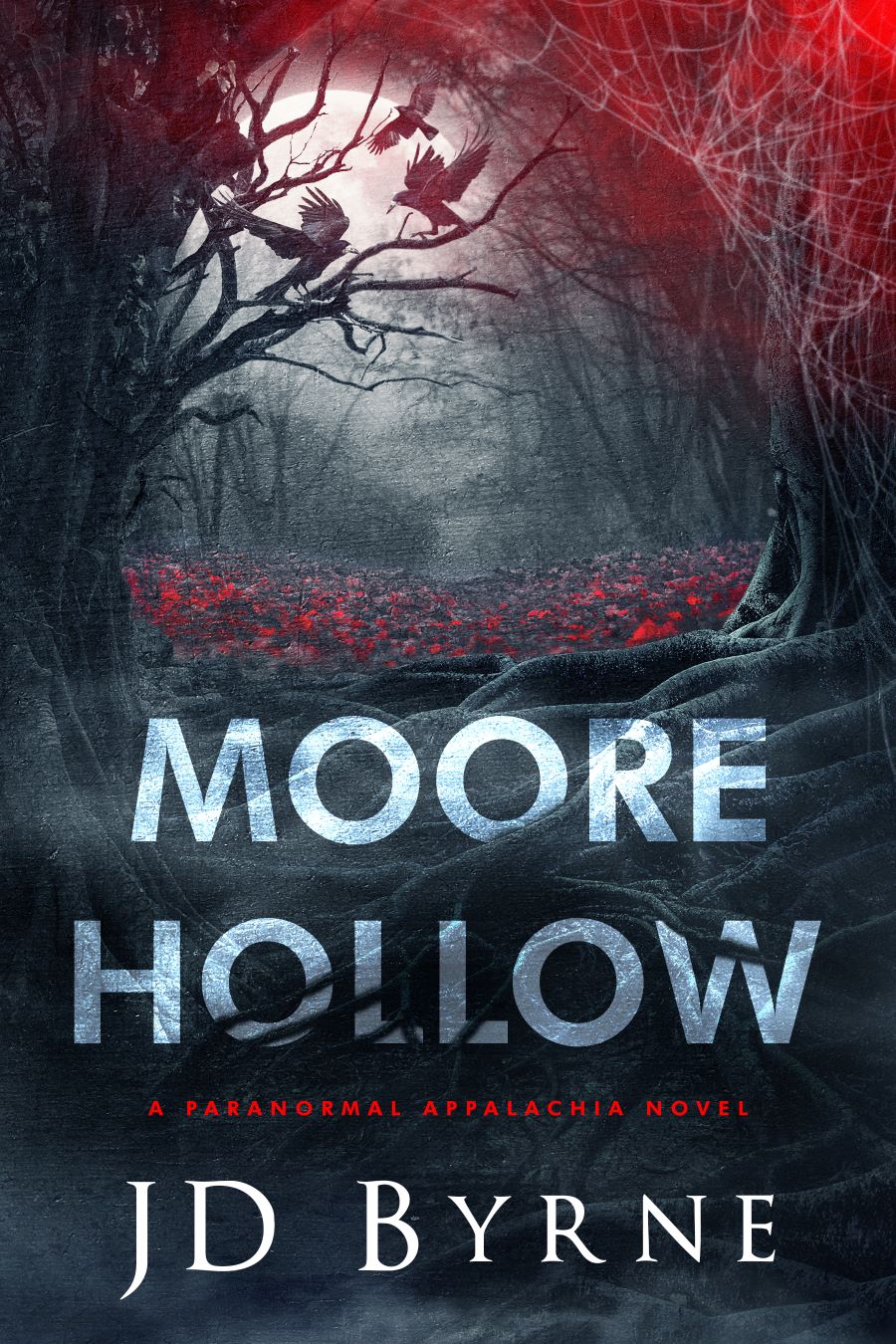
Second, you’ll also recall that I have a sequel to Moore Hollow in the works. I’m also doing the final prep on that to get it ready for release this summer. Part of that includes rebranding Moore Hollow as the first book in a new series, Paranormal Appalachia. Part of that is a new cover. I don’t want to share it, yet, but here’s some idea of the imagery in it:

The new book finally has a title, The Triplets of Tennerton. More details in the coming months!

So, for the next few weeks, I’m going to buckle down and work on that stuff. Back here in May, I imagine. Until then . . .

Decision Made (Finally!)

The more I write the more I realize that coming up with ideas isn’t the hard part. What’s hard is figuring out which ideas have legs and can become stories or books. Sometimes it takes some hard work to separate the wheat from the chaff, so to speak.

When Heroes of the Empire came out in June  it brought to a close a long period of focusing on one world and one project. Since 2018, at least, when I started the first draft of Gods of the Empire, I’d basically lived in the world of the Unari Empire, building it out and telling the stories of my characters in it. The only reason I felt able to work on the sequel to Moore Hollow in the spaces between those books was that it meant returning to a world I already knew.

At the same time, I was gathering ideas like some thieving magpie, putting them away in various Word documents for a later date. I knew from the time I collected them that some had more substance than others, but I wasn’t quite prepared for how long it would take me to figure out which ones were which.

See, the thing with trilogies, at least for me, is that they are an implicit promise to the reader – I know how this ends and I’m going to finish it in good time. If I say “here’s my new book, it’s the first part of a trilogy,” rest assured that, barring some unforeseen circumstance, I’m working on those books for the next few years.

Which means, back in June, I got really excited about the idea of diving into a new world. Part of what makes writing fantasy so fun is you get to let your imagination wander and come up with strange new places, things, and people. Writing a trilogy means that you have to put that wandering on hold and I was happy to get my walking shoes back on (so to speak).

And I had a target – I wanted to start my next book during National Novel Writing Month. I’ve done that for several of my books. NaNoWriMo provides a great way to focus on writing for a month, even if what you’re left with on December 1 is only two-thirds or even one-half of a finished manuscript. That would give me a couple of months to build the world, flesh out the characters, and then figure out what was going to happen to them.

Easy, right? If only.

I actually had to go through my idea files pretty brutally, with virtual red pen and everything, and just get rid of stuff that didn’t really strike my fancy. Some of those were mere ideas (“surely there’s a fantasy story in the Scapa Flow incident, right? What about High Noon but with wizards!”) that were never going to become a real story. Others were things that I’d hung on to so long without developing that I figured their time had passed. Ultimately, they were ideas that I just didn’t see sprouting stories and I hadn’t faced up to that fact yet.

In the end I had about three dozen ideas that could become my next project, so I decided to so what my anal retentive self always does – start dividing and conquering them. I put each idea into one of four groups – Sci-Fi, Older Fantasy, Newer Fantasy, and Non-SF/Fantasy (yes, I’ve got a couple of those). The goal was to produce a “winner” in each group and then compare those four to each other. I almost worked – I wound up with five finalists because I couldn’t decide between the top to Newer Fantasy ideas.

I worked through each idea. I took a week and spent one day thinking through all the angles I could for every one. I did a PowerPoint presentation for my wife to get her feedback on the ideas. Good ideas that I at first thought were front runners fell by the wayside either because they weren’t as deep as I’d hoped or they just weren’t singing to me.

Finally, last week, I was in Richmond for court and had some time the night before to work through the final three (don’t worry, my colleague was doing the argument the next morning). I walked around my hotel room, talking to myself, arguing the pros of a particular idea then playing devil’s advocate and tearing it apart. After a couple of hours, and a really enormous calzone, I finally made a decision.

My next project has the working title The Fall. It’s inspired by the sad tale of Franz Reichelt, a Parisian tailor who met an infamous fate:

To use an awful pun, that’s the jumping off point for this project. It’ll be set in a similar kind of world, timeline wise, but include what I think is a really nifty magical element. This is my first time building a magic system for one of my novels, so I’m both anxious and excited about the prospect. Structurally I’m leaning toward doing something like Citizen Kane, where the main character is investigating someone’s life and we see it play out in flashbacks.

All in all, I’m really looking forward to diving into this.

And, yes, it is the one my wife liked best.

What Comes Next?

Well, it’s been about a month since Heroes of the Empire dropped, so I figured it was time to get back at it. Here’s what’s coming up in my world to look forward to (or run away from!).

My first novel, Moore Hollow, was always intended to be a one-and-done affair.

However, I’ve had several readers ask about sequels, so I kept an open mind about returning to Ben Potter and his life if the opportunity presented itself. The opportunity came when I was revisiting an old National Novel Writing Month (NaNoWriMo) project about a West Virginia lawyer who got wrapped up in a case that touched on UFOs and shadowy Government conspiracies. I didn’t much care for how that story ended up, but I liked the character and thought it was good backstory.

I decided to take Ben and permanently relocate him to West Virginia. There he’ll dig into various paranormal events, some of which brush up against the legal system. When that happens, he and my old lawyer character will team up (or will they?). I think it’s got a lot of potential for some fun, independent stories that I can return to now and then.

The first of those is the so-far-cleverly-titled Untitled Moor Hollow Sequel. In spite of the useless title the book itself is pretty far along. I just completed a third draft and handed it to my lead beta reader. If all goes according to plan, I hope the book (complete with a title!) will come out early in 2024.

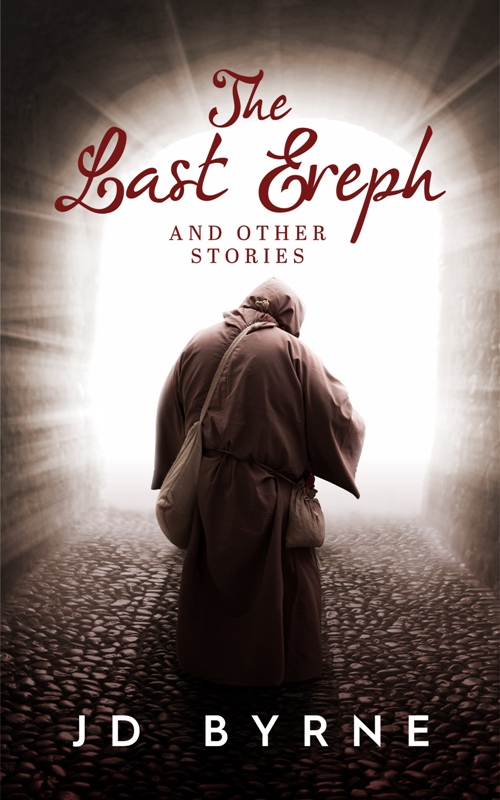
After that I’m going to focus on pulling together a new collection of short stories based on what I’ve written since The Last Ereph and Other Stories came out.

I’ve got a decent number of them, some very short, some already shared here, or published in anthologies here and there. It will include stories set both in the world of The Water Road and Moore Hollow (indeed, the sequel story to the untitled sequel is already written!). There may even be another story or two to round things out. Looking for a 2025 release date for that one.

But what of really new stuff? To be honest, I am chomping at the bit to dive into a new world with a bunch of new characters. The Unari Empire books have been my focus for several years so it’s time to turn my attention to one of those slight “ideas” that I’ve got laying around here and there. Plan is to have a new book ready to start writing for NaNoWriMo this year. What will it be about? Right now I have no fucking clue and that’s exhilarating.

Onward!

Weekly Watch: “Night of the Living Dead”

At the recent DualCon in Charleston, through sheer serendipity, my table wound up being next to that of John Russo, co-writer (along with director George Romero) of Night of the Living Dead, the horror film from which essentially the entire modern zombie genre sprang. After hearing him talk about the movie on a panel we did it occurred to me that I’d never actually seen the flick. Naturally, the wife and I remedied that situation that very evening.

The story of Night of the Living Dead is even more amazing than the movie itself, although it holds up pretty well after all these years. Made for about $100,000 by first-time film makers (Romero, Russo and others had a production company that made commercials and other short pieces in and around Pittsburgh – Romero even directed some segments of Mr. Rogers!) it grossed about $30 million worldwide, making it one of the most profitable movies ever made.

The movie itself takes a fairly common setup and ramps the dread up to 11. As Russo explained during our panel, he thought of Night of the Living Dead as the 1939 movie Stagecoach, “but with zombies instead of Indians” and that seems right. You take a group of disparate people with few prior ties to each other, put them in a stressful situation, and see whether they pull together and triumph or splinter and fail.

If the movie is not just that story, but a metaphor for society at large as it faces existential threats then we, in the words of Thinking Plague, “are so fucked.” Once the group is gathered in an isolated house while the zombie horde (sorry, “ghouls” – the movie never uses the Z word) approaches, the battle lines are draw over whether to remain on the main floor or barricade themselves in the basement. The arguments both ways are the kind that can never be right or wrong – the main level has multiple points of entry for the ghouls, but also multiple ways out; the basement is more secure, but if they break through that door you’re dead.

My first thought upon viewing was that Ben, the main character and the prime supporter of the main level argument, was proven wrong, because he winds up in the basement when the horde overwhelms the house, anyway. The more I think about it, though, I don’t think that’s the case. Less important than where they make their stand is that they make it together, is what I’m thinking now. That even he is killed, in the end, and not by the ghouls, makes for a very bleak viewing experience and comment on human nature.

Aside from the side effects of its low budget (beyond its role in launching the modern zombie genre, Night of the Living Dead is one of the foundational films of the modern independent film scene) it doesn’t feel “cheap” (this is not a Zappa-esque “Cheepnis” situation). The script uses radio and TV news reports, often playing in the background, to broaden the story without losing the focus on our characters and their locale. That also helps setup the very end, too. I also enjoyed the soundtrack, which is typical orchestral bombast, save for when the zombies are the focus, when is switches to a very cutting edge soundscape of synthesized throbs and scratches.

But my final takeaway from Night of the Living Dead is irony. My first novel, Moore Hollow, is a kind of zombie story. The backdrop is that a crooked West Virginia politician around the turn of the 20th century actually tried to raise the dead so they would vote for him. In the novel, a disgraced English journalist with family ties to the West Virginia coal fields comes to track down the mystery. The zombies aren’t monsters, but more a problem to be dealt with and, perhaps, damned souls who need protection. I gave him the last name “Potter” completely oblivious to the Harry Potter connection.

His first name? “Ben.” Just like the main character in pop culture’s foundational zombie text. Sometimes the creative mind really does some wild things.

Who Does Your Main Character Work For?

A little white back, my wife and I saw The East, a 2013 film starring and co-written by Brit Marling:

Marling’s character infiltrates an off-the-grid terrorist organization that’s been striking out at corporations that have gotten out of hand. One is responsible for an oil spill, another for despoiling a town’s water supply, and a third for releasing a drug onto the market that has horrible side effects. Part of what makes the movie interesting is that Marling isn’t a cop or a crusading journalist, but rather an agent for a private security firm. It made me think about the importance of who your main character works for in a story and what it means for their development (or lack thereof) as a character.

A lot of stories are about main characters solving some kind of mystery, figuring out the solution to some problem. It’s no surprise, then, that lots of stories have main characters whose jobs require them to solve those mysteries – cops, private detectives, journalists. It gives them not just a motivation for getting into the problem in the first place but a destination as well – an arrest, the confirmation of a dark secret, an expose article. But it can also give them interesting limitations, blinders, or obstacles to overcome.

The natural job for a character like Marling’s in The East would be a cop of some variety – a person tasked by society with taking down bad guys. A person who should, at least in theory, be motivated to serve justice and help people. We’ve seen that story before, however, so making Marling’s character a private security operative boxes her in interesting ways since she’s not working for society in general, but for specific clients.

There is a scene, for instance, where she winds up in a middle of a plot the group is pulling that will poison dozens of people at a drug exec’s party. When she realizes that and calls her boss for guidance, she’s gently reminded that the drug company is not their client, so she shouldn’t try to stop what’s happening, just keep gathering info for the client that actually hired her. It creates an extra amount of tension over what she’s going to do and why, which I thought worked pretty well.

I’ve been thinking about this as I work on the sequel to Moore Hollow.

Yeah, so, I’m doing a sequel to Moore Hollow, the first of many, I think (currently now being worked on around the final volume of the Unari Empire trilogy, Heroes of the Empire).

For the books going forward, Ben Potter, the disgraced journalist who is the main character of Moore Hollow, permanently relocates to West Virginia and throws himself into investigating the area’s rich tradition of beasties, legends, and general weirdness. In the second book, though, he hooks up with a lawyer to help represent a particular client. That will give him different motivations and restrictions than his normal work as a paranormal journalist. I hope to explore how those roles are different as the series goes forward and Ben sometimes does and sometimes doesn’t work with that attorney.

Of course, those choices don’t always work for every reader/viewer. Consider this view, from a review of The East:

Yet the biggest issue with The East is that Batmanglij and Marling so thoroughly rig the script in the environmentalists’ favor. By casting Marling as a corporate spy instead of a government agent, it sets up a fatally compromised situation where her bosses have the same profit motive as the companies being jammed. So choices that might be made in the name of justice are instead a matter of loyalty to one set of values that’s clearly more compromised than the other. Environmental activists like the ones in “The East” live by a code, but the same can’t be said of Sarah’s employer. Going native is easy when you don’t have to follow the letter of the law.

But for me, it’s precisely that lack of direction that makes the character (and her journey) interesting. In the end, I think she finds a lot of commonality between her employer and the would-be do-gooders.

What I’m saying is that, oftentimes, our main characters born out of what they’re going to do in our story. Still, it’s useful to think about the context in which they’re going to do it, which includes how they’re making a living. It can open up some interesting storytelling avenues.

The Real Here or Somewhere Else?

A great thing about writing fantasy and science fiction is that you can set a story wherever you like, be it a far flung future or a galaxy far, far away. It can be a place that never existed or that exists but not in the form it does for your story. The possibilities are endless. But sometimes you want to tell a story in what, for better or worse, we’ll call the “real” world – the one that exists when you’re writing your story (or sometime before). If that’s the case, should you set it in a real place or make one up?

I grappled with this when I wrote Moore Hollow. It’s set in the “real” world, to the extent that zombies exist in the real world. The main character, Ben Potter, lives in London and visits family in Leeds before and after he travels to West Virginia. He rents a car at Yeager Airport in Charleston! All real places.

But when it came time to set the main part of the book, I was caught. I originally intended to set the story in one of the real counties deep in coal country – Mingo, McDowell. I thought that would help the story by giving a real sense of place, to ground the more fantastical elements.

The problem with using real places, of course, is that it limits your story somewhat. I needed some specific locales for Moore Hollow, places that, it turned out, didn’t really match the lay of the land any particular place in southern West Virginia. Thus, Vandalia County and its county seat, Jenkinsville, were born. All of a sudden I had unlimited freedom to fit the landscape to the story I wanted to tell.

We tend to see that kind of thing a lot in TV shows, as they cobble up settings as the show goes on. The best example, probably, is The Simpsons, which has for years given Springfield all the things it needs for the stories they tell, whether they really make sense or are found in a single location in the real world. Need a nuclear power plant? No problem. An ever burning tire fire? Have one of those, too. A city with a minor league baseball team but big enough to host a thriving entertainment industry (you think all those Krusty shows beam in from Hollywood?)? It’s got everything you need!

You get the point – when you’re making up the location as you go along, you can give it whatever the story needs.

There’s a price to pay for that kind of flexibility, though. The story you’re telling might feel more divorced from reality than you’d like.

By comparison, I just finished reading another of the Dresden Files novels. In no way is that series set in the real world – unless there are wizards, spirits trapped in skulls, and all manner of fantastical beasties out there that manage to stay off social media in 2021. That said, it is set in the very real place of Chicago and benefits for it. It adds a gritty reality to the stories that helps the “he’s a PI, but a wizard” concept really take off. If they’d been set in a fictional city that was, for all intents and purposes, Chicago, I don’t think it would be the same. Not that everything is scrupulously “real,” but then, neither is the setting of any literary novel that takes place in the real world.

Ultimately, I decided to create Vandalia County in Moore Hollow because no real place had all the things I wanted the place to have for the story. For future stories in that universe (a sequel novel and sequel-to-that novella have been drafts), I’m leaning toward trying to set them in real places, whenever possible. I might not be able to hold myself to that, but I want to try. One thing’s for certain – the decision about where to set your story has consequences. Think them through and do what’s right for your story.

I Won! I Won!

Hey, everybody. How was November? Everybody awakened from their turkey coma?

As I said earlier, I spent last month taking part in National Novel Writing Month, working on the sequel to my first novel, Moore Hollow. I’m pleased to say it was a very productive month:

NaNo-2019-Winner-Web-Badge.jpg

Of course, in this case “winner” means “reach the 50,000-word threshold,” not have a complete manuscript in a month. Still, I made a very good start and should finish up this first draft in the next few weeks. More importantly, this book now has a title! The second installment of what I’m going to call the Appalachian Paranormal series is The Triplets of Tennerton. I’m super excited to share it with you (in a while).

All in all, 2019 will have been a pretty productive writing year for me. I finished and published Gods of the Empire, first of my new Unari Empire trilogy. I also wrote a first draft of its sequel, Widows of the Empire. Now I’m about to wrap up a first draft of The Triplets of Tennerton. Not too shabby.

What of next year? My main focus will be on finishing Widows and writing the final book in that trilogy, Heroes of the Empire. Will Widows see the light of day in 2020? Too early to say, but it’s definitely a possibility. All I know is that I’m going to keep grinding at this thing called writing.

Funny-Writing-Meme-34

Hello, 2019

I’m not a big fan of New Year’s Resolutions. It’s not as if you file them with some official registry and, when you start to slip, government drones bust in to keep you on the straight and narrow.

newyearnewme

I prefer to use the start of the year as a time to take stock, to think about what the coming year might hold. So let’s do that, shall we?

To start with, my initial goal for 2019 is to finish up Gods of the Empire, the first book in my new trilogy. As you’ll recall, this project was originally going to be a series of shorter books, but morphed into a trilogy of longer books. As a result, I basically wrote the first book in two separate parts. They’ve now been fused together for a complete manuscript. It’s a couple of edits away from “done” and, I hope, will see the light of day this year.

Beyond that, things are fairly wide open.

Obviously, at some point, I’ll need to get cracking on the second book in this trilogy, Widows of the Empire. It’s largely planned out (in broad strokes, at least), but I’m not sure whether I’ll want to jump right back into that world or get some distance before I get working on book two in earnest.

I’m also planning to go back and revive something I thought was a standalone novel – Moore Hollow. I’ve had more than one person ask about a sequel, which I’d never intended, but I’ve come around. It’s now going to be the first book in a series in which Ben Potter moves to West Virginia and investigates various weirdnesses. Getting cracking on the second book in that series is high on my list of priorities, too.

There are bound to be some shorter projects that pop up here and there, too. Last year, between rounds of Gods of the Empire, I actually wrote a novelette (I think) set in the expanded Moore Hollow universe because the idea lodged itself in my brain and wouldn’t go away. That same kind of thing is likely to happen again. Only time will tell.

So there you have it – no resolutions, but some plans and some goals. Now let’s get out there and take on 2019!

letsdothis