Water Road Wednesday: The Neldathi of Kentucky?

I have a list of topics for these Water Road Wednesday posts. I sat down last December and wracked my brain to come up with everything I could talk about without going too far into what actually happens in the books. Never in my wildest dreams did I think I’d wind up with a post about the blue people of Kentucky.

Although the story began much earlier, it came to the attention of doctors in 1975 when a child in the hospital was being treated based on the blue color of his skin (“as Blue as Lake Louise”). Then, as:

a transfusion was being readied, the baby’s grandmother suggested to doctors that he looked like the ‘blue Fugates of Troublesome Creek.’ Relatives described the boy’s great-grandmother Luna Fugate as ‘blue all over,’ and ‘the bluest woman I ever saw.’

Turns out, genes were to blame:

The Fugate progeny had a genetic condition called methemoglobinemia, which was passed down through a recessive gene and blossomed through intermarriage.

* * *

Methemoglobinemia is a blood disorder in which an abnormal amount of methemoglobin — a form of hemoglobin — is produced, according to the National Institutes for Health. Hemoglobin is responsible for distributing oxygen to the body and without oxygen, the heart, brain and muscles can die.

In methemoglobinemia, the hemoglobin is unable to carry oxygen and it also makes it difficult for unaffected hemoglobin to release oxygen effectively to body tissues. Patients’ lips are purple, the skin looks blue and the blood is “chocolate colored” because it is not oxygenated . . ..

According to family tradition, Martin Fugate came to the area, in all his bluishness, in 1820. There he married a woman who carried a recessive gene for the condition. Four of their seven children were blue. Other families in the area showed signs of the condition, too, with one group being described as “bluer’n hell.” The Fugate family began to move away in the early 20th Century, as coal mining picked up in the area.

Although it’s a genetic condition (exacerbated by inbreeding), it can also be caused by exposure to certain chemicals. It’s one of those conditions that’s so rare no doctor ever sees it, but they all learn about it medical school.

Did the Fugates and their like really look like the Neldathi of The Water Road universe? Doubtful. But it’s kind of interesting that a clan-based group of mountain dwellers I pulled out of my imagination have a kind of real world equivalent. Truth, as they say, is never a match for fiction.
What Vinyl Can Learn From The Americans

Almost every piece of fiction is, in fact, about creating an alternate reality. No matter the verisimilitude of a story, not matter how “real” the characters feel, the simple truth is they aren’t. They’re creations of a writer who controls their every movement and word. Our world is not their world for the basic reason that they don’t exist in our world.

Alternate histories, of course, take this premise and run with it. What if the Allies lost World War II? What if the American Revolution never happened? Stories that ask such questions are all about messing with history. The only limits on the changes you make are whether they make some sense in relation to the big change.

Things are a little trickier when you’re telling a story set in the past that doesn’t have quite the same ambition. If you’re not really changing the past, how much of “history” as we know it can you play with? And how? Two current TV shows deal with this issue, one much more successfully.

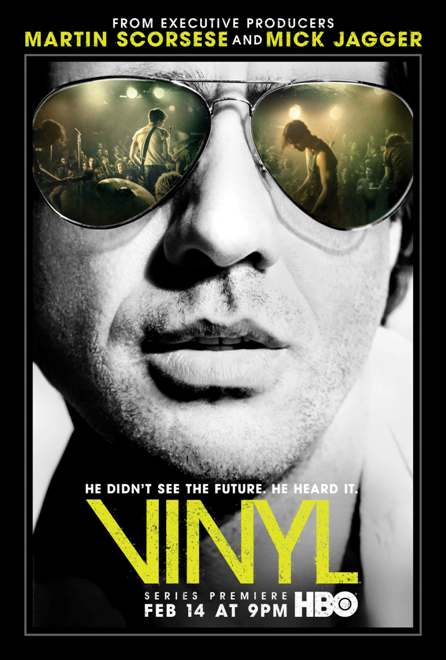
Vinyl, on HBO, has a hell of a pedigree. The show, about the head of a struggling record company in the early-to-mid 1970s, boasts Martin Scorsese, Mick Jagger, and Terrence Winter (of The Sopranos and Boardwalk Empire fame) among its creative forces. The company is on the brink, the main character is a coked-up killer, and, well, there are other complications. It’s gotten a fairly cool reception from critics, but has already been renewed for a second season. I’m not sure I’ll be on board for it.

Vinyl-Key-Art-FINAL

Although I have several issues with the show, the one that really drives me nuts (and prompted this post) involves how the fictional record label interacts with real world stars. Already this season we’ve seen our heroes interact with Led Zeppelin, David Bowie, Alice Cooper, and Elvis. While there’s a chance to play that for fun, or verisimilitude boosting background, the show doesn’t go that route. Instead, we’re shown multiple instances of the fictional record label trying to do business with these luminaries that we know won’t because we’re still in the “real” world. Whatever conversations you might dream up for Alice Cooper to say in your version of 1973, you’re not going so far as to have him sign with a fictional record label. It drains these incidents of any tension or drama, regardless of how well they’re executed.

Compare that approach with the one taken by FX’s The Americans. It’s got considerably higher fictional stakes – telling the story of a pair of Soviet spies posing as a suburban American family during height of the Cold War 1980s. They should bump into historical biggies every week, yet they don’t. In fact, the only major historical fact in play in the series is the one that hangs over the whole thing like a specter – we know that these folks play for the losing team.

the-americans

Yet, the drama of the series still works because our “heroes” aren’t interacting with bigger specific historical events that have happened around them. They never try to assassinate Reagan, for example (although I suppose you could conspiracy theory that one into real history), or engage in some epic act of sabotage that didn’t happen in the real world. As a result, we’re more caught up in the tension of their existence because we’re unsure how their small part of the larger story is going to play out.

Vinyl lacks that. Whatever the fate of American Century Records will turn out to be it has fuck all to do with hitching its star to David Bowie or Elvis. It’s a much better show when it’s playing with its fictional artists, people in whom viewers can invest some real emotion.

It’s fun to play around with history. But I think you have to have a solid idea of why you’re doing it and how your fictional characters are going to fit into that history. Are they swept along with the tide we all know or are they changing it into something entirely different? It’s a fine line and easy to wind up on the wrong side of it.

Same As It Ever Was

On my old blogs, where I discussed legal stuff more often, I talked about how conflicted defense attorneys are about defendants who “roll” on each other – that is, who testify against another defendant in return for either a reduced sentence or beneficial plea bargain from the prosecution. That conflict came to mind while reading about a similar situation that occurred on the other side of the planet.

The Master of Confessions is journalist Thierry Cruvellier’s account of the trial of “Duch” before the name, the international court currently trying former members of the Khmer Rouge for crimes against humanity. Duch was the lead interrogator at the Tuol Sleng prison I mentioned a while back, also known as S-21. Duch’s job was to get people to confess not only their crimes against the revolution, but to rat out others in their “line,” a process known as denunciation.

One of the interesting things about the book is that Cruvellier isn’t writing history. He’s writing about it, but he’s doing it from the vantage point of his own observation of the trials (and other similar trials around the world). Thus, it gives him room to make astute observations that might not be so well placed in a work a pure history.

On the subjection of denunciations, he writes (paragraph breaks added by me):

The court openly hates the very idea of denunciation. Given that at S-21 thousands were tortured and mercilessly killed, the court vehemently rejects the validity of the denunciations obtained there. But in other circumstances, the international legal establishment can be more accommodating.

Mandatory denunciation (though obtained without torture) is a crucial element in many confessions made before international tribunals and, in these circumstances, lawyers find that their consciences remain quite untroubled by it. On the contrary, they actively encourage it. A defendant who pleads guilty to a UN tribunal is told to denounce his accomplices if he wants to win over the prosecutor and earn the judges’ leniency. He isn’t forced to name names under torture, of course, but if he wants to make the most of his guilty plea and obtain a lighter sentence, then he has no real choice but to comply.

Rwanda’s community courts, known as Gacaca courts, which have been so misguidedly praised over the past ten years, feed off of mass denunciations. Though they don’t torture people, snitching is inextricably linked to confessions in Gacaca courts. The result is an all-consuming, rampant, and poisonous judicial operation that had produced more than a million suspects. Throughout Rwanda, the pressure to name one’s accomplices has given rise to slander so great it wouldn’t be out of place in the archives of S-21.

‘Denunciation is another form of lying,’ Francois Bizot, a survivor of imprisonment by the Khmer Rouge, says in court. International justice, it seems, only hates lying in certain circumstances.

This captures the essential issue when it comes to defense attorneys and rolling codefendants. On the one hand, their testimony is inherently suspect because it’s being given in return for something of value – more lenient treatment. Indeed, a federal court once recognized this for what it is – bribery – but swiftly backpedaled upon realization that banning the practice would bring the criminal justice system screeching to a halt. On the other hand, providing what the federal system calls “substantial assistance” is often the only way one of our clients can help reduce their sentence.

Which goes to show, I guess, that “justice” and what it looks like isn’t so different, whether you’re dealing with petty drug dealers in West Virginia or the architects of mass murder in Cambodia.

Weekly Read: Dead Wake

On May 7, 1915, a torpedo struck the liner Lusitania off the coast of Ireland. It sank in less than 20 minutes, taking almost 1200 lives. It was a cause célèbre during World War I, a conflict that was just settling down into a lengthy stalemate of trench warfare. Not for nothing did those lost include dozens of American citizens. The United States had not yet entered the war.

That the sinking of the Lusitania is tragic is without question. That the people killed were innocents who had nothing really to do with the war being fought around them is equally without question. One would think their story might make for a gripping read. Maybe it is, but Dead Wake isn’t it.

Erik Larson is one of the stars of popular history. In books like The Devil in the White City (about the 1898 Chicago World’s Fair and the serial killer who stalked it) and Thunderstruck (about Marconi’s development of wireless technology, and its relation to a grisly murder), he weaves multiple story lines together in a way that sheds light and provides dramatic structure for whatever historical event is the main focus. He does the same in Dead Wake, but it just doesn’t work as well.

Part of that, sad to say, is because he spends an awful lot of time aboard Lusitania before it sinks. To be blunt – the people he introduces us to just aren’t very interesting. To be more specific, the only thing interesting about their journey – their story in this book – is that the boat sinks. But we already know that, so where’s the dramatic interest? Much as I hate to say it, perhaps a fictional story is the better way to do this, ala Cameron’s Titanic.

That compounded by the fact that, looking back with a hundred extra years of history between now and then, the sinking of Lusitania doesn’t seem like the great crime it once was. After all, we’ve seen the incineration of entire cities and indiscriminate terrorist attacks since then. Lusitania being sunk was a horror, but (1) it wasn’t a neutral ship, however much time Larson spends on how the Germans dealt with such; (2) it was carrying armaments; and (3) it sailed into a declared war zone after specific warnings about the danger of doing so.

Also, for all the furor that the sinking caused, it didn’t really change anything. We spend a lot of wasted time in Dead Wake with a love-struck Woodrow Wilson, presumably because of the impact Lusitania’s sinking had on the American entry into the war. But that didn’t come until two years later and, at any rate, was part of the (arguably more interesting) aftermath of the sinking which Larson sails past (pun intended).

In addition to the strands of the Lusitania and Wilson, there’s a third bit where the book is at its best – on the U-boat that sunk the ship. Larson does great work in describing the nature of submarine life at that time. Not only does he cover the technical aspects, but his descriptions of the innards of the boat (and the sweaty guys aboard it) really come to life. He touches on the issues submarines brought to the rules of war, but only briefly. I wish he had spent more time diving deep into the philosophical depths on that one.

As I mentioned above, what’s arguably most interesting about the sinking of the Lusitania is what happened after the ship disappeared beneath the sea. The UK, in the middle of a war, had good information about what exactly happened, but tried to frame up the ship’s captain anyway (for reasons that are unclear). Americans were outraged, but did nothing about it – hard to imagine such restraint prevailing now. And there are so many unanswered questions about the sinking that conspiracy theories have sprouted up, fed by the continued secrecy of various sources of information. This would have been a fertile area for exploration, more so than the dull daily lives of passengers on board the ship.

One thing that Larson does through the book is highlight the power of coincidence and, for lack of a better word, “luck.” Lusitania was delayed about two hours on its way out of New York because it had to stop and get passengers from another liner. Had it not, it would have passed by the U-boat in the fog, preventing any attack. The ship’s captain, unaware of the U-boat lurking nearby, unwittingly turned the ship in a way that made it the perfect target. Things like that reinforce the randomness that often helps produce momentous events.

Dead Wake isn’t a bad read. It’s quite informative in spots and well written (as always). But it pales in comparison to Larson’s earlier work.

DeadWake

My Watery Bridge Too Far

I’ve talked before about the flying snowman point, the point at which a reader or viewer is no longer willing to suspend disbelief to enjoy a story. There’s a similar thing that happens when certain things are depicted in the narrative, things that are so off putting that they ruin things, or at least leave a sour aftertaste.

I’ve read some people for whom that thing is rape, either survivors who don’t want to relive their trauma or people who just think it’s something that is too casually thrown around in fiction. For my wife it’s animal abuse or neglect. She can rarely push past that, once it comes up. I’ve always thought of myself as tougher than that, able to shrug off anything in the service of a narrative. A reader’s version of a cast iron stomach. Apparently, I was wrong.

Last year my wife and I took our belated honeymoon in Cambodia. It’s a beautiful, historic place, filled with friendly people. But it’s also the scene of one of the worst authoritarian regimes of the 20th Century. During the reign of the Khmer Rouge in the 1970s up to 2 million Cambodians died, either worked to death in a program of rural fixation or outright murdered as enemies of the state.

While we were in Phnom Penh we went to the Killing Fields outside the city, as well as the Tuol Sleng prison, from which many of those doomed people came.

TS1

Tuol Sleng is a former school and it’s been left largely in the same condition in which the Vietnamese found it when they rolled into the city in 1979. In fact, rooms in which prisoners were murdered just ahead of the Vietnamese advance still have blood on the walls and ceilings. Of the 17,000 of people sent to Tuol Sleng only a dozen survived (we met one of them). It’s easy enough to be horrified at the place just be using your imagination.

Not that you’re limited to that. Several rooms are given over to exhibits about what went on there. In one room there are implements of torture, as well as paintings done by a survivor of the various torture techniques. Take a look at this picture:

TS2

See the painting in the right, behind the rack upon which victims would lay while their fingernails were pulled out? It depicts waterboarding, simulated drowning, which was a crime against humanity when the Khmer Rouge did it, a war crime when the Japanese did it in World War II, but mere an “enhanced interrogation technique” during our glorious War on Terror. Whatever it’s called, it’s torture and the thought that it’s been done in my name turns my stomach.

Which brings me to Channel Blue, a comic sci-fi novel by Jay Martel. In the book a down and out Los Angeles screenwriter, Perry, accidentally learns that the Earth is actually a huge reality TV show run for the benefit of an alien race. Even worse, ratings are down and the show’s been cancelled – in other words, the Earth is to be destroyed. Perry does his best to save it, but each attempts tends to fail miserably and leads to Perry suffering in all kinds of ways.

The other night, while going through another of these episodes (it gets kind of tedious), Perry is identified as a potential terrorist, taken to a secret location, and waterboarded. Not for any good reason (he’s back on his way quickly enough), but, there it is – a depiction of waterboarding in what’s otherwise been a funny, light bit of entertainment. It stopped me cold.

It’s not that I object to any depiction of torture in literature or film. But it’s one thing to depict it as part of a serious work, perhaps shedding light on the brutality of the whole process. It’s quite different to put it in a comedic work even if the act itself wasn’t played for laughs.

But if that’s true, what about one of my favorite books (and others) of all time? Very early on in The Hitchhiker’s Guide to the Galaxy the entire planet Earth is destroyed. It’s played completely as a joke – the Earth is destroyed to make way for a hyperspace bypass. Billions of people are killed. That’s never bothered me – why not?

I think it comes down to realism, oddly enough. Realistically, the Earth is not going to be destroyed, certainly not to make way for a hyperspace bypass by an alien race spouting awful poetry. The idea is so absurd that it’s not worth taking seriously. By contrast, waterboarding of alleged terrorist suspects is something we’ve done, and not in the recent past.

I’ll admit this is probably not a rational response. Most things like this are more visceral than intellectual (although not all). There’s nothing wrong with that, so long as people recognize it. I guess I do now.

Weekly Read: Darkness at Noon

An awful lot has been written about Darkness At Noon, Arthur Koestler’s searing portrayal of a Communist revolutionary brought down by the inevitable logic of his own ideology. Hell, this review in the New York Times when it initially came out in 1941 sums things up pretty well. It’s fascinating, thoughtful, and ultimately tragic. On that most people agree, so I’m not going to waste time going on about its strengths here.

I’m more interested on a couple of things that popped into my head while reading it about Rubashov, the doomed protagonist. The TLDR version of the plot is that Rubashov was one of the leaders of the Russian Revolution (the country isn’t specifically named, but it’s identity is hardly concealed) who, during the pre-World War II purges by Stalin was caught up in the machine he helped create. It’s not much of a spoiler to say that it costs Rubashov his life, as it did Nikolai Bukharin and the other Old Bolsheviks upon whom the character is based.

Rubashov spends the entire book in prison, although we learn about his earlier life through flashbacks. What we see is someone who is an experienced, if not practiced, prisoner. He knows to calmly pace around his cell as a means of exercise and as a way to keep his mind clear. He has no problem using code to talk with the prisoners on either side of him through the walls of their cells. More than anything else, he doesn’t freak out.

In fact, that’s what is most interesting about Rubashov as a character. The typical person thrown in prison by a tyrannical state, mentally tortured, and force to confess to ridiculous crimes is a fighter, a person in constant resistance. We see how he spits in the face of authority, struggles to retain any control over his life that he can. In other words, he goes down fighting. Rubashov doesn’t do any of that. It would be wrong to say he accepts his fate. He does spend most of the book trying to talk his way out of execution, after all. But he does it with the knowledge that it will most likely be futile.

The futility is due to the system itself, in which he played a major role. Not only was he an early loyal fighter for the Revolution, he was a philosopher of sorts, particularly good at spreading the message to others. But when you’re fighting for the Revolution, everything gets viewed through the prism of whether it’s revolutionary or anti-revolutionary. Not only is there no middle ground, there are no topics that are immune from its grip. To paraphrase Christopher Hitchens, ideology poisons everything.

That’s best exemplified by a fellow prisoner, Bogrov, who was convinced that the nation should build fewer, bigger submarines (with a better range), as opposed to building more, but smaller, submarines. As Rubashov’s interrogator explains, both positions were valid from an engineering and economic point of view, but they had radically different impacts on Revolutionary theory. Larger submarines with more offensive capability meant prioritizing a global Revolution, while the smaller and more numerous submarines signaled self defense and strengthening the Revolution at home. Number 1 (Stalin) favored the later course, so poor Bogrov was branded counter revolutionary and dealt with in the only way such things can be dealt with – “liquidation.”

What’s amazing is how much this part of Darkness At Noon still resonates today. In modern American politics there are very few issues where there is a reasonable middle ground, at least when it comes to pundits and shouting on social media platforms. The other side isn’t just loyal opposition, it’s the enemy. Their policies aren’t just wrong, their evil, immoral, and (in the terms of the novel) anti-revolutionary. Regardless if you’re on the left or right, you think you’re the revolutionary one, of course. Not only does such simple minded mudslinging make it difficult for anything of importance to be done, it leads to reductive thinking about the other side. If they’re evil, if they’re immoral, if they’re leading the nation to ruin, then liquidation really isn’t that farfetched as a solution is it?

That’s why I’m a little disappointed to see some readers (in Goodreads commentary and whatnot) dismiss Darkness At Noon as a product of its time, an interesting historical curiosity, but not much more. While it’s true that the specific ideology on offer in the book is largely a thing of the past, the risk of what unchecked loyalty to an abstract ideology can become is very much a lesson that transcends the specifics of the Russian Revolution. Ideologues become obsessed with purity, an obsession that will inevitably turn on fellow ideologues once the people who everybody agrees are impure are purged at the beginning. Nobody is ever pure enough.

The snake will always eat its tail, unless its tempered by some contrary vision and some humanity. That’s a lesson worth learning, regardless of the specifics of how it’s taught.

1995darknessnoon-cover-400

When Law and Soccer Collide

In the United States, we generally think of sports team logos getting in trouble with modern law, bowing to the changing perceptions of a (hopefully) more inclusive population. However, that’s not always the case, particularly when you’ve got a legal foundation that goes back well beyond 1776.

Consider this Big Soccer article about Ayr United, currently playing in the third tier of Scottish soccer (confusingly called League One – just trust me). They’ve been on a roll on the field, but could run afoul of the law off of it, all due to their team crest, which is this:

AUFC Crest

Nice, huh? It’s been around since the 1950s, but is in danger of something that’ s been around much longer – a law about heraldry that dates back to 1592. England has a civil court to deal with heraldry, but Scotland’s body, the Lyon Court (presided over by Lord Lyon, King of Arms, naturally) is a little more hard core:

In Scotland however, infractions in heraldry are actually a criminal matter and nobody can legally use any sort of heraldic device without the approval of the Lord Lyon, who has the power to have any unapproved heraldic devices, and anything they are attached to, destroyed. This means that if Ayr make no changes to their emblem, the Lord Lyon could destroy all team kit and merchandise.

Another club in Ayr’s league, Airdire United, actually did the latter when their crest came under scrutiny.

Why Ayr and why now? The Lyon Court only investigates things brought to its attention, so somebody must have ratted (suspicion falls on fans from rivals Kilmarnock because, naturally, an Ayr fan ratted them out decades ago). Having said that, one Scottish attorney estimates that 25 of Scotland’s 42 professional soccer clubs might have similar issues.

I like the conclusion the article writer reaches:

It may seem as though Ayr United and the clubs before them are being unfairly treated, but I should point out that the Lyon Court is there to uphold the law. It may be a ridiculous anachronism of a law, but it’s still the law, and if the Lyon Court decide that a prosecution is in the public interest, then that’s what they’ll do.

That’s why it’s important for legislative bodies to go back through old laws and clear out those that are outdated and never enforced. Not only do they undermine confidence in the law, the provide troublemakers, whether of the elected or civilian variety, with tools to harass their rivals. The UK is currently in the middle of such a project, looking to strike old laws from things like wearing armor in Parliament to handling salmon “under suspicious circumstances.” Hard to say whether that would reach so far as the Lyon Court, however. I’m guessing not.

So loopholes it is for Ayr United.

Moore Hollow Monday – A Little History

Let me be very clear – Moore Hollow is a complete work of fiction. It takes place in a town I made up, Jenkinsville, which is the county seat of the equally imaginary Vandalia County. Still, that doesn’t mean there isn’t a little truth tucked away in there.

There are stories – rumors, in most instances – around elections in which people say that the dead continue to vote. It’s so pervasive that it led one small investigator to proclaim:

Oh my God! The dead have risen and are voting Republican.

Seriously, the problem arises because voter rolls don’t get purged very often, or very well, resulting in people who have died remaining eligible to vote (in a very hyper technical ignore the stink of rotting flesh kind of way). A Pew study in 2012 found that as many as 1.8 million dead people were still on the voter rolls. Still, there’s a pretty good gap between dead people still on the rolls and dead people actually voting.

In the wake of the 2012 election lots of officials in South Carolina asserted that hundreds of dead people had voted, an assertion made mostly in the context of the GOP push for stricter voter ID laws. More than 900, they said. As one lawmaker quipped:

We must have certainty in South Carolina that zombies aren’t voting.

Only, as with most things involving voting, the truth was much less sensational. The 953 votes found to have been cast by the (un?)dead weren’t cast in 2012, but in 74 separate elections over the course of seven years. In fact, the dead voters could be traced to a much more mundane explanation:

The report confirms what the State Election Commission had found after preliminarily examining some of the allegations: The so-called votes by dead people were the result of clerical errors or mistaken identities.

For instance, sometimes a son had the same name as a deceased father, and poll workers mixed up a dead father with a living son. (This happened 92 times in the initial probe, and then further investigation found seven more examples.)

That being said, examples of dead people voting pop up every now and then, as this article relates. In one instance in Tennessee, two dead people voted in an election decided by 20 votes. Still, there’s little evidence that it’s a problem that either determines elections or is part of a ploy used by the unscrupulous to win elections.

Which is where Moore Hollow comes in. West Virginia, southern West Virginia in particular, has seen its share of electoral fraud over the years. I even remember people joking about the dead continuing to vote (“early and often,” as they say) long after they shuffled off their mortal coil.

So it was natural to take the two strands and use them to create Thomas Owen Gallagher, aka King Tommy, aka The Cheat. King Tommy was the kind of politician who would do anything to win. Would he resort to voodoo, to strange instructions in a foreign book, to raise the dead and order them to vote for him? Of course he was! It’s what happened after that’s the crux of Moore Hollow, as Ben Potter returns to his great grandfather’s old stomping grounds to root out the truth. But what to do with it once he knows it?

Cover (KDP)

The hardest part of a mystery is deciding what to do once you’ve solved it.

Available next Monday, October 5, from

Amazon, Barnes & Noble, iTunes, and Kobo

Some Validation on War and Religion

A while back I wrote a review of Fields of Blood, Karen Armstrong’s lengthy (if shallow) tome about the history of war and religion. There, I wrote this:

Third, and most troubling for the entire book, is Armstrong wants to view religion’s role in violence as simply as the critics to which she is responding. If it’s not THE cause, she seems to argue, it is exonerated. She ignores (or breezes right past) the role religion can play in making killing of the other guy all right, even if the underlying cause isn’t religious. The American Civil War is an example of a war that was purely political, but both sides thought they were doing God’s work. Ever listened to the ‘Battle Hymn of the Republic’? It’s all about how righteous the Union cause was.

I normally wouldn’t bring something like that back up just for fun, but a recent article in The Atlantic backs me up on this, so I thought I’d pass it along.

Allen Guelzo looks at the issue of religion on the Civil War, using a pair of new books as a jumping off point. While he’s ultimately more interested in what the war did to religion (created a bunch of new skeptics), along the way he discusses a new book by Harvard’ Drew Faust about how religion fueled the war, on both sides:

Above all, it was a time when Christianity allied itself, in the most unambiguous and unconditional fashion, to the actual waging of a war. In 1775, American soldiers sang Yankee Doodle; in 1861, it was Glory, glory, hallelujah! As Stout argues, the Civil War ‘would require not only a war of troops and armaments … it would have to be augmented by moral and spiritual arguments that could steel millions of men to the bloody business of killing one another…’ Stout concentrates on describing how Northerners, in particular, were bloated with this certainty. By ‘presenting the Union in absolutist moral terms,’ Northerners gave themselves permission to wage a war of holy devastation. ‘Southerners must be made to feel that this was a real war,’ explained Colonel James Montgomery, a one-time ally of John Brown, ‘and that they were to be swept away by the hand of God, like the Jews of old.’ Or at least offered no alternative but unconditional surrender. ‘The Southern States,’ declared Henry Ward Beecher shortly after Abraham Lincoln’s election to the presidency, ‘have organized society around a rotten core,—slavery,’ while the ‘north has organized society about a vital heart, —liberty.’ Across that divide, ‘God is calling to the nations.’ And he is telling the American nation in particular that, ‘compromise is a most pernicious sham.’

But Southern preachers and theologians chimed in with fully as much fervor, in claiming that God was on their side. A writer for the Southern quarterly, DeBow’s Review, insisted that since ‘the institution of slavery accords with the injunctions and morality of the Bible,’ the Confederate nation could therefore expect a divine blessing ‘in this great struggle.’ The aged Episcopal bishop of Virginia, Richard Meade, gave Robert E. Lee his dying blessing: ‘You are engaged in a holy cause.’

The problem, of course, is that once you have God on your side, the other side isn’t just wrong or dangerous, they’re downright Satanic. It makes it more difficult to view the conflict in realistic, practical terms. As Guelzo puts it, “Holy causes that can never be overcome do not make provision for surrender.”

Which is where Armstrong went so wrong. Warfare is evil, even if it’s sometimes a necessary evil. Dragging religion into it, even if only to bulk up your side’s morale, doesn’t help matters and almost certainly is going to make things worse.

Technology Changes, Human Desire Doesn’t

I’ve said before that the War on (Some People’s) Drugs is destined to be a failure because it is, at bottom, a war on human desire. People will always look for ways to feel better, to escape the horror/dreariness/boredom of their daily lives, or to just slip away for a little while. Why else do we, as a species, keep coming up with ways to mess with our brains? See my current favorite example, the prevalence of “ether frolics” in the late 19th Century.

The same is true when it comes to technology, but in reverse. Almost anytime people freak out about how some new technological development is going to send the world straight to hell in a hand basket, chances are they’re not being very original. The same complaints have happened before when technology we now don’t give a second thought about was new and perceived as dangerous.

Amanda Hess at Slate has a good example of how, regardless of technological means, human desire is fairly constant. Riffing on a series of think pieces about the evils of Tinder, the hookup app, she goes back more than 150 years to a similar piece about the evils of a then-new technology – the private post office box:

In 1860s Manhattan, young men and women in search of some excitement could duck into a little stationery shop uptown, open the unmarked notebook on the counter, and scribble a message to all the other strangers who were in on the secret.

* * *

Beneath each note, the author had scribbled the address of the nearest post office. Now any man who found himself smitten with the writing of Blanche G. or Annie B. could send the girl a private note to the post office, where her father couldn’t intercept it.

Think of it as Tinder for the pre-steampunk crowd!

A man named George Elliot was having nothing of it. In a book called The Women of New York (which sounds like an app in and of itself) he wrote, as Hess explains:

This postal personal-ad operation, Ellington sneered, could only appeal to ‘a certain class of people of the metropolis—more particularly the classes known as the demi-monde, the fast men and the women who are inclined to a rapid life.’ Ellington hardly deemed these men worth mentioning, but he filled a 650-page volume with opinions on the women he believed were destroying the moral fiber of society with their whoring. Though these women ‘outwardly appear to enjoy their various midnight revelries,’ Ellington diagnosed their private condition as ‘blasé and tired of everything.’

The point is not to laugh at Elliot’s ridiculous notions about the place of women. It’s to recognize that technological moral panic is a recurring theme throughout history. More than likely there were people who thought Guttenberg was going to hell for inventing movable type. Certainly it’s true that similar panics accompanied the early days of the telegraph, telephone, television, and the internet.

Why should mobile apps be any different? And in a few years we’ll find some other technological gizmo upon which to fixate and declare how it, too, shall ruin society just like all its predecessors didn’t.