Highs and Lows

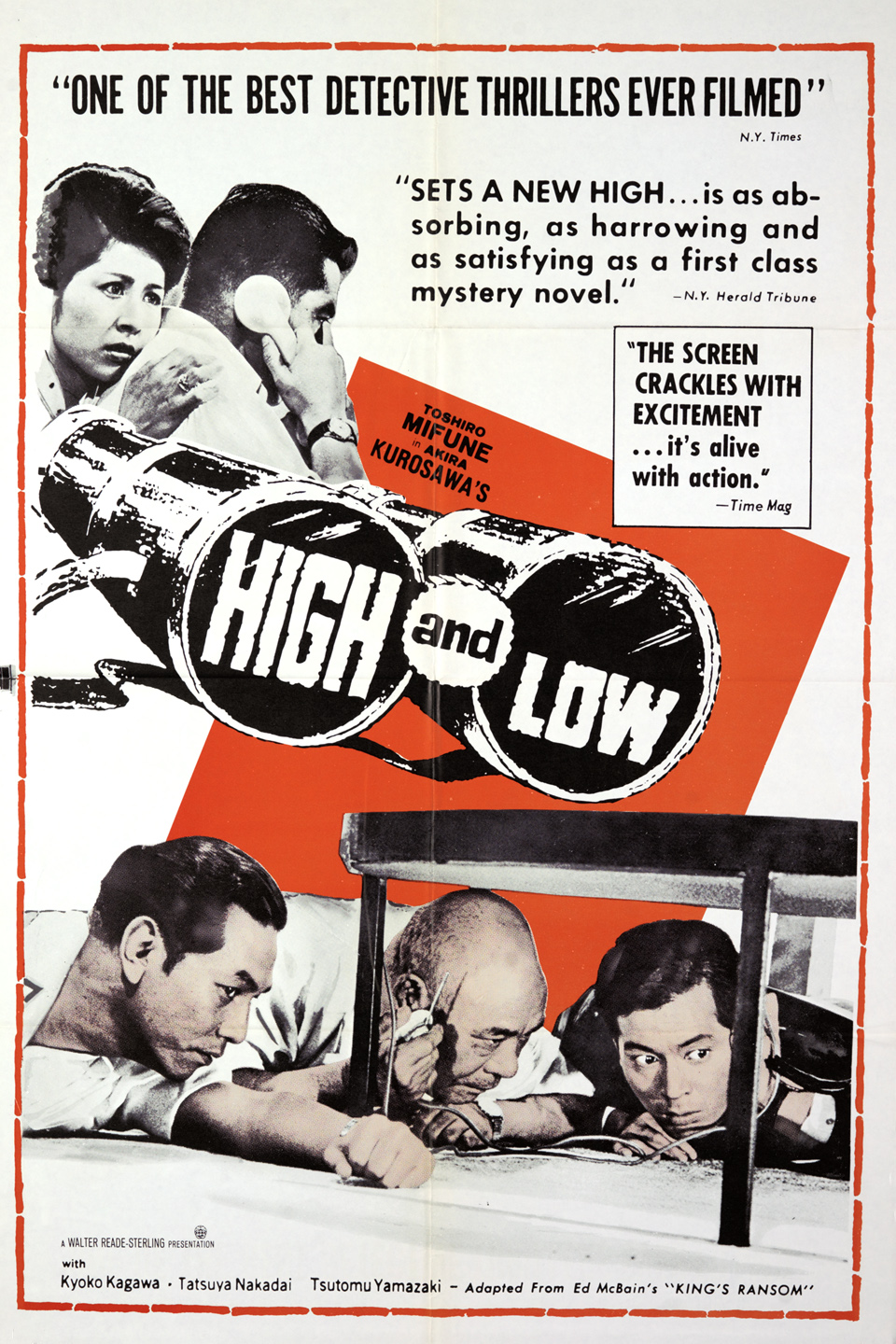
When I found out earlier this year that a new Spike Lee Joint was on the way, I was excited. When I found out it was an adaptation of an Akira Kurosawa film – one I’d not yet seen – I was doubly thrilled. So how does Highest 2 Lowest compare to High and Low? Not as well as it might have, but I kind of think that’s the point. There will be spoilers aplenty!

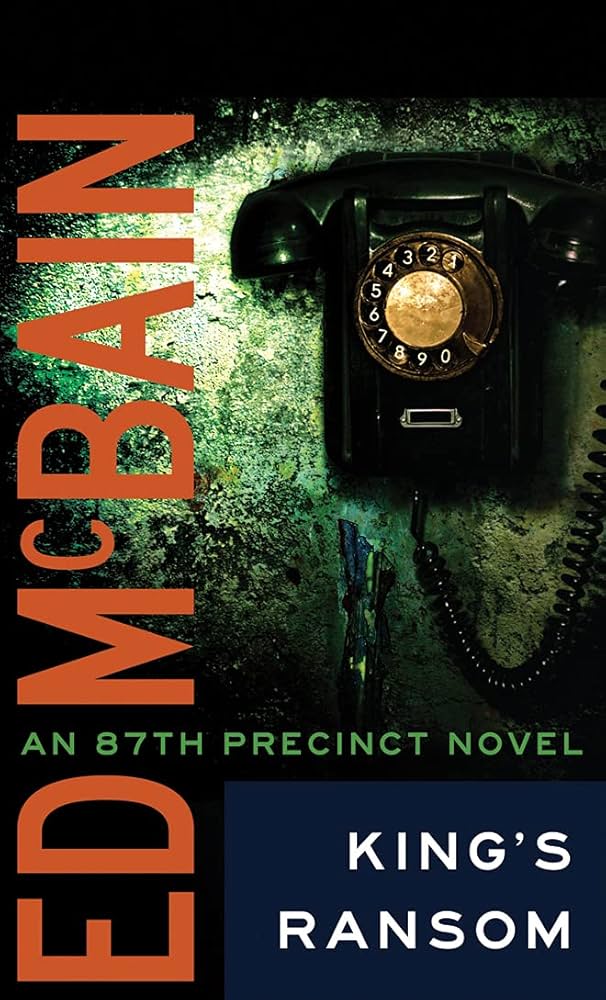
It’s worth noting that both movies have their roots in a 1950s hard-boiled detective novel, King’s Ransom by Ed McBain.

No, not that McBain. “Ed McBain” was a pen name of Evan Hunter, who also wrote the book The Blackboard Jungle (on which the movie was based) and the screenplay for The Birds. King’s Ransom was part of a series of books dealing with a particular group of cops and tells the story of a wealthy magnate (named King, hence the title) who, while angling to take over his company, learns that his son has been kidnapped. The twist is that the kidnapped kid is actually his driver’s, which leads to a conflict as to whether King will pay the ransom or not.

Neither film, it turns out, is a particularly faithful adaptation of the book for a simple reason – in the book (so far as I can tell – I’ve not actually read it) King decides not to pay the ransom. The plot is entirely taken up in a will he/won’t he. As we’ll see, both movies use the ransom stuff as more of a jumping off point, although they go to entirely different places.

Both movies, though, at least use the same setup as the book. High and Low, which came out in 1963, stars Kurosawa regular Toshiro Mifune in the King role (since the names are basically the same in both movies I’ll refer mostly to actors’ names instead) as an executive leveraged to the hilt in an attempt to take over the shoe company he runs.

In Highest 2 Lowest, by contrast, Denzel Washington plays the aging head of a music label of which he’s trying to regain control.

He’s not in quite as much financial peril as Mifune, but the nature of his business raises bigger concerns (about, for instance, a historical driver of black culture being stripped for parts after a takeover). It’s a subtle difference, but an important one.

The relationship between mogul and driver is quite different, as well. Mifune’s relationship with his driver is purely business and plays out through rigid class distinctions. Their kids play together, but there’s never any forgetting who is the boss and who works for whom. Denzel, by contrast, has a much deeper relationship with his driver (played by Jeffery Wright), one that suggests common roots, if different life paths. The pairing of Denzel and Wright is great and Highest 2 Lowest is often best when it focuses on them, but the deepening of that relationship drains some of the suspense out of whether the ransom will eventually be paid.

Although there’s not really any doubt on that. Beyond the fact that there’s no back half of these movies without the ransom being paid, the fact is there really isn’t much of a moral argument against paying it. Practical, yes, but not moral. To have either Mifune or Denzel hold out would have ruined their characters (or made for very different movies). That said, how the decision gets made is also subtly different. Mifune never decides to “do the right thing” (so to speak) and pay the ransom, but agrees to a police scheme to pay it as part of an operation in which, he’s promised, they’ll get the money back. It’s unclear exactly why Denzel has a change of heart, although getting the money back is also mentioned by the cops he works with, too. I suspect that vagueness is intentional, but it’s a little frustrating.

Where both movies shine, in different ways, is the sequence where the ransom money is actually turned over. Both take place on trains. The kidnapper lures Mifune onto a train where he thinks the handoff will take place, only to be instructed to toss the bag with the money out a window going over a particular bridge. It’s a taut, tense sequence where it looks like everything is spiraling out of control, but actually isn’t. Denzel is likewise lured onto a train, a subway train bound for Yankee Stadium (allowing Spike Lee to indulge in some amusing Red Sox hate). It’s more sprawling than taught, but equally vibrant in a completely different way, accented with chanting Yankees fans and a chase through a Puerto Rican Day parade. Musically this is where Highest 2 Lowest is at its best, both in the propulsive jazz piano score and the sweet Latin fusion of the late Eddie Palmieri and his band (performing for the parade).

It’s here where the movies diverge greatly, leading one to ask whether “adaptation” is the right description for what Highest 2 Lowest is. Which one works better for you will probably come down to what you look for in movies.

In High and Low, once the money is dropped Mifune is almost entirely absent from the rest of the film. The focus shifts to the police who, with the kidnapped kid safely rescued, work on tracking down the kidnapper and the money. There’s some time spent with the kidnapper himself, as well, but we’re mostly with groups of cops trying to track down leads. The driver helps with one, but aside from a couple of quick check ins Mifune is absent. What proceeds is almost like a time capsule from an era were cops were dedicated and incorruptible, going above and beyond. It’s almost like a fairy tale.

Highest 2 Lowest, by contrast, slips into action movie mode. The cops here range from ineffectual to flat out racist and are more wedded to procedure than anything else. When Denzel, who we’ve been told over and over again has the best ears in the business, delivers a pretty damned good clue as to the kidnapper’s identity thanks to them, the cops shrug it off. The dedicated police procedural of Kurosawa’s film instead becomes a kind of buddy movie, with Denzel and Wright teaming up to find the kidnapper and get the money back. This allows Denzel to come face to face with the kidnapper (a rapper played by A$AP Rocky) in a cracking scene in a recording studio that has the rhythm of a rap battle. It also personalizes the motives of the kidnapper, for better or worse.

Oddly, then, both kind of come back together at the end. In High and Low Mifune, who has lost just about everything (some of the money was recovered, but not quickly enough to save his home, much less the corporate takeover), has a final confrontation with the kidnapper in prison, during which the kidnapper explains his motives. Highest 2 Lowest has a similar scene, although Denzel comes into it in a much better position, and it feels a little redundant given the prior confrontation in the recording studio. The motives are also quite different, with Mifune’s tormentor choosing him as an avatar of wealth lording it above the rest of society, while Rocky is bent out of shape at not being recognized specifically by Denzel for his musical talents. Highest 2 Lowest then ladles on a coda showing Denzel’s relaunch in life and business, a stark contrast with High and Low’s decidedly downer ending.

With all that said, does one work better than the other? Like I said, I think that it depends on what you’re looking for. In spite of their common roots, the movies are quite different and it’s unfair to judge Highest 2 Lowest against High and Low in the way you might judge a movie version of a book. They are different things getting at different ideas. And, if anything, the thing they’re least interested in are what they take from King’s Ransom.

Highest 2 Lowest has, for my money, more highs and lows than the prior film. Some scenes – the money drop and chase, Denzel’s initial confrontation with the kidnapper – are electric. Some others are a little sluggish, particularly in the first half. In fact, the critical consensus seems to be that the first half is bad, the second half good. I think that’s overly simplistic – High and Low’s first half skates by on a lot of technical mastery (framing, shot composition, etc.), which kind of overlooks how non-compelling the actual moral dilemma is. Highest 2 Lowest doesn’t get the same break. Highest 2 Lowest also offers the Denzel/Wright pairing, which is unlike anything in the other film. That said, while it does lead to some great work on screen, it also slightly undermines what tension there otherwise could be over whether the ransom is ever going to get paid.

Where High and Low shines is in its broader themes. My understanding is that some critics initially read it as an indictment of capitalism and I definitely get that. This is where Mifune’s business venture being less compelling than Denzel’s pays off because it makes his choice even more stark – he’s going to risk some poor boy’s life for shoes? Additionally, because it ends with Mifune basically stripped of everything it implies that he’s paying a price for not doing the right thing for the right reasons. High and Low also really lives up to its title, shifting from one milieu to the other halfway. Its kidnapper could have targeted any rich guy as a blow against the system.

In the end, I don’t think Highest 2 Lowest is going to supplant High and Low, but I don’t think that was its intent, either. It is, to borrow the musical terminology of the movie, a riff on a common theme. High and Low is a classic for good reason and one of the highlights of Kurosawa’s career. Highest 2 Lowest is pretty good, but I don’t think anybody will think it’s knocking any earlier Lee movies out of his top five or so. It’s definitely worth a watch.

Revisiting the Concept of a Heist

A few years ago I wrote a piece about “heist” stories and what they are (or should be). My concept of the heist is narrower than it is for others (including the OED) and boils down to this:

The distinction, for me at least, comes down to brute force. A robbery can be elaborate and kinetic and exciting – think the beginning of The Dark Knight – but, at the end of the day, it’s “your money or your life.” It’s simple, effective, and brutal. “Heist” conjures up something more clever, more deeply thought out. It’s about getting the object of the robbery without the violence. It’s a better, more elevated, kind of crime, if you will.

The distinction came back to mind recently when the wife and I watched Heist, a 2001 David Mamet film starting Gene Hackman, Delroy Lindo, and host of others.

As you might expect, it involves thefts gone bad, but do they actually live up to my stickler’s definition of what a heist is?

There are actually two thefts in the movie, the first is more setup and the second the main event (the titular heist, one assumes). The first definitely doesn’t feel much like a heist to me. Yes, there is some subterfuge involved – the thieves drug the morning coffee of the employees of the jewelry store they’re going to hit, but that’s close to the line in terms of brute force (courts would consider the use of poison to be “violent,” in most instances). What clearly is brute force is the way they actually get in to the store – they just break down the door. Literally, it’s a forced entry. So I’d say this job is more a straight up robbery than a heist.

The second job is definitely more like it. The target is a bunch of Swiss gold on a cargo jet that’s about to leave the country. This is a heist, albeit one that doesn’t go off without a hitch. The plan is all subterfuge and distraction. The only violence involved arises because of an unexpected issue. When push comes to shove, Hackman’s character walks right in pretending to be somebody he’s not and walks out with the loot. Hell, the police response is more due to the diversionary explosion the crew uses at another part of the airport (this crew loves them some diversionary explosions) than the theft itself!

Indeed, that’s one of the neat things about the movie – there’s hardly any police presence in it. There are cops about (there’s one tense scene where a state trooper stumbles on their prep and a young hothead nearly turns it into a shootout), but there are no dogged investigators bearing down on the crew after the big score. Rather, they tear themselves apart in a series of betrayals and double-crosses. It’s too much (why care about what’s happening when it’s certain to be upended in a few minutes?), but it gets at another key element in distinguishing a heist from a garden-variety robbery – the ability to get away with the goods.

So, in the end, how heisty is Heist? Fairly heisty, I would say. The initial job is a straight up robbery, but the big set piece definitely has heist vibes. Doesn’t make it inherently more interesting than the first one, but it’s more compelling in different ways. It’s fun, which is a key to a good heist, in my opinion – even if the end result is an awful lot of dead folks.

Storytelling Is Not Lying (Or Is It?)

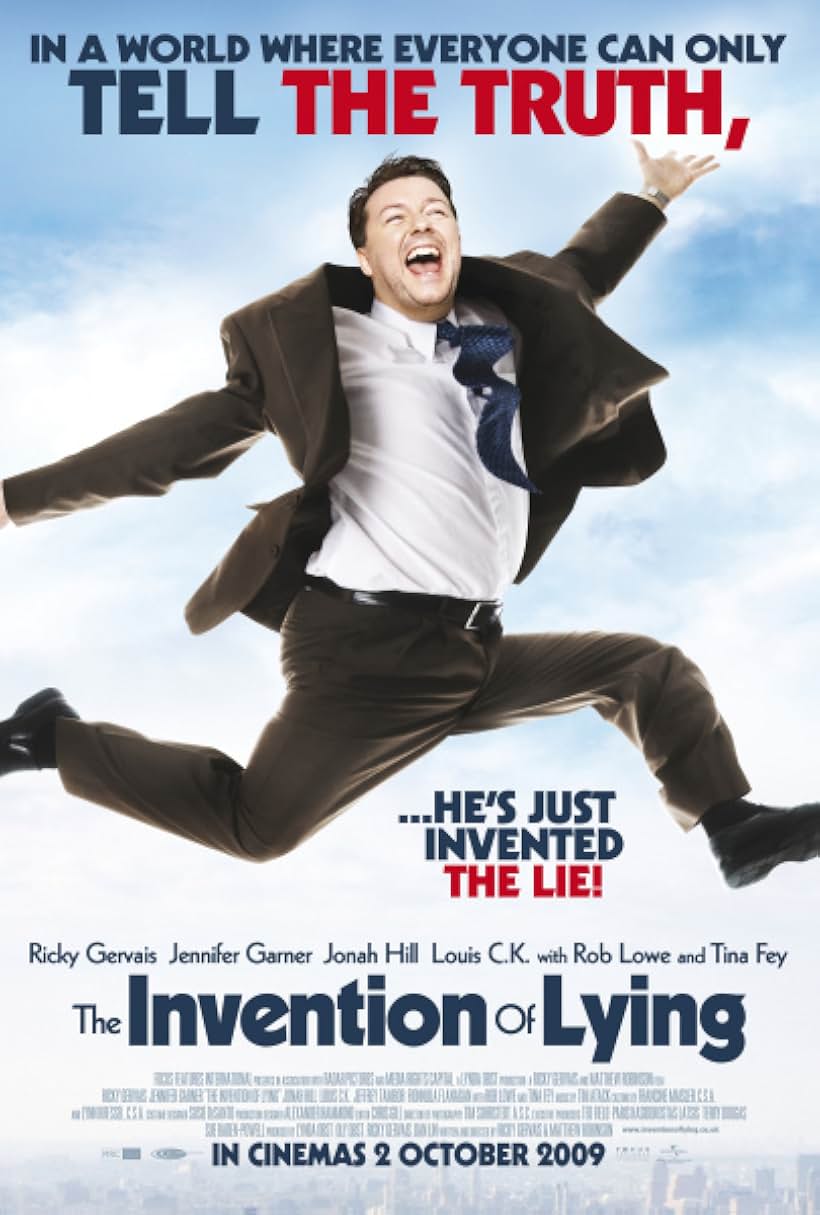
Years ago, Ricky Gervais made a movie (with his writing/directing partner Matthew Robinson) called The Invention of Lying.

Gervais starred (along with my high school classmate Jennifer Garner) as a screenwriter in a world where lying doesn’t exist. As a result, he’s limited to only writing movies about historical events since fiction does not exist. He winds up discovering how to lie, part of which is being able to write a fictional screenplay.

The movie itself is fine, but the part about fiction not being able to exist in a world without lying always stuck in my craw. Then, a few weeks ago, I saw this on Facebook:

And that sticking came back with a vengeance (although she was sharing it in a humorous way). Because, you see, the notion that fiction – storytelling – is “lying” is simple-minded bullshit.

George Constanza famously said that a lie isn’t really a lie if you believe it, but that kind of goes both ways – a lie is really only a lie if the people hearing it expect it to be true. This is most evident when you’re talking about lying in court – perjury. Any witness, before they say a word to a jury or answer a single question, either takes an oath to or affirm that they are going to tell the truth. Jurors are primed to believe them.

But the same is true for most everyday interactions. When I ask my wife how her day was I don’t expect her to lie to me, after all. We may not be completely accurate with others all the time (that’s probably beyond the capability of human brains), but, for the most part, we’re not trying to lie to others on a regular basis. There’s an expectation of truth, at the very least.

Fiction, by contrast, announces itself from the start. “This is not real,” it says, “this is made up.” Even if there are close cases on the margins (including, ironically, stories about historical events and figures), nobody would ever say that The Lord of the Rings or 2001 or what have you were anything other than made up stories designed to entertain and enlighten. They are not presented as fact.

Of course, sometimes storytellers lie as part of the fiction. Fargo famously starts with a disclaimer:

This is a true story. The events depicted in this film took place in Minnesota in 1987. At the request of the survivors, the names have been changed. Out of respect for the dead, the rest has been told exactly as it occurred.

Amusingly, the Coen Brothers have changed their own story over the years as to whether the story of Fargo had some basis in real events or was completely made up. Does that make the movie any more of a “lie” either way? No! It’s a work of fiction, a story being told by storytellers. We’re not supposed to take it as truth.

For a certain definition of “truth,” of course. The argument goes that fiction can often get at truths about the human experience that non-fiction can have a hard time grappling with. That’s probably correct in some instances, although I can’t speak from experience. The stories I write are, I hope, entertaining and engaging, but any brush with deeper cosmic truths is probably coincidental.

As a wise man once said:

So, yeah, writers and other storytellers do make stuff up. It’s kind of the business model (the hard part is making up stuff nobody else has come up with yet!). But that’s what people think we do, right? Nobody could ever possibly believe we’re telling the truth.

Or maybe I’m full of shit? You’ll never know!

On the Joys of Going to the Movies

I listen to several different podcasts about movies and if there’s one thing they all have in common it’s praise for the experience of seeing movies in the theater. Indeed, they exhort listeners to go out to theaters and see movies with others and enjoy the kind of communal experience you just can’t have at home, no matter how good your setup is from a technical standpoint. Recent experience suggests they might be overselling things.

A couple of weeks ago the wife and I did something we haven’t done in years – we actually went to the theater to see a real, grown-up, R-rated movie, the new Soderberg flick Black Bag, which I enthusiastically recommend.

We’ve gone to theaters in the past (less frequently since COVID hit, of course), but usually for the kind of big-screen spectacle popcorn movie that makes Scorsese itch. Those, to me, are more made for the big crowd thing than smaller movies that you have to engage with a little more. But this was the first time we’d been to see something like this in quite a while.

Things got off to an inauspicious start as there was absolutely nobody in the lobby of the theater complex (attached to the one mall in the area that remains thriving) when we arrived – no patrons, no employees. That meant we had to buy tickets via a kiosk, which went smoothly enough, although some vital information about the showing we were going to was left out (more on that in a moment).

Around the corner the concession stand was manned by a couple of young kids, but the crux of the moviegoing experience – popcorn and drinks – was all self-serve (the kids ran the registers, at least). There was a menu of other stuff that I suppose they would have made for you upon request, but we’d just had lunch so it wasn’t much of a concern. Still, we’ve not even made it into the theater yet and the experience is kind of cold and off-putting.

Our theater was at the very end of the corridor (not a problem!), which gave us the chance to walk past a handful of other theaters, some with movies playing. Some of the doors were open, others weren’t, but in either event you could hear what was going on inside pretty well. Not the best of omens for a satisfying movie experience. Next door to us the new Captain America flick was well underway.

Since we were early I took the chance to wander back up the corridor for a bathroom break. On the way back I noticed that one of the other theaters was in the middle of Anora, apparently rereleased on the back of its Best Picture Oscar win. It was during one of the louder more expletive-laden parts, so I decided to peek in and drink in a few minutes on the big screen, since we only got to see it at home. Inside there was nothing on the screen – no picture, no flickering, no nothing. But the soundtrack was going strong. I assume there was nobody in there (I was a little scared to look, frankly), but then why run the sound? It was just another odd note in a growing symphony.

As the loop of pre-movie ads gave way to previews, we noted that a couple of them used subtitles, even though the previews were all in English. My wife wondered if the movie itself would have them and I said I hoped not. Sure enough, once the opening titles were gone the subtitles popped up again. I ran back up the corridor to ask if they could be turned off (the kid at the concession stand said he didn’t know). Apparently they couldn’t, as they ran during the entire movie. It’s a minor annoyance, but a distracting one nonetheless.

It turns out that this screening was set aside as one for folks with hearing impairments and, thus, the subtitles were the point. I’ve no problem with that, but there was nothing in the ticket-buying process or the Google movie times listing that indicated this was that kind of screening. It was only afterwards, when I went to the theater’s website specifically, that I got an explanation. Had we known that ahead of time, we’d have gone to a different theater.

Three other people watched the movie with us. Two were a couple a few rows behind us (the ticket kiosk sells reserved seats, but that was pointless given the turnout). A little past halfway they started to be attacked by plastic bags (I can only suspect), given the occasional bouts of plastic crinkly noises. The other cinemagoer was a guy who came in about 20 minutes late and then left and came back three more times (always sitting in those couple of rows right in front of the screen). I’m not sure he made it all the way to the end.

Along the way there was at least one point where I could hear Sam and Red Hulk smashing it up next door. And, repeatedly, parts of the screen would go pixelized briefly in the way a streaming service does if it’s a little sluggish.

All of these are minor annoyances. None alone ruined the movie, nor did the weight of all of them together. As I said, the movie is great and worth seeing and I did it as part of a lovely afternoon out with my beloved (we even dodged the rain!). Still, if this is what the modern moviegoing experience is it doesn’t do a lot to inspire.

I don’t want to deny anyone the communal movie-going experience if that’s their thing and I realize the importance of it to the health of the industry, but I’m clearly not the one who finds the process less than thrilling these days. Black Bag, critically well received and the “kind of movie they don’t make anymore” – aimed at grownups, original, not the first in a series, an only a trim 94 minutes long – won’t even break even, it looks like. The modern theater-going experience is cold, sterile, and off-putting.

Sorry, Marty, but I’ll continue to consume most of my cinema at home on the couch with a snoozing puppy by my side.

“Anora,” the New Kings, and the Absence of Consequences

One of the bulwarks of the criminal justice system is that the prosecution has to prove someone committed a crime beyond a reasonable doubt – a higher standard than those that apply in civil proceedings. One of the perversities of the criminal justice system is that courts generally will not, and in some jurisdictions are not allowed to, actually instruct jurors on what “reasonable doubt” is. It’s left to the parties to argue it out and the jurors to make the call.

Lawyers, searching for a common experience to which jurors can relate, try to analogize the “beyond a reasonable doubt” standard to the kind of certainty you need to make a major life decision. Not where to go to dinner or what movie to watch, but, say, whether to buy a house or a car. The big one, of course, is whether to get married (and to whom). Even if a juror has never been married, they’re aware of what a monumental decision that is.

I was thinking about those arguments while watching Anora this past weekend.

The newly-minted Best Picture winner is about the titular Anora (Ani to her friends and customers), a stripper who embarks on a whirlwind paid-for-date/romance with Vanya, the son of a Russian oligarch. After a wild time in Vegas he proposes that they get married and they do, much to the displeasure of his parents who send their (largely ineffectual) goons to ensure that the marriage is annulled. In the end, when it comes time for Vanya to stand up to his parents and stand with his wife, he can’t do it. The interesting question is why.

The answer, I think, lies in how the film deals with class distinctions. Essentially, the characters are divided into three groups.

Vanya and his parents are the super-rich, the 1%, the “new kings.” They have “fuck you” money and an immense amount of power. They largely suffer no consequences for wrongdoing and, therefore, have little fear of doing it. This is particularly important for Vanya because, as portrayed in the movie, he’s never had to make a consequential decision in his life. Even someone who is only 21 years old, who has lived a normal life, has made decisions that had consequences, both foreseen and unforeseen.

Vanya hasn’t and, as a result, doesn’t even recognize them when they come around. So, when he proposes marriage to Ani I don’t think he’s either (1) simply lying to her in a way to make her do something useful for him or (2) a besotted dope who’s really deeply in love with this woman he’s known for a week. I think he sees the decision to get married as being as consequential as what club to go to or whether to jet off to Vegas. Whether he gets it wrong or not, he won’t really suffer any consequences. He is, quite literally, playing with house money.

The second group of characters include Toros and his brother, two of the goons who are tasked with keeping tabs on Vanya. Neither are remotely in the same class as Vanya and his parents, but they think they can have access to wealth and power if they just continue to make themselves useful. Not for nothing but when Vanya goes missing Toros’ entire motivation for finding him is to please Vanya’s parents and fix a problem. He doesn’t express any concern for this guy whose life he’s looked over for years. He doesn’t see him as a kind of son, worrying about his safety and wellbeing. So long as he finds Vanya and gets the marriage annulled all is right with his world.

The final group is Ani herself, along with another one of the goons, Igor. Only Ani doesn’t realize she’s in this group at first. She thinks she’s in one of the other two, on her way into the good life, achieving upward mobility. Igor, by contrast, knows better. He understands his spot in the hierarchy and that he’s fated to stay there. His bond with Ani comes largely from his empathy for her coming to the same realization as the movie plays out. I think the ending is her recognizing a fundamental similarity between them that she would never have had with Vanya (not for nothing is the scene in the car the only sex scene that appears to include a real connection between the people involved).

The movie, then, reflects more than a little of our current reality. Increasingly, we live in a country with an out-of-touch and untouchable moneyed elite who rarely suffer any consequences for their actions. Susan Collins famously said, during Trump’s impeachment, that she was going to vote against convicting him because he “has learned from this case” getting “a pretty big lesson.” She wasn’t wrong – he learned he faces essentially no consequences for his actions. Just like Vanya, which is why he so often says the first thing that comes to his mind without giving any real thought to what might happen after.

Sitting down to watch Anora I didn’t quite know what to expect. I certainly didn’t expect a pretty succinct analogy for this country’s current class inertia (as one report put it “wealth status is sticky” – there’s little chance you move up or down over the course of a lifetime), but that’s certainly in there. It’s definitely got more going on than the “hooker with a heart of gold” tag some detractors are given it after the Oscars. It does make you think.

What it makes me think is that sometimes the lack of consequences might be the most consequential thing of all.

2024 – My Year In Movies

After a week off to craft a spooky story for the NYC Midnight Short Story Competition, it’s time for the final installment of my look back at the year just past and highlight some of my favorite, or just most interesting, media I consumed (not necessarily new, but new to me). It’s time to talk about some movies  . . .

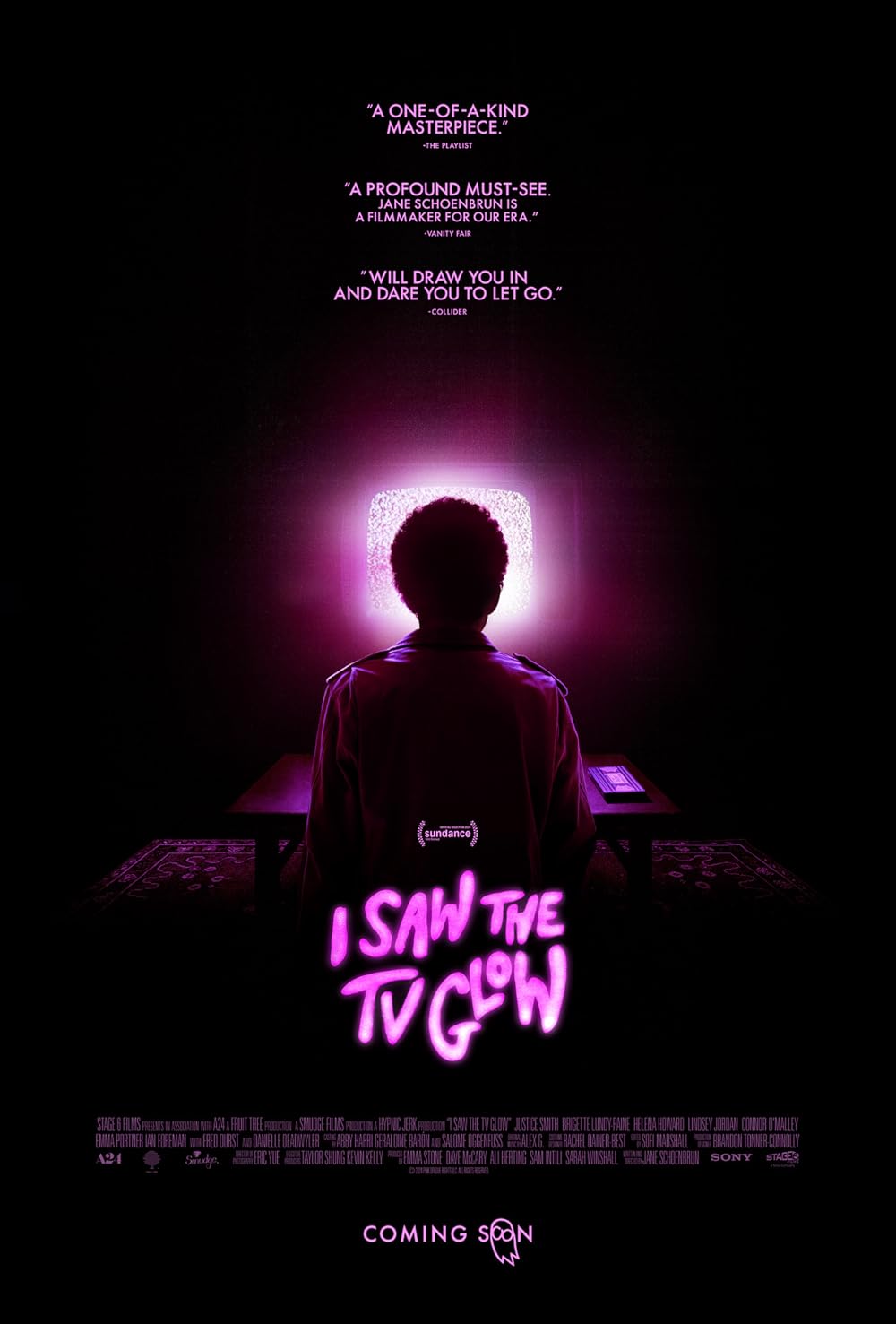
I Saw the TV Glow (2024)

You remember that episode of The Pink Opaque where . . .. No, of course you don’t, but if you’re any kind of genre fan, you’ve started a conversation that way about Babylon 5 or Buffy or whatever. This movie taps into that shared obsession, with two characters bonding over their love of the fictional The Pink Opaque (long ago in the past where a printed episode guide plays a role). What spools out though goes far beyond a TV show to deal with issues of self, identity, and shared experiences. It also has some scenes that completely freaked me out in the best way (including a superlong monologue that shouldn’t work, but really does). Do I understand it on all the levels other people do? Almost certainly not. Still one of the best things I’ve seen in a long time.

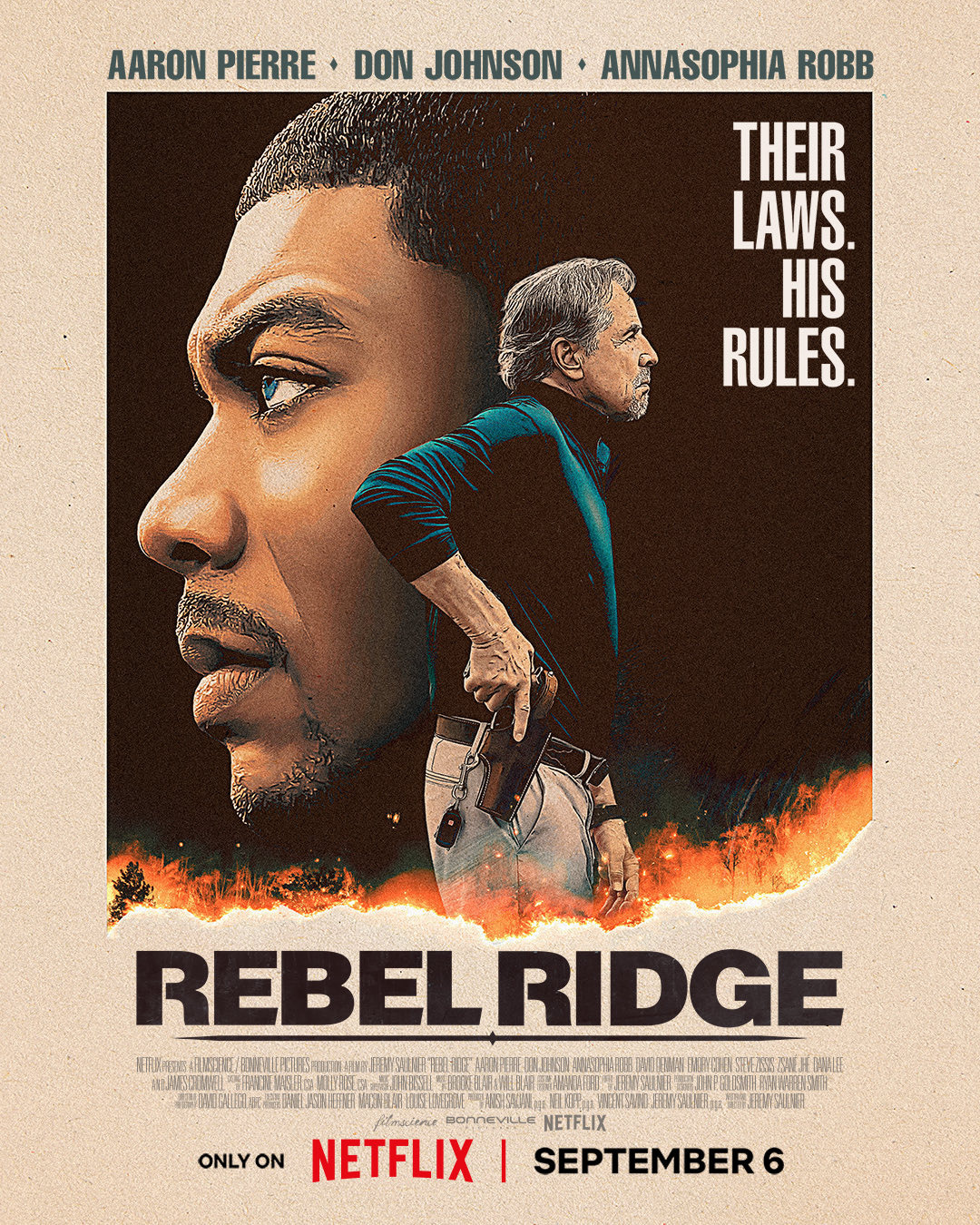
Rebel Ridge (2024)

“Semi-action movie about civil asset forfeiture” is a hell of an elevator pitch. It’s down to stars Aaron Pierre and Don Johnson (you heard right) that it works so well. Pierre plays a man who comes to a small Alabama town to pay his brother’s bond – in cash. It’s seized by the cops who classify it as drug proceeds. This is a real thing. The frustrations Pierre experiences pretty well match reality, before things get thrillier the closer to the end we get. There’s some violence, but it’s doled out well and this isn’t a pure-bred action movie. Stay away if you just want to see Pierre kick ass; watch it if you want a pretty clever interrogation of a problematic practice that, somehow, manages to even make the cops pretty well rounded in the end.

The Zone of Interest (2023)

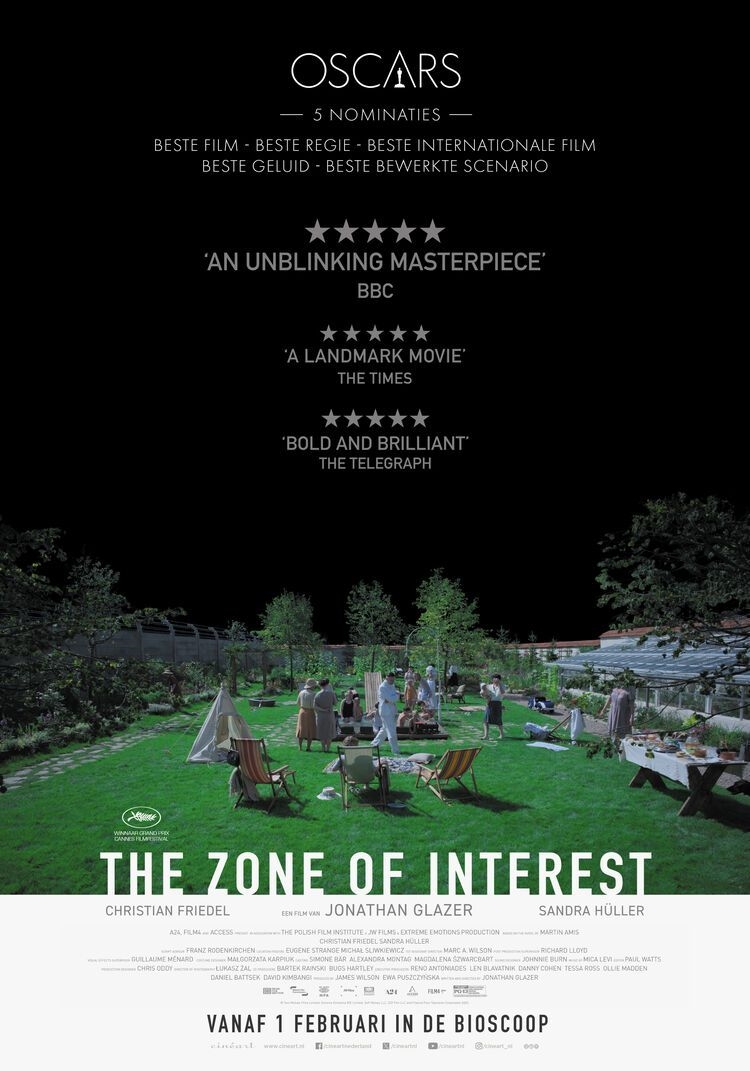
It’s hard to imagine a more somber, only-watch-it-once kind of film. A slice of life about a German family who happen to live across the wall from Auschwitz (in the titular “zone of interest”). Dad’s the commandant. The bold choice of director Jonathan Glazer is that what goes on over the wall is never directly shown, but the sound designed is punctuated with sounds of terror and cruelty that make it unmistakable. What does it say about the commandant and family that this appears to be their dream home? Nothing good, of course. A harrowing watch, but worth it one time.

Blow Out (1981)

If you ever wanted a movie that showed you how people had to edit sound recordings in the pre-digital era, this is it. John Travolta plays a sound guy for low-budget horror films who, while out one night trying to get some good sounds, accidentally records the murder of a sitting governor and presidential hopeful in a car crash. There’s a damsel in distress and a lot of leg work that goes into putting together the pieces, all of which zings with energy and down-to-earth competence. That Travolta winds up right where he started just makes it all the more perfect.

Anatomy of a Fall (2023)

I’m a sucker for a courtroom drama – so how about one set in a courtroom that is so foreign to my common-law system experience that it was like science fiction? I mean, that’s not the only great thing about this movie, a clever did-she-do-it (there’s no doubt it was either her or an accident) that spends just as much time in the home where the death happens as it does in the French courtroom. Some of it – particularly the round-table out-of-sequence questioning of the defendant – is so odd that I had to do some reading afterwards to see how realistic it was (pretty accurate, within the bounds of dramatic license, or so I read). Did she do it? I’m not sure anybody knows (the lead actress, if I recall correctly, said she didn’t know!).

Some Thoughts on “The Northman”

I really enjoyed Robert Eggers’ first two films, The Witch and The Lighthouse. They both ooze atmosphere and can get by on that alone, but they’re also seriously weird, to boot. The kind of movies you walk away from asking, “what did I just see?” So while Viking revenge fantasy isn’t necessarily high on my list of favs, I did take the chance to watch his latest, The Northman when it came along.

The Northman is the story of Amleth, a 10th-century Viking prince who sees his father killed by his uncle, who then promptly carries off his mother. Amleth vows revenge and if you think this sounds a little like Hamlet, you’re right – they both riff on the same legend. His journey involves Viking raids, mysterious seers (one of who is played by Bjork!), a witchy ally, and, eventually, a mano-a-mano battle on an active volcano (shades of Revenge of the Sith? You bet!). It’s worth a watch, even if not up to the same level as Eggers’ prior work.

I do have some thoughts . . .

Can something be too accurate?

Eggers has a reputation for exacting precision in world building, going all in an getting the details right of the world of each particular movie. Not for nothing have all three Eggers films been set in the past (in one interview he laughed at the idea of making a contemporary film). For The Northman he engaged several experts on Viking history, ritual, and the like to create a world that sure feels awfully “real,” even if does involve things like unshakable faith, sorcery, and Valkyries carrying souls to Valhalla (as detailed in this profile).

I dig the detail. The world of The Northman is so gritty and granular that it feels “real,” even if there’s a lot about it that doesn’t exactly jive with reality. But can it go to far? I found a couple of reviews (one here, for example) that suggested that Eggers and crew get so caught up in details and being “right” about all sorts of small things that maybe other important parts of movie making get lost in the shuffle.

There are parts of The Northman that seem to be there solely because Eggers (or Alexander Skarsgard, who plays Amleth and was a producer) found out some cool things about Viking lore and wanted to put them on screen. I have no objection to that, but your mileage may differ. In fact, I can’t think of anything that feels like it could have been done “better” by fudging the details of the setting (most of the dialogue is in English, to be fair), so I don’t think Eggers puts verisimilitude as the highest and only value, but it’s clearly important. The film’s flaws (Amleth is a pretty boring hero with no apparent inner life or ability to reconsider his fate) are more down to the kind of story Eggers wants to tell rather than a fault in how it’s told.

Destiny versus storytelling

As I mentioned above, the legend of Amleth was the basis for Hamlet long before The Northman, but it makes for an interesting point of comparison. As this New Yorker review explains, Eggers’ Amleth is really nothing like Shakespeare’s melancholy Dane:

In regressing to Shakespeare before Shakespeare, Eggers replaces intricate and complex poetry with thudding banalities. He voids Amleth—a muscular warrior raised in crude ways and trained in cruder ones—of any inwardness, as if in fear of rendering him effete or off-putting. Eggers’s action-film Hamlet is neither bookish nor inhibited nor speculative nor plotting with far-reaching imagination of complicated stratagems—nor witty nor, above all, endowed with a sense of humor.

In other words, Hamlet is a tragic figure you can at least sympathize with – Amleth, not so much. Again, I don’t think this is a fault in Eggers’ execution as much as it is the kind of story he’s telling and the kind of world he’s telling it in. In Amleth’s world the constraints of fate are as real and binding on him as the law of gravity. If his destiny is to take revenge on his uncle it matters not that his uncle’s already had his downfall (his kingdom was taken by another king and he was exiled) or that his mother comes clean about who Amleth’s father really was (and her role in his death). Even the promise of a normal life in Orkney with the witch and their children can’t keep him from his destiny.

That’s the problem with destiny or fate or prophecy as a storyteller. Generally, writers and readers/viewers want characters – heroes, at any rate – who have agency. Or if they don’t they at least recognize that fact and rail against it or unsuccessfully avoid their fate. Tragedy is when you can’t stop yourself from doing what you shouldn’t, not when you just shrug your shoulders and go along for the ride. That said, the idea of a life free from moral choice – if I’m fated to die on a volcano, why live a moral, upstanding life – is one worth exploring, but it’s not what Eggers was after, for better or worse.

And, yes, the actual film doesn’t match the tagline on the poster.

The berserker and the office drone

Through sheer serendipity I saw The Northman while one episode away from end (of the first season?) of Sweatpea, a British TV offering showing on Starz in the United States.

Sweatpea is about an outwardly mild and meek office drone, Rhiannon, who been bullied by various people all her life and starts working towards bloody vengeance. Her primary target is Julia, a school bully (leader of a clique, in fact) whose abuse was so bad Rhiannon was literally tearing her hair out. Julie is first and foremost on Rhiannon’s list of “people I’d like to kill,” so she kidnaps her with every intent of doing her in.

Except there’s a complication – Julia, it seems, is a victim of her own, as her fiancé is abusive to her. Rhiannon is thus confronted with a person she wants dead who is suffering through the same stuff she’s gone through – but does that make right all the abuse Julie perpetrated in the first place? I don’t know how it’s going to play out as I write this, but the contrast with Amleth is striking. If Rhiannon goes through with killing Julia it will no doubt be her choice and I doubt it will be portrayed as glorious. Certainly, she’s not going to be flown off into Valhalla. But, then again, she lives in a modern world where things like fate and destiny are only found in, well, in movies and the like.

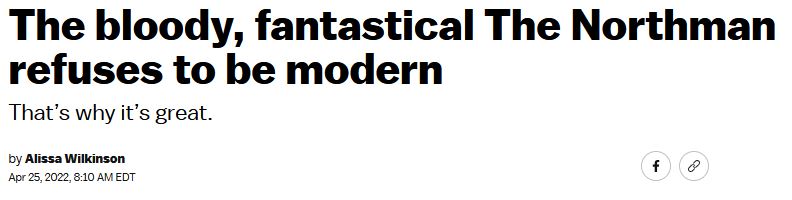
This Vox review has an interesting take on The Northman:

I wouldn’t go so far as “great,” but Eggers’ refusal to try and tell a story that’s such a throwback at least makes for an interesting watch. Consume in a darkened room and you may wind up thinking you’re back in Iceland, with the spirits of the dead all about you.

How to Do an Info Dump

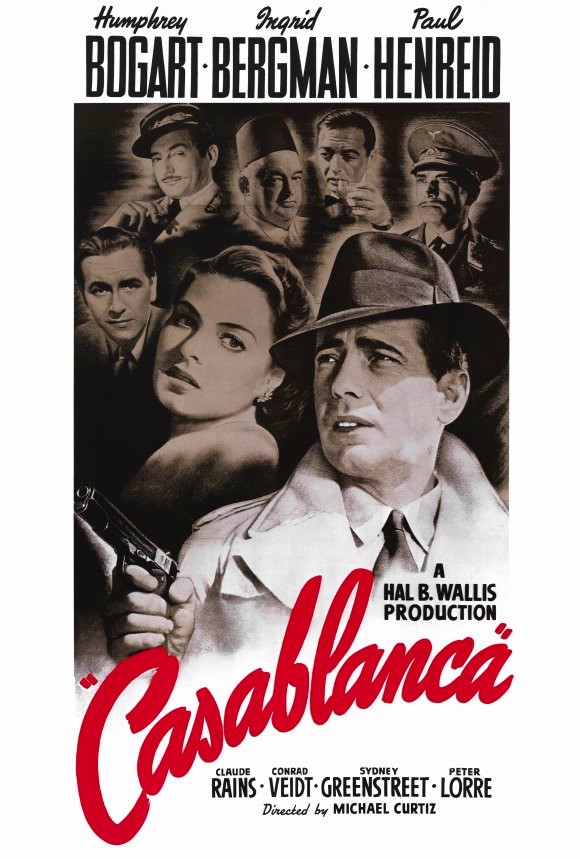
A few weeks ago my wife and I watched Casablanca. I’d seen in long ago, way before I was really into movies (contrary to what my wife thinks, we’d never seen it together) and it seemed like something worth revisiting.

It’s as good as advertised, a rare example of a film of that vintage that’s not just great in the context of its times but has aged very well.

Something really struck me about one of the early scenes. A lot of the action in Casablanca takes place at Rick’s, the club run by Humphrey Bogart’s character. Our introductory scene to that place is one of the long shots (like the famous Copacabana entrance shot in Goodfellas) that lets us get the scope and feel of the place, all the while dropping in on various conversations as the cameras pass by (and getting a song from Sam).

Two of those conversations are a great example of how to get a viewer necessary information about the world we’re in without being too heavy handed about it. The movie is set in the early part of the Second World War and the city of Casablanca itself is a kind of waypoint for refugees fleeing the conflict, somewhat under Nazi control but not entirely (or at least they want it to look that way). That people are desperate is part of the fabric of the film.

In the first conversation, a well-dressed but clearly distressed woman is negotiation the sale of some diamond jewelry to a buyer. He offers her “two thousand four hundred” francs (presumably) for it, because the market is saturated with diamonds right now (presumably sold in similar circumstances). The woman clearly thinks this is too little, but as viewers we don’t really know if she’s right. After all, the piece she’s selling might have great sentimental value but be fairly common (of even a fraud). That bit of conversation leaves us hanging somewhat, partly because the camera has other places it needs to be. There’s no time for context.

We shortly get the context, anyway. The camera pans across another conversation, lingering just long enough for us to overhear a man negotiating with a smuggler to get him out of the city. The price? 15,000 francs – “in cash,” he says, more than once. Instantly we know that the woman with the jewelry is probably getting screwed on the price, but she has to sell because she’s raising money to get out of town. It’s a perverse example of supply and demand, played out over the course of a minute or so. “Info dumps” are sometimes relegated to the concerns of fantasy and sci-fi writers, but the truth is that all fiction requires the kind of world building that can lead to info dumps. Casablanca has a great example, right up front, of how to do that quickly, efficiently, and without bogging down the important part – getting to Bogey!

Thoughts on Frankenstein(s)

Sometime last fall (after Halloween, if I’m recalling correctly), I was flipping through the channels and saw that the 1931 James Whale version of Frankenstein was going to be on Turner Classic Movies. Having never seen it, but seen plenty of stuff riffing on it, I decided I had to check it out.

Midway through the movie it occurred to me that I’d never read the Mary Shelley novel upon which it was based, either, so I read it immediately afterwards.

It’s a fascinating study in adaptation and how stories can shift based on how they’re told.

The basics are the same – a scientist working on the cutting edge of technique and ethics, the guy actually named Frankenstein, cobbles together a creature from dead people parts and reanimates it. Said creature then stalks about the countryside.

But really, the differences are much more interesting and really take each version of the story in a completely different direction.

The movie is short (not much more than an hour) and constitutes what I think of as the generic “Frankenstein story.” That is, the creature gets out of control and is chased down by a pitchfork wielding mob. Indeed, he appears to die in a blaze and building collapse at the end of the movie, but there were sequels to be had so they retconned that starting with Bride of Frankenstein in 1935.

The book, by contrast, is much more personal. The terrors perpetrated by the creature are smaller in scale but land much more heavily because they relate directly to his creator, Frankenstein himself. Not for nothing is the book named after him as it is really the scientist’s story, not so much the creature’s. If the movie is the easily replicable template for monster movies to come, the book is much more thoughtful about what it means to create life in the first place and what that responsibility does to someone.

Which makes the differences between the movie creature and book creature so interesting. The movie creature, played famously by Boris Karloff, is essentially an innocent cast into the world and unable to cope with it. The event that incites the populace against the creature comes when he accidentally kills a young girl while playing with her. It’s completely the sort of thing that a being without any real understanding of the world could do, not out of any malice but through sheer naiveite.

The book creature is, by contrast – well, he’s a monster, one that’s all too human at his core. Abandoned by Frankenstein and utterly alone in the world, he saves a small girl rather than accidentally killing her – and gets shot for his troubles. Pissed at the world, and Frankenstein in particular, he cold bloodedly kills Frankenstein’s brother and frames an innocent for it. He extorts Frankenstein into making him a mate (which never comes to fruition in the book), threatening the rest of the Frankenstein family. He kills Frankenstein’s best friend and bride. Honestly, he’s pretty much a serial killer with a very particular set of victims. Whatever empathy you feel for the creature at the get go dissolves away by the end of the book.

Which, of course, is a very real world way of thinking about murder. It’s not uncommon for killers, even serial killers, to have upbringings that would make your eyes water. Nonetheless, it’s hard to feel too sorry for them once they’ve taken another life (or lives). I don’t know if Shelley intended to book to function in this way but to this public defender’s eyes it plays like the paradigmatic capital case mitigation argument – yes, he’s a beast, but who wouldn’t be after all he’s been through?

In other words, book creature is much more deserving of the fate of movie creature, even though their respective endings both say interesting things about human nature.

The other really interesting difference, to me, was in the characterization of Frankenstein himself. Movie Frankenstein – who for some reason is renamed Henry from Victor, but his friend Henry is  renamed Victor! – is the prototypical mad scientist. His lab crackles with insanity and hubris just as much as electricity and bubbling chemicals. He doesn’t really feel conflicted about what he’s doing, or what he’s done, until the creature becomes a problem that needs solved. He’s just not a very interesting character.

Book Frankenstein, by contrast, falls way deep into the issues created by his creation. He doesn’t sound like he’s just about to slip over the cliff into insanity, although he is a loquacious mother fucker. In fact, Shelley’s book pulls off the trick of being beautifully verbose to start, before becoming frustratingly overwrought, then back to beautiful just be sheer force of will.

Without a doubt, the movie Frankenstein is much more fun. It’s a scary romp with just enough pathos to make the conclusion feel tragic. Frankenstein the novel is more of a thinker and I can see why later attempts to make a movie (or TV show) closer to it didn’t come out too well. Each has their purpose and I’m glad I’ve consumed both, but if I had to pick only one – it’s book for me all the way.

The Many Mutinies on the Bounty

Sometimes I fall down rabbit holes. This particular one I’m going to blame on Turner Classic Movies.

As I think I’ve said before, part of my work morning routine is to flip through the schedule on TCM to see if there’s anything worth recording that day. Months ago I found such a thing, the 1935 version of Mutiny on the Bounty, starring Charles Laughton and Clark Gable.

Having never seen it, or any other Bounty story, I recorded it. It sat on the TiVo long enough that TCM also showed the 1962 version (with Marlon Brando), so I recorded that as well.

When my wife saw both sitting there, she wondered aloud about if I intended to watch the 1984 version, Bounty, with Mel Gibson and Anthony Hopkins (and Daniel Day Lewis and Liam Neeson!).

So, one Saturday, we did the deep dive and watched all three back-to-back-to-back. And then I read Caroline Alexander’s The Bounty: The True Story of the Mutiny on the Bounty to actually get the history of the whole thing.

Watching different versions of the same story, the history of which is not as clear as you might think, made for some interesting comparisons.

But first, the basic history – in 1787 Bounty left England, under the command of William Bligh, for a journey to Tahiti. There, the crew would harvest breadfruit plants for transport to Jamaica, where it was hoped they could be replanted and used as a cheap food for the enslaved population. Sometime after Bounty left Tahiti one of Bligh’s underlings, Fletcher Christian, led a mutiny. Bligh and several loyal men were put adrift in a launch (and managed to make it back to civilization), while Christian and the others found their way to Pitcairn Island, where their descendants live to this day.

What’s particularly interesting about the history (from Alexander’s book, at least) is that there is a gaping hole in the record when it comes to Christian. Bligh, the men in the launch, and even some of the other mutineers returned to England where there were various inquiries into the mutiny, but Christian never did, dying (or being murdered) on Pitcairn. His precise motivation for the mutiny is unknown, therefore, and leaves a lot of room for fictional variation in the story.

For example, the portrayals of Bligh vary considerably between the three movies. As played by Laughton  in 1935, Bligh is a tough-love legal enforcer. The law of the sea is harsh and brutal, but it’s necessary to keep discipline on what is a very dangerous voyage. The 1962 Bligh, by contrast (played by Trevor Howard), appears to get off on the punishment he dishes out (which Christian calls him out for). He may use the legalish language that Laughton did, but it appears to be a cover for more personal motives. Hopkins in Bounty, on the other hand, dishes out much less discipline (particularly before the reach Tahiti), but seems much more paranoid about possible plots. Per Alexander’s book, Bounty was probably the closest to correct, as Bligh didn’t appear to be any firmer of a disciplinarian than the normal English captain of the time. That said, Bligh also suffered a rebellion (land mutiny?) when he was a territorial governor in Australia later in life, so clearly there was something about his leadership style that rubbed some people the wrong way.

The same is true for Christian, whose motives shift from telling to telling. Gable’s version, perhaps polished to match his matinee idol status, was driven to mutiny on behalf of the lowly sailors who Bligh abused. Notably, that version of Christian had served with Bligh before and had some idea that there might be trouble. It’s a pretty simple narrative. The 1962 version Brando played takes longer to get to the same place and, when he does so, simply snaps, rather than more coolly plots the mutiny. This Christian didn’t know Bligh before, so he’s perhaps more shocked by the brutality. Where Brando’s Christian really differs from Gable’s is the weight that command puts on him after the mutiny. Gibson’s version is motivated less by Bligh’s cruelty (since there’s less of it) than his affection for life on Tahiti. He appears, to quote Londo Molari, to have “gone native” and is willing to do whatever it takes to get back. This Christian didn’t just know Bligh prior to being on Bounty but was good friends with him, which again kind of pushes the cruelty angle to the side. Which of these is closest to truth, if any, is anybody’s guess.

The movies differ considerably in what happens after the mutiny, too. In the 1935 version, after Bligh makes it back to England, he is exonerated of anything to do with the mutiny, then heads off back to the South Pacific (true!) where he tracks down Christian on Tahiti and forces him to book it to Pitcairn (false!). Post-mutiny life for Christian is pretty swell, as least until Bligh shows up. In the 1962 version, Bligh is again acquitted, but with some comments from the judges afterwards that maybe he had it coming, anyway. There’s no return voyage. For Christian, as I said, command weighs heavily on him so much so that on Pitcairn he floats the idea of returning to England to tell their story. This prompts others to burn Bounty in the bay and Christian dies trying to save it (ending courtesy of Billy Wilder, rather than any historical basis). The 1984 version gives Bligh a full exoneration, while making Christian’s life after the mutiny even more miserable. The landing on Pitcairn comes off less of a triumph and more pathetic than anything else.

What none of the movies really do is dig into what happened in England once Bligh returned. There really was a court martial at which many of the mutineers (returned from Tahiti by other vessels) were convicted of mutiny, although many were acquitted (including a potential ancestor of mine!). Several were sentenced to hang, but two were pardoned. News coverage of the court martial was largely favorable to Bligh, but Alexander chronicles how that shifted over the years, thanks in part to Christian’s family and some of the other sailors involved. It’s safe to say that the popular conception of Bligh, closer to Laughton’s and Howard’s portrayals than to Hopkins’, is largely due to their out-of-court efforts.

Particularly interesting in the variations is that the 1935 and 1952 movies are both based on the same set of novels, so you’d think they’d be more similar. They’re both big screen spectacles and the 1952 version was no doubt made just to take advantage of color, but they are quite different in the people whose stories they are telling. I think I prefer the 1935 one. Laughton’s Bligh may be the farthest from the truth, but he’s pretty compelling and in his devotion to rules without empathy scarier to me than Howard’s psycho Bligh (remember, I’m a public defender by day). While I appreciate the ambiguity of the 1984 film, it doesn’t resonate quite as much (in spite of the Vangelis score).

Usually when a movie is made about a historical event the discourse breaks down into whether the movie got it “right” or how “wrong” it actually got things. The whole Bounty situation is a good example of how history isn’t so obvious in lots of situations and lends itself to different interpretations. Surely there’s another Bounty movie or TV series in the works that’ll provide an entirely different perspective, too.