Weekly Read – An Assassin In Utopia

I’ve said before that book titles can be tricky, particularly for non-fiction, since they act as a kind of “promise, a declaration of what kind of book the reader is getting into). That said, Susan Wels’ An Assassin In Utopia: The True Story of a Nineteenth-Century Sex Cult and a President’s Murder makes a hell of a promise. Pity it doesn’t come close to fulfilling it.

The sex cult in question is the Oneida Community, initially founded in New York in 1848 and persisting, in various forms, for the next three decades. The dead president in question is James Garfield, who perished after being shot only six months after taking office in 1881. What purportedly brings these two things together is Garfield’s assassin, Charles Guiteau, who had a couple of brief stints as a member of the Oneida Community.

It’s a pretty slender thread to tie together a book and, to be fair, Wels doesn’t really try too hard. As I said, Guiteau spent some time at Oneida, but given his particular mental quirks and psychopathy you can’t say what he learned there caused him to shoot Garfield (he couldn’t even get laid in a commune devoted to an early version of “free love”!). Rather, she collects stray historical anecdotes that cover several decades while Oneida was in operation and Garfield found his way to the White House. Many of them are interesting in their own right, but they don’t feel cohesive.

Which is a shame, because I would have loved more detail on the Oneida Community itself. Born from forward-thinking social ideas, and eventually infused with ideals of political socialism, Oneida was one of the first of many utopian communities that popped up in the United States in that period. That is descended into a typical sex cult, where a few leaders (old men all) decided who slept with who and, of course, who slept with them. Minors are raped, too, in the name of whatever ideals the leaders dreamed up, a pattern that echoes down through the succeeding generations.

Indeed, Oneida disappears entirely from the narrative once the focus turns to Garfield’s election (and surprise nomination in the first place) and assassination. Wels covers that briskly, but the shooting, and Garfield’s lingering as doctors probed his wounds until he died, is covered more thoroughly (and interestingly) in Candice Millard’s The Destiny of the Republic: A Tale Madness, Medicine and the Murder of a President. As I said way back when:

While Millard spends a great amount of time (particularly in the book’s second half) on Garfield’s lingering death, the first half of the book is spent setting up not only the lives of Garfield and Guiteau up to that point, but the world in which they lived. It’s a fascinating snapshot, showing both how different the United States of the 1870s-1880s is compared to today, and how disappointingly similar the two eras are.

***

In the end, where the book really shines is in the contrast of Garfield and Guiteau, two men swept into their fatal confrontation by things beyond their control. It’s ironic that Garfield, who never really wanted to be president, is the kind of person who we should want to become president – educated and inquisitive, a voracious reader, and apparently a genuinely decent guy. And yet, even as part of a very select club of assassinated presidents, he’s pretty much forgotten these days. Of course, Guiteau is not exactly a household name, either.

If you’ve never dived into this period of American history, or the Garfield assassination, this book is a reasonable start. Beyond that, The Destiny of the Republic does better on the assassination itself and there’s probably a more thorough treatment of the Oneida Community out there, too (which I might have to seek out).

Sing us out, Charlie . . .

2023 – My Year in Music & Books

Now that the new year is well and truly underway, it’s finally time to take a look back at 2023 (I loathe the “best of the year” lists that start popping up in October). This year I’ve decided to split my thoughts in two, leading off with books and music this week, with movies, TV, and podcasts coming next week.

BOOKS

Going back through my Goodreads data for the past year I was shocked to see that I only read one “new” book that was actually released in 2023, John Scalzi’s Starter Villain.

It’s about what you’d expect from Scalzi these days, a fun, quick read that succeeds in doing what it sets out to do, which is entertain. The setup involves an everyman who finds out that his deceased uncle was part of a Dr. Evil-style collection of global supervillains and he’s been picked to take his place. There are a lot of hilarious ideas (not just talking cats as you might expect from the cover, but talking dolphins with labor issues) and snappy dialogue, but I kind of wish the main character had been a little more seduced by the “dark side.” He never really has to grapple with whether to be a villain. Nonetheless, recommended if you’re into that kind of thing.

What of older books I read last year? There were several good ones.

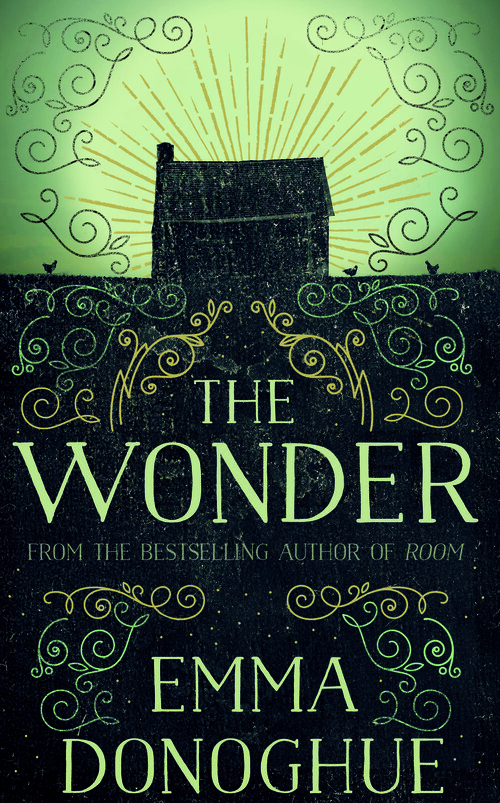
The first is kind of a cheat, as I mentioned the film adaptation in my round up last year, The Wonder by Emma Donoghue, from 2016.

Lately I’ve taken to watching a movie or TV series based on a book and then going back and reading to book to see how they compare. I’m of the “books and movies/TV shows are different” camp, without one being better than the other, necessarily. That said, the novel here has some interesting layers, thanks to the point of view, that the movie couldn’t really get into. As someone who, in my day job, sometimes has to meet delusional people on their own ground in order to represent them, the struggle of the rational, scientific main character here to connect with the religiously-minded family she’s inserted into really worked for me.

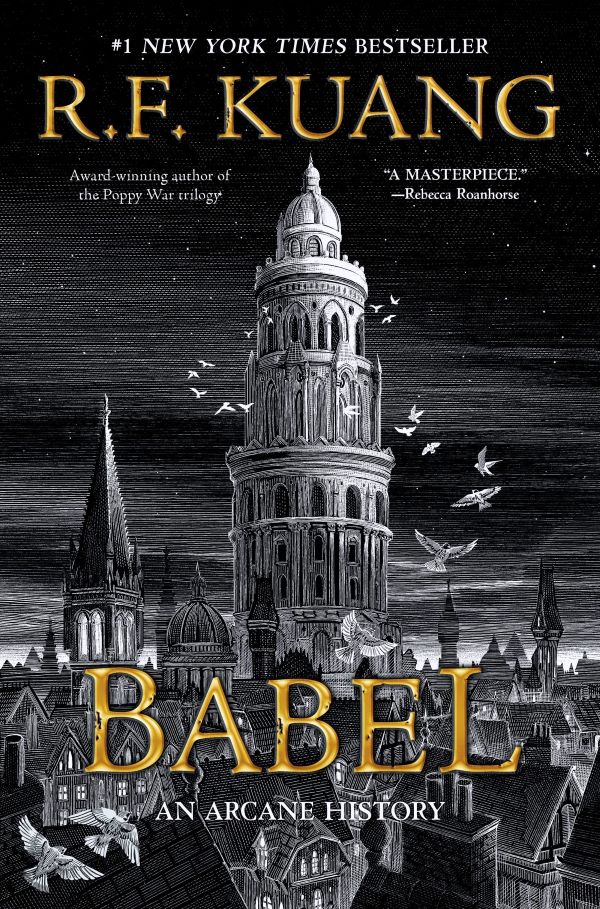
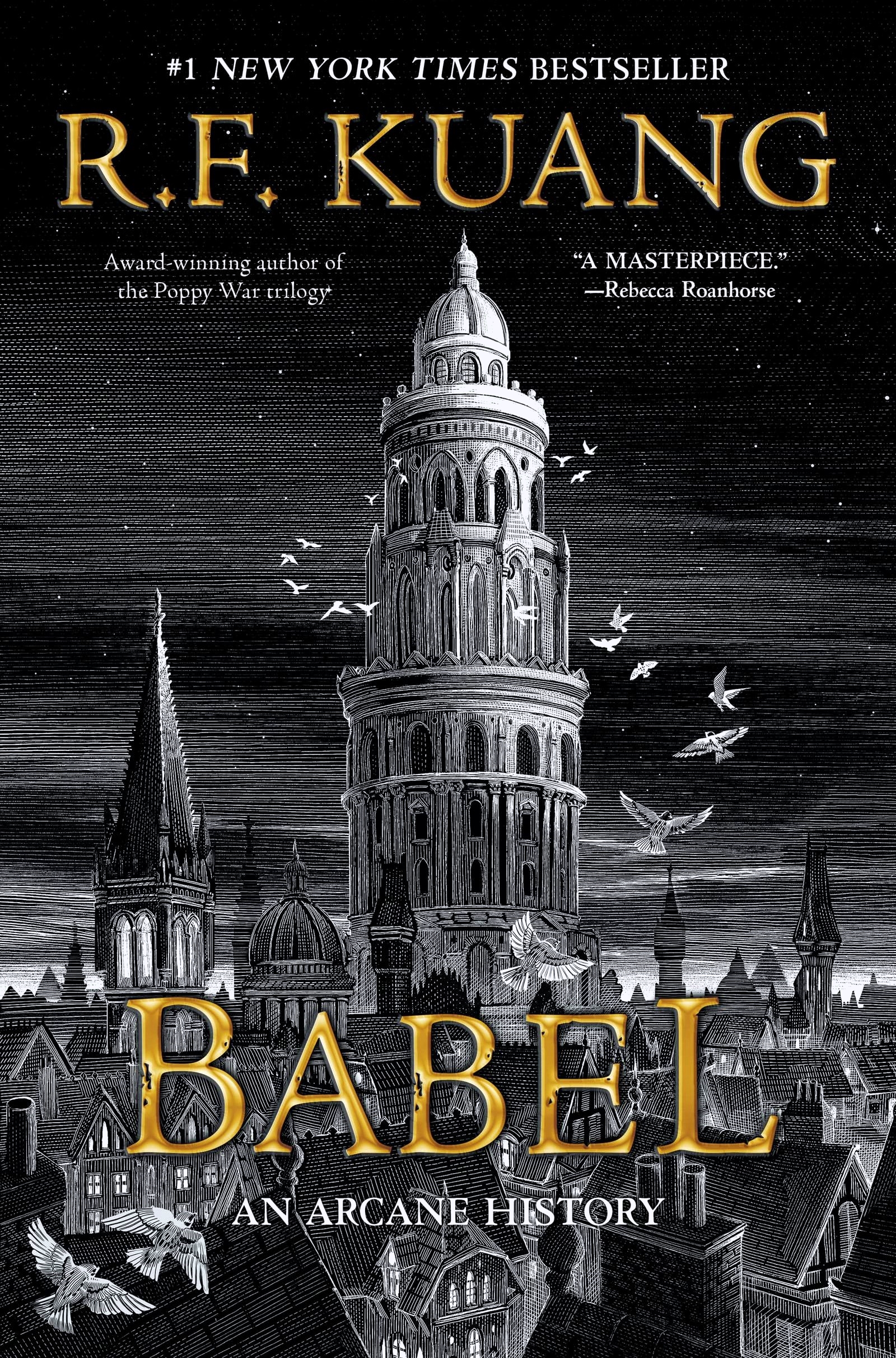
The other most interesting work of fiction I read last year was R.F. Kuang’s Babel, from 2022:

I wrote a bit about it here. The more distance I’ve had from it the more I liked it, which is always a good sign. Plus, the magic system Kuang uses there informed the one I have in my current WIP, so it was definitely an influence.

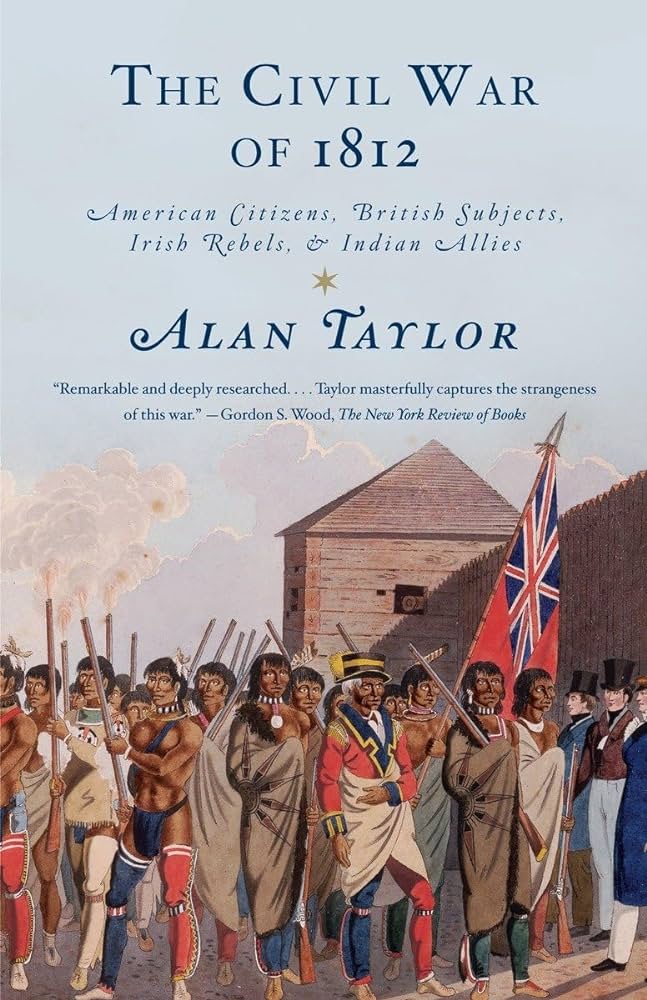
As for nonfiction, I had several runs of multiple books on the same topic – World War I, the French Revolution & Napoleonic Wars, the recent history of Israel/Palestine – one of which was the War of 1812, generally considered an “unknown” war here in the United States. My favorite read of that bunch was The Civil War of 1812, by Alan Taylor (from 2010).

Taylor’s thesis is that the United States’ northern border with Canada (still a British colony at that point) was really more of a concept than a reality at the time, with a large population of British loyalists from the US fleeing into Canada after Revolutionary War. As a result, there were families pit against each other, former business partners, etcetera, in what was a really nasty conflict. A different perspective, which is always important for history.

The other non-fiction highlight for me was David Graan’s Killers of the Flower Moon from 2017.

Of course, this was because of the impending release of Martin Scorsese’s film adaptation, which I haven’t been able to see yet. I know the movie’s not organized in the same way as the book and for good reason. For two-thirds of its time Killers is an interesting exploration of murder cases of the Osage and the struggle for oil money. It’s in the last third, however, that we see that the story Graan has told thus far isn’t unique or extraordinary – it was very much business as usual all across Osage territory. It was a slow motion ethnic cleansing and it happened within the lifetimes of many. 

MUSIC

Thankfully, 2023 itself was  little more robust when it comes to music, as there were several excellent releases that caught my attention from the year.

The first of those is the long-awaited new solo album from Mike Keneally, The Thing that Knowledge Can’t Eat.

This is the kind of album Keneally hasn’t done for a while, just a collection of songs that shows off his amazing range as a player, writer, and arranger. I mean, the thing starts out with a song that’s just layered vocals and sparse piano about the beauty of logos. From there it shifts through art pop, metal riffing (with a Steve Vai guest appearance), and even Zappa-esque big band (with an assist from the Metropole Orkest). What’s more, it all works together. It reminds me of the great Gentle Giant albums where each track sounded different from the others but they all sounded like they belonged together. Appropriately enough, the drummer on the last track, “The Carousel of Progress,” is none other than Malcom Mortimore of . . . Gentle Giant.

The other new album that really grabbed me, to my surprise, is Steven Wilson’s The Harmony Codex.

I probably liked his prior effort, The Future Bites, than most people, but it was really uneven. And when individual tracks from The Harmony Codex started coming out they didn’t particularly grab me. I’m glad I still got the album, but this really is an album that needs to be digested in one sitting. Like the Keneally album it covers a lot of stylistic ground, with the electronic elements blended in more successfully than The Future Bites. This was really a pleasant surprise and it pleases me when someone with so much out there, like Wilson, can still surprise me.

As for “new to me” albums, well, I’m a sucker for great band names (likewise, I’m happy to buy a bottle of wine simply because of a cool label), so when I stumbled across The Helicopter of the Holy Ghost on Bandcamp there was no doubt I was going to check them out.

What I found was a sad, but hopeful, backstory. In 2001, musician Billy Reeves was in a car wreck, which resulted in him spending two weeks in a coma. In 2017, Reeves’ brother gave him a pair of mini-discs that had been in the car with demos Reeves had been working on – only now he had no memory of them at all. Bringing in other musicians to help complete the work, those demos became The Helicopter of the Holy Ghost’s album Afters. As you might expect, the music has a melancholy quality that reminds me in some spots of Robert Wyatt’s solo work. Lots of piano and lush vocals push things along. Good with headphones (or earbuds).

My other Bandcamp surprise for the year was another grower, No Past No Future by Spacemoth.

It starts out as a very noisy, buzzy synth-pop/psychedelic record, which is cool in its own right, but goes on to mellow and stretch out a bit in the second half. By the time we reach the title track and the end you’re in a completely different headspace, although the buzzy edge remains. Very cool and another real album that deserves consideration as such.

That’s it for sounds and words. Next up, them newfangled moving pictures!

Some Thoughts on “2001”(s)

One of my favorite podcasts is Mary Versus the Movies, in which the titular Mary watches a popular movie from the 1980s she’s never seen and then discusses it with her co-host/husband (I think that’s who he is). It’s a fun setup, as each episode starts with what she thinks the movie is about before watching it, which is sometimes hilariously wrong.

On a recent episode the subject was 2010: The Year We Make Contact, the sequel to 2001: A Space Odyssey, directed by Peter Hyams. Of course, it’s impossible to talk about a sequel without talking about what came before, but that’s doubly true of 2010 and 2001, which are completely different types of movies. It’s like comparing OK Computer to Kid A – it’s as much about what the sequel is not compared to the first one as anything. For what it’s worth, I think 2010 is a pretty solid flick, but it pales in comparison to Kubrick’s masterpiece.

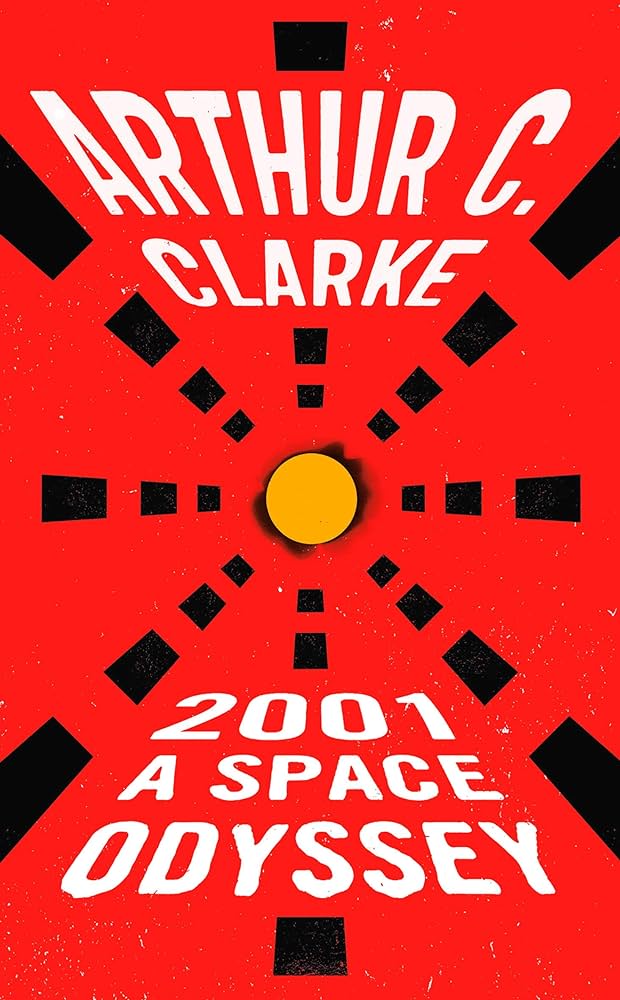
Part of the discussion these movies, inevitably, involved their relation to the books of the same name. That brought to front of mind that I’d never actually read Arthur C. Clarke’s novel 2001: A Space Odyssey. Seemed like as good a reason as any to get it from Audible and give it a listen.

Kubrick is one of my favorite directors and 2001 one of my favorite movies of his, so it was impossible for me to read Clarke’s version of 2001 with completely fresh eyes. It also defies the usual analysis of looking to how the movie “adapted” the book since, in this case, the movie and book developed on parallel tracks – neither was an adaptation of the other. Which is particularly odd since, in terms of what happens, they track each other pretty closely.

The biggest difference from book to movie is the destination of Discovery’s journey. In the book they’re headed to Saturn, but in the movie it’s Jupiter. Apparently the change was due to the effects folks not being able to make Saturn’s rings convincing, so Kubrick moved the destination to Jupiter (ironically, the novel of 2010 – upon which that movie really was based – retconned the story to have them go to Jupiter). There are other minor differences – the monoliths aren’t all black and have particular measurements, we learn why HAL went apeshit, etc. – but for the most part the book is as faithful to the movie as it could be, given the circumstances.

Which is both a blessing and a curse. A blessing because they kind of play into each other and can help folks grasp what’s going on. It’s a curse because that means the main difference between book and movie is the execution and, on that score, Clarke simply can’t compare.

I’ve read some Clarke before, including Rendezvous With Rama, which is another one of his classics. It’s got a great idea at the core – an alien object enters the solar system and a research crew goes out to meet it. The book is basically their exploration of this vast ship. I found it pretty dull, without any real character development or emotional pull into the story. The exploration itself was, I’m sure, rigorously scientific and accurate, but for me there was no “there” there.

A lot of 2001 feels the same way. There are long stretches where Clarke describes the nature of space travel and how everything works that were probably fascinating back in the 1960s when this was all new but didn’t do anything for me. For instance, there’s a chapter where the Discovery crew tries to closely observe a passing asteroid – there’s no threat or danger, no chance that something will go wrong, just a chance to exercise some scientific curiosity. That’s a great thing! It just doesn’t make for compelling fiction, necessarily.

Of course, a lot of the movie is fairly slow and not exactly action packed, but the visual and audio work Kubrick does makes that work, creating a sense of deepening isolation as Discovery plows further on. Clarke tells us the numerical details of that isolation, but doesn’t show it in a way that creeps into your bones. That said, some of what works best for me about Clarke’s writing comes in the parts that are hardest to conceive of being written on the page, namely the stuff with the apes in the beginning and the whole “journey into the infinite” in the end.

Another area where the novel falls down are characters. None of them are particular interesting and exist mostly to talk about Clarke’s tech stuff and move the plot along. The movie isn’t much better, but it has one redeeming aspect in this area – HAL.

In both the book and movie HAL slowly goes crazy and starts killing people. As I said, the book tells us why (2010, the movie, does that, too), which takes some of the mystery and terror out of it. HAL comes across as a problem to be solved (and fairly quickly, at that) rather than a sentient, malevolent being.

The movie’s HAL, on the other hand, is one of the most chilling characters every to grace a movie screen. Not for nothing did HAL rank 13th on the American Film Institute’s list of greatest movie villains. The cold precision with which HAL goes through everything makes what he does so terrifying. Yet, the scene where Bowman shuts HAL down and he starts to sing is heartbreaking. Those scenes on the written page just don’t pop in the same way (I’m not sure any writer could have made them compete).

As for the endings, well, I think it depends on what you want out of your fiction. Clarke’s ending makes much more “sense,” in that he largely lays out precisely what’s happening, and it’s done fairly well. Again, though, it’s hard to top the movie’s visual/aural mindfuck that spits you out on the other side more bamboozled than before. Probably because I came to the movie first I prefer the ambiguity. It has that “what the fuck?” quality I talked about a few weeks ago that I dig in art sometimes.

It’s generally a fool’s errand to look at a book and a movie based on it (or vice versa) and determine which one is “better.” The written word and film are different mediums that reach the soul in different ways. What works well on the page might not on the screen (and vice versa). That’s doubly true with 2001. I can’t say the movie is “better” than the book, but I can say I prefer it. It transports me in a way Clarke’s prose doesn’t and leaves more of a lasting impression. Still, I’m glad to have read the book, if only to again realize how fruitless such comparisons are.

And neither of them are as groovy as Mike Keneally’s “2001,” anyway.

Weekly Watches & Reads – UK History Edition

In May, my wife and I took a much delayed (thanks COVID!) vacation to the United Kingdom, hitting London, the Scottish Highlands and Isle of Skye, and Edinburgh over the course of a couple of weeks.

As is my wont, the trip inspired me to come home and read/listen/watch various things about that part of the world. Here are some quick thoughts.

The whole of the UK is steeped in history and it occurred while I was there that I knew precious little of it, particularly when it came to Scotland. I remedied that by digesting the entirety of Scotland: A History from Earliest Times, by Alistair Moffat.

Never was a book so aptly named, given that it spends a good hunk of its epic runtime (23+ hours in audiobook format) covering the geological history of Scotland before human beings even enter into it. Honestly, I wish the book would have condensed that considerably, since Moffat then covers basically all of Scottish human history (my other criticism is that he goes too close to current, lapsing from history to journalism in the end). As a result, it has a kind of bird’s eye view of things, without a whole lot of detail, but for someone like me who didn’t have a great idea of Scottish history, it was just about perfect. Particularly interesting to me was how Sir Walter Scott (who has a huge memorial in Edinburgh, pictured above) essentially created the modern conception of being “Scottish,” drawing on Highland things that had mostly been suppressed previously.

One of this historical things about which I knew nothing at all before we hit Scotland were the Jacobite Risings that happened there in the 17th & 18th Centuries. The last, started in 1745, was particularly prominent, in spite of the fact that it ended in bloody defeat for the rebels at the Battle of Culloden. We visited the battlefield and I wanted to get a better sense of the battle, so I read/listened to a book with the title Culloden, by Trevor Royle, which you’d think would do the trick.

Except that the full title is Culloden: Scotland’s Last Battle and the Forging of the British Empire. The Culloden part is, maybe, one third of the book, although perhaps it doesn’t need much more than that (it took place on wide open terrain and was over in about an hour – Gettysburg it was not). The rest is about how many of the officers and men at Culloden went on to fight Britain’s imperial wars around the world, with a decent focus on North America. It was interesting, in its own way, but not quite what I was looking for.

My thought was Culloden would be a good subject for a movie, so I was surprised that there weren’t many out there dealing with it directly (as opposed to using it as some kind of background). I finally found one called Chasing the Deer that I was able to watch on YouTube.

I was drawn to this partly because one of the actors is Fish, original lead singer of Marillion and successful solo artist in his own right. I knew he’d done a little bit of acting (this was his only feature film) so that made certain I had to check it out. It was well done in terms of tone and accuracy, but the small budget came through and the script wasn’t great (neither, sad to say, was Fish, although he was about par for the course with the rest of the cast). It did give you some idea of what the actual battle was like, however, so that counts for something.

My final bit of reading when I got home was Devil-Land: England Under Siege 1588-1688, by Clare Jackson.

We were in Westminster Abbey and I saw Oliver Cromwell’s tomb (well, slab of tile under which he’s buried) and realized I’d never really dug into Cromwell or the English Civil Wars. This book looked like just the thing to fill that gap. It’s just as long as Scotland, but only focused on about 100 years, after all. Still, I was disappointed that this was also pretty high-level history, without a lot of detail about life on the ground. In addition, the Civil Wars didn’t get any singular treatment and were just events along the way that happened to involve the royals that were really the focus of the book. There was no discussion of any political philosophy underlying the Republicans or Royalists. What is clear to me, however, is that this period was hugely influential on the American Founding Fathers, as you can pick precise parts of the Constitution that seem designed to prevent atrocities and injustices that happened during this era.

Speaking of Westminster Abbey, part of what we took in there were the tombs of Elizabeth I and Mary Queen of Scots. Somewhere along the way I found out there was a fairly recent movie about the pair, cleverly titled Mary Queen of Scots, with Saoirse Ronan in the title role and Margot Robbie as Elizabeth.

As the title suggests this is a Mary-forward portrayal of events and does give you a sense of the era (the claims of historical inaccuracy, based on my reading, are mostly down to interpretation rather than outright incorrectness). That said, it’s fairly dull for the most part, skipping large periods of time in order to cover all of Mary’s time in Scotland, but precious little of her time as a prisoner in England. And as much as I love David Tennant, one of John Knox’s rants on how wicked women are was enough. Nice bit of synergy, though – I started Devil-Land just after we saw this and it starts with the execution of Mary, so it was a nice transition.

Much less period, and not at all historical, but definitely getting points for Highland isolation is Calibre, from 2018.

Calibre is the story of two buddies, one of whom is getting ready to become a father, who jaunt into the Scottish wilderness for a hunting trip. They wind up in a very small town filled with very creepy people who are full of unheeded warnings. A tragic accident happens and the guys get stuck in town without an easy way out. The movies deals in tropes, to be sure (the “small town creepy hick” cliche transcends oceans), but the atmosphere is really well maintained and the acting is quite good. Like I said, nothing historical, but does give you a sense of what it’s like in the middle of nowhere Scotland (see also “Loch Henry,” one of the episodes of the new season of Black Mirror).

Spending a few days in a foreign land is hardly enough time to get a sense of the place. What it can do, at least for me, is spark a deeper interest in the area’s history and culture, such that it will always be something that captures my interest. I figure British history is a rabbit hole I’m going to plumet down into for a good long while to come.

Revisiting the Need to Change the World

A few years ago, off the back of reading N.K. Jemisin’s The City We Became, I wrote about whether stories that involve magic that are set in the “real world” need to have a meaningful impact on that world.

I had started thinking about that issue thanks to an observation by a legal blogger (of all people!) about Lev Grossman’s The Magicians, in which he concluded that:

it therefore strains credulity to believe that powerful sorcerers have been around for centuries, yet have never revealed themselves to normal humans, seized political power, or had any impact on history.

As I said in my post, I’ve wrestled with this in developing (or not) some of my own ideas. If the story is set in our world, but with magic, shouldn’t magic change things?

I was set to thinking about this again after reading R.F. Kuang’s Babel, which is up for a Hugo.

Babel is set in an alternate history version of England (for the most part) of the early Victorian era, just on the verge of the First Opium War in China. The main characters are training as “translators” at Oxford who practice a form of magic whereby they engrave pairs of words on silver bars that are then used to do particular things. Some of them are completely magical – there’s one that explodes someone’s heart, for example, and another that can heal the sick. Most of them, however, merely make things that already work do so more smoothly and efficiently – carriages travel more smoothly, gardens are more pleasurable, factories require fewer employees, etc.

For our purposes, what all this means is that the British Empire is precisely the same thing that it was in our real history – a globe-spanning colossus that exploited its colonial territories and other weaker, developing nations for fun and profit. There’s nothing about the world of Babel, in broad strokes, that is different from our world. Does that matter? Is it a flaw in Kuang’s world building?

At one time I would have said it was, or at least leaned that way, and you can certainly find reviewers on Goodreads who find that to be a major flaw. But I think what Kuang has done is use the fantasy element to crystalize the themes she wanted to talk about that are very real in our world and our history, namely colonialism and its legacy. In Babel the raw silver needed to fuel the magic works almost like spice does in Dune, a purely extractive industry conducted in a faraway place for the benefit of entrenched, moneyed interests back home. Sure, the actual silver trade did that, too, but the magical gloss heightens the inequity of it.

Could Babel have told the same story without the magic? A few specifics would have to change, but in general, sure it could have. It’s a book about a character who at first thinks he’s been plucked from a dead-end life to live a life of learning and privilege who slowly learns what that privilege is based upon and rebels against it. Magic isn’t required for that, but it doesn’t hurt, either. There’s also the possibility, of course, that what Kuang is saying is that whatever resource we’re talking about, including magic, was going to fall into the service of the most wealthy and powerful anyway, which is not wrong.

In my conclusion back in 2020 I suggested that writers are leaving some interesting ideas on the table by not playing out the impacts of their world’s fantastical things on the world as we know it. I still think that’s true, largely, but I’ve come to accept a caveat – that, sometimes, what you’re after isn’t a big world building “what if?” exercise and trying to do so would just take away from the story you’re trying to tell. As usual, the focus should be on what best serves the character and the story, not anybody else’s idea of how world building should be done.

When Copyright Kills

A couple of weeks ago John Oliver pointed out that the original version of Mickey Mouse is about to slip into the public domain and out of copyright control. Naturally, he has plans for this, but it’s worth remembering that the last time Steamboat Willie was in danger of passing out of copyright control Congress snapped into action and extended the term for copyright protection. I haven’t seen anything indicating they’re going to do it again, but I wouldn’t be surprised if the idea was at least floated (probably without success, given the current GOP jihad against Disney), particularly given what’s happened to poor Winnie-the-Pooh.

As a writer and musician I’m a fan of copyright. The basic idea is that allowing the producers of art to have a monopoly on its sale and distribution incentivizes the creation of more art. But there’s always been a question of how much copyright is too much and when works should move into the public domain and be free for adaptation by others. The Copyright Act of 1790 established a 14-year copyright term, renewable for another 14 years, but those terms were doubled in the 19th century. Then between 1976 and 1998 (when The Mouse roared) terms ballooned to the current life of the author plus 70 years or 120 years if a it was created by a corporation. So in the brief life of the United States we’ve gone from copyright that expired while the creator was not only still living but probably still creating to a term that runs for decades.

Weird things happen when copyright terms run so long that they outstrip the lives of the work’s creators. Recently there’s been controversy about changes to books by the likes of Roald Dahl and Agatha Christie to better reflect modern sensibilities (I talked a bit about the issue here). What’s interesting is that both authors made such changes in their lifetimes, presumably without much fuss. What makes it seem wrong now is that it’s not the authors making the changes but their current copyright holders, who didn’t create a thing. Without lengthy copyright terms that extend beyond the lives of those authors this wouldn’t be an issue – anybody who wanted to could publish the original versions or whatever bowdlerized versions they wanted.

Thanks to this in-depth video, I recently learned about another problematic case of long-term copyright. Remember “Down Under,” by Men at Work? Particularly the flute riff that repeats several times during the song? 

Released in 1981 it was a huge international hit, hitting number one in the US and UK. It wasn’t until 2007 when a TV quiz show noticed that part of the flute part matches almost perfectly the melody of “Kookaburra Sits in the Old Gumtree,” a popular Australian song. After the show aired, people called the company that held the copyright to “Kookaburra” about the similarities, resulting in a lawsuit against Men at Work and their record company for infringement. The company won, a result which Colin Hay has suggested helped speed flautist Greg Ham’s depression and death (Ham played the famous riff, but wasn’t actually one of the listed songwriters).

What makes the “Down Under” story so concerning is that this wasn’t a situation of the writer of “Kookaburra” herself, or even her descendants, making the claim, it was a company that bought the rights at auction after her death. It was purely a commercial maneuver and could not have contributed in any way to encouraging the writer to create more art (her being dead, after all). And while the riff has become fairly iconic, it’s hardly essential to the song, providing a little bit of extra flavor in the arrangement.

Questions on the persistence of copyright always bring me back to Spider Robinson’s Hugo-award winning story “Melancholy Elephants.” It’s that rarest of beasts, a sci-fi story about the law. In this case, it’s about a proposed law that would extend copyrights indefinitely, and the widow of a famous composer beseeches a legislator to not pass the bill – even though it would financially benefit her. She makes the point that there are only so many combinations of notes, rhythms and such out there (echolyn’s “Suite for the Everyman” covers this with sections titled “Only Twelve” and “Twelve’s Enough,” respectively) and if they’re all placed off limits for future composers people will eventually stop making new music.

The same is true for stories, whether they’re written in books or told on screens. New writers often worry about sharing ideas for stories, unaware that pretty much no “idea” is new. What makes a story worth writing is what you want to say with it, not what others have already said. Not only has Romeo and Juliet given birth to adaptations as diverse as West Side Story, a ballet, and a Dire Straits song (which produced its own amazing Indigo Girls cover!) – it was based on a history of similar stories dating back centuries. The idea of Romeo and Juliet was not new – Shakespeare’s presentation of it was.

It was Picasso who said “good artists borrow, great artists steal” – and even that wasn’t an original thought. That’s probably a bit flippant, but the core of it is true. Every creative person is the sum of their influences, the things they’ve read, heard, or seen. Placing those things eternally off limits will do more to stifle that kind of creativity than it will to encourage creators to create in the first place. Killing off creative endeavors altogether is probably too high a price to pay for some author’s grandchildren being able to live of their book sales.

As in nearly all things, balance is key. It’s just that I’m not sure we’re particularly well balanced at the moment.

But What Is a Happy Ending?

As the Tears for Fears song goes, everybody loves a happy ending. That said, what makes an ending a happy one? Does that depend on the person doing the reading or watching? And does it matter whether we’re looking at a more meta or personal level?

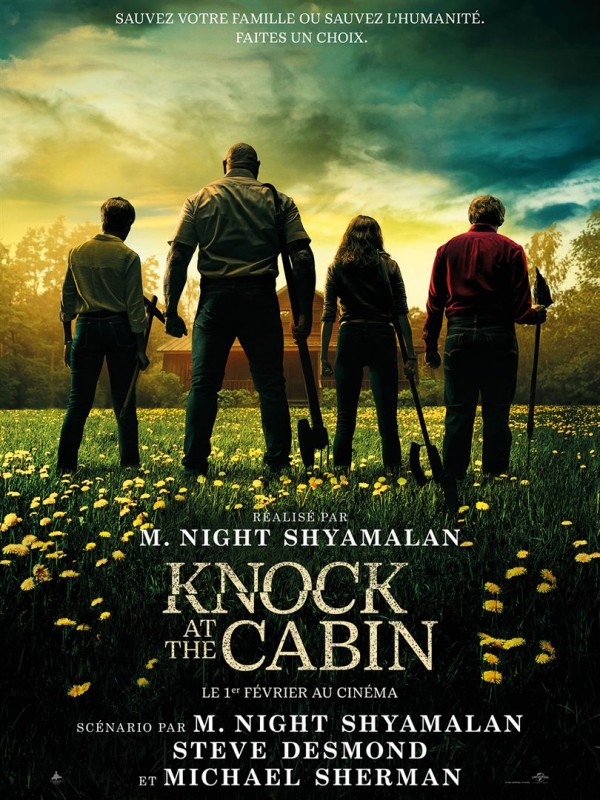
I stumbled into these questions recently after finishing Paul Tremblay’s The Cabin at the End of the World, which became the movie Knock at the Cabin, directed by M. Night Shyamalan and released last year. It was the movie promos that made me want to read the book (I’ve not had good luck with Shaymalan’s movies over the years) so I was always interested in how the adaptation went. The endings of the book and movie differ quite a bit and raise some interesting questions about what constitutes a “happy” ending.

Needless to say, the post from here on out is going to be spoiler heavy, so if you don’t want to know about any of this, head away now.

The plot of the book and film are pretty close, until a certain point. They both start with a young girl playing outside a remote country cabin where she and her two fathers are on vacation. She’s approached by a large, friendly guy who winds up having three friends with him. He gives the family a startling ultimatum – the end of the world is upon us and the only way to stop it is for one of the family members to be sacrificed. It’s sort of a horror/mythical take on Sophie’s Choice.

Naturally, the family refuses to kill one of their own and the tension ramps up from there. The interlopers start to kill each other and there’s some evidence from the outside world (via TV) that maybe it really is the end of days. Tragedies are happening and the big dude in charge may or may not know of them in advance. In the book, at least (I haven’t seen the movie yet), it’s left very vague whether the intruders are religious fanatics, simply nuts (but I repeat myself), or are really telling the truth.

Here’s where things part ways, significantly, between book and movie. In the book there is a struggle over a gun that leaves the little girl dead. Eventually the dads escape (all the intruders die) and they confront the question of sacrificing one of themselves just in case the world is really ending (one is now more of a believer than the other). Ultimately they decide not to, essentially concluding that any kind of God that would require such a thing isn’t worth obeying, and they walk off into a brewing storm that may or may not just be a storm. In the movie, by contrast, the girl is not shot and one of the dads decides to sacrifice himself to save the world on her behalf. The girl and her remaining father leave and find evidence that the sacrifice really is stopping the world from ending.

Per this interview with the LA Times (via), Tremblay explains that while he generally likes the movie, he prefers his ending to Shaymalan’s. No big surprise there. Endings are hard and if you get what you think is a good one you’re kind of protective of it. But what really interested me was Tremblay’s explanation as to why:

I think the movie’s ending is way darker than my book. I don’t mean to say this flippantly. But politics aside, on a character level, the idea of, “What are Andrew and Wen going to do now”? Not only did they just kill Eric – how will they go on with that knowledge – but also with the knowledge that this supreme being that controls the universe was so unremittingly cruel to them? I would never write a sequel . . . but I’m actually weirdly interested in a story of what Wen and Andrew do now.

He further explains:

at a certain point in telling the story it didn’t matter to me if the apocalypse was happening because the story to me became, “What were Eric and Andrew going to choose?”

That was the story: their choice. Their ultimate rejection of fear and cruelty, whether or not the apocalypse is happening. What has happened in the cabin and what they’re presented with is wrong; it’s immoral, and they refuse. And I find that hopeful . . ..

This is weird on its face. The movie ending is clearly the happier one, right? The little girl lives. While one of her dads decides to sacrifice himself (which is honestly where I thought the book was going) at least we know it wasn’t in vain and it really did save the world. For a story full of psychological terror that seems like the best possible outcome.

But I think that framing depends on whether you look at the story from a personal or meta level. On a meta level this story is the trolley problem on steroids. Forget five strangers on the tracks versus one, we’re talking about survival of life on Earth – billions of people – against the life of one person who is, to you, particularly beloved. By pure utilitarian calculus this is a fairly easy call (the needs of the many, as Spock would say). Of course, that presumed that the apocalypse is really happening and the requested sacrifice could really stop it.

A similar dilemma animated the season finale of The Last of Us (and the end of the game, so far as I’ve read), in which Joel was faced with Ellie being operated on in a way that would kill her but that might lead to a cure for the pandemic that was ravaging humanity. Rather than give it much thought, he broke very bad (badder than before, at any rate) and killed anyone who got between he and Ellie. He saved her, thus potentially condemning the rest of the people on the planet.

Is that a happy ending? It sure is for Joel, who doesn’t have to go through the trauma of losing (in essence) another daughter. Is it for Ellie? Hard to tell, since she didn’t really get much choice in the matter (either way). Is it for humanity? If it was going to lead to a cure, fuck no, but if it wasn’t?

My point isn’t to take sides (although I have my preferences, like anybody), but to point out that any on person’s conception of a “happy” ending might not match someone else’s. In a way, that’s a great thing for writers. Endings are hard and the knowledge that people can interpret a particular ending so differently means it’s folly to try and please people. But in another, it means more to think about when trying to shoot for a happy ending.

As always, the best course is to think hard about what you’re going to do and why you want to do it. That way at least you’ll have a satisfactory conclusion to the story you want to tell.

Is Art the Stuff Nobody Needs?

We’ve all sat through movies, or slogged through books, that are too damned log. Did Uncut Gems really need two hours of shouty Adam Sandler? Wouldn’t 90 minutes have done the trick? Do any of the Song of Ice and Fire books need those long descriptions of food?. Couldn’t most of those Netflix true crime documentary series be cut to a feature length doc rather than four or five TV episodes? Isn’t in the obligation of the creators of these entertainments to be as efficient as possible?

Not so fast, argues author Lincoln Michel. Last month he made a strong argument that it’s the “unnecessary” stuff that makes art worth doing. I’m not sure that he’s completely correct, but he’s certainly not wrong.

Michel references people who complain about scenes of sex or violence, or, most hilariously, “those damn whale chapters” in Moby Dick, because “they don’t move the plot along.” Dubbing these folks “consumers” rather than readers, he suggests that their “ideal story seems to be a Wikipedia plot summary.” This might have many causes, from a modern obsession with efficiency to artists seeking short cuts to satisfy an increasingly fragmented audience.

For Michel, this is not a good thing:

Yet I would like to humbly suggest this thinking is entirely wrong. The unnecessary is most necessary part of art. Art is exactly the place to let your eye linger on what fascinates it. Art isn’t an SEO optimized app or a rubric for overworked teachers to grade five-paragraph essays. Art is exactly the space—perhaps the last space left—where we can indulge, explore, and expand ourselves. If we can’t be weird, extraneous, over-the-top, discursive, and hedonistic in our art, where can we be?

While recognizing that the seemingly extraneous stuff can have meaning in the work (by deepening understanding of a character, for instance), Michel goes so far as to claim that “I don’t believe art has ‘a point.’” In other words, for Michel, art is about the journey itself, not the destination and the tangents and dead ends that are explored along the way are as much a part of that as the jaunt down the proverbial Yellow Brick Road.

I like a lot of what Michel is saying here. I write fiction, but I also write briefs and other legal arguments in my day job and in that role, there is no doubt, brevity counts. Lawyers are famously long winded, I know, but you really want to convince the judge (or law clerk) reading your brief in the most efficient way possible, so you trim down the issues, trim down the facts to the bare minimum.

Fiction can certainly be different than that, but does it have to? I’m reading a book right now (no names – I’m not finished yet and it might turn around on me) that has a great idea at its center and would make for a really good short story or novella, but as a novel there’s just too much padding. What should be tense and horrific is instead kind of dull and plodding.

In a way it reminds me of the bloat albums went through when CDs took over as the main music format back in the 1990s. Whereas single LPs couldn’t handle much more than 45 minutes of music without quality issues, CDs can run all the way up to almost 80 minutes (a time chosen, apocryphally, so as to allow for the inclusion of all of Beethoven’s Ninth Symphony on one disc) and lots of artists took advantage of that. Here recently we’ve seen albums shrink again, back to where they were in the LP days and that seems generally like a good move.

That said, some of my favorite albums of that era are full to bursting and I wouldn’t have it any other way. Marillion’s Brave trimmed down to fit on one LP would be a travesty. I wouldn’t shave a moment off of the early Mike Keneally albums, all of which push the boundaries of CD capacity. And to the extent that other albums have filler, that doesn’t really diminish from the enjoyment I get from the really good stuff.

Heck, progressive rock writ large could be thought of as a celebration of what is “unnecessary” for rock music. Rock and roll, after all, is supposed to be direct, to the point, and emotionally blunt. Prog flouted that ideal, most obviously in songs that sprawled across entire albums sides (or more!), rather than be limited to 3 minutes or so. It’s that embrace of the excess, the unnecessary, that I love about prog.

That said, there’s an awful lot of lengthy prog that does nothing for me at all, same as books or anything else. Michel recognizes this, following his discussion of a favorite novel of his that is “plotless and essentially character-less” with the recognition that “[o]f course, it might not be interesting to you. If you don’t enjoy an artist’s vision, that is of course well and fine.” The problem, he argues, is transferring that personal dislike to objective truths about the quality of a work.

With that I agree 100%. As I’ve said here before, the reaction to art is inherently personal and what is one person’s work of genius is another’s pretentious twaddle. Where I part company, I guess, with Michel is that when I hear people say something is boring or slow or has unnecessary parts what I’m hearing is that the art, whatever it is, isn’t working for them and isn’t interesting to them. Because I don’t think there are objective truths about art I don’t take any one person’s reaction to any particular piece of it as being an attempt to deliver any truth other than their own. So I wouldn’t be as hard on people who think parts of books or movies or whatever are “unnecessary” because, to them, they are.

What’s most important, in the end, is that, as Michel concludes, there are spaces where artists and those who experience art can be free to be as excessive and unnecessary as they want to be. Not every work of art is for every taste and that’s not only okay it’s fucking fantastic. Find what you love and dive into it, then hope whoever is making it is willing to explore the unnecessary or the “boring” because when they do it you might think it’s the best thing ever. And creators – keep in mind that not everybody is willing to follow you down your creative cul de sacs – but I bet some folks will.

On Practicing Law In Someone Else’s Sweet Hereafter

I’ve written about The Sweet Hereafter, Atom Egoyan’s 1997 film, a couple of times before. It made my list of favorite movies last year and I added it to a list of other great lawyer movies compiled by the ABA.

As I said in the favorite movie post:

his is my favorite movie about being a lawyer, even though there’s no dramatic courtroom climax or wronged client who needs defended. Instead, it’s about the toll it takes on a person’s psyche to make a living by inserting yourself into the tragedies of others.

With the recent passing of Russell Banks, who wrote the novel upon which the film was based, I thought it was a good time to actually read the damn thing and see how they compare. I did this secure in the knowledge that I had read, somewhere, that Banks  himself admitted that this was one of those rare situations where the film improved on the book. Naturally, I can’t find that anywhere online. Regardless, is it true? After reading the novel and rewatching the movie, I can’t say for sure.

At bottom, both are about a small town called Sam Dent (upstate New York in the book, somewhere in Canada in the movie) where a school bus accident led to the death of most of the town’s children. Into this tragedy comes a big-city lawyer named Mitchell Stephens, who tries to sign up grieving parents for a lawsuit against someone, somewhere that was really responsible for the accident. His plans are foiled when one of the kids who survived the crash, but is now paralyzed, Nicole Burnell, lies in a deposition that the bus driver had been speeding. She does this either to get back at her father who has molested her, in sympathy with those in town who don’t want anything to do with lawsuits, or both. All the while, Stephens deals with phone calls from his estranged daughter, a long-term drug addict who has just learned she’s HIV positive (maybe).

One major difference between the two is that the novel really has no main characters. It’s told in a series of first-person monologues by the bus driver, Delores Driscol; Billy Ansel, who lost his two twins and runs the local garage where the wreck of the bus is stored; Stephens; and Burnell. Each character interacts with others, but the shifts of focus make it impossible for any of them to be the narrative spine of the story. The movie, by contrast, clearly makes Stephens the main character, the agitator/irritant who gets into town and stirs up stuff (whether that’s “trouble” or “justice” depends on your point of view).

There are a couple of places where the book’s shifting POV makes for really interesting comparisons. At one point, Stephens and Ansel talk after Stephens shows up to take pictures/video of the wrecked bus. In the movie, this plays as Stephens trying, quite unsuccessfully, to sign up another parent for his lawsuit (this is how it’s read in law review articles, of which there are many), but in the book we know that he’s actually doing the opposite – he wants Ansel pissed and wanting no part in the lawsuit so when he testifies as a witness (Ansel was behind the bus when it crashed) he’ll be unbiased. Legally, I’m not so sure that makes sense (and it backfires spectacularly), but it certainly changes the way we see Stephens. Likewise, being in Nicole’s head makes her outright anger at her father more palpable and her ultimate betrayal more emotional and spiteful than the cold, calculated move it appears in the film.

There’s two big changes from the book that the movie makes, one more important than the other for figuring out what the story is trying to say. The smaller change is a storyline where Stephens is on a plane and meets an old friend of her daughter to whom he’s able to deal out all the information about his daughter’s troubled life. This is a pretty good way of getting at a lot of stuff that’s in Stephens’ head in the book and doesn’t really impact the overall arc of things.

The bigger change is the ending. In the film, after the lawsuit falls apart, it jumps to Stephens getting into a cab at the airport, where he sees that Delores is driving one of the shuttle busses. In the book, by contrast, there’s a lengthy coda from her point of view in which she learns what Nicole said about her and, therefore, what the town now thinks of her. It culminates in a demolition derby at the county fair that plays out like a kind of sacrifice (it involves one of Delores’ old cars) after which things seem to slide back towards normal. I don’t think it really works (and Delores does wind up driving tourist vans, although fairly nearby), but it’s certainly different.

Do these changes makes the movie better? I’m not going to go that far. I prefer the film, but I came to it first and there’s some bias because of that. Also, while Egoyan arguably exercised a messy ending dealing with the fallout from Nicole’s perjury, the end of the movie works better (I think) than the book. Mostly, the experience reinforced my thought that literature and visual media are different things driving at different goals. One isn’t really better than the other, they’re both different and it’s great that we can explore the same story in multiple ways.

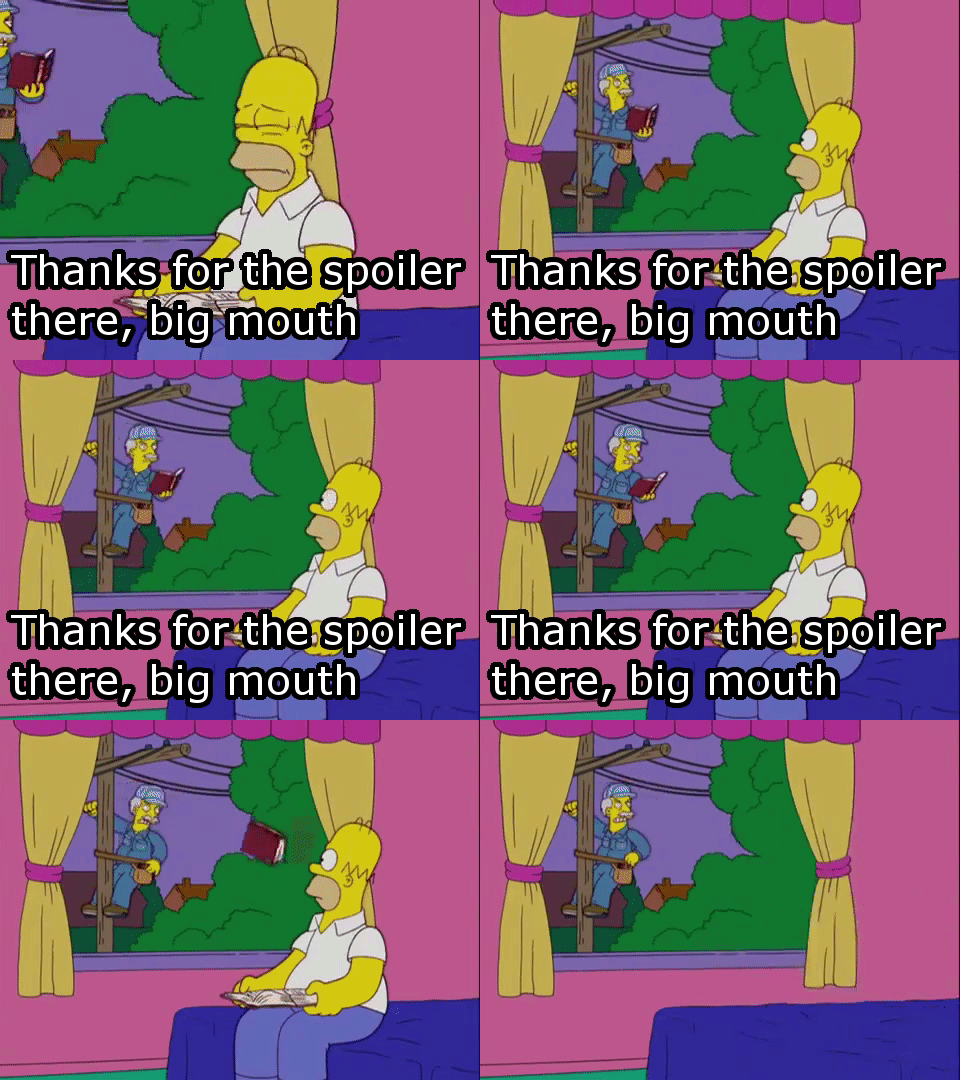
So where does that leave my love for The Sweet Hereafter as a lawyer’s story? The film version of Stephens continues to hit harder. While the book gets us into his head, Ian Holm’s portrayal of Stephens as emotionally running on fumes resonates more. In the deposition scene, as Nicole’s perjury spills out, the look on Holm’s face is one that any lawyer knows well. Remember this scene from The Simpsons?

It’s the same thing with Stephens. You can tell the very moment his case, all the work he’s put into it, all the hours away from home, goes up in smoke. All due to something entirely beyond his control. We’ve all been there pal.

That, in the end, is why The Sweet Hereafter resonates so much as a lawyer movie. We may all aspire to be Atticus Finch, but we recognize more of ourselves in Mitchell Stephens then we’d like to admit.

A Bit of Justice for Cousin Charlie

I am not, in general, a big reader of historical fiction. Not anything against it, I think I’d just rather read the history itself. Nonetheless, when Hilary Mantel died last year I thought I probably ought to check out some of her work. A little leery of wading directly into the Thomas Cromwell books I scanned her bibliography and saw a book called The Giant O’Brien. It rang a small bell and, after a bit of poking around, I found it was about, perhaps, a distant relative.

Said giant was Charles Byrne, who measured over seven-and-a-half feet tall. As chronicled in Mantel’s book, he leaves rural Ireland to go to London and become an attraction. What’s really interesting about the man in the book (whether it tracks reality I don’t know) is that he was very much in control of his exploitation. He’s not a simpleton dragged away from home by someone out to make a quick buck. Rather, he’s well aware of what’s going on and happy to make his way in the world in that manner, with the possibility of a young death hovering over him the whole time.

In the book, Byrne is pursued by a surgeon, John Hunter, who is a collector of “specimens” and wants the giant’s skeleton once he’s dead. Byrne makes it perfectly clear that he doesn’t want this to happen, but is betrayed by the hangars-on that have come with him to London, who eventually make the deal with Hunter for a few hundred pounds. The result was that Byrne’s skeleton was put on display at Hunter’s museum, where it became the most famous part of its collection.

There is some dispute as to how, precisely, Byrne’s bones came into Hunter’s possession – let’s hope he wasn’t so cruelly betrayed – but there’s no doubt Byrne didn’t want to go on display like a museum piece. Nonetheless, he was and there he hung for the next two centuries.

Until just recently. The museum is nearing reopening after several years of renovation and have announced that Byrne’s skeleton will no longer be on public display:

“What happened historically and what Hunter did was wrong,” said Dawn Kemp, a director at the Royal College of Surgeons of England, of which the Hunterian Museum is now part. “How do you redress some of these historical wrongs? The first step is to take Byrne’s skeleton off display.”

The real question now is what else, if anything, should be done with it. On the one hand, if we’re rectifying historical wrongs and Byrne wished not to be a specimen that should be the end of the discussion. On the other, there is something to be said for having Byrne’s bones around for scientific study:

“We shouldn’t think that we now know everything,” said Marta Korbonits, a professor of endocrinology at Queen Mary University in London, who has researched Byrne’s genes.

The research “isn’t done and dusted,” she added.

Indeed, Byrne’s skeleton has offered up new answers as medicine has evolved. In 1909, an American surgeon studied Byrne’s remains, and discovered that he had a tumor in his brain. Then, about a century later, researchers including Dr. Korbonits extracted DNA from Byrne’s teeth and found that he also had a rare genetic mutation that had been unknown until 2006.

“Without the public view, we wouldn’t have made that link,” Dr. Korbonits said.

I’ll admit, I’m a little conflicted. On the one hand, since I believe that a body after death is just meat and bone and the person who it once was is gone, I don’t get too worked up over what people do with dead bodies, particularly at the remove of a couple of centuries. And if there is some broader benefit for mankind that’s a good thing, right? On the other, disrespecting a person’s wishes is a shitty thing to do and it seems if you’re going to right that wrong you have to go all the way.

In the end, there’s no good answer, given the proven good that having Byrne’s skeleton around has done, although I could see a compromise – since we’ve gotten more out of him than we ever should have, maybe it’s time to say “thanks” and let the guy rest? It’s the least we can do for cousin Charlie.