On Historical Fiction

Years ago – I mean years ago  – I remembered Roger Ebert describing Michael Bay’s Pearl Harbor in this withering way:

“Pearl Harbor” is a two-hour movie squeezed into three hours, about how on Dec. 7, 1941, the Japanese staged a surprise attack on an American love triangle.

At the time I thought that was just a good burn on a bad, schlocky, blockbuster (surely less entertaining than the commentary track for whichever Kevin Smith film it was where they bust on co-star Ben Affleck relentlessly for it), but the more I think about it, Ebert’s observation identifies a key difficulty when it comes to historical fiction – are you telling a story about a historical event or about people in a historical time who might be impacted by it?

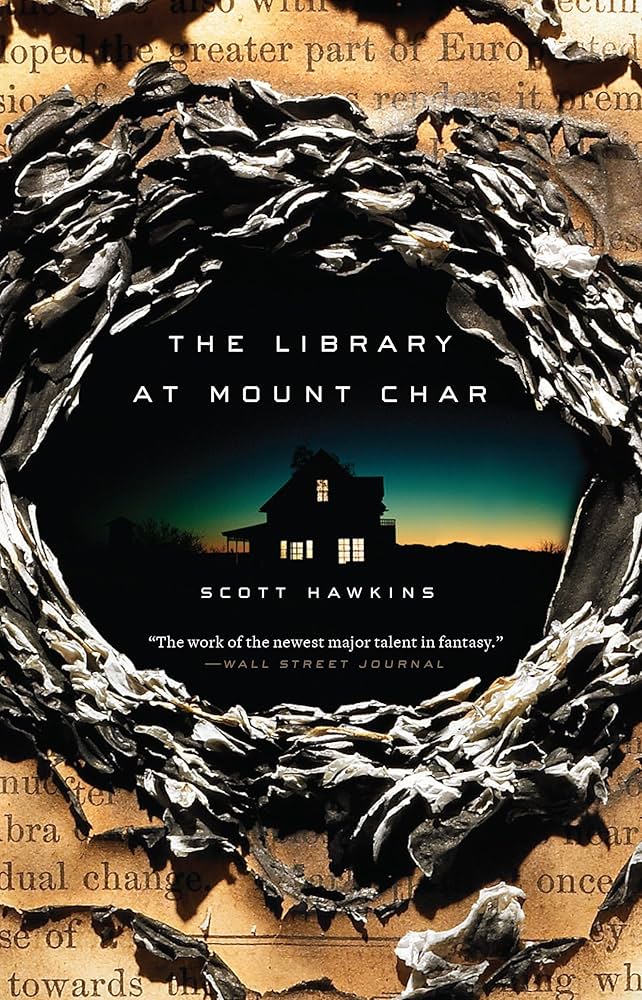
That dilemma hit me recently as I read a pair of books built around a period of local history known as the West Virginia Mine Wars. They take very different approaches to the material which left one much more successful than the other, at least for me.

The first was Rednecks, by Taylor Brown.

“Rednecks,” for those not familiar, was the term used to describe striking miners who would tie a red bandana around their necks (it was derogatory at first, then adopted by the miners). The book Rednecks acts almost as a kind of sequel to the great John Sayles’ film Matewan, starting with the “Matewan Massacre” that was the culmination of the film. It then tells of the events that led to the Battle of Blair Mountain, the largest armed conflict in the United States since the Civil War (so far, at least).

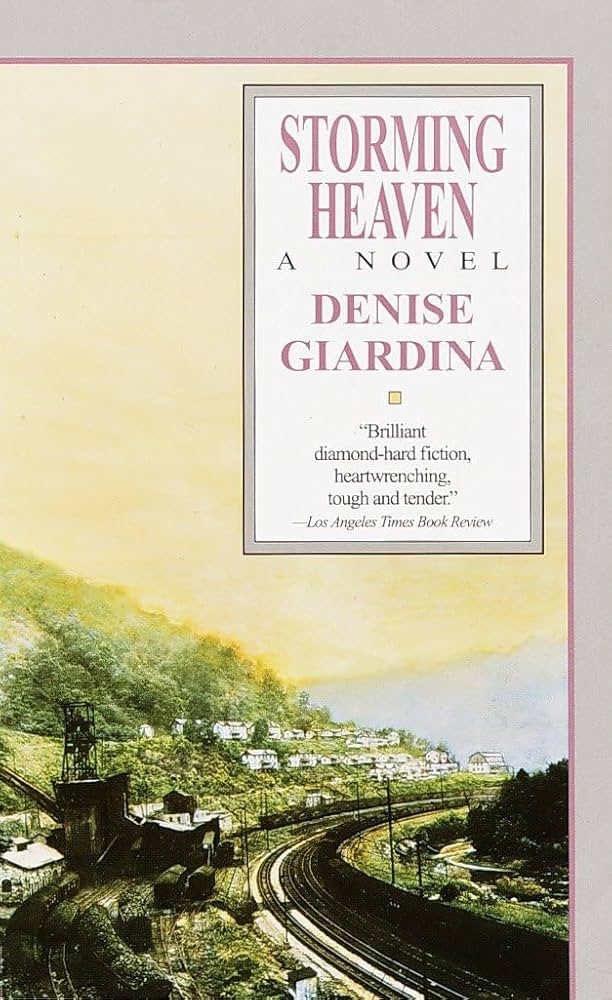
The second book was Storming Heaven, by Denise Giardina.

While it ends in roughly the same place as Rednecks, Storming Heaven covers the whole of the Mine Wars period, starting with the railroads coming into the West Virginia/Kentucky border area in the 1890s and buying up property using sketchy methods.

Beyond that, the two books differ in whose story is being told. The main characters in Rednecks are a local doctor (of Lebanese extraction, apparently inspired by one of the author’s ancestors) and a miner, both fictional, but lots of the smaller roles are filled by real people – Mother Jones, Sid Hatfield, and such. We get chapters from their points-of-view and some big speeches that are probably historically accurate. The downside is that they tend to drain the momentum of the main characters’ stories and can come off like one of those “you are there!” books for young readers.

By contrast, in Storming Heaven all the characters are fictional. They do occasionally interact with real people and some are fictional takes on real people – Sid Hatfield, for instance, gets a doppelganger who is also assassinated on the courthouse steps. In fact, the book takes place in a couple of fictional counties (one in West Virginia, on in Kentucky), but manages to interact with the “real world” enough to retain a sense of realism.

The result is that Rednecks feels like a book that was written to bring knowledge of a particular historical event to the public via fiction. That’s a noble pursuit and it’s certainly a mode of fiction that does a lot of work across literature, film, and TV. What it doesn’t really feel like is a story of people, characters, who feel alive and real in their own. I was far more engaged with Rednecks when it focused on the fictional doc and miner than when it leaned on actual historical figures.

Storming Heaven, by contrast feels like a fully fleshed out work of fiction that happens to be set during a particular historical period. I didn’t care about the characters because of the events they were living through, I cared about them as individuals. In the process, I think you get a better feel for what the historical period was like. No doubt, Rednecks is a lot more granular in terms of how Blair Mountain went down, but Storming Heaven hits harder emotionally, even with less historical detail.

I did an interview recently where I said that the most important element in good writing is building interesting characters. If you don’t care about the people to whom the events of the story are happening nothing else really matters. I think details of events are better left to non-fiction, to the work of historians and journalists. Historical fiction works best when it’s trying to capture the feeling of what it meant to live during the time period involved.

Or you can do what I do and plunder history for ideas and turn them into fantasy or sci-fi stories. Then there’s no worry about getting history “right” because the history is whatever you think it should be!

The Fault In Those Stars

A few weeks ago I finished up Kay Chronister’s The Bog Wife.

While doing my usual post-reading due diligence I pulled up the book’s Goodreads page to read some reviews and the follow conversation occurred:

MY WIFE: Are you going to read that?

ME: I just finished it.

MY WIFE: What did you think?

ME: *makes that pretty good/not great tilting hand gesture* Not bad. Three stars.

MY WIFE: Why do you say that?

ME: Are you going to read it, too?

MY WIFE: Probably not, if you only think it’s worth three stars.

I proceeded to explain to my wife my thoughts on the book (long story short – I liked the basic idea, but thought it was going somewhere more interesting and the ending felt rushed). At bottom, I’m glad I read it, but didn’t find it particularly compelling.

This got me thinking about the whole star-based rating system that is so prevalent these days. What’s a “good” star rating? What’s a “bad” one? Is there a better way of doing things?

It’s natural to want to rate something you’ve read, heard, or watched. At bottom the ultimate decision is one reflected by the old Siskel & Ebert system – thumbs up or down? Is this a movie you’d recommend to others or is it not? That’s all you really need to know, but such a system can give odd false positives. All you need to do is check out Rotten Tomatoes, where a “fresh” score can be the product of lots of good, but not great, reviews just as easily as hordes of fawning ones.

As an example, we got a chance to see Fantastic Four: First Steps in the theater (one with recliners for seating – not bad!). It currently has an 87% “certified fresh” rating, which makes it sound like a world beater. By contrast, reading the actual reviews (like this one from the AV Club) shows some nuance – the movie is generally good, but flawed in ways that might make some not care for it.

Given that, it’s not surprising that people will wind up trying to come up with something more “objective” (it’s not – this is art we’re talking about) and granular, something that you can use to compare works to each other.

For that, the star system has the potential to work out pretty well. Particularly if you’re using the 5-star system you see at places like Librarything, Letterboxd, and Rate Your Music. Particularly when you can give half stars (I’m looking at you, Goodreads) it helps make some really fine distinction between works. The problem is not everybody thinks the stars all mean the same thing.

Everybody can agree that a 5-star review is a rave and a 1-star a pan (some systems even allow for the dreaded 0.5 star, which I’ve done twice at Rate Your Music). But just about anything else is a free-fire zone, it seems to me. Look at just about any work with reviews and you’ll see it. Here are some snippets from 3-star Goodreads reviews of some recent books I’ve read:

But, also:

For what it’s worth, when I first started cataloging things at Rate Your Music I tried to come up with a rhyme and reason for ratings and this is what I came up with (it’s a Stickie note on my PC desktop):

As you can see, I think anything at 3 stars or over is “good.” In some ways, I respect reviews more that are a little bit skeptical, aware of flaws in something. It pains me to say this as an author, but pretty much every artistic endeavor in the history of humankind has flaws in it. Any great pillar of literature or any piece of music that makes you weak in the knees is probably flawed in some way – hell, the flaws may be part of its charm! So when I see 1-star reviews with short “this sucks!” or 5-star reviews with equally short “this is the best!” I tend to ignore them.

Don’t get me wrong – as a writer I love getting 5-star reviews! But as a reader or viewer or listener I find the less-than-loving reviews to be more interesting and, in a way, to tell me more about the work than ones that are just full  of praise.

So, I suppose my takeaway here is to encourage people not to be scared away from checking out a particular work because it gets a less-than-five-star review. There’s a lot of real estate between “rules!” and “sucks!” and you may find a new favorite in there. It’s not the stars that matter, it’s the reasons for giving them that counts.

ADDENDUM: It occurred to me, as I was posting this, that this might come across as a long way of saying “my wife was wrong” in deciding not to read The Bog Wife based on my thoughts on it. One of the things about listening to reviews – or, more specifically, reviewers – is that you can learn how well your tastes and preferences match them. If you know a critic likes the same stuff you do and they love something, it’s probably worth checking out. On the other hand, if your significant other whose tastes you know is lukewarm about it so you are too? It’s all good.

Some Cheesy Thoughts

Consider The Leftovers, but funnier. And full of cheese.

That’s a good way to think of John Scalzi’s latest, When the Moon Hits Your Eye.

In The Leftovers (both the very good book and the excellent TV series based on it) a small portion of the world’s population simply vanishes. The story is about what comes next, the grappling with a strange new world and your place in it. Fixing it, or figuring out what happened, really doesn’t enter into it.

So, too, for Moon in which, suddenly one day, the Earth’s only satellite turns to cheese. Sorry, NASA, I meant into an “organic matrix.” Terminology aside, what follows is a lot like The Leftovers in that Scalzi is more interested in how people deal with their new reality rather than probing how it happened or how the problem might be solved. That will surely frustrate some, but I suppose I’m a sucker for “the world’s gone weird, how do we feel about that?” stories.

And “stories” is what Moon provides. In fact, it’s worth asking just what Moon actually is in the first place. It looks like a novel – work of fiction, of several tens-of-thousands of words, takes place in a fairly limited timeframe – but it reads like a collection of short stories. They’re not even particularly connected ones, either. There are characters from some stories that appear in others, often in the background after having been main characters themselves, but aside from a series that tells of a voyage to the cheese/moon that is told from several POVs, there isn’t really an overall “story” happening. I liked this setup, but folks who go into it wanting a novel might be put off (my wife, who doesn’t really care for short stories, said she’d been miffed in that situation).

Some of those stories are really good, too. There’s a chapter that’s a meeting of bankers trying to squeeze the last penny out of what appears to be the end of the world (how long before people stop working, etc.?) that sharp satire. There’s another involving a dying musician that’s touching as it deals with loose ends and regrets. There’s another matched pair that involves young lovers caught in a duel between cheese shops owned by estranged brothers. Not all land this well, but that’s the nature of the beast for what is, essentially, a short story collection. They’ll always sort themselves out (I’ll regret having said that one day).

That said, do any of those stories really require the who “moon turns to cheese” setup? Not really, although the one with the bankers comes close, since it requires some kind of apocalypse. The others would work just as well without it, though, which makes me wonder if Scalzi had some ideas lying around that he shoehorned into Moon. Not really a complaint – sometimes the best track on a concept album is the one that’s mostly a killer instrumental that doesn’t move any plot along – but it’s an interesting thought.

Moon also asks a question of just what genre it is. Scalzi is most well-known for writing science fiction, but can one really say that a story where the moon, for no explicable reason, turns to cheese is anything other than fantasy? To a certain extent Scalzi feels like he’s trying the alternate history approach – the critical event is pure fantasy, but the aftereffects are as realistic as possible. As an example, when the moon changes to cheese it retains the same mass, which means it gets bigger since cheese is less dense than rock (the good stuff, at least!). That makes the moon brighter in the sky. All that said, in an afterword Scalzi concedes that he wasn’t really that interest in scientific rigor, so there’s no harm is saying that Moon is pure absurdist fantasy.

There’s one way in which Moon falls short of The Leftovers, which is the ending. Without getting too spoilery the book manages to return, sitcom style, to the status quo in the same mysterious way as it began. It didn’t work for me, but given that this wasn’t a book that was all leading up to that ending, that didn’t bother me much.

If you’re willing to indulge some dispersed storytelling and don’t have a deep desire for answers, When the Moon Hits Your Eye is a lot of fun and my favorite of Scalzi’s since Redshirts.

So come and sail the seas of cheese!

2024 – My Year In Books

Happy New Year! It’s the time when I take a look back at the year just past and highlight some of my favorite, or just most interesting, media I consumed (not necessarily new, but at least new to me). First up, naturally, let’s talk about books . . .

I thought I read a bunch of books in 2024 until I compared notes with my wife who read twice as many! She consumes books like food and hasn’t fallen prey to the siren song of podcasts like I have, so she has more focused. Still, I read nearly fifty books in 2024 (in addition to publishing one!) and some were particular favorites.

My Effin’ Life by Geddy Lee (2023)

Rush is my “first favorite band,” the one that initially seeded in me the need to hear everything they did, new or old. No surprise, then, that I’d jump at the chance to read bassist/vocalist/keyboardist Geddy Lee’s memoir. It is, of course, heavy on the history of Rush, particularly the early days, but it exceeds the typical rock doc book in a couple of ways. One is Lee’s exploration of his heritage – his parents survived the Holocaust then met as refugees in Canada – which is fascinating. The other is his recounting of the final days of the band and the death of drummer Neil Peart. Recommended for Rush fans for sure, but even those who might only know “Tom Sawyer” from the radio will dig it.

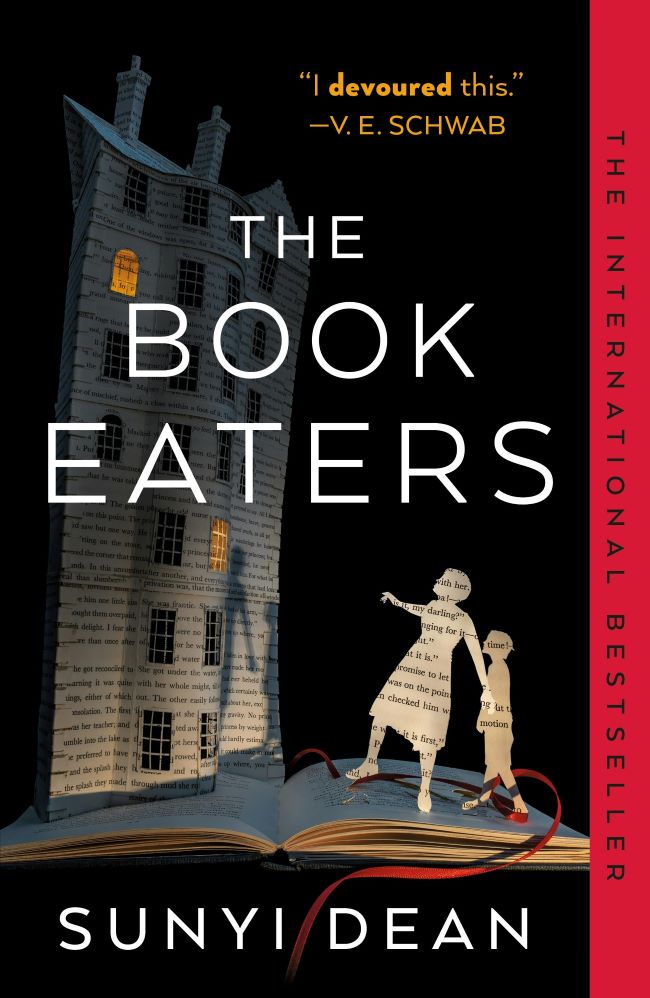
The Book Eaters by Sunyi Dean (2023)

It’s a great pitch for a book – what if there were people (well, maybe not quite “people”) in the world who survived by eating books, taking in all the stories or knowledge written therein? What I expected from The Book Eaters was a fairy tale about the nourishing nature of books and words, something ethereal and mystical. What I got instead was a really cool spin on vampires (not all these “people” eat books) and problems of family and belonging. Rarely can you say the book delivered something completely different than expected and was all the better for it.

Stillwater #1 by Chip Zdarsky, Ramón Pérez, & Mike Spicer  (2021)

Lots of stories question whether the idea of immortality is a good one, but usually on the scale of the individual? What if there was entire town where no one aged or could die? Like, if somebody jumps off a building and spalts on the sidewalk that’s not the end of things? That’s the setup of Stillwater. The first volume introduces up to someone who managed to get out as a child, only to be lured back. Naturally, things aren’t as grand as one might think they’d be in a town stripped of death. Can’t wait to see where it goes.

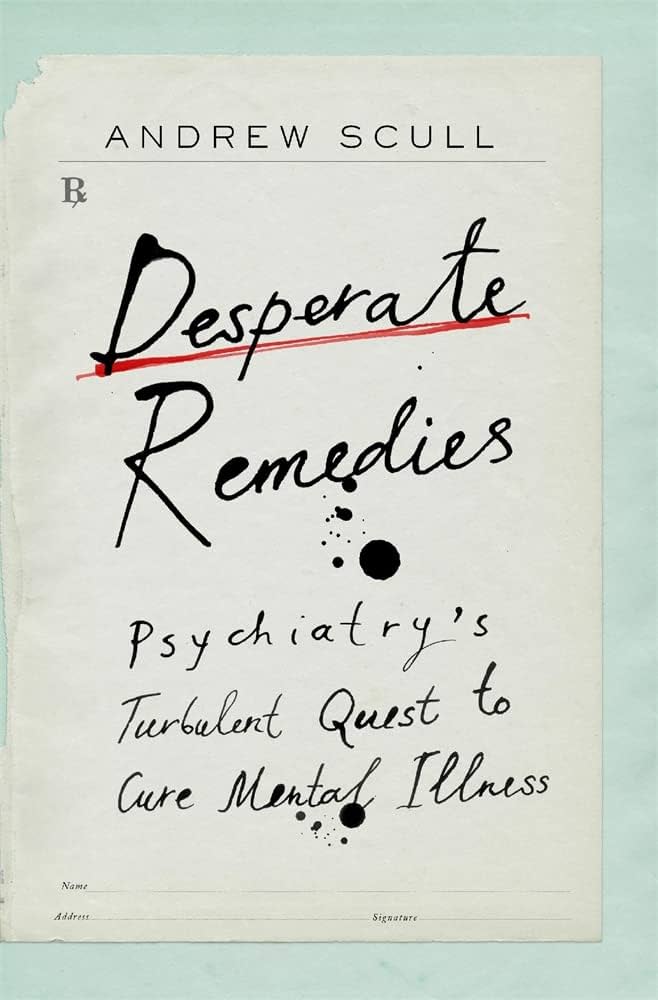
Desperate Remedies: Psychiatry’s Turbulent Quest to Cure Mental Illness by Andrew Scull (2024)

The only thing more depressing I read in 2024 came out of the daily news. This survey of the history of relatively modern attempts to treat mental illness is fascinating for showing how we have lurched from one theory of mental illness to the next, each with its own miracle cures that never seem to actually come to fruition. What comes through is that, even today, we don’t have a good handle on what actually causes mental illness (in its various forms) and that makes it nearly impossible to treat. Like I said, depressing stuff, but it does at least provide some hope that we’ll keep bashing away at the problem.

A Thread of Violence: A Story of Truth, Invention, and Murder by Mark O’Connell (2023)

There’s a version of this book – telling the story of a murderer in 1980s Ireland whose friendship with the Attorney General threatened to bring down the government – that’s a straightforward telling of the tale, which needs little pumping up to be really interested. This isn’t that book. Rather, what makes O’Connell’s angle interesting is that his grandparents lived next door to where the killer was apprehended and he’d always felt the shadow of that incident lurking over him. His conversations with the killer, who still doesn’t quite seem to grasp what he’s done, dive into issues of identity and memory that are fascinating.

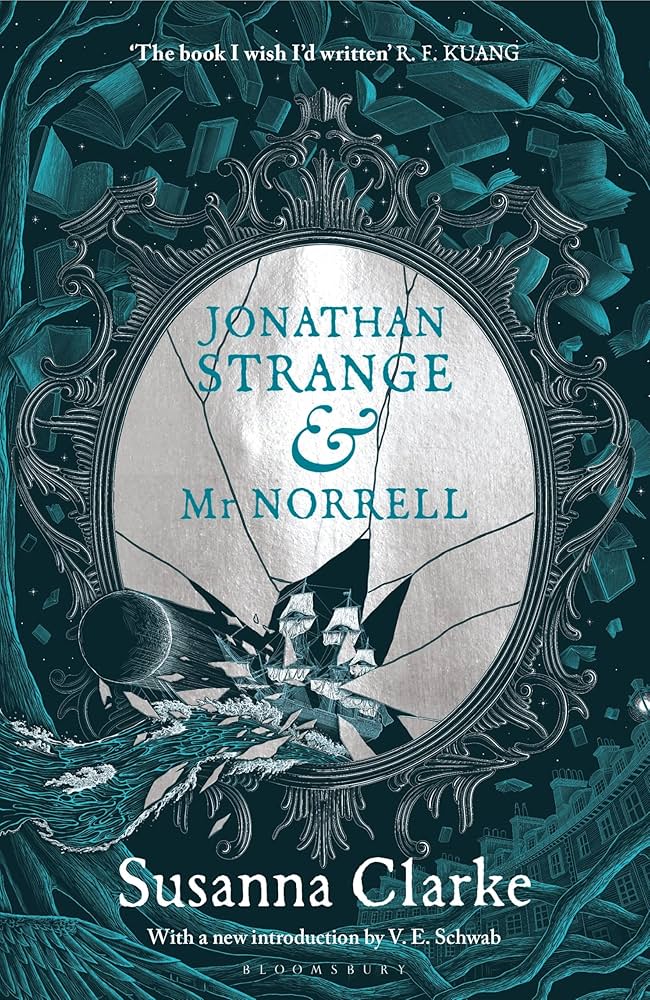
Jonathan Strange & Mr. Norrell by Susanna Clarke (2004)

This is kind of a cheat, as I read and loved this when it first came out two decades ago. That anniversary led to a new edition and lots of coverage, so I decided to dive back into it and see if it held up after all this time. Happily, it does. I was a little worried that, with lots of writing under my belt, I might feel more picky about things, but it turns out I just admire Clarke’s work all the more. It’s so immersive, just pulling you into the world that she builds slowly and steadily. I went in willing to consider this one of the great books of the century and left being certain that’s the case.

Absorb (and Be Confounded) First, Understand Second

I have never read Ulysses. I don’t think that’s a major confession (certainly a lesser one that I’ve never read Tolkien, given my genre of choice), given that while it’s one of the most famous works of English literature it’s also got a reputation as one of the most difficult to read. Not a breezy beach romp is Joyce’s chronicle of a day in Dublin.

It’s a reputation reinforced by things like this column on Slate from last month, in which the author staggers under the idea that his book club was going to “raw dog” Ulysses, rather than read it with some kind of supporting, explanatory work alongside. Putting to one side the continuing attempts to make “raw dogging” a thing, isn’t that the way you should first approach a work of art? If you need to have someone else tell you what it means from the jump what’s the point?

Without a doubt there are books, movies, and albums that cannot be fully appreciated on the first go. The one my mind goes to immediate is Memento, Christopher Nolan’s early breakthrough that’s told (in essence) backwards. It’s definitely a movie that rewards rewatching once you have a better idea of what’s going on, but it’s worth experiencing on your own at first to get the full effect. Seeking outside meaning before you watch it yourself spoils part of the fun.

The difference comes from wanting to understand what you’ve already seen or read versus wanting to have a complete understanding of the work the first time you experience it. I’m not saying that are that requires that kind of work is inherently better than stuff that’s more direct and accessible from the jump – there are different kinds of pleasures when it comes to art and sometimes that pleasure is teasing out just what the artist means after you know what they’re saying.

A lot of my favorite music is British. As a result, sometimes there are references in it that I, as an American, just don’t get. I’ve spent time figuring out just what Fish was saying about 1980s Brittain on the first four Marillion albums. That I didn’t understand it all when I first heard them wasn’t important, but learning the details afterwards only deepened my understanding of the songs.

I do the same thing with books and movies. After I finish one I have a ritual in which I scour various review sites – Goodreads, Letterboxd, etc. – as well as critic’s reviews and other write ups, not just to see if my opinion of the work matches consensus (a lot of times it doesn’t!) but to see if other people have insight into what I’ve just read or watched. I love learning about how movies or albums are made and what weird sausage-making process was involved in the final product and how much of the creators’ original ideas came through (if any).

Sitting down to read a book or watch a movie shouldn’t feel like work. Having to do so with a separate work open beside you to make sure you “get” what you’re reading or watching sure seems like work to me. It’s what I do in my day job – I look at a case that requires me to dig into a statute or regulation to figure out what it really means, which requires me to jump to another case, which requires me to look at a historical version of the statute to see how it’s changed over time. I don’t want to have to do that in my spare time. Who does?

Works of art are, in essence, sales pitches. Are you, consumer of art, entranced or intrigued or outraged enough by what you see/hear/read to linger? To borrow a phrase, would you like to know more? That’s the point to at which you might expect a reader or viewer to start digging into supplementary materials. Before you set the hook, however, they really ought to be left to muddle through on their own.

Now, if you don’t mind, I’m going to go listen to this song for the umpteenth time and, once again, try and figure out what Jon Anderson is on about:

Thoughts on Frankenstein(s)

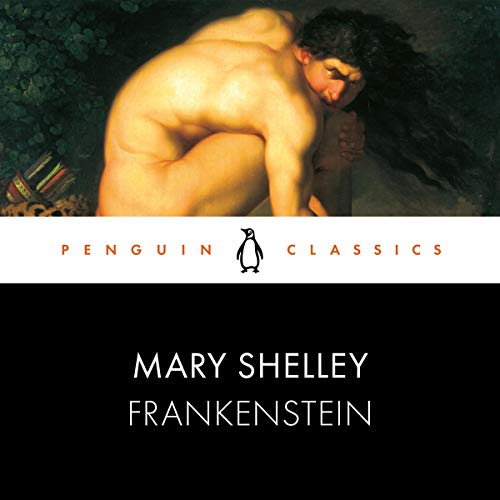
Sometime last fall (after Halloween, if I’m recalling correctly), I was flipping through the channels and saw that the 1931 James Whale version of Frankenstein was going to be on Turner Classic Movies. Having never seen it, but seen plenty of stuff riffing on it, I decided I had to check it out.

Midway through the movie it occurred to me that I’d never read the Mary Shelley novel upon which it was based, either, so I read it immediately afterwards.

It’s a fascinating study in adaptation and how stories can shift based on how they’re told.

The basics are the same – a scientist working on the cutting edge of technique and ethics, the guy actually named Frankenstein, cobbles together a creature from dead people parts and reanimates it. Said creature then stalks about the countryside.

But really, the differences are much more interesting and really take each version of the story in a completely different direction.

The movie is short (not much more than an hour) and constitutes what I think of as the generic “Frankenstein story.” That is, the creature gets out of control and is chased down by a pitchfork wielding mob. Indeed, he appears to die in a blaze and building collapse at the end of the movie, but there were sequels to be had so they retconned that starting with Bride of Frankenstein in 1935.

The book, by contrast, is much more personal. The terrors perpetrated by the creature are smaller in scale but land much more heavily because they relate directly to his creator, Frankenstein himself. Not for nothing is the book named after him as it is really the scientist’s story, not so much the creature’s. If the movie is the easily replicable template for monster movies to come, the book is much more thoughtful about what it means to create life in the first place and what that responsibility does to someone.

Which makes the differences between the movie creature and book creature so interesting. The movie creature, played famously by Boris Karloff, is essentially an innocent cast into the world and unable to cope with it. The event that incites the populace against the creature comes when he accidentally kills a young girl while playing with her. It’s completely the sort of thing that a being without any real understanding of the world could do, not out of any malice but through sheer naiveite.

The book creature is, by contrast – well, he’s a monster, one that’s all too human at his core. Abandoned by Frankenstein and utterly alone in the world, he saves a small girl rather than accidentally killing her – and gets shot for his troubles. Pissed at the world, and Frankenstein in particular, he cold bloodedly kills Frankenstein’s brother and frames an innocent for it. He extorts Frankenstein into making him a mate (which never comes to fruition in the book), threatening the rest of the Frankenstein family. He kills Frankenstein’s best friend and bride. Honestly, he’s pretty much a serial killer with a very particular set of victims. Whatever empathy you feel for the creature at the get go dissolves away by the end of the book.

Which, of course, is a very real world way of thinking about murder. It’s not uncommon for killers, even serial killers, to have upbringings that would make your eyes water. Nonetheless, it’s hard to feel too sorry for them once they’ve taken another life (or lives). I don’t know if Shelley intended to book to function in this way but to this public defender’s eyes it plays like the paradigmatic capital case mitigation argument – yes, he’s a beast, but who wouldn’t be after all he’s been through?

In other words, book creature is much more deserving of the fate of movie creature, even though their respective endings both say interesting things about human nature.

The other really interesting difference, to me, was in the characterization of Frankenstein himself. Movie Frankenstein – who for some reason is renamed Henry from Victor, but his friend Henry is  renamed Victor! – is the prototypical mad scientist. His lab crackles with insanity and hubris just as much as electricity and bubbling chemicals. He doesn’t really feel conflicted about what he’s doing, or what he’s done, until the creature becomes a problem that needs solved. He’s just not a very interesting character.

Book Frankenstein, by contrast, falls way deep into the issues created by his creation. He doesn’t sound like he’s just about to slip over the cliff into insanity, although he is a loquacious mother fucker. In fact, Shelley’s book pulls off the trick of being beautifully verbose to start, before becoming frustratingly overwrought, then back to beautiful just be sheer force of will.

Without a doubt, the movie Frankenstein is much more fun. It’s a scary romp with just enough pathos to make the conclusion feel tragic. Frankenstein the novel is more of a thinker and I can see why later attempts to make a movie (or TV show) closer to it didn’t come out too well. Each has their purpose and I’m glad I’ve consumed both, but if I had to pick only one – it’s book for me all the way.

How Censors Work

When I was first pulling together the world of the Unari Empire, one of the character ideas I had was that of an Imperial censor. That character would kind of pop up throughout the story, struggling to hold on as the Empire shattered around them, slowly losing their will to do the job that had defined them. I shelved that particular idea since I didn’t have a good handle on what the day-to-day life of a censor looked like.

If only I’d read Robert Darnton’s Censors at Work: How States Shaped Literature back then I might have given it a go.

Darnton explores the nitty gritty of how censors actually did their jobs during three historical periods – pre-Revolutionary France, India in the late 19th and early 20th centuries under British rule, and East Germany right around the fall of the Berlin Wall. It’s a dry work, without a lot of compelling through lines for casual readers, but it does offer some fascinating insights into what it means to be a “censor.”

Primarily, what censors did (or what these censors did) on a daily basis wasn’t squelch explicitly political speech aimed at criticizing the regime for which they worked. In a lot of ways they worked as hyper-powerful literary gatekeepers, helping to shape literature by acting as a kind of quality control. The French censors, many of whom were writers themselves, wanted to ensure the quality of French literature. The British censors in India were hopeful they could guide the Indians into writing great literature (“great” here meaning “what British thinkers consider great,” of course). The East Germans helped literary works get trimmed and massaged to reach an audience.

To an extent, in crafting these portraits, Darnton is trying to humanize the censors. They weren’t faceless thugs grinding ideas into the dirt under their bootheels – they were just people doing a job in which they believed, at least most of the time. This isn’t to say that Darnton comes across as a fan of censorship (he emphatically doesn’t), but it does create a more nuanced picture of what they do most of the time.

Of course, what they were doing all the time was still censoring writers (Darnton focuses almost exclusively on books, with some theater stuff thrown in), even if most of the time their motives were more benign than we might expect. The French censors Darnton talks about who squelched a bawdy insider narrative of life at Versailles might have thought it was low brow trash, but they were also aware that it made fun of the royal court and you can’t have that. That dynamic is even more clear with the British, who developed a real knack for decoding incipient strains of Indian nationalism and independence movements in modern retellings of ancient myths (not for nothing, but if you see rebellion in every work you read, maybe that’s saying something about you?). The East Germans, of course, made no bones that they were making sure new books were ideologically appropriate, regardless of the genre.

One interesting dynamic that plays out across all three eras is that every regime at least pays lip service to the importance of free speech. That is, none of the regimes saw their restriction of particular kinds of speech as any kind of violation. Hell, the East German censors (Darnton interviews two) don’t even think they engaged in censorship! This is true wherever you are, including the United States. The “freedom of speech” guaranteed by the First Amendment is  term of legal art that excludes things like libel and obscenity. The grey areas of those definitions are where the rubber meets the road.

Given that these censors didn’t see their work as being conflict with a commitment to free speech, it’s not surprising that they tended to find objectionable material wherever they looked for it. If Hitchens was right that religion poisons everything then censorship does, too. There is no book or literary work so minor that it can’t be subversive or just not up to quality if you look at it from the right angle.

Which is perhaps the most important takeaway from Darnton’s work. Any censorship scheme is going to be carried out by human beings (or AI programmed by human beings, I suppose). Those human beings will come from different backgrounds, with different philosophies, shaped by whatever flavor of regime is in charge at the time. If you think there’s some kind of speech that should be obviously off limits – say, “hate speech” – it’s worth considering who’s going to decide what that is and what it isn’t. Chances are, they aren’t going to get it “right” all the time (but they’ll think they are).

Which is why I might come back to the idea of using a censor as a character in a story sometime. There’s more going on there than I suspected, even if it’s perhaps not as complicated as the person doing the censoring might want it to be.

The Many Mutinies on the Bounty

Sometimes I fall down rabbit holes. This particular one I’m going to blame on Turner Classic Movies.

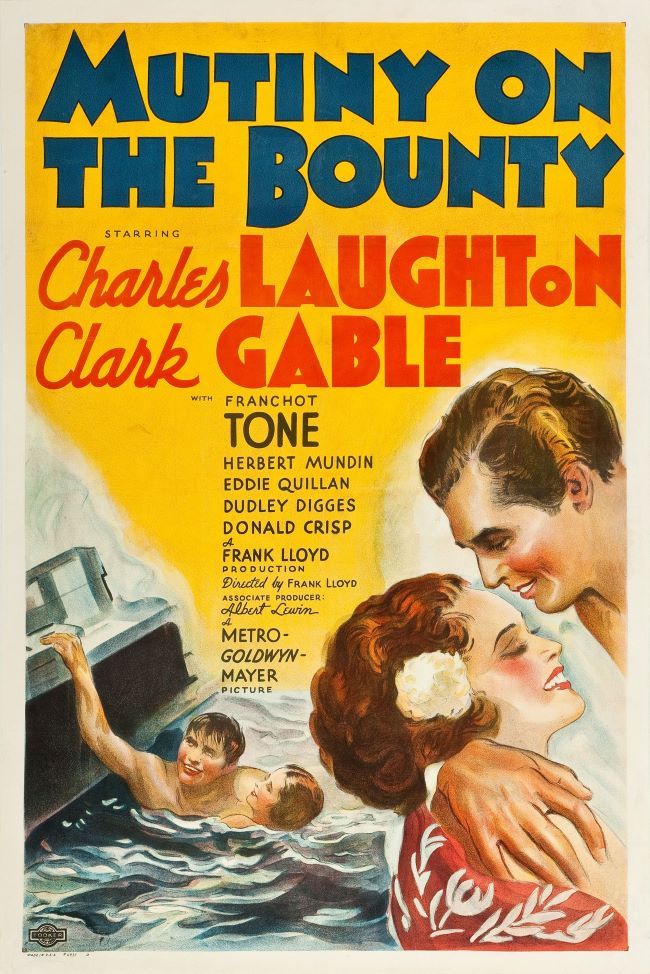
As I think I’ve said before, part of my work morning routine is to flip through the schedule on TCM to see if there’s anything worth recording that day. Months ago I found such a thing, the 1935 version of Mutiny on the Bounty, starring Charles Laughton and Clark Gable.

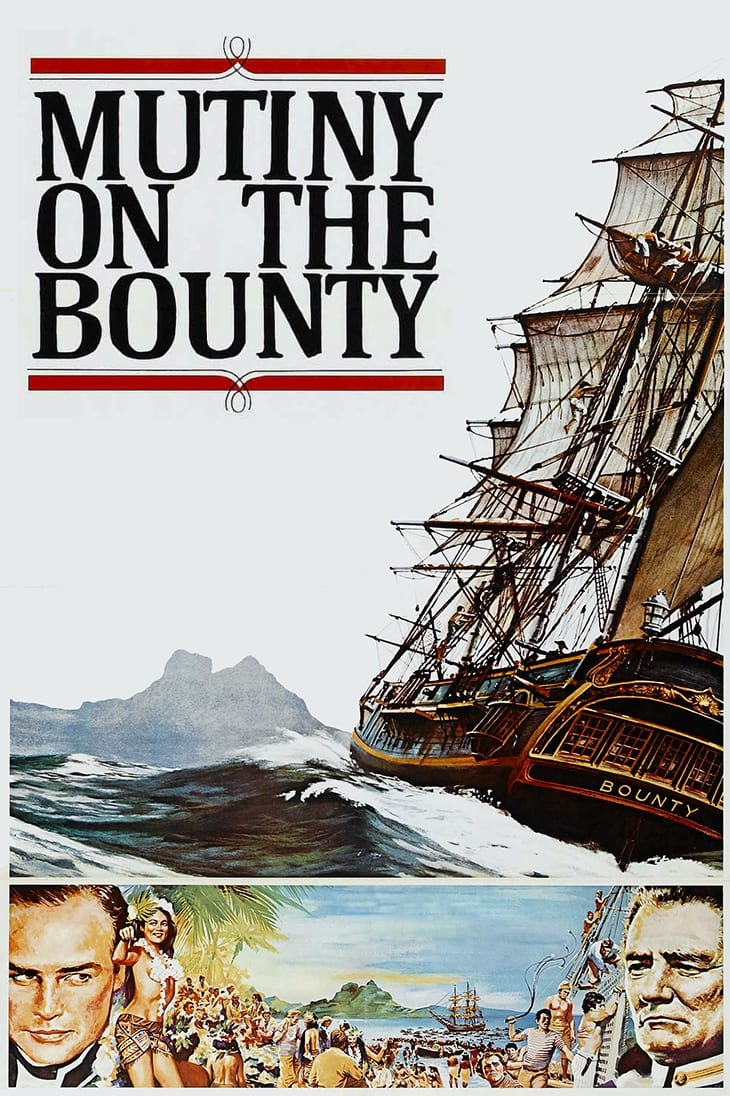
Having never seen it, or any other Bounty story, I recorded it. It sat on the TiVo long enough that TCM also showed the 1962 version (with Marlon Brando), so I recorded that as well.

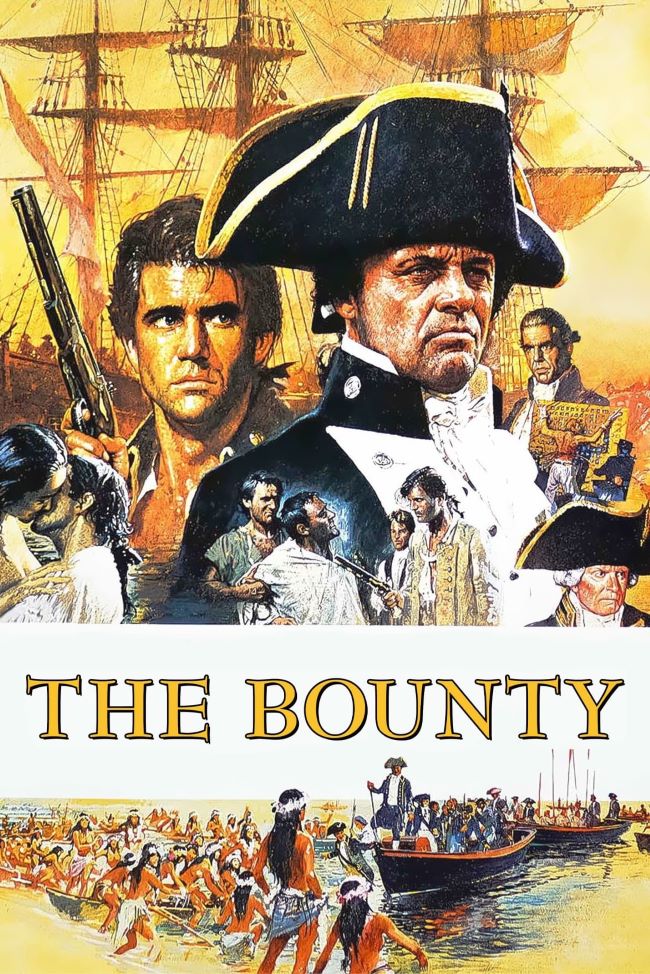
When my wife saw both sitting there, she wondered aloud about if I intended to watch the 1984 version, Bounty, with Mel Gibson and Anthony Hopkins (and Daniel Day Lewis and Liam Neeson!).

So, one Saturday, we did the deep dive and watched all three back-to-back-to-back. And then I read Caroline Alexander’s The Bounty: The True Story of the Mutiny on the Bounty to actually get the history of the whole thing.

Watching different versions of the same story, the history of which is not as clear as you might think, made for some interesting comparisons.

But first, the basic history – in 1787 Bounty left England, under the command of William Bligh, for a journey to Tahiti. There, the crew would harvest breadfruit plants for transport to Jamaica, where it was hoped they could be replanted and used as a cheap food for the enslaved population. Sometime after Bounty left Tahiti one of Bligh’s underlings, Fletcher Christian, led a mutiny. Bligh and several loyal men were put adrift in a launch (and managed to make it back to civilization), while Christian and the others found their way to Pitcairn Island, where their descendants live to this day.

What’s particularly interesting about the history (from Alexander’s book, at least) is that there is a gaping hole in the record when it comes to Christian. Bligh, the men in the launch, and even some of the other mutineers returned to England where there were various inquiries into the mutiny, but Christian never did, dying (or being murdered) on Pitcairn. His precise motivation for the mutiny is unknown, therefore, and leaves a lot of room for fictional variation in the story.

For example, the portrayals of Bligh vary considerably between the three movies. As played by Laughton  in 1935, Bligh is a tough-love legal enforcer. The law of the sea is harsh and brutal, but it’s necessary to keep discipline on what is a very dangerous voyage. The 1962 Bligh, by contrast (played by Trevor Howard), appears to get off on the punishment he dishes out (which Christian calls him out for). He may use the legalish language that Laughton did, but it appears to be a cover for more personal motives. Hopkins in Bounty, on the other hand, dishes out much less discipline (particularly before the reach Tahiti), but seems much more paranoid about possible plots. Per Alexander’s book, Bounty was probably the closest to correct, as Bligh didn’t appear to be any firmer of a disciplinarian than the normal English captain of the time. That said, Bligh also suffered a rebellion (land mutiny?) when he was a territorial governor in Australia later in life, so clearly there was something about his leadership style that rubbed some people the wrong way.

The same is true for Christian, whose motives shift from telling to telling. Gable’s version, perhaps polished to match his matinee idol status, was driven to mutiny on behalf of the lowly sailors who Bligh abused. Notably, that version of Christian had served with Bligh before and had some idea that there might be trouble. It’s a pretty simple narrative. The 1962 version Brando played takes longer to get to the same place and, when he does so, simply snaps, rather than more coolly plots the mutiny. This Christian didn’t know Bligh before, so he’s perhaps more shocked by the brutality. Where Brando’s Christian really differs from Gable’s is the weight that command puts on him after the mutiny. Gibson’s version is motivated less by Bligh’s cruelty (since there’s less of it) than his affection for life on Tahiti. He appears, to quote Londo Molari, to have “gone native” and is willing to do whatever it takes to get back. This Christian didn’t just know Bligh prior to being on Bounty but was good friends with him, which again kind of pushes the cruelty angle to the side. Which of these is closest to truth, if any, is anybody’s guess.

The movies differ considerably in what happens after the mutiny, too. In the 1935 version, after Bligh makes it back to England, he is exonerated of anything to do with the mutiny, then heads off back to the South Pacific (true!) where he tracks down Christian on Tahiti and forces him to book it to Pitcairn (false!). Post-mutiny life for Christian is pretty swell, as least until Bligh shows up. In the 1962 version, Bligh is again acquitted, but with some comments from the judges afterwards that maybe he had it coming, anyway. There’s no return voyage. For Christian, as I said, command weighs heavily on him so much so that on Pitcairn he floats the idea of returning to England to tell their story. This prompts others to burn Bounty in the bay and Christian dies trying to save it (ending courtesy of Billy Wilder, rather than any historical basis). The 1984 version gives Bligh a full exoneration, while making Christian’s life after the mutiny even more miserable. The landing on Pitcairn comes off less of a triumph and more pathetic than anything else.

What none of the movies really do is dig into what happened in England once Bligh returned. There really was a court martial at which many of the mutineers (returned from Tahiti by other vessels) were convicted of mutiny, although many were acquitted (including a potential ancestor of mine!). Several were sentenced to hang, but two were pardoned. News coverage of the court martial was largely favorable to Bligh, but Alexander chronicles how that shifted over the years, thanks in part to Christian’s family and some of the other sailors involved. It’s safe to say that the popular conception of Bligh, closer to Laughton’s and Howard’s portrayals than to Hopkins’, is largely due to their out-of-court efforts.

Particularly interesting in the variations is that the 1935 and 1952 movies are both based on the same set of novels, so you’d think they’d be more similar. They’re both big screen spectacles and the 1952 version was no doubt made just to take advantage of color, but they are quite different in the people whose stories they are telling. I think I prefer the 1935 one. Laughton’s Bligh may be the farthest from the truth, but he’s pretty compelling and in his devotion to rules without empathy scarier to me than Howard’s psycho Bligh (remember, I’m a public defender by day). While I appreciate the ambiguity of the 1984 film, it doesn’t resonate quite as much (in spite of the Vangelis score).

Usually when a movie is made about a historical event the discourse breaks down into whether the movie got it “right” or how “wrong” it actually got things. The whole Bounty situation is a good example of how history isn’t so obvious in lots of situations and lends itself to different interpretations. Surely there’s another Bounty movie or TV series in the works that’ll provide an entirely different perspective, too.

Returning to the End of the World (and the Story)

Last year I wrote some about how the ending of Paul Tremblay’s The Cabin at the End of the World, which I had just read, had been changed in pretty big ways for the film adaptation, Knock at the Cabin, directed by M. Night Shyamalan. At the time I hadn’t seen the movie for myself, and now that I have I wanted to circle back on the matter.

To recap (in spoiler-filled fashion), the book and movie are both about a family – two dads and their young daughter – who are beset in the titular cabin by a group of people who claim that the apocalypse is imminent and the only way to stop it is for one of the family members to kill another (suicide won’t work). The family refuses the bargain and the tension creeps up as it appears that, just maybe, the end of the world is nigh.

As I said last year:

Here’s where things part ways, significantly, between book and movie. In the book there is a struggle over a gun that leaves the little girl dead. Eventually the dads escape (all the intruders die) and they confront the question of sacrificing one of themselves just in case the world is really ending (one is now more of a believer than the other). Ultimately they decide not to, essentially concluding that any kind of God that would require such a thing isn’t worth obeying, and they walk off into a brewing storm that may or may not just be a storm. In the movie, by contrast, the girl is not shot and one of the dads decides to sacrifice himself to save the world on her behalf. The girl and her remaining father leave and find evidence that the sacrifice really is stopping the world from ending.

In that earlier post I was focused on the question of which ending was better described as a “happy” ending – the one where characters refuse to play the game of an abusive deity or the one where they sacrifice for the greater good. Both are a choice and neither is wrong in any kind of a normative sense – one will work better for some, the other for others. Nonetheless why the choice was made is kind of fascinating.

Having seen the movie I did my usual post-viewing due diligence (reading reviews and such) and came across this article which goes into why the ending for the movie was changed:

Steve Desmond and Michael Sherman, who wrote the screenplay with Shyamalan, agreed the book’s original, grim ending had to be changed for film.

“We adapted it slightly different than the book, and then [Shyamalan] had a whole new vision for what the ending could be,” Desmond and Sherman told Variety at the “Knock at the Cabin” premiere. “The book is the book, and the movie is the movie, and we think they both were exceptional mediums. This is a big, wide release movie that is meant for a very large audience. There are some decisions that the book made that were pretty dark and may have been a little too much for a broader audience. That was a decision that [Shyamalan] immediately recognized. It’s a great ending now.”

Now, without a doubt, more people saw Knock at the Cabin than read The Cabin at the End of the World. That’s true of any book turned into a movie or TV show (alas). Is that a good reason to change an ending? It feels kind of chickenshit to me to decide the masses can’t handle the ambiguity of the original and decide to spoon feed them a “happier” ending. It’s one thing to imagine that you’re just improving on it from an artistic standpoint (Shyamalan, at least, appears to lean more this way in terms of his outlook on the world), but to admit to dumbing it down feels cheap.

It should be clear by now that I prefer the book’s ending. The entire story, for me, is all about ambiguity: Is what these people are saying about the world ending real? Is it a hoax? Are they honest, but mentally ill, believers? It also gets at an issue that’s frequently lost in popular discussion about the existence of one god or the other – that even if some being like that exists it might not be worthy of worship or obeisance. The book leaves you much more to chew on than the movie does. I may be in the minority, but that’s OK.

Endings are hard. They’re harder still if you’re engaging in some kind of triangulation in an attempt to find the “right” ending for a particular audience, be it broad or narrow casted. Find the ending you think works best for the story. If it puts off some people, well, that sucks. You can’t please all the people all the time – and most of the time it’s a folly to even try.

It’s All Right, They Have a Warrant (and Fangs)

I’ve seen a question posed in various places on social media the past few weeks:

I thought if anyone is qualified to answer this question it might just be the guy who is both a public defender and a writer of fantasy (with horror overtones in spots). So, what of it – can that vampire cop enter your house against your will?

Let’s start with the assumption that we’re talking about an American vampire cop here, so they’d have to comply with the Fourth Amendment to the Constitution, which prohibits “unreasonable” searches and seizures. It also requires a warrant to execute a search of a home. An arrest warrant will also allow police to enter a home, if they have the necessary suspicion that the person named in the warrant lives there.

A search warrant has to be based on probable cause that evidence of a crime is present in the place to be searched. It’s not a particularly high standard, not even up to the level of “preponderance of the evidence” used in civil proceedings (essentially 51% certainty) and a far cry from the “beyond a reasonable doubt” standard needed to convict someone of a crime. Warrants must be particular as to the things to be seized and the places to be searched. That’s supposed to prevent exploratory rummaging of the kind that occurred under “general” warrants in the pre-Revolutionary era. The application of all this in particular cases is tricky and what keeps me employed, but the basic concepts are easy to grasp.

Perhaps not quite so much for vampires, since their lore varies from telling to telling of particular stories. Nonetheless, there does seem to be a consensus that vampires require permission before they can enter a home. According to this article it dates back to at least the 17th Century and a Greek theologian who stated that a way to be safe from vampires was to stay at home, as they couldn’t enter without being invited. But why? One explanation is that the rule “reflects the idea that evil, represented by vampires, can’t harm you unless you allow it to. It’s a choice, an act of free will.” Tough shit if you get taken in by a slick talking blood sucker then!

With that said, let’s set the scene – Detective Angel and Lieutenant Louis show up at your home. As vampires they cannot come in uninvited. Fun fact – as cops, they can’t either! Except, of course, they have a search warrant, which they do (it allows them to search for any and all implements relating to killing the undead). Does the warrant let them in even if you don’t invite them?

The basic answer, I think, is “no.” The law is the law, but the rule that vampires can only enter with an invitation operates more like a law of nature. Police could no more get a warrant to stop the tides or keep the sun from rising than they could to allow a vampire entrance to a home without an invitation. Nor are warrants commands to someone to allow police into your home – they are permission for the police to enter using any means necessary, hence SWAT teams and knocking down doors in the middle of the night.

But the basic answer is not the only answer. For one thing, if we’re assuming a world with vampires – vampires who are police, no less – then presumably the law has made some accommodation for this. Can a court, as part of issuing a search warrant, compel a homeowner to give permission for the vampire police to enter? I don’t see why not. Courts frequently order people to do things they otherwise don’t want to do, including things like provide blood samples and fingerprints. This doesn’t feel any different and doesn’t lean into that kind of acquiescence that might trigger Fifth Amendment self-incrimination concerns (like giving up the password to your phone).

For another, who gets to give consent to enter and how much consent is enough? Many years ago the Supreme Court decided a case where police showed up to a home in response to a domestic dispute. They asked for permission to search the home – the husband denied it, the wife consented. Police searched the home and found drug paraphernalia. The Supreme Court ultimately held that the search was invalid because so long as one person present when the request for consent was made objected to the search, it didn’t matter what anybody else said. In such situations, police had to go get a warrant.

So what if, when our vampire police walk up with their warrant, you’re willing to invite them in but your significant other who also lives there is not? Does the Supreme Court’s rule for the Fourth Amendment carry over to vampire invitations? Or is it a one-person-to-a-home situation? I’m leaning towards the latter, since, as I understand it, once a vampire is invited into a home it is forever invited, implying that consensus among the occupants isn’t necessary.

What makes the question fun to ponder is the clash of what seems like two absolutes – a warrant permits entry versus a vampire’s need to be invited. But that rests on the presumption that the law wouldn’t evolve to account for the fact that (a) vampires were real and (b) they worked in law enforcement. The Founders didn’t imagine automobiles, but the Supreme Court figured out how the Fourth Amendment interacted with them. Same with cell phones. I have no doubt that a legal system that’s been in a constant state of evolution since at least the Magna Carta would figure out how to deal with vampire detectives.

But until then? Ask to see the warrant, then keep your mouth shut, unless you’re asking for your lawyer.