Weekly Read: Imbeciles: The Supreme Court, American Eugenics, and the Sterilization of Carrie Buck

It is better for all the world, if instead of waiting to execute degenerate offspring for crime, or to let them starve for their imbecility, society can prevent those who are manifestly unfit from continuing their kind. The principle that sustains compulsory vaccination is broad enough Three generations of imbeciles are enough.

– Buck v. Bell, 274 U.S. 200, 207 (1927)

In the rogues gallery of bad Supreme Court decisions – things like Dred Scott, Plessy, and Korematsu  – few had summed their own awfulness up so succinctly as Buck v. Bell, in which the Supreme Court upheld the constitutionality of Virginia’s law allowing the forced sterilization of the “feeble minded.” The decision was nearly unanimous (the lone dissenter didn’t write an opinion explaining his vote) and, horrifically, it is still “good law” in the 21st Century (a claim is shares with Korematsu).

Imbeciles, by lawyer turned journalist Adam Cohen, isn’t a deep legal analysis of Buck itself. Instead, it tells the story of the case by focusing on four people involved in it. First (and last) is Carrie Buck, the Virginia woman eventually sterilized for being “feeble minded.” Second is Albert Priddy, who ran the Virginia institution where Buck was committed prior to her sterilization (he dropped out before the case hit the Court, being replaced by Bell). Third is Aubrey Strode, the Virginia legislator and lawyer who helped pass the law and then defend it in court. Finally, there’s Olive Wendell Holmes, the Supreme Court Justice who authored the opinion. The result is an interesting, depressing, and angering story that provides a lot of needed background to the Court’s brief (5 paragraphs) opinion.

Cohen structures the book so that we begin with Buck’s life up to the case began and end with her life after her sterilization. In between, we get a chapter each on the background of the other guys and then a chapter covering their intersection with the case. It’s a fairly effective way to structure things, although not carried off very creatively (each chapter title is just someone’s name, like a George R.R. Martin tome). It also leads to some redundancy, particularly as Cohen uses Priddy’s and Strode’s background chapters as means to sketch out the broader picture of the eugenics movement.

That movement, though eventually discredited and forgotten (the Nazis being enthusiastic adopters of eugenics helped it slip down the memory hole), echoes in the 21st Century political diatribes about immigration and wall building. Indeed, the sterilization arguments were basically the same as the arguments for restricting the immigration of “undesirables,” with the added twist of them already being in the United States. Beyond that, sterilization was largely a way for society to deal with a perceived problem on the cheap – it was too expensive to warehouse the “feeble minded” in a more beneficent way. Sterilization followed by release into society was cheap, easy, and, thanks to the Supreme Court, perfectly legal.

I’ve read some complaints from readers that Cohen spends too much time diving into the biographies of his subjects, to the detriment of a broader understanding of the eugenics movement. I think that misses the point, somewhat. Cohen presents a good argument that Buck v. Bell was as much the result of those biographies as it was legal theory or factual findings. It’s not a complete success (Holmes may have been predisposed to support eugenics, but this wasn’t a close case), but I find it fairly persuasive. For example, see here for a law review article putting Holmes’s vote down his experiences during the Civil War (something Cohen touches on).

The personal relationships explain how the law’s most dubious component came into being. Strode drafted the law, perhaps in a way that meant to slow down its implementation. For example, he refused calls to have the sterilization scheme applied to all Virginians, rather than only those in state custody. Similar provisions in other states had been struck down on equal protection grounds. Cohen argues that while Strode was a skilled lawyer and advocate, he wasn’t the eugenic evangelist that Priddy and others were.

One of those provisions of the law was a requirement that it not go into effect until the Supreme Court approved it. On the face of it, this seems like a good thing – why not wait for the high court to weigh in? But that’s not the way the American legal system is designed to function. Courts (up to and including the Supreme Court) only adjudicate live “cases and controversies” – meaning actual disputes that require a resolution. That’s why issues of standing are so important, as there can be no actual dispute if someone doesn’t have the ability to seek redress against the other party. Our system is designed to allow two interested parties to argue against each other, present evidence to support their claims, and ultimately allow a neutral third party to pick a winner. It’s trial by combat, only less bloody and more mentally taxing.

By requiring the Virginia law to be blessed by the Supreme Court before it went into effect, Strode effectively set the stage for the farce that was Buck v. Bell. Cohen lays out how Priddy, Strode and others essentially conspired to produce a “test case” for the Court. Now, test cases and strategic litigation on social issues isn’t a bad thing – the one that always stands out to me is how the plaintiff in Brown v. Board of Education was chosen partly because the black school she attended was actually better than the closer white school she would have otherwise attended (that took the idea that it was separate, but not equal, off the table and forced the discrimination issue to the fore). But that’s different than a setup. Buck v. Bell was a setup.

That was largely true for two reasons. First, Buck herself was largely kept in the dark about the whole thing, both the operation to sterilize her and the litigation about it. It’s hard to have a real case or controversy if the plaintiff isn’t really driving the bus. Second, and more importantly, Buck’s lawyer, Whitehead, was in on it from the get go. He was friends with Strode and Priddy and did nothing that a competent lawyer would think of as competent. With only token resistance, Strode rolled through the courts and up to the Supreme Court, getting the ruling everybody wanted (and needed). This is, perhaps, the biggest flaw in Cohen’s argument that Strode wasn’t quite as on board with eugenic sterilization as the rest of those involved – he knew how the system was supposed to work and proceeded with the farce, anyway.

Ultimately, the focus is on Carrie Buck, who opens and closes the book. It’s a natural through line for the story of her particular case (obviously), but a little bit dangerous as a thread holding together a book about eugenics as a broader movement. That’s because, as Cohen makes clear again and again, there simply wasn’t evidence to support the conclusion that Buck was “feeble minded.” In fact, she appears to have been a perfectly normal person of average intelligence. As a result, the book comes dangerously close to suggesting that the real injustice is that Buck wasn’t actually a moron, rather than the state mandated sterilization of anybody. It’s a bit like telling the story of prison overcrowding through the eyes of someone who was wrongfully convicted. It’s powerful, but perhaps not for the right reason.

Imbeciles is a compelling story of a Supreme Court case, the people who guided it, and the woman who got caught up in its wake. Highly recommended.

imbeciles

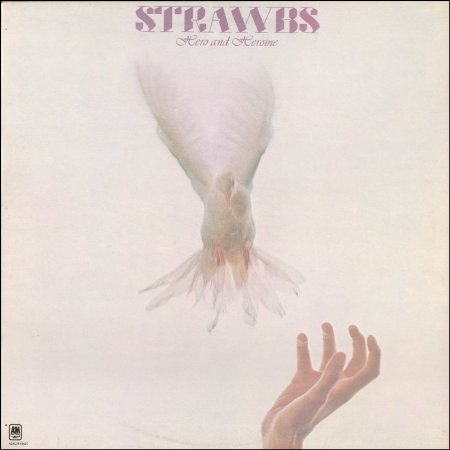
Weekly Listen: Hero and Heroine

I hadn’t had any exposure to The Strawbs until I saw them at ROSFest last year. Originally announced as the Friday headliner, they wound up squished into a crammed Saturday schedule after some travel difficulties. They took the stage and roared through a single album, 1974’s Hero and Heroine. For a bunch of guys pushing retirement age, they were pretty damned good.

As I said, I went into that set cold. I knew, vaguely, that the band had a folksy background and had (at some point) included Rick Wakeman, but I was ignorant otherwise. I was, therefore, in the perfect frame of mind to absorb Hero and Heroine. There’s definitely folksy roots, but they rock on occasion (in a way that similar folksy based proggers like, say, Renaissance never do) and there was some interesting keyboard work going on. Sure, Dave Cousins’s voice had seen better days (did I mention retirement age?), but he still grabbed the tunes by the balls and delivered a great performance.

Needless to say, I had to pick up a copy of this album.

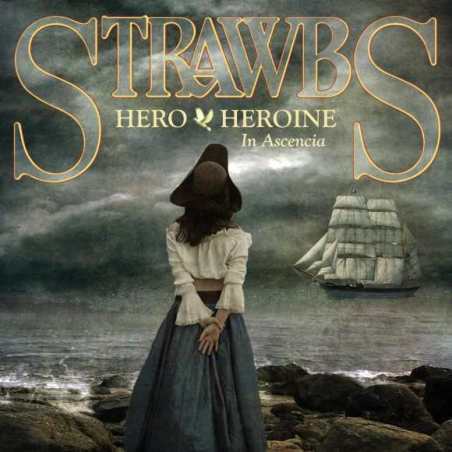
I headed downstairs to where the band’s merch table was. Sure enough, they had a whole stack of the album for sale. Or, at least, a version of the album:

hhnew

Dubbed Hero and Heroine In Ascencia, it was a newly recorded version, rather than the original release. I didn’t really think twice about picking it up, since I figured there was a good reason for the new recording (other bands have, for legal reasons, rerecorded their own work to obtain the rights). Besides, this one was recorded by the band I’d just seen (aside from the keyboard player) – bonus!

 Repeated listens really drove home just how rough Cousins’s voice is, though. With the energy of a live setting it’s one thing, but in the studio you get more picky. So I started wondering what the original sounded like, how the two would compare against each other. Sure enough, the original is legitimately available, so I grabbed if from Amazon and took a listen.

hhold

Aside from some slight rearranging of a few bits, both albums play the same. The performances, however, are very different. The 1974 version sounds much younger. It emphasizes the band’s folksy qualities. Cousins’s voice is pure, youthful, and full of life. It comes off well, just this side of being too “twee.”

The new version, by contrast (and perhaps surprisingly, given the older lineup) is more powerful, rocks harder, and just has more guts to it. Cousins’s voice has lost its youthful vigor, but that even works in its favor. Where the original sounds like a tale of love told through the eyes of a young man, one either living it or perhaps aspiring to it, the new version sounds like the pained reminiscences of an old man looking back on his own history. A lyric like “after all, it’s just the revolution I despised,” comes off as cocky and simple minded in the older version, but bitter and knowing in the new version. The shift of perspective gives the whole thing more depth.

Now, I may be full of shit about this. In fact, I wonder if my opinion would be flipped if I had first heard this album back in college or law school when I rediscovered prog. After all, it would have been the original and I would have been younger, so maybe I would have looked at the newer version in the way I look at the modern version of Yes – a pale facsimile of the genuine article. Certainly, by the time I was sitting in the Majestic Theater on a Saturday afternoon this year I was in a different head space than I was back then.

That’s one of the things about music (or any piece of art) that’s both wonderful and frustrating – you bring so much of yourself to it that it’s hard to ever get a “true” read on it. You only get one chance to make a first impression, after all, and when and how that impression gets made might make it hard to ever overcome it.

The bottom line, I suppose, is that the new version of Hero and Heroine speaks to my cynical side in a way that the original version doesn’t to my romantic side. That probably says more about me than it does about the album, which is pretty damned good in any event.

Weekly Read: We Stand On Guard

There’s an episode of Futurama where Fry and Bender are sent off to a far away planet to battle a species of alien ball things (they joined the Army for the discounts, but “war were declared”). The dramatic pivot – if such a thing could exist in an episode that included Zapp Brannigan, the disembodied heads of Richard Nixon and Henry Kissinger, and a running gag about M*A*S*H – is when Fry learns that the planet wasn’t just a rock, but the home planet of the aliens. In other words, we were the invaders, the bad guys.

That, largely, is the big idea behind We Stand On Guard, in which a small band of guerillas in the Canadian wilderness fight back against marauding invaders from . . . the United States. It’s an interesting idea and in the hands of Bryan K. Vaughn – of Saga, The Private Eye, and many others fame – you’d think it would be more interesting. As it is, the six-issue run is too short to do anything all that original and, in the end, it turns into a better executed version of Red Dawn. With, you know, Canadians.

You see, in 2112 (a Rush reference, surely?), somebody bombs the White House. In response, we blow the ever loving shit out of Canada. You may think what happened in the South Park Movie was bad, but that’s just peanuts to what we do in We Stand On Guard. Fairly quickly thereafter we’re thrown into the story of Amber who, along with her brother, survived the initial onslaught and lived to fight another day. The story flips back and forth between the present (2124) and the past as Amber and her brother escape advancing American forces.

Why does any of this happen? It’s not really clear, even by the end of things. Sure, some Canadian general confesses to the White House thing, but it’s clear he’s been beaten (at least) and so I suspect this isn’t supposed to be the final word on things. Why we freaked the fuck out and razed our long-time peaceful neighbor doesn’t even get a cursory explanation. We’re out for Canadian water, but whether that’s a happy accident of the invasion or the goal of it is never clear.

Which is a shame, because beyond the initial setup the story plays out like any where the main character joins a plucky band of resistance fighters. It’s bloodier than most, but in the end the good guys win (at least for now) because, you know, they have to. As my brother is fond of saying, “because it’s in the script.” The brief run time doesn’t allow for any of the characters to get defined beyond archetypes or for any kind of interesting world building that doesn’t directly relate to the story We Stand On Guard is rushing to tell.

We Stand On Guard has a lot going for it, anyway. The art’s quite good, clean and vivid. And Vaughn has come up with some really awful ways to get people to talk. Let’s just say that in a hundred years we’ve become even more fluid with our “enhanced interrogation techniques.” And, say what you will about the short nature of the book, that means it doesn’t drag at all. It’s fast paced pretty much from the get go.

Which is precisely the problem. It’s an odd thing to say, but this would have been better had there been more of it. The Private Eye got ten “issues” (since it was originally released in digital format only I’m not sure how they compare to regular comic issues) and that seems about the minimum needed to tell a story set in a new world populated by new people. Maybe there’s a comics equivalent to a director’s cut out there, somewhere, that would fill in some of the blanks.

westandonguard

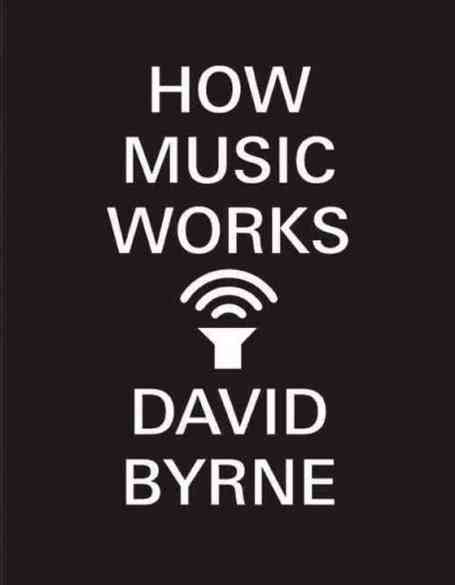
Weekly Read: How Music Works

Usually I write a review just after I finish a book, when it’s fresh in my memory and I’m inspired to say something about it. I finished this book two months ago and instantly wrote most of below. Then things happened and it kind of got away from me. I’ve returned to it several times, but can’t really muster up the enthusiasm to put the finishing touches on it. But it’s got some value, I think, so I present it here with this disclaimer. Given the book at issue, think of it as a demo version of a song that never got finished.

Book titles can be tricky things. We fictions writers have it easy, since we can do almost anything and it works, more or less (I lean towards using locations that are important to the story, hence Moore Hollow and The Water Road). Nonfiction writers have to be careful, though, because a title of a nonfiction book is almost a promise, a declaration of what kind of book the reader is getting into.

How Music Works is not a very good title for the book to which it’s attached. The title promises something like a pop science treatment on sound, how it’s produced and how it rattles around in our brains. Instead, as written by musician David Byrne (no relation, although I sometimes refer to him as “Uncle David” in an attempt to sound cool) of Talking Heads fame, it’s much more wide ranging and, yet, more personal overview of what shapes music that you listen to. It’s often interesting on its own terms, even if its terms it doesn’t want to recognize.

In the introduction, Cousin David says that the book isn’t about him, but he does use experiences  from his own career to illuminate certain subjects. And while it’s true that this isn’t just a rock star bio, Byrne nonetheless spends an awful lot of time canvassing his lengthy career. That’s not necessarily a bad thing – he knows of what he speaks. But it limits the discussion in a lot of places. He could have dived deeper into certain issues by seeking out interviews with others. For  example, he talks about how technology has changed the way music is recorded and that lots of professional recording is now done in home studios. He admits that some folks still prefer the big studio treatment, but doesn’t go into why and whether it’s something that’s going to live on.

Byrne’s probably at his best when he’s discussing the ways in which technology has changed the  way music is consumed. It’s not a new theory – that music was once mostly consumed as live performance, either by professionals or amateurs in the home, whereas now it’s mostly consumed in recorded form – but he gives it a comprehensive airing. It’s an interesting thing to ponder, to wonder how different music is when it’s something you do, rather than just something you experience.

In fact, my favorite part of the book is a chapter titled “Amateurism.” It’s less a celebration of mediocrity than it is celebrating the idea of people making art for themselves. It’s not an either or thing – Cousin David wouldn’t suggest nobody buy music from “professionals” anymore. But actually making music, even if you know it’s nowhere near “perfect” or worth sharing with a wide audience, can be very rewarding. Speaking for myself, I love actually making music (insert shameless plug), even if hardly anybody actually listens to it.

Having said that, it’s in this chapter that Byrne says something that’s gotten him in trouble. In talking about “high” art versus “low,” he writes:

I never got Bach, Mozart or Beethoven – and don’t feel any worse for it.

A lot of people, exemplified by this guy in the Amazon reviews, read this as Byrne shitting on classical music, deriding it as a means to lift up popular music. I don’t read it the same way.

Instead, I think he’s calling into question the idea of segregating music (and other forms of art) into “high” and “low,” which then tends to inform society’s ideas of what is worthy of support and what isn’t. He’s not wrong that lots of popular forms of music tend to have subversive elements (or at least are believed to be). It’s also true that the newly rich look to institutions of “high” art as a means of buying their way into high society. Notably, he doesn’t call for such things to stop or be illegal or anything like that. He just wonders what it might be like if a newly minted billionaire might decide to support a rock or hip-hop club that developed new acts, rather than sign up as a symphony patron.

I’ve never been a fan of tagging some music as “serious,” which, by definition, means the rest of it isn’t. Tell me Robert Fripp, perched on a stool near the back of a King Crimson stage barely visible, isn’t being serious about the music. Tell me that that a blues player, like the late BB King, who sweats his very soul into what he plays, wasn’t serious about his music. Hell, tell me that Frank Zappa, in the middle of some kind of stage buffoonery that looks like pure silliness, wasn’t deadly serious about his music. You can’t. Music, like most art, is as serious as you want to make it, but that doesn’t have a damned thing to do with whether you’re playing in a symphony hall or a greasy dive.

More than anything else, I just don’t see the great sin in saying “I never got” a piece of art or music and refusing to feel bad for it.

how music works

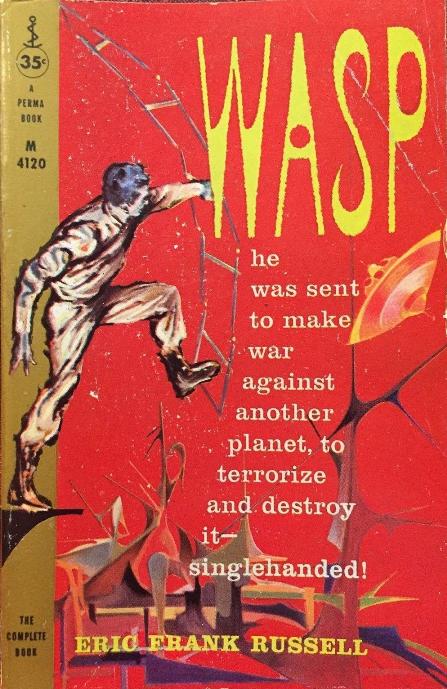
Weekly Read: Wasp

Ready an older book can be tricky – and I’m not even talking about Chaucer or Voltaire here. On the one hand, a recognition of the fact that the book arose from a different time, a different social context, is necessary to give it a benefit of the doubt sometimes, to explain why it doesn’t quite fit with modern expectations. On the other hand, sometimes you can defer too much and paper over that a book just isn’t very good with the explanation that, at one time, people must have thought it was.

Wasp, which was first published in 1957, has a brilliant idea at its core – a single operative is dropped behind enemy lines with instructions to wreak havoc among the populace, drawing resources and attention away from the front lines. The analogy the title makes is to when a wasp gets into a car, freaks out the driver, and kills all on board in an accident. It could have easily been written as a Cold War thriller, a James Bond kind of thing, but one side in Wasp is on Earth and the other on Jaimec, near Sirius, and the war is an interstellar one.

The wasp in this case is James Mowry, who had the good fortune to have been born on the enemy planet and raised there until he was a teenager. As a result he gets drafted for this dangerous assignment (he’s not a career spy). After some montage-like training, he’s dumped on an outlying planet, given lots of resources, and let loose. He does precisely what he’s supposed to do, with the expected results.

Which is the biggest problem with Wasp, something that doesn’t really have anything to do with when it was written. Mowry is just too good at what he does, particularly considering his lack of espionage background. Yes, he gets into scrapes with the secret police, but there’s never really much danger. There’s no real antagonist, no dogged cop trying to hunt Mowry down that makes it seem like he’s really at risk.

Nothing goes wrong until almost the very end when his cache of goods is found and he’s effectively cut off from communicating with Earth (don’t whine about spoilers – did I mention 1957?). Had this happened in the middle of the book, throwing Mowry out of his comfort zone and forcing him to deal with some serious problems, it would have been a welcome twist. As it is, he survives what’s left of the book in quick fashion before he’s picked up (in an admittedly twisted coda) by Earth forces.

That wouldn’t be too problematic if there was something interesting going on inside Mowry. Given his background, one might think he would have some sympathy from the Sirians. In spite of their secret police, they don’t seem all that different from what we know of the Terrans (Mowry, after all, is impressed against his will and sent to indiscriminately blow up stuff – hardly noble) and surely Mowry made a friend while he was growing up? More immediate, he doesn’t forge any kind of connection with the people he uses in his scheme. Everybody is a pawn being moved around the board, even Mowry.

The lack of depth draws sharper focus to the anachronisms of the story. For one thing, there are no women involved. I don’t mean there are no notable female characters, I mean there are no women anywhere at all (As Jo Walton put it, “[t]his is an old fashioned book, written before women were invented.”). Par for the course in 1957, but glaringly unrealistic to modern eyes. For another, there isn’t any attempt to extrapolate future tech, aside from space travel and communications, such that Jaimec looks and sounds almost exactly like 1950s America. A typewriter features prominently at one point. With a better story and deeper, more interesting characters, it would be easy to overlook.

Lots of people make a lot of Mowry being a “terrorist.” No less a luminary than Terry Pratchet said of Wasp he “can’t imagine a funnier terrorists’ handbook.” Neil Gaiman, at one point, owned the film rights. He was working on a script when 9/11 happened and he abandoned it because audiences wouldn’t be ready for a movie where the terrorist is the good guy (although, given his lack of depth, he functions more as a psychopath than a good guy).

I’m not sure that’s an accurate characterization of Mowry and what he does. For one thing, he’s an agent of a state at war inflicting damage on the other state with which is at war (presumably openly declared). That’s straight up warfare, even if carried out in a slightly unconventional way. For another, most of Mowry’s targets are military or government related, even if there’s some collateral damage. Compared to carpet bombing, lacing the countryside with landmines, and atomic weapons, however, it’s damned precise. If Mowry had  brain in his head I’d think that perhaps the author was trying to make a larger point.

There’s something to be said for quick dumb fun. Wasp is certainly quick and, in spots, it’s kind of un in a subversive kind of way. But it’s pretty dumb and doesn’t think very highly of its characters. It’s intriguing central idea deserved a better execution.

Wasp-1959

Weekly Read: The Relic Master

As it happens, the afternoon after I finished Christopher Buckley’s The Relic Master I stumbled across Blazing Saddles on TV. While watching it for the umpteenth time, I had an epiphany about comedy and violence.

Trust me, these two things go together.

The Relic Master is the story of Dismas, who works for a pair of high placed Germans in the 16th century, scouring the world for holy relics. These baubles – from a piece of a saint’s fingernail to the boat of St. Peter – are supposed to cure the sick and help the sinful atone for being, well, basically for being human.

Dismas tries to scam one of his patrons (with an assist from Albrecht Durer – yes, that one), but gets caught. As penance, he (and Durer) are tasked with stealing another holy relic, the Shroud of Chambery – better known today as the Shroud of Turin. A road trip ensues, terminating in an extended stay in Chambery that, let’s just say, doesn’t go as planned.

It’s a heist story, and a fairly amusing one. It’s never quite as funny as it wants to be (aside from a version of the Last Supper that’s beautifully farcical), but it’s generally fun, quick moving, and interesting. Dismas (who may or may not have been a real person) lived in interesting times (see Luther, Martin – relics play large role in the indulgence trade) and intersects with several interesting historical figures, none of which actually changes history as we know it.

Where does Blazing Saddles come in? Early in the movie there’s a scene where the railroad company sends a gang of thugs to Rock Ridge to scare off the population. Violence, rape, and murder are all on offer and, if presented in any way realistically, would be horrible. But it’s not. There’s no blood, nobody dies, and the attack ends with a nearly pantomime attack on a little old lady who still manages to crack a one liner. A subsequent church bombing is, literally, all smoke.

Why is that important? Because it means the movie never loses sight of what it is, of its tone. It’s a comedy first and foremost. One that’s got something to say about serious stuff, but in terms of action, it’s profoundly silly.

The Relic Master, by contrast, wants to be light and funny most of the time, but twice it dips into serious violence that just ruins the mood. The first is when Dismas’s initial caper goes bad and he’s tortured by his wronged patron. This is all off stage, thankfully, although that results in a heretofore unutilized POV shift. Torture is rarely funny (Vogon poetry should be involved), and the kind the Dismas experiences certainly isn’t It leaves him physically altered (a plot point of which Buckley makes good use later), although doesn’t appear to do that much emotional damage. Regardless, it’s a downer.

The second is near the end, when the other scheme starts to go to shit, with bloody consequences. At one point Dismas references eleven dead bodies in a room. And someone gets their throat cut on stage. None of this is particularly necessary and, again, it’s a real downer. There’s something to be said for dark comedy (think Tarrantino), but that doesn’t seem to be what The Relic Master is going for the other 85% of the time.

The sudden shifts in tone keep The Relic Master from being a completely satisfying read. Whether that’s an outgrowth of making Dismas a former mercenary, and thus possessed of certain skills, I don’t know. Protagonists of capers often work better if they’re talkers, not fighter. While Dismas is clever in his own right, he does fall back on old habits.

Still, a mostly fun, quick read, set during an interesting time. You could do worse.

the-relic-master

Weekly Read: The State of Jones

With the movie Free State of Jones opening this weekend, I thought it was a good chance to highlight this review of one of the books on which it’s based, from my old blog.

A title is a promise, at least for a work of nonfiction. It’s what draws you in, after all, and convinces you to give a book more attention. The full title of this book by Washington Post reporter Sally Jenkins and Harvard professor John Stauffer is The State of Jones: The Small Southern County That Seceded From the Confederacy. It’s a case that Jenkins and Stauffer don’t make.

Which is a shame, because the story they have to tell is fairly fascinating in its own right and something that a lot of Americans don’t know about. Revolving around a backwoods Mississippi “dirt farmer” named Newton Knight, it’s a tale of racial and class divisions before, during, and after the Civil War. Poor farmers from areas of Mississippi like Jones County had little interest in defending the ability of wealthy elites elsewhere to own slaves. Faced with the horrors of war in places like Corinth and Vicksburg and with families starving back at home due to shitty wartime economics, Knight and a group of others deserted from the Confederate army and headed back home.

Back in the Mississippi countryside, Knight and company organized an armed group that basically made life impossible for the Confederacy in Jones and surrounding counties. In addition to skirmishing with soldiers dispatched to arrest them for desertion, Knight’s group raided Confederate supply lines and tax collectors. It’s fair to say, based on the evidence presented in the book, that Jones County was effectively outside the sphere of Confederate power well before the end of the war.

But that’s not the same as secession. Maybe it’s because I’m a West Virginian and familiar with our unique history when it comes to the birth of the state and kind of sensitive about it, but secession is a formal, political act, not the de facto result of guerrilla military activity. Jenkins and Stauffer never provide evidence of such an act and, in fact, don’t really show whether Knight and his company were more pro-Union insurgents or simply a group of outlaws who gathered together to protect themselves and, as a side effect, cleared the Confederates from Jones.

It’s an important distinction because there was a hot debate when The State of Jones came out about its quality as work of history. Detractors argued that Jenkins and Stauffer massaged the historical record (and filled in gaps with imaginative extrapolations) to make Knight more of a modern progressive figure than he actually was (see, e.g., here and here). As for the question of secession itself, in part two of her three part review, professor Victoria Bynum (author of another book on Jones County) writes:

The old tale that Newt Knight and his band of renegades drew up a Constitution during the Civil War that declared Jones County, Mississippi, to have seceded from the Confederacy has been a favorite of journalists, folklorists, and even a few historians, since the late nineteenth century. Until historians finally shattered this myth, its effect was to paint the men of the Knight Company as hyper-secessionists rather than Unionists; i.e. as good old Southern white boys on a tear against any and all authority—rebels against the Rebellion, if you will.Stauffer’s defense is, in my opinion, weak:

From Newton Knight’s perspective, neither he nor his fellow Unionists seceded from the Union, which means they were never part of the Confederacy. Knight insisted that since Jones County had voted against secession, it ‘never seceded from the Union into the Confederacy.’

But from the perspective of the Confederacy, Knight and his fellow Unionists did secede. Confederate officers wrote that Jones County was in ‘rebellion’ against the Confederacy, and they referred to Knight and his men as ‘traitors.’ These were the same terms Republicans used to describe Confederates.It simply doesn’t work that way. Whatever irregularities existed with Jones County’s delegate to the Mississippi secession convention (the book alleges that he switched his position and voted for secession, even though the county had voted overwhelmingly against it), the convention voted to secede and the state as a whole was along for the ride. As was Virginia, of course, except for the counties west of the Alleghenies that stood up, said “bullshit to this,” and created, eventually, the state of West Virginia. Statewide votes are binding on the entire state. Individual disaffected voters don’t get to ignore results they don’t like.

Aside from the whole secession issue, The State of Jones has some other flaws that keep it from being easily recommended. For one thing, it’s focus shifts without any good reason from the more personal story of Knight and his family to broad depictions of several major engagements during the war (one of which, Bynum argues, Knight wasn’t present for). Those get tedious, mostly because they drive home the same point each time – war is hell, the Confederate foot soldier’s life was one of near constant starvation and disease, and it’s easy to see why anyone would want to escape it. Once we’ve gotten that point, do we really need it made over and over again?

Another problem with the book is, as noted above, its use of speculation and conjecture to fill in the blanks of Knight’s life and the lives of those around him. To be completely fair, Jenkins and Stauffer don’t hide it when they do it. To the contrary, many times they discuss a particular event, then transition into something along the lines of “we don’t know what Knight thought about this, but it might have been . . ..” Nonetheless, it’s frustrating to have the actual history whither down such dead ends.

I’m glad I read The State of Jones, if only because I knew nothing about this particular part of the Civil War before. But, after reading it and much of the discussion about it around the Web, I wouldn’t recommend it. There are other, more scholarly (if drier, perhaps), accounts out there. But The State of Jones is the one most likely to be encountered by the general public. That’s OK, if it serves as a jumping off point, rather than a comprehensive education.

Originally published March 15, 2013.

The New York Times had an interesting article on the movie and the director’s engagement with the issue of historical accuracy.

Weekly Watch: The Martian

It’s a fact of my modern life that I don’t see most of the movies I want to see when they hit theaters. Various factors conspire to keep me separated from these flicks for months, until they happen to slip through my sphere of influence. The minute The Martian came out, I wanted to see it. Ridley Scott adapts a DIY-publishing success sci-fi story for the big screen? Yes, please!

Alas, it came and went from theaters. It kind of slipped below my radar. I nearly paid way too much money to watch it while I was on the road last week, but fought the urge. Finally, a stroke of luck – it was on HBO last weekend. Hooray for my low tech ways!

Here’s the real problem with that kind of delay. It’s hard in the modern world to avoid opinions about a movie (or a book or album) when the first come out. It’s damned near impossible to do so for months afterward, particular when it’s nominated for some big awards and wins some others. I’m not talking about being ruined by spoilers. I’m just talking about how you can have certain expectations about something when you finally get around to see it.

So what of The Martian? Well, it didn’t live up to the hype.

Which is not to say it’s bad. In fact, it’s very well made, pleasing to look at, and has some good performances. It’s got a “rah rah, bring the boy back home” story that winds up into a feel good ending. That’s not a problem in and of itself, but it’s what leads up to it that doesn’t work so well.

Mark Watney, the main character, is a nice enough guy and the situation he’s put in really sucks. Not just stranded, but left for dead. He has considerable obstacles to overcome in order to survive and he . . . fairly easily overcomes them. At one point he says, about a problem, that he’s going to “science the shit” out of it. That attitude – every problem has a solution, take one at a time – is driven home back on Earth when Watney begins training the next generation of astronauts.

It’s a great motto and probably an excellent way to deal with real world problems. It doesn’t, however, bear any real dramatic weight. The bottom line – Watney’s too damned competent. Everything he tries works (until plot requires that it get destroyed) and, while we see him make some snarky comments about his situation, it never really seems to get to him. Even if all his schemes kept working, he’s still millions of miles from home and alone. We know what solitary confinement does to people – it ain’t pretty.

In this way, The Martian suffers considerably from comparison to the much smaller (and much less seen) Moon. Even before it gets to the issue of clones and whatnot, it paints a really effective picture of what being along on another planet(oid) would really be like. The struggle, as the kids say, is real.

But Watney’s isn’t. It’s not that I want to see the man suffer, but some struggle would have been nice. There’s no way a big-budget summer movie, rated PG13 and starring Matt Damon, is going to go all the way dark and have him die on the planet or commit suicide or something. But some hint that the vast expanse of time without human contact had some impact on his psyche would have been interesting. As it is, only his weight loss seems like an issue (and it’s light years away from what Christian Bale puts up with).

Writing this, I’m reminded of a post on the IMDB discussion board where someone asks “is this based on a true story?”. It’s not as dumb a question as it sounds, looking at it now. Real life can be many things, but it’s not often filled with the dramatic tension we expect in fiction. A true story of clever survival, rooted in the fact that it actually happened, has a pull to it that a fictional tale of similar stature just doesn’t. I read somewhere that the difference between fiction and real life is that fiction has to make sense. It has to have some drama to it, too.

Which is not to say The Martian sucked. It was a perfectly enjoyable way to spend a couple of hours, but it didn’t live up to my perhaps exaggerated expectations. It was fluff, but it was engaging fluff. There’s something to be said for that.

martian2015-5

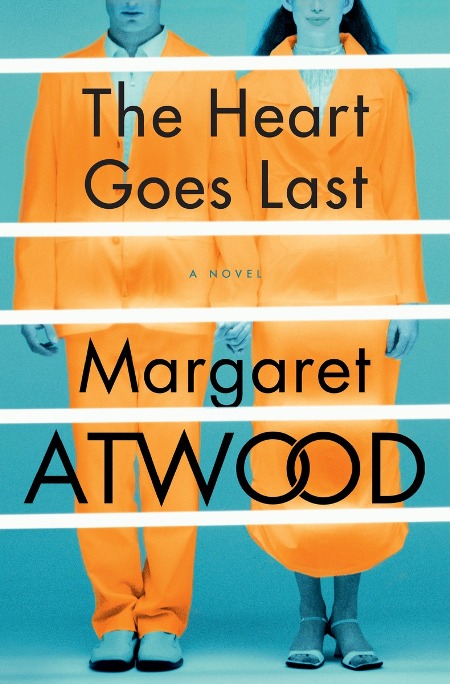
Weekly Read: The Heart Goes Last

My brother used to have a saying – an aphorism, I suppose – taped to his wall. It was attributed to Skippy the Lizard God and went like this:

Sex is like pizza – when it’s good, it’s really good. Even when it’s bad, it’s still pretty good.

The same is true of albums by great bands, movies by great directors, or books by great authors – even their lesser efforts are generally worth your time. That’s a long way of saying that while The Heart Goes Last is far from Margaret Atwood’s best work, it’s still worth a read.

The Heart Goes Last has a deliciously absurd premise. A husband and wife, Stan and Charmaine, are living in their car in a depressed, near-future New England dystopia (there’s some suggesting things are better in the rest of the US). They’re not exactly happy, but they’re getting by. They find out about a quasi-utopian project called Consilience that promises work, happiness, and safety, but with a catch – people in the town live one month in their home and then one month in prison (where they’re used as cheap labor). Stan and Charmaine move in. It’s wrong to say “wackiness ensues,” but what transpires is pretty fucked up.

Without going too deep into spoiler country, Stan and Charmaine get caught up in a grand scheme that could bring down the whole operation, one that detours through murder and organ harvesting, Elvis impersonators, romantic imprinting gone awry, and Dutch-designed sex robots.*

There are some wonderfully dark and funny bits in all of this. In one instance, Stan finds what he thinks is a love note between the two “alternates” who share his and Charmaine’s house (occupants switch each month – one set in the house, one set in the big house). It’s lusty and sexy in a way Charmaine simply isn’t, which makes Stan determined to find and bed the other woman (contact between alternates is strictly forbidden). He spins out an R-rated, Technicolor fantasy that covers not only his attempted seduction but the surely violent reaction from her muscled, bald, and tattooed husband. It’s all completely inane, made all the more so when we learn the truth about the note.

Then there’s the blue teddy bears. I don’t think anybody has gotten such mileage out of an ordinary inanimate object since Tom Hanks (Castaway link).

Which is all amusing for a bit, but it doesn’t really coalesce into anything substantive in the end. Part of that’s due to Stan and Charmaine, who are our only POV characters. Since they’re essentially pawns in the game, we never get a solid idea of what the game is, who’s playing it, and why (even at the end). In addition, neither one are what you’d call bright. Stan is mostly a slave to his baser urges, while Charmaine is so chirpy and positive (even when dispatching souls in her prison job) that it’s hard to sympathize with her very much. I agree with this bit from the NPR review:

The Heart Goes Last’s deepest investment isn’t in Consilience’s hideous secrets. It isn’t even in Stan and Charmaine’s inner lives — both characters have interior monologues like repetitive tape loops. The book is mostly interested in their sexual obsessions, and the way they fetishize each other only once they’re separated. But their predictability doesn’t do much to ground an unpredictable narrative, or give readers a worthy point of view. As other people plot against Consilience, the protagonists become hapless bystanders in everything from their marriage to the larger story.

It doesn’t help matters that the endgame, as it plays out between this two, has a confusing, Rube Goldberg quality. Which could be fun, if we had some idea of what the people setting up the scheme were trying to accomplish.

As I said, all that makes The Heart Goes Last frustrating and I certainly wouldn’t suggest it as a starting point for someone who’s never read Atwood before. But she’s too talented a writer to not score some points along the way, so I’d definitely say it’s worth it (it’s pretty brief, all things considered). Nobody succeeds every time, but few of us are lucky enough to stumble as interestingly as Atwood.

Also, if I ever meet Grandma Win in person, I’ll punch her dentures down her throat.

* Indeed, it’s kind of odd how many parallels there are with The Mechanical and The Rising that I reviewed recently. Dutch robots? Check. Reprogrammed humans? Check. Ruminations on the nature of free will? Check. Done in completely different ways, of course. The sex bots also remind me of Zappa, naturally.

Book Review The Heart Goes Last

Weekly Read: The Master of Confessions

As I said once before, my wife and I spent a couple of weeks in Cambodia last year as a belated honeymoon. It’s a country of stunning geographical beauty, fascinating history, and warm, friendly people. But it’s also a place that still dealing with the deep scars of its recent past. Specifically, the impact of the overspill of the Vietnam War and the eventual rise and fall of the Khmer Rouge regime in the 1970s and the horrors that it brought.

Although the regime fell to a Vietnamese invasion in 1979 (some groups hung on until the 1990s), the country is still dealing with trying to bring to justice those responsible for an era that killed up to 2 million people. The first of those brought to trial was Kaing Guek Eav, known more widely as Duch. Duch spent most of the Khmer Rouge years in charge of the S-21 prison in Phnom Penh, in which thousands of people were tortured and killed. In fact, there were only 7 survivors of S-21. S-21 is now the Tuol Sleng Genocide Museum, which is a horrifying place.

The Master of Confessions, by French journalist Thierry Cruvellier, is about Duch and his crimes, but it’s not a straight biography. Nor is it a typical history of the Khmer Rouge. Instead, it’s the relations and observations of Duch’s 8-month trial before the Extraordinary Chambers in the Courts of Cambodia in Phnom Penh. While it certainly goes into the history, it’s all done at arm’s length, allowing Cruvellier to effectively comment on not just what’s happened, but the trial itself and the very idea of seeking justice for such massive crimes (Cruvellier has also written about the Rwandan genocide trials – sadly, that book doesn’t appear to be available in English).

I already noted one example, when Cruvellier brings up the dynamic of confessions and their role in the justice system, something which is familiar to defense lawyers from Phnom Penh to West Virginia. Another is where he details how the mood of the trial changes the longer it goes on:

Five months into the trial, the quality of the silence in the courtroom has changed. No longer is it that breathless and dumbstruck silence that knows it is watching history being written, nor is it the solemn quiet of a legal drama. The silence that fills the courtroom now is that of fatigue, of weariness, of exhaustion with both the trial and Duch’s words. His performance has lost its shine. Now he sounds like he’s rambling endlessly.

Duch was rambling because, alone amongst the few charged by the ECCC, he pleaded guilty and spent most of his time trying to lessen his culpability, rather than deny it completely. That being said, as Cruvellier points out, Duch was rarely willing to extend his testimony beyond those areas that were already widely documented. It’s a cunning, if empty, strategy – admit what they can prove you did, stall on everything else. It would also be frustrating as fuck.

That frustration came to a head during closing arguments when one of the Cambodian lawyers representing Duch kneecapped his French superior and suddenly claimed that Duch shouldn’t be convicted at all. The argument is cowardly, but kind of compelling – not only was Duch not in the top echelon of the Khmer Rouge, but some of those who were are still free and, indeed, still part of the Cambodian government today. It was a bold, weird gambit that, as expected, fell completely flat.

Cruvellier’s approach also allows him some interesting digressions from Duch himself and the trial. In one instance he treks to the northern part of Cambodia, the rugged mountainous area near the Thai border where the remnants of the Khmer Rouge (including Pol Pot) held on until the 1990s. He explores the growing industry of genocide tourism, as various people try to monetize everything from gravesites of Khmer Rouge leaders to spots where their homes once stood. It was an uncomfortable bit to read, given that my wife and I travelled halfway around the world partly to see S-21 and the killings fields at Choeung Ek. I like to think that we’re both students of history, engaging in some empathy for the victims of the regime. But maybe we were just gawkers, scraping the surface of something we can never really hope to understand.

At the heart of Cruvellier’s observations is the same question most people ask about someone like Duch – how does someone do such horrible things on such a scale? It’s not really a question courts are designed to answer – they’re more interested in the what of someone’s actions, rather than the why (issues of intent aside). At the end there aren’t any good answers. Duch, for all his evil deeds, is not a mustache twiddling villain. He’s a man who glommed on to several ideologies in his life, each with equal vigor, whether it was the Khmer Rouge’s particularly brutal form of Communism or, in his later life, Christianity. At least he recognizes that flaws in his past ideologies. Duch doesn’t make the argument that Communism was failed, rather than conceded that it failed the Cambodian people spectacularly.

My only real beef with the book is the Cruvellier gives short shrift to the actual outcome of the trial. Duch was convicted (naturally) and initially sentenced to 30 years, a term that was increased to life in prison on appeal. Cruvellier dashes that off in a few lines at the end of the book. I wish he’d been able to get into the considerations at play in that appeal, particularly since increasing a sentence on appeal is almost unheard of in American law.

One of the reviews on Amazon faults Cruvellier’s approach because it:

is tainted by the author’s utter contempt for the institutions that conduct international criminal trials . . ..

It’s certainly true that Cruvellier has a jaundiced view of tribunals like the ECCC, but I’m not so sure it rises to the level of “utter contempt.” If anything, he seems to be disappointed at how tribunals that theoretically should aim for answering bigger questions of why ultimately wind up bound down by legal procedural minutiae. For what it’s worth, the couple of conversations we had with Cambodians about the ECCC showed a real ambivalence toward it. They seemed to think that justice was something that was never really going to happen and that the main purpose of the ECCC was to show the international community that something was happening and keep foreign investment flowing. Cynicism, more than contempt, but well earned, it seems to me.

Maybe I have less of an issue with Cruvellier’s point of view because, deep down, I’m a cynic, too, especially when it comes to international law. I found his reporting to be sober, nuanced, and tinged with the sadness that when humanity is at its most brutal it often can’t rise to the occasion when it comes time to do justice. It’s not as depressing a read as it sounds, but it’s not one that will leave you walking away with a song in your heart. Maybe that’s a good thing.

There’s a good interview with Cruvellier here, if you’re interested in more about him and the book (and how to actually pronounce Duch correctly).

MasterofConfessions