Is the ATAC a MacGuffin?

For Your Eyes Only is my favorite James Bond flick.

Part of that is due to when I saw it, it being one of the first Bond movies I’d seen. But a big part of it due to the fact that the spine of the movie’s plot is a more plausible Cold War scenario than the Dr. Evil inspiring big bads Bond often faced.

In a nutshell, a British ship (disguised as a fishing trawler but really a spy ship) sinks off the Greek coast. On board was the Automatic Targeting Attack Communicator or ATAC, a computer that helps coordinate the UK’s ballistic missile fleet. Naturally the Soviets want to get their hands on it. Bond, aided by supreme Bond Girl Melina Havelock, tries to get it back for the Brits. In the end . . . well, the end is one of my favorites of all time:

So I was delighted to come across an episode of the All 80s Movies Podcast about For Your Eyes Only. I was surprised, though, when the guys on the podcast called the ATAC (which they hilarious mispronounce “AhhTAC” – it’s not like they don’t say it over and over again in the movie!) a “MacGuffin.” That didn’t jive with my idea of what a MacGuffin was and got me to thinking about it.

The term apparently dates to about 1930s or 1940s and was coined by a British screenwriter named Angus MacPhail, who worked a lot with Hitchcock. As defined by the OED, a MacGuffin is:

a particular event, object, factor, etc., presented as being of great significance to a character or characters, but in the end proving illusory.

Hitchcock would further explain that a “MacGuffin is the thing that the spies are after, but the audience doesn’t care” and, ultimately, “is actually nothing at all.”

It’s that last part that I always associated with the concept of a MacGuffin. A famous more recent example is the briefcase in Pulp Fiction, which multiple characters go to great lengths to possess, but we never learn what is inside, except for:

But I’m seeing lots of examples cited of things that are, to my mind, so substantial to be considered MacGuffins. Some cite all the things in the Indiana Jones movies (as in “Indiana Jones and the BLANK of BLANK”) as MacGuffins. This includes the Ark of the Covenant in the first movie – but they find the Ark, it melts some Nazis, and basically deus ex machina’s Indy’s escape. Is that a MacGuffin? Another list includes Colonel Kurtz from Apocalypse Now, a real human being with whom the main character significantly interacts, as a MacGuffin. That makes no sense to me. Likewise the Death Star plans in Star Wars – not only do they jump start the plot, but we see them after delivery and the info in them allows Luke to blow the place to shit!

Other examples hew closer to my conception of a MacGuffin. “Rosebud” in Citizen Kain, for example, since the important part of the story isn’t the damned sled but that rise and fall of Kain’s life. The Holy Grail in Monty Python and the Holy Grail is an even better example, since it motivates the action but is never seen or obtained by the characters.

While pondering all this I checked out one of the all-time great MacGuffin movies, which I’d never seen, The Maltese Falcon.

It definitely fits the mold of MacGuffin I have in my mind. The bird itself doesn’t show up until about 15 minutes from the end of the film and then, once it’s revealed to be fake, ceases to have any real meaning. Rather, the movie is about what the pursuit of this object (which Bogart’s Sam Spade calls “the stuff that dreams are made of”) changes and corrupts all who decide to pursue it. It could be anything – a Javanese lion, an Andalusian wombat – and the same story gets told. That the damned thing matters to the characters but doesn’t to the audience seems to be the whole point.

I suppose for me the question is how important the actual item is to the resolution of the story. If all it does it motivate people and the ultimate identity/characteristics of the thing doesn’t matter, I’d call that a MacGuffin. If it’s more important than that, probably not.

Where does that leave the ATAC? Since we see it in action, then see it recovered, then stolen, and then ultimately destroyed by the main character so the bad guys can’t have it, I’m definitely not getting MacGuffin vibes from it. It’s just too important to the movie, including the wider world of it. The world of The Maltese Falcon continues to spin regardless of how that petty crime is resolved, while the world of For Your Eyes Only gets considerably more dangerous if the ATAC falls into Soviet hands.

Ultimately, what qualifies as a MacGuffin is probably in the eye of the beholder. As a writer, it’s a useful tool to have in order to motivate characters. On the other hand, don’t lose sight of the fact that sometimes the little doohickey everybody is trying to get their hands on is pretty damned important in its own right.

Just like obscenity, you know it when you see it.

Weekly Read: Legends & Lattes

My wife is a voracious reader and introduced me to the concept of “cozy” genres. Her big one is cozy mysteries, in which the murder takes place bloodlessly off screen and the cookie recipes in the back are more important than the whodunnit. I stumbled into one of those that crossed into fantasy a while back, The Accidental Alchemist, which was fun enough, but not quite my thing. Would a second go on cozy fantasy change my mind? Not yet, at any rate.

The setup for Legends & Lattes is pretty slick – Viv, an orc who’s spent her life adventuring and killing in a typical fantasy world, decides to get out of the business and settle down. Her new line of work? Running a coffee shop in a town that’s never heard of the stuff (in-world it’s an invention of dwarves, IIRC). “High fantasy and low stakes,” claims the cover, which certainly suggests a light, frothy outing.

Which it is! I’ve seen a lot of people rave about this book for being like a big hug or warm blanket, super comfy and cozy and I won’t disagree. I wish it had something more to it, however, to make it more than just a bit of literary comfort food (adept as it is when it comes to that).

It could, for example, have been really funny. There are a couple of chuckles here and there, but it’s not what I’d call a comedy. The basic idea sounds like it could have come out of a Discworld novel, but Pratchett always had a more cutting edge and could write amazing jokes. There’s nothing like that here.

I’ve seen some people complain that the book has “no plot,” but that’s not true. Things happen! What is really lacking is conflict, in any meaningful sense. For instance, Viv and the crew she assembles around her have to get the business off the ground and running. Every innovation they think of – offering iced coffee in addition to hot, adding baked goods (sumptuously described, it has to be said) to the menu, etc. – works like a charm. There’s even a local protection racket that Viv has to deal with, but it’s wrapped up easily with a conversation (and Viv paying protection, oddly).

That isn’t to say there isn’t a bad guy. A member of Viv’s old crew shows up about two-thirds of the way through and commits what appears to be a heinous crime – so much so that it’s completely out of place with the warm fuzziness of the rest of the book – but it’s barely a hiccup in the end.

Without any real conflict I need something more. Could have been humor, but, like I said, that’s not really what the book was going for. It could have been a more thorough exploration of Viv’s new home town. I particularly thought the protection racket stuff would give her a chance to interact with other people in her neighborhood, either to rally them or find out that resistance was futile. It could have been a cool way to see other species at work, add some additional color. Alas, the book sometimes feels like a TV show allegedly set in a big city that’s clearly shot on a soundstage that never moves from the single corner it regularly depicts.

I don’t want to come down too harshly on Legends & Lattes. It’s a quick, fun read, even if it leaves you feeling a little “so what?” when it’s over. But I’m clearly in the minority in not finding it completely charming and wonderful (it’s nominated for an Nebula and Hugo awards, after all). Which means, ultimately, that I just don’t think the “cozy fantasy” thing is really my cuppa, so to speak. And that’s OK.

I’d really like one of them cinnamon rolls, though. Hold the icing.

On Deciding Not to Publish

When the film version of A Clockwork Orange was released in 1971 it was the subject of a lot of controversy due to its portrayal of violence and sex. As I observed years ago:

The telling of Alex’s story is replete with, well, sex and violence. Roger Ebert’s original (non-flattering) review notes an ‘X’ rating, but the DVD calls it ‘R.’ There’s lots of nudity, for example, but the only sex involved is a single scene that’s so sped up (to the tune of the William Tell Overture, no less) that it’s mostly a blur. A presumed rape happens off screen. And while there’s copious violence, there’s very little blood. It’s nothing compared to what comes out these days. And it helps showcase not only the brutality of Alex’s shallow world view, but the equally shallow world view of those that take their revenge on him.

It was such a thing that a British prosecutor cited it in court the next year amidst allegations of copycat violence. In 1973, the film was withdrawn from British release at director Stanley Kubrick’s behest, even though he didn’t think it was inspiring anything. It wouldn’t be released in the UK again until after Kubrick had died.

I thought about A Clockwork Orange when Elizabeth Gilbert (she of Eat, Pray, Love fame) announced on social media that she was withdrawing from publication a new novel that was due to come out in 2024:

Eat, Pray, Love author Elizabeth Gilbert is pulling her new novel from publication after Ukrainian readers expressed ‘anger, sorrow, disappointment and pain’ about her decision to set a book in Russia.

Gilbert’s The Snow Forest is a historical novel set in Siberia, and follows a family of religious Russian fundamentalists who have lived isolated and undetected for 44 years since retreating from the world in the 1930s.

When they are discovered in 1980 by a team of Soviet geologists, a scholar and linguist is sent to the family’s home to bridge the chasm between modern existence and their ancient, snow forest life.

A lot of the pushback to the book happened on Goodreads, as often happens even well in advance of a book coming out (and thus anybody actually reading it). By the time I got to the Goodreads page for the book (which is now completely gone) all the info about the book – the blurb, cover, etc. – had been taken down, so it was impossible to tell if there was something in the way the book was being sold that triggered the backlash or if it really was as simple as Ukrainians pushing back against a new book set in Russia.

Gilbert’s decision prompted a lot of discussion. Most of it’s been negative, as is perhaps inevitable in an era where “cancel culture” continues to weigh on peoples’ minds and books are being banned by state governments. This column from a former president of PEN American Center (a free speech advocacy group) gives a flavor:

But what’s equally unreasonable – and disturbing – is the precedent that Gilbert’s decision sets, the potential danger it poses to writers, to the future of literature, to the culture, and to our freedom of speech. What will happen if authors allow themselves to be bullied by their readers? What if the themes we write about, and how we write about them, are to become the subject of a general referendum? Should survivors of domestic abuse band together to prevent any future productions of Othello? Should we quit reading Anne Frank’s diary because it takes place in a country that was hospitable to Jewish refugees – until it wasn’t? Should animal rights activists campaign to have Moby-Dick banned for its portrayal of the horrors of the whaling industry? One can all too easily imagine what might have occurred had Nabokov submitted Lolita to the court of public opinion before it appeared in print.

All this after posing a series of hypotheticals about whether she should “build a bonfire in my backyard to consign Gogol, Tolstoy and Chekhov to the flames?”

This is, in a word, horseshit. There’s a conversation to be had about how to deal with Russian art, music, and literature at a time when the current iteration of Russia has invaded a neighbor without cause and there have been overreactions on that front. Likewise, the idea of telling writers that certain subjects are off limits for whatever reason is a bad thing and certain won’t be defended by me. But neither of those things are what’s happened here.

Gilbert wrote a book, which she clearly has a right to do. Once written does she then have a duty to publish it, regardless of any second thoughts on her part? That doesn’t make any sense. Writers and other creatives produce art all the time that they decide, for whatever reason, not to release to the public. You think I don’t have a novel or two buried in my closet that will never see the light of day? Free speech is not just about the right to talk or say something, it’s about the right to decide not to say it. Maybe Gilbert’s calculus is wrong on this occasion, but it’s hers to make. To use her decision as the jumping off point for a slippery slope that leads to book burning is ludicrous.

There’s a perception out there that unlike movies or TV series or albums that a novel is the product of a singular creative vision, the end result of one person sitting down at the keyboard and pounding out thousands of words. That’s romantic, but unrealistic. Most books that anybody would actually want to read go through the hands of editors, beta readers, and others before a final version is released. The book changes in that process. The author is ultimately responsible for making changes (or not), but the input of others is critical to a successful final product.

That’s all Gilbert did here. Had she run The Snow Forest past a few Ukrainian friends and they had said that now is perhaps not the time for a book like this and she’d stopped the publication process at that point it wouldn’t be news. It was only because a release date had been set and Gilbert withdrew the book in such a public way (to her credit) that this was a thing. That it was a thing, and a thing worth withdrawing the book over, is entirely Gilbert’s decision. Any other author is free to make the opposite one, if they choose.

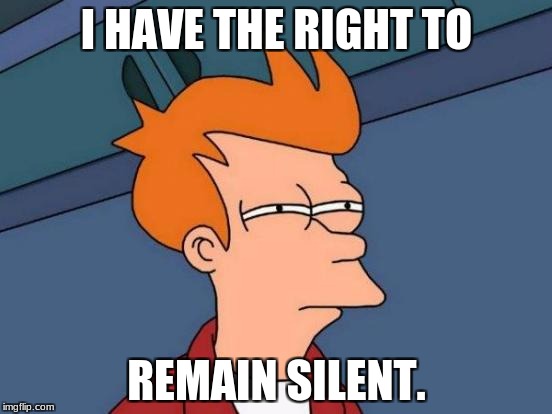
If the right to speak means anything it has to be paired with a right to remain silent – just like the right to practice a religion has to be paired with the right to practice none at all. The same is true of authors, musicians, painters, and any other creative person. I’d hope that’s something that, at the end of the day, we could all agree on.

Weekly Watches & Reads – UK History Edition

In May, my wife and I took a much delayed (thanks COVID!) vacation to the United Kingdom, hitting London, the Scottish Highlands and Isle of Skye, and Edinburgh over the course of a couple of weeks.

As is my wont, the trip inspired me to come home and read/listen/watch various things about that part of the world. Here are some quick thoughts.

The whole of the UK is steeped in history and it occurred while I was there that I knew precious little of it, particularly when it came to Scotland. I remedied that by digesting the entirety of Scotland: A History from Earliest Times, by Alistair Moffat.

Never was a book so aptly named, given that it spends a good hunk of its epic runtime (23+ hours in audiobook format) covering the geological history of Scotland before human beings even enter into it. Honestly, I wish the book would have condensed that considerably, since Moffat then covers basically all of Scottish human history (my other criticism is that he goes too close to current, lapsing from history to journalism in the end). As a result, it has a kind of bird’s eye view of things, without a whole lot of detail, but for someone like me who didn’t have a great idea of Scottish history, it was just about perfect. Particularly interesting to me was how Sir Walter Scott (who has a huge memorial in Edinburgh, pictured above) essentially created the modern conception of being “Scottish,” drawing on Highland things that had mostly been suppressed previously.

One of this historical things about which I knew nothing at all before we hit Scotland were the Jacobite Risings that happened there in the 17th & 18th Centuries. The last, started in 1745, was particularly prominent, in spite of the fact that it ended in bloody defeat for the rebels at the Battle of Culloden. We visited the battlefield and I wanted to get a better sense of the battle, so I read/listened to a book with the title Culloden, by Trevor Royle, which you’d think would do the trick.

Except that the full title is Culloden: Scotland’s Last Battle and the Forging of the British Empire. The Culloden part is, maybe, one third of the book, although perhaps it doesn’t need much more than that (it took place on wide open terrain and was over in about an hour – Gettysburg it was not). The rest is about how many of the officers and men at Culloden went on to fight Britain’s imperial wars around the world, with a decent focus on North America. It was interesting, in its own way, but not quite what I was looking for.

My thought was Culloden would be a good subject for a movie, so I was surprised that there weren’t many out there dealing with it directly (as opposed to using it as some kind of background). I finally found one called Chasing the Deer that I was able to watch on YouTube.

I was drawn to this partly because one of the actors is Fish, original lead singer of Marillion and successful solo artist in his own right. I knew he’d done a little bit of acting (this was his only feature film) so that made certain I had to check it out. It was well done in terms of tone and accuracy, but the small budget came through and the script wasn’t great (neither, sad to say, was Fish, although he was about par for the course with the rest of the cast). It did give you some idea of what the actual battle was like, however, so that counts for something.

My final bit of reading when I got home was Devil-Land: England Under Siege 1588-1688, by Clare Jackson.

We were in Westminster Abbey and I saw Oliver Cromwell’s tomb (well, slab of tile under which he’s buried) and realized I’d never really dug into Cromwell or the English Civil Wars. This book looked like just the thing to fill that gap. It’s just as long as Scotland, but only focused on about 100 years, after all. Still, I was disappointed that this was also pretty high-level history, without a lot of detail about life on the ground. In addition, the Civil Wars didn’t get any singular treatment and were just events along the way that happened to involve the royals that were really the focus of the book. There was no discussion of any political philosophy underlying the Republicans or Royalists. What is clear to me, however, is that this period was hugely influential on the American Founding Fathers, as you can pick precise parts of the Constitution that seem designed to prevent atrocities and injustices that happened during this era.

Speaking of Westminster Abbey, part of what we took in there were the tombs of Elizabeth I and Mary Queen of Scots. Somewhere along the way I found out there was a fairly recent movie about the pair, cleverly titled Mary Queen of Scots, with Saoirse Ronan in the title role and Margot Robbie as Elizabeth.

As the title suggests this is a Mary-forward portrayal of events and does give you a sense of the era (the claims of historical inaccuracy, based on my reading, are mostly down to interpretation rather than outright incorrectness). That said, it’s fairly dull for the most part, skipping large periods of time in order to cover all of Mary’s time in Scotland, but precious little of her time as a prisoner in England. And as much as I love David Tennant, one of John Knox’s rants on how wicked women are was enough. Nice bit of synergy, though – I started Devil-Land just after we saw this and it starts with the execution of Mary, so it was a nice transition.

Much less period, and not at all historical, but definitely getting points for Highland isolation is Calibre, from 2018.

Calibre is the story of two buddies, one of whom is getting ready to become a father, who jaunt into the Scottish wilderness for a hunting trip. They wind up in a very small town filled with very creepy people who are full of unheeded warnings. A tragic accident happens and the guys get stuck in town without an easy way out. The movies deals in tropes, to be sure (the “small town creepy hick” cliche transcends oceans), but the atmosphere is really well maintained and the acting is quite good. Like I said, nothing historical, but does give you a sense of what it’s like in the middle of nowhere Scotland (see also “Loch Henry,” one of the episodes of the new season of Black Mirror).

Spending a few days in a foreign land is hardly enough time to get a sense of the place. What it can do, at least for me, is spark a deeper interest in the area’s history and culture, such that it will always be something that captures my interest. I figure British history is a rabbit hole I’m going to plumet down into for a good long while to come.

What Comes Next?

Well, it’s been about a month since Heroes of the Empire dropped, so I figured it was time to get back at it. Here’s what’s coming up in my world to look forward to (or run away from!).

My first novel, Moore Hollow, was always intended to be a one-and-done affair.

However, I’ve had several readers ask about sequels, so I kept an open mind about returning to Ben Potter and his life if the opportunity presented itself. The opportunity came when I was revisiting an old National Novel Writing Month (NaNoWriMo) project about a West Virginia lawyer who got wrapped up in a case that touched on UFOs and shadowy Government conspiracies. I didn’t much care for how that story ended up, but I liked the character and thought it was good backstory.

I decided to take Ben and permanently relocate him to West Virginia. There he’ll dig into various paranormal events, some of which brush up against the legal system. When that happens, he and my old lawyer character will team up (or will they?). I think it’s got a lot of potential for some fun, independent stories that I can return to now and then.

The first of those is the so-far-cleverly-titled Untitled Moor Hollow Sequel. In spite of the useless title the book itself is pretty far along. I just completed a third draft and handed it to my lead beta reader. If all goes according to plan, I hope the book (complete with a title!) will come out early in 2024.

After that I’m going to focus on pulling together a new collection of short stories based on what I’ve written since The Last Ereph and Other Stories came out.

I’ve got a decent number of them, some very short, some already shared here, or published in anthologies here and there. It will include stories set both in the world of The Water Road and Moore Hollow (indeed, the sequel story to the untitled sequel is already written!). There may even be another story or two to round things out. Looking for a 2025 release date for that one.

But what of really new stuff? To be honest, I am chomping at the bit to dive into a new world with a bunch of new characters. The Unari Empire books have been my focus for several years so it’s time to turn my attention to one of those slight “ideas” that I’ve got laying around here and there. Plan is to have a new book ready to start writing for NaNoWriMo this year. What will it be about? Right now I have no fucking clue and that’s exhilarating.

Onward!

Heroes of the Empire – The World of Oiwa

I don’t put maps in my books for a couple of reasons. One is purely practical – they’re expensive if they’re any good. The other is kind of philosophical – I think that if the book is well written and compelling that readers won’t get hung up on details of geography. I hope I’ve managed to do that in these books (and others). Geography is fun, but it’s not the story.

That said, I do tend to make maps for myself to use as a reference while I write. Here’s what’s been stuck to the metal part of my writing desk for the past six years, a map of the planet Oiwa:

The bag at the bottom is the collection of role playing dice I used to create the map. I rolled them out and traced around them to create continents and islands, then filled in the terrain. Some of it matched the story idea I was developing, but a lot of it didn’t and impacted things as they moved along.

Essentially, Oiwa boils down into three sectors, two in the north and one in the south. The one on the right is the Unari Empire, which is where most of the action of these books take place. Cye is just off the east coast of that north/south inlet at the bottom. For Widows of the Empire I wrote some about the areas called the Unaru (the very southern part, south of that big mountain range) and the Knuria (most of what’s north of those mountains). The top left contains the nations of the Western Alliance, which have mostly featured as an off-screen force in the books (from the “sometimes you build stuff for your world you can’t use” file). Aton actually goes there in a job that takes place off screen between the first two books.

To the south are the correctly, if unspectacularly named, Southern Islands, which covers everything on the bottom half of the map. They played a larger part in Widows of the Empire and do again in Heroes. As with the Western Alliance I’ve got a whole lot of lore in my head for how the various parts of the Southern Islands fit together politically and culturally, but there was never a good place for it all to go in these books. Aton spends time there in Widows and there’s action there in Heroes, too, but it’s mostly on ships and so we only get a glimpse of some of the Islander culture.

One of the cool things about writing stories that take place in other worlds is the freedom to create whatever kind of world that you want. With that comes a responsibility to bring readers into it in such a way that it feels real and understandable. Building Oiwa, including its history, has been a blast. I hope it was worth coming along for the ride.

Heroes of the Empire – Out June 7. Preorders available here for Kindle and here for other ebook formats.

Heroes of the Empire – A Second Excerpt

As promised, here’ the second of two excerpts I’ll be sharing from Heroes of the Empire this month (for a third, exclusive one, join my mailing list!). In this one, Rossum witnesses how far the Emperor will go to hold on to power.

Rossum kept his eyes on the soldiers behind the barricade, the ones who now had their rifles in their hands. Some clutched at them so tightly, their knuckles were turning white. Rossum knew that look, that pose. They were frightened, getting into something they weren’t ready for.

The soldier on the barricade yelled something again, but even with the bullhorn it was drowned out by the crowd. He flung the bullhorn to the ground and went to his belt, reaching for his pistol.

Before he could unholster the gun, a bottle flew out of the crowd. It smashed against the barricade just at the soldier’s feet, shattering into pieces. The soldier threw up his hands to cover his face, lost his balance, and fell backward off the barricade. The crowd roared a cheer of approval that gave way to laughter.

Rossum didn’t think it was funny. These outnumbered, nervous soldiers had seen one of their leaders humiliated and possibly hurt. There needed to be de-escalation of the situation, not the pouring of more coals on the fire. He started to look for the best way out of here, off the stoop and down the street to safety.

The soldiers behind the barricade were looking for guidance. Their eyes flitted from each other to the lieutenant, who had yet to say or do anything. After a long moment, he drew a sword and climbed over the barricade. About half the troops did the same.

“Go home!” the lieutenant yelled, waving his sword. “This needs to stop!”

“We are home!” someone yelled from the front of the crowd. It moved back a few steps as the soldiers advanced, but resumed the chanting. “Our street! Our homes!”

Rossum knew the lieutenant had made a mistake. Even with bayonets, the troops were hopelessly outnumbered by the crowd. It was only the threat of gunfire, with the soldiers safe behind the barricade, that was keeping things somewhat calm.

The soldiers and the crowd had now realized the situation. After retreating a few steps, the chanting crowd started to inch forward again, back toward the barricade. The soldiers stood their ground for a moment before they started shuffling backward toward the barricade. Members of the crowd had started to pick up rocks, bottles, or any other items they could lay their hands on.

The strange, slow dance continued until what Rossum had thought inevitable happened.

One of the soldiers, sliding back on his feet, backed up until he ran into the barricade. He lost his balance and, without thought, pulled his trigger. Thanks to his falling backward, the shot fired harmlessly over the crowd’s head, but it didn’t matter.

Rocks, bottles, and other projectiles flew out of the crowd toward the soldiers. None found any particular target, but it prompted the lieutenant to start barking orders. In rapid fashion the soldiers still behind the barricade raised their rifles and fired into the air.

The ragged report of gunfire caused the crowd to stop, but only briefly. Another salvo of rocks emerged and the mass of humanity surged forward, sending the front rank of soldiers finally scrambling back over the barricades.

Rossum surveyed the block again. If he could get into the crowd and make it through to the other side, he could slip down an alley. He didn’t know where it went, but it would provide better cover if the troops started shooting. He could feel in his gut that they were going to.

He stepped off the stoop, down the street, and plunged into the crowd. He began to pick his way across, fighting the flow of the human stream like a salmon heading home to spawn. He brushed past two people, touching them, but neither seemed to notice. They were too busy chanting and pushing toward the barricade. Then he ran straight into someone without looking, knocking the other person down.

Rossum stopped and extended a hand to help the young man back up. His eyes went wide when he saw the man’s face. “Moth?”

“Rossum?” Moth said, grinning as he got back to his feet. “You’re one of us? I knew it!”

“Look, you need to get out of here,” Rossum said.

“No way,” Moth said, shaking his head. “We need to stand up to these animals. We have to show them that we won’t be frightened.” Moth’s voice started to waver just a bit, like he was trying to convince himself.

“You should be frightened,” Rossum said, nerves on edge as he listened for the next volley. “They’re going to start killing people.”

Heroes of the Empire – Out June 7. Preorders available here for Kindle and here for other ebook formats.

Heroes of the Empire – Vigram Rossum

One of the cool things about writing books – a series of books, especially – is that you have characters who grow into the story in ways you never imagined when they first showed up. For the record, I’m not one of those authors who anthropomorphize my characters – I made them, I’ll do with them what I damned well please – but that doesn’t mean small characters who weren’t intended for big things can’t surprise you.

I had that happen in The Water Road books. Part of The Endless Hills, the second book, dealt with the aftermath of the sack of a city called Innisport. When I had the main character tour the devastated city I wanted a local to call her out about what her troops had done there. That character was called Mida and all I intended for her to be in one a single scene in that book. Turns out in the final book, The Bay of Sins, Mida not only came back but had a significant storyline of her own, which I used to explore how the people of that city were trying to process what had happened there. Vigram Rossum turned out to be a similar character for me in the Unari Empire trilogy.

I created him originally to be a foil for Aton Askins, the main character who spends most of the story finding ancient artifacts for a mysterious employer. Rossum was the head of security for the person from whom Aton, um, “liberated” his first artifact. Beyond Rossum trying to track Aton down to get it back, I wasn’t sure he’d play much of a role.

Turns out, I liked the idea of Aton having a foil. Not someone who was working against him, at least directly, but who was sort of in the same line of work. The fraternity of those tracking down ancient artifacts of the gods for wealthy patrons isn’t that large, after all. More than that, I liked the idea of having Aton’s foil know precisely what he was doing. Aton has always kind of worked in a state of what we lawyers call willful ignorance – he’s willing to do the job and make the money and not think too hard about where it all comes from. Rossum knows and he thinks Aton needs to know, too. In other words, I liked the idea of Rossum almost becoming a form of Aton’s conscience, getting under his skin and making him reconsider how he’s making a living.

Rossum wound up hanging around, to the point where he’s one of the many point-of-view characters in Heroes. Not only do we get his view of the events in Cye as the story barrels to a close, we learn some more about how he wound up working for his employer in the first place. Rossum was once an Imperial Marine who got caught up in a bad situation and made it worse by doing the right thing. His future employer plucked him from the brig and gave him a second chance, but now Rossum is having second thoughts. Will his current actions echo his past?

Heroes of the Empire – Out June 7. Preorders available here for Kindle and here for other ebook formats.