First, I’m very happy to have a story in the debut volume of Old Bones, the new annual literary journal of Henlo Press.
The story is called “To the Sound of Birds.” It’s about a guy setting up to sell used pulp paperbacks at a swap meet in a high school parking lot when he starts to hear odd noises from the mountain across the highway. Naturally he investigates and discovers something beyond his wildest imagination.
For what it’s worth the inspiration for the story was just that – the high school parking lot where my local SCCA chapter used to autocross was across the highway from a pretty sizeable mountain and, one day, I heard something weird from over there. Didn’t check it out, though, so I suppose we’ll have to let my imagination run wild, right?
You can get a physical copy of Old Bones by clicking here or a Kindle version here.
Or, if you want not just a physical copy but a signed copy, you can come see me! On February 25 I’ll be at Henlo’s first Writers’ Block event at the community center in Barboursville, WV. Things kick off at noon and readings by some of the authors start about 12:45 – maybe you’ll get a chance to hear a chapter from my forthcoming Moore Hollow sequel. It all leads up to the launch of 304 Monsters by Stephen Bias, which looks pretty cool if you’re into the weird West Virginia thing (and who isn’t?). I’ll also have all my other books there, too, if you need to stock up.
New Music!
It’s been a couple of years since I put any new music up, but I’m finally getting around to finishing some of the bits and pieces that have piled up since. The genesis of this one actually dates back to the year of the plague, but I didn’t start to really develop it until recently. It’s called “Chihuahua Junk Pixies.” I don’t remember specifically where the name came from, but I’m sure it had something to do with these two:
It’s bouncy and fun, at least in parts, and, if I may say so, kind of catchy. Enjoy!
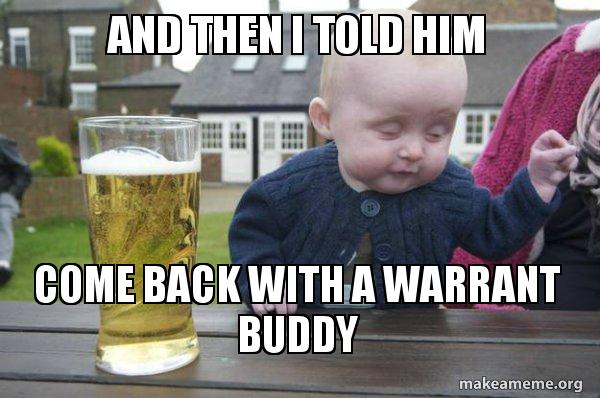
I thought if anyone is qualified to answer this question it might just be the guy who is both a public defender and a writer of fantasy (with horror overtones in spots). So, what of it – can that vampire cop enter your house against your will?
Let’s start with the assumption that we’re talking about an American vampire cop here, so they’d have to comply with the Fourth Amendment to the Constitution, which prohibits “unreasonable” searches and seizures. It also requires a warrant to execute a search of a home. An arrest warrant will also allow police to enter a home, if they have the necessary suspicion that the person named in the warrant lives there.
A search warrant has to be based on probable cause that evidence of a crime is present in the place to be searched. It’s not a particularly high standard, not even up to the level of “preponderance of the evidence” used in civil proceedings (essentially 51% certainty) and a far cry from the “beyond a reasonable doubt” standard needed to convict someone of a crime. Warrants must be particular as to the things to be seized and the places to be searched. That’s supposed to prevent exploratory rummaging of the kind that occurred under “general” warrants in the pre-Revolutionary era. The application of all this in particular cases is tricky and what keeps me employed, but the basic concepts are easy to grasp.
Perhaps not quite so much for vampires, since their lore varies from telling to telling of particular stories. Nonetheless, there does seem to be a consensus that vampires require permission before they can enter a home. According to this article it dates back to at least the 17th Century and a Greek theologian who stated that a way to be safe from vampires was to stay at home, as they couldn’t enter without being invited. But why? One explanation is that the rule “reflects the idea that evil, represented by vampires, can’t harm you unless you allow it to. It’s a choice, an act of free will.” Tough shit if you get taken in by a slick talking blood sucker then!
With that said, let’s set the scene – Detective Angel and Lieutenant Louis show up at your home. As vampires they cannot come in uninvited. Fun fact – as cops, they can’t either! Except, of course, they have a search warrant, which they do (it allows them to search for any and all implements relating to killing the undead). Does the warrant let them in even if you don’t invite them?
The basic answer, I think, is “no.” The law is the law, but the rule that vampires can only enter with an invitation operates more like a law of nature. Police could no more get a warrant to stop the tides or keep the sun from rising than they could to allow a vampire entrance to a home without an invitation. Nor are warrants commands to someone to allow police into your home – they are permission for the police to enter using any means necessary, hence SWAT teams and knocking down doors in the middle of the night.
But the basic answer is not the only answer. For one thing, if we’re assuming a world with vampires – vampires who are police, no less – then presumably the law has made some accommodation for this. Can a court, as part of issuing a search warrant, compel a homeowner to give permission for the vampire police to enter? I don’t see why not. Courts frequently order people to do things they otherwise don’t want to do, including things like provide blood samples and fingerprints. This doesn’t feel any different and doesn’t lean into that kind of acquiescence that might trigger Fifth Amendment self-incrimination concerns (like giving up the password to your phone).
For another, who gets to give consent to enter and how much consent is enough? Many years ago the Supreme Court decided a case where police showed up to a home in response to a domestic dispute. They asked for permission to search the home – the husband denied it, the wife consented. Police searched the home and found drug paraphernalia. The Supreme Court ultimately held that the search was invalid because so long as one person present when the request for consent was made objected to the search, it didn’t matter what anybody else said. In such situations, police had to go get a warrant.
So what if, when our vampire police walk up with their warrant, you’re willing to invite them in but your significant other who also lives there is not? Does the Supreme Court’s rule for the Fourth Amendment carry over to vampire invitations? Or is it a one-person-to-a-home situation? I’m leaning towards the latter, since, as I understand it, once a vampire is invited into a home it is forever invited, implying that consensus among the occupants isn’t necessary.
What makes the question fun to ponder is the clash of what seems like two absolutes – a warrant permits entry versus a vampire’s need to be invited. But that rests on the presumption that the law wouldn’t evolve to account for the fact that (a) vampires were real and (b) they worked in law enforcement. The Founders didn’t imagine automobiles, but the Supreme Court figured out how the Fourth Amendment interacted with them. Same with cell phones. I have no doubt that a legal system that’s been in a constant state of evolution since at least the Magna Carta would figure out how to deal with vampire detectives.
But until then? Ask to see the warrant, then keep your mouth shut, unless you’re asking for your lawyer.
I’ve said before that book titles can be tricky, particularly for non-fiction, since they act as a kind of “promise, a declaration of what kind of book the reader is getting into). That said, Susan Wels’ An Assassin In Utopia: The True Story of a Nineteenth-Century Sex Cult and a President’s Murder makes a hell of a promise. Pity it doesn’t come close to fulfilling it.
The sex cult in question is the Oneida Community, initially founded in New York in 1848 and persisting, in various forms, for the next three decades. The dead president in question is James Garfield, who perished after being shot only six months after taking office in 1881. What purportedly brings these two things together is Garfield’s assassin, Charles Guiteau, who had a couple of brief stints as a member of the Oneida Community.
It’s a pretty slender thread to tie together a book and, to be fair, Wels doesn’t really try too hard. As I said, Guiteau spent some time at Oneida, but given his particular mental quirks and psychopathy you can’t say what he learned there caused him to shoot Garfield (he couldn’t even get laid in a commune devoted to an early version of “free love”!). Rather, she collects stray historical anecdotes that cover several decades while Oneida was in operation and Garfield found his way to the White House. Many of them are interesting in their own right, but they don’t feel cohesive.
Which is a shame, because I would have loved more detail on the Oneida Community itself. Born from forward-thinking social ideas, and eventually infused with ideals of political socialism, Oneida was one of the first of many utopian communities that popped up in the United States in that period. That is descended into a typical sex cult, where a few leaders (old men all) decided who slept with who and, of course, who slept with them. Minors are raped, too, in the name of whatever ideals the leaders dreamed up, a pattern that echoes down through the succeeding generations.
Indeed, Oneida disappears entirely from the narrative once the focus turns to Garfield’s election (and surprise nomination in the first place) and assassination. Wels covers that briskly, but the shooting, and Garfield’s lingering as doctors probed his wounds until he died, is covered more thoroughly (and interestingly) in Candice Millard’s The Destiny of the Republic: A Tale Madness, Medicine and the Murder of a President. As I said way back when:
While Millard spends a great amount of time (particularly in the book’s second half) on Garfield’s lingering death, the first half of the book is spent setting up not only the lives of Garfield and Guiteau up to that point, but the world in which they lived. It’s a fascinating snapshot, showing both how different the United States of the 1870s-1880s is compared to today, and how disappointingly similar the two eras are.
***
In the end, where the book really shines is in the contrast of Garfield and Guiteau, two men swept into their fatal confrontation by things beyond their control. It’s ironic that Garfield, who never really wanted to be president, is the kind of person who we should want to become president – educated and inquisitive, a voracious reader, and apparently a genuinely decent guy. And yet, even as part of a very select club of assassinated presidents, he’s pretty much forgotten these days. Of course, Guiteau is not exactly a household name, either.
If you’ve never dived into this period of American history, or the Garfield assassination, this book is a reasonable start. Beyond that, The Destiny of the Republic does better on the assassination itself and there’s probably a more thorough treatment of the Oneida Community out there, too (which I might have to seek out).
My mother passed away this past weekend. It wasn’t unexpected, but it still came as a shock. Naturally, I’ve been doing a lot of remembering in the past few days and I pulled a story out of my brain involving my mother and the ultimate development of my bizarro musical tastes.
My musical tastes were shaped by two main forces inside my family. The first was my brothers, who are 10 and 13 years older than I am. I say that not to call them old (we’re all old now!), but to point out that just when I was old enough to start thinking about popular music they were old enough to have established tastes and preferences. It’s why, in spite of going through junior high and high school in the 1980s my musical likes lagged by about ten years. It’s through my brothers that I discovered progressive rock – they introduced me to Yes, Genesis, Zappa, etc.
The other force inside my family was my parents. They were my introduction to the world of “serious” music – the symphony, opera (my father is a huge opera fan), musical theater. I never jumped into that stuff quite as much as I did prog, but its influence definitely contributed to that. In addition, both my parents were singers, having been in the WV Symphony Chorus for years. They were big fans of vocal harmony groups like The Hi-Los and the Swingle Singers. I can draw a direct line from hearing that sort of stuff to bands like Gentle Giant, echolyn, and Moon Safari that feature exquisite vocal harmonies.
With that said, my first music collection was mostly cassettes recorded from albums my brothers had (they each had, over time, bitchin’ stereos, while I made due with a boom box). At one point, probably because they were about to move out, I made a more concerted effort to make cassette copies of some albums that I didn’t necessarily love but figured I should have anyway.
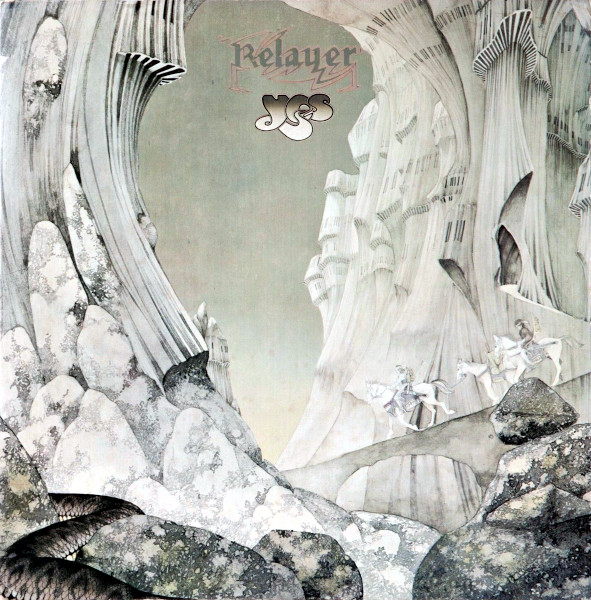
Enter Relayer.
The seventh Yes album, the first and only with Swiss keyboard player Patrick Moraz. I was aware of it at the time, but not really familiar with it. But it was Yes and I was a fan, so I needed a copy.
One day I was the only person in the house and decided that would be a good time to record and listen. See, kids – back in those days if you wanted to record something onto cassette it took as long as the album lasted, so you might as well listen as you went. I wasn’t trying to be clandestine, just considerate.
My parents came home at some point. I’m not sure what attracted my mother, whether the music itself or the cover, but she took a look at the track list on the back of the LP cover.
As you can see, side one is one long piece called “The Gates of Delirium.” My mother was convinced that this twenty minutes of progressive rock madness could only be about one thing – drugs. For whatever reason, she decided to put her foot down and stop me from listening to/recording any of it. I still don’t know why – my house growing up was not exactly censorial and I got exposed to a lot of stuff I was too young to understand, from George Carlin to Monty Python (remember, two older brothers!) and, as I mentioned, Frank Zappa! None of this was an issue with my mother but, for some reason, “The Gates of Delirium,” that great ode to the power of drugs, was a bridge too far.
I didn’t argue with her. As I said, Relayer didn’t mean much to me at the time and I couldn’t mount a credible defense for “The Gates of Delirium,” anyway. Jon Anderson’s lyrics were always what you might call “opaque” – I read somewhere that he was more interested in how words sounded than in what they meant – and I didn’t know, at the time, what it was really about. So I put Relayer away and got on with whatever album was next.
I only later learned what “The Gates of Delirium” was really about – War and Peace. That’s right, in typical prog fashion, Anderson had decided to whittle down a 1200+ page classic of world literature into one side of an album. While I’m certain drugs were involved in the creative process, it isn’t actually about that, much less a celebration of it (as the lyrics make fairly clear – as clear than Anderson typically gets, anyway).
You’d think after all that I’d bear some grudge against my mother for denying me this masterpiece for so long. You’d be wrong! See, the thing is that all of Relayer, and large chunks of “The Gates of Delirium,” are by far the weirdest, most aggressive things Yes ever did and at the time I was trying to record it I didn’t really like it much. When came back to it in college or law school I’d started listening to way weirder stuff and so Relayer didn’t strike me as “too much.” Rather, it hit just the right sweet spot. That it was, in some minor sense, “forbidden” probably didn’t hurt. If I’d lived with it for years by that point, I’d probably just shrugged it off as not for me.
So thanks, Mom, for letting that rarely used overly protective streak come out in this particular instance. It probably led to this becoming one of my favorite bits of Yes music ever.
Let’s talk about the past year on screens – big, small, and phone.
MOVIES
As has become the norm, I didn’t see a lot of new movies this year, although my wife and I did venture out to theaters a couple of times. One of those was to see the movie that I thought was the best of the year, Christopher Nolan’s Oppenheimer.
I don’t have a lot more to say about that movie, as it’s been reviewed and discussed to death since it came out. I will not say it is my favorite of Nolan’s films (I have a soft spot for The Prestige and always will), but it may be the most impressive. I thought James Camerson did well wringing drama out of a shipwreck we all knew about going in, but the tension developed during the scene with the Trinity test was another level.
The other 2023 movie I wanted to highlight was very different, a documentary called The Mission.
You may remember in 2018 when a missionary named John Chau decided he should try and convert a remote, isolated tribe on an Indian Ocean island and wound up being killed for his troubles. The Mission tells that story, based largely on Chau’s own diaries, along with letters from his father to the filmmakers. It uses animation to fill in the visuals, along with some talking heads that cover broader issues of missionary work and whether it’s more of a plague than a blessing. What really got to me is how Chau’s father watched helplessly as his son became more and more devout, captured by an evangelistic spirit, and charged headlong to his death.
As for the “new to me” class, it turns out that I spent 2023 getting caught up on a lot of good stuff from 2022. The first two are a pair of very different horror(ish) flicks, The Menu and Men.
The Menu is another in the recently popular “eat the rich” genre, this time skewering the wealthy and aloof via a snooty, high-end restaurant with the world’s worst customer service (or best, depending on your point of view). It’s darkly funny and enjoyable in a sick, twisted way. As for Men . . . well, it’s bizarre. A woman who suffered a recent tragic loss departs to a small English village as a retreat, only to find that it’s entirely populated by men (and boys, even more creepily) who all look alike (all played by Rory Kinnear, who’s a good enough reason to watch just about anything). It goes from unsettling, past creepy, into confusingly disgusting by the end, but it really stuck with me. It was the high point of several folk-horror movies I saw last year.
For something completely different, the absolute funniest thing I saw last year was Weird: The Al Yankovic Story.
It’s a biopic of Weird Al Yankovic’s life, only it really isn’t. Instead, it skewers biopic tropes and pokes fun at Al’s own image and history. I watched it on a plane on the way to the UK last year and there were a couple of times I drew stares for laughing so hard.
TELEVISION
The watchword for television in 2023 was “endings,” as several excellent series came to an end, most notably Succession. Don’t sleep on the final outings of the gang at Archer, though. That was a show that had no business running as long as it did and continuing to be that funny. I wanted to highlight another couple of excellent shows that wrapped things up last year, however.
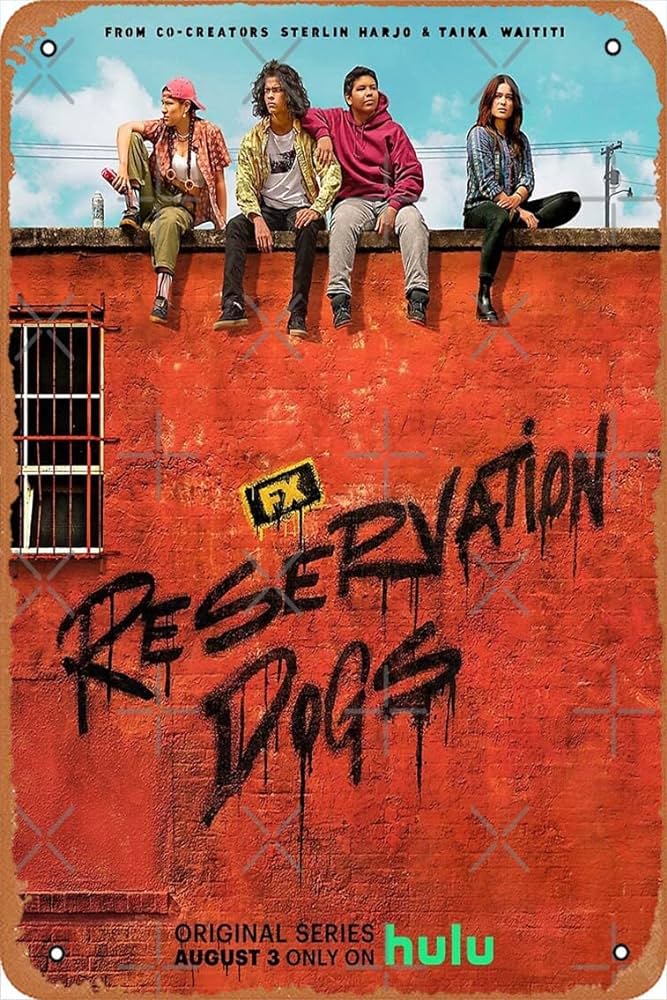
The first is Reservation Dogs, the Native American-led dramedy from FX (or Hulu, whichever).
Set largely on an Indian reservation in Oklahoma, the show was about four young adults trying to make sense of their world and culture in the wake of their best friend’s suicide. It was often funny (the recurring presence of one character’s spirit guide in particular), but also quite moving. And while I would have loved to have gotten more of it, the series wrapped up in a very satisfactory way.
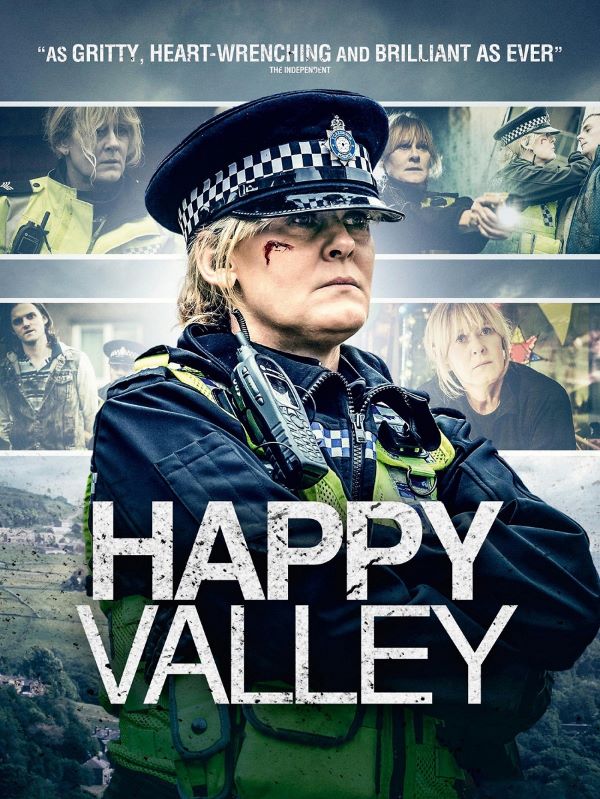
The other ending I wanted to note was also a return, and of a show I knew nothing about before its return, Happy Valley.
The ironically named series is set in Yorkshire and follows the tribulations of a woman who is both a police officer and stand-in mother to her grandson, the product of a rape that led her daughter to kill herself. It’s pretty rough stuff and, plotting wise, I have some issues with how they keep the father/rapist around as the series bogeyman, but the whole thing is held together by an amazing performance by NAME as the officer/grandmother. Very glad I stumbled into it on BBC America.
A pair of new shows really caught my attention, too. Each could have additional seasons, I suppose, but they work well as standalone experiences, too.
One is Scavengers Reign, an impressive sci-fi series from HBO (or Max or whatever the hell they’re calling themselves these days).
The setup is really simple – the crew of a deep-space flight crash land on an alien planet and struggle to survive. That’s really it for plot, which is slight, but that’s not the point of this show. Rather, the creators use the flexibility of animation to conjure a world that is truly and utterly alien, both amazing and terrifying in equal measure. In a way it reminded me of 2001 in the way it takes complete advantage of its medium. A trip well worth taking.
By contrast I wouldn’t recommend the trip taken by most of the people involved in Love Has Won: The Cult of Mother God (another Max offering), much less the titular mother herself.
On the one hand, this documentary is part of the current boom in docs about cults. What sets this apart is that so much of it is populated with video taken by the members itself as their leader goes from somewhat inspirational spiritualist to complete crank wasting away from overdoses of colloidal silver. It’s three episodes and there’s a part in the second where people say things that are just so stereotypically culty that you have to laugh. Then it becomes more clear is what we’re watching is a woman who surrounded herself with true believers that, once she needed help, weren’t able to provide it because they had gone so deep down this particular rabbit hole. It winds up being very tragic.
PODCASTS
I am not what you’d call a devout podcast listening (in spite of hosting one), but I do have a couple of favorites from the last year that I really enjoyed.
The first has been around since the early days of the pandemic, but I hadn’t highlighted it before – The Album Years.
Hosted by musicians Steven Wilson and Tim Bowness (who’ve worked together as No-Man, in addition to a host of other projects), each episode takes a particular year and works through albums from that year that stood out to them. The idea is to leave the obvious choices to the side and feature some lesser known, or perhaps lesser loved, work. Wilson and Bowness are literate in the area and have enough overlap in tastes that they can talk about a lot, but have enough areas of disagreement to keep things interesting.
The other was new for 2023 – If Books Could Kill.
Hosted by journalist Michael Hobbes and lawyer Peter Shamshiri, the tagline says it all: “The airport bestsellers that captured our hearts and ruined our minds.” For each episode one of them (only one, usually) reads the featured book and they walk through the clichés, spurious claims, and just plain weirdness that infests pop psychology, self-help, and popular political/economics books. It’s funny, and often deeply sarcastic, but the work is kind of serious – we lap up a lot of bullshit as a society, often packaged in innocuous ways, so it’s good to call it out every now and then.
Now that the new year is well and truly underway, it’s finally time to take a look back at 2023 (I loathe the “best of the year” lists that start popping up in October). This year I’ve decided to split my thoughts in two, leading off with books and music this week, with movies, TV, and podcasts coming next week.
BOOKS
Going back through my Goodreads data for the past year I was shocked to see that I only read one “new” book that was actually released in 2023, John Scalzi’s Starter Villain.
It’s about what you’d expect from Scalzi these days, a fun, quick read that succeeds in doing what it sets out to do, which is entertain. The setup involves an everyman who finds out that his deceased uncle was part of a Dr. Evil-style collection of global supervillains and he’s been picked to take his place. There are a lot of hilarious ideas (not just talking cats as you might expect from the cover, but talking dolphins with labor issues) and snappy dialogue, but I kind of wish the main character had been a little more seduced by the “dark side.” He never really has to grapple with whether to be a villain. Nonetheless, recommended if you’re into that kind of thing.
What of older books I read last year? There were several good ones.
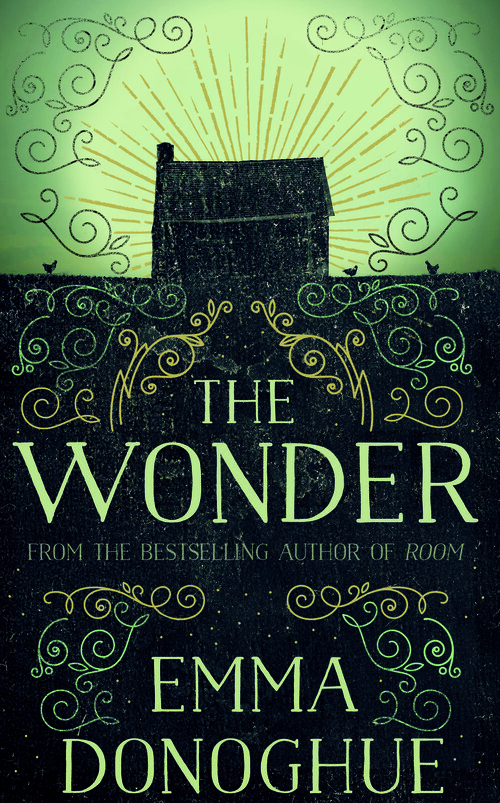
The first is kind of a cheat, as I mentioned the film adaptation in my round up last year, The Wonder by Emma Donoghue, from 2016.
Lately I’ve taken to watching a movie or TV series based on a book and then going back and reading to book to see how they compare. I’m of the “books and movies/TV shows are different” camp, without one being better than the other, necessarily. That said, the novel here has some interesting layers, thanks to the point of view, that the movie couldn’t really get into. As someone who, in my day job, sometimes has to meet delusional people on their own ground in order to represent them, the struggle of the rational, scientific main character here to connect with the religiously-minded family she’s inserted into really worked for me.
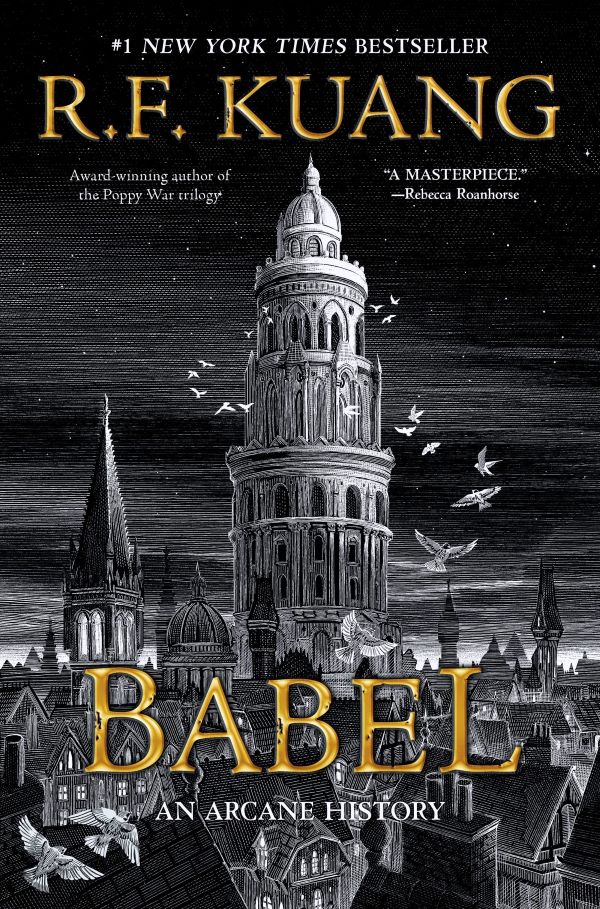
The other most interesting work of fiction I read last year was R.F. Kuang’s Babel, from 2022:
I wrote a bit about it here. The more distance I’ve had from it the more I liked it, which is always a good sign. Plus, the magic system Kuang uses there informed the one I have in my current WIP, so it was definitely an influence.
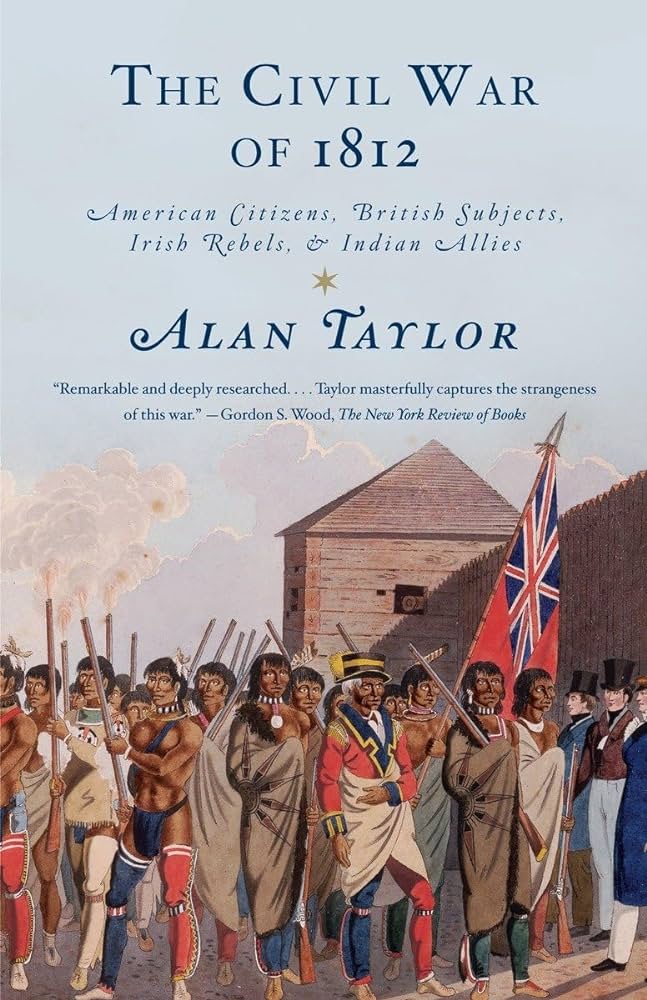
As for nonfiction, I had several runs of multiple books on the same topic – World War I, the French Revolution & Napoleonic Wars, the recent history of Israel/Palestine – one of which was the War of 1812, generally considered an “unknown” war here in the United States. My favorite read of that bunch was The Civil War of 1812, by Alan Taylor (from 2010).
Taylor’s thesis is that the United States’ northern border with Canada (still a British colony at that point) was really more of a concept than a reality at the time, with a large population of British loyalists from the US fleeing into Canada after Revolutionary War. As a result, there were families pit against each other, former business partners, etcetera, in what was a really nasty conflict. A different perspective, which is always important for history.
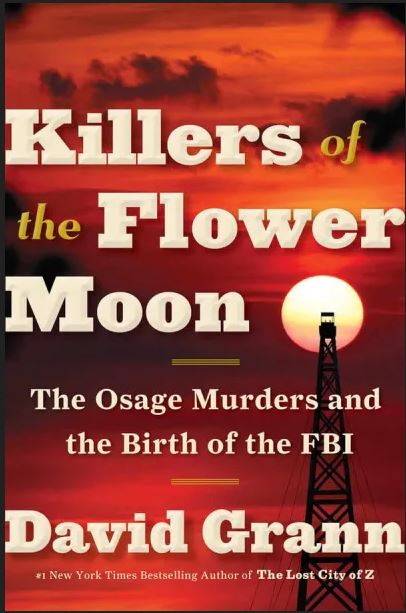
The other non-fiction highlight for me was David Graan’s Killers of the Flower Moon from 2017.
Of course, this was because of the impending release of Martin Scorsese’s film adaptation, which I haven’t been able to see yet. I know the movie’s not organized in the same way as the book and for good reason. For two-thirds of its time Killers is an interesting exploration of murder cases of the Osage and the struggle for oil money. It’s in the last third, however, that we see that the story Graan has told thus far isn’t unique or extraordinary – it was very much business as usual all across Osage territory. It was a slow motion ethnic cleansing and it happened within the lifetimes of many.
MUSIC
Thankfully, 2023 itself was little more robust when it comes to music, as there were several excellent releases that caught my attention from the year.
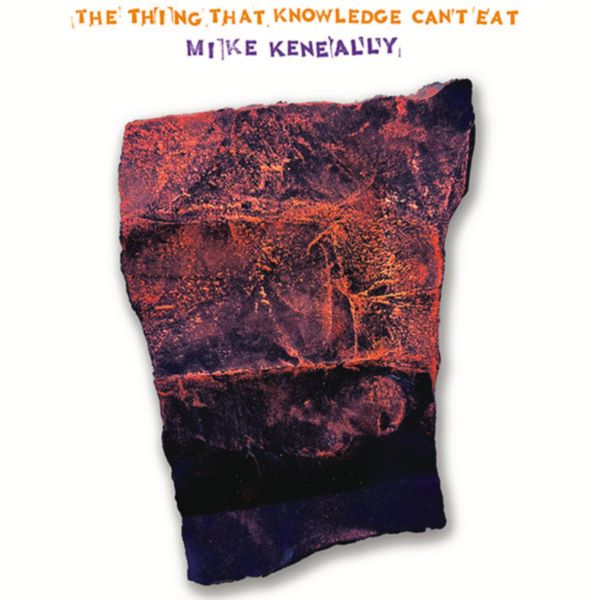
This is the kind of album Keneally hasn’t done for a while, just a collection of songs that shows off his amazing range as a player, writer, and arranger. I mean, the thing starts out with a song that’s just layered vocals and sparse piano about the beauty of logos. From there it shifts through art pop, metal riffing (with a Steve Vai guest appearance), and even Zappa-esque big band (with an assist from the Metropole Orkest). What’s more, it all works together. It reminds me of the great Gentle Giant albums where each track sounded different from the others but they all sounded like they belonged together. Appropriately enough, the drummer on the last track, “The Carousel of Progress,” is none other than Malcom Mortimore of . . . Gentle Giant.
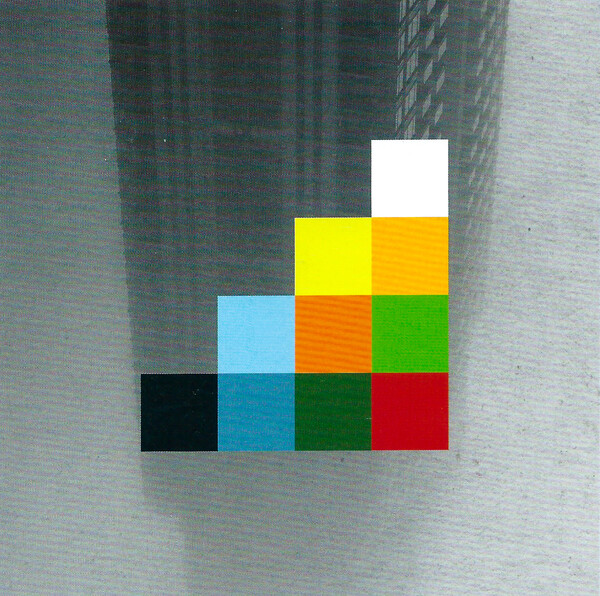
The other new album that really grabbed me, to my surprise, is Steven Wilson’s The Harmony Codex.
I probably liked his prior effort, The Future Bites, than most people, but it was really uneven. And when individual tracks from The Harmony Codex started coming out they didn’t particularly grab me. I’m glad I still got the album, but this really is an album that needs to be digested in one sitting. Like the Keneally album it covers a lot of stylistic ground, with the electronic elements blended in more successfully than The Future Bites. This was really a pleasant surprise and it pleases me when someone with so much out there, like Wilson, can still surprise me.
As for “new to me” albums, well, I’m a sucker for great band names (likewise, I’m happy to buy a bottle of wine simply because of a cool label), so when I stumbled across The Helicopter of the Holy Ghost on Bandcamp there was no doubt I was going to check them out.
What I found was a sad, but hopeful, backstory. In 2001, musician Billy Reeves was in a car wreck, which resulted in him spending two weeks in a coma. In 2017, Reeves’ brother gave him a pair of mini-discs that had been in the car with demos Reeves had been working on – only now he had no memory of them at all. Bringing in other musicians to help complete the work, those demos became The Helicopter of the Holy Ghost’s album Afters. As you might expect, the music has a melancholy quality that reminds me in some spots of Robert Wyatt’s solo work. Lots of piano and lush vocals push things along. Good with headphones (or earbuds).
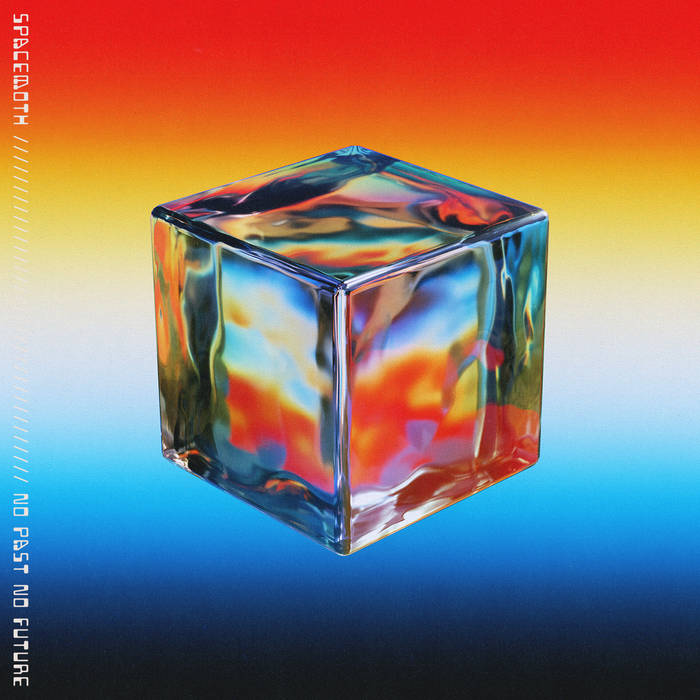
My other Bandcamp surprise for the year was another grower, No Past No Future by Spacemoth.
It starts out as a very noisy, buzzy synth-pop/psychedelic record, which is cool in its own right, but goes on to mellow and stretch out a bit in the second half. By the time we reach the title track and the end you’re in a completely different headspace, although the buzzy edge remains. Very cool and another real album that deserves consideration as such.
That’s it for sounds and words. Next up, them newfangled moving pictures!
Both because I’m still hard at work on the new novel I started during NaNoWriMo and because the rigors of the holidays are starting to catch up with me, I’m going to wrap things up here for the year with a regift of a post I wrote in 2021 about what makes a Christmas story.
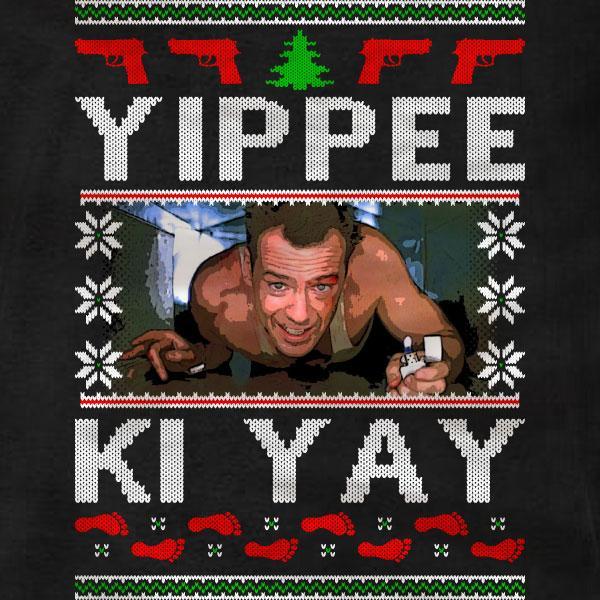
A confession – I’ve never seen Die Hard. I’m not really an action movie guy, so it’s not really in my wheelhouse. I was kind of surprised when it started popping up described as a “Christmas movie,” but I suppose it takes place during the holiday, so why not? Then early this week I saw an interesting push back against that argument – basically that while the movie takes place at Christmas it doesn’t actually have anything to do with Christmas or what it means. That got me thinking about what makes a Christmas story and whether you can have a Christmas story that doesn’t even have Christmas in it.
I stand by what I wrote then, which is ultimately what matters the most about whether something is a Christmas story or not is whether you think it is or want it to be. In the time since I have seen Die Hard and tend to agree that it’s more Christmas adjacent than anything else, but if that’s what lights your tree who am I to say otherwise?
Even if this is more my speed:
Regardless of how you celebrate, what you celebrate, or even if you don’t – Happy Holidays! See you in 2024.
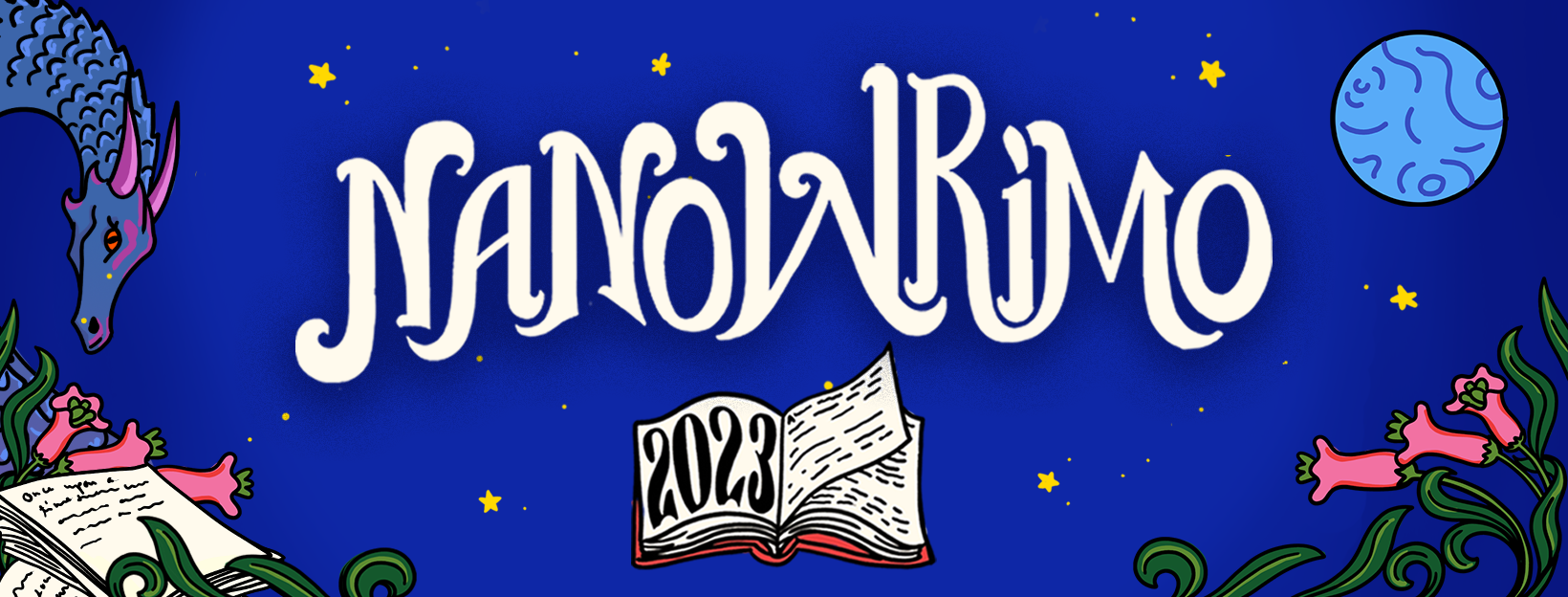
NaNoWriMo is over, which means it’s time to take stock and see whether it was all worth it. Was it? Well, I did get this spiffy graphic:
Which means, yes, I “won” again this year. I’m particularly pleased since the month included not only Thanksgiving (which my wife and I host for the family, so lots of work) but a birthday weekend jaunt to New Orleans (thanks, honey!) and I still managed to keep to task and wind up with 50k+ words in the end.
I’m really happy with them, too. There are definitely things that need to get worked out in a second draft (I have notes, of course), but this story and this main characters and taking me to some different, interesting places. Alabrie, the city-state where the story is set, is shaping up to be a character all in itself.
It’s not done, of course, not even the first draft, but I can see the end of the tunnel. More than most books I had a real idea of what the entire story was before I sat down to write it. Still, much work still left to do.
It’s that time of year again! No, not when the lungs are clogged with clods of pumpkin spice, but when it’s just about National Novel Writing Month!
As I wrote a little while back I’ve got a new project ready to go for NaNoWriMo this year. I’ve got a few more days to put to finishing touches on my planning and then it’s off to the races on Monday. Needless to say, there won’t be any new posts for November, and maybe even into December if I’m on a roll.
People create for lots of different reasons. Some folks do it purely for the fun or catharsis of creation. Some do it as a vocation, if they’re good at it, enjoy it, and can hit the market just the right way. Others are trying to tap into something fundamental about humanity or probe deep into the eternal mysteries of the universe. And some just want to share their creation with the world and hope it brings a few people joy.
I fall into that last category. I write largely because I enjoy it, because it’s fun to tell stories, and I hope some other folks out there will enjoy reading them. I’m not trying to write the “great American novel” or plumb the depths of the human condition to help better understand my fellow people. All I’m really interested in is entertaining, maybe more thoughtfully sometimes, but that’s it.
Does that make me a hack?
I never thought so until recently. To my mind, “hack” was a pejorative term. Wikipedia, at least, agrees with me, defining a “hack writer” as a:
Term for a writer who is paid to write low-quality, rushed articles or books “to order”, often with a short deadline. In fiction writing, a hack writer is paid to quickly write sensational, pulp fiction such as “true crime” novels or “bodice ripping” paperbacks. In journalism, a hack writer is deemed to operate as a “mercenary” or “pen for hire”, expressing their client’s political opinions in pamphlets or newspaper articles. Hack writers are usually paid by the number of words in their book or article; as a result, hack writing has a reputation for quantity taking precedence over quality.
Putting to one side the unwarranted bias against “pulp” writing or romances inherent in that definition, it’s clear that being called a hack is insulting. It’s a charge that your insincere, only in it for the money, not making art but some kind of crass commercial product. If I was called a hack I’d be deeply offended, same as if someone in my professional life called me a shill or a mouthpiece.
But maybe I’m looking at things all wrong, if this Slate piece by Sam Adams is right. Titled “Bring Back the Hack,” it argues that movie studios should look to “hack” directors to helm their big-budget franchises rather than getting up-and-coming auteurs whose singularity tends to get squished in the franchise machine, anyway:
The problem here is two-pronged. The first is Hollywood’s penchant for sucking promising young directors into its maw, tempting them into selling their artistic souls to the franchise devil with medium-fat paychecks and the possibility of speaking to a larger audience. The second is that the movies frequently end up being lousy, extinguishing whatever hint of personality made the filmmaker attractive in the first place and revealing them to be hopelessly out of their depth when tasked with bending a massive studio movie to their will. You don’t get the unique stamp of an artist, but you also don’t get the frictionless craftsmanship that would be brought to the job by a seasoned old hand—in other words, a hack.
Adams seems to deem the primary feature of a “hack” as being that “you don’t know who they are.” He then launches into a discussion distinguishing workmanlike directors such as Jon Turtletaub and even John Huston from true auteurs. Later on, however, he sort of admits that “hack” isn’t really the word he’s looking for:
That’s where hacks come in. A hack—or, if you insist on a less prejudicial term, a craftsperson—isn’t out to make a movie their own. Their aim is to fulfill the task set before them. Like former cinematographer Jan de Bont and former costumer designer Joel Schumacher, they often entered the business from the lower ranks of the crew rather than as writer-directors, rising to the top with an understanding based in the practicalities of production. A hack is a perfect match for a formula film, whether it’s the latest IP extension or simply squarely in an established genre, because they don’t consider themselves better than the material.
This “craftsperson hack” category includes, for Adams, people like Ron Howard (who won Best Picture and Best Director Oscars for A Beautiful Mind) and Jon Favreau (who launched the most successful film series in history, not to mention The Mandalorian). If those guys are hacks then I suppose I’d be happy to be called one, though that term doesn’t feel right. Neither is somebody that’s on my list of favorite directors, the kind of people whose stuff I want to see just because they made it. But Adams cites Favreau’s going to battle with the studio to cast Robert Downey, Jr. for Iron Man, which hardly seems like a pliant, go-along-to-get-along kind of thing. Hell, if hacks can make stuff like Rush then sign me up.
At any rate, I don’t think the same kind of distinction can be made with writers. Name brands are a thing, after all, since people like to read more books from an author if they liked one of their books. That applies equally to deeply sublime stuff and more pulpy just-for-fun stuff. I suppose the closest thing you have in books is situations where some established author’s name continues to hold sway even though others are actually writing the books. Zombie comic strips come to mind, too, I suppose.
I tend to agree with Adams that bringing in somebody known for their personal vision in movies to direct the next comic book flick is kind of a waste. Regardless, I don’t think defining hack so broadly as to lose its meaning does anybody any favors. Leave to it the stain of uncaring make work, produced without any personal motivation.
I may be a lot of things, but I think I’m safe in saying I’m not a hack.











 JD Byrne