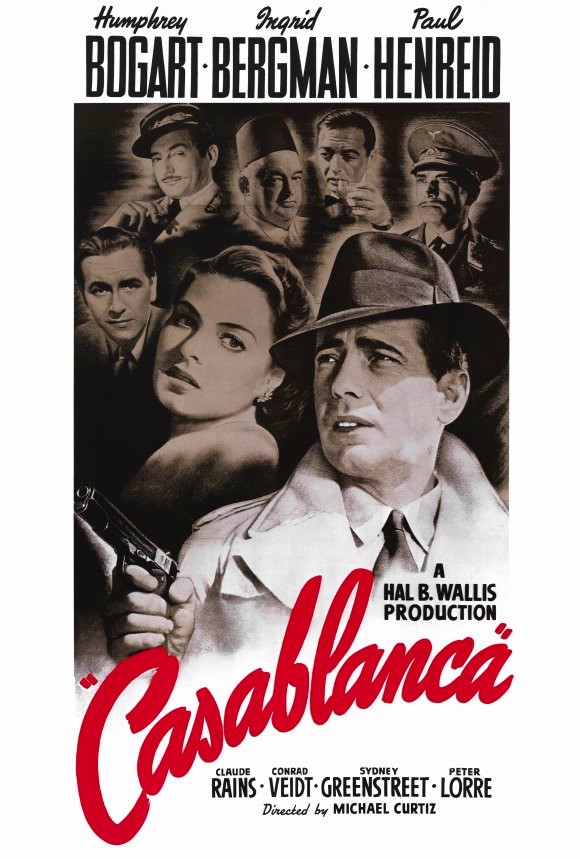
A few weeks ago my wife and I watched Casablanca. I’d seen in long ago, way before I was really into movies (contrary to what my wife thinks, we’d never seen it together) and it seemed like something worth revisiting.
It’s as good as advertised, a rare example of a film of that vintage that’s not just great in the context of its times but has aged very well.
Something really struck me about one of the early scenes. A lot of the action in Casablanca takes place at Rick’s, the club run by Humphrey Bogart’s character. Our introductory scene to that place is one of the long shots (like the famous Copacabana entrance shot in Goodfellas) that lets us get the scope and feel of the place, all the while dropping in on various conversations as the cameras pass by (and getting a song from Sam).
Two of those conversations are a great example of how to get a viewer necessary information about the world we’re in without being too heavy handed about it. The movie is set in the early part of the Second World War and the city of Casablanca itself is a kind of waypoint for refugees fleeing the conflict, somewhat under Nazi control but not entirely (or at least they want it to look that way). That people are desperate is part of the fabric of the film.
In the first conversation, a well-dressed but clearly distressed woman is negotiation the sale of some diamond jewelry to a buyer. He offers her “two thousand four hundred” francs (presumably) for it, because the market is saturated with diamonds right now (presumably sold in similar circumstances). The woman clearly thinks this is too little, but as viewers we don’t really know if she’s right. After all, the piece she’s selling might have great sentimental value but be fairly common (of even a fraud). That bit of conversation leaves us hanging somewhat, partly because the camera has other places it needs to be. There’s no time for context.
We shortly get the context, anyway. The camera pans across another conversation, lingering just long enough for us to overhear a man negotiating with a smuggler to get him out of the city. The price? 15,000 francs – “in cash,” he says, more than once. Instantly we know that the woman with the jewelry is probably getting screwed on the price, but she has to sell because she’s raising money to get out of town. It’s a perverse example of supply and demand, played out over the course of a minute or so. “Info dumps” are sometimes relegated to the concerns of fantasy and sci-fi writers, but the truth is that all fiction requires the kind of world building that can lead to info dumps. Casablanca has a great example, right up front, of how to do that quickly, efficiently, and without bogging down the important part – getting to Bogey!
The Major League Soccer regular season wraps up on the other side of this current international break. Every team but one will be in action on “decision day,” as the final playoff spots are booked and seedings secured. DC United are still alive for playoff berth (it’s been a few years), so I’m fairly excited.
With the regular season winding up, that means there’s talk about end-of-season awards, including who should be named Most Valuable Player. An early favorite for that award at the start of the season would have been Lionel Messi, who was expected the lead Inter Miami CF to the Supporters’ Shield (awarded to the team with the best regular season record), top playoff seed and, eventually, MLS Cup. But a funny thing happened on the way to that Supporters’ Shield, which the club wrapped up a couple of weeks ago – Miami proved that maybe they didn’t really need Messi that much after all.
Before we go any further, I’m not here to rip on Messi’s talent or career. He’s an amazing player, easily in the running for GOAT status when it comes to soccer, and I’ve enjoyed watching him play even though he’s never played for any of my teams. I’m just talking about whether, in this particular season, Messi deserves the title of MLS MVP.
Let’s get the numbers (all sourced from FotMob) out of the way – going into the final weekend of play Messi has scored 17 goals and dished out 10 assists in only 18 games. That’s an insane rate of production, down to a combination of Messi’s freakish talent and MLS not exactly being the most competitive league in the world. For context, DC United’s Christian Benteke, who leads the league in goals scored, has 23 in 29 games (with 5 assists to boot), while assist leader Luciano Acosta (of FC Cincinnati – and formerly DC United!) has 16 assists and 14 goals in 31 games. If it was just a matter of per-game production, Messi is the easy choice.
But that’s not the award. There are purely stat-based awards for scorers and assisters and such. One could argue that those should be based on something other than raw numbers (goals per 90 minutes played, or something), but that’s a debate for another day. Other leagues award the best player. The crux of the biscuit when it comes to MVP awards, however, is the word in the middle – “valuable.” What does it mean to be the most “valuable” player on a particular team, much less in the league?
By one measure Messi would clearly be the most valuable player in MLS, given the eyeballs and money he’s brought to the league. Messi isn’t the league’s first big signing (his owner/operator at Miami, David Beckham, literally changed the way MLS operated when he came to the Galaxy in 2007), but there’s no denying he’s had a huge impact on the league’s profile globally. Haters may call it a “retirement league,” but if the retirees are the best who ever played the game does anybody really care?
Of course, that’s not what “valuable” really means in this context. It has to do with on the field performance, what a player means to the success of his team. That said, it’s not purely about who has the most talent or who had the gaudiest stats. Therein lies the problem with Messi being MVP, at least this year.
The 2024 MLS season was semi-interrupted by Copa America, with the nominally South American championship being held in the United States. Messi, of course, played for Argentina in that tournament. His last MLS match prior to the tournament was a 3-3 draw with St. Louis City on June 1. At the time, 18 games into the season, Miami was in first place in the Eastern Conference and overall with 35 points, 2 points clear of Cincy.
While Copa America was going on, Miami played 5 MLS games (the league doesn’t actually stop for these big tournaments, which makes it look pretty amateur, honestly), of which it won 4. The only blemish was a 6-1 drubbing by Cincinnati. In spite of that, Miami slipped behind Cincy by a point at the top of the table. Maybe Messi’s absence was a big deal?
Here’s the thing – Messi was injured during Copa America and didn’t play again for Miami until September 14. In the interim, Miami played 4 more league games (we’ll leave to one side the Leagues Cup), all of which they won, including a 2-0 win over their Cincy nemesis. As a result, when Messi came back, Miami was right where they were when he left for Copa America – at the top of the table and 8 points clear of Cincy.
In other words, while Messi was away for either international duty or due to injury, Miami played 9 league games, won all but one of them, and were in the same place in the table as when Messi left, but even more secure in that perch. Given that, how can it be said that Messi was the “most valuable” member of that team? Sure, the other big name players that have flocked to Miami over the past few years – Jori Alba, Luis Suarez – are largely there because of Messi, but evidence suggests if Messi had simply vanished from the face of the Earth during preseason Miami would have been just fine.
Who is the most “valuable” player from MLS this season? I can’t say, as I haven’t seen many games outside of DC United’s and I’m biased towards Benteke because of that. But I am fairly certain it’s not Messi, at least not this year. Best player in the league? Almost certainly. The most valuable on a team that barely noted his absence? Certainly not.
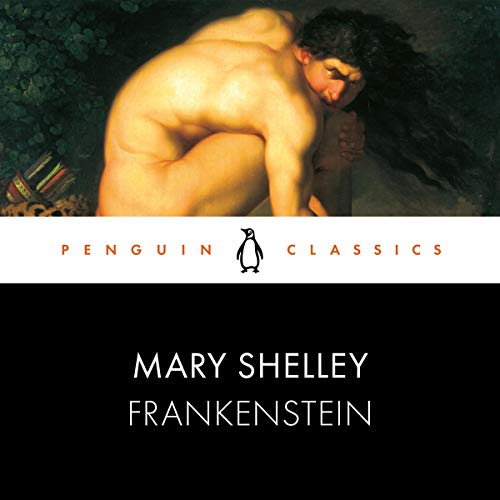
Sometime last fall (after Halloween, if I’m recalling correctly), I was flipping through the channels and saw that the 1931 James Whale version of Frankenstein was going to be on Turner Classic Movies. Having never seen it, but seen plenty of stuff riffing on it, I decided I had to check it out.
Midway through the movie it occurred to me that I’d never read the Mary Shelley novel upon which it was based, either, so I read it immediately afterwards.
It’s a fascinating study in adaptation and how stories can shift based on how they’re told.
The basics are the same – a scientist working on the cutting edge of technique and ethics, the guy actually named Frankenstein, cobbles together a creature from dead people parts and reanimates it. Said creature then stalks about the countryside.
But really, the differences are much more interesting and really take each version of the story in a completely different direction.
The movie is short (not much more than an hour) and constitutes what I think of as the generic “Frankenstein story.” That is, the creature gets out of control and is chased down by a pitchfork wielding mob. Indeed, he appears to die in a blaze and building collapse at the end of the movie, but there were sequels to be had so they retconned that starting with Bride of Frankenstein in 1935.
The book, by contrast, is much more personal. The terrors perpetrated by the creature are smaller in scale but land much more heavily because they relate directly to his creator, Frankenstein himself. Not for nothing is the book named after him as it is really the scientist’s story, not so much the creature’s. If the movie is the easily replicable template for monster movies to come, the book is much more thoughtful about what it means to create life in the first place and what that responsibility does to someone.
Which makes the differences between the movie creature and book creature so interesting. The movie creature, played famously by Boris Karloff, is essentially an innocent cast into the world and unable to cope with it. The event that incites the populace against the creature comes when he accidentally kills a young girl while playing with her. It’s completely the sort of thing that a being without any real understanding of the world could do, not out of any malice but through sheer naiveite.
The book creature is, by contrast – well, he’s a monster, one that’s all too human at his core. Abandoned by Frankenstein and utterly alone in the world, he saves a small girl rather than accidentally killing her – and gets shot for his troubles. Pissed at the world, and Frankenstein in particular, he cold bloodedly kills Frankenstein’s brother and frames an innocent for it. He extorts Frankenstein into making him a mate (which never comes to fruition in the book), threatening the rest of the Frankenstein family. He kills Frankenstein’s best friend and bride. Honestly, he’s pretty much a serial killer with a very particular set of victims. Whatever empathy you feel for the creature at the get go dissolves away by the end of the book.
Which, of course, is a very real world way of thinking about murder. It’s not uncommon for killers, even serial killers, to have upbringings that would make your eyes water. Nonetheless, it’s hard to feel too sorry for them once they’ve taken another life (or lives). I don’t know if Shelley intended to book to function in this way but to this public defender’s eyes it plays like the paradigmatic capital case mitigation argument – yes, he’s a beast, but who wouldn’t be after all he’s been through?
In other words, book creature is much more deserving of the fate of movie creature, even though their respective endings both say interesting things about human nature.
The other really interesting difference, to me, was in the characterization of Frankenstein himself. Movie Frankenstein – who for some reason is renamed Henry from Victor, but his friend Henry is renamed Victor! – is the prototypical mad scientist. His lab crackles with insanity and hubris just as much as electricity and bubbling chemicals. He doesn’t really feel conflicted about what he’s doing, or what he’s done, until the creature becomes a problem that needs solved. He’s just not a very interesting character.
Book Frankenstein, by contrast, falls way deep into the issues created by his creation. He doesn’t sound like he’s just about to slip over the cliff into insanity, although he is a loquacious mother fucker. In fact, Shelley’s book pulls off the trick of being beautifully verbose to start, before becoming frustratingly overwrought, then back to beautiful just be sheer force of will.
Without a doubt, the movie Frankenstein is much more fun. It’s a scary romp with just enough pathos to make the conclusion feel tragic. Frankenstein the novel is more of a thinker and I can see why later attempts to make a movie (or TV show) closer to it didn’t come out too well. Each has their purpose and I’m glad I’ve consumed both, but if I had to pick only one – it’s book for me all the way.
When I was first pulling together the world of the Unari Empire, one of the character ideas I had was that of an Imperial censor. That character would kind of pop up throughout the story, struggling to hold on as the Empire shattered around them, slowly losing their will to do the job that had defined them. I shelved that particular idea since I didn’t have a good handle on what the day-to-day life of a censor looked like.
Darnton explores the nitty gritty of how censors actually did their jobs during three historical periods – pre-Revolutionary France, India in the late 19th and early 20th centuries under British rule, and East Germany right around the fall of the Berlin Wall. It’s a dry work, without a lot of compelling through lines for casual readers, but it does offer some fascinating insights into what it means to be a “censor.”
Primarily, what censors did (or what these censors did) on a daily basis wasn’t squelch explicitly political speech aimed at criticizing the regime for which they worked. In a lot of ways they worked as hyper-powerful literary gatekeepers, helping to shape literature by acting as a kind of quality control. The French censors, many of whom were writers themselves, wanted to ensure the quality of French literature. The British censors in India were hopeful they could guide the Indians into writing great literature (“great” here meaning “what British thinkers consider great,” of course). The East Germans helped literary works get trimmed and massaged to reach an audience.
To an extent, in crafting these portraits, Darnton is trying to humanize the censors. They weren’t faceless thugs grinding ideas into the dirt under their bootheels – they were just people doing a job in which they believed, at least most of the time. This isn’t to say that Darnton comes across as a fan of censorship (he emphatically doesn’t), but it does create a more nuanced picture of what they do most of the time.
Of course, what they were doing all the time was still censoring writers (Darnton focuses almost exclusively on books, with some theater stuff thrown in), even if most of the time their motives were more benign than we might expect. The French censors Darnton talks about who squelched a bawdy insider narrative of life at Versailles might have thought it was low brow trash, but they were also aware that it made fun of the royal court and you can’t have that. That dynamic is even more clear with the British, who developed a real knack for decoding incipient strains of Indian nationalism and independence movements in modern retellings of ancient myths (not for nothing, but if you see rebellion in every work you read, maybe that’s saying something about you?). The East Germans, of course, made no bones that they were making sure new books were ideologically appropriate, regardless of the genre.
One interesting dynamic that plays out across all three eras is that every regime at least pays lip service to the importance of free speech. That is, none of the regimes saw their restriction of particular kinds of speech as any kind of violation. Hell, the East German censors (Darnton interviews two) don’t even think they engaged in censorship! This is true wherever you are, including the United States. The “freedom of speech” guaranteed by the First Amendment is term of legal art that excludes things like libel and obscenity. The grey areas of those definitions are where the rubber meets the road.
Given that these censors didn’t see their work as being conflict with a commitment to free speech, it’s not surprising that they tended to find objectionable material wherever they looked for it. If Hitchens was right that religion poisons everything then censorship does, too. There is no book or literary work so minor that it can’t be subversive or just not up to quality if you look at it from the right angle.
Which is perhaps the most important takeaway from Darnton’s work. Any censorship scheme is going to be carried out by human beings (or AI programmed by human beings, I suppose). Those human beings will come from different backgrounds, with different philosophies, shaped by whatever flavor of regime is in charge at the time. If you think there’s some kind of speech that should be obviously off limits – say, “hate speech” – it’s worth considering who’s going to decide what that is and what it isn’t. Chances are, they aren’t going to get it “right” all the time (but they’ll think they are).
Which is why I might come back to the idea of using a censor as a character in a story sometime. There’s more going on there than I suspected, even if it’s perhaps not as complicated as the person doing the censoring might want it to be.
A few years ago I did a post about what I called “minor” epics – songs that sprawled past 10 minutes, but wouldn’t have taken up an entire album side back in the good ole’ days. I decided that it was about time to address to “real” epics, of the kind that progressive rock loosed upon the world around the time I was born. Rather than pick a certain number, I decided I’d highlight my favorite epic from each decade. Some decisions were harder than others, believe me!
But first, some ground rules. By “epic” here I mean a song that would have typically taken up one side of vinyl (or nearly so), so longer than 15 minutes. I’m not including entire albums that are only one song (think Jethro Tull’s Thick as a Brick or echolyn’s mei) or albums with sides that flow easily from song to song, where those are still separate songs (e.g., Marillion’s Misplaced Childhood, side two of Abbey Road by The Beatles, etc.). Also, I’m excluding from consideration electronic and post-rock artists who tend to work on this kind of scale, simply because their epics don’t hit me the same way (even though I love some of them). Finally, as with any list like this, it’s completely subjective and highly personal – I can only opine on stuff I’ve actually heard.
Let’s go!
The 2020s – “Celebrity” (2020)
The current decade is fairly light in terms of epics. Partly that’s due to it only being half over, but I also suspect that it’s also partly due to the whole “side long” thing not meaning as much when most music is consumed in ways that don’t involve “sides” at all. So it really came down to a choice between two, the first of which is from the most recent album by The Decemberists, As It Ever Was, So It Will Ever Be. “Joan in the Garden” is a proper wild epic, complete with sections that hint back to something like “Echoes” more than the folky art pop they’re more known for. It’s really good, but it’s not my favorite from this decade.
That honor goes to “Celebrity” by I am the Manic Whale, from their 2020 album Things Unseen.
The song manages to do something I thought impossible – honoring folks who do well in those ubiquitous TV talent shows while gleefully skewering those who think they’ll just show up and (to paraphrase one lyric) “give it their heart and soul.” So, lyrically it’s quite fun. Musically, too, it’s great, with some unexpected bassoon in the bass line for a good bit. “Celebrity” is really the perfect distillation of what this band is all about, which is a good thing for an epic to be.
The 2010s – “The King of Number 33” (2011)
This is more what I was thinking about when I decided to embark on this project. There’s enough good stuff from the 2010s to make this a very difficult decision. I mean, all three epics from Marillion’s Fuck Everyone and Run (2016) meet the criteria! As great as they are, however, I didn’t land on one as my favorite. Other strong contenders included the excessively epic “Harvest Aorta” by Ephemeral Sun (from the 2010 album of the same name) and Resistor’s tale of epic musical adventure, “The Land of No Groove” (from Rise, also from 2010).
In the end, I decided to go with the title track from DeExpus’ 2011 album The King of Number 33.
A great, tragic, story song that has the feel of being based on a true story (although I have no evidence that it is). The “king” is a mentally ill man who rides the local bus everyday in full regalia until, one day, he demands obedience and attacked dissenters with a sword. Musically it’s solidly in the neo-prog realm, complete with Marillion’s Mark Kelly chipping in on keyboards. It soars, it rocks, it hits you in the heart. What more could you want?
Well, a version of the entire song available somewhere to link to. Here’s the whole album, which is worth a listen.
The 2000s – “In Earnest” (2006)
The Oughts were a good time for epics, from Ritual’s Moomin-inspired story-song “A Dangerous Journey” (from 2007’s The Hemulic Voluntary Band), the earnest sunniness of Moon Safari’s “Other Half of the Sky” (from 2008’s Blomljud), and the wild avant-garde piano runs of “Vertiges” by Present (from 2009’s Barbaro (ma non troppo).” I feel like I could have wrestled with this group for a long time, but for the fact that this decade provided what I think of as my favorite “new” epic of them all.
From 2006’s A Place in the Queue, it’s The Tangent and “In Earnest.”
Lyrics don’t impact me too much (vocals are an entirely different thing), particularly with epics, but when they do they really add an extra layer of enjoyment to the song. “In Earnest” is about an old man who spent his youth fighting the Nazi’s in the RAF, only to have his entire life reduced to that experience in the public’s mind. It’s a sad reflection on memory that ends with a stirring plea:
Don’t leave me nostalgic for the wrong things in my life
I don’t want adventures among your grand designs of war
I’ll take a clear morning with the wind in my hair
I beg you, In Earnest, for nothing more
That, combined with the soaring guitar and keyboard parts backing it, frequently chokes me up.
The 1990s – “This Strange Engine” (1997)
This one was really tough, as this decade includes some peak epics from some of my favorite bands. “The Healing Colors of Sound” by Spock’s Beard (Day for Night – 1999) is one of my favorites of theirs. “The Narrow Margin,” from IQ’s sprawling concept album Subterranea (1997), really clicked for me after I got to hear it live a couple of times. Throw in bangers from Anglargard (“Höstsejd” from 1994’s Epilog), Dream Theater (finally putting down “A Change of Seasons” on the 1995 EP of the same name), and echolyn (“A Suite for the Everyman” from 1992’s Suffocating the Bloom) – not to mention a pair of new epics from Yes (“Mind Drive” and “That, That Is” from the Keys to Ascension semi-live albums of 1996 & 1997) – and this decision could have landed on any of them.
But in the end, there could be only one – Marillion’s “This Strange Engine,” the title track from their 1997 album.
Marillion’s first epic in a while (and kind of a breakthrough return to the form they’ve returned to again and again in years since), it was also the first time in a long time that Mark Kelly got to rip off a big solo, which was fun to hear again – and see! Part of the reason this is my favorite epic for the decade is that that I got to see the band play it live on the fan-funded tour that helped give birth to crowdfunding. Every time I hear this song, I’m transported back to that night in a club in Pittsburgh.
The 1980s – “Promenade au fond d’un canal” (1980)
If the current decade is a little slight for epics, the 1980s were positively bereft, at least when it came to progressive rock. Prog by that time, to steal a phrase from Frank Zappa, wasn’t “dead, it just smells funny.” The neo-prog movement was all about presented a more direct, polished, and streamlined version of prog that scaled down the epic nature of things somewhat (although there were some – IQ’s “The Last Human Gateway” led off their debut album, 1983’s Tales from the Lush Attic and Marillion had the temerity to release 17+ minute “Grendel” as the B-side of a single in 1982!). Meanwhile bands like King Crimson were steering into new wave and other genres that didn’t exactly pride expansiveness.
There’s still at least one gem out there, though – the first track off of avant-garde band Present’s debut album, Triskaidékaphobie, “Promenade au fond d’un canal.”
Normally I’m sharing studio versions of these tracks, but this one from 2005 is just too good to pass up (and finishes in menacingly bonkers fashion). If this had been the last gasp of prog it would have been an awesome capstone.
The 1970s – “Awaken” (1977)
Yeah, so, this is the hard one. There are so many songs to choose from (more than a handful of Yes tunes alone!). There’s extensive explorations of inner and outer space (“Echoes,” from Pink Floyd’s 1971 album Meddle), lengthy organ freakouts (“Nine Feet Underground” by Caravan, from 1971’s In the Land of Grey and Pink), and terrifying sci-fi epics that can’t always been contained to one album side (both from Emerson, Lake and Palmer – 1971’s “Tarkus,” from the album of the same name, and 1973’s “Karn Evil 9,” from Brain Salad Surgery). Then there’s whatever hypnotic nightmare fuel “De Futura” is (from Magma’s 1976 Udu Wudu).
Ultimately, though, it has to come down to Yes v. Genesis, two of my favorite bands. For Genesis there is only one entry, at least – “Supper’s Ready,” the psychedelic apocoalypse (in 9/8!) that wraps up 1972’s Foxtrot. By comparison, in the mid 1970s Yes cranked out four albums in a row with at least one epic (and one alum entirely composed of four of them!). All those epics have their charms, but in the end, I picked one of them to lead the way.
“Awaken” is not Yes’ first epic and the album that it appears on, Going for the One, is kind of the first of their 1970s albums that isn’t really pushing the envelope of what it means to be Yes. It’s still great, though, and the epic closer is the very refined endpoint of Yes in epic form (they wouldn’t produce another until 1994). It’s my favorite epic of prog’s founding decade – at least it is today.
That’s the awesome thing about favorites – they’re not frozen in time, decisions made that can never be revoked. If I wrote this post next week all the answers might be different. Ain’t music the best?
NOTE: Just to prove the point, shortly after I wrote this post I listened to Seconds Out, which has a fabulous version of “Supper’s Ready” and I wondered how I could ever choose anything else!
Sometimes I fall down rabbit holes. This particular one I’m going to blame on Turner Classic Movies.
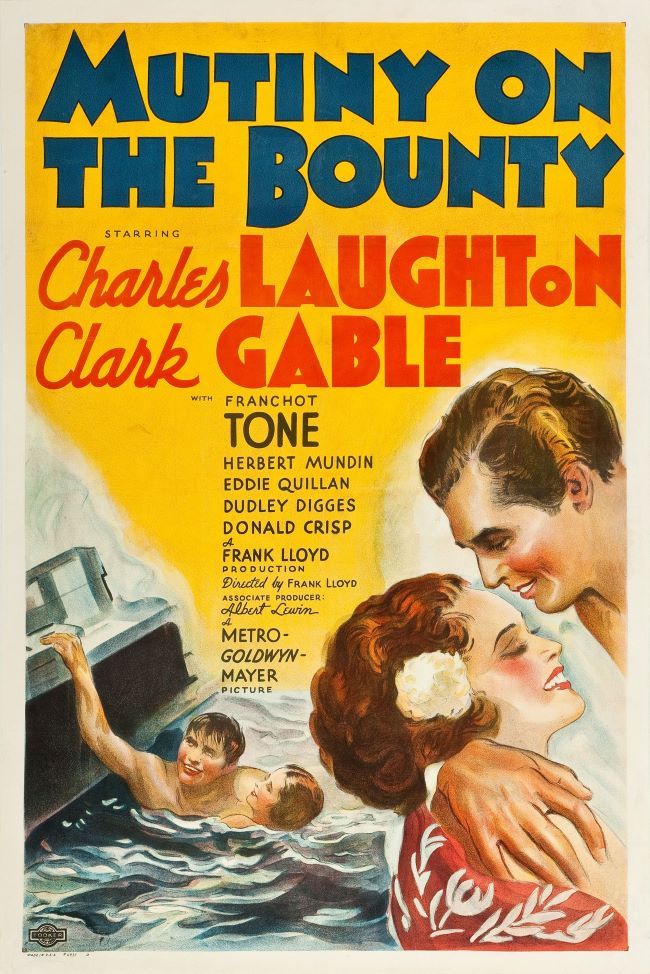
As I think I’ve said before, part of my work morning routine is to flip through the schedule on TCM to see if there’s anything worth recording that day. Months ago I found such a thing, the 1935 version of Mutiny on the Bounty, starring Charles Laughton and Clark Gable.
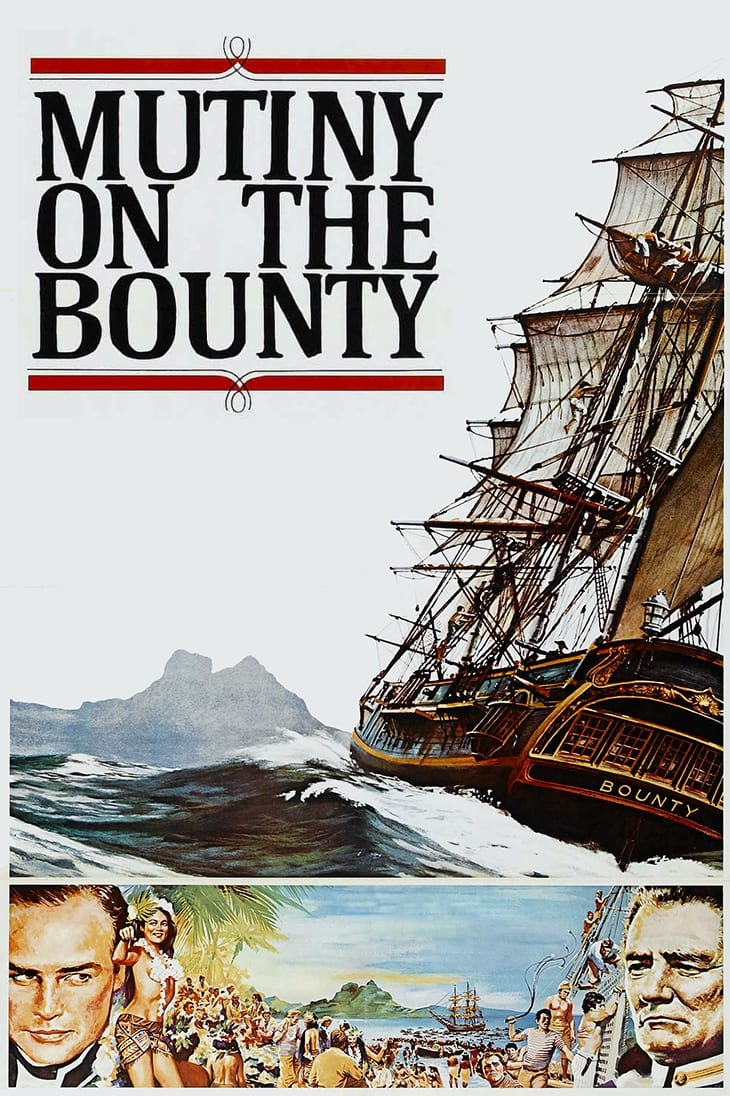
Having never seen it, or any other Bounty story, I recorded it. It sat on the TiVo long enough that TCM also showed the 1962 version (with Marlon Brando), so I recorded that as well.
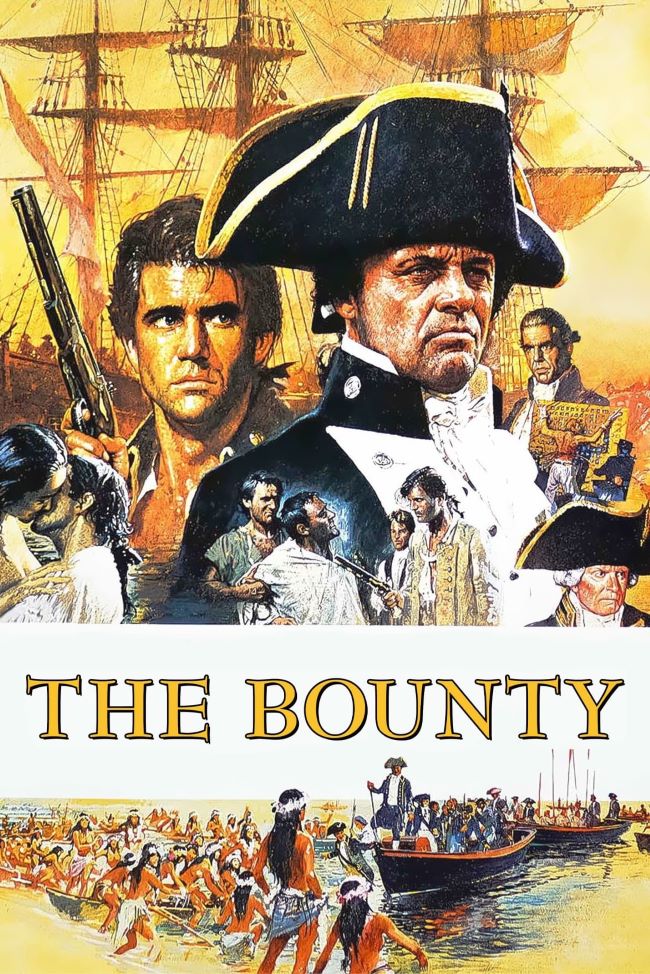
When my wife saw both sitting there, she wondered aloud about if I intended to watch the 1984 version, Bounty, with Mel Gibson and Anthony Hopkins (and Daniel Day Lewis and Liam Neeson!).
So, one Saturday, we did the deep dive and watched all three back-to-back-to-back. And then I read Caroline Alexander’s The Bounty: The True Story of the Mutiny on the Bounty to actually get the history of the whole thing.
Watching different versions of the same story, the history of which is not as clear as you might think, made for some interesting comparisons.
But first, the basic history – in 1787 Bounty left England, under the command of William Bligh, for a journey to Tahiti. There, the crew would harvest breadfruit plants for transport to Jamaica, where it was hoped they could be replanted and used as a cheap food for the enslaved population. Sometime after Bounty left Tahiti one of Bligh’s underlings, Fletcher Christian, led a mutiny. Bligh and several loyal men were put adrift in a launch (and managed to make it back to civilization), while Christian and the others found their way to Pitcairn Island, where their descendants live to this day.
What’s particularly interesting about the history (from Alexander’s book, at least) is that there is a gaping hole in the record when it comes to Christian. Bligh, the men in the launch, and even some of the other mutineers returned to England where there were various inquiries into the mutiny, but Christian never did, dying (or being murdered) on Pitcairn. His precise motivation for the mutiny is unknown, therefore, and leaves a lot of room for fictional variation in the story.
For example, the portrayals of Bligh vary considerably between the three movies. As played by Laughton in 1935, Bligh is a tough-love legal enforcer. The law of the sea is harsh and brutal, but it’s necessary to keep discipline on what is a very dangerous voyage. The 1962 Bligh, by contrast (played by Trevor Howard), appears to get off on the punishment he dishes out (which Christian calls him out for). He may use the legalish language that Laughton did, but it appears to be a cover for more personal motives. Hopkins in Bounty, on the other hand, dishes out much less discipline (particularly before the reach Tahiti), but seems much more paranoid about possible plots. Per Alexander’s book, Bounty was probably the closest to correct, as Bligh didn’t appear to be any firmer of a disciplinarian than the normal English captain of the time. That said, Bligh also suffered a rebellion (land mutiny?) when he was a territorial governor in Australia later in life, so clearly there was something about his leadership style that rubbed some people the wrong way.
The same is true for Christian, whose motives shift from telling to telling. Gable’s version, perhaps polished to match his matinee idol status, was driven to mutiny on behalf of the lowly sailors who Bligh abused. Notably, that version of Christian had served with Bligh before and had some idea that there might be trouble. It’s a pretty simple narrative. The 1962 version Brando played takes longer to get to the same place and, when he does so, simply snaps, rather than more coolly plots the mutiny. This Christian didn’t know Bligh before, so he’s perhaps more shocked by the brutality. Where Brando’s Christian really differs from Gable’s is the weight that command puts on him after the mutiny. Gibson’s version is motivated less by Bligh’s cruelty (since there’s less of it) than his affection for life on Tahiti. He appears, to quote Londo Molari, to have “gone native” and is willing to do whatever it takes to get back. This Christian didn’t just know Bligh prior to being on Bounty but was good friends with him, which again kind of pushes the cruelty angle to the side. Which of these is closest to truth, if any, is anybody’s guess.
The movies differ considerably in what happens after the mutiny, too. In the 1935 version, after Bligh makes it back to England, he is exonerated of anything to do with the mutiny, then heads off back to the South Pacific (true!) where he tracks down Christian on Tahiti and forces him to book it to Pitcairn (false!). Post-mutiny life for Christian is pretty swell, as least until Bligh shows up. In the 1962 version, Bligh is again acquitted, but with some comments from the judges afterwards that maybe he had it coming, anyway. There’s no return voyage. For Christian, as I said, command weighs heavily on him so much so that on Pitcairn he floats the idea of returning to England to tell their story. This prompts others to burn Bounty in the bay and Christian dies trying to save it (ending courtesy of Billy Wilder, rather than any historical basis). The 1984 version gives Bligh a full exoneration, while making Christian’s life after the mutiny even more miserable. The landing on Pitcairn comes off less of a triumph and more pathetic than anything else.
What none of the movies really do is dig into what happened in England once Bligh returned. There really was a court martial at which many of the mutineers (returned from Tahiti by other vessels) were convicted of mutiny, although many were acquitted (including a potential ancestor of mine!). Several were sentenced to hang, but two were pardoned. News coverage of the court martial was largely favorable to Bligh, but Alexander chronicles how that shifted over the years, thanks in part to Christian’s family and some of the other sailors involved. It’s safe to say that the popular conception of Bligh, closer to Laughton’s and Howard’s portrayals than to Hopkins’, is largely due to their out-of-court efforts.
Particularly interesting in the variations is that the 1935 and 1952 movies are both based on the same set of novels, so you’d think they’d be more similar. They’re both big screen spectacles and the 1952 version was no doubt made just to take advantage of color, but they are quite different in the people whose stories they are telling. I think I prefer the 1935 one. Laughton’s Bligh may be the farthest from the truth, but he’s pretty compelling and in his devotion to rules without empathy scarier to me than Howard’s psycho Bligh (remember, I’m a public defender by day). While I appreciate the ambiguity of the 1984 film, it doesn’t resonate quite as much (in spite of the Vangelis score).
Usually when a movie is made about a historical event the discourse breaks down into whether the movie got it “right” or how “wrong” it actually got things. The whole Bounty situation is a good example of how history isn’t so obvious in lots of situations and lends itself to different interpretations. Surely there’s another Bounty movie or TV series in the works that’ll provide an entirely different perspective, too.
Over the last year or so it’s been harder and harder to avoid thinking about how artificial intelligence – “AI” – might impact the various aspects of my life. Not for nothing but there’s certainly a future where some variant of AI does most, if not all, of my lawyering job, so that’s been on my mind. More personally, how AI is going effect what people write and read, and the kind of music they make and listen to, is also something that is hard to keep off the brain. Now something’s popped up that really makes it impossible for me to avoid it.
Regular readers know that I’ve participated in National Novel Writing Month – NaNoWriMo – off and on for years. The idea is that you take the month of November, write about 1700 words a day, and by the end you have around 50,000 words, one threshold (at least) for a full-length novel. NaNoWriMo helped me develop the discipline to sit down and do that kind of long-form writing and several of my books started out as NaNoWriMo projects.
NaNoWriMo hasn’t had the best couple of years. Back in 2022 the organization paired up with an company called Inkitt that is, to put it mildly, a little suspicious. Then last year there were revelations that a child sex predator had been able to use the NaNoWriMo forums to seek out victims, leading to changes in how the site operated.
And now NaNoWriMo has waded into the debate on AI, doing so for apparently the most base of reasons – they have a new sponsor, ProWritingAid, which bills itself as an “AI-Powered Writing Assistant.” According to this (very positive) review, it’s more of an editing/feedback tool than the generative AI like ChatGPT we’ve come to think of as “AI,” so it doesn’t look like the kind of thing that is going to write a book for you, but help you do the actual work.
Which just makes NaNoWriMo’s recent declaration all the stranger. Last year and entry appeared in the site’s FAQ to answer the question “Am I allowed to use AI?” The answer makes perfect sense -there’s nothing to keep you from using AI during NaNoWriMo, but using something like ChatGPT “to write your entire novel would defeat the purpose of the challenge, though.” So far so good.
Then, more recently, another entry appeared asking “What is NaNoWriMo’s position on Artificial Intelligence (AI)?”. Initial squishiness about neither supporting nor condemning “any specific approach to writing,” gives way to a rejection of the “categorical” condemnation of AI, as such is classist, ablelist, and ignores “general access issues” (whatever that means).
Huh?
Depending on the definition of “AI” there certainly are technologies that could assist writers with various disabilities get their work written. Speech-to-text software involves some form of AI, broadly defined. Spell checkers are a friend to everyone. But is that really what they’re talking about? I doubt it, since those technologies have been around for years and nobody batted an eye. This can only be in reaction to thoughts on generative AI, right?
Rather than reinvent the wheel, I’ll quote some of Chuck Wendig’s post on this, with the charming title of “NaNoWriMo Shits the Bed on Artificial Intelligence”:
The privileged viewpoint is the viewpoint in favor of generative AI. The intrusion of generative artificial intelligence into art and writing suits one group and one group only: the fucking tech companies that invented this pernicious, insidious shit. They very much want you to relinquish your power in creating art and telling stories to them and their software, none of which are essential or even useful in the process of telling stories or making art but that they really, really want you to believe are essential. It’s a lie, a scam, a con. Generative AI empowers not the artist, not the writer, but the tech industry.
It goes on like that (it’s good rant) and I can’t say I disagree. At best, generative AI could be a benefit to consumers of content by providing them more of it at less cost, and perhaps tailored to their particular preferences. But for the creators there is absolutely nothing in generative AI for them. Being creative is about personal expression. Why have a machine write the story you want to tell? Tell it yourself!
That said, there are two things that have, up to this point, kept me from fully joining the anti-AI crusade.
First, there’s more than a whiff of moral panic about generative AI, in the sense that it reminds me of similar complaints about other artistic technological breakthroughs. Session musicians were up in arms that the Mellotron would put the out of business, but it turns out the a Mellotron doesn’t sound like live instruments played by human beings – it sounds (gloriously) like a Mellotron. Same with something like AutoTune, which may be used to “fix” a human vocalist, but has transformed more into an instrument/intentional effect with its own sound and characteristics. Will we look at generative AI that way in ten or twenty years? I’m not saying we will, but I’m not saying we won’t, either.
Second, most seem to agree that using generative AI is a cheat if used to “write” “your” book – how is it any different than hiring a ghost writer to do it? Honestly, putting to one side concerns about how AI engines are trained (a big aside, I’ll admit), isn’t hiring someone to write a book you put your name on just as bad as putting your name on something generated by a computer? Yes, it’s better in some spiritual sense ultimately for the content to be generated by a human rather than a computer, but it’s still not your story, is it?
Those are questions that will be worked out over the coming years. Right now, in 2024, however, it should be enough for an organization devoted to writing to say “generative AI is not welcome here,” while making room for the use of AI-adjacent technologies that help people tell their own stories. That NaNoWriMo can’t make that fairly simple declaration is, for me, enough to no longer be a participant, at least in any official way.
Thank you, NaNoWriMo, for how you helped jump start my life as a writer. I’ve got it from here.
Hey gang! It’s been a while. I was going to get back to blogging a few weeks ago, as my Don’t Call It a Book Tour wound down, but Frontier’s internet service had other plans. So I pushed things back until after Labor Day. It’s supposed be fall now, right?
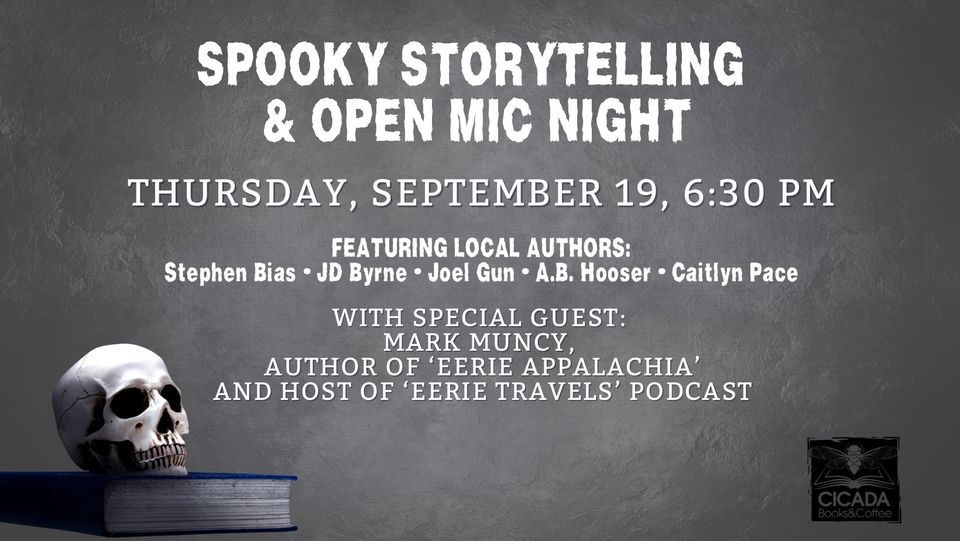
That said, the book tour still has a couple of stops left on it. As I mentioned earlier, I’ll be back at the West Virginia Book Festival on October 19. Before that, though, I’ll be part of a night of Spooky Storytelling at Cicada Books & Coffee in Huntington on September 19.
I’ll bust out some of my scarier stuff, along with other local authors Stephen Bias, Joel Gun, A.B. Hooser and Caitlyn Pace, along with podcaster Mark Muncy. It’s open mic, too, so bring your best spooky tale! More details here.
In between all the book tour stuff, I’ve managed to finally finish a complete draft of The Fall, my NaNoWriMo project from last year. This one was tough, having a stunted first attempt, a change of direction for the second attempt that got scrapped halfway through, and questions about how the damned thing was going to end. It’s in pretty rough shape, but I have something I can work on and make better.
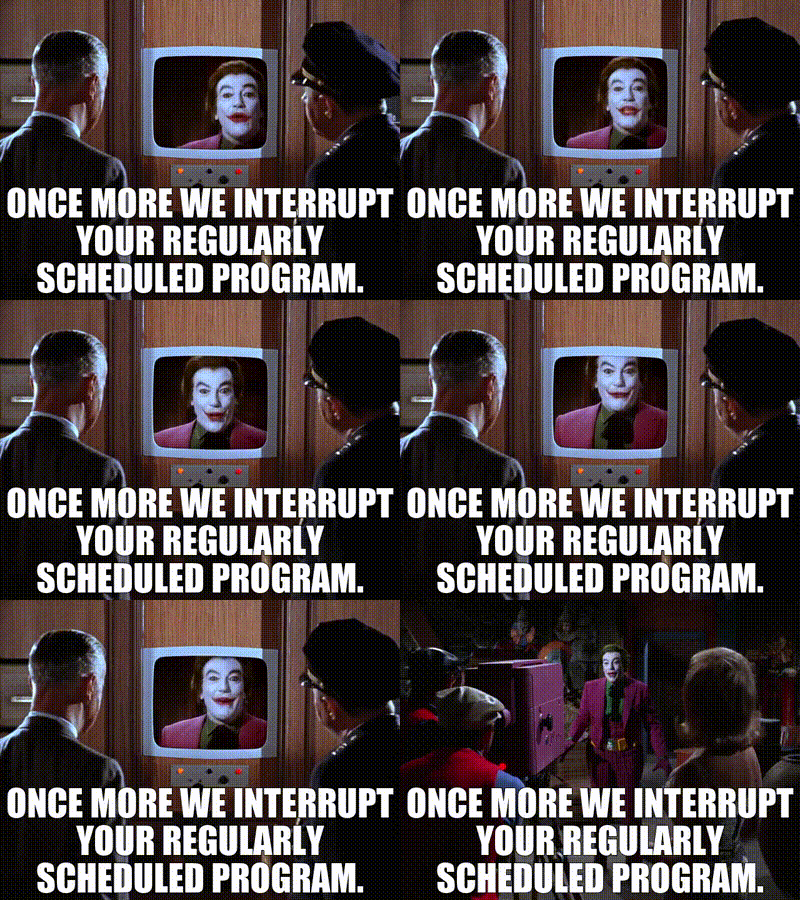
All of which is a long way of saying that regular programming is resuming here at the blog (until it doesn’t, of course!).
I’m about halfway through my planned events. I had a really great time at Plot Twist Books in South Charleston and Cicada Books & Coffee in Huntington, doing some signings and reading. I got to add another event, too, and appear as the featured author at the monthly Writers Can Read gathering in Huntington.
That last event is particularly neat, as after the feature author reads, anyone can get up and read from works in progress or works long finished. We had memoir, poetry, and other fiction read that night. You can keep up to date on their events here.
On August 17 at 6pm I’ll be appearing along with a couple of other local authors at Bake My Day which, as the name suggests, is a bakery! In addition to readings and signings, there will also be music and a wine & macaron tasting event. Truly, something for everyone.
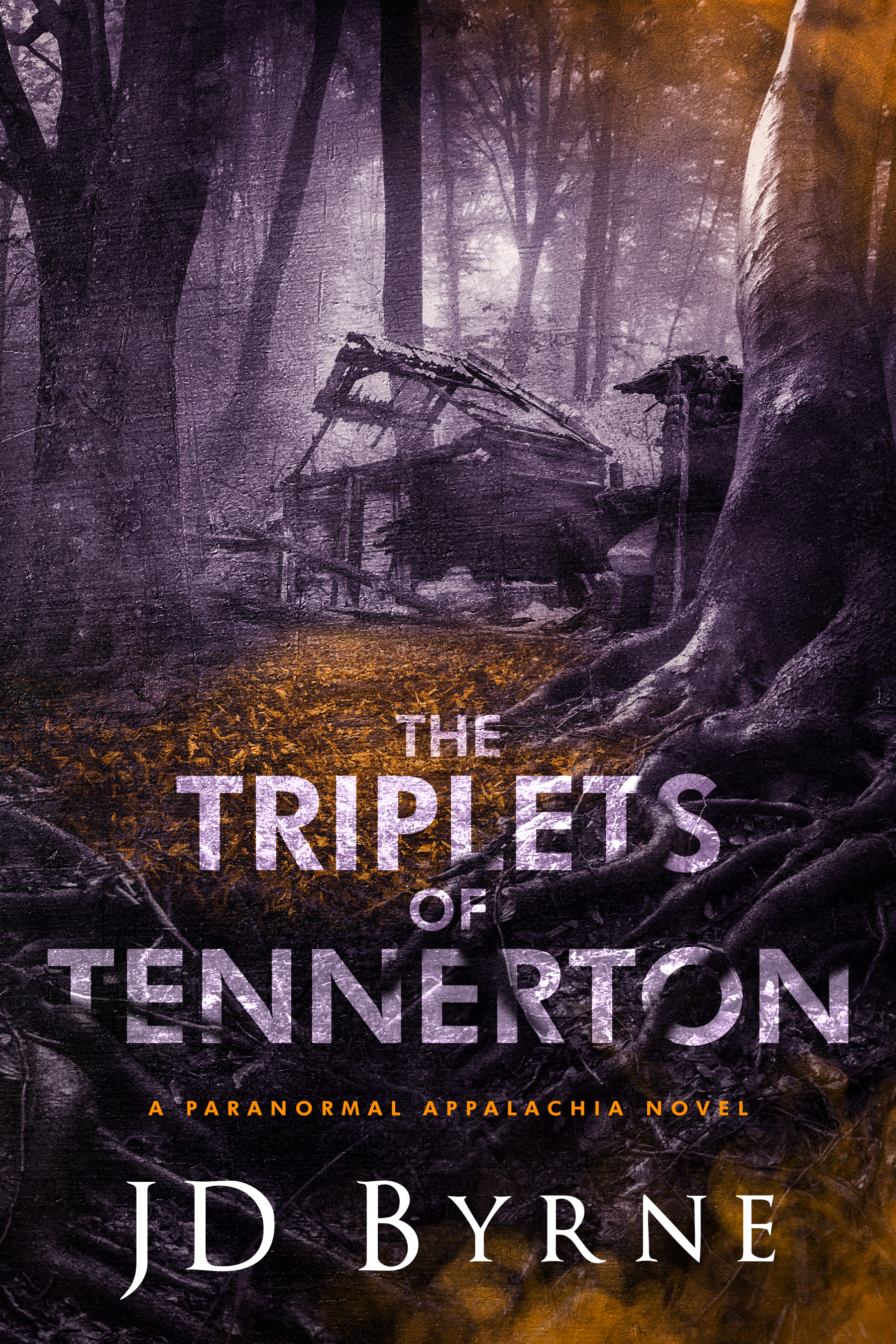
Now that the award winningThe Triplets of Tennerton is out and about in the world, I’m happy to announce that I’ll be doing some in-person events later this year where I’ll be selling and signing and other stuff, too!
June 29, 2024 @ 11am-2pm: Plot Twist Books – South Charleston, WV
The first stop is in my hometown, so it’s particularly special. I grew up in South Charleston and my father still lives there (only a couple of blocks away, in fact), so it’s a nice place to kick things off. I’ll be there signing and selling books.
Cicada is a cool little spot on the west side of Huntington. They’ve got a great selection of books (including lots from local authors) as well as a couple of neat nooks in the store for meetings or chats. The coffee is good, too, from what I’ve heard (I’m not a connoisseur). In addition to signing books, I’ll be doing some readings at this event, too.
Ticketing information for this event can be found here.
It’s been a while since I’ve been able to participate in this event, so I’m really excited to be back. Lewisburg is a cool little town generally speaking, but it’s even cooler when it’s filled with readers and writers and lovers of words. I’ll be in the Festival Bookstore. Much more going on that weekend, so check out their website.
Last (?) but certainly not least, I’ll be back at the West Virginia Book Festival after missing out last year. As usual, there’s a great roster of authors and other presenters during the day, as well as the famous library used book sale.

















 JD Byrne