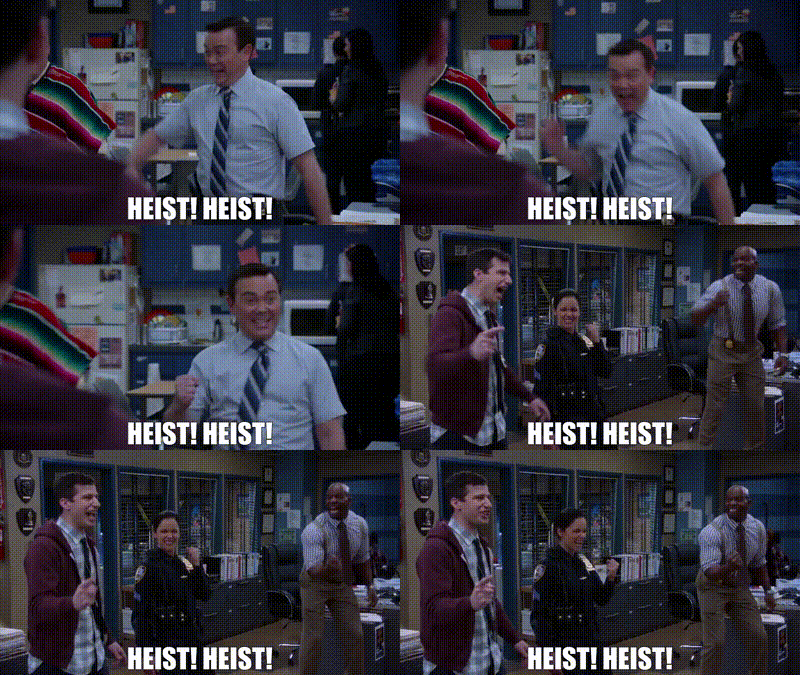
Revisiting the Concept of a Heist

A few years ago I wrote a piece about “heist” stories and what they are (or should be). My concept of the heist is narrower than it is for others (including the OED) and boils down to this:

The distinction, for me at least, comes down to brute force. A robbery can be elaborate and kinetic and exciting – think the beginning of The Dark Knight – but, at the end of the day, it’s “your money or your life.” It’s simple, effective, and brutal. “Heist” conjures up something more clever, more deeply thought out. It’s about getting the object of the robbery without the violence. It’s a better, more elevated, kind of crime, if you will.

The distinction came back to mind recently when the wife and I watched Heist, a 2001 David Mamet film starting Gene Hackman, Delroy Lindo, and host of others.

As you might expect, it involves thefts gone bad, but do they actually live up to my stickler’s definition of what a heist is?

There are actually two thefts in the movie, the first is more setup and the second the main event (the titular heist, one assumes). The first definitely doesn’t feel much like a heist to me. Yes, there is some subterfuge involved – the thieves drug the morning coffee of the employees of the jewelry store they’re going to hit, but that’s close to the line in terms of brute force (courts would consider the use of poison to be “violent,” in most instances). What clearly is brute force is the way they actually get in to the store – they just break down the door. Literally, it’s a forced entry. So I’d say this job is more a straight up robbery than a heist.

The second job is definitely more like it. The target is a bunch of Swiss gold on a cargo jet that’s about to leave the country. This is a heist, albeit one that doesn’t go off without a hitch. The plan is all subterfuge and distraction. The only violence involved arises because of an unexpected issue. When push comes to shove, Hackman’s character walks right in pretending to be somebody he’s not and walks out with the loot. Hell, the police response is more due to the diversionary explosion the crew uses at another part of the airport (this crew loves them some diversionary explosions) than the theft itself!

Indeed, that’s one of the neat things about the movie – there’s hardly any police presence in it. There are cops about (there’s one tense scene where a state trooper stumbles on their prep and a young hothead nearly turns it into a shootout), but there are no dogged investigators bearing down on the crew after the big score. Rather, they tear themselves apart in a series of betrayals and double-crosses. It’s too much (why care about what’s happening when it’s certain to be upended in a few minutes?), but it gets at another key element in distinguishing a heist from a garden-variety robbery – the ability to get away with the goods.

So, in the end, how heisty is Heist? Fairly heisty, I would say. The initial job is a straight up robbery, but the big set piece definitely has heist vibes. Doesn’t make it inherently more interesting than the first one, but it’s more compelling in different ways. It’s fun, which is a key to a good heist, in my opinion – even if the end result is an awful lot of dead folks.

New Short Story (from Me and Many Others)!

I’m happy to announce the release of Volume Two of Old Bones, the literary journal of Henlo Press.

Inside that cool cover you’ll find a bunch of stories (and other stuff) from writers from my neck of the woods – including me!

The story is called “Chord Change” and it’s based on an idea that’s been hanging around my brain for a while – what if someone’s solemn duty was to listen to the everlasting chord generated by the universe or the gods or whatever and the chord suddenly changed. The key to turning it into a story was to not make the listener the main character. Rather, it’s the guy she ropes into trying to help her talk back.

Here’s a snip:

Over the years, Kluvier had built up a repertoire of dozens of songs, from folk songs to cult hymns and chants. He would never be able to play with Andra’s finesse, but he had the ability to hear a song a few times, play it once, and then forever be able to retrieve it.

His first hour was always the same, a way to warm himself up and to gauge his audience. Some days the more modern, popular music was what people wanted. Other times the long, slow chords of cult hymns that had soaked into wider culture of the years provided the perfect background. Once that was out of the way, and Braax had his first break of the day, Kluvier would let his fingers wander, dipping in and out of known songs while taking tangents of variations on themes. During another break he heard a woman pass by whistling an odd-metered tune he’d never heard before. He worked on it, and several variations, for most of the next hour.

The predicted rain held off, which kept the traffic consistent. The coins dropping into the box were few and far between, but as the sun started fall behind the Great Library they at least started to clink against each other nicely when a new one was thrown in.

Kluvier let Braax off his turnwheel to attack a small bowl of water while he knelt and started counting the coin. He hoped to get everything counted and packed away before Valnu showed up to take his cut again. Kluvier was just about done when a human-shaped shadow fell across the box. Kluvier cursed under his breath, then a bag of coin thudded to the ground beside the box. He looked up.

“Is that enough?” It was Shyana. She was breathing hard and her robes, which had been so well put together yesterday, were dirty and mussed. There was a bruise starting to blossom under her left eye.

“What happened to you?” Kluvier grabbed the bag and stood.

“I did what I had to,” she said. “Is that enough?”

For more of that, as well lots of other great stuff, get your copy of Old Bones Volume Two here or here.

Storytelling Is Not Lying (Or Is It?)

Years ago, Ricky Gervais made a movie (with his writing/directing partner Matthew Robinson) called The Invention of Lying.

Gervais starred (along with my high school classmate Jennifer Garner) as a screenwriter in a world where lying doesn’t exist. As a result, he’s limited to only writing movies about historical events since fiction does not exist. He winds up discovering how to lie, part of which is being able to write a fictional screenplay.

The movie itself is fine, but the part about fiction not being able to exist in a world without lying always stuck in my craw. Then, a few weeks ago, I saw this on Facebook:

And that sticking came back with a vengeance (although she was sharing it in a humorous way). Because, you see, the notion that fiction – storytelling – is “lying” is simple-minded bullshit.

George Constanza famously said that a lie isn’t really a lie if you believe it, but that kind of goes both ways – a lie is really only a lie if the people hearing it expect it to be true. This is most evident when you’re talking about lying in court – perjury. Any witness, before they say a word to a jury or answer a single question, either takes an oath to or affirm that they are going to tell the truth. Jurors are primed to believe them.

But the same is true for most everyday interactions. When I ask my wife how her day was I don’t expect her to lie to me, after all. We may not be completely accurate with others all the time (that’s probably beyond the capability of human brains), but, for the most part, we’re not trying to lie to others on a regular basis. There’s an expectation of truth, at the very least.

Fiction, by contrast, announces itself from the start. “This is not real,” it says, “this is made up.” Even if there are close cases on the margins (including, ironically, stories about historical events and figures), nobody would ever say that The Lord of the Rings or 2001 or what have you were anything other than made up stories designed to entertain and enlighten. They are not presented as fact.

Of course, sometimes storytellers lie as part of the fiction. Fargo famously starts with a disclaimer:

This is a true story. The events depicted in this film took place in Minnesota in 1987. At the request of the survivors, the names have been changed. Out of respect for the dead, the rest has been told exactly as it occurred.

Amusingly, the Coen Brothers have changed their own story over the years as to whether the story of Fargo had some basis in real events or was completely made up. Does that make the movie any more of a “lie” either way? No! It’s a work of fiction, a story being told by storytellers. We’re not supposed to take it as truth.

For a certain definition of “truth,” of course. The argument goes that fiction can often get at truths about the human experience that non-fiction can have a hard time grappling with. That’s probably correct in some instances, although I can’t speak from experience. The stories I write are, I hope, entertaining and engaging, but any brush with deeper cosmic truths is probably coincidental.

As a wise man once said:

So, yeah, writers and other storytellers do make stuff up. It’s kind of the business model (the hard part is making up stuff nobody else has come up with yet!). But that’s what people think we do, right? Nobody could ever possibly believe we’re telling the truth.

Or maybe I’m full of shit? You’ll never know!

On the Joys of Going to the Movies

I listen to several different podcasts about movies and if there’s one thing they all have in common it’s praise for the experience of seeing movies in the theater. Indeed, they exhort listeners to go out to theaters and see movies with others and enjoy the kind of communal experience you just can’t have at home, no matter how good your setup is from a technical standpoint. Recent experience suggests they might be overselling things.

A couple of weeks ago the wife and I did something we haven’t done in years – we actually went to the theater to see a real, grown-up, R-rated movie, the new Soderberg flick Black Bag, which I enthusiastically recommend.

We’ve gone to theaters in the past (less frequently since COVID hit, of course), but usually for the kind of big-screen spectacle popcorn movie that makes Scorsese itch. Those, to me, are more made for the big crowd thing than smaller movies that you have to engage with a little more. But this was the first time we’d been to see something like this in quite a while.

Things got off to an inauspicious start as there was absolutely nobody in the lobby of the theater complex (attached to the one mall in the area that remains thriving) when we arrived – no patrons, no employees. That meant we had to buy tickets via a kiosk, which went smoothly enough, although some vital information about the showing we were going to was left out (more on that in a moment).

Around the corner the concession stand was manned by a couple of young kids, but the crux of the moviegoing experience – popcorn and drinks – was all self-serve (the kids ran the registers, at least). There was a menu of other stuff that I suppose they would have made for you upon request, but we’d just had lunch so it wasn’t much of a concern. Still, we’ve not even made it into the theater yet and the experience is kind of cold and off-putting.

Our theater was at the very end of the corridor (not a problem!), which gave us the chance to walk past a handful of other theaters, some with movies playing. Some of the doors were open, others weren’t, but in either event you could hear what was going on inside pretty well. Not the best of omens for a satisfying movie experience. Next door to us the new Captain America flick was well underway.

Since we were early I took the chance to wander back up the corridor for a bathroom break. On the way back I noticed that one of the other theaters was in the middle of Anora, apparently rereleased on the back of its Best Picture Oscar win. It was during one of the louder more expletive-laden parts, so I decided to peek in and drink in a few minutes on the big screen, since we only got to see it at home. Inside there was nothing on the screen – no picture, no flickering, no nothing. But the soundtrack was going strong. I assume there was nobody in there (I was a little scared to look, frankly), but then why run the sound? It was just another odd note in a growing symphony.

As the loop of pre-movie ads gave way to previews, we noted that a couple of them used subtitles, even though the previews were all in English. My wife wondered if the movie itself would have them and I said I hoped not. Sure enough, once the opening titles were gone the subtitles popped up again. I ran back up the corridor to ask if they could be turned off (the kid at the concession stand said he didn’t know). Apparently they couldn’t, as they ran during the entire movie. It’s a minor annoyance, but a distracting one nonetheless.

It turns out that this screening was set aside as one for folks with hearing impairments and, thus, the subtitles were the point. I’ve no problem with that, but there was nothing in the ticket-buying process or the Google movie times listing that indicated this was that kind of screening. It was only afterwards, when I went to the theater’s website specifically, that I got an explanation. Had we known that ahead of time, we’d have gone to a different theater.

Three other people watched the movie with us. Two were a couple a few rows behind us (the ticket kiosk sells reserved seats, but that was pointless given the turnout). A little past halfway they started to be attacked by plastic bags (I can only suspect), given the occasional bouts of plastic crinkly noises. The other cinemagoer was a guy who came in about 20 minutes late and then left and came back three more times (always sitting in those couple of rows right in front of the screen). I’m not sure he made it all the way to the end.

Along the way there was at least one point where I could hear Sam and Red Hulk smashing it up next door. And, repeatedly, parts of the screen would go pixelized briefly in the way a streaming service does if it’s a little sluggish.

All of these are minor annoyances. None alone ruined the movie, nor did the weight of all of them together. As I said, the movie is great and worth seeing and I did it as part of a lovely afternoon out with my beloved (we even dodged the rain!). Still, if this is what the modern moviegoing experience is it doesn’t do a lot to inspire.

I don’t want to deny anyone the communal movie-going experience if that’s their thing and I realize the importance of it to the health of the industry, but I’m clearly not the one who finds the process less than thrilling these days. Black Bag, critically well received and the “kind of movie they don’t make anymore” – aimed at grownups, original, not the first in a series, an only a trim 94 minutes long – won’t even break even, it looks like. The modern theater-going experience is cold, sterile, and off-putting.

Sorry, Marty, but I’ll continue to consume most of my cinema at home on the couch with a snoozing puppy by my side.

On the Half-Life of Revenge

Revenge is a dish best served cold. – Klingon proverb

Revenge is an evergreen character motivation. Everybody, regardless of their station in life or what they do for a living, has gotten pissed off enough by someone to at least contemplate getting revenge. But how far can revenge get you in a story? Does there come a point where even the most righteous revenge starts to curdle?

I thought about this a lot while the wife and I were watching The Glory.

A South Korean drama from Netflix, it sprawls out over 16 hourish-long episodes (apparently originally released in two parts). The further on we got the less invested I was in the main character’s revenge arc – not because it wasn’t well founded, but because I had so much time to think about it.

The main character is Moon Deun-eun, who while in high school is constantly bullied by a group of classmates led by Park Yeon-jin. “Bully” here is really too tame of a term – they tortured the poor girl, which we see in fairly graphic detail (burning with a curling iron, for instance). They get away with it because their parents are rich and connected and Deun-eun is basically fending for herself (her father is absent, her mother worthless). After she drops out, Deun-eun struggles for a while until she dedicates her life to getting back at Yeon-jin and crew.

And she plays a long game. Over the course of years Deun-eun trains to become a teacher, eventually worming her way back into the lives of her tormentors by becoming a teacher in the school of Yeon-jin’s young daughter. From there she unwinds a pretty clever plot in which she does little herself to hurt anyone, but turns the others against one another in a way that leads to a fairly satisfying payoff. But it takes an awful long time to get there and, along the way, you start to wonder if revenge is really that great a deal, even if fully warranted.

To be fair, The Glory doesn’t let Deun-eun go quietly into the sunset when it’s all over. She’s basically stripped of her reason for living and only gets back on track by deciding to help her boyfriend get revenge on the man who killed his father. Nonetheless, your sympathies lie with Deun-eun only so far as the hot coals of revenge keep burning and I didn’t feel it at the end of 16 episodes.

Maybe it’s just the law-talking-guy in me but, in the broad view, revenge is bad. Bad for the soul, probably, but certainly bad for society. The law, in all its manifestations, is largely designed to replace systems of private justice – a.k.a. revenge. If your neighbor steals from you, you don’t break into his house and get your stuff back – you call the police or sue him. If someone kills your loved one, you don’t get to track down the offender and kill them yourself – that’s a job for the police, prosecutors, and the courts.

Emotionally revenge can be very satisfying, at least in fiction.

I mean, who couldn’t get on board with something like this:

On the other hand, being the better person just doesn’t have the same zip to it:

But for that very reason I think revenge works best in movies or a shorter series. There’s enough time to get you fired up and fully behind the main character’s scheme without giving you time to really think if they should be doing it in the first place. Revenge fiction works best when it harnesses that initial “this is bullshit!” reaction to learning about someone being wronged. The more time you have for that to ebb away, the less interesting the ultimate revenge is.

The quote at the top, of course, comes from Star Trek II: The Wrath of Khan. Critically, part of why that works so well is that the revenge seeker is the bad guy.

Is Any Game a “Big Game”?

It was the kind of situation that screamed “big game,” a few weeks ago. Leeds United were on 72 points and top of the English Championship, but only two points ahead of their closest pursuer, Sheffield United. Leeds travelled to Sheffield with the chance to not just stay top but create a bit of a cushion with a win over their Yorkshire rivals.

It was a hell of a game – Sheffield scored early in the first half (on an own goal attributed to Leeds’ keeper) and looked poised to hold off the visitors. Until the 72d minute, after which Leeds went on a run that created three goals unanswered. At the end of the night it was a 3-1 win and a five-point gap at the top. Surely, that’s the makings of a big game right?

Maybe not.

Over the next two games, by definition against teams lower down in the table, Leeds managed only a point, while Sheffield United bagged six. As a result, things are all tied up at the top of the standings just two weeks later (as I’m writing, Leeds is on top on goal differential). All this got me thinking about whether, in European soccer at least, there are such things as big games.”

The issue comes down to the league format that’s utilized in the big leagues in Europe. Rather than the typical American setup of a regular season followed by playoffs where a champion is crowned, in those leagues every team plays every other team twice (home and away), with the team that earns the most points (three for win, one for a draw) over the course of the season winning the title. It prioritizes sustained excellence at the expense of not having those do-or-die playoff games at the end of the season.

As a result, I’m not sure big games really matter. Every game is a potential three points gained or lost, regardless of the quality of opponent. This theory first sprouted in my mind last year, given how well Leeds did against the top teams in the Championship, only to fail to win promotion to the Premier League. Leeds finished third, behind Leicester City and Ipswich Town – who, in four games, Leeds defeated four times (ironically, the team that beat Leeds in the promotion playoff final, Southampton, beat Leeds twice during the regular season). Those were the big games last season, but in the end they didn’t matter anymore than losing at home to Blackburn (who finished 19th) and dropping points to Sheffield Wednesday (20th) and Sunderland (16th), among others. It was Leeds’ performance against lower table teams that mattered, in other words.

The same thing might be happening this season. Leeds’ record against the other top teams in the Championship is pretty good – three wins, two draws, and a loss. Certainly good enough to win promotion, you’d expect. But they’ve also dropped points to teams currently in 19th and 16th places, which might matter more in the end.

But maybe this is just a Leeds thing that I’m particularly attuned to as a fan. To check, let’s look at the past few seasons in the Premier League and the big games there.

Last season, Manchester City beat Arsenal to the title by two points – even though Arsenal beat them once and their other match up was a draw. What mattered more, in the end, was that Arsenal was tripped up by 13th-place Fulham twice during the season (one loss, one draw). By contrast, the year prior Manchester City’s five-point margin at the end of the season was certainly bolstered by beating Arsenal twice. The year before that, Liverpool triumphed by a single point over Manchester City, even though they drew both times they played each other. It’s not a large sample, but it at least suggests that big games often aren’t (the two seasons before that were such blowouts that there’s no point in analyzing them).

Is that enough data to draw any conclusions? Of course not, but I’m going to, anyway. I don’t see anything here that persuades me that big games mean anything over the course of long seasons like these. There are almost always other games against lesser opponents where one team slips up and the other doesn’t and those matter just as much in the end. The equivalence I’m thinking of is when somebody misses a last-second jumper or field goal and they get all the blame for a loss, when in fact there were mistakes and missed opportunities all through the game that made the last-ditch effort necessary in the first place. Are there seasons so close where defeating your closest rival head to head will make the difference? Sure, but I think those are more rare than fans would like to admit.

None of which is to say there aren’t big games for other reasons, such as rivalry/derby matches, or in other competitions – by definition every game in the FA Cup or March Madness is a big game, because if you lose you’re done. But leagues like the Championship or Premier League require a longer view.

If nothing else, it’ll lower your blood pressure from stressing over the next big game.

“Anora,” the New Kings, and the Absence of Consequences

One of the bulwarks of the criminal justice system is that the prosecution has to prove someone committed a crime beyond a reasonable doubt – a higher standard than those that apply in civil proceedings. One of the perversities of the criminal justice system is that courts generally will not, and in some jurisdictions are not allowed to, actually instruct jurors on what “reasonable doubt” is. It’s left to the parties to argue it out and the jurors to make the call.

Lawyers, searching for a common experience to which jurors can relate, try to analogize the “beyond a reasonable doubt” standard to the kind of certainty you need to make a major life decision. Not where to go to dinner or what movie to watch, but, say, whether to buy a house or a car. The big one, of course, is whether to get married (and to whom). Even if a juror has never been married, they’re aware of what a monumental decision that is.

I was thinking about those arguments while watching Anora this past weekend.

The newly-minted Best Picture winner is about the titular Anora (Ani to her friends and customers), a stripper who embarks on a whirlwind paid-for-date/romance with Vanya, the son of a Russian oligarch. After a wild time in Vegas he proposes that they get married and they do, much to the displeasure of his parents who send their (largely ineffectual) goons to ensure that the marriage is annulled. In the end, when it comes time for Vanya to stand up to his parents and stand with his wife, he can’t do it. The interesting question is why.

The answer, I think, lies in how the film deals with class distinctions. Essentially, the characters are divided into three groups.

Vanya and his parents are the super-rich, the 1%, the “new kings.” They have “fuck you” money and an immense amount of power. They largely suffer no consequences for wrongdoing and, therefore, have little fear of doing it. This is particularly important for Vanya because, as portrayed in the movie, he’s never had to make a consequential decision in his life. Even someone who is only 21 years old, who has lived a normal life, has made decisions that had consequences, both foreseen and unforeseen.

Vanya hasn’t and, as a result, doesn’t even recognize them when they come around. So, when he proposes marriage to Ani I don’t think he’s either (1) simply lying to her in a way to make her do something useful for him or (2) a besotted dope who’s really deeply in love with this woman he’s known for a week. I think he sees the decision to get married as being as consequential as what club to go to or whether to jet off to Vegas. Whether he gets it wrong or not, he won’t really suffer any consequences. He is, quite literally, playing with house money.

The second group of characters include Toros and his brother, two of the goons who are tasked with keeping tabs on Vanya. Neither are remotely in the same class as Vanya and his parents, but they think they can have access to wealth and power if they just continue to make themselves useful. Not for nothing but when Vanya goes missing Toros’ entire motivation for finding him is to please Vanya’s parents and fix a problem. He doesn’t express any concern for this guy whose life he’s looked over for years. He doesn’t see him as a kind of son, worrying about his safety and wellbeing. So long as he finds Vanya and gets the marriage annulled all is right with his world.

The final group is Ani herself, along with another one of the goons, Igor. Only Ani doesn’t realize she’s in this group at first. She thinks she’s in one of the other two, on her way into the good life, achieving upward mobility. Igor, by contrast, knows better. He understands his spot in the hierarchy and that he’s fated to stay there. His bond with Ani comes largely from his empathy for her coming to the same realization as the movie plays out. I think the ending is her recognizing a fundamental similarity between them that she would never have had with Vanya (not for nothing is the scene in the car the only sex scene that appears to include a real connection between the people involved).

The movie, then, reflects more than a little of our current reality. Increasingly, we live in a country with an out-of-touch and untouchable moneyed elite who rarely suffer any consequences for their actions. Susan Collins famously said, during Trump’s impeachment, that she was going to vote against convicting him because he “has learned from this case” getting “a pretty big lesson.” She wasn’t wrong – he learned he faces essentially no consequences for his actions. Just like Vanya, which is why he so often says the first thing that comes to his mind without giving any real thought to what might happen after.

Sitting down to watch Anora I didn’t quite know what to expect. I certainly didn’t expect a pretty succinct analogy for this country’s current class inertia (as one report put it “wealth status is sticky” – there’s little chance you move up or down over the course of a lifetime), but that’s certainly in there. It’s definitely got more going on than the “hooker with a heart of gold” tag some detractors are given it after the Oscars. It does make you think.

What it makes me think is that sometimes the lack of consequences might be the most consequential thing of all.

Similar Wars, Different Worlds

A while back I read a good write up about the 1953 version of War of the Worlds over at Reactor in which someone explained  (down in the comments) that the version most of us had seen on TV was a kind of stepped-down version in terms of the Technicolor, but that the currently streaming version was restored to its full glory. That sounded like a good excuse to watch a movie I hadn’t seen for a long time and set me off on a little dig into the story and the ways it’s been told.

The story, of course, started with H.G. Wells, whose novel first appeared (in serialized form) in 1897.

It’s a simple tale – Martians invade England, deal death and destruction to all in their path, but are felled in the end by Earth pathogens they aren’t equipped to deal with. It’s been adapted for the big screen twice (and in numerous other ways, including a rock opera!), in 1953 by producer George Pal and in 2005 by director Steven Spielberg. I consumed the book and both movies in pretty short succession and it’s interesting to see what parts of the book each film emphasizes, while not sticking completely faithfully to its text.

To be fair, that’d be a hard ask. The unnamed narrator of the book is a fairly average upper-middle class guy – he’s neither a scientist nor in the military, but he’s well read and thinks philosophical thoughts. The book follows him as he experiences the first landing of the Martians, including failed friendly attempts at first contact, and then as he (and others) flee as the tripod war machines make their way towards London. Above all, the book creates a sense of loneliness as the narrator loses his family (temporarily), his society, and any real hope in his future. Even though the book Martians never leave England it feels like the story of the last man on Earth. The ending, when it comes, is less happy than it is more a relief. Given how foundational the book is to modern sci-fi it’s hard to even quantify it as “good” or not – it’s just part of the bedrock.

The 1953 movie changes some things dramatically.

The main character, Dr. Clayton Forrester (yes), is not only a scientist but an expert on all things Mars, so he’s much more involved in the response to the Martian landing. It does, as in the novel, include a misplaced attempt at friendship (savagely parodied in Mars Attacks), but there’s a bigger focus on the military response, futile as it is. Forrester is more man of action than passive observer and he’s got others with whom he’s involved (including a love interest), so the emphasis on loneliness really isn’t there. This version also has a pretty heavy-handed religious overlay, with God getting the credit for the bugs that kill the Martians in the end.

The 2005 film in some ways hues more closely to the spirit of the novel, but also makes major changes.

The main character here is Ray Ferrier, a dock worker very much in the everyman vein, who, because this is Spielberg, has two children he has to look after the entire time. There is absolutely no chance for peaceful contact, however, as the aliens just pop up from underground (not sure that makes sense) and start wreaking havoc. Ferrier and clan are thus constantly on the run. While changing the setup, this movie keeps interesting details from the book, such as the Martians plucking up humans to use for food (the 1953 Martians are just killing machines) and a late-story run in with a madman who knows how he’s going to rebuild the world in his own image. Overall, this version does a better job of making the main character (and his kids) seem very very small in the grand scheme of things.

I won’t say either movie is better than the other. The 1953 version’s Martian machines – they look like they’re hovering but there really are legs, if you squint at the right times – will forever be what they should look like, slow and sleek and terrifying. The 2005 version does a better job with the characters, I think. Neither quite gets the central spine of the book, the feeling of loneliness, but that’s understandable.

One thing’s for certain – we’ve been beaming this story out there for decades so that if the Martians ever do come for us, they’ll probably be armed with antibiotics as much as heat rays.

See Me! Hear Me! Feel . . . What, Exactly?

A couple of weeks ago, after some weather-related fits and starts (fuck winter, seriously!), I got a chance to sit down with the fine folks at the Reading Room Ruffians podcast. We talked about writing in general and specifically about Moore Hollow, since they’d all just read it. It was a fun hour that I’ll think you’ll enjoy. I was really pleased they liked my twist on the zombie story.

Watch here:

Or click here to get links to their pod on all sorts of different platforms.

And here if you don’t get the reference in the post title.

I Enjoy Making Art (and You Should, Too)

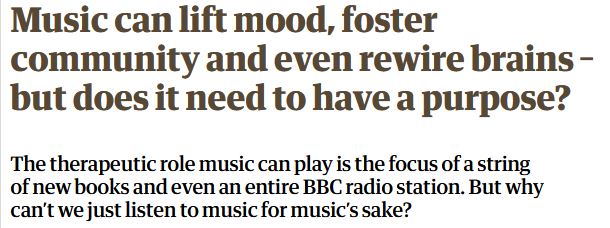
A while back I saw this headline:

And let’s just say I had an instant reaction:

My second reaction was hoping this dope wasn’t related to the Shulman brothers of Gentle Giant fame (doesn’t seem like it). I cooled off a bit and figured maybe he was being taken out of context or something.

Reading further didn’t make things any better. I had thought, perhaps, that what Shulman meant when he said people don’t like making music these days was something about how creators have to spend so much time doing other stuff (building brands, being terminally online, etc.) that “making music” in a business sense is not as fun as it once was. He was talking about professionals, in other words.

Nope. He’s just a douche:

“It’s not really enjoyable to make music now. It takes a lot of time, it takes a lot of practice, you need to get really good at an instrument or really good at a piece of production software,” Shulman explained. “And I think the majority of people don’t enjoy the majority of the time they spend making music.”

It’s an interesting and arresting angle.

Not really and here’s why – the vast majority of people who make music do so only for their own amusement or the amusement of those few around them. Most musicians aren’t trying to make it big, or even make a living, making music. They’re making music because it stirs something in their soul, fills a need in the way they interact with a world. Put simply – for most musicians being “good” is irrelevant to why they make music in the first place.

Years ago, one of my local writer colleagues made a very good point about making art. When people ask writers if they’ve ever been published or artists whether they’ve had an exhibition, they’re tying the doing of art with the high-level consumption of it, with sales. As a comparison, my colleague suggested, nobody asks a bunch of middle-age guys playing basketball at the Y if they’re training for the NBA. Rather, we recognize the value of doing the thing just for the sake of doing it, not to produce a product for which other people might pay money.

As a writer I like to think of myself as a professional – I work very hard on the text, work with editors and cover designers to produce a polished final product. As a musician, I am very much an amateur. I make noise when the spirit takes me and, if something comes out that makes me particularly happy, I’ll upload it to share with others. But I don’t deceive myself that I’m doing anything other than having fun and, maybe, another person or two might have fun with it, too. Which isn’t to say I don’t have fun writing, too – if I didn’t I wouldn’t do it – but I have different goals in each area.

Doing anything well, much less competently enough for others to pay you money for it, is hard. It takes work, long-term effort, and lots of failure. You know what doesn’t require any of those? Making are because you love it. Your sculptures can be lumpy. Your stories can peter out in the end. Your songs can be stiff and not particularly catchy. Did you enjoy making them? The answer to that question is the only thing that matters in the end.

So I will disagree with Mikey and suggest that the vast majority of people who make music – or any kind of art – enjoy it simply because that’s the whole point of doing it in the first place. Sure it can be frustrating, but the answer is to take a break and take the dog for a walk, not to turn to some soulless piece of AI to do the work for you.

Make art for yourself. And have fun.