On the Joys of Going to the Movies

I listen to several different podcasts about movies and if there’s one thing they all have in common it’s praise for the experience of seeing movies in the theater. Indeed, they exhort listeners to go out to theaters and see movies with others and enjoy the kind of communal experience you just can’t have at home, no matter how good your setup is from a technical standpoint. Recent experience suggests they might be overselling things.

A couple of weeks ago the wife and I did something we haven’t done in years – we actually went to the theater to see a real, grown-up, R-rated movie, the new Soderberg flick Black Bag, which I enthusiastically recommend.

We’ve gone to theaters in the past (less frequently since COVID hit, of course), but usually for the kind of big-screen spectacle popcorn movie that makes Scorsese itch. Those, to me, are more made for the big crowd thing than smaller movies that you have to engage with a little more. But this was the first time we’d been to see something like this in quite a while.

Things got off to an inauspicious start as there was absolutely nobody in the lobby of the theater complex (attached to the one mall in the area that remains thriving) when we arrived – no patrons, no employees. That meant we had to buy tickets via a kiosk, which went smoothly enough, although some vital information about the showing we were going to was left out (more on that in a moment).

Around the corner the concession stand was manned by a couple of young kids, but the crux of the moviegoing experience – popcorn and drinks – was all self-serve (the kids ran the registers, at least). There was a menu of other stuff that I suppose they would have made for you upon request, but we’d just had lunch so it wasn’t much of a concern. Still, we’ve not even made it into the theater yet and the experience is kind of cold and off-putting.

Our theater was at the very end of the corridor (not a problem!), which gave us the chance to walk past a handful of other theaters, some with movies playing. Some of the doors were open, others weren’t, but in either event you could hear what was going on inside pretty well. Not the best of omens for a satisfying movie experience. Next door to us the new Captain America flick was well underway.

Since we were early I took the chance to wander back up the corridor for a bathroom break. On the way back I noticed that one of the other theaters was in the middle of Anora, apparently rereleased on the back of its Best Picture Oscar win. It was during one of the louder more expletive-laden parts, so I decided to peek in and drink in a few minutes on the big screen, since we only got to see it at home. Inside there was nothing on the screen – no picture, no flickering, no nothing. But the soundtrack was going strong. I assume there was nobody in there (I was a little scared to look, frankly), but then why run the sound? It was just another odd note in a growing symphony.

As the loop of pre-movie ads gave way to previews, we noted that a couple of them used subtitles, even though the previews were all in English. My wife wondered if the movie itself would have them and I said I hoped not. Sure enough, once the opening titles were gone the subtitles popped up again. I ran back up the corridor to ask if they could be turned off (the kid at the concession stand said he didn’t know). Apparently they couldn’t, as they ran during the entire movie. It’s a minor annoyance, but a distracting one nonetheless.

It turns out that this screening was set aside as one for folks with hearing impairments and, thus, the subtitles were the point. I’ve no problem with that, but there was nothing in the ticket-buying process or the Google movie times listing that indicated this was that kind of screening. It was only afterwards, when I went to the theater’s website specifically, that I got an explanation. Had we known that ahead of time, we’d have gone to a different theater.

Three other people watched the movie with us. Two were a couple a few rows behind us (the ticket kiosk sells reserved seats, but that was pointless given the turnout). A little past halfway they started to be attacked by plastic bags (I can only suspect), given the occasional bouts of plastic crinkly noises. The other cinemagoer was a guy who came in about 20 minutes late and then left and came back three more times (always sitting in those couple of rows right in front of the screen). I’m not sure he made it all the way to the end.

Along the way there was at least one point where I could hear Sam and Red Hulk smashing it up next door. And, repeatedly, parts of the screen would go pixelized briefly in the way a streaming service does if it’s a little sluggish.

All of these are minor annoyances. None alone ruined the movie, nor did the weight of all of them together. As I said, the movie is great and worth seeing and I did it as part of a lovely afternoon out with my beloved (we even dodged the rain!). Still, if this is what the modern moviegoing experience is it doesn’t do a lot to inspire.

I don’t want to deny anyone the communal movie-going experience if that’s their thing and I realize the importance of it to the health of the industry, but I’m clearly not the one who finds the process less than thrilling these days. Black Bag, critically well received and the “kind of movie they don’t make anymore” – aimed at grownups, original, not the first in a series, an only a trim 94 minutes long – won’t even break even, it looks like. The modern theater-going experience is cold, sterile, and off-putting.

Sorry, Marty, but I’ll continue to consume most of my cinema at home on the couch with a snoozing puppy by my side.

On the Half-Life of Revenge

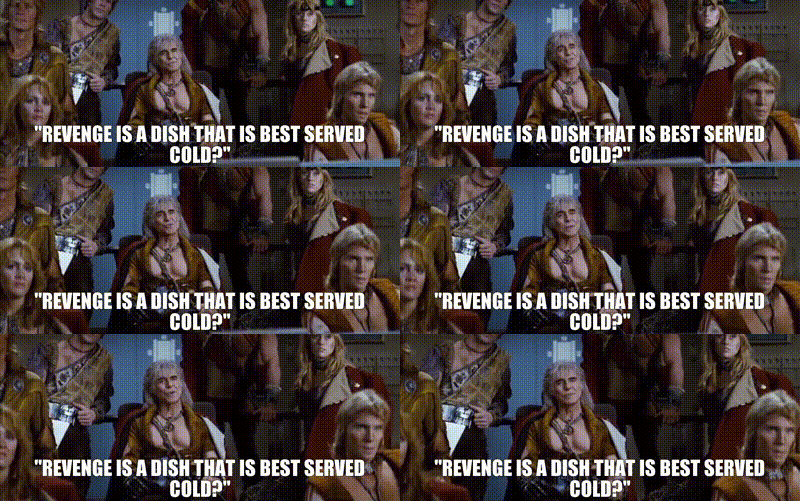
Revenge is a dish best served cold. – Klingon proverb

Revenge is an evergreen character motivation. Everybody, regardless of their station in life or what they do for a living, has gotten pissed off enough by someone to at least contemplate getting revenge. But how far can revenge get you in a story? Does there come a point where even the most righteous revenge starts to curdle?

I thought about this a lot while the wife and I were watching The Glory.

A South Korean drama from Netflix, it sprawls out over 16 hourish-long episodes (apparently originally released in two parts). The further on we got the less invested I was in the main character’s revenge arc – not because it wasn’t well founded, but because I had so much time to think about it.

The main character is Moon Deun-eun, who while in high school is constantly bullied by a group of classmates led by Park Yeon-jin. “Bully” here is really too tame of a term – they tortured the poor girl, which we see in fairly graphic detail (burning with a curling iron, for instance). They get away with it because their parents are rich and connected and Deun-eun is basically fending for herself (her father is absent, her mother worthless). After she drops out, Deun-eun struggles for a while until she dedicates her life to getting back at Yeon-jin and crew.

And she plays a long game. Over the course of years Deun-eun trains to become a teacher, eventually worming her way back into the lives of her tormentors by becoming a teacher in the school of Yeon-jin’s young daughter. From there she unwinds a pretty clever plot in which she does little herself to hurt anyone, but turns the others against one another in a way that leads to a fairly satisfying payoff. But it takes an awful long time to get there and, along the way, you start to wonder if revenge is really that great a deal, even if fully warranted.

To be fair, The Glory doesn’t let Deun-eun go quietly into the sunset when it’s all over. She’s basically stripped of her reason for living and only gets back on track by deciding to help her boyfriend get revenge on the man who killed his father. Nonetheless, your sympathies lie with Deun-eun only so far as the hot coals of revenge keep burning and I didn’t feel it at the end of 16 episodes.

Maybe it’s just the law-talking-guy in me but, in the broad view, revenge is bad. Bad for the soul, probably, but certainly bad for society. The law, in all its manifestations, is largely designed to replace systems of private justice – a.k.a. revenge. If your neighbor steals from you, you don’t break into his house and get your stuff back – you call the police or sue him. If someone kills your loved one, you don’t get to track down the offender and kill them yourself – that’s a job for the police, prosecutors, and the courts.

Emotionally revenge can be very satisfying, at least in fiction.

I mean, who couldn’t get on board with something like this:

On the other hand, being the better person just doesn’t have the same zip to it:

But for that very reason I think revenge works best in movies or a shorter series. There’s enough time to get you fired up and fully behind the main character’s scheme without giving you time to really think if they should be doing it in the first place. Revenge fiction works best when it harnesses that initial “this is bullshit!” reaction to learning about someone being wronged. The more time you have for that to ebb away, the less interesting the ultimate revenge is.

The quote at the top, of course, comes from Star Trek II: The Wrath of Khan. Critically, part of why that works so well is that the revenge seeker is the bad guy.

Is Any Game a “Big Game”?

It was the kind of situation that screamed “big game,” a few weeks ago. Leeds United were on 72 points and top of the English Championship, but only two points ahead of their closest pursuer, Sheffield United. Leeds travelled to Sheffield with the chance to not just stay top but create a bit of a cushion with a win over their Yorkshire rivals.

It was a hell of a game – Sheffield scored early in the first half (on an own goal attributed to Leeds’ keeper) and looked poised to hold off the visitors. Until the 72d minute, after which Leeds went on a run that created three goals unanswered. At the end of the night it was a 3-1 win and a five-point gap at the top. Surely, that’s the makings of a big game right?

Maybe not.

Over the next two games, by definition against teams lower down in the table, Leeds managed only a point, while Sheffield United bagged six. As a result, things are all tied up at the top of the standings just two weeks later (as I’m writing, Leeds is on top on goal differential). All this got me thinking about whether, in European soccer at least, there are such things as big games.”

The issue comes down to the league format that’s utilized in the big leagues in Europe. Rather than the typical American setup of a regular season followed by playoffs where a champion is crowned, in those leagues every team plays every other team twice (home and away), with the team that earns the most points (three for win, one for a draw) over the course of the season winning the title. It prioritizes sustained excellence at the expense of not having those do-or-die playoff games at the end of the season.

As a result, I’m not sure big games really matter. Every game is a potential three points gained or lost, regardless of the quality of opponent. This theory first sprouted in my mind last year, given how well Leeds did against the top teams in the Championship, only to fail to win promotion to the Premier League. Leeds finished third, behind Leicester City and Ipswich Town – who, in four games, Leeds defeated four times (ironically, the team that beat Leeds in the promotion playoff final, Southampton, beat Leeds twice during the regular season). Those were the big games last season, but in the end they didn’t matter anymore than losing at home to Blackburn (who finished 19th) and dropping points to Sheffield Wednesday (20th) and Sunderland (16th), among others. It was Leeds’ performance against lower table teams that mattered, in other words.

The same thing might be happening this season. Leeds’ record against the other top teams in the Championship is pretty good – three wins, two draws, and a loss. Certainly good enough to win promotion, you’d expect. But they’ve also dropped points to teams currently in 19th and 16th places, which might matter more in the end.

But maybe this is just a Leeds thing that I’m particularly attuned to as a fan. To check, let’s look at the past few seasons in the Premier League and the big games there.

Last season, Manchester City beat Arsenal to the title by two points – even though Arsenal beat them once and their other match up was a draw. What mattered more, in the end, was that Arsenal was tripped up by 13th-place Fulham twice during the season (one loss, one draw). By contrast, the year prior Manchester City’s five-point margin at the end of the season was certainly bolstered by beating Arsenal twice. The year before that, Liverpool triumphed by a single point over Manchester City, even though they drew both times they played each other. It’s not a large sample, but it at least suggests that big games often aren’t (the two seasons before that were such blowouts that there’s no point in analyzing them).

Is that enough data to draw any conclusions? Of course not, but I’m going to, anyway. I don’t see anything here that persuades me that big games mean anything over the course of long seasons like these. There are almost always other games against lesser opponents where one team slips up and the other doesn’t and those matter just as much in the end. The equivalence I’m thinking of is when somebody misses a last-second jumper or field goal and they get all the blame for a loss, when in fact there were mistakes and missed opportunities all through the game that made the last-ditch effort necessary in the first place. Are there seasons so close where defeating your closest rival head to head will make the difference? Sure, but I think those are more rare than fans would like to admit.

None of which is to say there aren’t big games for other reasons, such as rivalry/derby matches, or in other competitions – by definition every game in the FA Cup or March Madness is a big game, because if you lose you’re done. But leagues like the Championship or Premier League require a longer view.

If nothing else, it’ll lower your blood pressure from stressing over the next big game.

“Anora,” the New Kings, and the Absence of Consequences

One of the bulwarks of the criminal justice system is that the prosecution has to prove someone committed a crime beyond a reasonable doubt – a higher standard than those that apply in civil proceedings. One of the perversities of the criminal justice system is that courts generally will not, and in some jurisdictions are not allowed to, actually instruct jurors on what “reasonable doubt” is. It’s left to the parties to argue it out and the jurors to make the call.

Lawyers, searching for a common experience to which jurors can relate, try to analogize the “beyond a reasonable doubt” standard to the kind of certainty you need to make a major life decision. Not where to go to dinner or what movie to watch, but, say, whether to buy a house or a car. The big one, of course, is whether to get married (and to whom). Even if a juror has never been married, they’re aware of what a monumental decision that is.

I was thinking about those arguments while watching Anora this past weekend.

The newly-minted Best Picture winner is about the titular Anora (Ani to her friends and customers), a stripper who embarks on a whirlwind paid-for-date/romance with Vanya, the son of a Russian oligarch. After a wild time in Vegas he proposes that they get married and they do, much to the displeasure of his parents who send their (largely ineffectual) goons to ensure that the marriage is annulled. In the end, when it comes time for Vanya to stand up to his parents and stand with his wife, he can’t do it. The interesting question is why.

The answer, I think, lies in how the film deals with class distinctions. Essentially, the characters are divided into three groups.

Vanya and his parents are the super-rich, the 1%, the “new kings.” They have “fuck you” money and an immense amount of power. They largely suffer no consequences for wrongdoing and, therefore, have little fear of doing it. This is particularly important for Vanya because, as portrayed in the movie, he’s never had to make a consequential decision in his life. Even someone who is only 21 years old, who has lived a normal life, has made decisions that had consequences, both foreseen and unforeseen.

Vanya hasn’t and, as a result, doesn’t even recognize them when they come around. So, when he proposes marriage to Ani I don’t think he’s either (1) simply lying to her in a way to make her do something useful for him or (2) a besotted dope who’s really deeply in love with this woman he’s known for a week. I think he sees the decision to get married as being as consequential as what club to go to or whether to jet off to Vegas. Whether he gets it wrong or not, he won’t really suffer any consequences. He is, quite literally, playing with house money.

The second group of characters include Toros and his brother, two of the goons who are tasked with keeping tabs on Vanya. Neither are remotely in the same class as Vanya and his parents, but they think they can have access to wealth and power if they just continue to make themselves useful. Not for nothing but when Vanya goes missing Toros’ entire motivation for finding him is to please Vanya’s parents and fix a problem. He doesn’t express any concern for this guy whose life he’s looked over for years. He doesn’t see him as a kind of son, worrying about his safety and wellbeing. So long as he finds Vanya and gets the marriage annulled all is right with his world.

The final group is Ani herself, along with another one of the goons, Igor. Only Ani doesn’t realize she’s in this group at first. She thinks she’s in one of the other two, on her way into the good life, achieving upward mobility. Igor, by contrast, knows better. He understands his spot in the hierarchy and that he’s fated to stay there. His bond with Ani comes largely from his empathy for her coming to the same realization as the movie plays out. I think the ending is her recognizing a fundamental similarity between them that she would never have had with Vanya (not for nothing is the scene in the car the only sex scene that appears to include a real connection between the people involved).

The movie, then, reflects more than a little of our current reality. Increasingly, we live in a country with an out-of-touch and untouchable moneyed elite who rarely suffer any consequences for their actions. Susan Collins famously said, during Trump’s impeachment, that she was going to vote against convicting him because he “has learned from this case” getting “a pretty big lesson.” She wasn’t wrong – he learned he faces essentially no consequences for his actions. Just like Vanya, which is why he so often says the first thing that comes to his mind without giving any real thought to what might happen after.

Sitting down to watch Anora I didn’t quite know what to expect. I certainly didn’t expect a pretty succinct analogy for this country’s current class inertia (as one report put it “wealth status is sticky” – there’s little chance you move up or down over the course of a lifetime), but that’s certainly in there. It’s definitely got more going on than the “hooker with a heart of gold” tag some detractors are given it after the Oscars. It does make you think.

What it makes me think is that sometimes the lack of consequences might be the most consequential thing of all.

Similar Wars, Different Worlds

A while back I read a good write up about the 1953 version of War of the Worlds over at Reactor in which someone explained  (down in the comments) that the version most of us had seen on TV was a kind of stepped-down version in terms of the Technicolor, but that the currently streaming version was restored to its full glory. That sounded like a good excuse to watch a movie I hadn’t seen for a long time and set me off on a little dig into the story and the ways it’s been told.

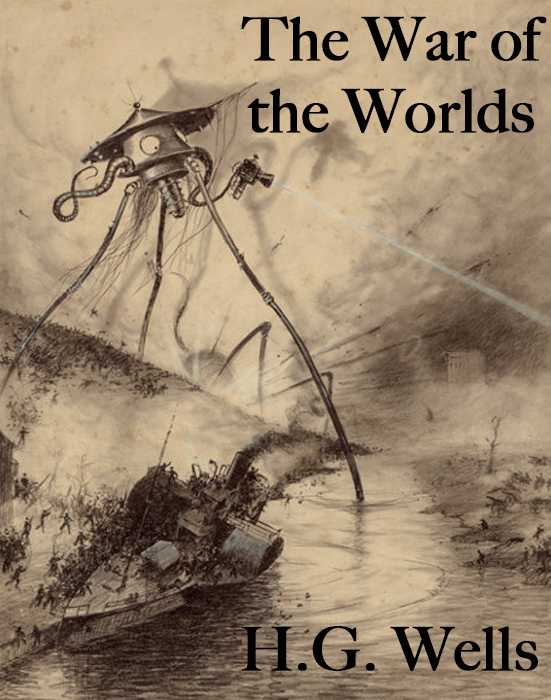
The story, of course, started with H.G. Wells, whose novel first appeared (in serialized form) in 1897.

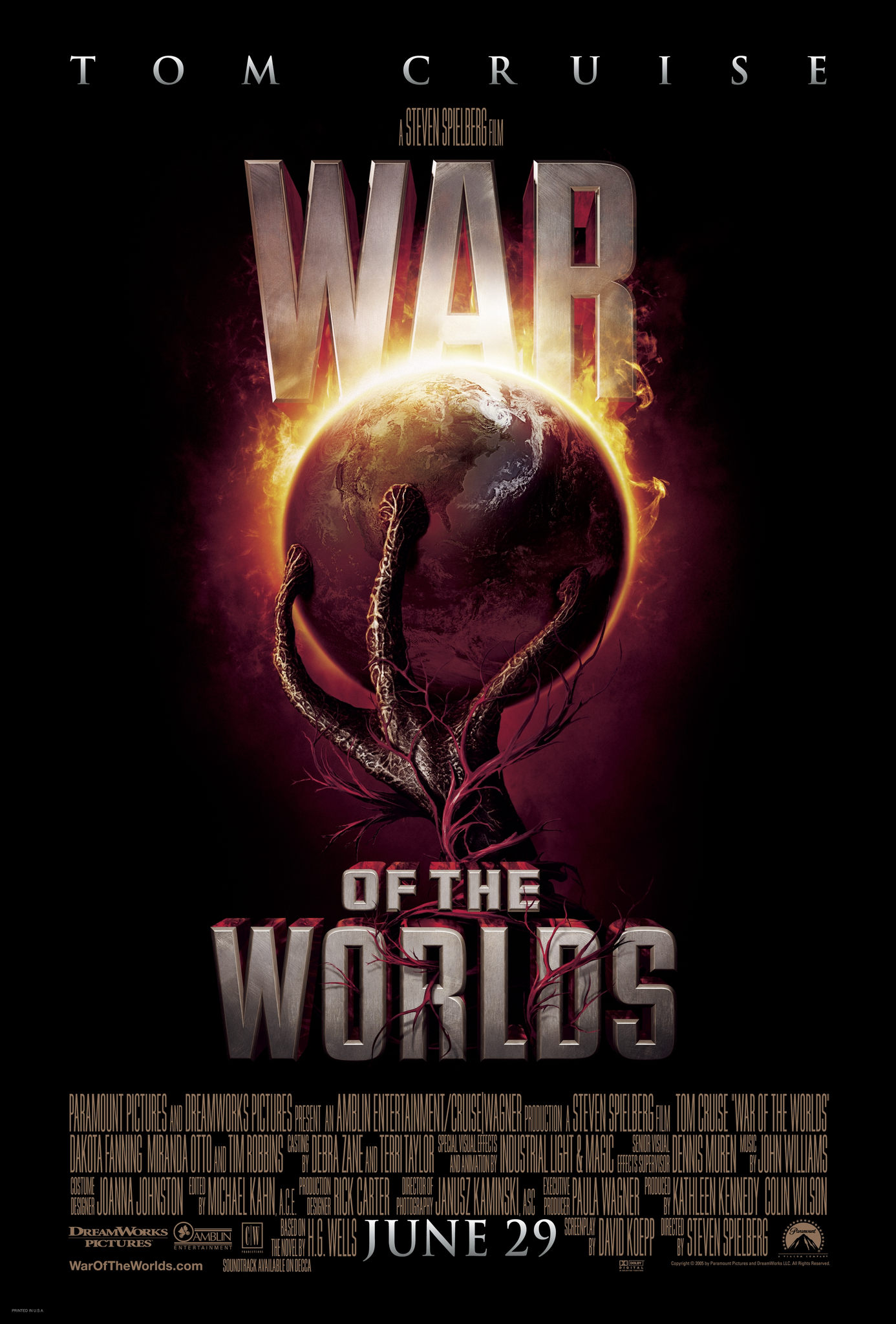
It’s a simple tale – Martians invade England, deal death and destruction to all in their path, but are felled in the end by Earth pathogens they aren’t equipped to deal with. It’s been adapted for the big screen twice (and in numerous other ways, including a rock opera!), in 1953 by producer George Pal and in 2005 by director Steven Spielberg. I consumed the book and both movies in pretty short succession and it’s interesting to see what parts of the book each film emphasizes, while not sticking completely faithfully to its text.

To be fair, that’d be a hard ask. The unnamed narrator of the book is a fairly average upper-middle class guy – he’s neither a scientist nor in the military, but he’s well read and thinks philosophical thoughts. The book follows him as he experiences the first landing of the Martians, including failed friendly attempts at first contact, and then as he (and others) flee as the tripod war machines make their way towards London. Above all, the book creates a sense of loneliness as the narrator loses his family (temporarily), his society, and any real hope in his future. Even though the book Martians never leave England it feels like the story of the last man on Earth. The ending, when it comes, is less happy than it is more a relief. Given how foundational the book is to modern sci-fi it’s hard to even quantify it as “good” or not – it’s just part of the bedrock.

The 1953 movie changes some things dramatically.

The main character, Dr. Clayton Forrester (yes), is not only a scientist but an expert on all things Mars, so he’s much more involved in the response to the Martian landing. It does, as in the novel, include a misplaced attempt at friendship (savagely parodied in Mars Attacks), but there’s a bigger focus on the military response, futile as it is. Forrester is more man of action than passive observer and he’s got others with whom he’s involved (including a love interest), so the emphasis on loneliness really isn’t there. This version also has a pretty heavy-handed religious overlay, with God getting the credit for the bugs that kill the Martians in the end.

The 2005 film in some ways hues more closely to the spirit of the novel, but also makes major changes.

The main character here is Ray Ferrier, a dock worker very much in the everyman vein, who, because this is Spielberg, has two children he has to look after the entire time. There is absolutely no chance for peaceful contact, however, as the aliens just pop up from underground (not sure that makes sense) and start wreaking havoc. Ferrier and clan are thus constantly on the run. While changing the setup, this movie keeps interesting details from the book, such as the Martians plucking up humans to use for food (the 1953 Martians are just killing machines) and a late-story run in with a madman who knows how he’s going to rebuild the world in his own image. Overall, this version does a better job of making the main character (and his kids) seem very very small in the grand scheme of things.

I won’t say either movie is better than the other. The 1953 version’s Martian machines – they look like they’re hovering but there really are legs, if you squint at the right times – will forever be what they should look like, slow and sleek and terrifying. The 2005 version does a better job with the characters, I think. Neither quite gets the central spine of the book, the feeling of loneliness, but that’s understandable.

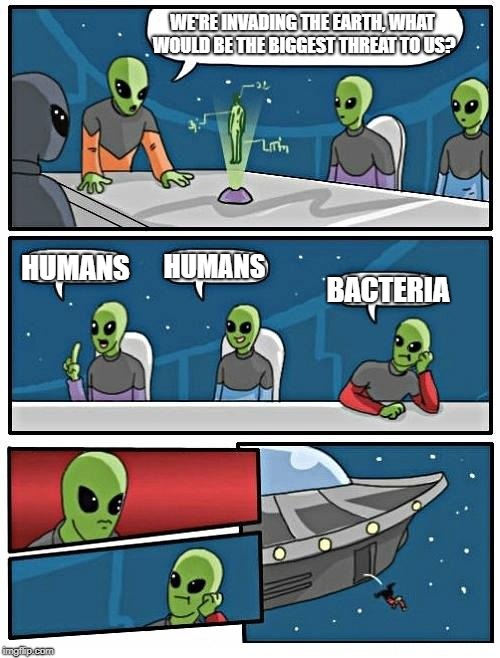
One thing’s for certain – we’ve been beaming this story out there for decades so that if the Martians ever do come for us, they’ll probably be armed with antibiotics as much as heat rays.

See Me! Hear Me! Feel . . . What, Exactly?

A couple of weeks ago, after some weather-related fits and starts (fuck winter, seriously!), I got a chance to sit down with the fine folks at the Reading Room Ruffians podcast. We talked about writing in general and specifically about Moore Hollow, since they’d all just read it. It was a fun hour that I’ll think you’ll enjoy. I was really pleased they liked my twist on the zombie story.

Watch here:

Or click here to get links to their pod on all sorts of different platforms.

And here if you don’t get the reference in the post title.

I Enjoy Making Art (and You Should, Too)

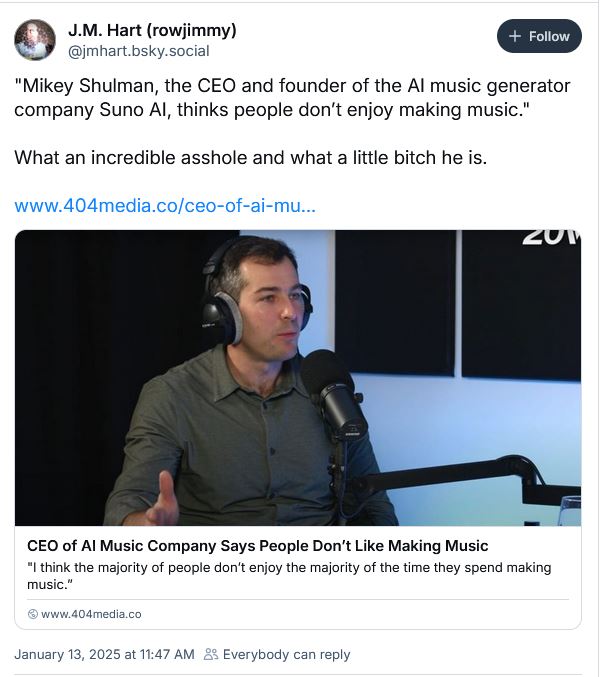
A while back I saw this headline:

And let’s just say I had an instant reaction:

My second reaction was hoping this dope wasn’t related to the Shulman brothers of Gentle Giant fame (doesn’t seem like it). I cooled off a bit and figured maybe he was being taken out of context or something.

Reading further didn’t make things any better. I had thought, perhaps, that what Shulman meant when he said people don’t like making music these days was something about how creators have to spend so much time doing other stuff (building brands, being terminally online, etc.) that “making music” in a business sense is not as fun as it once was. He was talking about professionals, in other words.

Nope. He’s just a douche:

“It’s not really enjoyable to make music now. It takes a lot of time, it takes a lot of practice, you need to get really good at an instrument or really good at a piece of production software,” Shulman explained. “And I think the majority of people don’t enjoy the majority of the time they spend making music.”

It’s an interesting and arresting angle.

Not really and here’s why – the vast majority of people who make music do so only for their own amusement or the amusement of those few around them. Most musicians aren’t trying to make it big, or even make a living, making music. They’re making music because it stirs something in their soul, fills a need in the way they interact with a world. Put simply – for most musicians being “good” is irrelevant to why they make music in the first place.

Years ago, one of my local writer colleagues made a very good point about making art. When people ask writers if they’ve ever been published or artists whether they’ve had an exhibition, they’re tying the doing of art with the high-level consumption of it, with sales. As a comparison, my colleague suggested, nobody asks a bunch of middle-age guys playing basketball at the Y if they’re training for the NBA. Rather, we recognize the value of doing the thing just for the sake of doing it, not to produce a product for which other people might pay money.

As a writer I like to think of myself as a professional – I work very hard on the text, work with editors and cover designers to produce a polished final product. As a musician, I am very much an amateur. I make noise when the spirit takes me and, if something comes out that makes me particularly happy, I’ll upload it to share with others. But I don’t deceive myself that I’m doing anything other than having fun and, maybe, another person or two might have fun with it, too. Which isn’t to say I don’t have fun writing, too – if I didn’t I wouldn’t do it – but I have different goals in each area.

Doing anything well, much less competently enough for others to pay you money for it, is hard. It takes work, long-term effort, and lots of failure. You know what doesn’t require any of those? Making are because you love it. Your sculptures can be lumpy. Your stories can peter out in the end. Your songs can be stiff and not particularly catchy. Did you enjoy making them? The answer to that question is the only thing that matters in the end.

So I will disagree with Mikey and suggest that the vast majority of people who make music – or any kind of art – enjoy it simply because that’s the whole point of doing it in the first place. Sure it can be frustrating, but the answer is to take a break and take the dog for a walk, not to turn to some soulless piece of AI to do the work for you.

Make art for yourself. And have fun.

2024 – My Year In Movies

After a week off to craft a spooky story for the NYC Midnight Short Story Competition, it’s time for the final installment of my look back at the year just past and highlight some of my favorite, or just most interesting, media I consumed (not necessarily new, but new to me). It’s time to talk about some movies  . . .

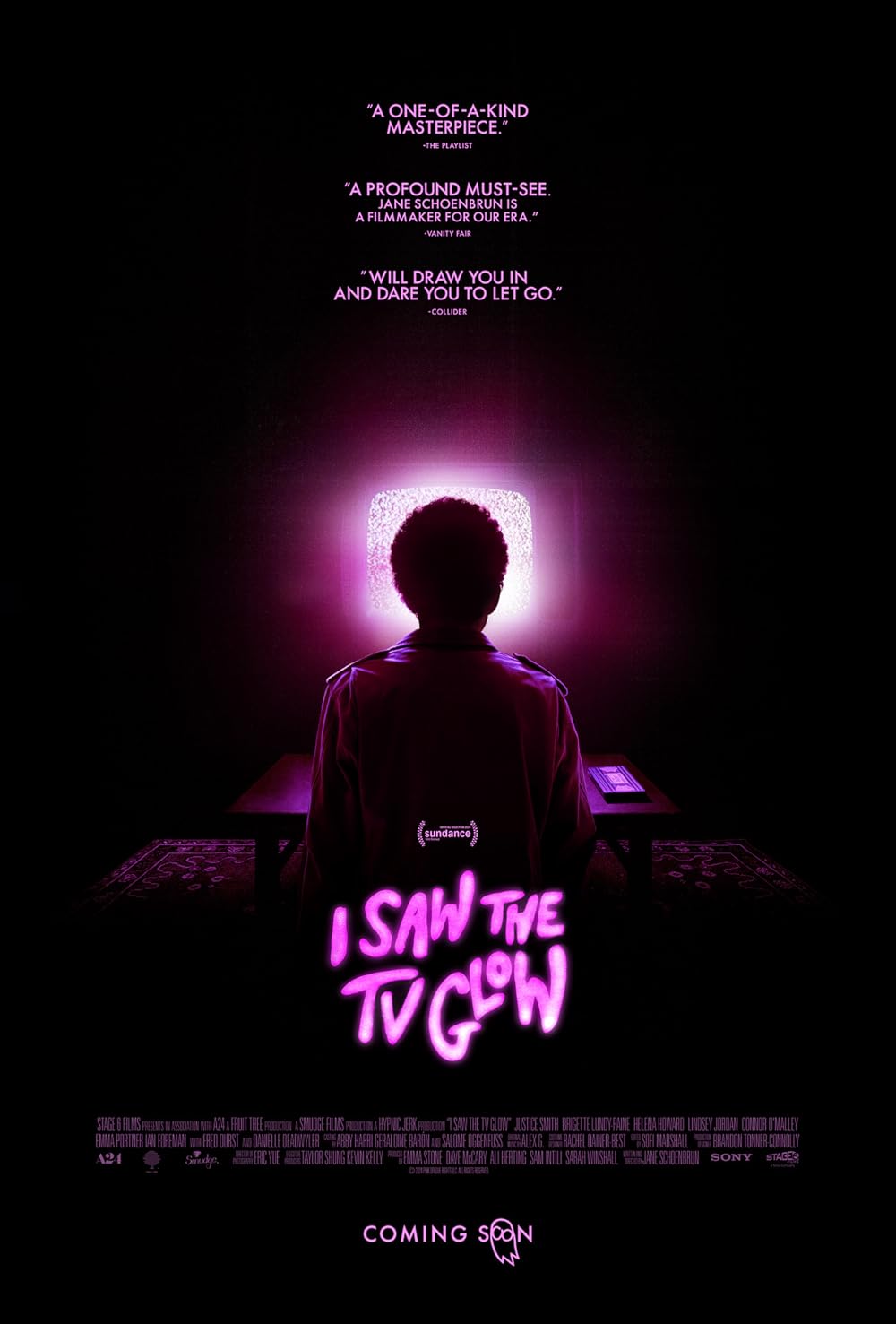
I Saw the TV Glow (2024)

You remember that episode of The Pink Opaque where . . .. No, of course you don’t, but if you’re any kind of genre fan, you’ve started a conversation that way about Babylon 5 or Buffy or whatever. This movie taps into that shared obsession, with two characters bonding over their love of the fictional The Pink Opaque (long ago in the past where a printed episode guide plays a role). What spools out though goes far beyond a TV show to deal with issues of self, identity, and shared experiences. It also has some scenes that completely freaked me out in the best way (including a superlong monologue that shouldn’t work, but really does). Do I understand it on all the levels other people do? Almost certainly not. Still one of the best things I’ve seen in a long time.

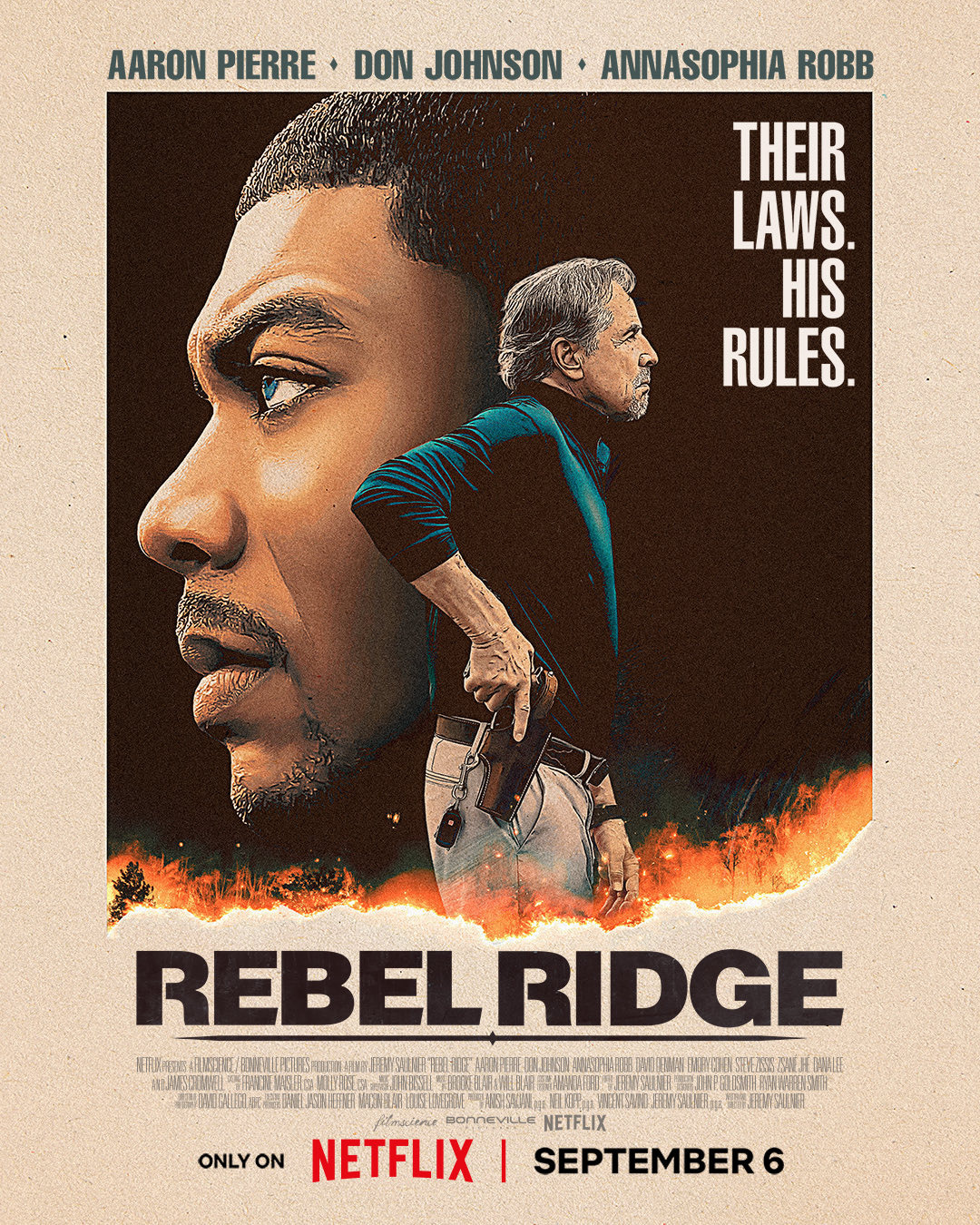
Rebel Ridge (2024)

“Semi-action movie about civil asset forfeiture” is a hell of an elevator pitch. It’s down to stars Aaron Pierre and Don Johnson (you heard right) that it works so well. Pierre plays a man who comes to a small Alabama town to pay his brother’s bond – in cash. It’s seized by the cops who classify it as drug proceeds. This is a real thing. The frustrations Pierre experiences pretty well match reality, before things get thrillier the closer to the end we get. There’s some violence, but it’s doled out well and this isn’t a pure-bred action movie. Stay away if you just want to see Pierre kick ass; watch it if you want a pretty clever interrogation of a problematic practice that, somehow, manages to even make the cops pretty well rounded in the end.

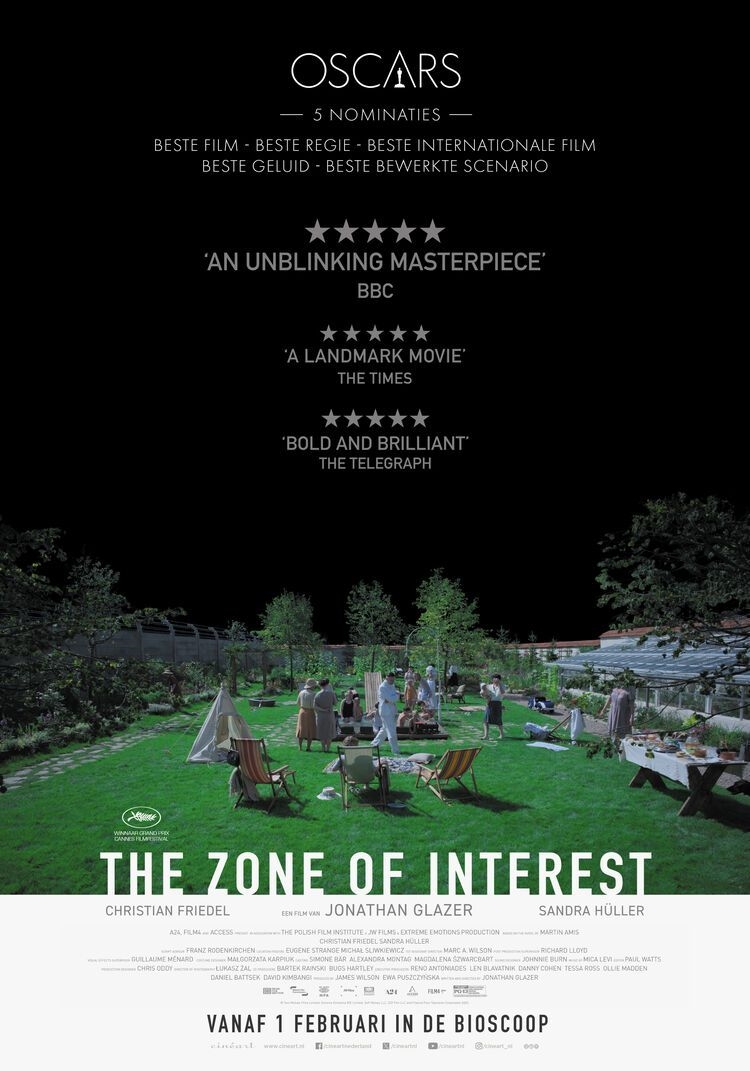
The Zone of Interest (2023)

It’s hard to imagine a more somber, only-watch-it-once kind of film. A slice of life about a German family who happen to live across the wall from Auschwitz (in the titular “zone of interest”). Dad’s the commandant. The bold choice of director Jonathan Glazer is that what goes on over the wall is never directly shown, but the sound designed is punctuated with sounds of terror and cruelty that make it unmistakable. What does it say about the commandant and family that this appears to be their dream home? Nothing good, of course. A harrowing watch, but worth it one time.

Blow Out (1981)

If you ever wanted a movie that showed you how people had to edit sound recordings in the pre-digital era, this is it. John Travolta plays a sound guy for low-budget horror films who, while out one night trying to get some good sounds, accidentally records the murder of a sitting governor and presidential hopeful in a car crash. There’s a damsel in distress and a lot of leg work that goes into putting together the pieces, all of which zings with energy and down-to-earth competence. That Travolta winds up right where he started just makes it all the more perfect.

Anatomy of a Fall (2023)

I’m a sucker for a courtroom drama – so how about one set in a courtroom that is so foreign to my common-law system experience that it was like science fiction? I mean, that’s not the only great thing about this movie, a clever did-she-do-it (there’s no doubt it was either her or an accident) that spends just as much time in the home where the death happens as it does in the French courtroom. Some of it – particularly the round-table out-of-sequence questioning of the defendant – is so odd that I had to do some reading afterwards to see how realistic it was (pretty accurate, within the bounds of dramatic license, or so I read). Did she do it? I’m not sure anybody knows (the lead actress, if I recall correctly, said she didn’t know!).

2024 – My Year In TV

I continue my look back at the year just past and highlight some of my favorite, or just most interesting, media I consumed (not necessarily new, but new to me). This week let’s watch some TV . . .

Mrs. Davis (2023)

I can only imagine that the brainstorming sessions for this show must have included some mind altering substances. A nun scours the globe, with the help of various other colorful characters, in order to fight an out of control AI that might be taking over the world. Should this work in any way shape or form? No. Does it? Amazingly, yes. It’s funny, thrilling, compelling, and hits you in the feels. In a world overrun with IP-driven reboots and rethinks we need more Mrs. Davises.

Shogun (2024)

Not an original thought, I know – this once-limited series has been praised to the hilt since it premiered. Pleasantly, it completely lived up to the hype. Having no familiarity with either the original novel or miniseries (I’m not that old) I can’t say how it compares to those sources, but as a stand-alone piece of work it was brilliant. Was the ending kind of a cop out? In a way, but isn’t that what life’s like sometimes? Besides, there’s a second season coming to stir things back up!

The Sympathizer (2024)

This is another show that probably shouldn’t have worked as well as it did. The titular character is a North Vietnamese spy who infiltrates the office of a South Vietnamese general so thoroughly that when the general flees to the United States the spy goes along. What follows is a twisting examination of being and identity, punctuated with a lot of black humor. There’s a movie within the show that sends up Hollywood and Robert Downey, Jr. shows up in multiple roles. It doesn’t all work all the time, but, as with Mrs. Davis, this is more of the odd kind of storytelling TV needs.

Say Nothing (2024)

Say Nothing is one of the best books I’ve ever read (as I’ve noted before). When I heard at TV adaptation was in the works I was skeptical that they’d be able to pull off the same trick of telling some very relatable, personal stories about people involved in The Troubles while also providing enough high-altitude context to explore the wider conflict. The show, of course, doesn’t quite do that quite as well, but by paring things down a bit the story told wound up very powerful. The series performs a neat sleight of hand by setting the first few episodes as kinetic pieces of lawlessness and violence done for the cause and then pivoting to explore the long-term consequences of participating in those things. Excellent on its own, even better if it makes you want to read the book afterwards.

We Are Ladyparts (2021, 2024)

It’s a great elevator pitch – a series about a group of young Muslim women in Brittain (of Pakistani background) who form a punk band. Could be a heavy, maudlin examination of the struggle of outsiders in the modern UK, right? Or, it could be a very funny show with deep-down laughs and fun songs that also manages to dig into themes of belonging and identity. I was completely captivated, in spite of a couple of music-related nitpicks (the music isn’t really punk, even if the attitude is, and their plan for success sounds more out of the 1980s than 2020s). Hoping for more!

The Life of Rock with Brian Pern (2014) – Brian Pern: A Life in Rock (2014) – Brian Pern: 45 Years of Prog and Roll (2016) – A Tribute – At the BBC (2017)

While watching stuff I frequently hop over to IMDB to figure out why a familiar face looks so familiar. I don’t know what we were watching or who I was looking up, but one of their prior works was Brian Pern: 45 Years of Prog and Roll – needless to say, it piqued my interest. Brian Pern is a parodic version of Peter Gabriel – lead vocalist of a prog-rock band called Thotch in the 1970s who went on to a genre-defining solo career (he frequently states that he invented world music). Across three short seasons (three episodes each, plus a couple of later specials), Pern first chronicles the history of rock and roll then navigates his own failing career, which ends in a botched Thotch reunion and death in an unfortunate Segway accident. There’s a lot of very funny stuff over the seasons (which includes appearances from the likes of Rick Wakeman and Gabriel himself), but the first is the best. If you’re a fan of prog at all, or much mockumentaries, you owe it to yourself to track it down online.

2024 – My Year In Sound

I continue my look back at the year just past and highlight some of my favorite, or just most interesting, media I consumed (not necessarily new, but new to me). This week, let’s talk music and podcasts . . .

Albums

Zopp – Dominion (2024)

Zopp is manifesting itself into a real band (they’ve played live), but this, their second album, is still primarily the work of Rya Stevenson, who plays just about everything except drums and horns. At the forefront of the nouveau-Canterbury sound is fuzzed out organ, of course, along with lots of other tasty keyboards. New for this album are a couple of tunes with vocals. Stevenson’s not a powerhouse vocalist, but his laid back, low drama delivery is in step with his Canterbury predecessors. If you thought nobody made music like Egg or Caravan these days, you’re in for a treat!

Ghosts of Jupiter – The Great Bright Horses (2016)

A fine collection of neo-psychedelia that often feels like Traffic run through some kind of chemically-induced dream state. A lot of the palate is organic – acoustic guitar, flute, piano – which makes the soaring, sinewy guitar parts stand out all the more. You don’t need a drink (or something else) to dig this, but it probably wouldn’t hurt. Beautiful cover, too.

Emmett Elvin – Being of Sound Mind (2022)

I knew Elvin from his work with Knifeworld and Guapo, but was completely unprepared for the funhouse experience that this solo album was. Kicking off with some serious Zappa vibes, the songs bounce from genre to genre without any apparent rhyme or reason, but it all works. Menacing and playful, dissonant and melodic in equal measure. There’s even the catchy “Artificial Guitar” than you can kind of sing along with! Far and away my favorite new thing I heard last year.

St. Vincent – All Born Screaming (2024)

I liked St. Vincent’s detour into 70s-inspired sleaze, Daddy’s Home, more than most, but I admit it felt a little slight and lacked the edge of some of her earlier work. No worries here, as the darkness and general oppressiveness is back. The soundscapes are equally lush but feel smothering rather than intoxicating, with an electronic glaze to them. Compelling, yet disturbing, kind of like 2024.

The Decemberists – As It Ever Was, So It Will Be Again (2024)

With a title like As It Ever Was, So It Will Be Again it was clear that this album would be a return to “normal” for The Decemberists (again, I liked their last album more than most). I perhaps bought into that so much that when I first got this album I thought it was very nice, but kind of “Decemberists by numbers,” without a lot of standout material. My opinion changed over the year and it really grew on me. There are several great songs (“Burial Ground,” “Long White Veil,” “Don’t Go to the Woods”) without even mentioning the closing epic, “Joan In the Garden” that managed to channel “Echoes” in spots. It’s no shame to revert to form when the form is so damned good, right?

Podcasts

Homicide: Life on Repeat

One of the great joys of last year was that, at long last, Homicide: Life on the Street appeared on a streaming service. Not only that, the clamor of that release even interested my wife in watching it, so we burned through the entire series over the fall (more thoughts on that from me sometime later). This podcast, hosted by Kyle Secor (Bayliss during the series) and Reed Diamond (Kellerman), bills itself as a rewatch podcast, but that mostly just serves as a frame for them to bring in various people associated with the show to talk about how the sausage got made. Guests have already included David Simon and Tom Fontana and I’m not sure how long it can make it into the series this way, but if you’re a fan of the show it’s a must listen. And it’s a lot of fun (I love the musical bumpers for various segments they’ve done).

What Went Wrong

A really good podcast about movies with a pretty misleading name. You’d think it was all about doomed productions and flops, but in actuality it’s more of an examination of how things change in movie projects from inception to production. In other words, it’s a recognition that things go wrong, but ultimately can still produce a good movie. The one on Star Wars (I’m old, I don’t do episode numbers) was particularly good.

Dark Histories

My general rule of podcasts is that you need at least two people for it to work right. It’s not just because having someone else to bounce facts and opinions off of is often more entertaining, it’s because one person droning on tends to lead down rabbit hole and not make for compelling listen. Dark Histories is the exception to the rule, as it’s merely Ben and a microphone, but you can tell that he’s put great effort into putting together an actual script to tell particular stories in a satisfying way (with just a hint of sound design in the background). As the title suggests, the focus is on weird, odd, or terrifying stories of the past, things that might get overlooked in general. Fascinating and very well done.