Can’t Anyone Rest in Peace These Days?

Many many years ago, there was a Bloom County cartoon in which Opus learns of new companies that allow you to freeze-dry a deceased pet and keep them around forever. His reaction was a tad overwrought:

Or at least I always thought it was. More and more, however, it’s becoming clear that we can’t just let the dead be dead, we’ve got to keep bringing them back to serve various agendas.

The most alarming recent case came out of a court in Arizona. Christopher Pelkey was killed during an incident of road rage and Gabriel Horcasitas convicted of his manslaughter. It’s pretty common in such cases to have victims (or family members of victims) give statements to the judge before sentencing about what has been lost due to whatever crime the defendant committed.

Horcasitas’ sentencing went a step further:

Ms. Wales, 47, had a thought. What if her brother, who was 37 and had done three combat tours of duty in the U.S. Army, could speak for himself at the sentencing? And what would he tell Gabriel Horcasitas, 54, the man convicted of manslaughter in his case?

The answer came on May 1, when Ms. Wales clicked the play button on a laptop in a courtroom in Maricopa County, Ariz.

A likeness of her brother appeared on an 80-inch television screen, the same one that had previously displayed autopsy photos of Mr. Pelkey and security camera footage of his being fatally shot at an intersection in Chandler, Ariz. It was created with artificial intelligence.

“It is a shame we encountered each other that day in those circumstances,” the avatar of Mr. Pelkey said. “In another life, we probably could have been friends. I believe in forgiveness and in God, who forgives. I always have and I still do.”

Reporting on the hearing has been really bad – that article quotes the defense attorney as stating (perhaps correctly) that given the wide latitude judges have at sentencing that there’s probably nothing legally wrong with it, but he also says that an appellate court might find it to be reversible error – but it’s unclear whether an objection was lodged, so who knows? Regardless, Pelkey’s reference to forgiveness beyond the grave didn’t seem to move the judge any – Horcasistas got the maximum sentence.

I can sympathize with using AI to bring a dead loved one back to life to hear them make their own plea for justice (I also think it’s ghoulish and I’ve never been a big fan of victim impact statements, but at least feel for those involved). That’s a lot harder to do when it’s part of a cynical cash grab at the expense of a dead person’s reputation.

BBC Maestro is the British broadcaster’s version of Masterclass, in which you pay to access video lectures by big names in their given fields. When it comes to mystery fiction is there a bigger name than Agatha Christie? Ah, but she’s dead. That’s no longer a problem! Thanks to the “magic” of AI and some desperate descendants:

Agatha Christie is dead. But Agatha Christie also just started teaching a writing class.

“I must confess,” she says, in a cut-glass English accent, “that this is all rather new to me.”

* * *

She has been reanimated with the help of a team of academic researchers — who wrote a script using her writings and archival interviews — and a “digital prosthetic” made with artificial intelligence and then fitted over a real actor’s performance.

“We are not trying to pretend, in any way, that this is Agatha somehow brought to life,” Michael Levine, the chief executive of BBC Maestro, said in a phone interview. “This is just a representation of Agatha to teach her own craft.”

Bullshit. Anyone could take Christie’s writings, including drafts, notes, and other non-published works, and base a writing class on it. Such a class would probably be quite useful! But it wouldn’t bring in the bucks the way having “Agatha” actually tell it to you. People are attracted to the name, which is the whole point in using it in the first place. Add in the likeness and it’s like she’s in the room with you (are the space bees, as well?).

It reminds me of the Frank Zappa hologram tour that hit the road a few years ago. A band full of Zappa alumni played live, occasionally joined by a holographic projection of Frank playing along. It was a sad gimmick. It should have been enough of a draw to hear some amazing music played live (in front of your ears!) by amazing musicians, but that wouldn’t have been enough of a draw. But Zappa there in hologram form? Well, it did sell some tickets, although the fact that it’s been largely forgotten about hints at its impact (meanwhile, Dweezil and others continue to do the man’s music justice on the live stage around the world).

And now they’re reanimating one of the most distinctive voices in movie history:

Nearly 40 years after his death, Orson Welles is back — as a disembodied AI-generated voice in location-based storytelling app Storyrabbit.

Storyrabbit, from podcast company Treefort Media, inked a partnership with the Orson Welles Estate to launch “Orson Welles Presents.” The app now features the unmistakable voice of Welles, digitally re-created using Storyrabbit’s AI technology, as an option for users to hear stories about specific locations. Using the Welles voice is free in the app until June 1, after which it will cost $4.99/month.

I mean, the idea for the app is kind of neat – it provides you with short info blurbs about specific locations based on where your phone is – but what value is added by having not-Welles give you the info? Surely the into itself is what you want, right? Maybe you don’t want it read by Gilbert Gotfried, but surely any of the numerous voice over actors or audiobook narrators out there could do the job, right?

I love history – that was my undergrad degree before I went to law school. I love the history of art, too. I’d give a lot to have been able to talk with Kurt Vonnegut or see Frank Zappa play live, but that’s never going to happen. An AI simulacrum of either of them isn’t the same thing – it’s a modern construct based largely on who we think those people were, not who they really were.

The dead are gone. They can leave us incalculable gifts, but what they can’t leave is their presence. Animating their virtual corpses in pursuit of a buck (or pound) demeans them – and us as well. Maybe Opus had it right all along.

Is There a Fourth Album Curse?

I never thought about whether there was a “fourth album curse” until the other day when I saw this AV Club article about fourth albums that beat the curse. The concept is pretty thinly sourced – a 2011 discussion forum thread and an article about Franz Ferdinand, in which its leader said:

Alex Kapranos once found himself dreading an inevitable milestone with his band, Franz Ferdinand: their fourth album. “At that point a lot of people are going, ‘Why are you still here? Why are you still doing stuff?,’” he recalls.

I can sort of see his point. By the time an artist has been around to release a fourth album the novelty has worn off and, depending on who they are, things can start to get a little familiar. With Beardfish, for example, I jumped on the train with their second album, The Sane Day, which is great.

I really liked the next two as well (the Sleeping in Traffic duology), but by the time Destined Solitaire rolled around – my fourth album with them, their fifth overall – the sheen had worn off. It’s not a bad album, by any stretch, but it failed to wow me and nothing they’ve done since has sparked the same sonic joy for me.

But let’s assume the premise is true – arguendo, as they say in the legal world – and see if there are some other artists who knocked it out of the park on their fourth (studio) album and avoided this so-called curse.

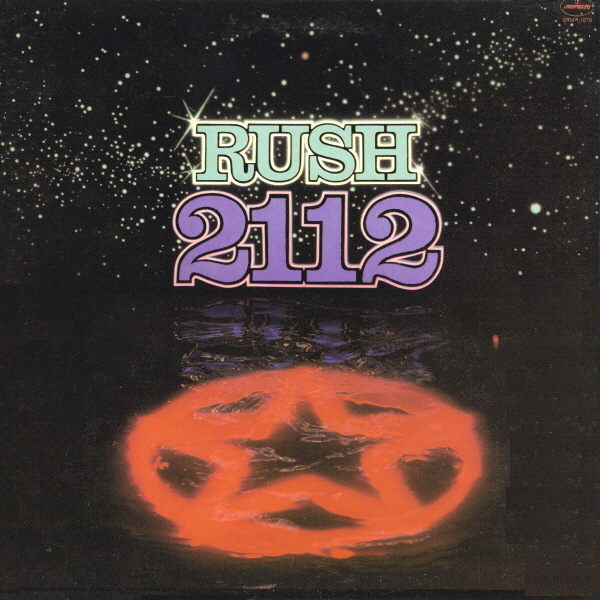
The one that immediately sprang to mind when I read the article (it showed up in the first comment, too), was 2112 by Rush.

Although their self-titled debut had gotten some traction, Rush’s second and third albums hadn’t really moved the needle. Faced with a record company giving them one last chance to produce a hit they decided to say “fuck it,” do their own thing and, if necessary, go down swinging. Alas, the album, particularly the side-long title track, really clicked with a certain group of fans and the rest is history. 2112 is literally the album that made Rush what they turned out to be.

Another band whose fourth album, propelled by a side-long title track, signaled their trailblazing future was Kraftwerk with Autobahn.

Up to that time, Kraftwerk had been of a piece with the rest of the Krautrock scene, experimental and not generating much particular notice. Autobahn marked the full embrace of electronic sounds (although there’s still some guitar and flute in there) that would find full flower on later classics like Trans-Europe Express and The Man Machine and set the scene for the synthpop and electronic music boom of the modern age.

An artist of a completely different variety, but with a similar swerve, is Bruce Hornsby. After the megahit of “The Way It Is,” his next two albums with the Range produced reduced commercial returns (although they’re both pretty good). For Harbor Lights, his fourth album, he changed things up.

For one thing he ditched The Range, not just in name but in body, aside from drummer John Molo. In their place he brought in a host of players with jazz (and related) cred, including Pat Metheny, Branford Marsalis, Jerry Garcia, and Phil Collins. The music brings in more influences from jazz, bluegrass, and classical music that would define Hornsby’s music in the years to come. It’s not a Kid A seismic shift, but it’s pretty significant.

Somewhat closer to the spirit of Kid A was Dazzle Ships by Orchestral Manoeuvres in the Dark.

After several successful albums, capped by Architecture & Morality, the band did a swerve into samples, found sounds, and collages. There are a few pop-facing songs, sure, but it’s more experimental and, as a result, kind of bombed compared to previous releases. It didn’t shift OMD’s style or anything, but it’s a solid example of a band using its success as a chance to do something different and mostly succeeding.

Finally, echolyn’s fourth album, Cowboy Poems Free, certainly belongs on this list.

It was their third album, As the World, that was supposed to be the big one, an unabashedly progressive rock record released by a major label (Sony) in the middle of the grunge-fueled 1990s. However, personnel at the label changed, the album was released with no real support, and the band broke up. But they returned in 2000 with Cowboy Poems, a little older and wiser (?), at least about the mechanisms of the record business. They’ve kept going (slowly, at times) ever since, release some really brilliant albums. For them, the fourth album was a “yeah, we can still do this” moment.

I’m sure there are plenty of fourth albums out there that fall flat, but, on balance, I’m not sure there’s such a thing as a fourth album curse if you can muster this many exceptions. Or maybe it’s more of a nuisance than a curse – in which case, why make such a big deal about it?
Form, Function, and Fiction

All art is driven by form, to a certain extent. Deciding to tell a story by writing a novel means a different form, with different strengths and weaknesses, than telling the same story by making a movie (which is why it’s often fruitless to compare adaptations to the source material). But sometimes creators will intentionally confine themselves even more, prioritizing form over traditional storytelling techniques. There’s recently been a couple of really interesting examples of this on TV.

The first to debut (although we came to it late), is The Pitt, the Max medical drama that is absolutely not a reboot of/sequel to ER.

Set in a takes-all-comers trauma center ER in Pittsburgh, the show’s catchy gimmick is that the 15-episode first season follows a single shift in the ER in real time (if you’re thinking such a shift couldn’t really be 15 hours long – it’s not an average day!). Noah Wyle (yes, of ER fame) plays the head doc as he rides herd over a bunch of residents, med students, and other medical professionals through the day.

The second to premier, which it did with a blast, was Adolescence, a British Netflix limited series about the investigation of a teenager’s murder of a teenaged girl.

As with The Pitt, Adolescence has a structural gimmick, too – each of the four episodes is done in one shot, so that it not only plays out in real time (for the hour – the series actually covers months of time in the end) but pretty much in one location. The first episode starts when police raid the suspect’s home, then follows him and others to the police station and the eventual reveal that he did, in fact, kill the girl. Other episodes feel a little more contained, particularly the third, which is basically a pas de deux with the killer and the psychologist trying to understand him.

In both cases, the format of the shows put limitations on how those stories were told. With The Pitt that began early, as they had to build the labyrinthine ER set before they could actually write anything. Given the “real time” framing, they had to know how long it took for people to get from place to place and what would be visible in the background of shots to know how all the pieces fit together. Likewise, in Adolescence the one-shot conceit meant there were no quick cutaways to other locations and other characters. That led to a tight focus on the killer and his family, to the exclusion of the victim or her family. As a public defender I found that focus refreshing, as often not enough attention is paid to the toll that crime takes on the perpetrator’s family. Nonetheless, it did lead to some criticism of the show for that focus.

What does that mean for how the form of these shows impact the viewing experience? I think the one-shot conceit for Adolescence makes a bigger, and more powerful, impact. The first episode expertly hands off from character to character, setting the scene at the station leading up to the killer’s interrogation and eventually admission. There are times when he disappears as the camera follows other characters around, reinforcing his isolation. The final episode, which includes a drive to the UK version of Home Depot after kids vandalize the killer’s father’s van, uses the drive time to supreme effect, giving us genuine human moments that, in other formats, might not land as well. The third episode, which is just the killer and the psychologist, is the least flashy but is intense. Only the second episode, where cops go to the school where the killer and victim went, feels a little hard done by the format, mostly because it’s a pretty big campus and there’s a lot of walking to be done.

The conceit feels less present in The Pitt. The most notable thing about it is that it avoids the typical medical drama pattern of wrapping up particular patients at the end of the hour. Some patients linger (and linger) for several “hours,” giving a better sense of how long ER visits tend to be. That said, aside from the slowly ratcheting up of tension over the hours there wasn’t one point where I was like “and that’s why they did it this way!” And the “one shift” idea drags down the reality of it a bit as no such horrible ER shift has ever existed in the history of the world. I would have liked to have seen a down hour where nothing major happens, people get a chance to breathe, and such. In the end the format works, and it doesn’t get in the way, but I’m not sure how essentially it is to the end result.

Art isn’t created in a vacuum. It’s shaped by the times in which it’s made and by the people who make it (who, themselves, are products of the times in which they’re made). Sometimes, artists will add additional barriers that shape their work and it can produce something really cool.

Music for Its Own Sake

Information is not knowledge.

Knowledge is not wisdom.

Wisdom is not truth.

Truth is not beauty.

Beauty is not love.

Love is not music.

Music is THE BEST

– Mary, from the bus (via Frank Zappa, “Packard Goose”)

Even before the current administration’s crackdown on education, it wasn’t unusual to see band directors or other music educators arguing for, if not more funding for school music programs, then at least no more cuts. Often, music education supporters trot out a graphic like this in support of such arguments:

That’s great and it’s important that the public knows that stuff, but whenever I see it I feel like it risks turning music – and art in general – into something transactional that we do, or teach kids about, only because its boosts the bottom line down the line. Isn’t it enough to make and embrace music for its own sake?

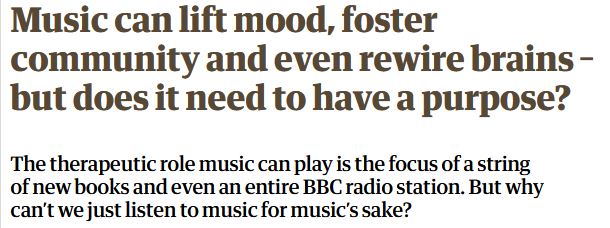
This all came back up when I saw this article by Emily MacGregor in The Guardian:

MacGregor talks about a recent rush of books about the healing powers of music and focuses on a new BBC station called “Radio 3 Unwind”:

Programming on Unwind is light on chat, but heavy on second (i.e. slow) movements and, er, birdsong. The schedule consists mostly of playlist-type shows with names such as Mindful Mix and Classical Wind Down and features plenty of recognizable choral, piano and instrumental classics from big hitters such as Chopin, Purcell and Mozart, alongside an emphasis on new music and composers from diverse backgrounds.

Unwind’s presenters often have psychology or mindfulness credentials – and above all soothing voices. When I tune in, I find myself being encouraged to consider “the grandness of the natural world” by an authoritative baritone against strains of undulating woodwind, majestic strings, sonorous horns. “You breathe, as nature would have you breathe. You are alive.” Hmmm. A Shostakovich symphony this is not. I can’t quite shake the feeling that I’m settling in for a spa treatment.

I’m not here to poo-poo the healing power of music. Many a frustrating days at work have been made right by a drive home with the windows down, tunes blaring, and me singing along so enthusiastically I start losing my voice. Without a doubt, music can make you feel better. But isn’t it so much more?

Back to MacGregor:

The anxiety is that Unwind devalues music, so that we start thinking that it is only of value insofar as it’s useful for something else. Mightn’t Unwind encourage listeners to think classical music is little more than bland background muzak, with nothing to say? Criticism has come from all directions: the BBC has been accused of selling out, of dumbing down, of anaesthetizing listeners and of relegating classical music to the awful category of “ambient”. There’s been a rallying cry for the intrinsic value of music, music for music’s sake.

Hey, now, let’s not take shots at a foundational part of electronic music, shall we?

Anyway, I agree with MacGregor’s statement that she’s “allergic to the suggestion that music needs to be attached to claims about something else to be worthwhile,” I don’t necessarily see research about the benefits of music as problematic. The problem is more with a society that views anything that isn’t “productive” (where “productive” probably means economic gain) has to justify itself in some way. It should be enough to listen to a symphony or a Marillion song because it brings you pleasure, on some level.

Thus, I’ll join fully in MacGregor’s conclusion:

Where the art-for-art’s-sakers and the music-for-healing camps find common ground is in the idea that as a society we’ve lost sight of how important music is. Over the past decade, there’s been a sharp decline in UK sixth-formers studying the arts, following the government’s “strategic priority” emphasizing Stem subjects. But music is not the icing on the cake of an existence dominated by science, technology and economics; it’s (to push a metaphor too far) the rich butter whipped right through the mix. We are aural creatures, reverberating together.

Listen to Mary – music is the best.

“Bone Valley” and the Crushing Weight of Finality

I occasionally get appointed to what are called “cold record” appeals, so called because the lawyer handling the case on appeal (that’s me) is not the same person, or from the same office, who handled the case at trial, plea, or sentencing. In those cases I have a letter I send that explains just what a direct appeal is and what it isn’t. Part of that spiel is that in the United States courts of appeals generally don’t review the facts of cases. They’re looking for legal error (for which the facts may be relevant), but generally the question of “did this person actually do it?” has already been answered and the court of appeals isn’t going to revisit that.

It’s called “finality” and it is, in many ways, the hobgoblin of our criminal justice system. It’s the idea that once someone is convicted of a crime it becomes really difficult to even get a court to look at the question of guilt/innocence, much less in a way that might actually result in a conviction being reversed. It’s something that a lot of lay people don’t understand and find frustrating – which I do, too!

I was thinking about this while listening to season one of the podcast Bone Valley.

The subject is Leo Schofield, who was convicted of the 1987 murder of his wife, Michelle. The podcast covers not only the initial investigation and Schofield’s trial (for which the evidence presented is pretty slight), but also his attempts to get a new trial after evidence turns up pointing to another man, Jeremy Scott, as the killer. Scott eventually confesses, but even that’s not good enough for Florida courts, who denied Schofield’s requests for relief (he was eventually released on parole in 2023).

Bone Valley does a pretty good job as a “whodunnit,” but there’s a gaping hole in the middle of it when it comes to the law. Nobody ever comes out and says just what Schofield has to show to get a new trial. What is the standard of review? Is it enough to show newly discovered evidence or does he have to show it’s of a kind that it completely undermines his conviction? Does it matter that Scott tells a half dozen different stories and isn’t particularly reliable as a witness, but appears to get some details right that only the killer would know? The show presents its case as if courts now are looking at the question of guilt anew, but they aren’t.

Let me give you an example. The state, of course, has a theory as to how Schofield killed his wife and can marshal some facts to back it up (not enough, in my opinion, but a jury disagreed). A couple of times Bone Valley dings courts for taking the state’s gloss on the facts as gospel truth, as if they’re just gullible doofuses.

Only that’s how review of facts in criminal cases generally work. On appeal I can technically challenge the sufficiency of evidence supporting a conviction, but in doing so the court of appeals has to take the facts of the case in the light most favorable to the prosecution. In particular, that means if a witness whose credibility was sketchy testified to X and X supports conviction, the court of appeals has to accept X as true.

For example, there’s a witness in Schofield’s trial who testified that she saw him loading something heavy, perhaps a body, in the back of his car the night his wife disappeared. Damning if true! Only her sister’s testimony suggested she had her dates wrong and that was really a couple of weeks before the murder (when, Schofield says, he was loading an amp into his car to go play a gig). You can choose to believe that witness or not, but courts of appeal can’t – her testimony supports the verdict and so, taking things in the light most favorable to the prosecution, her testimony is reliable.

Finality is, like all the various procedural hurdles inmates have to jump through to get back to court, about prioritizing an answer already gotten over making sure it’s the right answer. Antonin Scalia famously wrote in an opinion that there’s nothing in the Constitution that “forbids the exe­cu­tion of a con­vict­ed defen­dant who has had a full and fair tri­al but is lat­er able to con­vince a habeas court that he is ​’actu­al­ly’ innocent.” He wasn’t wrong – our system is designed to produce a winner and a loser, rather than struggle to get to the “right” answer (the same’s true in civil cases, too).

This is not how it has to be. Lots of other countries, usually working in variants of the civil/Napoleonic system, review the factual bases of convictions fresh on appeal. I honestly don’t know if those systems work out any better, on average, than ours when there are genuine questions of guilt, but at least the system isn’t structured to entrench mistakes in the name of not upsetting the status quo. What’s for certain is that any system that allows Alford and nolo contender guilty pleas (where a defendant pleads guilty even though they maintain they didn’t do it) or excludes reliable evidence because it was found or seized in the wrong way has other priorities than getting the ultimate question of guilt “right.”

All this is important if you really care about legal outcomes, not just the factual issues around the case. It’s one thing to ask, as a factual question, “did Leo Schofield kill his wife?” You can weigh the evidence however you want and make your best case. It’s an entirely different thing to ask, as a legal matter, “should Leo Schofield get a new trial based on newly discovered evidence that somebody else killed his wife?” The judges who will make the decision have law that constrains them in terms of how they view the facts of a case.

It’s surely not the best system the world has ever known. I’m not even certain it is (to borrow a phrase) “the worst . . . except for all the others.” But it is the one we’ve got, so know what it is you’re working with. Still and all, sometimes Dickens was right.

Sometimes It Just Doesn’t Work

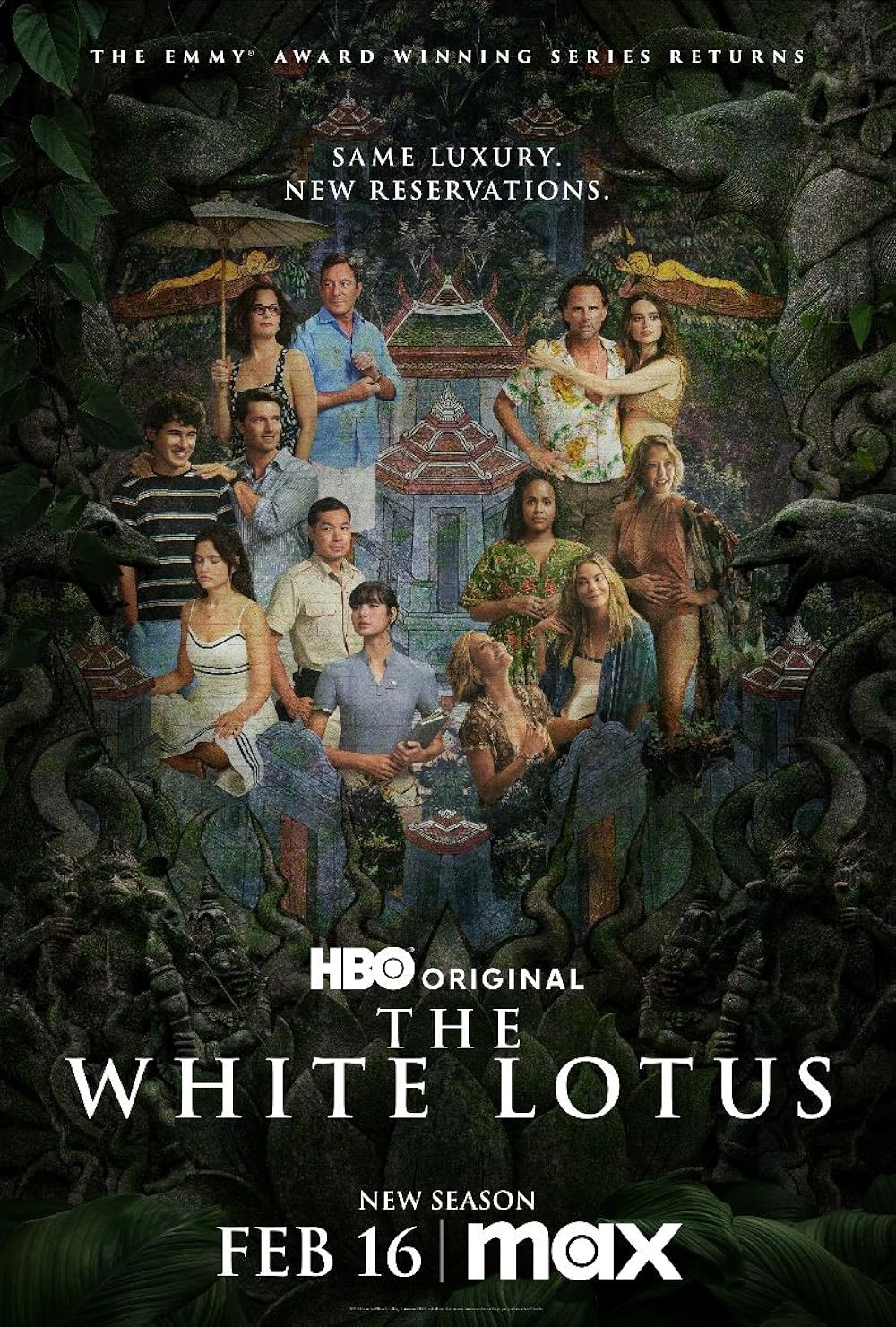
NOTE: This post contains spoilers for the third season of The White Lotus, so if you care about that kind of thing come back later.

One of the things about oral argument is that appellate judges love hypotheticals. Even garden variety criminal appeals can present issues that will resound through multiple cases in lower courts, so judges like to use hypos to test the limits of potential holdings or outcomes in any given case. Judges hate it when they ask a hypothetical question and the answer from counsel starts with, “that isn’t this case, Your Honor.” No shit, counsel, now answer the damned question!

I got those kind of vibes reading some of the criticism of the season finale of The White Lotus and the reaction to it of the show’s writer/director/creator, Mike White.

So far, all three seasons of The White Lotus are setup the same way – we initially see a dead body at an outpost of the titular resort, then rewind to a week or so earlier as we see the events that lead up to that death. This season, the finale included a gun battle that ended in a higher-than-usual body count (five dead, by some reckonings).

Some folks (myself included) complained that the swift manner in which the episode and, therefore, season, ended felt rushed, as the main characters (who weren’t dead) departed on schedule and apparently unaffected by the carnage around them. It’s not unreasonable to think the Thai police would sweep down on the place and question these folks or that some of them might be so shattered by the experience that they needed some kind of assistance (a trio of main characters were right in the middle of the firefight!).

White’s response to that criticism doesn’t strike me as particularly compelling:

Mike White, the show’s creator, thought the armchair critics were being too literal, calling them the “logic police” in an interview with The Hollywood Reporter.

“This isn’t a police procedural, this is a rumination-type show,” he said. “It makes me want to pull my hair out. Is this how you watch movies and TV shows?”

There’s a fine line in criticism between knocking something for failing at what it’s trying to do and for not being what you think it ought to be (see, e.g, this review of Warfare that seems to condemn it for not being something other than it is). I’ve seen authors say they have a hard time reading for fun anymore because they can’t turn their writer-brain off and will try and think of how they’d have told the same story in a better, different way (I’m not casting stones – I can lapse into that mode, too). That seems to be what White is accusing critics of doing, but it doesn’t wash.

Nobody wanted or expected the show to turn into Law & Order: Thailand for the last half hour of the season (although a season arranged so that we know who died from the jump, with cops pushing rich dipshits out of their comfort zone, might be interesting), but it feels off to present not just on screen death but straight up murder (with multiple fatalities) and have it vanish into the atmosphere. Moreover if the show is, as White puts it, a “rumination-type show,” what event can cause more intense ruminations than witnessing a mass shooting? Granted they’re very different shows, but you can bet there’s some “rumination” going on among the characters of The Pitt following their mass shooting event.

Look, endings are hard and I understand that White had a lot of stuff left on the editing room floor due to time restraints, even with an hour-and-a-half finale. Still, sometimes it just doesn’t work or at least leaves people scratching their heads (as Bruce says, “not everything everybody does works all the time, son”). That doesn’t ruin all that came before it (it’s more about the journey than the destination, right?), but that also doesn’t mean people don’t have a point.

Sometimes you just have to accept the thing didn’t work and move on.

Thoughts on Rewatching “Homicide: Life on the Street”

Last fall one of the great injustices of the streaming world was remedied when the entire run of Homicide: Life on the Street (including the wrap up TV movie) was finally available to stream on Peacock.

Yes, some of the music cues had to be changed due to rights issues (miss my “No Self Control” drop!), but otherwise the show looks and sounds better than it has for years. Created by Paul Attanasio (with an assist from director and Balimore guru Barry Levinson) and based on a book by then-journalist David Simon called Homicide: A Year on the Killing Streets, the show broke a lot of ground for network TV and helped usher in the cable shows we now think of as peak TV, including Simon’s The Wire.

I wish I could say I was into Homicide from the jump, but the truth is I only remember being able to drop in here and there during the show’s original run. I liked what I saw, but it was harder to watch a specific show back in those days, kids (it was on Friday night for part of its run, for fuck’s sake!). Where I really picked up the show was on cable a few years later and, ultimately, by getting the entire series on DVD. In spite of having it right there, I hadn’t really watched it for years until it hit Peacock last year.

The relaunch on streaming led to a good deal of reportage on Homicide’s place in the TV pantheon, which caught my wife’s attention. She’d not seen much of the show, but decided it was worth diving in in light of the hype. How does the series hold up during a full-length rewatch after all these years?

Dramatically, Homicide holds up remarkably well. Part of that is due to the fact that it doesn’t look or feel like a product of 1990s network TV. If you listen to the (hopefully not gone for goode) podcast Homicide: Life on Repeat, Kyle Secor and Reed Diamond talk a lot about how differently the show was shot and other technical things that are, mostly, above my head. Still, it doesn’t feel like a TV show from thirty years ago, from an era with commercial breaks and network censors looking over everyone’s shoulders.

That extends to the storytelling itself, of course. The cops of Homicide are not (generally speaking) heroes out there braving the mean streets to make the world safe for democracy. They’re just men (mostly) and women trying to do a job and get through days filled with horror, pain, and uncooperative witnesses. Cases frequently remain unsolved (the “board” – a large dry-erase board that lurks to one side of the squadroom tracking open and closed cases – is practically a character itself). Unlike it’s NBC stablemate Law & Order things rarely go to court, so most often it’s the arrest, the clearance of the case, that matters, not ultimately whether justice is actually done. Homicide depicts police work as a grind, as a kind of assembly line, rather than a great, noble calling. It’s not unlike the practice of law, in my experience.

None of that would work without amazing work from the cast, both the series regulars and guests (again, like Law & Order, there are lots of “hey, they went on to . . .” moments). Secor, as Tim Bayliss, provides the perfect audience surrogate, the new guy to the squad who has to figure out the rhythms of the work and whether he should really be there are all. Andre Braugher rules as Frank Pembleton, master of “the box,” and the last person you want to sit down with for a chat. That the series doesn’t shy away from the fact that interrogations are often about tricking idiots into incriminating themselves adds a sleazy sheen to proceedings.

I’ve already mentioned Law & Order a couple of times and it’s impossible not to compare the two shows. I’m no Law & Order hater, in spite of my profession, but that show does seem to have a more upbeat attitude toward police work than Homicide does. A great example of that is two stories that dealt with suspects who really looked guilty, but the facts didn’t show it.

On Homicide, Bayliss’ first case as a primary is the sexual assault and death of a young girl, Adena Watson. Through most of the first season he and Pembleton try to build a case against a neighborhood fruit seller who really appears to be the best suspect, but they can never actually pin the murder on him. An entire episode is devoted to his interrogation, after which nothing has changed. The case remains unsolved (as did the real life inspiration in Simon’s book) and haunts Bayliss through the rest of the series. Viewers are left without any real closure, either.

Compare that to the Law & Order episode “Mad Dog” from 1997, in which a rapist prosecutor Jack McCoy had convicted years prior is released on parole, over McCoy’s furious objection. Shortly thereafter, there is a rape/murder in the neighborhood that bears the released guy’s modus operandi, but no real evidence to connect him. Detectives and prosecutors spend most of the episode deploying various tools of surveillance and coercion to trip the guy up, to no avail (McCoy is even chided by his boss for “dragging the law through the gutter to catch a rat”). It could have ended like that, with a sense of unknowing and asking serious questions about police conduct. Instead, a second assault is interrupted by the would-be victim taking a baseball bat to the skull of her attacker – who is, of course, the recently paroled rapist. In a flash we get closure and knowledge that not only had the cops and prosecutors been right all along, but that the bad guys’s dead, to boot.

All of this leads to an interesting question rewatching Homicide after all these years – is it copaganda? That is, do the stories it tells valorize police in a way that polishes their public image in a manner that can lead to the public letting police get away with stuff they never should get away with? Although it’s hardly a new phenomenon, I don’t remember “copaganda” being a term back during the show’s original run or it being discussed as such. There are certainly moments when the show leans that way – for all their faults, the cops are still fairly noble and have a sense of purpose as “murder police” (as Meldrick Lewis would put it), but overall it doesn’t really feel like it. These cops cut corners, unashamedly treat some murders as more worthy of solving than others, and worry about bulking up overtime. It’s not pure copaganda, at any rate, which makes sense given the issues many of the characters’ real-world analogues have had.

But I might be biased. For all the glory heaped upon The Wire, which is great, I always held Homicide in higher esteem. It seemed to get there first, but did it with constraints that would strangle a modern “prestige TV” series. After rewatching I still do. It’s an amazing achievement and, if you’ve not seen it, you owe yourself some binging.

Revisiting the Concept of a Heist

A few years ago I wrote a piece about “heist” stories and what they are (or should be). My concept of the heist is narrower than it is for others (including the OED) and boils down to this:

The distinction, for me at least, comes down to brute force. A robbery can be elaborate and kinetic and exciting – think the beginning of The Dark Knight – but, at the end of the day, it’s “your money or your life.” It’s simple, effective, and brutal. “Heist” conjures up something more clever, more deeply thought out. It’s about getting the object of the robbery without the violence. It’s a better, more elevated, kind of crime, if you will.

The distinction came back to mind recently when the wife and I watched Heist, a 2001 David Mamet film starting Gene Hackman, Delroy Lindo, and host of others.

As you might expect, it involves thefts gone bad, but do they actually live up to my stickler’s definition of what a heist is?

There are actually two thefts in the movie, the first is more setup and the second the main event (the titular heist, one assumes). The first definitely doesn’t feel much like a heist to me. Yes, there is some subterfuge involved – the thieves drug the morning coffee of the employees of the jewelry store they’re going to hit, but that’s close to the line in terms of brute force (courts would consider the use of poison to be “violent,” in most instances). What clearly is brute force is the way they actually get in to the store – they just break down the door. Literally, it’s a forced entry. So I’d say this job is more a straight up robbery than a heist.

The second job is definitely more like it. The target is a bunch of Swiss gold on a cargo jet that’s about to leave the country. This is a heist, albeit one that doesn’t go off without a hitch. The plan is all subterfuge and distraction. The only violence involved arises because of an unexpected issue. When push comes to shove, Hackman’s character walks right in pretending to be somebody he’s not and walks out with the loot. Hell, the police response is more due to the diversionary explosion the crew uses at another part of the airport (this crew loves them some diversionary explosions) than the theft itself!

Indeed, that’s one of the neat things about the movie – there’s hardly any police presence in it. There are cops about (there’s one tense scene where a state trooper stumbles on their prep and a young hothead nearly turns it into a shootout), but there are no dogged investigators bearing down on the crew after the big score. Rather, they tear themselves apart in a series of betrayals and double-crosses. It’s too much (why care about what’s happening when it’s certain to be upended in a few minutes?), but it gets at another key element in distinguishing a heist from a garden-variety robbery – the ability to get away with the goods.

So, in the end, how heisty is Heist? Fairly heisty, I would say. The initial job is a straight up robbery, but the big set piece definitely has heist vibes. Doesn’t make it inherently more interesting than the first one, but it’s more compelling in different ways. It’s fun, which is a key to a good heist, in my opinion – even if the end result is an awful lot of dead folks.

New Short Story (from Me and Many Others)!

I’m happy to announce the release of Volume Two of Old Bones, the literary journal of Henlo Press.

Inside that cool cover you’ll find a bunch of stories (and other stuff) from writers from my neck of the woods – including me!

The story is called “Chord Change” and it’s based on an idea that’s been hanging around my brain for a while – what if someone’s solemn duty was to listen to the everlasting chord generated by the universe or the gods or whatever and the chord suddenly changed. The key to turning it into a story was to not make the listener the main character. Rather, it’s the guy she ropes into trying to help her talk back.

Here’s a snip:

Over the years, Kluvier had built up a repertoire of dozens of songs, from folk songs to cult hymns and chants. He would never be able to play with Andra’s finesse, but he had the ability to hear a song a few times, play it once, and then forever be able to retrieve it.

His first hour was always the same, a way to warm himself up and to gauge his audience. Some days the more modern, popular music was what people wanted. Other times the long, slow chords of cult hymns that had soaked into wider culture of the years provided the perfect background. Once that was out of the way, and Braax had his first break of the day, Kluvier would let his fingers wander, dipping in and out of known songs while taking tangents of variations on themes. During another break he heard a woman pass by whistling an odd-metered tune he’d never heard before. He worked on it, and several variations, for most of the next hour.

The predicted rain held off, which kept the traffic consistent. The coins dropping into the box were few and far between, but as the sun started fall behind the Great Library they at least started to clink against each other nicely when a new one was thrown in.

Kluvier let Braax off his turnwheel to attack a small bowl of water while he knelt and started counting the coin. He hoped to get everything counted and packed away before Valnu showed up to take his cut again. Kluvier was just about done when a human-shaped shadow fell across the box. Kluvier cursed under his breath, then a bag of coin thudded to the ground beside the box. He looked up.

“Is that enough?” It was Shyana. She was breathing hard and her robes, which had been so well put together yesterday, were dirty and mussed. There was a bruise starting to blossom under her left eye.

“What happened to you?” Kluvier grabbed the bag and stood.

“I did what I had to,” she said. “Is that enough?”

For more of that, as well lots of other great stuff, get your copy of Old Bones Volume Two here or here.

Storytelling Is Not Lying (Or Is It?)

Years ago, Ricky Gervais made a movie (with his writing/directing partner Matthew Robinson) called The Invention of Lying.

Gervais starred (along with my high school classmate Jennifer Garner) as a screenwriter in a world where lying doesn’t exist. As a result, he’s limited to only writing movies about historical events since fiction does not exist. He winds up discovering how to lie, part of which is being able to write a fictional screenplay.

The movie itself is fine, but the part about fiction not being able to exist in a world without lying always stuck in my craw. Then, a few weeks ago, I saw this on Facebook:

And that sticking came back with a vengeance (although she was sharing it in a humorous way). Because, you see, the notion that fiction – storytelling – is “lying” is simple-minded bullshit.

George Constanza famously said that a lie isn’t really a lie if you believe it, but that kind of goes both ways – a lie is really only a lie if the people hearing it expect it to be true. This is most evident when you’re talking about lying in court – perjury. Any witness, before they say a word to a jury or answer a single question, either takes an oath to or affirm that they are going to tell the truth. Jurors are primed to believe them.

But the same is true for most everyday interactions. When I ask my wife how her day was I don’t expect her to lie to me, after all. We may not be completely accurate with others all the time (that’s probably beyond the capability of human brains), but, for the most part, we’re not trying to lie to others on a regular basis. There’s an expectation of truth, at the very least.

Fiction, by contrast, announces itself from the start. “This is not real,” it says, “this is made up.” Even if there are close cases on the margins (including, ironically, stories about historical events and figures), nobody would ever say that The Lord of the Rings or 2001 or what have you were anything other than made up stories designed to entertain and enlighten. They are not presented as fact.

Of course, sometimes storytellers lie as part of the fiction. Fargo famously starts with a disclaimer:

This is a true story. The events depicted in this film took place in Minnesota in 1987. At the request of the survivors, the names have been changed. Out of respect for the dead, the rest has been told exactly as it occurred.

Amusingly, the Coen Brothers have changed their own story over the years as to whether the story of Fargo had some basis in real events or was completely made up. Does that make the movie any more of a “lie” either way? No! It’s a work of fiction, a story being told by storytellers. We’re not supposed to take it as truth.

For a certain definition of “truth,” of course. The argument goes that fiction can often get at truths about the human experience that non-fiction can have a hard time grappling with. That’s probably correct in some instances, although I can’t speak from experience. The stories I write are, I hope, entertaining and engaging, but any brush with deeper cosmic truths is probably coincidental.

As a wise man once said:

So, yeah, writers and other storytellers do make stuff up. It’s kind of the business model (the hard part is making up stuff nobody else has come up with yet!). But that’s what people think we do, right? Nobody could ever possibly believe we’re telling the truth.

Or maybe I’m full of shit? You’ll never know!