The Fault In Those Stars

A few weeks ago I finished up Kay Chronister’s The Bog Wife.

While doing my usual post-reading due diligence I pulled up the book’s Goodreads page to read some reviews and the follow conversation occurred:

MY WIFE: Are you going to read that?

ME: I just finished it.

MY WIFE: What did you think?

ME: *makes that pretty good/not great tilting hand gesture* Not bad. Three stars.

MY WIFE: Why do you say that?

ME: Are you going to read it, too?

MY WIFE: Probably not, if you only think it’s worth three stars.

I proceeded to explain to my wife my thoughts on the book (long story short – I liked the basic idea, but thought it was going somewhere more interesting and the ending felt rushed). At bottom, I’m glad I read it, but didn’t find it particularly compelling.

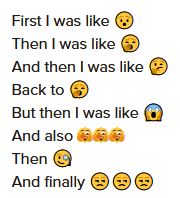
This got me thinking about the whole star-based rating system that is so prevalent these days. What’s a “good” star rating? What’s a “bad” one? Is there a better way of doing things?

It’s natural to want to rate something you’ve read, heard, or watched. At bottom the ultimate decision is one reflected by the old Siskel & Ebert system – thumbs up or down? Is this a movie you’d recommend to others or is it not? That’s all you really need to know, but such a system can give odd false positives. All you need to do is check out Rotten Tomatoes, where a “fresh” score can be the product of lots of good, but not great, reviews just as easily as hordes of fawning ones.

As an example, we got a chance to see Fantastic Four: First Steps in the theater (one with recliners for seating – not bad!). It currently has an 87% “certified fresh” rating, which makes it sound like a world beater. By contrast, reading the actual reviews (like this one from the AV Club) shows some nuance – the movie is generally good, but flawed in ways that might make some not care for it.

Given that, it’s not surprising that people will wind up trying to come up with something more “objective” (it’s not – this is art we’re talking about) and granular, something that you can use to compare works to each other.

For that, the star system has the potential to work out pretty well. Particularly if you’re using the 5-star system you see at places like Librarything, Letterboxd, and Rate Your Music. Particularly when you can give half stars (I’m looking at you, Goodreads) it helps make some really fine distinction between works. The problem is not everybody thinks the stars all mean the same thing.

Everybody can agree that a 5-star review is a rave and a 1-star a pan (some systems even allow for the dreaded 0.5 star, which I’ve done twice at Rate Your Music). But just about anything else is a free-fire zone, it seems to me. Look at just about any work with reviews and you’ll see it. Here are some snippets from 3-star Goodreads reviews of some recent books I’ve read:


But, also:

For what it’s worth, when I first started cataloging things at Rate Your Music I tried to come up with a rhyme and reason for ratings and this is what I came up with (it’s a Stickie note on my PC desktop):

As you can see, I think anything at 3 stars or over is “good.” In some ways, I respect reviews more that are a little bit skeptical, aware of flaws in something. It pains me to say this as an author, but pretty much every artistic endeavor in the history of humankind has flaws in it. Any great pillar of literature or any piece of music that makes you weak in the knees is probably flawed in some way – hell, the flaws may be part of its charm! So when I see 1-star reviews with short “this sucks!” or 5-star reviews with equally short “this is the best!” I tend to ignore them.

Don’t get me wrong – as a writer I love getting 5-star reviews! But as a reader or viewer or listener I find the less-than-loving reviews to be more interesting and, in a way, to tell me more about the work than ones that are just full  of praise.

So, I suppose my takeaway here is to encourage people not to be scared away from checking out a particular work because it gets a less-than-five-star review. There’s a lot of real estate between “rules!” and “sucks!” and you may find a new favorite in there. It’s not the stars that matter, it’s the reasons for giving them that counts.

ADDENDUM: It occurred to me, as I was posting this, that this might come across as a long way of saying “my wife was wrong” in deciding not to read The Bog Wife based on my thoughts on it. One of the things about listening to reviews – or, more specifically, reviewers – is that you can learn how well your tastes and preferences match them. If you know a critic likes the same stuff you do and they love something, it’s probably worth checking out. On the other hand, if your significant other whose tastes you know is lukewarm about it so you are too? It’s all good.

I Lied – Another Fall Event!

I know a couple of weeks ago I said I was only going to do a couple of appearance this fall – turns out I lied. I was asked recently to participate in MystiCon, presented by the Jackson County Public Library in October.

There’s a schedule full of speakers, lots of vendors, and contests for kids of all ages. It’ll be a good time in Ripley, so put it on your calendars!

Highs and Lows

When I found out earlier this year that a new Spike Lee Joint was on the way, I was excited. When I found out it was an adaptation of an Akira Kurosawa film – one I’d not yet seen – I was doubly thrilled. So how does Highest 2 Lowest compare to High and Low? Not as well as it might have, but I kind of think that’s the point. There will be spoilers aplenty!

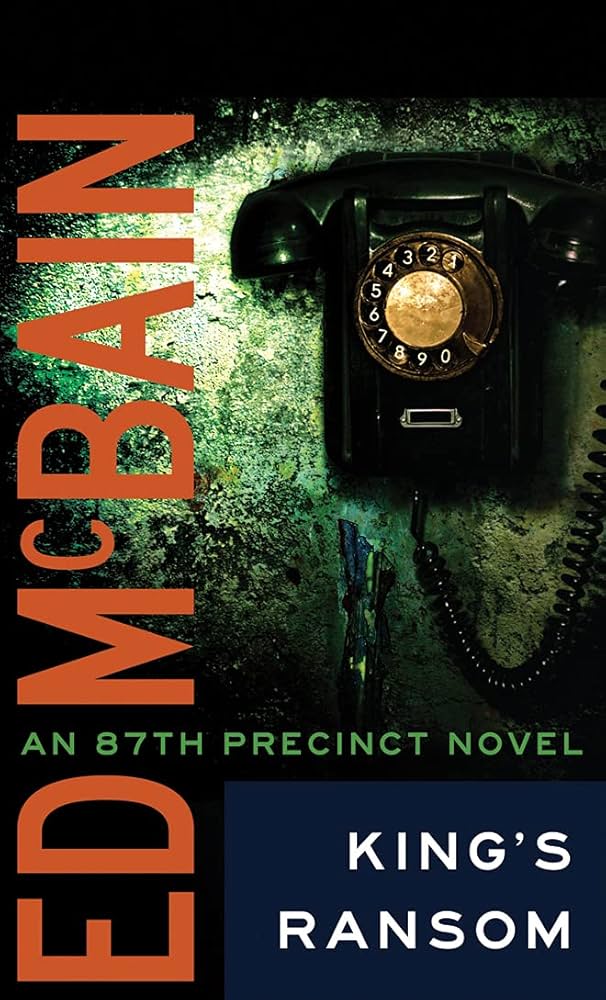
It’s worth noting that both movies have their roots in a 1950s hard-boiled detective novel, King’s Ransom by Ed McBain.

No, not that McBain. “Ed McBain” was a pen name of Evan Hunter, who also wrote the book The Blackboard Jungle (on which the movie was based) and the screenplay for The Birds. King’s Ransom was part of a series of books dealing with a particular group of cops and tells the story of a wealthy magnate (named King, hence the title) who, while angling to take over his company, learns that his son has been kidnapped. The twist is that the kidnapped kid is actually his driver’s, which leads to a conflict as to whether King will pay the ransom or not.

Neither film, it turns out, is a particularly faithful adaptation of the book for a simple reason – in the book (so far as I can tell – I’ve not actually read it) King decides not to pay the ransom. The plot is entirely taken up in a will he/won’t he. As we’ll see, both movies use the ransom stuff as more of a jumping off point, although they go to entirely different places.

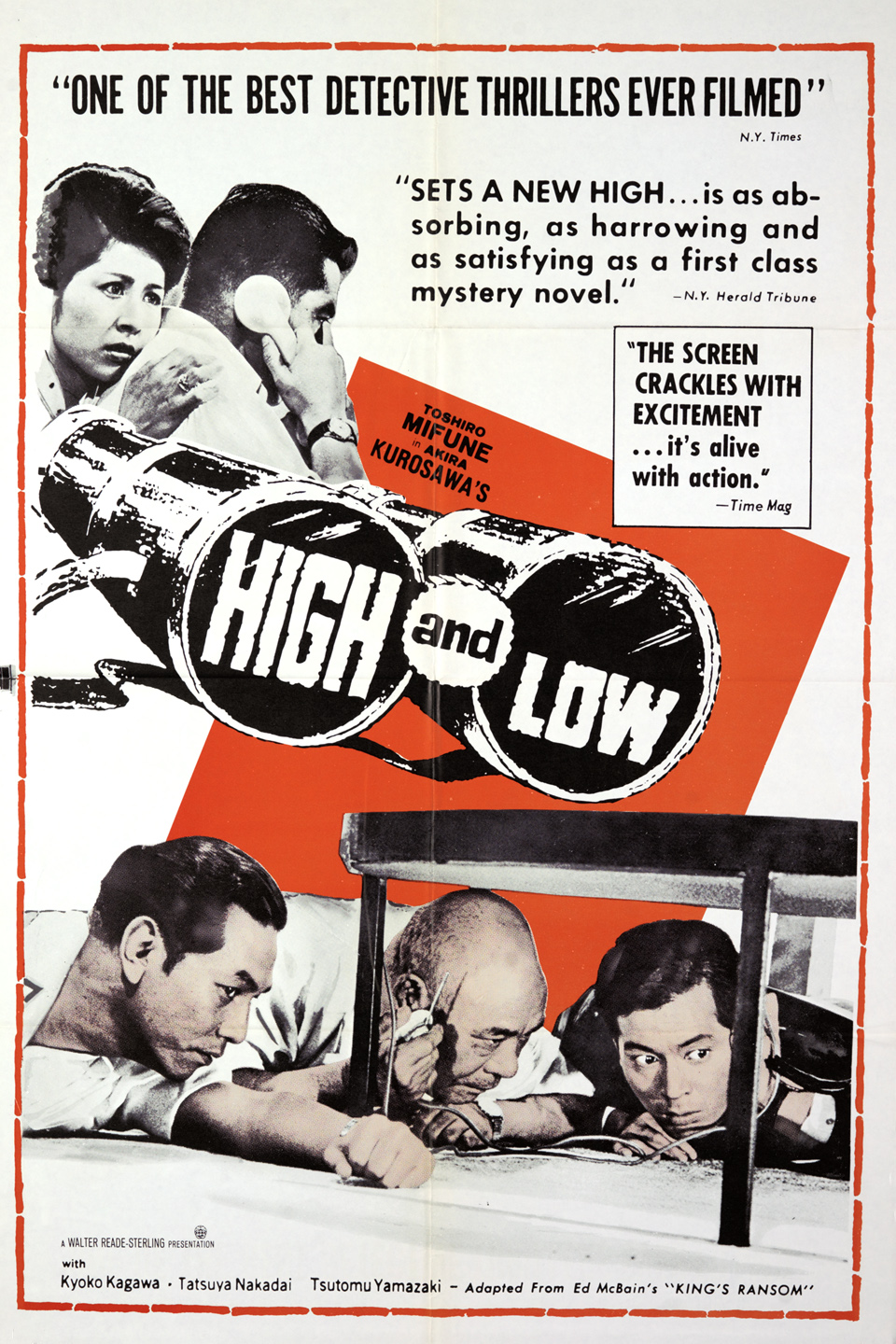
Both movies, though, at least use the same setup as the book. High and Low, which came out in 1963, stars Kurosawa regular Toshiro Mifune in the King role (since the names are basically the same in both movies I’ll refer mostly to actors’ names instead) as an executive leveraged to the hilt in an attempt to take over the shoe company he runs.

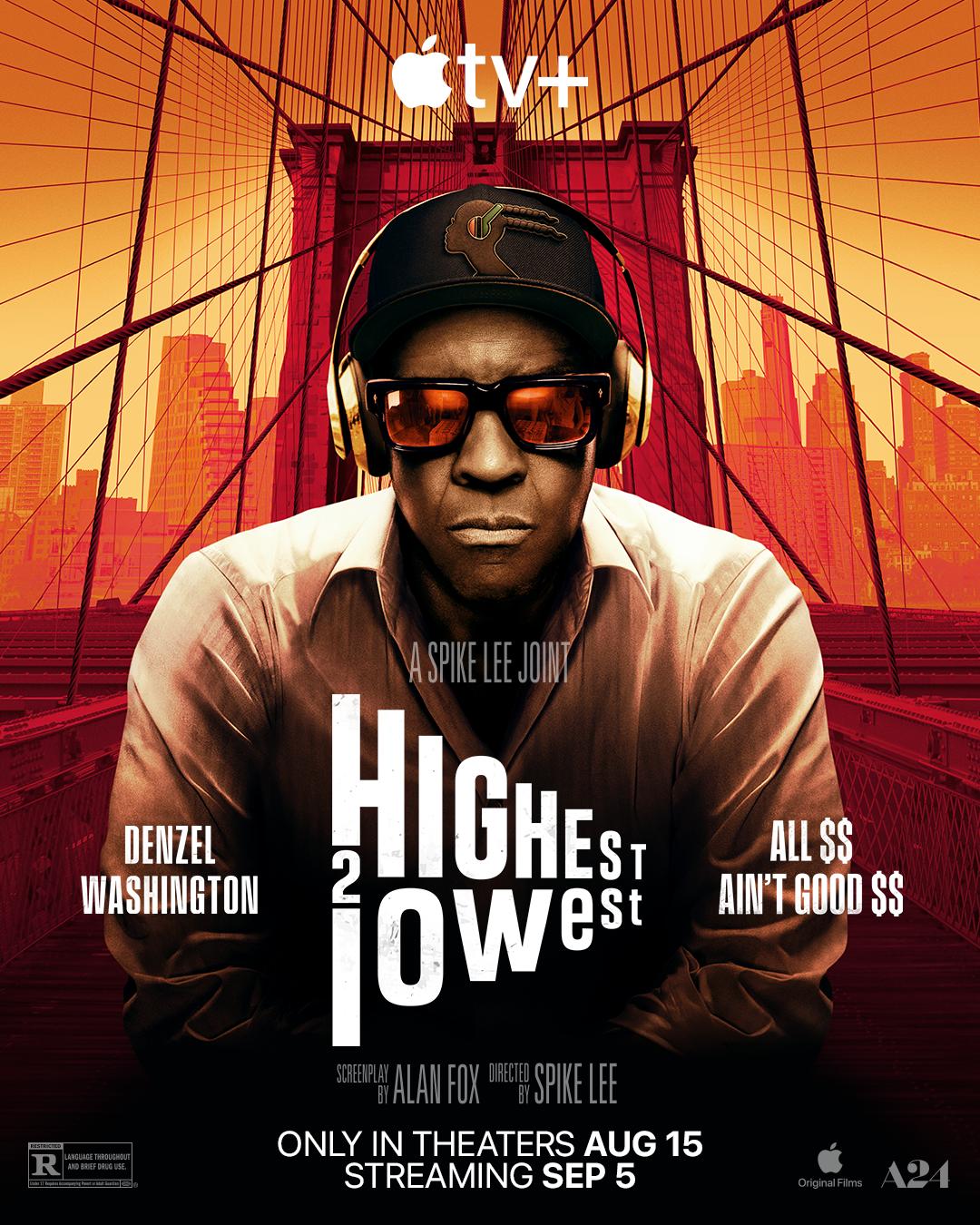
In Highest 2 Lowest, by contrast, Denzel Washington plays the aging head of a music label of which he’s trying to regain control.

He’s not in quite as much financial peril as Mifune, but the nature of his business raises bigger concerns (about, for instance, a historical driver of black culture being stripped for parts after a takeover). It’s a subtle difference, but an important one.

The relationship between mogul and driver is quite different, as well. Mifune’s relationship with his driver is purely business and plays out through rigid class distinctions. Their kids play together, but there’s never any forgetting who is the boss and who works for whom. Denzel, by contrast, has a much deeper relationship with his driver (played by Jeffery Wright), one that suggests common roots, if different life paths. The pairing of Denzel and Wright is great and Highest 2 Lowest is often best when it focuses on them, but the deepening of that relationship drains some of the suspense out of whether the ransom will eventually be paid.

Although there’s not really any doubt on that. Beyond the fact that there’s no back half of these movies without the ransom being paid, the fact is there really isn’t much of a moral argument against paying it. Practical, yes, but not moral. To have either Mifune or Denzel hold out would have ruined their characters (or made for very different movies). That said, how the decision gets made is also subtly different. Mifune never decides to “do the right thing” (so to speak) and pay the ransom, but agrees to a police scheme to pay it as part of an operation in which, he’s promised, they’ll get the money back. It’s unclear exactly why Denzel has a change of heart, although getting the money back is also mentioned by the cops he works with, too. I suspect that vagueness is intentional, but it’s a little frustrating.

Where both movies shine, in different ways, is the sequence where the ransom money is actually turned over. Both take place on trains. The kidnapper lures Mifune onto a train where he thinks the handoff will take place, only to be instructed to toss the bag with the money out a window going over a particular bridge. It’s a taut, tense sequence where it looks like everything is spiraling out of control, but actually isn’t. Denzel is likewise lured onto a train, a subway train bound for Yankee Stadium (allowing Spike Lee to indulge in some amusing Red Sox hate). It’s more sprawling than taught, but equally vibrant in a completely different way, accented with chanting Yankees fans and a chase through a Puerto Rican Day parade. Musically this is where Highest 2 Lowest is at its best, both in the propulsive jazz piano score and the sweet Latin fusion of the late Eddie Palmieri and his band (performing for the parade).

It’s here where the movies diverge greatly, leading one to ask whether “adaptation” is the right description for what Highest 2 Lowest is. Which one works better for you will probably come down to what you look for in movies.

In High and Low, once the money is dropped Mifune is almost entirely absent from the rest of the film. The focus shifts to the police who, with the kidnapped kid safely rescued, work on tracking down the kidnapper and the money. There’s some time spent with the kidnapper himself, as well, but we’re mostly with groups of cops trying to track down leads. The driver helps with one, but aside from a couple of quick check ins Mifune is absent. What proceeds is almost like a time capsule from an era were cops were dedicated and incorruptible, going above and beyond. It’s almost like a fairy tale.

Highest 2 Lowest, by contrast, slips into action movie mode. The cops here range from ineffectual to flat out racist and are more wedded to procedure than anything else. When Denzel, who we’ve been told over and over again has the best ears in the business, delivers a pretty damned good clue as to the kidnapper’s identity thanks to them, the cops shrug it off. The dedicated police procedural of Kurosawa’s film instead becomes a kind of buddy movie, with Denzel and Wright teaming up to find the kidnapper and get the money back. This allows Denzel to come face to face with the kidnapper (a rapper played by A$AP Rocky) in a cracking scene in a recording studio that has the rhythm of a rap battle. It also personalizes the motives of the kidnapper, for better or worse.

Oddly, then, both kind of come back together at the end. In High and Low Mifune, who has lost just about everything (some of the money was recovered, but not quickly enough to save his home, much less the corporate takeover), has a final confrontation with the kidnapper in prison, during which the kidnapper explains his motives. Highest 2 Lowest has a similar scene, although Denzel comes into it in a much better position, and it feels a little redundant given the prior confrontation in the recording studio. The motives are also quite different, with Mifune’s tormentor choosing him as an avatar of wealth lording it above the rest of society, while Rocky is bent out of shape at not being recognized specifically by Denzel for his musical talents. Highest 2 Lowest then ladles on a coda showing Denzel’s relaunch in life and business, a stark contrast with High and Low’s decidedly downer ending.

With all that said, does one work better than the other? Like I said, I think that it depends on what you’re looking for. In spite of their common roots, the movies are quite different and it’s unfair to judge Highest 2 Lowest against High and Low in the way you might judge a movie version of a book. They are different things getting at different ideas. And, if anything, the thing they’re least interested in are what they take from King’s Ransom.

Highest 2 Lowest has, for my money, more highs and lows than the prior film. Some scenes – the money drop and chase, Denzel’s initial confrontation with the kidnapper – are electric. Some others are a little sluggish, particularly in the first half. In fact, the critical consensus seems to be that the first half is bad, the second half good. I think that’s overly simplistic – High and Low’s first half skates by on a lot of technical mastery (framing, shot composition, etc.), which kind of overlooks how non-compelling the actual moral dilemma is. Highest 2 Lowest doesn’t get the same break. Highest 2 Lowest also offers the Denzel/Wright pairing, which is unlike anything in the other film. That said, while it does lead to some great work on screen, it also slightly undermines what tension there otherwise could be over whether the ransom is ever going to get paid.

Where High and Low shines is in its broader themes. My understanding is that some critics initially read it as an indictment of capitalism and I definitely get that. This is where Mifune’s business venture being less compelling than Denzel’s pays off because it makes his choice even more stark – he’s going to risk some poor boy’s life for shoes? Additionally, because it ends with Mifune basically stripped of everything it implies that he’s paying a price for not doing the right thing for the right reasons. High and Low also really lives up to its title, shifting from one milieu to the other halfway. Its kidnapper could have targeted any rich guy as a blow against the system.

In the end, I don’t think Highest 2 Lowest is going to supplant High and Low, but I don’t think that was its intent, either. It is, to borrow the musical terminology of the movie, a riff on a common theme. High and Low is a classic for good reason and one of the highlights of Kurosawa’s career. Highest 2 Lowest is pretty good, but I don’t think anybody will think it’s knocking any earlier Lee movies out of his top five or so. It’s definitely worth a watch.

Fall Events (Come See Me!)

Since I haven’t had anything new come out this year I’ve been taking a pass on most events during the year, but there are a couple coming up that I’m part of and should be a lot of fun.

First, on September 16, Cicada Books & Coffee in Huntington, WV, are having their second (?) annual (??) “Spooky Storytelling” open-mike night.

Last year was really fun, with several folks reading or telling scary stories (I did this one), capped off by the folks from Eerie Travels, who will also be in attendance this year. What will I be reading this year? Good question! See if I wind up with a good answer. Come on by (check Cicada’s Facebook page for details) and join in the fun.

Second, on October 11, the fine folks at Henlo Press are hosting the Writer’s Block 2025 Indie Author & Artist Festival (also the second annual) in Hurricane, WV.

I’ll be there with books for sale, as will numerous other authors (check the Facebook page for upcoming announcements), and I’m sure the Henlo folks will sell you a copy of either volume of their Old Bones anthologies, which are jam packed with nifty short fiction (and a couple of my things). Things kick off at 11am.

See you then(s)!