Gone Writin’ – Back In A Bit

Y’all may have noticed that I haven’t had a lot to say about actually writing here recently. There’s a good reason for that. My final NaNo project, The Fall, is continuing through the editing process – slowly but surely. That leaves me trying to figure out what to do next, with several interesting options in the aether. So I’m going to take a summer siesta from blogging and try and dig into my next book.

Talk again in a month or so when I have some idea what I’m doing – stay cool!

Revisiting the Prequel Problem

A couple of years ago I wrote some about the inherent problem with prequels:

But there’s an inherent problem with prequels – they’re playing in a universe in which the future is already known to us. That can box writers in and sometimes make it difficult for the prequel to stand on its own as a piece of compelling drama, something we should care about for its own merits.

I was specifically talking about Obi-Wan, the Star Wars prequel series that covers the time leading up to the original Star Wars movie. It has a kidnapped Leia in danger and multiple show downs between the younger Obi-Wan and Darth Vader, but there was a lack of tension since we knew that all of them have to make it into Star Wars in one piece.

Ironically, I contrasted that with another Star Wars prequel:

Star Wars knows how to do this. Rogue One is regarded by a lot of people as the best Star Wars movie since the original trilogy, even though we knew precisely how it was going to end. What made it work was that existing characters were largely absent and we got to know and care about a whole new cast so that when they made the necessary sacrifices to complete their mission it landed with some heft.

I say “ironic” because having finished up the second (and final) season of Andor I realized how much of a prequel problem that show had in the end.

It shouldn’t have been a surprise, of course, given that Andor is a prequel of a prequel – Rogue One. What was surprising is that the issue wasn’t so much knowing who was “safe” draining the tension. It was that the series was so set on getting to Rogue One that it dashed along from event to even without leaving a lot of time to breathe and develop characters more.

By modern streaming standards Andor had a long run – only two seasons, but 12 episodes each, which feels positively indulgent compared to some (looking at you The Last of Us). While the first season was basically a straight running chronology, the second seasons breaks the episodes into four three-episode hunks, with each hunk separated by a year or more.

As a result, what at first felt like a slow burn character study of Andor and the people in his orbit turned into a sprint through important events necessary to get him to the beginning of Rogue One.

Does this mean that the sprint wasn’t rewarding? In a lot of ways it was. Apparently Ghorman and its fate is something that’s come up in other Star Wars properties, but I knew nothing about it, so the whole development there I thought was really well done. When the final hammer comes down it does feel earned, even if you wanted to know more about some of the locals before we saw them cut down.

Not too long ago I wrote about how, sometimes, form dictates how fiction turns out. I didn’t think about it then but “prequel” is another kind of form that forces creators to do certain things in certain ways. That’s not an inherently bad thing, but just as I talked about with the formal restrictions in that piece, it makes a difference in the end product.

Would Disney have ever let Andor play out over four or five seasons to dive really deeply into who all these people were (between Andor and Rogue One I still have no solid idea of Saw Gerrera or what exactly he’s up to)? Probably not. For all its quality and praise, my understanding is that Andor is not one of the Mouse’s hottest streaming properties. Without that time would it have been better not to rocket through years of things happening just to make sure we get to where we need to get? Maybe, but that was always the assignment and it’s impossible to say that Andor failed in it. What I am fairly certain of is that if the same folks had been given the freedom to tell a Star Wars story that didn’t have to plug into an existing narrative at some point the end result probably would have been even more rewarding

Can’t Anyone Rest in Peace These Days?

Many many years ago, there was a Bloom County cartoon in which Opus learns of new companies that allow you to freeze-dry a deceased pet and keep them around forever. His reaction was a tad overwrought:

Or at least I always thought it was. More and more, however, it’s becoming clear that we can’t just let the dead be dead, we’ve got to keep bringing them back to serve various agendas.

The most alarming recent case came out of a court in Arizona. Christopher Pelkey was killed during an incident of road rage and Gabriel Horcasitas convicted of his manslaughter. It’s pretty common in such cases to have victims (or family members of victims) give statements to the judge before sentencing about what has been lost due to whatever crime the defendant committed.

Horcasitas’ sentencing went a step further:

Ms. Wales, 47, had a thought. What if her brother, who was 37 and had done three combat tours of duty in the U.S. Army, could speak for himself at the sentencing? And what would he tell Gabriel Horcasitas, 54, the man convicted of manslaughter in his case?

The answer came on May 1, when Ms. Wales clicked the play button on a laptop in a courtroom in Maricopa County, Ariz.

A likeness of her brother appeared on an 80-inch television screen, the same one that had previously displayed autopsy photos of Mr. Pelkey and security camera footage of his being fatally shot at an intersection in Chandler, Ariz. It was created with artificial intelligence.

“It is a shame we encountered each other that day in those circumstances,” the avatar of Mr. Pelkey said. “In another life, we probably could have been friends. I believe in forgiveness and in God, who forgives. I always have and I still do.”

Reporting on the hearing has been really bad – that article quotes the defense attorney as stating (perhaps correctly) that given the wide latitude judges have at sentencing that there’s probably nothing legally wrong with it, but he also says that an appellate court might find it to be reversible error – but it’s unclear whether an objection was lodged, so who knows? Regardless, Pelkey’s reference to forgiveness beyond the grave didn’t seem to move the judge any – Horcasistas got the maximum sentence.

I can sympathize with using AI to bring a dead loved one back to life to hear them make their own plea for justice (I also think it’s ghoulish and I’ve never been a big fan of victim impact statements, but at least feel for those involved). That’s a lot harder to do when it’s part of a cynical cash grab at the expense of a dead person’s reputation.

BBC Maestro is the British broadcaster’s version of Masterclass, in which you pay to access video lectures by big names in their given fields. When it comes to mystery fiction is there a bigger name than Agatha Christie? Ah, but she’s dead. That’s no longer a problem! Thanks to the “magic” of AI and some desperate descendants:

Agatha Christie is dead. But Agatha Christie also just started teaching a writing class.

“I must confess,” she says, in a cut-glass English accent, “that this is all rather new to me.”

* * *

She has been reanimated with the help of a team of academic researchers — who wrote a script using her writings and archival interviews — and a “digital prosthetic” made with artificial intelligence and then fitted over a real actor’s performance.

“We are not trying to pretend, in any way, that this is Agatha somehow brought to life,” Michael Levine, the chief executive of BBC Maestro, said in a phone interview. “This is just a representation of Agatha to teach her own craft.”

Bullshit. Anyone could take Christie’s writings, including drafts, notes, and other non-published works, and base a writing class on it. Such a class would probably be quite useful! But it wouldn’t bring in the bucks the way having “Agatha” actually tell it to you. People are attracted to the name, which is the whole point in using it in the first place. Add in the likeness and it’s like she’s in the room with you (are the space bees, as well?).

It reminds me of the Frank Zappa hologram tour that hit the road a few years ago. A band full of Zappa alumni played live, occasionally joined by a holographic projection of Frank playing along. It was a sad gimmick. It should have been enough of a draw to hear some amazing music played live (in front of your ears!) by amazing musicians, but that wouldn’t have been enough of a draw. But Zappa there in hologram form? Well, it did sell some tickets, although the fact that it’s been largely forgotten about hints at its impact (meanwhile, Dweezil and others continue to do the man’s music justice on the live stage around the world).

And now they’re reanimating one of the most distinctive voices in movie history:

Nearly 40 years after his death, Orson Welles is back — as a disembodied AI-generated voice in location-based storytelling app Storyrabbit.

Storyrabbit, from podcast company Treefort Media, inked a partnership with the Orson Welles Estate to launch “Orson Welles Presents.” The app now features the unmistakable voice of Welles, digitally re-created using Storyrabbit’s AI technology, as an option for users to hear stories about specific locations. Using the Welles voice is free in the app until June 1, after which it will cost $4.99/month.

I mean, the idea for the app is kind of neat – it provides you with short info blurbs about specific locations based on where your phone is – but what value is added by having not-Welles give you the info? Surely the into itself is what you want, right? Maybe you don’t want it read by Gilbert Gotfried, but surely any of the numerous voice over actors or audiobook narrators out there could do the job, right?

I love history – that was my undergrad degree before I went to law school. I love the history of art, too. I’d give a lot to have been able to talk with Kurt Vonnegut or see Frank Zappa play live, but that’s never going to happen. An AI simulacrum of either of them isn’t the same thing – it’s a modern construct based largely on who we think those people were, not who they really were.

The dead are gone. They can leave us incalculable gifts, but what they can’t leave is their presence. Animating their virtual corpses in pursuit of a buck (or pound) demeans them – and us as well. Maybe Opus had it right all along.

Is There a Fourth Album Curse?

I never thought about whether there was a “fourth album curse” until the other day when I saw this AV Club article about fourth albums that beat the curse. The concept is pretty thinly sourced – a 2011 discussion forum thread and an article about Franz Ferdinand, in which its leader said:

Alex Kapranos once found himself dreading an inevitable milestone with his band, Franz Ferdinand: their fourth album. “At that point a lot of people are going, ‘Why are you still here? Why are you still doing stuff?,’” he recalls.

I can sort of see his point. By the time an artist has been around to release a fourth album the novelty has worn off and, depending on who they are, things can start to get a little familiar. With Beardfish, for example, I jumped on the train with their second album, The Sane Day, which is great.

I really liked the next two as well (the Sleeping in Traffic duology), but by the time Destined Solitaire rolled around – my fourth album with them, their fifth overall – the sheen had worn off. It’s not a bad album, by any stretch, but it failed to wow me and nothing they’ve done since has sparked the same sonic joy for me.

But let’s assume the premise is true – arguendo, as they say in the legal world – and see if there are some other artists who knocked it out of the park on their fourth (studio) album and avoided this so-called curse.

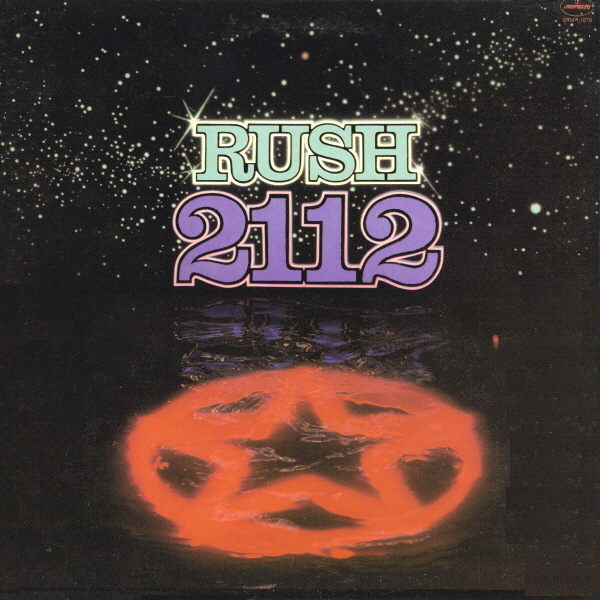
The one that immediately sprang to mind when I read the article (it showed up in the first comment, too), was 2112 by Rush.

Although their self-titled debut had gotten some traction, Rush’s second and third albums hadn’t really moved the needle. Faced with a record company giving them one last chance to produce a hit they decided to say “fuck it,” do their own thing and, if necessary, go down swinging. Alas, the album, particularly the side-long title track, really clicked with a certain group of fans and the rest is history. 2112 is literally the album that made Rush what they turned out to be.

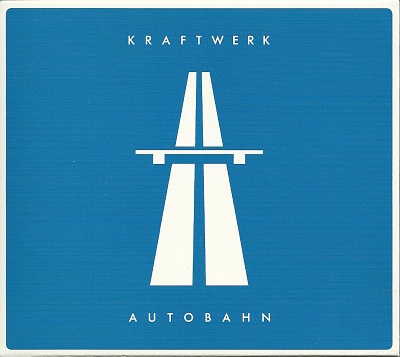
Another band whose fourth album, propelled by a side-long title track, signaled their trailblazing future was Kraftwerk with Autobahn.

Up to that time, Kraftwerk had been of a piece with the rest of the Krautrock scene, experimental and not generating much particular notice. Autobahn marked the full embrace of electronic sounds (although there’s still some guitar and flute in there) that would find full flower on later classics like Trans-Europe Express and The Man Machine and set the scene for the synthpop and electronic music boom of the modern age.

An artist of a completely different variety, but with a similar swerve, is Bruce Hornsby. After the megahit of “The Way It Is,” his next two albums with the Range produced reduced commercial returns (although they’re both pretty good). For Harbor Lights, his fourth album, he changed things up.

For one thing he ditched The Range, not just in name but in body, aside from drummer John Molo. In their place he brought in a host of players with jazz (and related) cred, including Pat Metheny, Branford Marsalis, Jerry Garcia, and Phil Collins. The music brings in more influences from jazz, bluegrass, and classical music that would define Hornsby’s music in the years to come. It’s not a Kid A seismic shift, but it’s pretty significant.

Somewhat closer to the spirit of Kid A was Dazzle Ships by Orchestral Manoeuvres in the Dark.

After several successful albums, capped by Architecture & Morality, the band did a swerve into samples, found sounds, and collages. There are a few pop-facing songs, sure, but it’s more experimental and, as a result, kind of bombed compared to previous releases. It didn’t shift OMD’s style or anything, but it’s a solid example of a band using its success as a chance to do something different and mostly succeeding.

Finally, echolyn’s fourth album, Cowboy Poems Free, certainly belongs on this list.

It was their third album, As the World, that was supposed to be the big one, an unabashedly progressive rock record released by a major label (Sony) in the middle of the grunge-fueled 1990s. However, personnel at the label changed, the album was released with no real support, and the band broke up. But they returned in 2000 with Cowboy Poems, a little older and wiser (?), at least about the mechanisms of the record business. They’ve kept going (slowly, at times) ever since, release some really brilliant albums. For them, the fourth album was a “yeah, we can still do this” moment.

I’m sure there are plenty of fourth albums out there that fall flat, but, on balance, I’m not sure there’s such a thing as a fourth album curse if you can muster this many exceptions. Or maybe it’s more of a nuisance than a curse – in which case, why make such a big deal about it?