A while back I read a good write up about the 1953 version of War of the Worlds over at Reactor in which someone explained (down in the comments) that the version most of us had seen on TV was a kind of stepped-down version in terms of the Technicolor, but that the currently streaming version was restored to its full glory. That sounded like a good excuse to watch a movie I hadn’t seen for a long time and set me off on a little dig into the story and the ways it’s been told.
The story, of course, started with H.G. Wells, whose novel first appeared (in serialized form) in 1897.
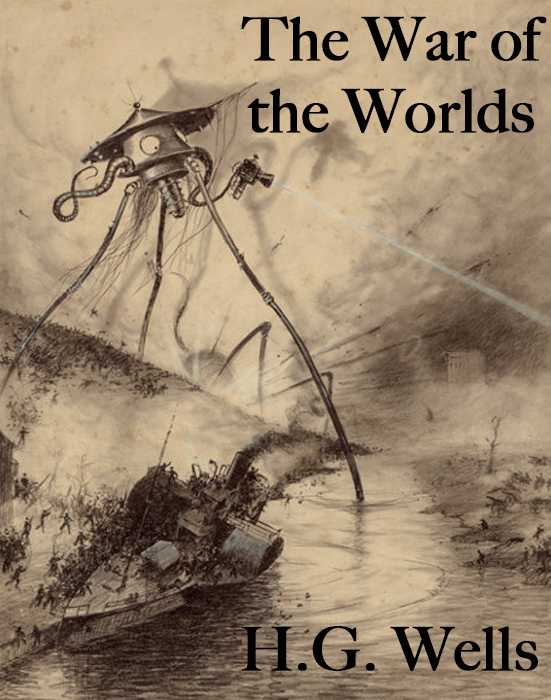
It’s a simple tale – Martians invade England, deal death and destruction to all in their path, but are felled in the end by Earth pathogens they aren’t equipped to deal with. It’s been adapted for the big screen twice (and in numerous other ways, including a rock opera!), in 1953 by producer George Pal and in 2005 by director Steven Spielberg. I consumed the book and both movies in pretty short succession and it’s interesting to see what parts of the book each film emphasizes, while not sticking completely faithfully to its text.
To be fair, that’d be a hard ask. The unnamed narrator of the book is a fairly average upper-middle class guy – he’s neither a scientist nor in the military, but he’s well read and thinks philosophical thoughts. The book follows him as he experiences the first landing of the Martians, including failed friendly attempts at first contact, and then as he (and others) flee as the tripod war machines make their way towards London. Above all, the book creates a sense of loneliness as the narrator loses his family (temporarily), his society, and any real hope in his future. Even though the book Martians never leave England it feels like the story of the last man on Earth. The ending, when it comes, is less happy than it is more a relief. Given how foundational the book is to modern sci-fi it’s hard to even quantify it as “good” or not – it’s just part of the bedrock.
The 1953 movie changes some things dramatically.

The main character, Dr. Clayton Forrester (yes), is not only a scientist but an expert on all things Mars, so he’s much more involved in the response to the Martian landing. It does, as in the novel, include a misplaced attempt at friendship (savagely parodied in Mars Attacks), but there’s a bigger focus on the military response, futile as it is. Forrester is more man of action than passive observer and he’s got others with whom he’s involved (including a love interest), so the emphasis on loneliness really isn’t there. This version also has a pretty heavy-handed religious overlay, with God getting the credit for the bugs that kill the Martians in the end.
The 2005 film in some ways hues more closely to the spirit of the novel, but also makes major changes.
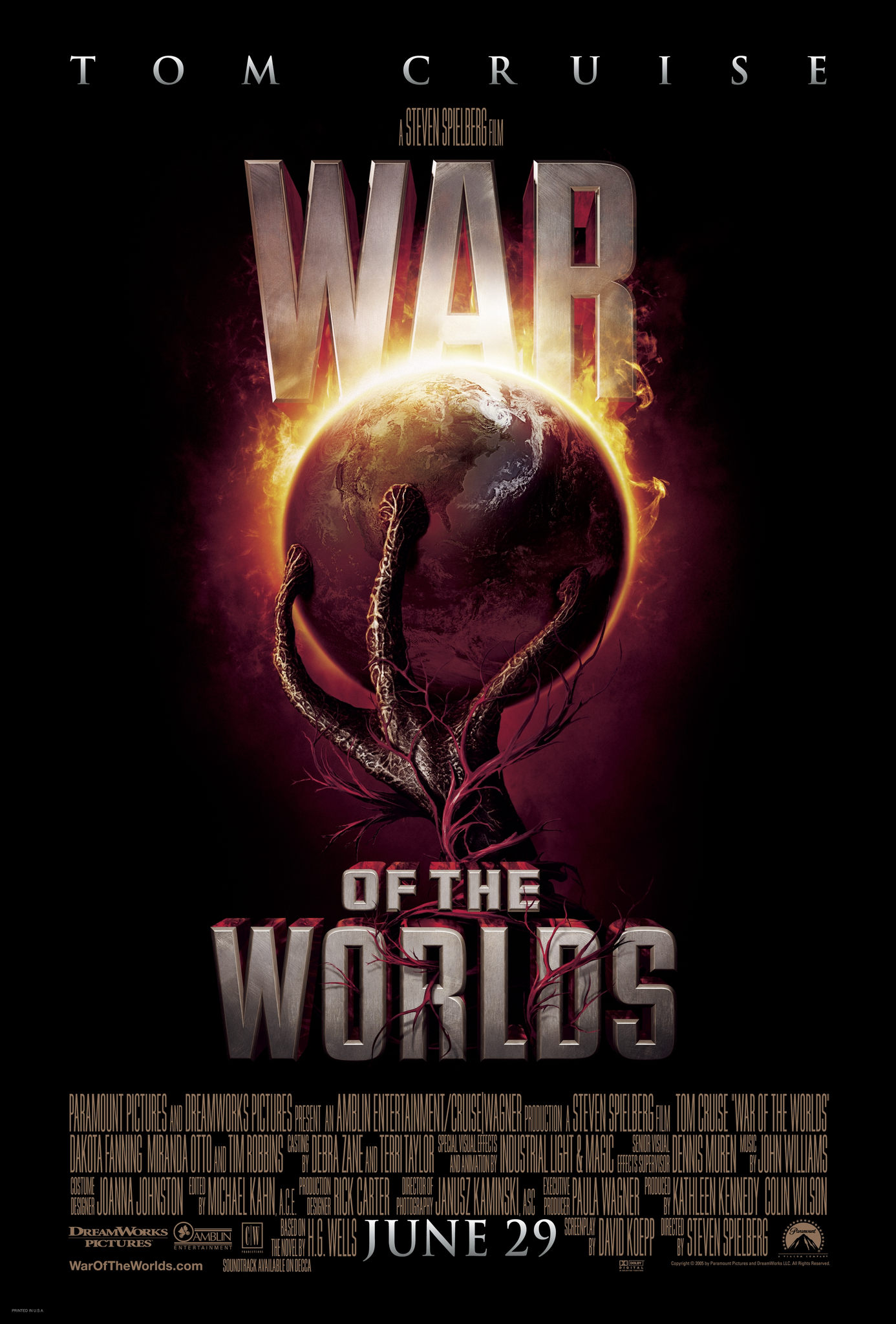
The main character here is Ray Ferrier, a dock worker very much in the everyman vein, who, because this is Spielberg, has two children he has to look after the entire time. There is absolutely no chance for peaceful contact, however, as the aliens just pop up from underground (not sure that makes sense) and start wreaking havoc. Ferrier and clan are thus constantly on the run. While changing the setup, this movie keeps interesting details from the book, such as the Martians plucking up humans to use for food (the 1953 Martians are just killing machines) and a late-story run in with a madman who knows how he’s going to rebuild the world in his own image. Overall, this version does a better job of making the main character (and his kids) seem very very small in the grand scheme of things.
I won’t say either movie is better than the other. The 1953 version’s Martian machines – they look like they’re hovering but there really are legs, if you squint at the right times – will forever be what they should look like, slow and sleek and terrifying. The 2005 version does a better job with the characters, I think. Neither quite gets the central spine of the book, the feeling of loneliness, but that’s understandable.
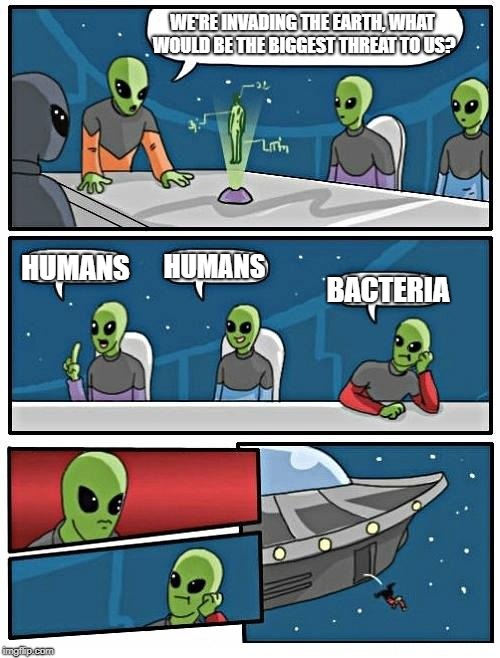
One thing’s for certain – we’ve been beaming this story out there for decades so that if the Martians ever do come for us, they’ll probably be armed with antibiotics as much as heat rays.







 JD Byrne