The Obligatory Holiday Post

So, 2024 has been a year. It began with on a serious down note, produced its share of highs along the way, and then slouched towards . . . well, whatever we’re doing now. Oy.

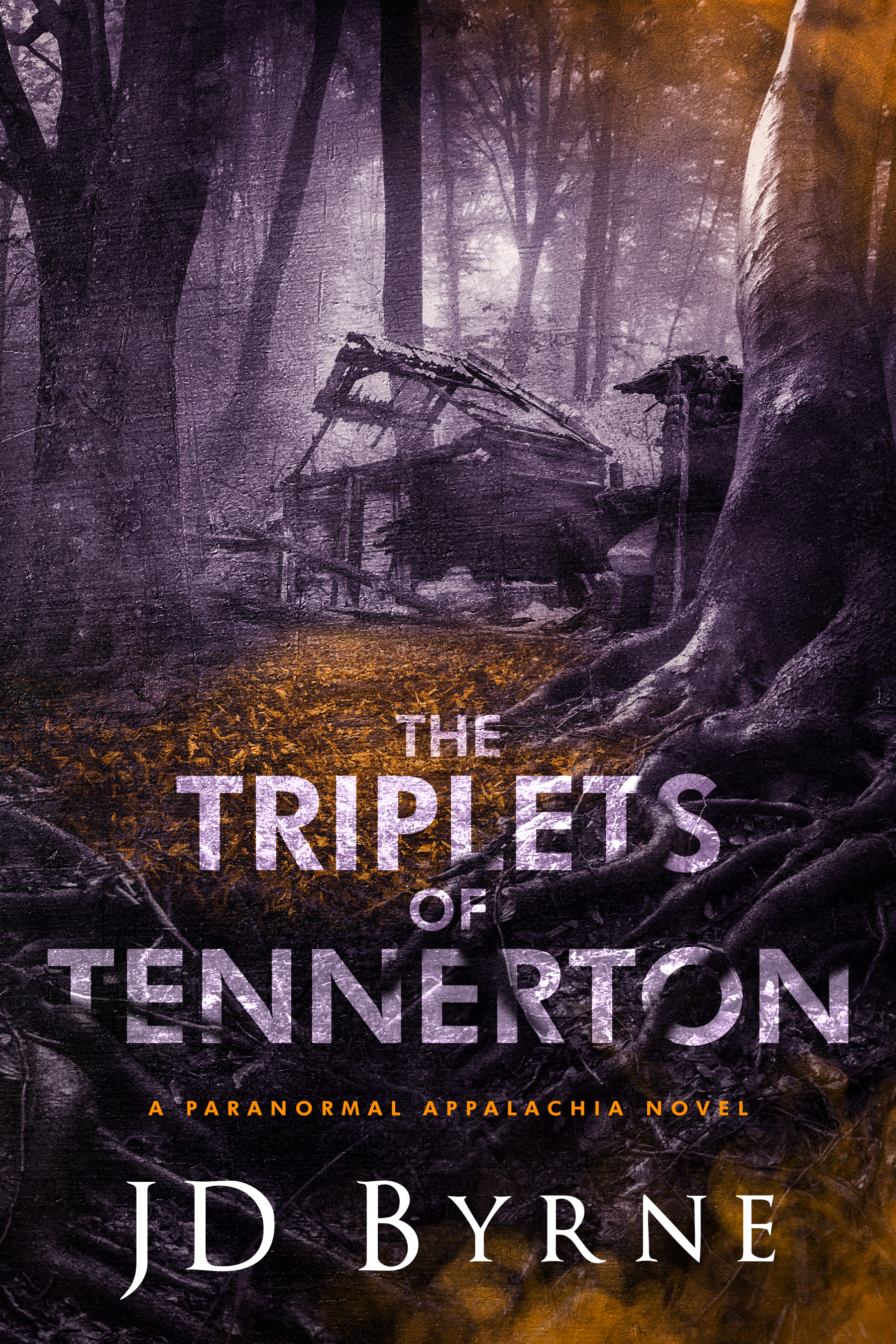
Without a doubt, my personal high point was the release of The Triplets of Tennerton, the second book in the newly refashioned Paranormal Appalachian series.

On the back of that release I got to do lots of in-person events and talk to lots of people about it all over the state. It’s the most fun I’ve had with a book launch and came at a very good time for me. Even won an award!

If you’re interested in Triplets you can read excerpts from it here and here and a little about the real world inspiration for the murder mystery at its heart here. I even did an interview of my own self about the book that you can check out here.

In fact, if you’re still doing some Xmas shopping, or maybe you’re looking for a present for yourself (you deserve it!), both Triplets and the original Ben Potter story, Moore Hollow, are on sale in eBook form for 99 cents for the rest of the year. Get Triplets here (Kindle) or here (other formats) and Moore Hollow here (Kindle) or here (other formats). There’s paperback versions of each book, too, available here and here or locally at Cicada Books & Coffee in Huntington and Plot Twist Books in South Charleston.

So, I hope you get some time to read or hang out with friends and loved ones over the next few weeks, regardless of what holidays you celebrate (if any!).

I’ll be back in 2025. Until then, have some seasonally appropriate tunes.

Absorb (and Be Confounded) First, Understand Second

I have never read Ulysses. I don’t think that’s a major confession (certainly a lesser one that I’ve never read Tolkien, given my genre of choice), given that while it’s one of the most famous works of English literature it’s also got a reputation as one of the most difficult to read. Not a breezy beach romp is Joyce’s chronicle of a day in Dublin.

It’s a reputation reinforced by things like this column on Slate from last month, in which the author staggers under the idea that his book club was going to “raw dog” Ulysses, rather than read it with some kind of supporting, explanatory work alongside. Putting to one side the continuing attempts to make “raw dogging” a thing, isn’t that the way you should first approach a work of art? If you need to have someone else tell you what it means from the jump what’s the point?

Without a doubt there are books, movies, and albums that cannot be fully appreciated on the first go. The one my mind goes to immediate is Memento, Christopher Nolan’s early breakthrough that’s told (in essence) backwards. It’s definitely a movie that rewards rewatching once you have a better idea of what’s going on, but it’s worth experiencing on your own at first to get the full effect. Seeking outside meaning before you watch it yourself spoils part of the fun.

The difference comes from wanting to understand what you’ve already seen or read versus wanting to have a complete understanding of the work the first time you experience it. I’m not saying that are that requires that kind of work is inherently better than stuff that’s more direct and accessible from the jump – there are different kinds of pleasures when it comes to art and sometimes that pleasure is teasing out just what the artist means after you know what they’re saying.

A lot of my favorite music is British. As a result, sometimes there are references in it that I, as an American, just don’t get. I’ve spent time figuring out just what Fish was saying about 1980s Brittain on the first four Marillion albums. That I didn’t understand it all when I first heard them wasn’t important, but learning the details afterwards only deepened my understanding of the songs.

I do the same thing with books and movies. After I finish one I have a ritual in which I scour various review sites – Goodreads, Letterboxd, etc. – as well as critic’s reviews and other write ups, not just to see if my opinion of the work matches consensus (a lot of times it doesn’t!) but to see if other people have insight into what I’ve just read or watched. I love learning about how movies or albums are made and what weird sausage-making process was involved in the final product and how much of the creators’ original ideas came through (if any).

Sitting down to read a book or watch a movie shouldn’t feel like work. Having to do so with a separate work open beside you to make sure you “get” what you’re reading or watching sure seems like work to me. It’s what I do in my day job – I look at a case that requires me to dig into a statute or regulation to figure out what it really means, which requires me to jump to another case, which requires me to look at a historical version of the statute to see how it’s changed over time. I don’t want to have to do that in my spare time. Who does?

Works of art are, in essence, sales pitches. Are you, consumer of art, entranced or intrigued or outraged enough by what you see/hear/read to linger? To borrow a phrase, would you like to know more? That’s the point to at which you might expect a reader or viewer to start digging into supplementary materials. Before you set the hook, however, they really ought to be left to muddle through on their own.

Now, if you don’t mind, I’m going to go listen to this song for the umpteenth time and, once again, try and figure out what Jon Anderson is on about:

On the Freedom of Mediocrity

Over the weekend my alma mater’s football regular season ended in a pretty humiliating 52-15 ass whoopin’ at the hands of the Texas Tech Red Raiders. “Regular season,” of course, because in the modern era a team that struggles to 6-6 still gets to go to a bowl game nobody’s ever heard of before, so there’s still the chance to finish the season with a losing record! The nature of the defeat led to the firing of head coach Neal Brown, who leaves with a middling 37-35 record over six years.

Six years ago, nearly to the day, I wrote a piece  examining the WVU football program and making the “sobering, but fairly obvious, conclusion” that we are “only a mediocre football program.” In that post I characterized the acceptance of mediocrity as “heartbreak,” but over the ensuing years I’ve come to view it differently – it’s really more liberating than heartbreaking.

The shift of perspective came not so much from WVU football, but from following the US Men’s National Team during those six years. 2018, of course, marked the World Cup in Russia for which we did not qualify, the first time in decades we’d been absent from soccer’s biggest stage. The time since has been an interesting experience when it comes to fandom.

On the one hand, these have been halcyon days for the USMNT. More American players than ever ply their trade at top European clubs. Hell, Christian Pulisic played a regular role for a Chelsea team that won the Champion’s League in 2021 and is currently tearing it up for AC Milan. And the team, as a whole, rebounded. We qualified for the 2022 World Cup and have reestablished the US as the dominant player in our region, winning all three editions of the new CONCACAF Nations League over old rivals (Mexico) and new (Canada).

On the other, we kind of appear to have found our ceiling and it’s not elite. In the World Cup we did about as well as we ever do, making it out of the group stage and losing in the first knockout round. And while being kings of CONCACAF is better than the alternative, the truth is our region is one of the weakest and coming out on top here isn’t saying a whole lot.

Where does that leave the USMNT? About where we’ve been over the past few decades. Our current FIFA ranking (for what those are worth) is 16, which is not bad when you consider there are 210 members of FIFA. A solid top-20 program is nothing to scoff at, but it’s hardly exceptional. We’d not be favorites to win any major tournament outside our own region and haven’t had a signature win against a European or South American power for a long while.

Overall, it’s hard to conclude that, in global terms, the USMNT is fundamentally mediocre.

Capable of big results, sure, but also frequently struggling to defeat Central American nations with a fraction of the population, too. We are entirely capable of making a deep run in the World Cup we co-host in 2026, but it will be a great story precisely because it would involve some upsets.

And I’m OK with that. I’ve come to terms with the fact that we will never be Brazil or France or Argentina or Germany (seriously, only eight countries have ever won the World Cup!). At best, in the right circumstances – a particular group of skilled and experienced players, a coach who can maximize all that, a favorable draw, etc. – we can make a good run and maybe even win the thing, if we get lucky. You know? That’ll be way more fun, anyway, than constantly worrying if we’re falling short of a goal we can never achieve in the first place.

I should, at this point, assure readers that I’m not arguing in favor of giving over to mediocrity in every part of your life. When it comes to your work, your family, and other important things you should always try to be the best version of yourself you can be. I’m talking about interacting with stuff that is, fundamentally, beyond your control. I have absolutely no control over whether WVU wins their bowl game or whether the USMNT wins another Nations League title next spring.

But when it comes to sports, it’s a pretty good deal. Particularly for things like colleges and national teams that, maybe, you can’t just up and dump for better teams, tamping down expectations means that when they win it’s great and when they don’t, eh, it’s no big deal. Sport is a diversion, right? It’s supposed to be fun? For all the talk hard-core fans of INSERT TEAM HERE make about how difficult it is to be a fan, if you really aren’t enjoying it then get another hobby – life’s too damned short.

So, come with me, friends. Embrace the almost certain mediocrity of your favorite teams. Wins will mean more, losses won’t hurt. Return sport to the proper place in your life!